This post contains affiliate links. As an Amazon Associate, I earn from qualifying purchases, at no extra cost to you.
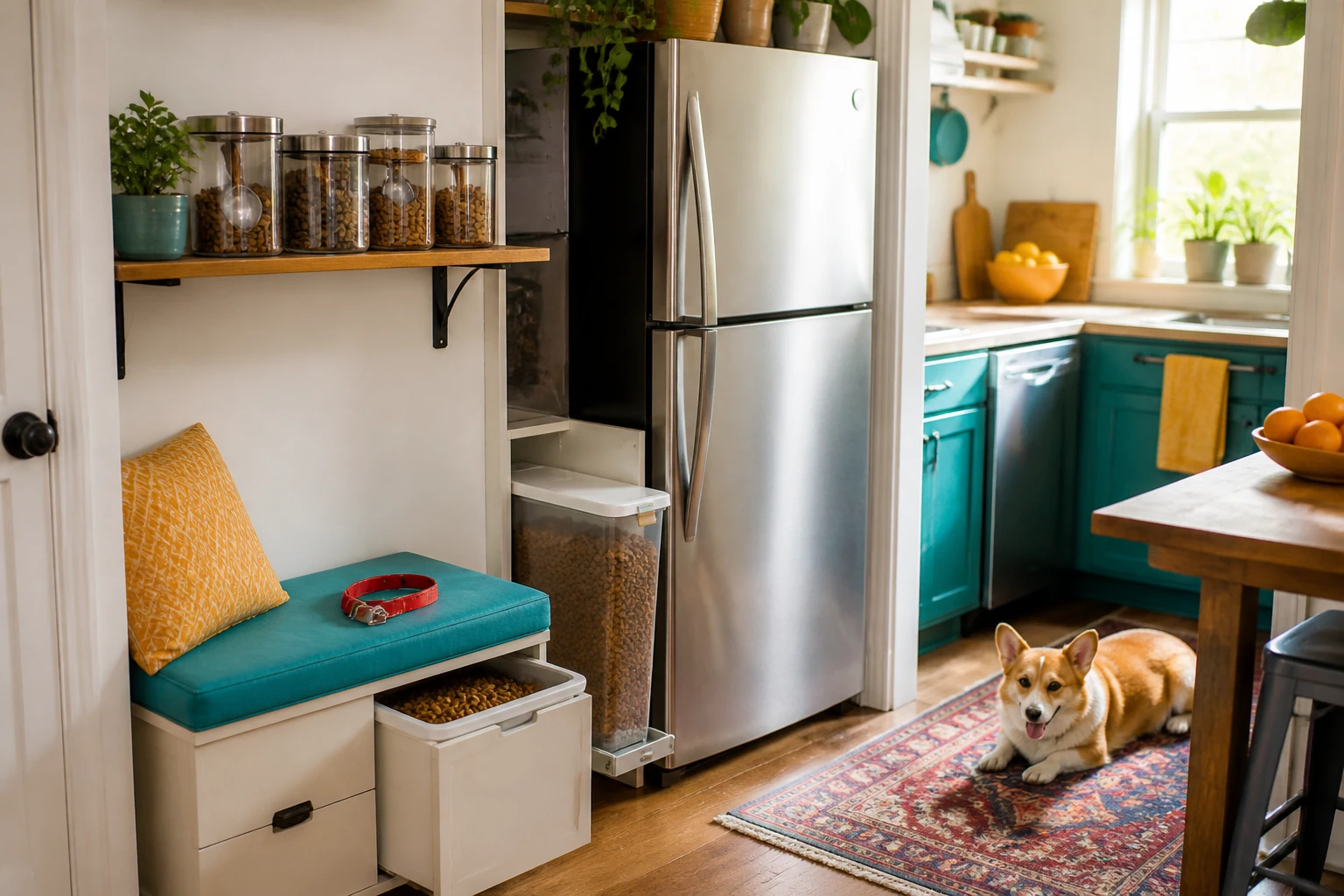
Tired of tripping over bags of kibble in your kitchen? These clever storage upgrades keep food fresh, tame clutter, and look good while doing it. We’re talking airtight, pest-proof, space-savvy setups that you can actually live with. Stick around for 7 ideas that work in real homes, not just Pinterest boards.
⭐ Our Top Pick: See it on Amazon
1. Slim Rolling Kibble Container That Disappears Between Appliances
Have a weird gap between your fridge and the wall? Turn it into a stealth pantry for your pup. A narrow rolling container with a gasket lid slides in and out easily and keeps food crisp and dry.
What to Look For
- Width under 7 inches to fit those awkward slivers of space
- Silicone gasket and latching handles for an aroma-tight seal
- Food-grade plastic or stainless steel (BPA-free if plastic)
- Smooth casters and a scoop storage clip
Measure from floor molding to appliance to avoid surprises. Park the container away from ovens and dishwashers since heat accelerates spoilage. I’d skip flimsy cereal bins without true seals; they leak smells, and your dog will absolutely notice, seriously.
Best for: Apartment kitchens with a gap next to the fridge or washer, 10–25 lb kibble bags.
2. Wall-Mounted Dispenser With Airtight Hopper
Free up counter space with a stud-mounted dispenser that portions kibble on demand. No more scooping from the bottom of a deep container, and no more bending every meal.
Tips
- Choose a hopper that’s airtight with a gasketed lid, not just a flip top
- Install into studs or use heavy-duty anchors (check weight rating)
- Opt for opaque or stainless to reduce light exposure
- Mount higher than muzzle height to discourage “self-serve” attempts
I’d pick a dispenser designed for pet food, not a cereal unit, because many cereal versions lack proper seals. Keep it away from the stove and sink to avoid steam and grease. Worth it if you want one-handed dispensing and a clutter-free counter.
Best for: Galley kitchens, laundry rooms, or mudrooms with open wall space.
3. Under-Sink Sealed Bins on Slide-Out Tracks
No pantry? Go under the sink—carefully. A pull-out frame paired with a latching, gasketed bin gives you easy access while protecting against splashes.
Setup Steps
- Map your plumbing: confirm the bin clears the P-trap and valves
- Use a metal slide-out base rated for the bin’s full weight
- Place a waterproof tray or mat under the bin as a back-up barrier
- Keep chemicals on a separate, higher shelf or in a locking caddy
Moisture tolerance matters under sinks, so prioritize containers with heavy-duty seals. I’d skip glass here—one bump and you’re dealing with shards. This layout hides food from curious noses and keeps your floor open, which feels like magic in tight quarters.
Best for: Studios and small kitchens where vertical storage is limited but cabinets are deep.
4. Stackable Modular Canisters for Kibble, Toppers, and Vitamins
When every inch counts, go vertical. Modular canisters stack neatly, corral small items, and let you build a mini “dog shelf” that actually stays organized.
Key Points
- Use medium bins for kibble portions, smaller ones for freeze-dried toppers
- Pick gasketed lids and square shapes to avoid wasted corners
- Label with the opening date and rotate first-in, first-out
- Hang the scoop on a Command hook inside the cabinet door
I’d pick shatter-resistant plastic or stainless canisters over glass, especially at lower shelves. Don’t mix old and new batches in the same container; finish one, then refill. This setup shines for small dogs who don’t plow through big bags quickly.
Best for: Cabinet shelves, pantry nooks, or a small bookcase turned pet station.
5. Storage Ottoman or Side Table With a Hidden Food Bin
Turn furniture into function with a storage ottoman or compact side table that hides an airtight bin inside. It doubles as seating or a landing spot for leashes while keeping food sealed and out of sight.
How to Make It Work
- Choose an ottoman with a hinged, slow-close lid (safer for fingers)
- Insert a removable, gasketed bin to contain odors and crumbs
- Line the bottom with a washable mat to catch stray kibbles
- Place it away from heat vents and direct sun
I’d pick a model with washable fabric or faux leather—cleaning is effortless. Skip loose baskets; they won’t block scent and can tempt chewers. It’s a tidy, multipurpose solution that blends right into your living room without screaming “dog stuff.”
Best for: Small living rooms, entryways, or studio apartments pulling double duty.
6. Over-the-Door Pantry Rack Dedicated to Dog Supplies
When floor space is full, look at your doors. An over-the-door rack turns the back of a pantry, laundry, or coat closet door into prime real estate for your dog’s goods.
What to Store
- Top shelves: supplements, silicone travel bowls, measuring cups
- Middle shelves: treats, canned food, rolls of poop bags
- Lowest shelf: a small, sealed kibble container (anchor the rack for weight)
Choose a rack 4–6 inches deep so doors still close. For heavier loads, screw the frame into the door rather than relying on hooks. I’d skip glass jars here since they swing and clink; shatter-resistant containers keep things quiet and safe.
Best for: Homes with a single closet near the kitchen or anyone who needs visibility at a glance.
7. Under-Bed Rolling Tote for Bulk Reserves
No closet left? Slide a low-profile rolling tote under the bed for backup bags. Keep the kibble in its original bag (for freshness and lot info) and place that bag inside the tote for a double barrier.
Pro Moves
- Pick a gasketed tote with latching handles and wheels
- Write the open date on the bag; aim to use within 4–6 weeks
- Avoid heaters and sunny windows; cool and dry wins
- Add a scoop only if the tote stays fully sealed between uses
I’d pick a tote around 6–7 inches tall for easy clearance. Don’t store next to scented items or cleaners—the fats in kibble can absorb odors. Worth it if you buy medium bags or need a “back stock” spot that doesn’t hog living space.
Best for: Small bedrooms and shared apartments where the kitchen has zero spare capacity.
Common Mistake to Avoid
Pouring new kibble on top of old food inside a bin sounds convenient, but it invites staleness and contamination. Either keep kibble inside its original bag tucked into the container, or wash and dry the bin completely before refilling. Also avoid garages, balconies, or spots with big temperature swings; heat and humidity wreck fat quality fast. Finally, skip floor-level glass and loose lids—dogs can nose them open and you’ll end up with an unplanned buffet.
FAQs
How long does dry dog food stay fresh after opening?
Most manufacturers recommend using an opened bag within 4–6 weeks. Store it in a cool, dry place below about 77°F (25°C), inside an airtight container. Keep the food in the original bag (folded tightly) within the bin to preserve the fat barrier and keep the batch and expiration details handy.
Is it safe to pour kibble directly into a plastic container?
Yes, if the container is food-grade and you clean and dry it completely between refills. However, I’d pick the “bag-in-bin” method to reduce residual oil buildup and keep lot info. If you pour directly, never top off—finish the old food, wash, then refill to maintain freshness.
What container size do I need for a 15 lb bag?
A good rule: 1 pound of kibble is roughly 1 quart of volume. For a 15 lb bag, aim for at least 15 quarts, and add 20% wiggle room to handle larger kibble shapes—so about 18–20 quarts. When in doubt, size up so the lid closes without compressing the food.
Can I store dog food in the fridge or freezer?
Freezer storage can extend freshness if you divide kibble into airtight portions and thaw sealed portions at room temperature to prevent condensation. I’d skip the fridge—moisture swings can invite mold. For short-term storage, a sealed bin in a cool, dry cabinet beats cold storage in most homes.
Are stainless steel containers better than plastic?
Stainless steel is non-porous, resists odors, and cleans easily—great for long-term use. Quality plastic works too if it’s food-grade, BPA-free, and sealed with a reliable gasket. IMO, I’d pick stainless if your dog is a determined chewer or you want a container that looks sharp on open shelves.
Small homes don’t need to smell like kibble or look like a pet store aisle. Pick one of these setups, measure carefully, and commit to airtight seals—your dog’s food stays fresh, and your space stays calm. You’ll wonder why you didn’t do this sooner, seriously.
 Want to build your own?See our printable DIY dog plans for a dog food storage cabinet with step-by-step instructions, cut lists and exact measurements.
As an Amazon Associate, I earn from qualifying purchases.