This post contains affiliate links. As an Amazon Associate, I earn from qualifying purchases, at no extra cost to you.
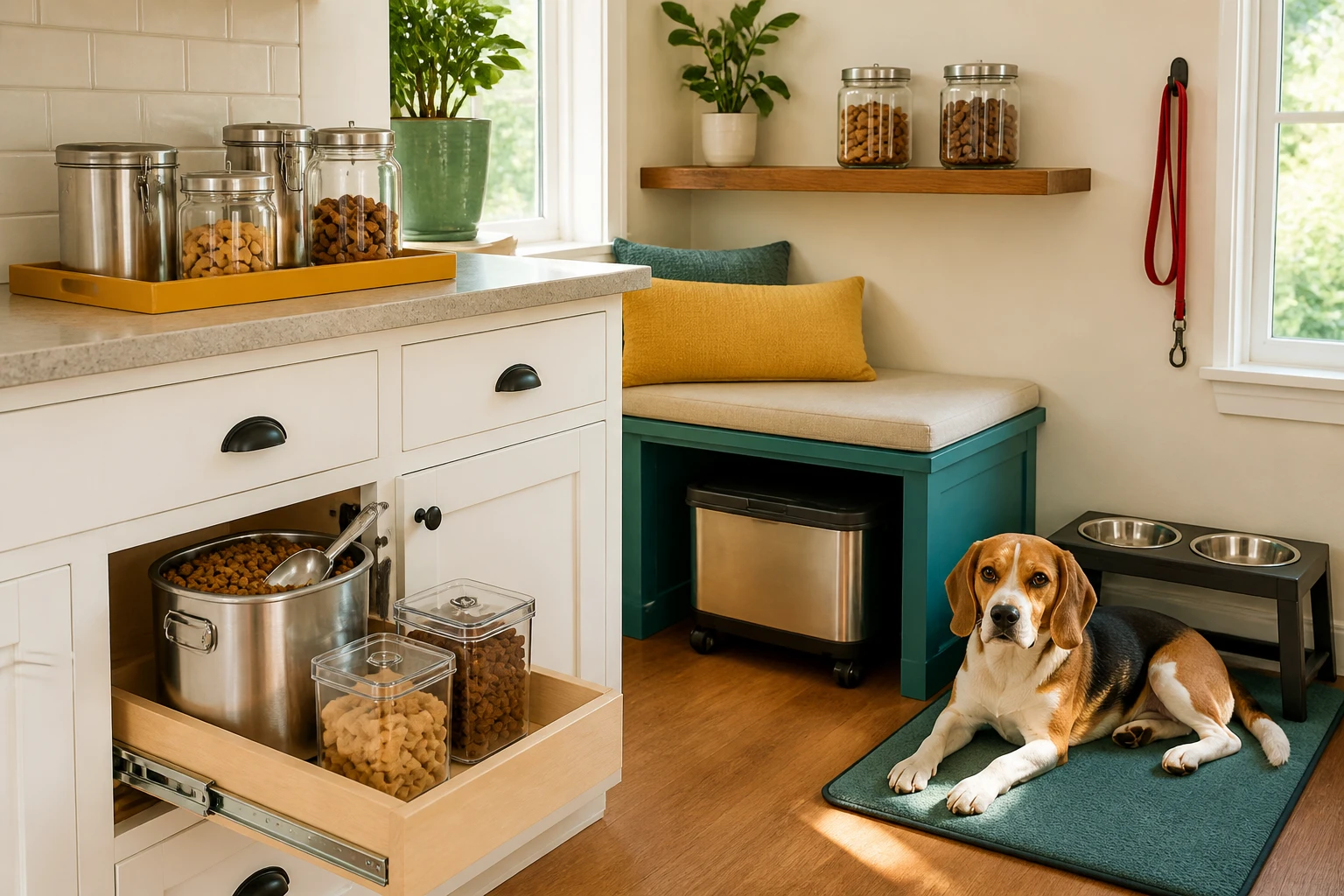
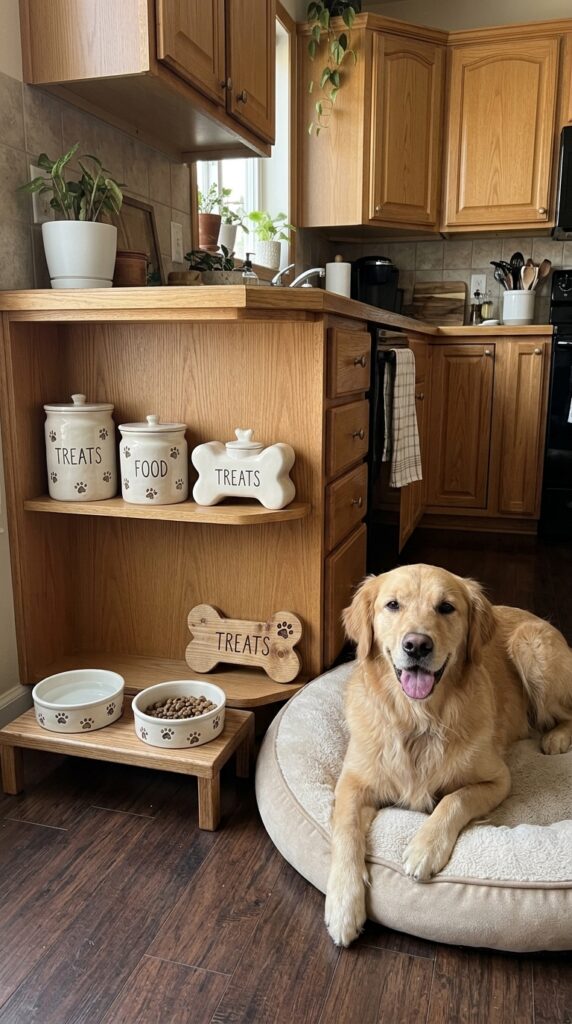
Your pup deserves a tidy, great-looking setup, and you deserve storage that actually works. These 6 ideas blend form and function, keep kibble fresh, and look good doing it. Each one includes a smart spot for treat jars you can grab in a heartbeat—without leaving a mess on the counter. Ready to create a space that keeps tails wagging and your home looking polished?
⭐ Our Top Pick: See it on Amazon
1. Countertop Canister Bar With Airtight Treat Jars
Want a grab-and-go station that doesn’t hog counter space? Set up a small “bar” with matching canisters on a tray near your feeding area. You’ll corral scoops, lids, and snacks in one neat zone that still feels like decor, not clutter.
Tips
- Choose airtight canisters made from stainless steel, ceramic, or shatterproof acrylic with silicone gaskets.
- Use a rimmed tray so everything moves at once when you need to wipe down surfaces.
- Add water-resistant labels or a label maker for a clean look that won’t smudge.
Place the kibble canister toward the wall and keep treat jars in front at easy reach. If your dog counter-surfs, tuck the whole tray on a high shelf when you’re out.
Why it works: It’s compact, looks intentional, and keeps food sealed. I’d pick a matching set for a streamlined vibe. I’d skip anything flimsy or without a gasket—freshness matters.
Safety: Keep heavy canisters out of reach of curious chewers and away from stovetops or heat vents.
Best for: Small kitchens or apartments that still want a stylish feeding zone.
2. Slim Rolling Pantry Cart That Disappears Beside the Fridge
Have a 4–8 inch gap next to your fridge or cabinet? Slide in a narrow rolling cart and you’ve got a stealthy storage spot for food and treat jars. It tucks away, looks tidy, and glides out only when you need it.
Key Points
- Pick a cart with locking casters and guard rails so containers don’t tip.
- Line shelves with grippy shelf liner to keep jars from sliding.
- Use tall, stackable bins on the bottom for kibble and lighter treat jars up top.
For extra polish, match the cart’s finish to your appliances. Keep the cart at least a few inches from any heat source so food stays fresh.
Why it works: Hidden storage = visual calm. Worth it if you crave a clean counter and quick access. I’d skip wire baskets with big gaps that let small containers wobble.
Safety: Park the cart so your dog can’t nose it out. Store only shatterproof jars at the edges and keep heavier bins low for stability.
Best for: Kitchens with awkward gaps begging for a purpose.
3. Entryway Bench With Hidden Kibble Drawer and Treat Jar Cubby
Turn a mudroom or entry bench into a sleek feeding command center. Pull-out drawers hide kibble, while a small upper cubby shows off treat jars you can grab as you head out for walks.
Materials
- Storage bench with drawers or doors (soft-close preferred)
- Food-safe bin or liner bag for the drawer (think BPA-free, gasketed lid)
- Shatterproof treat jars and wipeable shelf liner
Decant kibble into an airtight bin that fits the drawer and keep the scoop inside the bin to avoid stray crumbs. Add felt pads under jars so they don’t rattle when drawers close.
Why it works: It keeps daily essentials right where you leash up. I’d pick a bench with full-extension slides so the bin clears the frame. I’d skip open baskets—curious noses will find them.
Safety: Anchor the bench to the wall if it’s top-heavy. Keep jars at adult height and avoid glass at dog level, IMO.
Best for: Busy households that need storage plus a sit-down spot for shoes and leashes.
4. Floating Shelf Feed Station Over the Bowls
Create a mini station above your dog’s feeding area with a sturdy floating shelf. It frames the space and gives you a high, safe perch for treat jars and a compact kibble canister.
Install Like This
- Mount the shelf 18–24 inches above the top of the bowl stand so you can reach easily while your dog eats comfortably.
- Use wall anchors or studs and add a gallery lip or non-slip mat so containers stay put.
- Choose shatter-resistant containers and keep heavier items toward the wall.
Want it to look crisp? Match the shelf stain or paint to your bowl stand or trim. A small wall hook (Command-style) can hold a collapsible scoop—no drilling into your cabinet doors required.
Why it works: It defines a feeding “zone” that feels designed, not improvised. I’d pick a wood shelf sealed with a water-resistant finish. I’d skip overly deep shelves that you’ll bump into.
Safety: Don’t place heavy decor over the bowls. Keep the setup away from radiators, sunny windows, and dish splashes.
Best for: Anyone who wants a defined feeding nook without adding furniture.
5. Furniture-Style Credenza Pantry With Hidden Bins and Treat Jar Display
Repurpose a sideboard or credenza into a classy pet pantry. Deep drawers hold bulk food in sealed bins, while the top surface or an inner shelf becomes a treat jar gallery you’ll actually want to show off.
Setup Tips
- Measure drawer interior height and choose bins with gasketed lids that still clear the frame.
- Use a lazy Susan inside a cabinet for quick access to multiple treat jars.
- Add removable labels so you can switch flavors without sticky residue.
Place the credenza in a cool, shaded spot—heat degrades fats in food faster than you think. If your dog is persistent, add child-proof latches to doors. It’s not cute when a Lab learns how hinges work, seriously.
Why it works: You get big-kid storage that blends with your furniture. I’d pick a piece with soft-close hardware and a wipeable interior. I’d skip thin backer boards that flex under weight.
Safety: Secure tall furniture to studs. Keep jars and bins away from heating vents and fireplaces.
Best for: Open-plan living rooms, dining rooms, or larger kitchens where you want pet gear to blend in.
6. Pantry Zone Reset With Stackables and a Treat Jar Turntable
Dedicate one pantry shelf to your dog’s food and snacks, then organize it like a pro. Stackable containers maximize vertical space, while a small turntable brings treat jars to the front with one spin.
How to Do It
- Use a tall, airtight bin with a screw-top lid for kibble; keep the original bag’s barcode and lot info tucked inside.
- Place treat jars on a 10–12 inch lazy Susan with a grippy base so nothing slides.
- Add a shallow riser in the back for rarely used items like supplements or backup scoops.
Label everything with the flavor, serving scoop size, and “opened on” date. Keep this shelf at shoulder or eye level—high enough that paws can’t reach, low enough that you won’t drop containers on the daily.
Why it works: You’ll see what you have, stop overbuying, and refill in seconds. Worth it if you love a tidy pantry that stays that way.
Safety: Don’t store near cleaners or anything with strong odors. Oils in food can absorb smells—hard pass.
Best for: Homes with a dedicated pantry or tall cabinet that needs a refresh.
Common Mistake to Avoid
Skipping a real seal. Rolling the kibble bag and calling it a day looks fine—until the food stales fast and your dog goes “meh.” Always decant into airtight containers and keep everything away from sunlight and heat. Also avoid heavy glass at dog height, mixing old and new food without finishing the old first, and leaving scoops out where they attract pests.
FAQ
How big should my kibble container be?
Pick a size that holds one bag with a little headroom so the lid closes fully. If you buy in bulk, split into two or three containers. Smaller bins keep food fresher because you open them less often.
Which material is best—stainless steel, plastic, or ceramic?
Stainless steel is durable, easy to clean, and doesn’t hold odors. BPA-free plastic with a silicone gasket is lightweight and budget-friendly. Ceramic looks upscale but keep it higher or behind doors since it can chip. For treat jars at dog level, go shatter-resistant every time.
How long does dry food stay fresh once opened?
Most dry food tastes best within 4–6 weeks after you open the bag. Store it in a sealed bin in a cool, dry spot. Keep the bag’s label or a photo of it for lot numbers, just in case.
Can I store dog food in the garage?
I’d skip it. Garages swing hot and cold, which shortens shelf life and invites pests. If you must, use a gasketed container elevated off the floor and check temps—aim for 50–70°F whenever possible.
What’s the right way to clean containers and treat jars?
Wash with warm, soapy water monthly or between bag changes. Dry completely before refilling to prevent moisture buildup. If a container still smells, wipe with diluted white vinegar, rinse, and air-dry.
How do I keep ants and pests away?
Seal the food, wipe up crumbs, and use a tray to catch spills under canisters. For pantry zones, add door sweeps and store containers off the floor. Peppermint cotton pads placed high and out of reach can deter ants—just keep all scented items away from where your dog can lick them.
Pick one idea, set it up in an hour, and enjoy a space that actually functions. Your future self will thank you every time you dole out dinner or reward good sits without digging through a cabinet. Fresh food, easy treats, and a home that looks put-together—yes, please.
 Want to build your own?See our printable DIY dog plans for a dog food storage cabinet with step-by-step instructions, cut lists and exact measurements.
As an Amazon Associate, I earn from qualifying purchases.