This post contains affiliate links. As an Amazon Associate, I earn from qualifying purchases, at no extra cost to you.
Does your kitchen look like a pet supply truck exploded? With two species and multiple diets, storage gets chaotic fast. These 7 ideas keep kibble fresh, cans sorted, and scoops where you need them—without turning your place into a warehouse. Streamlined, pet-safe, and easy to maintain, they’ll help you stop hunting for the right bag every single feeding.
⭐ Our Top Pick: See it on Amazon
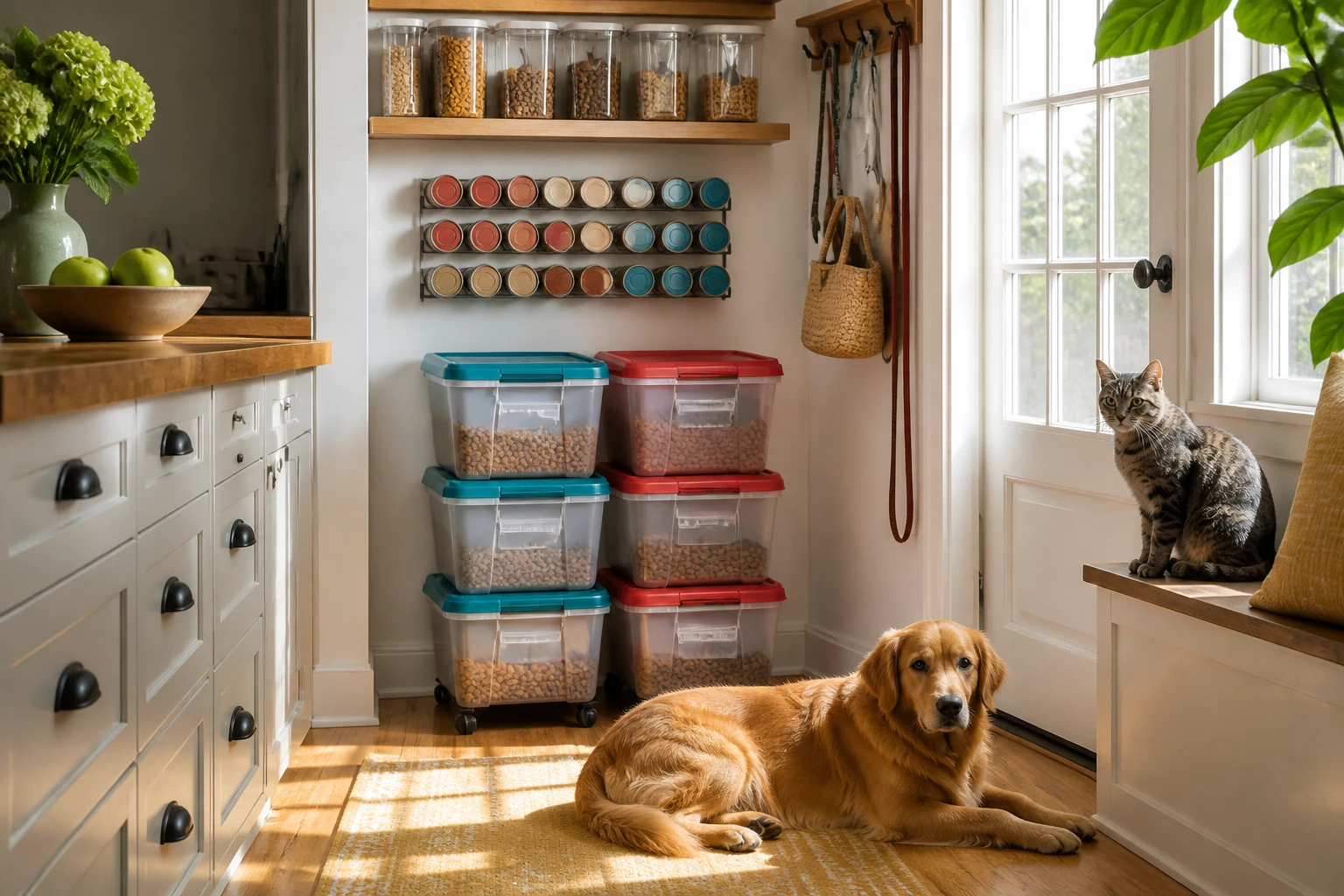
1. Stackable Airtight Bins on Wheels: Color-Code by Species
Vertical storage saves floorspace, and stackable bins make quick work of dog vs. cat diets. Look for airtight, food-grade containers with casters, so you can slide the stack out to scoop and roll it back when you’re done. Color-coded lids (or big labels) cut down the “Is this the cat’s low-cal food?” guessing game.
Tips
- Check capacity: most standard kibbles run roughly 1 lb ≈ 1.3–1.5 quarts. A 30 lb bag often needs ~40–45 quarts.
- Choose containers with integrated scoop holsters and gasketed lids to lock out moisture and pests.
- Store away from heat sources like ovens and dryers; warmth speeds up fat oxidation and stale smells.
Go for bins with a front-flip lid so you don’t have to unstack daily. I’d pick units with locking wheels; I’d skip anything with flimsy clips that a determined nose can pop open. Best for: small kitchens that need vertical storage and quick dog/cat separation.
2. Pull-Out Pantry Drawers That Hide the Big Bags
Retrofitting a base cabinet with a full-extension pull-out keeps bulk kibble tucked away but instantly reachable. Slide the drawer out, lift the lid on your sealed bin, and scoop without wrestling bags. It keeps heavy containers off the floor and keeps your back happy.
What to Look For
- Heavy-duty slides rated for 100+ lbs, especially for large-breed food.
- Cabinet depth of 21–24 inches so containers fit with lids fully closing.
- Soft-close hardware to prevent banging (and curious pets sprinting in).
Install a child latch if you have opportunistic chewers. Place pull-outs far from dishwashers and ovens—heat and steam are not your friends. Worth it if you crave a clean, built-in look and easy access. Best for: homeowners or renters with a standard base cabinet to convert.
3. Mudroom Bench with Tilt-Out Compartments (Faux Drawer Fronts)
A storage bench doubles as seating and a hidden stash spot for pet food. Tilt-out fronts (like laundry hampers) paired with food-safe liners let you decant kibble while keeping the room tidy. It blends into your decor while solving the “giant bag by the door” situation.
Build or Buy Smart
- Use BPA-free liners or insert sealed containers inside the tilt-out to meet food safety and freshness needs.
- Round off edges and choose durable finishes—excited dogs slam into furniture during pre-dinner zoomies.
- Mount Command hooks inside for scoops and measuring cups—no magnets, no risk.
Anchor the bench to wall studs for stability, and keep any bowls stashed until feeding to prevent ants and midnight snacking. I’d pick a bench height that lets you tilt fully without scraping the floor. Best for: entryways and laundry rooms where a furniture solution looks intentional.
4. Wall-Mounted “Pet Pantry” Cabinet with Door Racks
No floor space? Go up. A shallow wall cabinet dedicated to pet supplies keeps cans, toppers, and supplements neat and high out of reach. Door-mounted racks handle small items, while the main shelves hold sealed canisters and pouches.
Setup Details
- Use shelf lips or contained bins so cans don’t roll when the door swings.
- Install a simple latch to keep sneaky pets (and toddlers) out.
- Separate species and label shelves: “Dog: Joint Diet” vs. “Cat: Sensitive Stomach.” Clarity prevents mix-ups.
A wall cabinet keeps everything at eye level, which reduces errors when you’re groggy at 6 a.m. Seriously, you’ll thank yourself. I’d skip glass doors—breakage risk. Best for: apartments and tight kitchens that can spare 24–30 inches of wall width.
5. Counter Canisters for Daily Rations (Bulk Lives Elsewhere)
Keep only 2–3 days’ worth of dry food in small, stainless-steel canisters with silicone gaskets. They look clean on a shelf, and you won’t expose the entire bag to air each time you feed. The main stash stays sealed in a larger container for maximum freshness.
How to Use
- Decant with a funnel to avoid kibble confetti on your counters.
- Drop a labeled measuring scoop in each canister (1 cup for dog, 1/4 cup for cat).
- Keep canisters on a high shelf or closed cupboard—far from playful paws and away from the stove.
I’d pick brushed steel for chew and dent resistance; I’d skip ceramic and glass near tails and elbows. Best for: households that want a tidy, minimal setup for daily scooping without dragging out a big bin.
6. Two-Stage FIFO System: Bulk Vault + Small Working Bin
If you buy in bulk, use a “first in, first out” system to prevent stale kibble. Store the original bag inside a airtight vault (think screw-top gamma-seal lid or robust latch) to protect the fats and keep the lot number handy. Then refill a smaller working bin that holds 3–5 days of food.
Pro Moves
- Date everything: write open dates on painter’s tape so you know when to rotate.
- Don’t mix old and new bags. Finish one, wash and dry the bin, then start the next.
- If you portion-freeze, pack in airtight, meal-sized bags; thaw sealed to avoid condensation inside the kibble.
FYI: most dry food stays at peak quality for 4–6 weeks after opening, so plan bag sizes accordingly. Worth it if you’ve got large dogs and like warehouse-club pricing. Best for: multi-pet homes that go through food fast but still want optimal freshness.
7. Rolling Utility Cart That Parks in a Closet
A 3-tier metal cart corrals sealed containers, cans, and supplements in one mobile station. Roll it out at feeding time, then park it in a closet or laundry nook behind a door latch. It’s flexible, renter-friendly, and makes cleaning around feeding zones easier.
Layout Ideas
- Top shelf: small canisters and scoops. Middle: sealed bins for cat and small-breed dog. Bottom: larger dog kibble vault.
- Pick containers that fit the cart height with lids able to open without removal—measure before you buy.
- Locking casters are non-negotiable, and keep the cart away from sunlight and heat vents.
I’d pick a powder-coated cart (less chipping) and seal everything with gasketed lids. I’d skip open baskets that invite curious noses. Best for: busy households that feed in different rooms or want a tidy, portable setup.
Common Mistake to Avoid
Don’t pour kibble straight into a bin and keep topping it off forever. Residual oils go rancid and coat the container, making fresh food smell off-and taste worse. Either keep the original bag inside the sealed bin or wash and dry the container completely between bags. Also avoid garages or sheds unless they’re climate-controlled—heat and humidity will wreck freshness, fast.
FAQ
How long does dry pet food stay fresh after opening?
Most manufacturers recommend using opened dry food within 4–6 weeks. Keep it in the original bag (for the fat barrier and lot code) inside an airtight container, stash it in a cool, dry spot, and avoid daily temperature swings. If your pet eats slowly, buy smaller bags.
Is it okay to pour kibble directly into a plastic bin?
You can, but do it right: wash and dry the bin thoroughly between bags to remove residual oils. Better yet, place the entire bag inside a sealed container and cut a neat corner to pour from—this protects flavor, reduces residue, and keeps the lot number handy. Either route, go food-grade, BPA-free, and airtight.
Can I store pet food in the garage?
I’d skip it unless the space is fully climate-controlled. Heat, humidity, and pests can move in, and temperature swings degrade fats quickly. Aim for a cool interior pantry or laundry area away from appliances that vent heat.
What size container fits a 30 lb bag of kibble?
It varies by kibble shape, but a safe estimate is 1 lb ≈ 1.3–1.5 quarts. For a 30 lb bag, plan for roughly 40–45 quarts. When in doubt, check the container manufacturer’s chart and size up so the lid closes without crushing the bag.
Can I freeze kibble to extend shelf life?
Yes—portion in airtight, moisture-proof bags, then thaw inside the sealed bag so condensation forms on the outside, not the food. Only freeze what you won’t use within 4–6 weeks. Keep the rest cool, dry, and sealed.
Are stainless-steel canisters better than plastic?
For small daily canisters, stainless resists odors and chewing and cleans easily. For bulk, sturdy plastic vaults with quality gaskets work well and often provide more capacity. Whichever you choose, verify “food-grade,” a snug seal, and pet-proof closures.
With a few smart tweaks, feeding two species doesn’t need to feel like a juggling act. Pick one big solution (like a pull-out or vault system) and one daily-access setup (like counter canisters), and you’re golden. Your future self—standing in a quiet kitchen with zero spills—is going to be thrilled.
 Want to build your own?See our printable DIY dog plans for a dog food storage cabinet with step-by-step instructions, cut lists and exact measurements.
As an Amazon Associate, I earn from qualifying purchases.