This post contains affiliate links. As an Amazon Associate, I earn from qualifying purchases, at no extra cost to you.
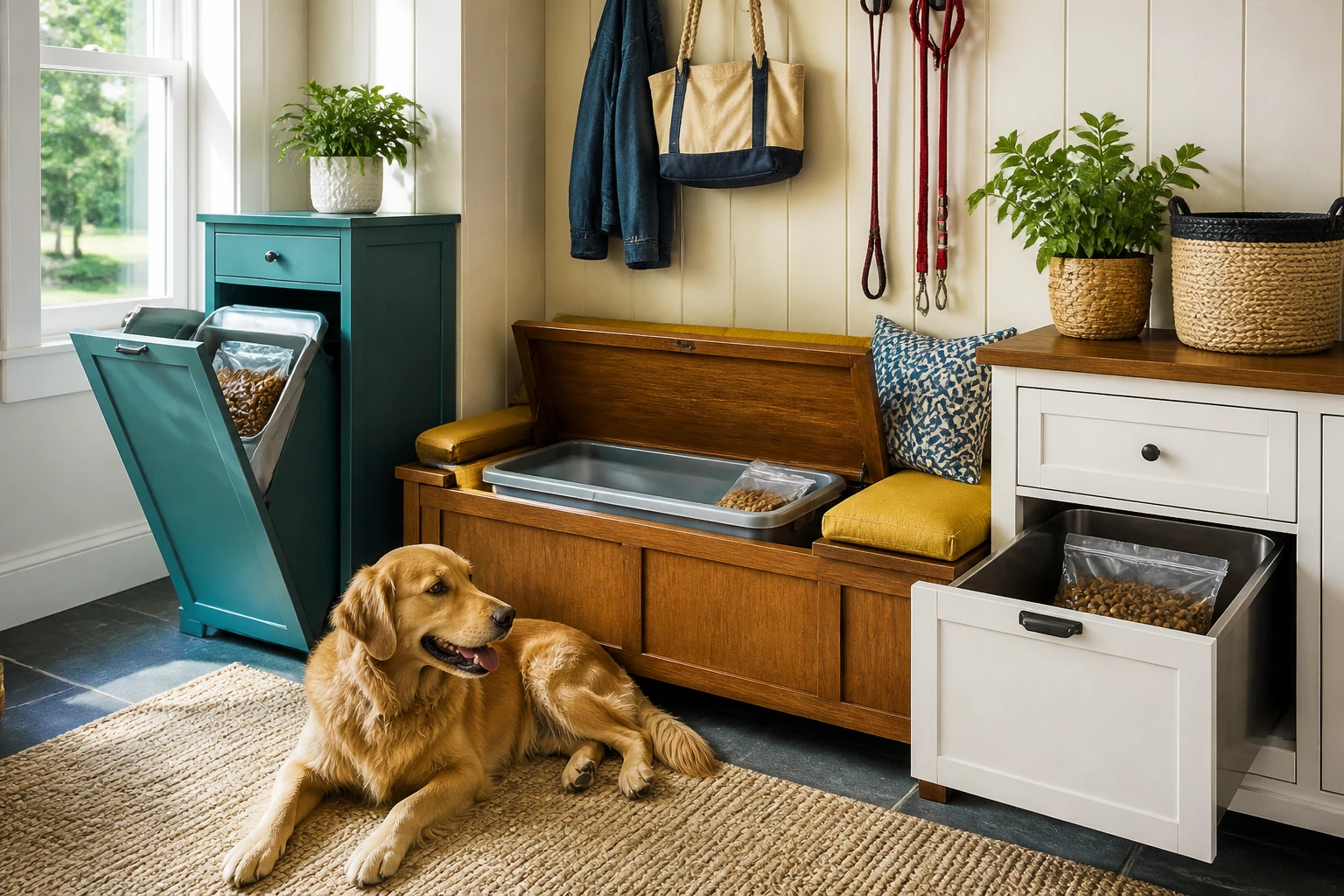
Your pup’s food bag does not need to sit there screaming “I live here!” across the room. With a few smart DIY moves, you can stash the entire bag (yes, bag-in-bin for freshness) inside furniture that actually looks good. These 8 ideas keep kibble airtight, off the floor, and out of sight while blending into your space. Let’s make your home look organized and stop the crinkly-bag eyesore for good.
⭐ Our Top Pick: See it on Amazon
1. Tilt-Out Kibble Locker From a Laundry Cabinet
Grab a tilt-out laundry hamper cabinet and convert it into a sealed kibble station. The tilt face hides everything, and the bin inside keeps the original bag upright so you protect the oils and flavor. It looks like furniture, because it is.
Materials
- Tilt-out hamper or trash cabinet (freestanding or built-in)
- Airtight bin or gasketed tote that fits inside
- Small L-brackets and screws
- Childproof latch or magnetic catch (dog-proofing matters)
Tips
- Measure the interior depth and height. Leave space so the door can tilt without hitting the bin’s lid.
- Secure the bin with L-brackets to stop wiggling when you tilt.
- Keep the food inside its original bag, folded tight, placed inside the tote for freshness.
Mount the cabinet to a wall stud to prevent tipping if your dog leans on it. I’d pick this if you want a furniture piece in an entry or laundry room that blends with your cabinetry and still gives fast access.
Best for: Medium to large kibble bags in a mudroom or laundry space.
2. Lift-Top Entry Bench Stash
A bench with a hinged seat hides a sealed bin underneath while doubling as a landing spot for leashes. You get storage without announcing what’s inside. Add a slow-close hinge and you’ll never slam the lid mid-scoop again.
How To Set It Up
- Choose a solid-wood or metal-framed bench with interior dimensions that fit your airtight container.
- Add a rubber mat under the bin so it stays put when you open the lid.
- Attach soft-close hinges and a chain stay so the lid won’t drop on fingers.
Skip benches with thin bottoms that flex, because a full bag can be heavy. Worth it if you want hidden storage right by the door without sacrificing seating.
Best for: Households that need a perch for shoes and leashes in a hallway or foyer.
3. Under-Shelf Rolling Tote Drawer
Turn the dead space under a pantry shelf into a rolling drawer for kibble. A low-profile tote on locking casters slides out easily, but disappears when you close the door. It’s like a drawer you didn’t have to build.
Materials
- Low, wide airtight tote (measure from floor to the bottom of your pantry shelf)
- Two locking casters and two swivel casters
- Short screws and washers (don’t puncture the tote)
- Optional: thin plywood base if you need more structure
Build Notes
- Attach casters to the tote’s reinforced corners, or mount them to a thin plywood board and set the tote on top.
- Label the tote with a permanent marker for quick reordering reminders.
- Keep a scoop in a separate bin or on a hook; don’t bury it in the food.
This under-shelf setup keeps the bag out of sight, dust-free, and off the floor, which deter pests. I’d pick this if you love tidy pantries and you want simple slides without drawer hardware.
Best for: Small pantries and renters who want zero wall drilling.
4. Countertop Bread Box Disguise
For small dogs (or toppers), an oversized bread box becomes a sleek decoy. Choose one tall enough to hold a smaller kibble bag or a sealed inner canister. On the counter, it reads as retro-chic storage, not “dog chow central.”
What to Look For
- Metal or enamel bread boxes with a tight-fitting lid
- A separate food-safe canister inside if the bread box isn’t gasketed
- Non-skid feet to stop sliding while you scoop
Keep the box away from heat sources to protect nutrients and prevent condensation. I’d skip this if you buy 30-pound bags; it’s better for compact storage needs.
Best for: Apartment kitchens or anyone feeding a toy or small breed.
5. Side Table With Secret Compartment
Swap your living room side table for a storage version with a lift-off top or hidden door. Inside, park a sealed container and tuck the entire bag in. No one will guess your “end table” moonlights as a kibble vault.
Tips
- Choose wood or metal with smooth interiors for easy wipe-downs.
- Add felt pads or a thin mat so the container doesn’t rattle.
- Install a childproof latch if your dog is the curious type.
Pair it with a washable tray on top and you’ve got a legit decor piece. Worth it if you want storage in plain sight that looks intentional.
Best for: Living rooms where you want multipurpose furniture.
6. Wall Cabinet With Drop-In Hatch
Mount a shallow wall cabinet at shoulder height and turn it into a drop-in bin. The bag stays upright inside the cabinet, safe from paws and away from moisture. Add a small interior hook for the scoop and you’ve got a tidy, elevated station.
Install Notes
- Anchor to studs with heavy-duty screws; food weighs more than you think.
- Use a cabinet with a tight door gap and a magnetic catch for a firm seal.
- Line the interior with a washable shelf liner or a removable plastic tub.
I’d pick a door style that matches adjacent cabinets so it disappears visually. Seriously, mounting it high also prevents chewing and keeps kids out.
Best for: Kitchens with wall space, or laundry rooms with extra studs to spare.
7. Woven Basket + Airtight Bucket Combo
Hide a food-safe, gasketed bucket inside a lidded woven basket for a natural look. The basket camouflages the utilitarian container, while the inner bucket keeps air and pests out. Set it beside a plant or console and it becomes decor, not storage.
Materials
- Lidded woven basket (rattan, seagrass, or wood with a flat top)
- Gamma-seal bucket or square airtight canister
- Non-slip pad underneath
Assembly
- Place the bucket inside the basket; trim the basket’s inner liner if needed so the lid closes flat.
- Keep the kibble in the original bag and drop it into the bucket.
- Label the basket discreetly on the back with a hang tag so only you know what’s inside.
I’d pick this for renters who want zero tools and quick access. Bonus: the basket style softens the room instantly.
Best for: Open living spaces where you want warm, furniture-like texture.
8. Deep Drawer Conversion in a Kitchen Island
Convert a deep island drawer into a sealed food drawer that looks custom. Add a fitted insert or narrow bins with lids, and you’ve got hidden storage exactly where you feed your dog. It keeps the floor clear and the routine efficient.
Steps
- Measure drawer interior and choose airtight containers that maximize width and height.
- Add a thin plywood false bottom if you need a perfectly flat surface.
- Use drawer dividers to keep the scoop, measuring cup, and toppers in their own zone.
Install soft-close slides if your drawer slams. Worth it if you love built-in solutions that match your cabinetry and you feed in the kitchen daily.
Best for: Busy kitchens with an unused deep drawer or island bay.
Common Mistake to Avoid
Don’t pour kibble directly into an unlined container if you can help it. Keep the food inside its original bag (rolled tight) and place that bag in your airtight bin—this protects nutrients and makes batch rotation easy. Also avoid heat, sunlight, and damp spots near dishwashers or dryers; warmth and moisture shorten shelf life and can attract pests.
FAQ
How do I keep dog food fresh the longest?
Store it in the original bag inside an airtight container, away from heat and humidity. Roll the bag’s top tightly, use a bin with a gasketed lid, and buy bag sizes you’ll use within 4-6 weeks. Wipe the container monthly and fully clean between bags.
Can I decant kibble into glass jars on the counter?
You can, but I’d skip it unless the jars are opaque and gasketed. Light and heat degrade fats, and frequent lid openings add air. If you love the look, keep a small amount out and stash the rest in a cool, sealed cabinet.
What size container fits a 25–30 lb bag?
Look for bins rated 35–40 quarts for that range, but always measure the bag’s height and width. Many “30 lb” bags are tall rather than wide, so a taller, narrower container or a Vittles-style vault often works best. When in doubt, bring a tape measure to the store or check specs online.
How do I pest-proof storage in the garage?
Use a hard-sided, gasketed container inside a cabinet, off the floor by at least two inches. Seal wall gaps, avoid scented liners, and never leave the scoop buried in the food. If rodents are a concern, keep storage indoors instead; garages swing in temperature, which affects quality.
My dog is a chewer. Which ideas are safest?
Choose elevated or wall-mounted options (the wall cabinet) or solid wood/metal furniture with a locking latch (tilt-out cabinet). Avoid fabric ottomans or wicker within reach. Anchor freestanding pieces to studs to prevent tipping if your dog paws at the door.
How often should I clean the container?
Wipe crumbs weekly and deep clean between bags. Use warm, soapy water, rinse thoroughly, and dry completely before refilling. Never use harsh fragrances that can transfer to the food.
Hide the bag, keep the crunch—done. Pick one of these 8 setups, match it to your room, and you’ll never stare at a crumpled sack again. Your home looks calmer, and feeding gets faster. Win-win, seriously.
🛠️ Want to build your own? See our printable DIY dog plans for a dog food storage cabinet with step-by-step instructions, cut lists and exact measurements.
As an Amazon Associate, I earn from qualifying purchases.