
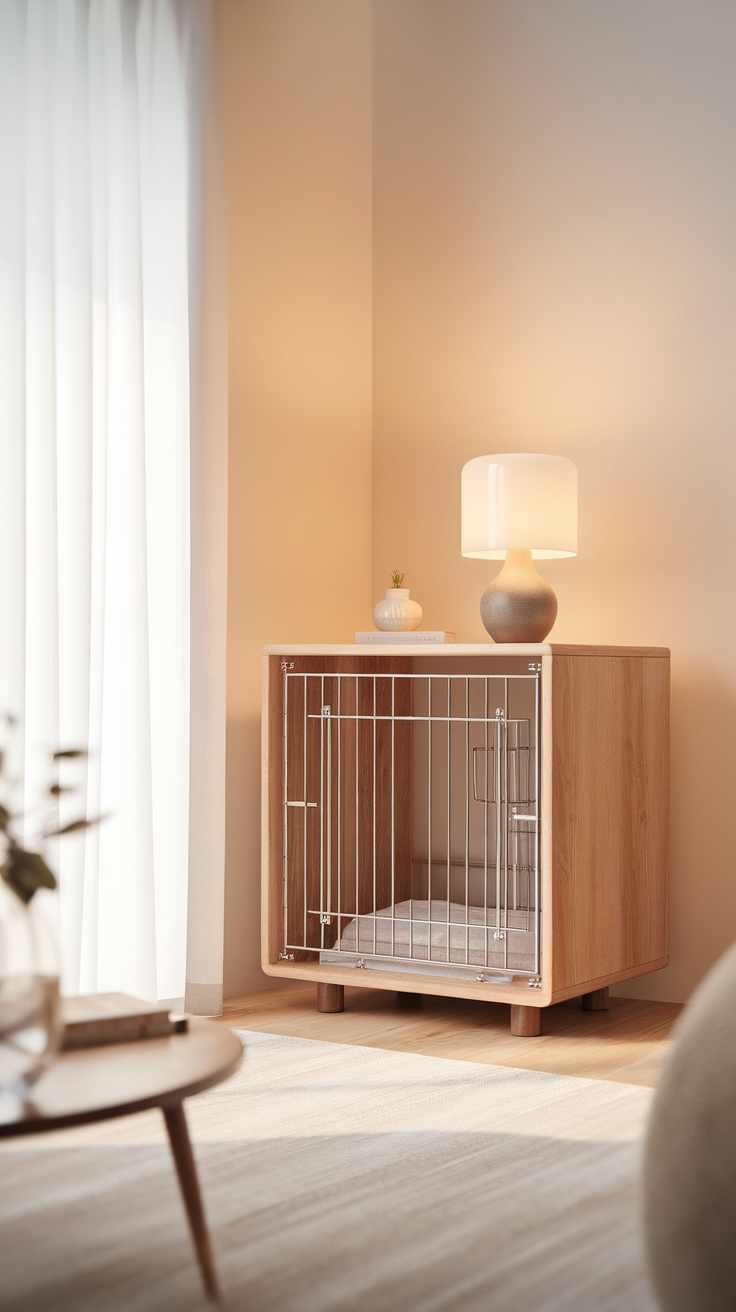
A crate doesn’t have to look like a crate. These days, the wire-cage-in-the-corner look is optional — and honestly, a little outdated. Here’s how to give your dog a safe den that also earns its keep in your living room.
Furniture-Style Crates: The Upgrade Worth Making
These are built to look like real furniture first, den second — end tables, benches, credenzas — with a functional crate hidden inside.
Why they work:
- Doubles as furniture: holds a lamp, drinks, or serves as extra seating
- Blends into decor: no visual "this is a cage" moment when guests walk in
- Keeps your dog central: they’re part of the room, not tucked away in a spare corner
Dress Up What You Already Have
If a full furniture-style crate isn’t in the budget right now, a well-fitted crate cover in a fabric that matches your space does a lot of the same visual work for a fraction of the cost.
Sizing Is Non-Negotiable
Before anything else — style, color, placement — make sure the crate actually fits your dog. Enough room to stand fully, turn around, and lie down stretched out, without so much extra space it stops feeling like a den.
FAQ
Will my dog actually like being in a stylish crate as much as a plain one? Yes — dogs respond to the size, shape, and coziness of the den, not the aesthetic. A furniture-style crate feels the same to them as a wire one, as long as it’s sized right.
Where’s the best spot to place a crate? Somewhere they can still see the room — a corner near, not away from, family activity. Total isolation can make crate time feel like punishment instead of a safe retreat.
How do I get my dog used to a new crate? Leave the door open at first, add their bed and a favorite toy inside, and let them explore on their own schedule. Never force them in — let it become their idea.
Final Thought
The right crate does two jobs at once: gives your dog a real den, and gives your living room a piece of furniture you’re not embarrassed by. That’s not too much to ask.