This post contains affiliate links. As an Amazon Associate, I earn from qualifying purchases, at no extra cost to you.
Your pup deserves a comfy den that doesn’t hog your square footage or wreck your aesthetic. These five smart crate-furniture ideas turn awkward corners and blank walls into hardworking, great-looking zones. Whether you rent a studio or squeeze a desk into your living room, these solutions blend with Ikea vibes and small-space living without sacrificing safety.
You’ll get practical layouts, compatible pieces, and DIY shortcuts that won’t require a workshop. Ready to make your dog’s crate look intentional instead of “last-minute”? Let’s build something both of you will love.
⭐ Our Top Pick: See it on Amazon
1. The “Entryway Console + Crate” Combo That Actually Organizes Life
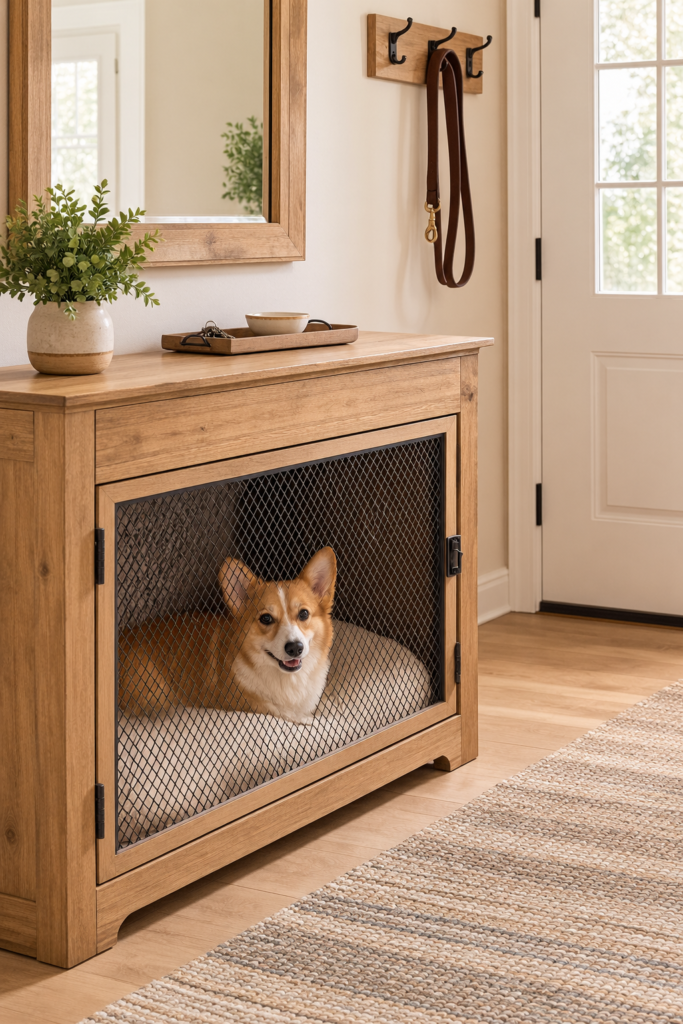
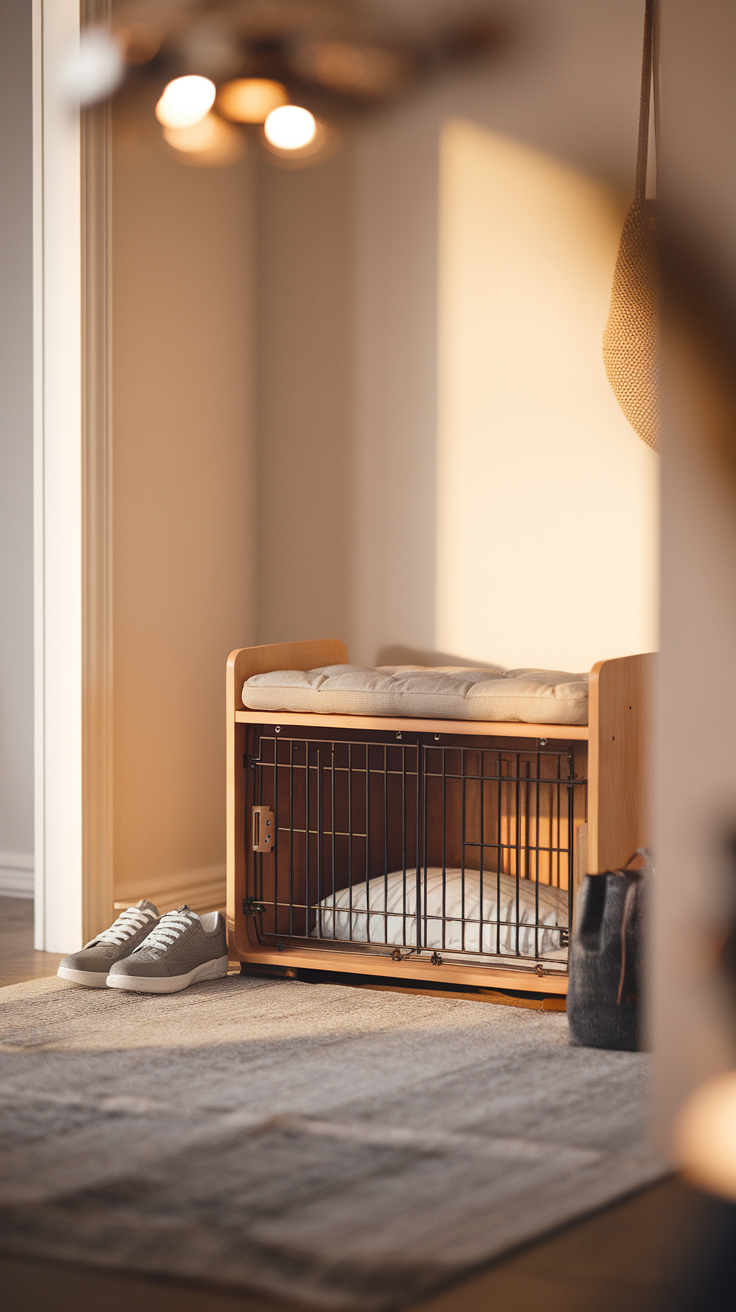
Entryways do the most with the least amount of square footage, so make your crate pull double duty as a landing spot. A console-height enclosure looks polished, adds a surface for keys and mail, and gives your dog a calm place to decompress after walks. It’s the easiest way to fake custom millwork without calling a carpenter.
How To Build It With Ikea Staples
- Slip a wire or furniture-style crate under an open console like the Ikea Vittsjö or a shallow Hemnes table. Confirm interior height clears your crate by at least 2 inches.
- Add a made-to-fit wood top if your console has gaps. Prefinished shelf boards work great.
- Hide clutter in matching baskets on the shelves above, and keep the crate unobstructed for airflow.
Smart Styling Tips
- Use shatterproof decor only—think framed art with acrylic glazing, faux greenery in a secured pot, and a tray for grab-and-go items.
- Mount hooks higher than crate height for leashes to avoid dangling cords near curious teeth.
- Place a washable, low-pile runner by the door and a non-slip crate mat inside for easy cleanup.
Safety First: Keep the tabletop lamp off the console if your dog can reach cords from inside the crate. Choose cordless, battery-operated lamps or wall sconces if you want light nearby.
Worth it if: Your entry feels chaotic and you need a defined landing zone. I’d skip this layout if your dog guards the door or gets overstimulated by traffic. Best for: Small foyers, studio apartments, and pups who settle quickly after walks.
2. The Media Unit Makeover: Crate Meets TV Stand Without Looking Clunky
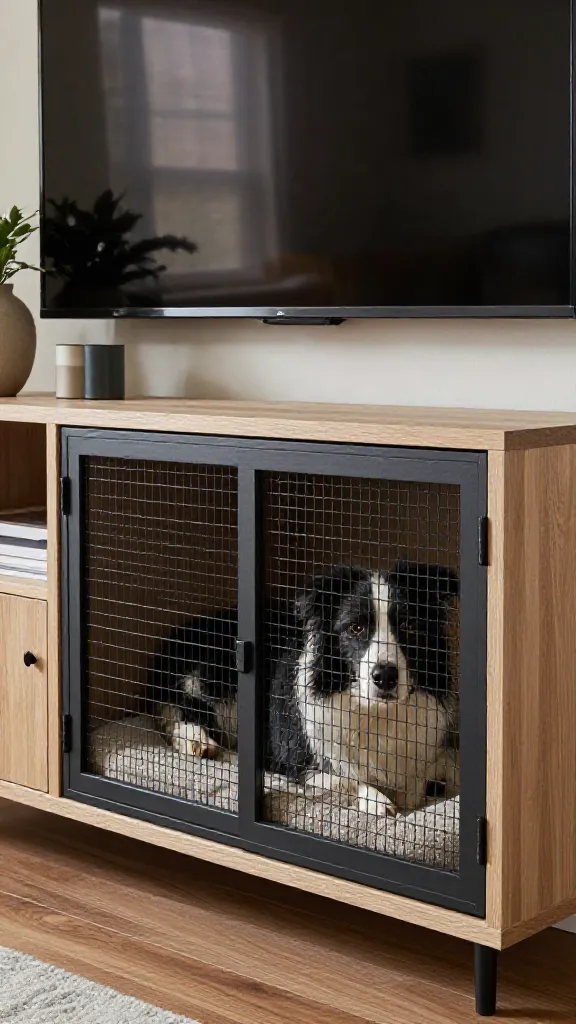
TV walls are prime real estate. Convert a low media cabinet into a sleek crate zone, then style the top like a standard console. You’ll reclaim floor space and your dog stays close during movie nights—win-win.
What To Look For
- A long, ventilated base like the Ikea Bestå frame with mesh doors or an open-cubby Kallax laid horizontally.
- Interior dimensions that exceed your dog’s length nose-to-tail when standing, plus enough head clearance when seated.
- Sturdy top that won’t sag under a TV—double-check weight limits.
DIY Conversions That Work
- Replace solid cabinet doors with metal grille panels or cane-style mesh for airflow. Add child-safety latches to keep doors secure.
- Line edges with U-channel trim to prevent snags. Sand everything smooth.
- Install a removable crate tray inside for easy cleaning. Measure twice before ordering.
Pro Tip: Mount the TV on the wall so you can center the crate opening away from heat-generating devices. Keep remotes and game controllers up high—chew temptation is real, FYI.
I’d pick this option if your living room pulls triple duty as lounge, office, and dining. I’d skip if your dog stress-pants when people cheer during sports. Best for: Shared spaces with tech, short-haired dogs who run warm, and people who love a clean front profile.
3. Side Table Sanctuary: Nightstand Or End Table That Doubles As A Den
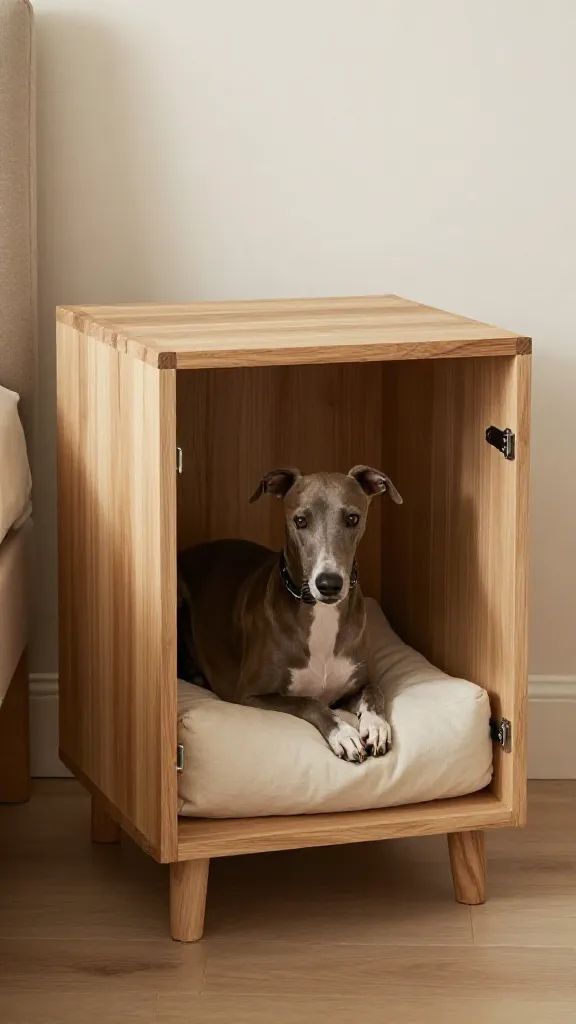
If you’re starved for space, tuck the crate beside your sofa or bed and make it act like a legit side table. You’ll free up room while keeping your pup near you at rest time. Bonus: it looks intentional when you match finishes to your existing furniture.
Layout And Sizing
- Choose a crate side table with a flush top and front or side entry. Confirm the door swings fully open without hitting walls or bed frames.
- For Ikea hacks, consider a Brimnes or Nordkisa nightstand with the lower section modified to fit a small crate insert with a ventilated door.
- Leave 1–2 inches around the crate walls for airflow if you’re building it in.
Finish And Function
- Use felt pads under the piece to prevent rattling on hardwoods.
- Top with a sturdy tray and soft-edge coasters—no glass decor within snoot range.
- Choose a washable cushion inside; zip-off covers save your sanity.
Safety Reminder: No candles on top. Opt for a weighty, battery-powered lantern or a small, dimmable table lamp with cord clips running behind the furniture, out of reach.
Worth it if you crave a minimal footprint and like your dog close by at night. I’d skip if your side table takes frequent drink spills. Best for: Bedrooms and compact living rooms, puppies that crate train near you, and light chewers.
4. The Kallax “Crate Wall” With Hidden Storage That Doesn’t Scream Pet Gear
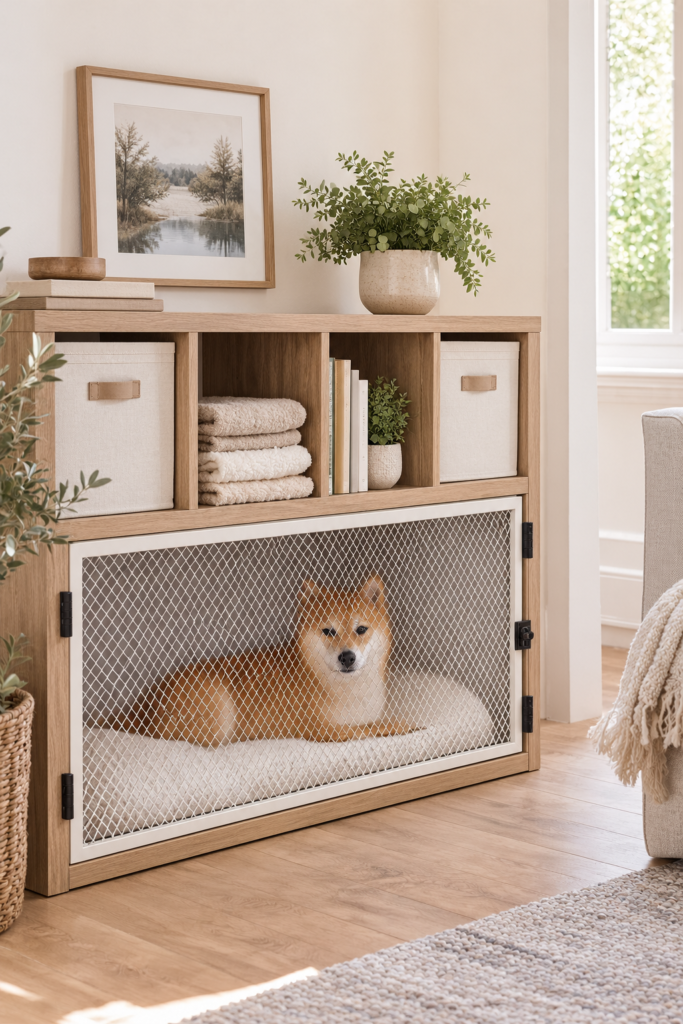
Kallax is an Ikea favorite for a reason: modular, inexpensive, and easy to hack. Turn the bottom row into a roomy crate bay while the upper cubes stash everything from grooming tools to extra linens. It reads like custom shelving without a custom price tag.
Build Steps
- Choose a 2×4 Kallax laid horizontally. Remove the vertical divider where the crate will slide in—reinforce the top panel with a steel flat brace underneath if needed.
- Add a vented facade using metal mesh framed with hobby wood, hinged to open outward. A simple slide latch keeps it closed.
- Protect interior panels with corner guards so paws don’t scuff particleboard. Add a fitted rubber mat under the bed.
Organization That Looks Polished
- Upper cubes: fabric bins for meds (out of reach), leashes, and grooming wipes. Label with subtle tags.
- Keep chewables and treats in sealed containers on higher shelves only.
- Style the top with a low-profile plant (fake), books, and a framed print so it blends with the room.
Safety Watchout: No dangling tassels or cords near the crate door. Secure the unit to the wall with anti-tip brackets—seriously, do not skip this.
I’d pick this if you want storage plus a single horizontal silhouette for a long wall. I’d skip if your dog is a heavy chewer who targets wood edges. Best for: Studios, family rooms, and renters who want max function per inch.
5. Under-Desk Or Workstation Crate That Keeps You Productive
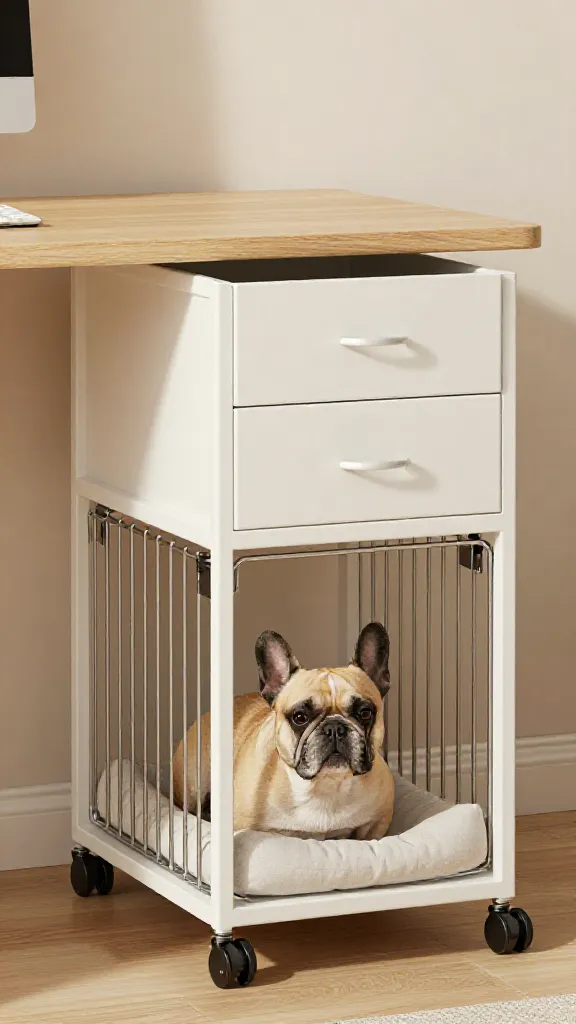
WFH life means your dog wants to be near your feet. Turn an open desk base into a calm nook so you can focus while they nap. It looks built-in and keeps your work surface clear of pet gear.
Desk Picks And Setup
- Choose a desk with an open underside like Ikea Alex drawer units flanking a solid tabletop, or a Lagkapten top on adjustable legs.
- Measure the knee well: you need room for both your legs and a crate. Try placing the crate off-center and a shallow rolling cart on the other side.
- Use cable trays or stick-on raceways to route cords high along the underside, far from the crate.
Comfort + Noise Control
- Line the crate with a machine-washable pad and a breathable cover on one side only to reduce visual distractions.
- Add rubber feet under the crate to eliminate vibration when you type or move your chair.
- Keep a water bowl in a no-spill base outside the crate, not inside near electronics.
Worth it if your dog shadows you during work hours and settles with white noise. I’d skip for dogs who lunge at rolling chairs. Best for: Home offices, bedroom nooks, and quiet creators who like tidy lines.
Common Mistake to Avoid
Don’t sacrifice ventilation for style. Fully enclosed cabinets with tiny cutouts trap heat and odors, and they can stress your dog. Aim for at least two open sides or a ventilated door and back panel, use a breathable bed, and keep the crate away from heaters, radiators, and sunny windows that overheat fast.
FAQ
How big should a dog’s crate be when built into furniture?
Your dog should stand without hitting the top, turn around easily, and lie fully stretched. As a rule of thumb, add 2–4 inches to your dog’s standing height and body length (not including the tail). When in doubt, size up and pad with a fitted bed.
Is cane, rattan, or mesh safe for crate doors?
Choose sturdy metal mesh or metal grille for chewers. Cane and rattan look great but they invite nibbling, so they’re best for calm adult dogs. If you use woven materials, reinforce with a metal frame and monitor for damage.
Can I put a cushion or cover in the crate without overheating?
Yes, pick a breathable, washable pad with no loose stuffing and avoid foam that traps heat in summer. If you use a cover, leave at least one full side uncovered for airflow. Rotate seasonally—lighter fabrics in warm months, quilted pads in winter.
How do I keep the crate furniture from tipping?
Anchor tall units to studs with anti-tip brackets, even low Kallax builds. Add felt pads for stability on slick floors, and keep heavy items on lower shelves. If the crate sits inside a cabinet, secure the base to prevent shifting when your dog enters.
What finishes are safest for dogs who lick or nudge the furniture?
Use low-VOC water-based polyurethane or natural oils designed for indoor furniture, and let them cure fully per the manufacturer’s timeline. Avoid peeling veneer edges. Round over any sharp corners with sandpaper before finishing.
Where should I place the crate in a tiny apartment?
Choose a low-traffic spot with a clear sightline to you—next to the sofa, under a desk, or in an entry corner with a console above. Avoid hot spots like radiators and direct sun, and keep at least one foot of breathing room around the door for easy access.
Ready to make your space feel intentional and your dog feel secure? Pick one idea that fits your layout, measure carefully, and commit to good ventilation and washable textiles. You’ll end up with a streamlined room and a happier sidekick.
As an Amazon Associate, I earn from qualifying purchases.