This post contains affiliate links. As an Amazon Associate, I earn from qualifying purchases, at no extra cost to you.
Got a pup who vanishes under blankets like a furry submarine? Let’s give them a snug little den that actually looks good in your home. These designs balance burrow-worthy comfort with decor-friendly style, so your living room doesn’t scream “kennel zone.” Expect clever shapes, washable fabrics, and layouts that keep your dog relaxed and your place looking put-together.
⭐ Our Top Pick: See it on Amazon
1. The Hooded Donut Nester With a Supportive Rim
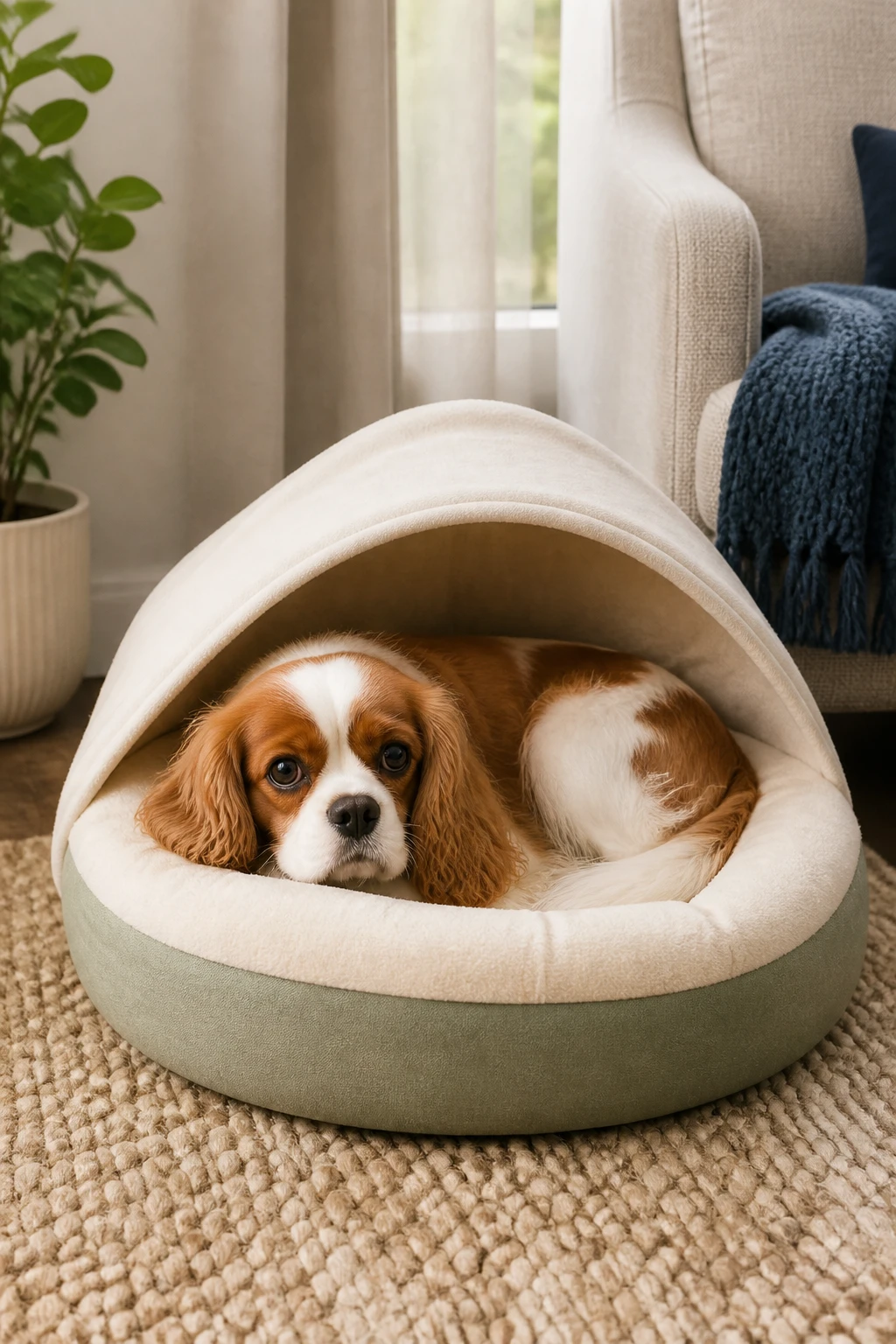
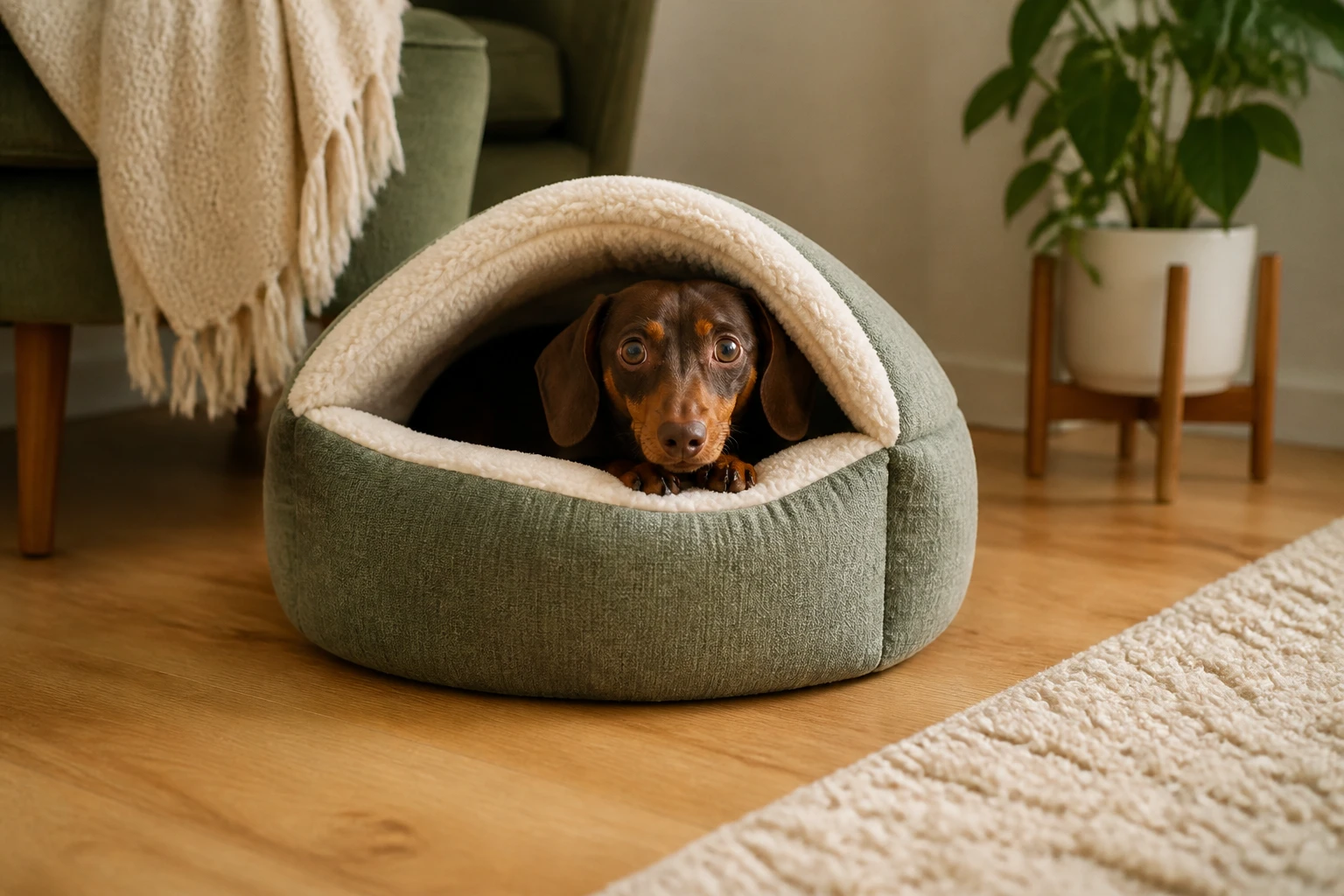
Think of a classic donut bed with a lightly structured hood they can nose under. That rim gives neck support while the hood creates a dim, secure nook. It’s a win for anxious pups and small breeds who burrow on instinct.
What To Look For
- Removable hood insert (flexible wire or foam) so it doesn’t collapse on timid dogs.
- Bolster height about 6–9 inches for small dogs, 10–12 inches for medium, so they feel enclosed without climbing a wall.
- Machine-washable cover with a hidden zipper and durable stitching.
- Grippy base to prevent the whole bed from “surfing” across hardwood.
Set it in a low-traffic corner away from vents. Add a thin blanket inside and let them dig away. I’d pick a neutral upholstery-style fabric that looks like a floor cushion, not a pet store marshmallow.
Tips
- Place a worn T-shirt under the inner cushion to add your scent. Instant calm.
- For skittish pups, prop the hood slightly open with a rolled towel for the first week.
- Skip faux fur if your dog overheats; choose breathable microfiber or twill.
Best for: Small to medium burrowers, apartment living rooms, anyone who wants an attractive “nest” that blends with sofas. Worth it if your dog loves to tuck their head under blankets.
2. The Blanket-Covered Cave Bed (Pocket-Style Snuggle Sack)
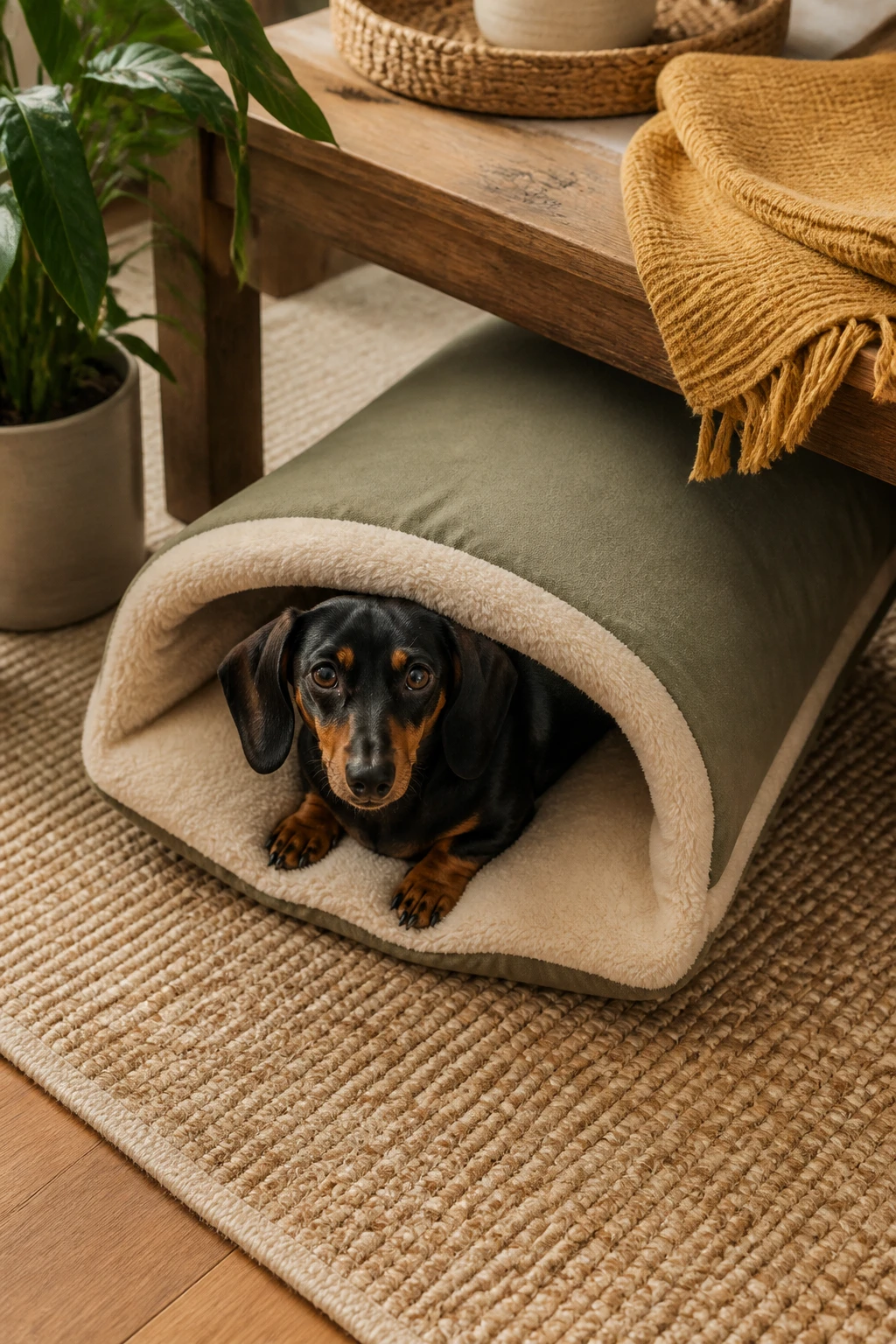
This one looks like a plush mattress with an attached quilt you can lift. Dogs slide inside the pocket and snooze in a little tunnel. It’s flatter than a donut, so it fits under coffee tables or at the foot of your bed.
Key Points
- Structured pocket with a lightweight insert or double-layered batting so the “lid” doesn’t pancake.
- Lining matters: Choose short-pile fleece or microsuede to avoid trapping fur like Velcro.
- Edge reinforcement around the opening so persistent diggers don’t shred seams.
Layer a thin memory foam pad inside the base if your dog has joint issues. IMO, I’d skip ultra-lofty fill that clumps after one wash. Go for a two-piece design: base + attached cover with separate zippers, so laundry day doesn’t turn into a wrestling match.
DIY Option
- Buy a rectangular bed with a zipper cover.
- Sew or Velcro a fleece panel along one long side to create the pocket.
- Add a flexible plastic quilting strip or foam rod along the lip for shape (fully enclosed in fabric).
Keep it a few feet from space heaters and fireplaces. Fabric + heat sources = hard pass. Best for: Dogs who love blankets but dislike tall bolsters; bedrooms and TV rooms where you want a low-profile look.
3. Furniture-Style Crate End Table With a Plush Tunnel Pad
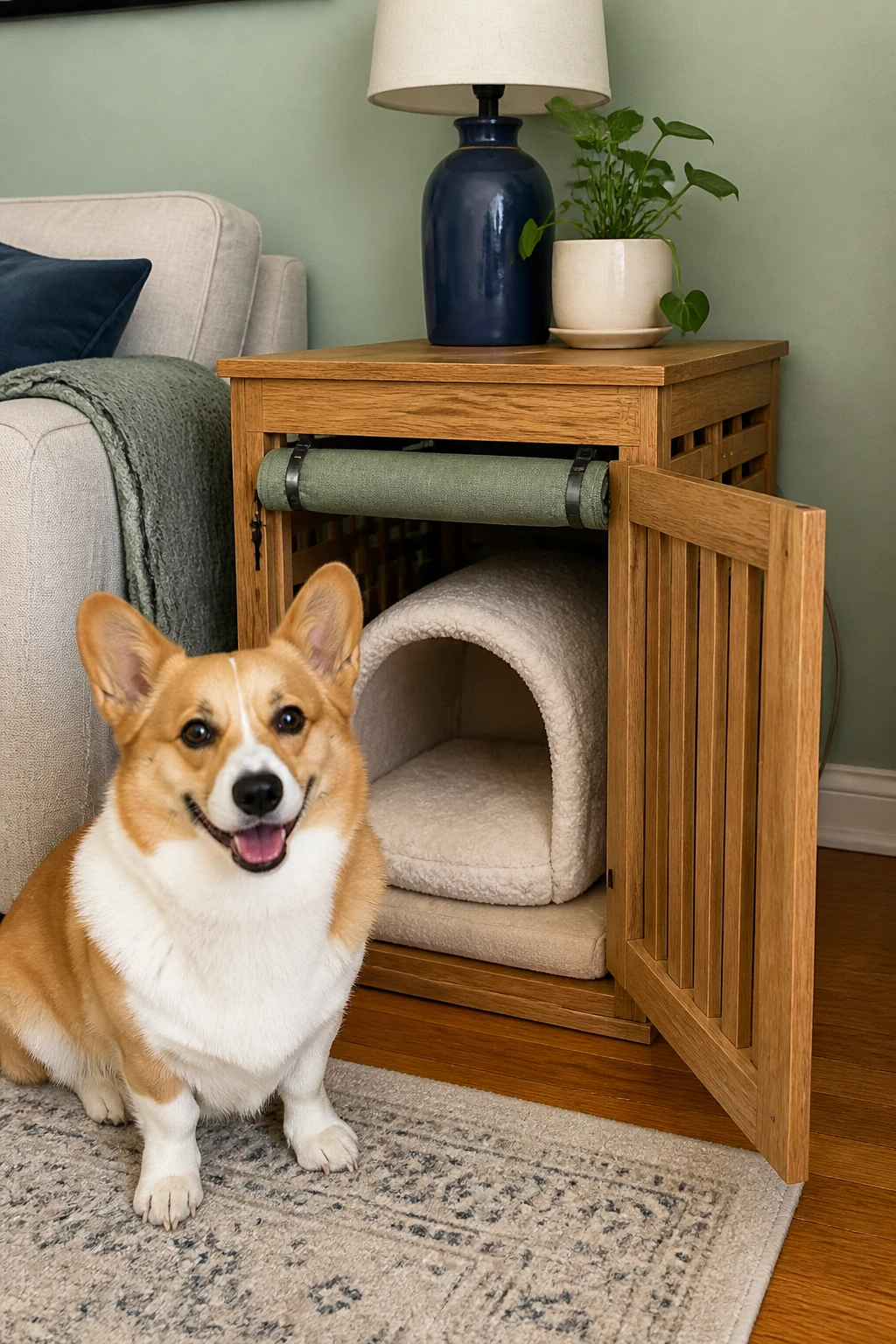
Dual-purpose furniture for the win. A wooden or metal crate that looks like an end table gives you surface space and your dog a dark, calm den. Slide in a burrow-friendly tunnel pad or a bolster bed with a draped cover to create a mini cave.
How To Set It Up
- Choose slat spacing that feels private but ventilated; add a breathable crate cover with roll-up sides.
- Pad the floor with a 1–2 inch orthopedic insert and a soft tunnel bed on top.
- Cable management for lamps: route cords behind the table and secure with cord clips so chewing isn’t tempting.
Want it to pass the vibe check? Match the crate finish to nearby furniture. Walnut or matte black usually blends with most decor. I’d pick a cover in canvas or twill—no dangling ties. And if your dog shows any history of chewing zippers or wood, supervise at first and remove the cover until you’re confident.
Pro Tips
- Place rubber feet under the crate to prevent rattling on hard floors.
- Skip scented sachets or essential oils inside; dogs’ noses are sensitive.
- Add a silicone water mat beside, not inside, to prevent damp bedding.
Best for: Open-concept living rooms, medium dogs who prefer a “room” over a pillow, households that want hidden-in-plain-sight pet zones. Worth it if you like tidy lines and multipurpose furniture.
4. The Tent-Style Pup Teepee With Weighted Flaps
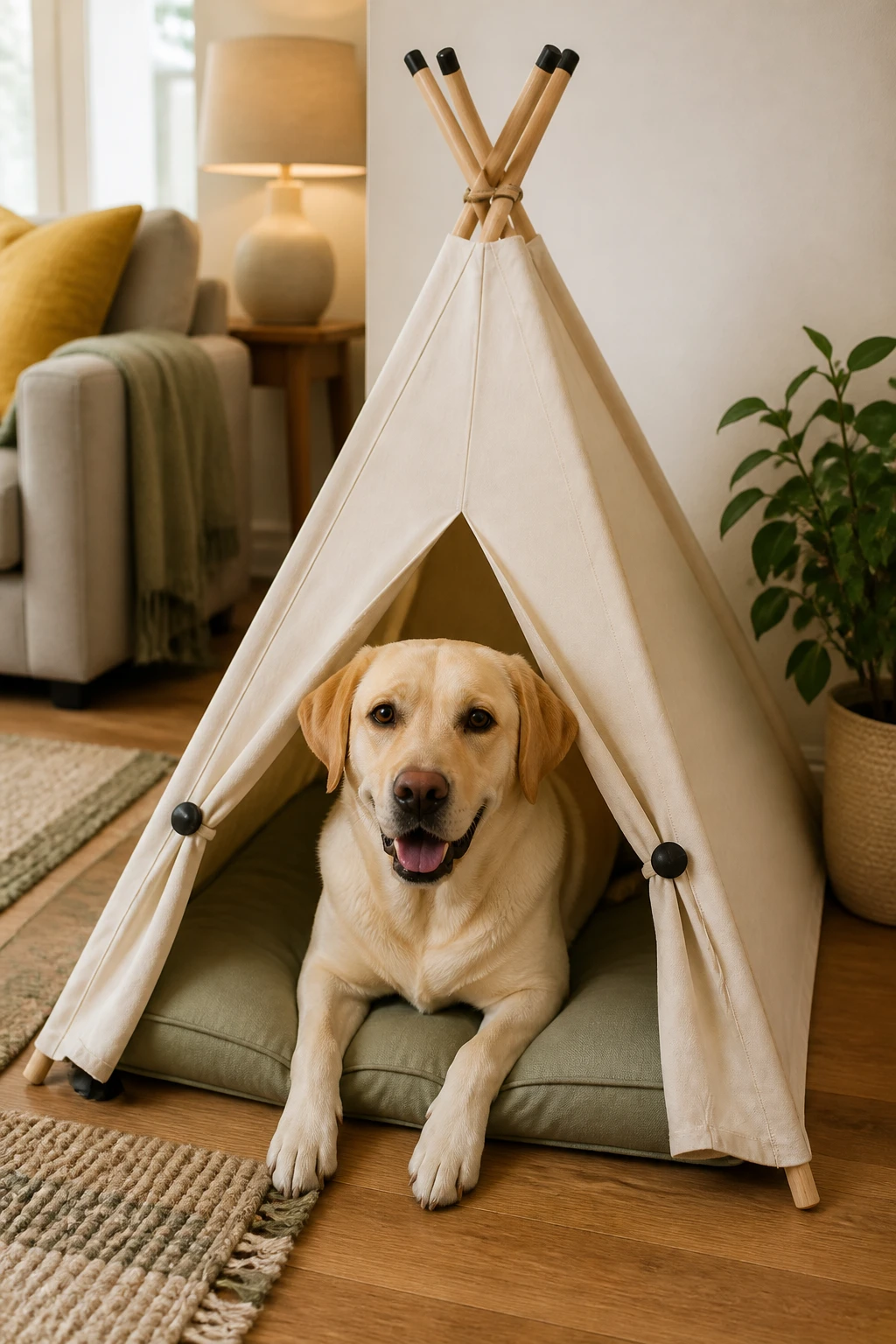
A-frame fabric tents give dogs a private nook without feeling buried. The slightly open front lets them peek out, which helps nervous pups who like to monitor the room. Bonus: it looks intentional, not like a pile of blankets exploded in your corner.
Materials That Work
- Heavy cotton canvas or linen blend for structure and airflow.
- Wooden dowels with rubber caps for stability, no sharp ends.
- Weighted hem or snap closures on the flap so it stays put but lifts easily.
Slide a rectangular cushion or thin bolster inside and add a washable throw. If you’ve got a chewer, avoid leather ties; use sewn channels for the poles. I’d skip fringe or tassels—tempting chew targets and not worth the vet bill.
Placement & Care
- Angle the entrance away from busy walk paths to minimize startle reactions.
- Use felt pads under the teepee legs to protect floors.
- Vacuum seams and corners weekly; hair loves hiding there.
Best for: Small to medium dogs, Scandinavian or boho rooms, renters who want something light and moveable. Worth it if you want a defined “zone” that doesn’t hog space.
5. The Under-Console Burrow Nook With a Cuddler Insert
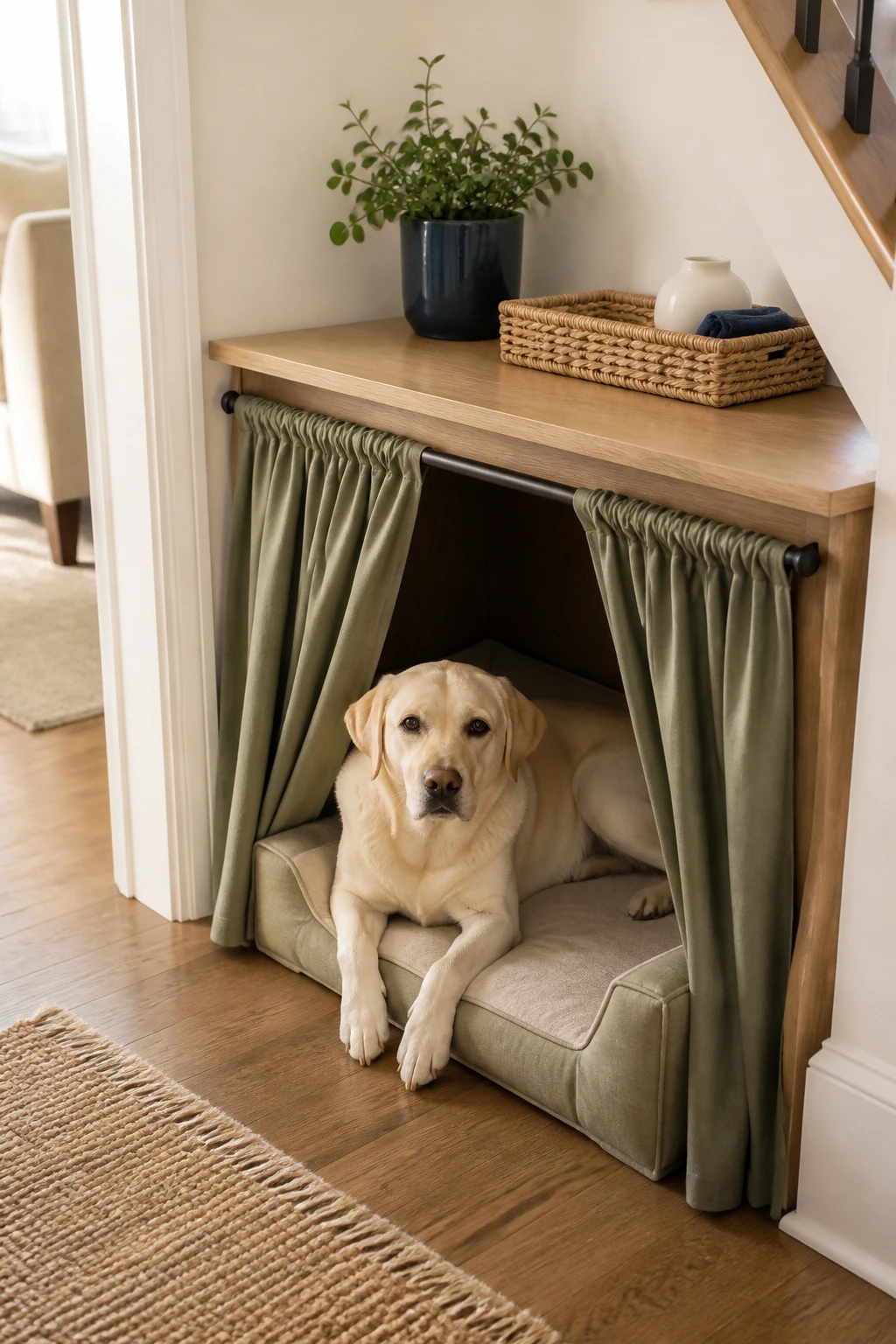
Turn that dead space under a hallway console or desk into a cozy hideaway. Add a low-profile cuddler bed and a tailored curtain panel on a tension rod to create a soft doorway. Your dog gets a quiet retreat; you get clean lines.
Build It Out
- Measure height so your dog can stand and turn comfortably—add 2–3 inches clearance.
- Use a washable curtain (cotton duck or twill) with Velcro tabs for quick removal.
- Pick a cuddler bed with a U-shaped rim so they can push their nose under the side like a mini cave.
Mount felt bumpers on the console’s inner edges so nothing scratches. Keep chargers and power strips off the floor—use adhesive cable trays high on the back. I’d pick stain-resistant fabric in a color close to your rug so the nook blends seamlessly.
When To Use
- Great for dogs who lounge near you while you work.
- Ideal in narrow entryways where a full crate won’t fit.
- Not for heavy chewers unless you test with the curtain open first.
Best for: Compact homes, dogs who like to nap near people but still feel tucked away. Worth it if you need an elegant solution in a small footprint.
Common Mistake to Avoid
Don’t size down. A tight den sounds snuggly, but cramped beds cause restless sleep and joint strain. Measure your dog from nose to base of tail while stretched, then add 4–6 inches of length and width. Also avoid beds with non-removable covers—fur, drool, and the occasional muddy paw happen. Finally, skip anything with dangling strings, beads, or metal charms. If it wiggles, they’ll chew it.
FAQ
How do I choose the right size for a burrowing bed?
Measure your dog in a natural sleeping curl and stretched long. Choose a bed that matches the longer measurement plus at least a few inches so they can turn comfortably. For hooded beds, check interior height so the cover doesn’t rest on their back constantly.
What fabrics work best for dogs that shed a lot?
Short-pile fleece, microsuede, and canvas shed fur with a lint roller. Avoid shaggy faux fur if you hate vacuuming; it traps hair. Look for tight weaves, hidden zippers, and covers that wash in cold and air-dry without shrinking.
Is a covered bed safe for puppies?
Yes, if you pick breathable materials and avoid small parts. Keep the hood lightly structured so it won’t collapse, and supervise at first to watch for chewing. No heated pads, no cords, and nothing scented inside the den.
Where should I place a burrowing bed?
Choose a quiet corner away from direct sun, drafts, and busy doorways. Many dogs relax more with a wall at their back and a view of the room. In shared spaces, furniture-style crates or under-console nooks blend well and cut visual clutter.
How often should I clean a burrow-style bed?
Wash covers every 1–2 weeks, or sooner if it smells like “wet dog chic.” Vacuum seams between washes, and air out foam inserts in the sun for a few hours to freshen. Always follow tag instructions to prevent shrinking.
My dog chews everything. Which design should I try first?
Start with a furniture-style crate end table and a tough canvas mat or a pocket bed with reinforced seams. Skip tassels, buttons, and dangling ties. Reward calm settling and supervise for the first week to build good habits.
Ready to give your burrow-loving buddy the snug den of their dreams? Pick one of these setups, place it in a quiet spot, and watch your dog claim it like royalty. You’ll get a calmer pup—and a neater home—without sacrificing your style.
As an Amazon Associate, I earn from qualifying purchases.