This post contains affiliate links. As an Amazon Associate, I earn from qualifying purchases, at no extra cost to you.
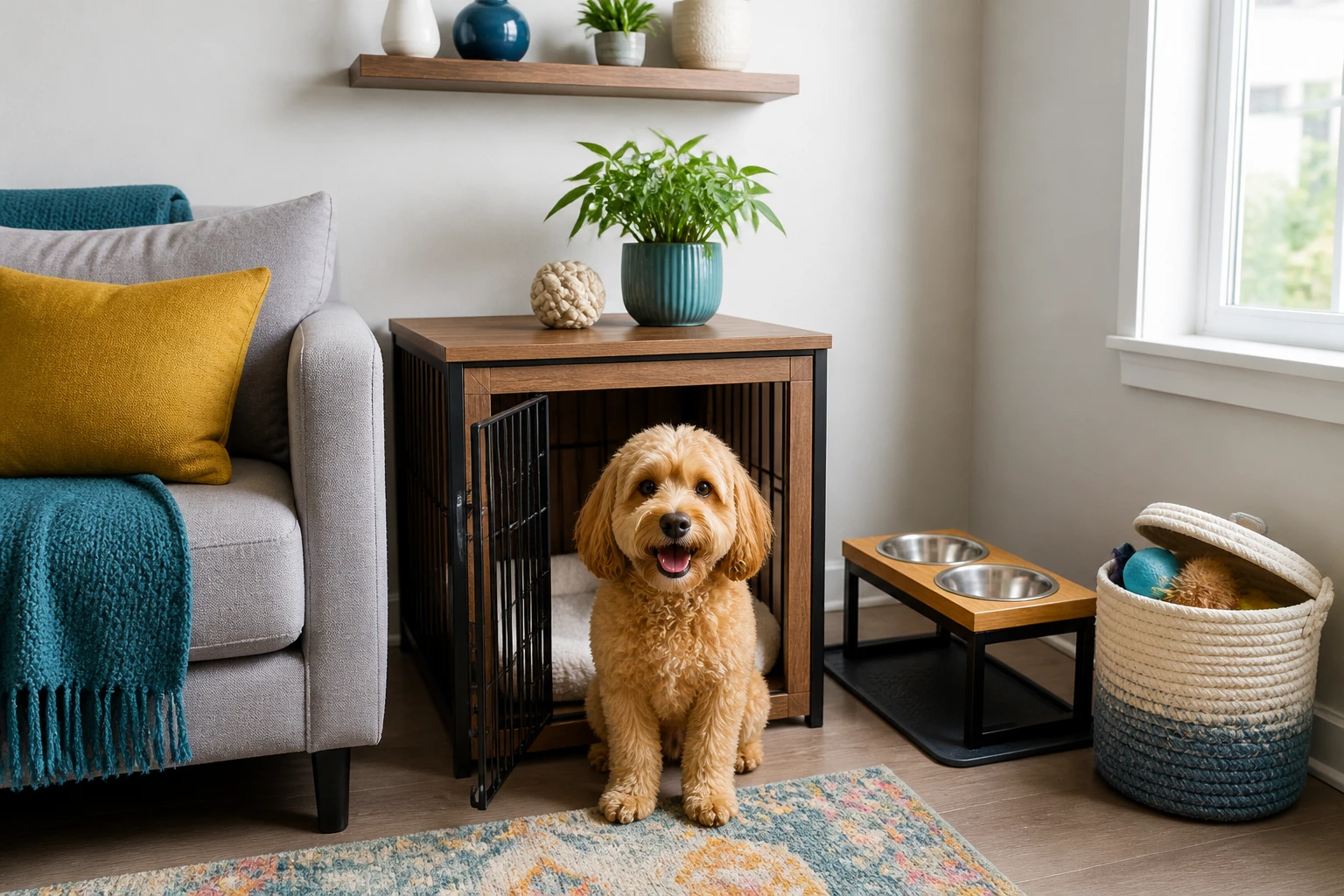
Your pint-size pup deserves a thoughtful setup, even if your square footage is… aspirational. These 6 ideas carve out legit comfort zones without eating your living room. You’ll hide the clutter, streamline routines, and make everything look intentional. Ready to reclaim your floor and give your dog a cozy hangout, all at once?
⭐ Our Top Pick: See it on Amazon
1. Turn the Crate into a Credenza or Side Table
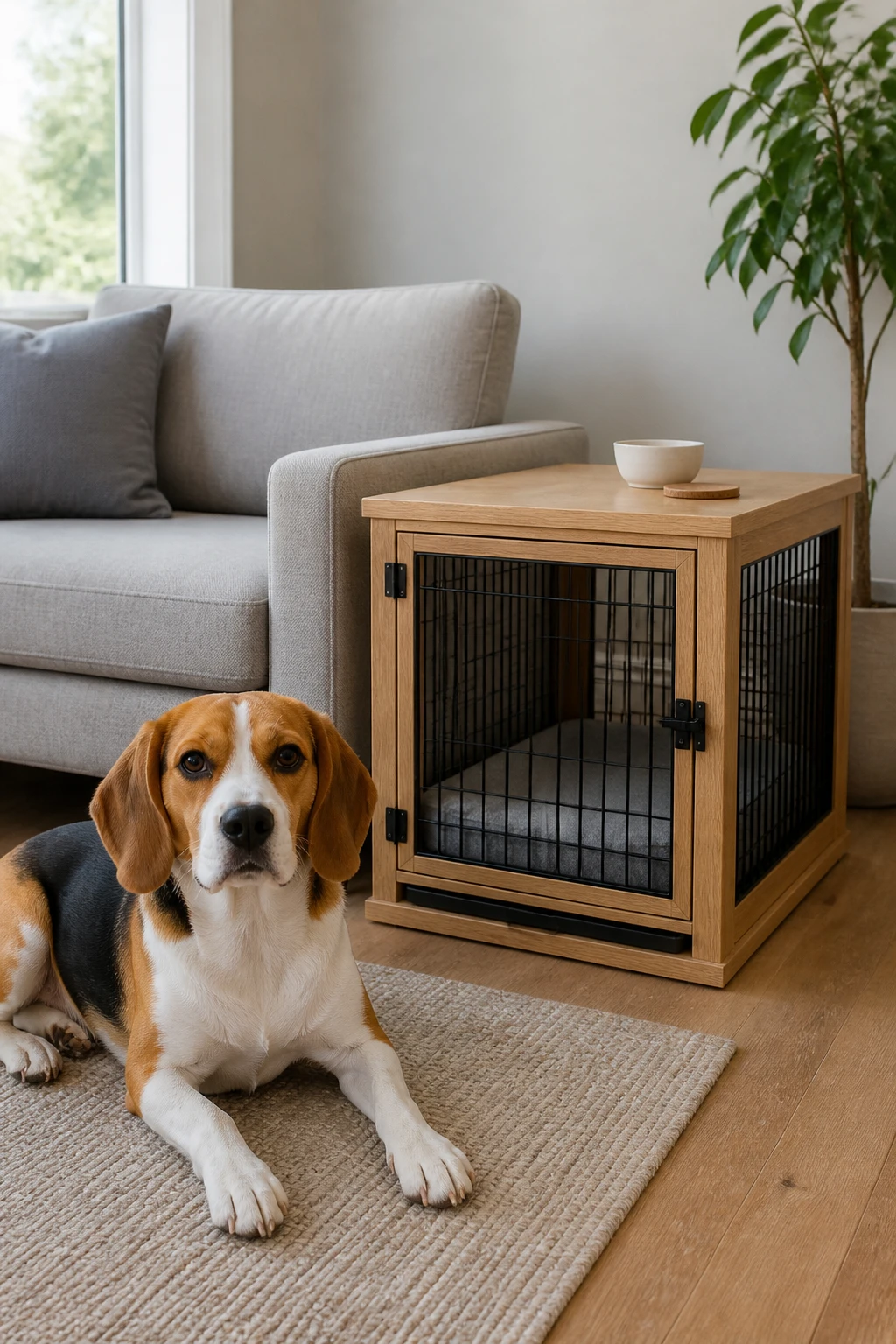
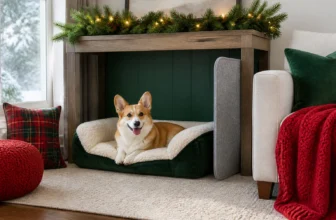
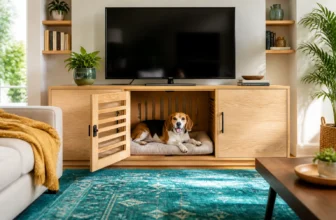
Crate furniture hides the kennel inside a cabinet that moonlights as a media console or end table. You get clean lines; your dog gets a restful den with airflow and visibility. It’s the fastest way to blend function with decor in a tight space.
What to Look For
- Ventilation: Slatted sides or mesh panels so your dog can breathe easily.
- Easy cleaning: Removable tray and wipeable finishes.
- Secure latches: Smooth, chew-resistant hardware.
- Real dimensions: Your pup should stand, turn, and sprawl without bumping the roof.
Setup Tips
- Place it away from radiators, space heaters, or sunny windows that overheat the unit.
- Use rubber bumpers under the credenza to stop wobble on slick floors.
- Add a low-profile orthopedic mat; skip fluffy fibers small dogs might chew.
- Decorate on top with shatterproof objects and faux greenery—keep everything out of nose reach.
I’d pick a unit with front and side doors for flexible placement. I’d skip designs with bars that catch collars. Worth it if you want a “where did the crate go?” look that doubles as actual furniture.
Best for: Studio apartments or small living rooms where every piece needs a job.
2. Slide-Out Feeding Station That Disappears When You’re Done
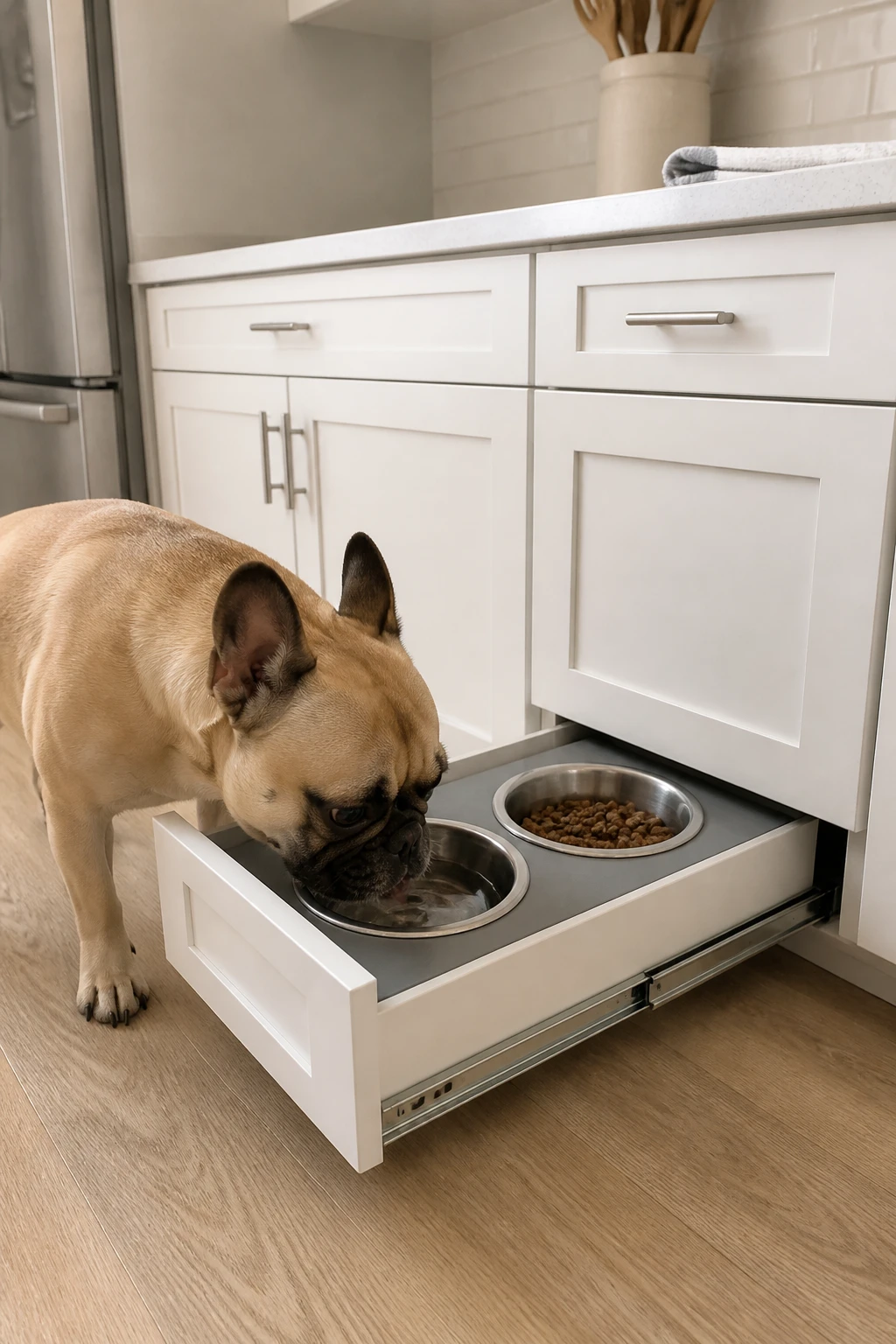
A pull-out feeder inside a base cabinet (or a slim rolling cart) keeps bowls off the traffic path. It avoids puddles underfoot and looks neat when guests drop by. With the drawers closed, you also reduce scavenging when you’re out.
Ideas That Work in Rentals
- Rolling caddy: A narrow cart with a silicone mat, two stainless bowls, and a bin for kibble.
- Freestanding shelf cube: A cube shelf turned sideways with a slide-in tray on felt pads.
- Removable drawer insert: If you have a spare cabinet, add a no-drill tray insert.
Practical Tips
- Position water on the outer edge for easy refills; food goes toward the back.
- Use anti-slip mats so bowls don’t skate on hardwoods.
- Keep cords far away—no robot vacuum cords near the bowls, FYI.
- Choose metal or ceramic bowls; pass on thin plastic that scratches and harbors odors.
I’d pick stainless bowls with a slight lip so they stay put. I’d skip raised stands for most toy breeds; throat and joint angles don’t need the height. Worth it if you hate staring at dishes between meals.
Best for: Kitchens or dining corners that need tidiness on demand.
3. Under-Bed Den Drawer for Nap Time Nirvana
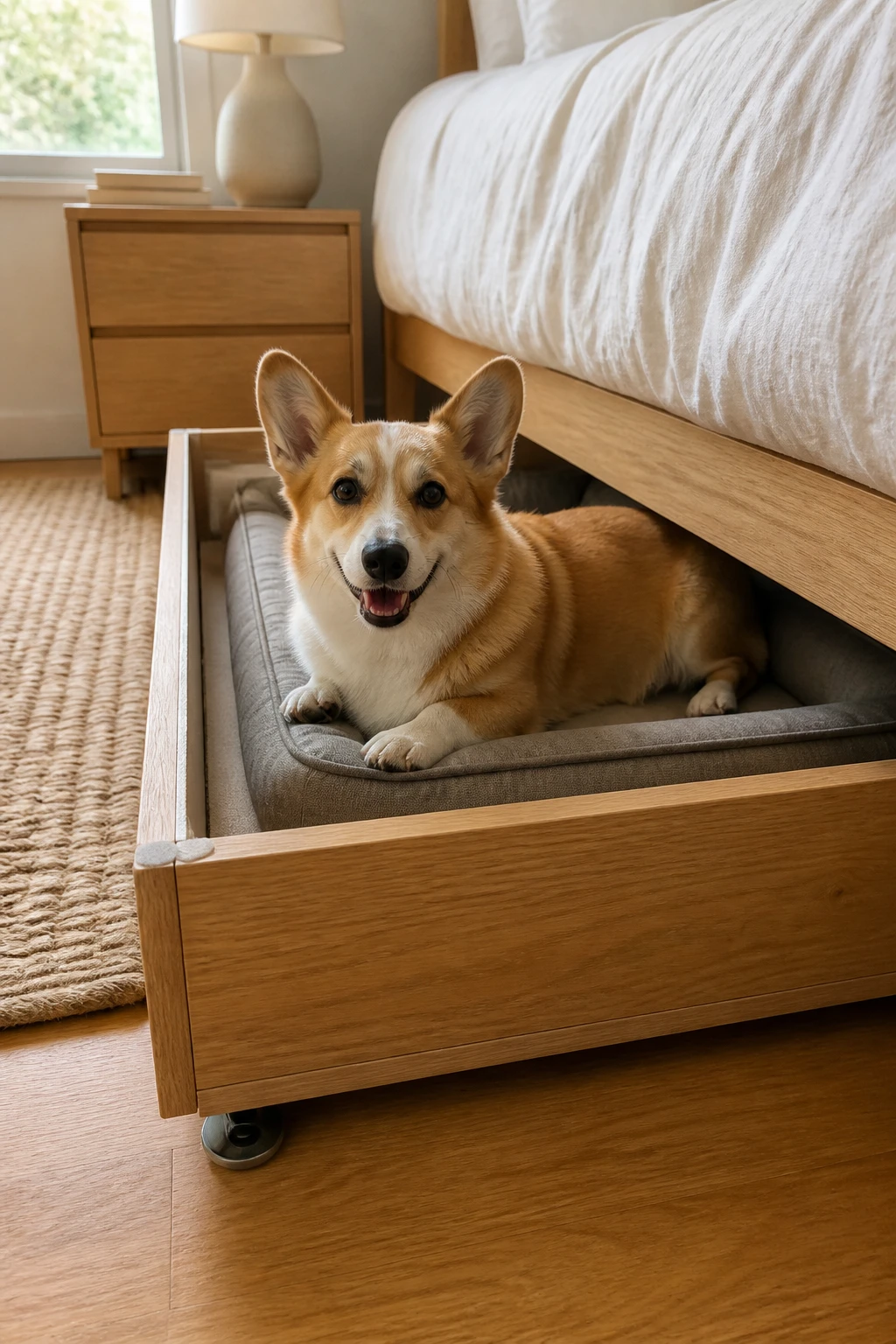
Put that lonely gap under your bed to work. A shallow drawer on casters holds a bolster bed and slides out for evenings, then tucks away to free up space. Your dog gets a dark, restful nook without sacrificing the look of your bedroom.
How to Set It Up
- Measure bed clearance and buy a low-profile bed that fits comfortably with room to pull out.
- Line the drawer with a washable cover; secure it with Velcro strips to prevent bunching.
- Attach felt pads or rubber wheels to protect floors and reduce rattling.
- Keep it clear of wall outlets—no cords dangling into the drawer, ever.
Training Micro-Plan
- Slide the drawer out at first and drop a few bits of regular kibble on the bed.
- When your dog chooses the spot, quietly push the drawer two inches in, day by day.
- Close only when your dog can exit freely—this is a den, not a trap.
I’d pick a drawer with front cutouts for airflow. I’d skip lids; you want easy access and constant ventilation. Worth it if you love a serene bedroom and a pup who prefers a dim retreat.
Best for: Bedrooms with platform beds or frames at least 7 inches off the floor.
4. Window Bench with Storage for Sunbathing and Stashing
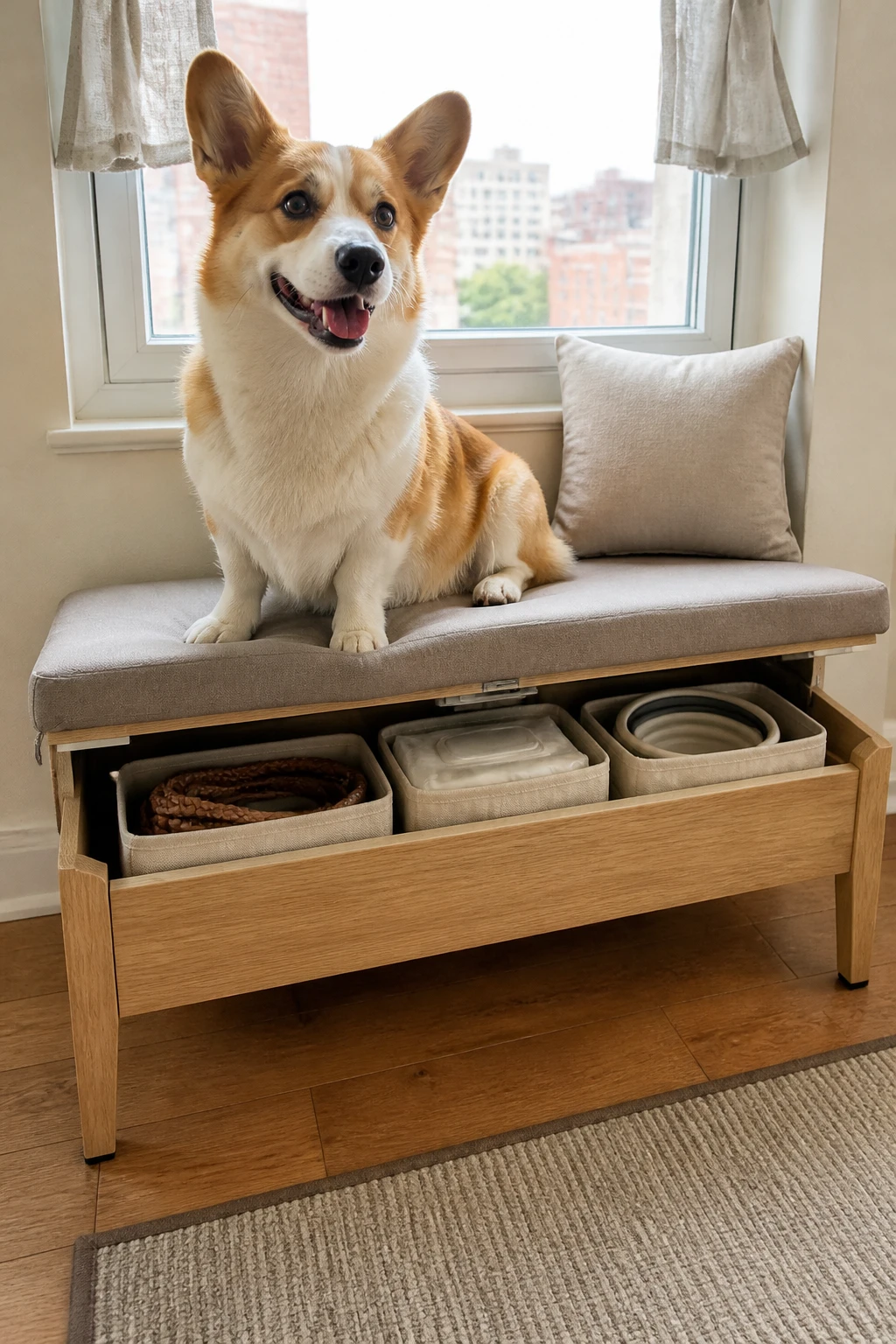
Dogs adore a lookout. A slim bench under the window gives your tiny sidekick a safe perch and hides supplies inside. Bonus: it doubles as seating when friends come over.
Key Points
- Choose a bench that anchors to the wall or sits on grippy feet—no wobble allowed.
- Add a non-slip cushion with zippered, washable covers.
- Store leashes, wipes, and travel bowls inside in labeled fabric bins.
- Keep curtains short or tie them up high so your dog doesn’t chew dangling fabric.
Safety Reminders
- Don’t place it where the sun turns the cushion hot; try light fabrics that stay cool.
- Avoid blind cords near the bench; secure them with a cleat or clip.
- Skip glass decor on the sill; use shatter-resistant accents placed out of reach.
I’d pick a bench with slow-close hinges so little paws don’t get pinched. I’d skip narrow tops under 12 inches deep—too tippy for lounging. Worth it if your dog spends half the day chasing sunbeams.
Best for: Living rooms and bedrooms with street views or quiet courtyards.
5. Foldable Playpen That Moonlights as a Room Divider
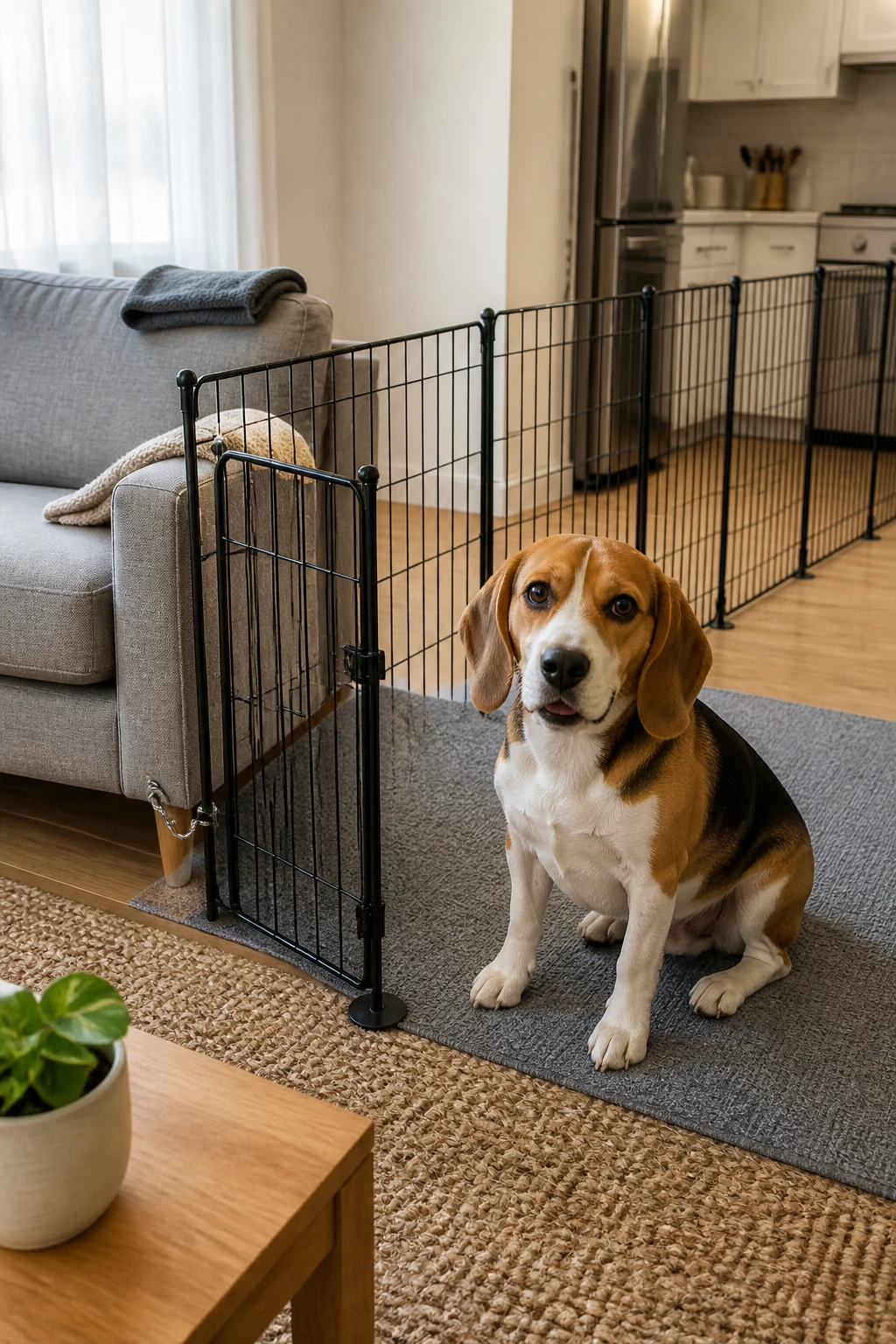
An exercise pen (ex-pen) creates a flexible zone for downtime, guests, or quick drying after rainy walks. It folds flat, slides behind the sofa, and pops up only when needed. In small apartments, that kind of versatility is gold, seriously.
Smart Setup
- Opt for panels with rubber feet so they don’t skate across slick floors.
- Place a washable rug or mat inside for traction and warmth.
- Clip the pen to stable furniture if your dog tries to nose it open—no zip ties to electrical cords, ever.
- Keep it away from heaters, unstable side tables, or anything with sharp corners.
Pro Uses
- Divide the living area from the kitchen during meal prep.
- Create a puppy zone for naps when friends visit.
- Block access to the entry door for “I just met the delivery driver” moments.
I’d pick a height that’s 6 to 12 inches taller than your dog’s shoulder. I’d skip ultra-light plastic panels for door-dashers. Worth it if you crave boundaries that appear and disappear on your terms.
Best for: Open-plan studios or long living rooms where you want flexible sections.
6. Closet Nook Conversion for a Calm Retreat
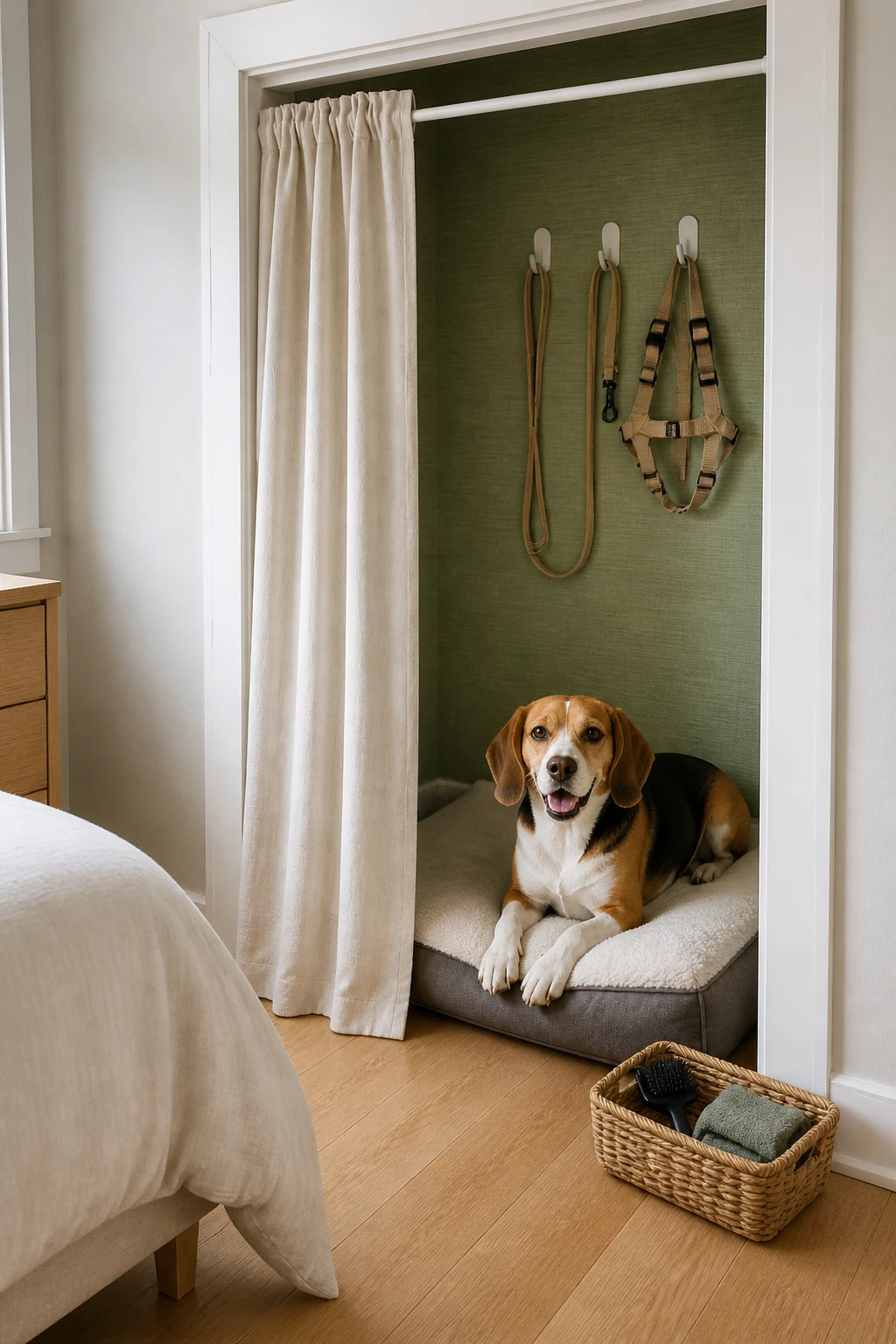
Half a closet can become a peaceful canine alcove. Remove lower shelving, add a mat, and hang a fabric curtain instead of a door for airflow. It looks clean, keeps clutter contained, and gives anxious pups a predictable hideout.
Quick Conversion Checklist
- Use peel-and-stick wallpaper or paint in a mid-tone (dark enough to feel den-like, not cave-dark).
- Install Command hooks for leashes and harnesses up high.
- Place a low-profile bed and a shallow basket for grooming supplies only—no edible items stored inside.
- Mount a battery puck light with a motion sensor, but position wires and batteries out of reach.
Placement Tips
- Keep at least 3 inches of space above the bed for airflow.
- Avoid closets with hot water heaters or HVAC access—heat and noise stress dogs out.
- Choose a breathable curtain fabric; skip heavy drapes that trap heat.
I’d pick a washable runner at the threshold to catch fur and dust. I’d skip scented sachets or diffusers—dogs’ noses say “why though?” IMO. Worth it if your pup needs a sanctuary that looks like part of the floor plan.
Best for: One-bedroom apartments with hallway closets or pantry corners.
Common Mistake to Avoid
Don’t overfill your dog’s area with stuff. A compact zone still needs clear airflow, safe exits, and zero dangling cords. Skip decor that invites chewing—no fringe, tassels, or fragile pieces near the floor. And don’t park beds or crates next to heaters, drafty windows, or sun patches that turn into mini saunas, seriously.
FAQ
How much space does a small dog actually need?
Focus on zones, not square footage. A restful den the dog can fully turn in, a feeding corner with non-slip footing, and an open lane to the door usually do the trick. If your pup loves to sprint indoors, keep one longer path clear of furniture.
Is crate furniture safe for daily use?
Yes—if it’s ventilated, correctly sized, and placed away from heat sources. Look for smooth hardware, sturdy floors, and non-toxic finishes. Add a fitted mat that doesn’t shift, and never hang lights or decor on the crate.
Where should I put the water bowl in an apartment?
Park it on a hard surface near a wall to minimize splashes. Use a silicone mat and pick a low, wide bowl for stability. If you have a robot vacuum, keep cords and charging docks far from the bowl so nothing tangles or spills.
What rugs and materials actually hold up?
Indoor-outdoor rugs, flat-weave runners, and performance fabrics win. They resist stains and dry quickly after wet paws. Choose shatter-resistant accents and faux greenery placed high; avoid loose strings or tiny decor at nose level.
Can I put my dog’s bed by the window?
Absolutely, if you manage temperature and cords. Use a bench or platform with a non-slip cushion and anchor it to prevent tipping. Secure blind cords out of reach and rotate cushions if the sun gets intense during certain hours.
How do I keep everything looking neat without hiding essentials?
Create a home for each category: leashes on wall hooks, grooming in a labeled bin, and bowls in a slide-out setup. When items return to the same place, visual clutter vanishes. Trust me, it makes weekday mornings way easier.
Small apartment, small dog, big possibilities. Pick one of these setups to start—then layer in storage and surfaces that genuinely serve your routine. Your place will feel calmer, and your dog will settle faster because the layout finally makes sense.
🛠️ Short on space? Build a crate that doubles as an end table with our printable DIY Dog Crate End Table plans, with 5 sizes, a cut list and step-by-step instructions.
As an Amazon Associate, I earn from qualifying purchases.