This post contains affiliate links. As an Amazon Associate, I earn from qualifying purchases, at no extra cost to you.
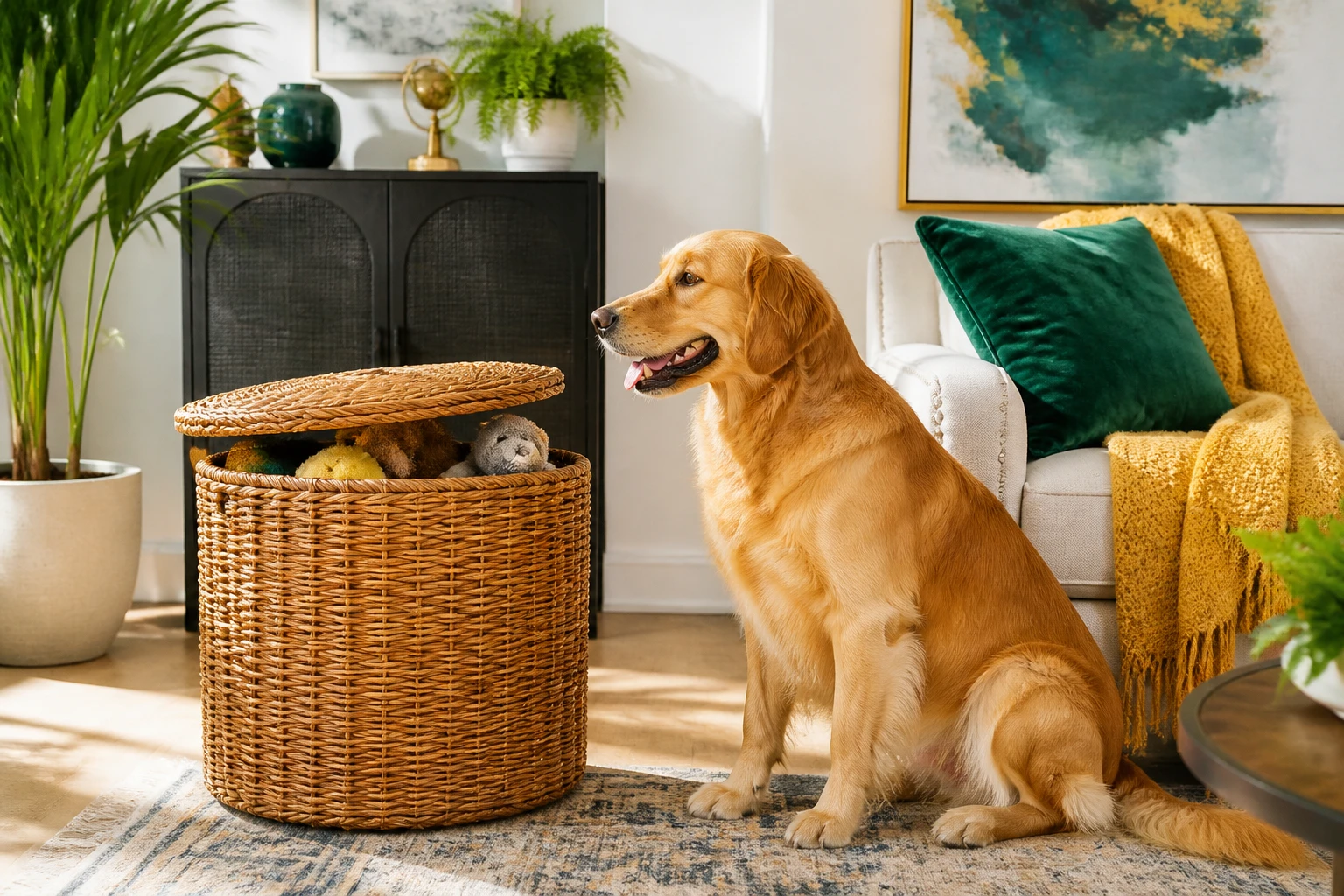
Dog toys everywhere? Same. The trick is finding storage that blends in so well your guests think it’s part of the room, not a chew central command. These 7 ideas hide the mess, match your style, and still make it easy for your pup to grab a favorite squeaky. Ready to reclaim your floors without sacrificing your vibe?
⭐ Our Top Pick: See it on Amazon
1. The Lidded Basket That Doubles as an Accent Piece
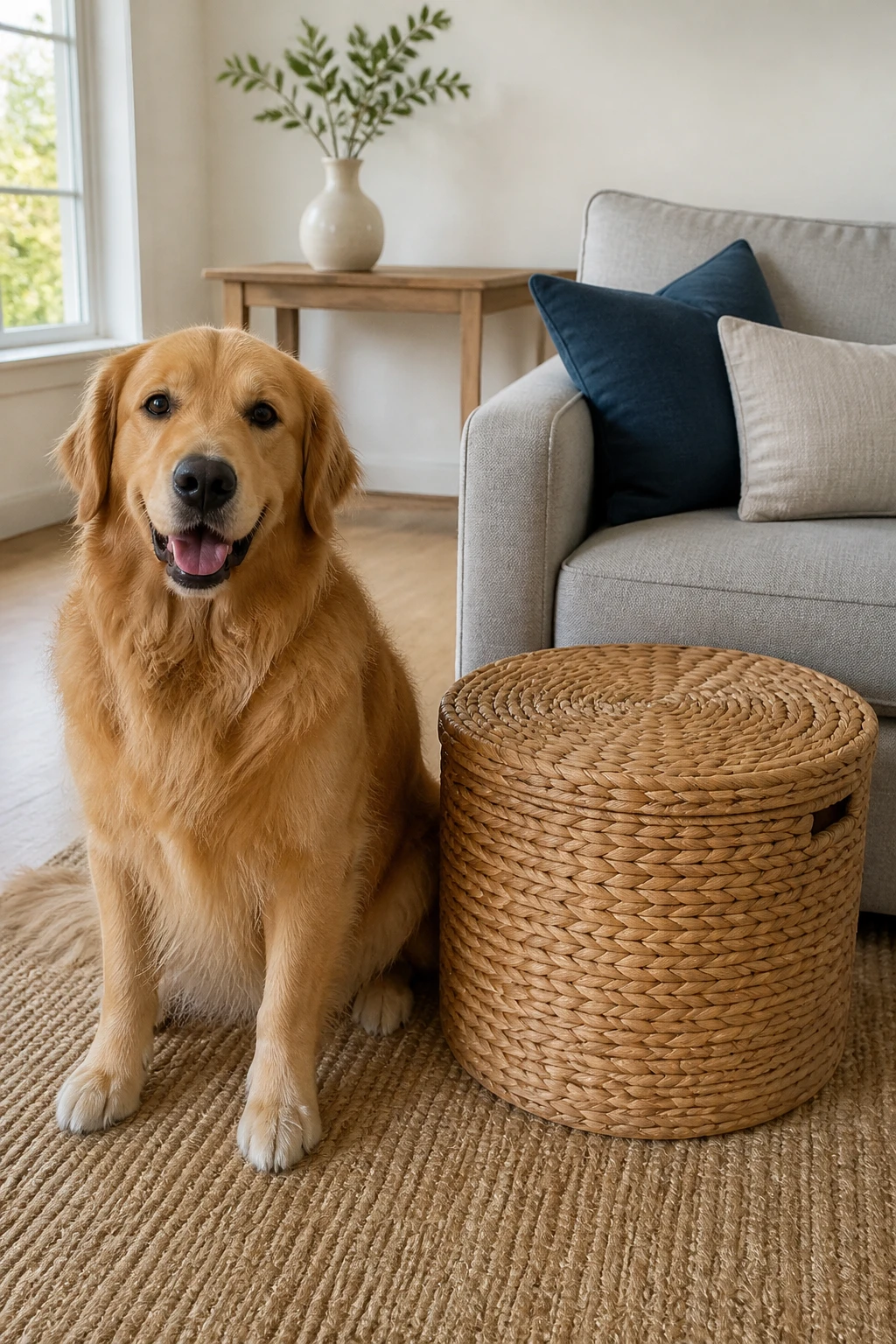
A generously sized, lidded basket looks intentional beside a sofa, under a console, or next to the fireplace. Cotton rope, water hyacinth, or tightly woven rattan reads warm and collected while keeping toys corralled. A fitted lid stops visual clutter and outsmarts eager foragers between play sessions.
Tips
- Pick a basket with a flush-fitting lid and no dangling tassels or fringe.
- Go 16–20 inches wide so balls and plushies slide in easily.
- Choose handles that sit tight to the body or none at all to prevent chewing.
- Slip a thin non-slip pad under the basket to keep it from scooting during zoomies.
I’d pick cotton rope for determined chewers; it shows fewer bite marks than looser reeds. I’d skip seagrass with flyaway fibers—it tempts nibblers. Rotate toys weekly and keep the lid on when you want the room looking calm.
Best for: Living rooms and bedrooms where you want soft texture that reads like decor, plus dogs who don’t shred baskets for sport.
2. Lift-Top Ottoman Coffee Table With Hidden Bins
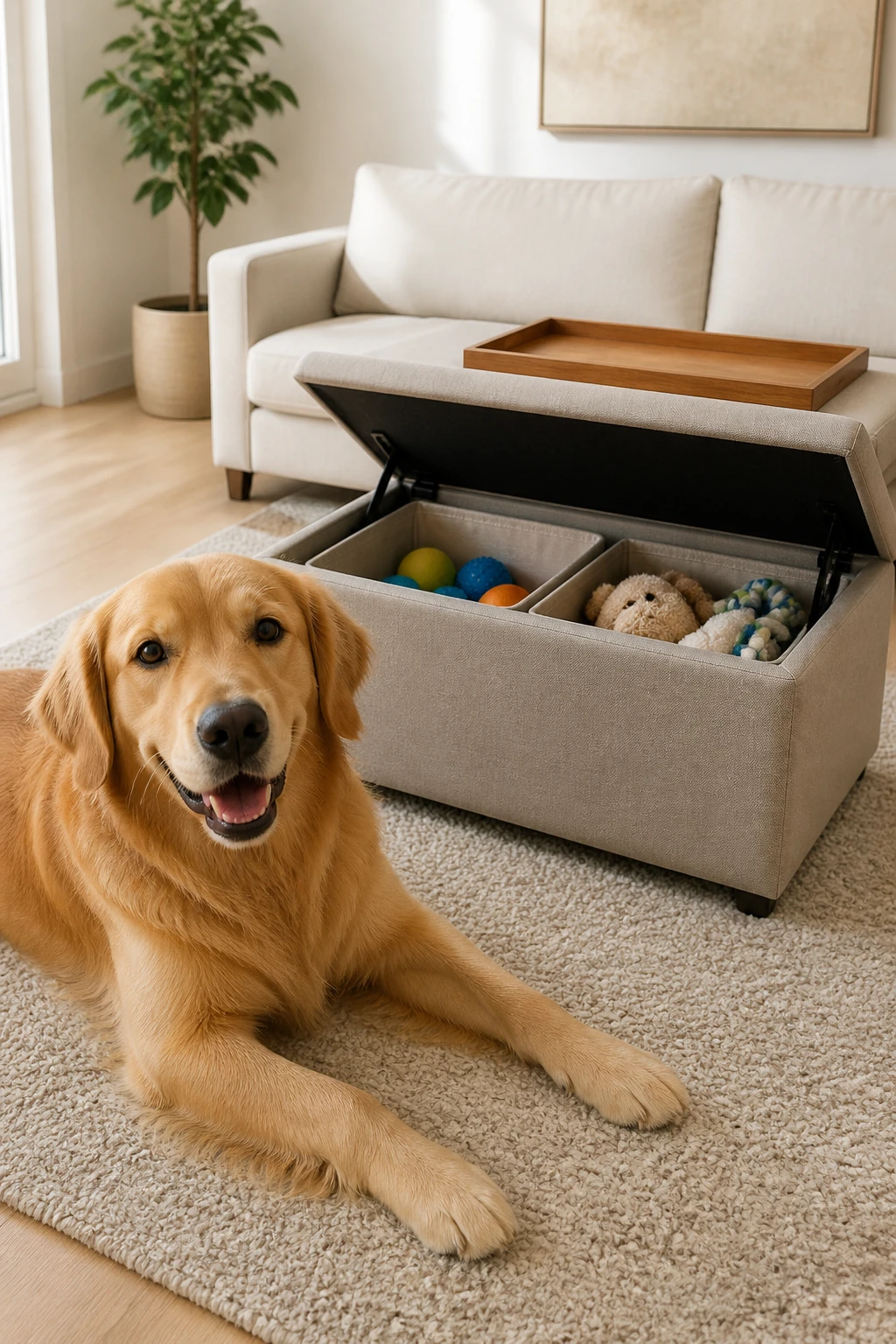
An upholstered storage ottoman pulls double duty as a surface for trays and a hideaway for toy chaos. Rounded corners mean fewer bruised shins and safer play. Inside, pop in a couple of fabric cubes so you can separate balls, plush, and tug ropes.
Key Points
- Look for performance fabric (stain-resistant, easy-clean) and a tight weave.
- Choose slow-close hinges to prevent lid slams and pinched fingers.
- Measure seat height to match your sofa (usually 16–18 inches) for a balanced look.
- Skip button tufting; buttons can loosen and become swallow hazards.
Worth it if you need soft edges and hidden storage in a small space. Keep it a few inches from heaters, and avoid decorative nailheads if your dog loves metal bits.
Best for: Apartments, family rooms, and anyone who wants feet-up comfort plus hidden toy zones.
3. Entryway Bench With Labeled Cubes
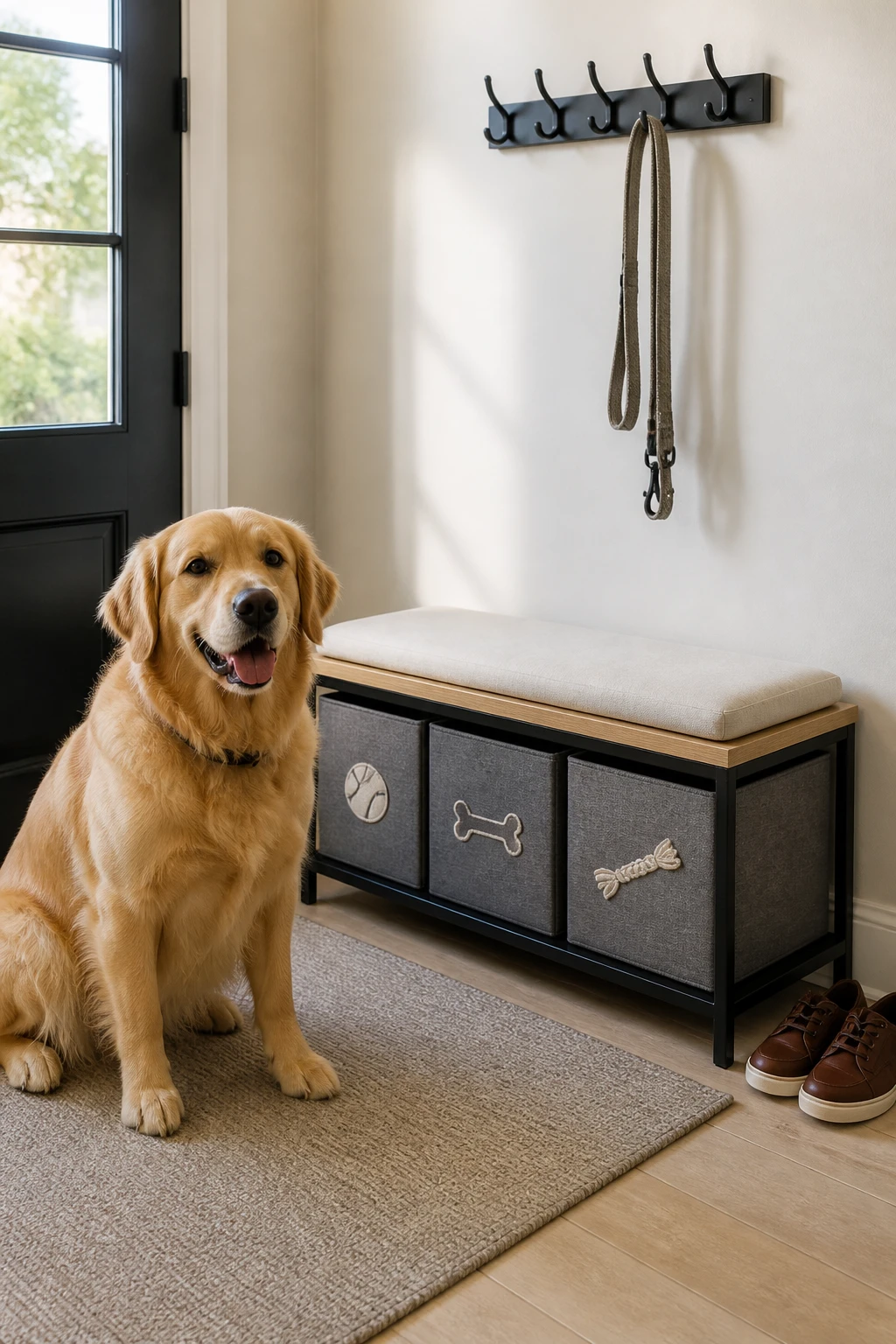
Create a tidy landing zone with a wood or metal bench and slide-in felt bins. It looks intentional by the door and makes grab-and-go fetch sessions painless. Add a cushion on top for a welcoming moment that disguises the storage underneath.
Setup Checklist
- Install anti-tip brackets so energetic greetings don’t budge the bench.
- Pick felt or canvas bins with sturdy sides; avoid rope pulls that invite chewing.
- Label with icons (ball, bone, tug) so the whole household follows the system.
- Mount leashes on Command hooks at adult shoulder height—out of chew range.
IMO, a slim bench with three cubes looks crisp and keeps clutter segmented. Keep toys in the lower bins, and store treats up high in a cabinet—never in open reach. You’ll love the routine: drop toy in bin, wipe paws, done.
Best for: Mudrooms and small foyers; multi-dog households that need categories.
4. Cane-Front Credenza That Hides the Chaos
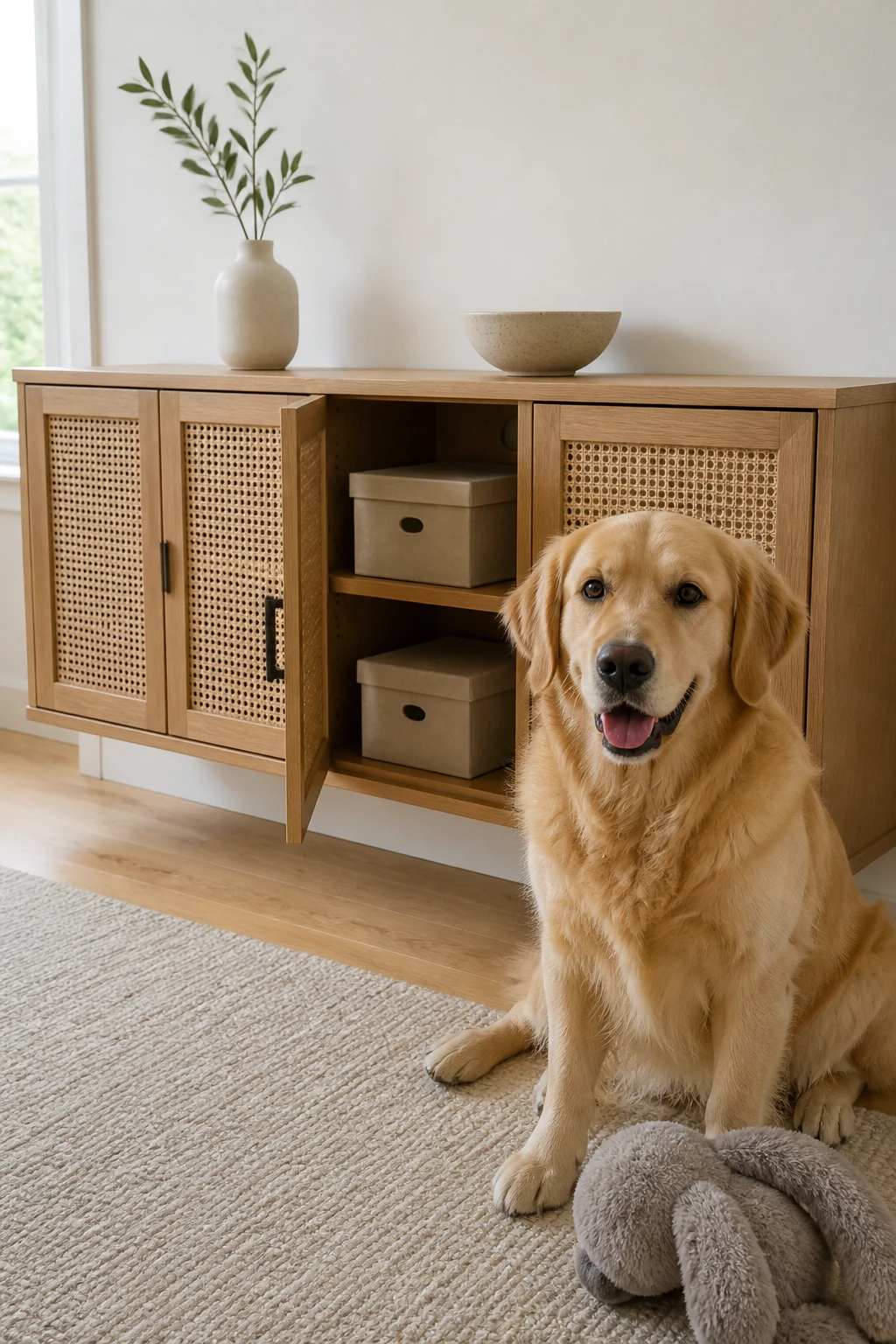
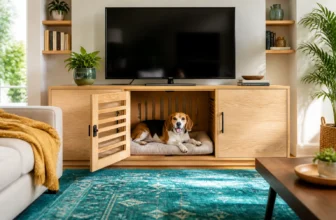
A low sideboard with cane or slatted doors blends texture with plenty of space for hidden bins. Slide lidded boxes inside to separate clean toys from “outside only” ones. The woven fronts feel airy while the interior stays out of sight.
What to Look For
- Soft-close hinges so doors don’t slam during wag-induced earthquakes.
- A back panel with cable cutouts you can ignore—no cords near the bottom where pups roam.
- Adjustable shelves to fit tall bins or baskets.
- Wall anchoring hardware for stability on hardwood or tile.
I’d skip open wire consoles—they scream utility and invite paws. A cane-front credenza reads elevated and lets you style the top with books and a faux plant (shatterproof pot, please). It’s the toy command center you won’t mind showing off.
Best for: Living and dining spaces with mid-century or coastal vibes; dogs who like to “redecorate” unless doors stay closed.
5. Floating Shelves for Overflow, Plus One Floor Basket for Daily Picks
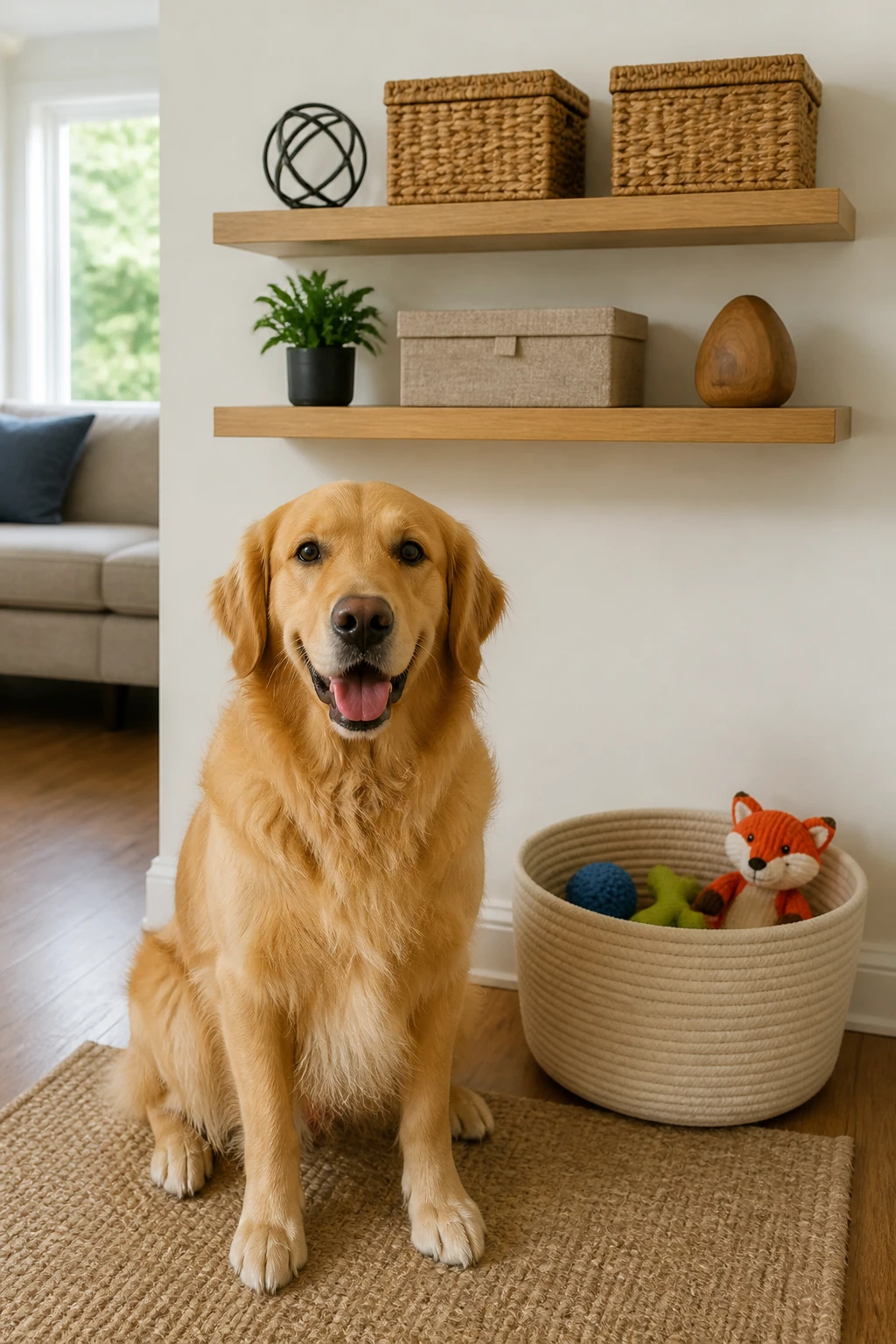
If your dog owns more toys than you do socks, stash extras up high and keep only a small batch down low. A pair of floating shelves holds lidded boxes for reserves, while a single floor basket handles the current favorites. This setup prevents overwhelm and cuts cleanup time.
How to Pull It Off
- Mount shelves into studs and follow weight limits; use hidden brackets for a clean look.
- Choose lidded boxes for the shelves so toys don’t catch dust.
- Style the shelf ends with sturdy, shatterproof accents, placed out of jumping range.
- Keep the floor basket medium-sized (12–14 inches) so it doesn’t swallow the room.
Rotate in 5–7 toys each week to keep play fresh. Worth it if you battle clutter creep and want your surfaces looking curated instead of chaotic. Safety note: avoid cords or hanging tassels near the basket—temptation city.
Best for: Small rooms that need vertical space; pups who get overstimulated by a mountain of options.
6. Furniture-Style Crate Console With a Toy Drawer
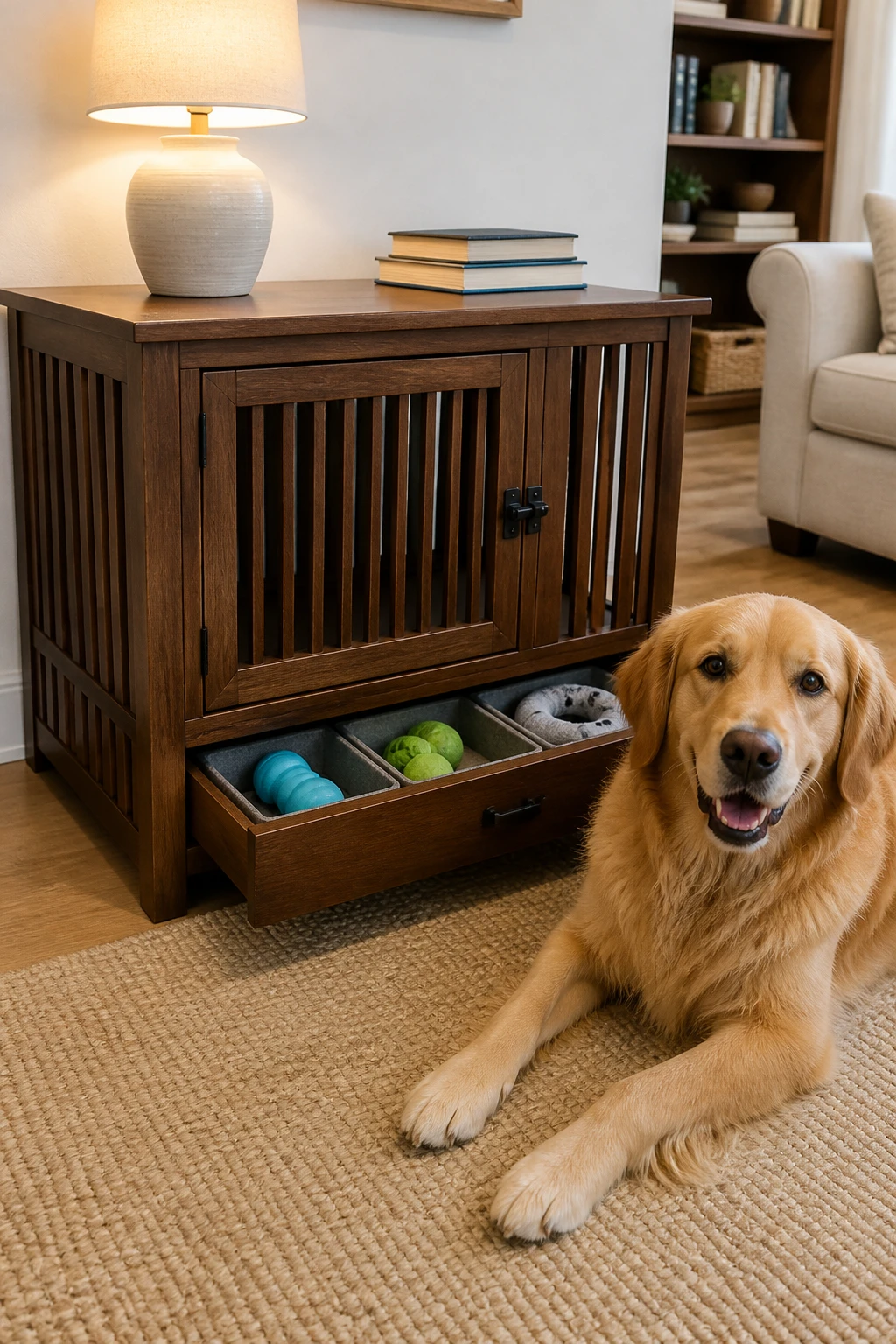
Turn your dog’s crate into a polished console table with storage built in. Many furniture-style crates include a drawer or open cubby beneath; if not, slide in stackable boxes that fit the footprint. You’ll get a legit surface for lamps and books while the drawer swallows toys.
Safety First
- Ensure ample ventilation on all crate sides and a secure latch your dog can’t work open.
- Use pet-safe finishes (water-based) and avoid draping fabrics or lights over the crate.
- Keep lamps toward the wall and route cords behind the unit, clipped out of reach.
- Soft-close drawer slides prevent finger pinches during cleanup.
I’d pick a solid wood frame with metal bars; it reads like real furniture. Skip glass tops; they show every nose print and risk chips. If your dog doesn’t crate, the same idea works with a console table plus baskets underneath.
Best for: Open-plan living rooms where every piece needs to earn its place; medium to large dogs that already crate comfortably.
7. Low Trunk Coffee Table With a Soft-Close Lid
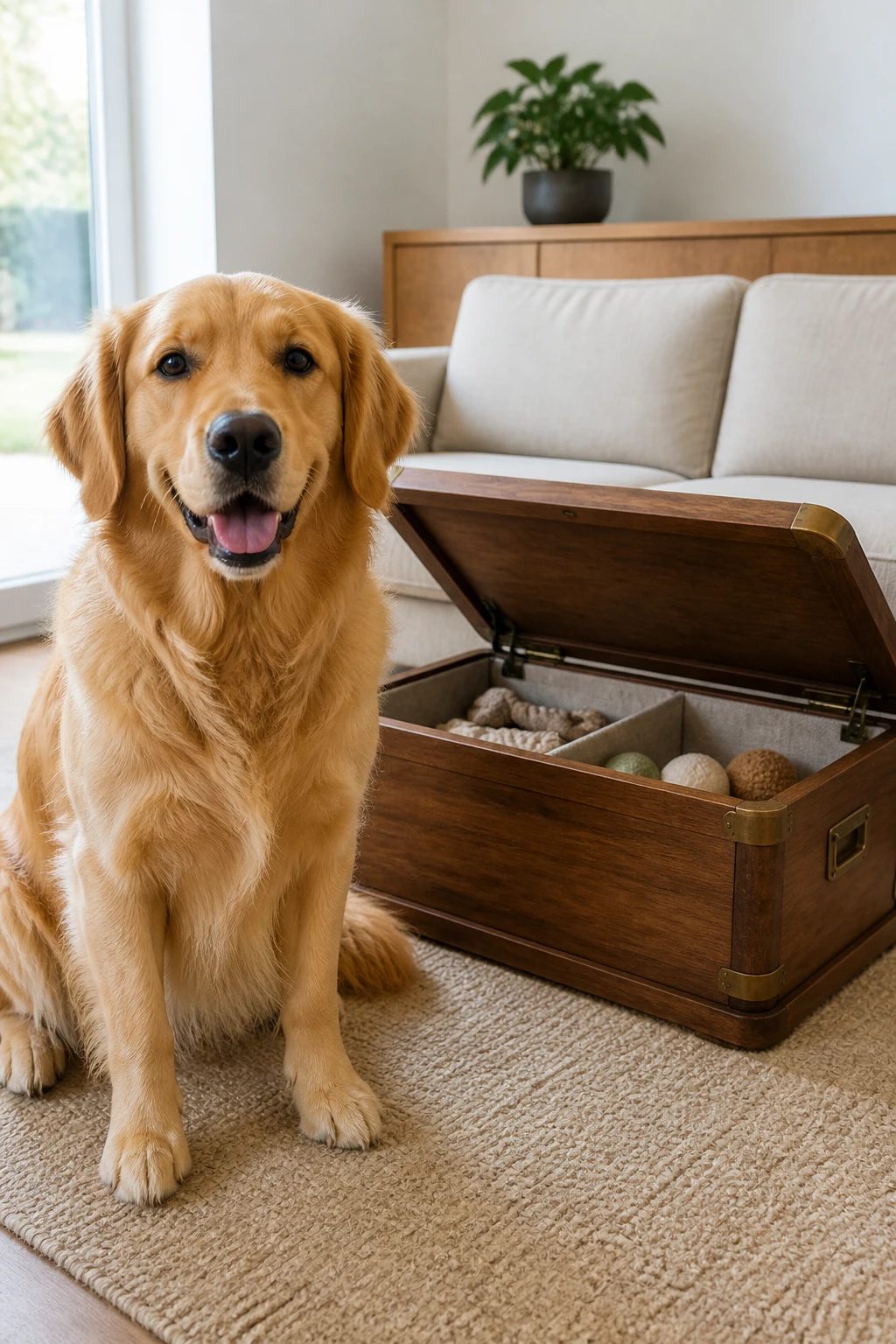
A vintage-style trunk anchors a room and hides an absurd amount of toys. Use a version designed as a coffee table so the hardware sits flush and the base stays stable. Add soft-close lid supports so curious noses don’t get surprised by a heavy drop.
Setup Details
- Line the interior with washable fabric bins to catch dirt and slobber.
- Choose rounded corners or protected edges; no dangling straps or locks.
- Aim for 36–42 inches long for balance with sofas; verify height at 16–18 inches.
- Skip aromatic cedar interiors; strong scents can irritate some pups.
This piece shines when you want an anchor that doesn’t read like storage. I’d skip trunks with ornate metalwork if your dog enjoys mouthing hardware. Bonus: the top becomes game night central once toys go away.
Best for: Larger living rooms and rambunctious households that need rugged, enclosed storage.
Common Mistake to Avoid
Don’t choose containers with tassels, fringe, bells, or loose strings—they can detach and become hazards. Also skip glass jars, real candles near baskets, and heavy lids without soft-close supports. Anchor tall storage, route cords high and behind furniture, and keep faux greenery or shatterproof decor out of paw range.
FAQ
How many toys should I keep out at once?
Keep 5–7 toys accessible and rotate weekly. Fewer options reduce floor sprawl and actually make each toy more exciting. Store the rest in lidded bins or up on shelves.
What basket materials hold up best to chewers?
Cotton rope and thick, tightly woven rattan tolerate light nibbling better than loose weaves. Felt bins also work well because they don’t fray. If your dog destroys everything, go with a lidded wood box or a fabric cube inside a bench so there’s a barrier.
How do I stop my dog from dumping the basket?
Pick a lidded container, choose a heavier basket, or park the bin inside a cubby where sides help contain the chaos. You can also teach a quick “take one” cue during play. If enthusiasm still wins, move extras to high shelves and leave only a few favorites down low.
What’s the easiest way to keep toy storage smelling fresh?
Use washable liners, toss soft toys in the laundry bag weekly, and wipe hard toys with a pet-safe cleaner. Add a small baking-soda sachet in a sealed box on a shelf—out of reach. Skip essential oils and potpourri; scents can irritate dogs.
How do I make storage look like it belongs in my room?
Match wood tones to existing furniture, echo textures (cane with cane, linen with linen), and scale pieces to your seating. Style the tops with books and a faux plant or a bowl—shatterproof, placed high. Keep the color palette to two or three hues so everything reads cohesive.
Is open shelving safe for dog gear?
Yes—if you use lidded boxes, mount shelves securely into studs, and keep any decor sturdy and out of jump range. Keep daily toys on the floor in a small basket and stash backups up top. Avoid dangling ornaments or anything fragile.
You don’t need to choose between a beautiful home and a happy playtime. With these 7 setups, you’ll hide the mess, streamline cleanup, and still keep fetch on standby. Grab one idea to start, then mix two or three for a seamless, dog-friendly layout.
🛠️ Love hiding dog clutter in style? Build our DIY Dog Food Storage Cabinet, with a tilt-out kibble bin and a treat-jar shelf on top. Get the printable plans with 3 sizes and step-by-step instructions.
As an Amazon Associate, I earn from qualifying purchases.