This post contains affiliate links. As an Amazon Associate, I earn from qualifying purchases, at no extra cost to you.
You love your dog, but you also love boundaries. A wooden gate in the doorway solves both with charm and function. These 7 builds look custom, hold up to daily traffic, and keep paws where they belong. Grab your tape measure, because you’re about to turn a problem area into something you’re proud to show off.
⭐ Our Top Pick: See it on Amazon
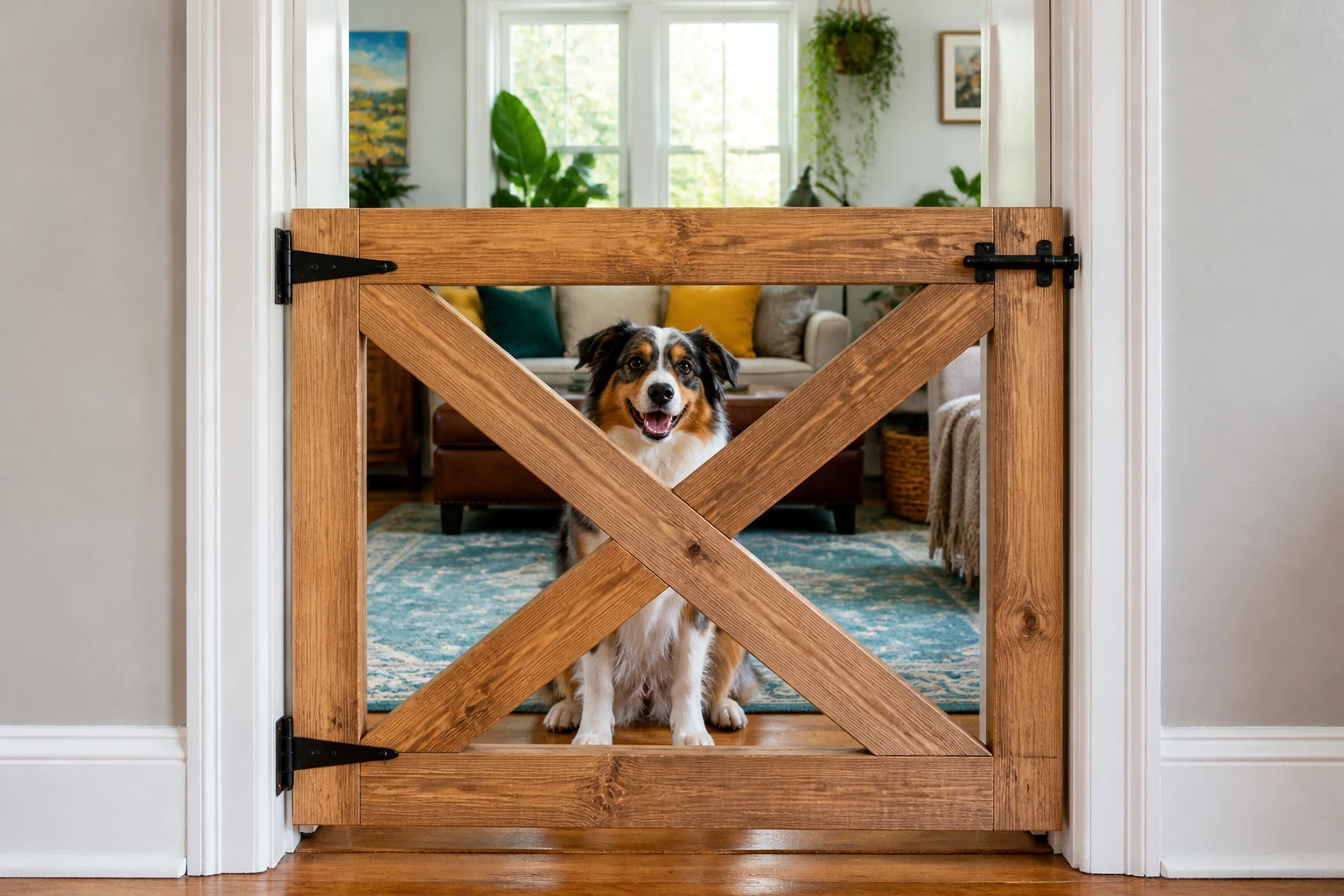
1. Farmhouse X-Brace Swing Gate That Feels Built-In
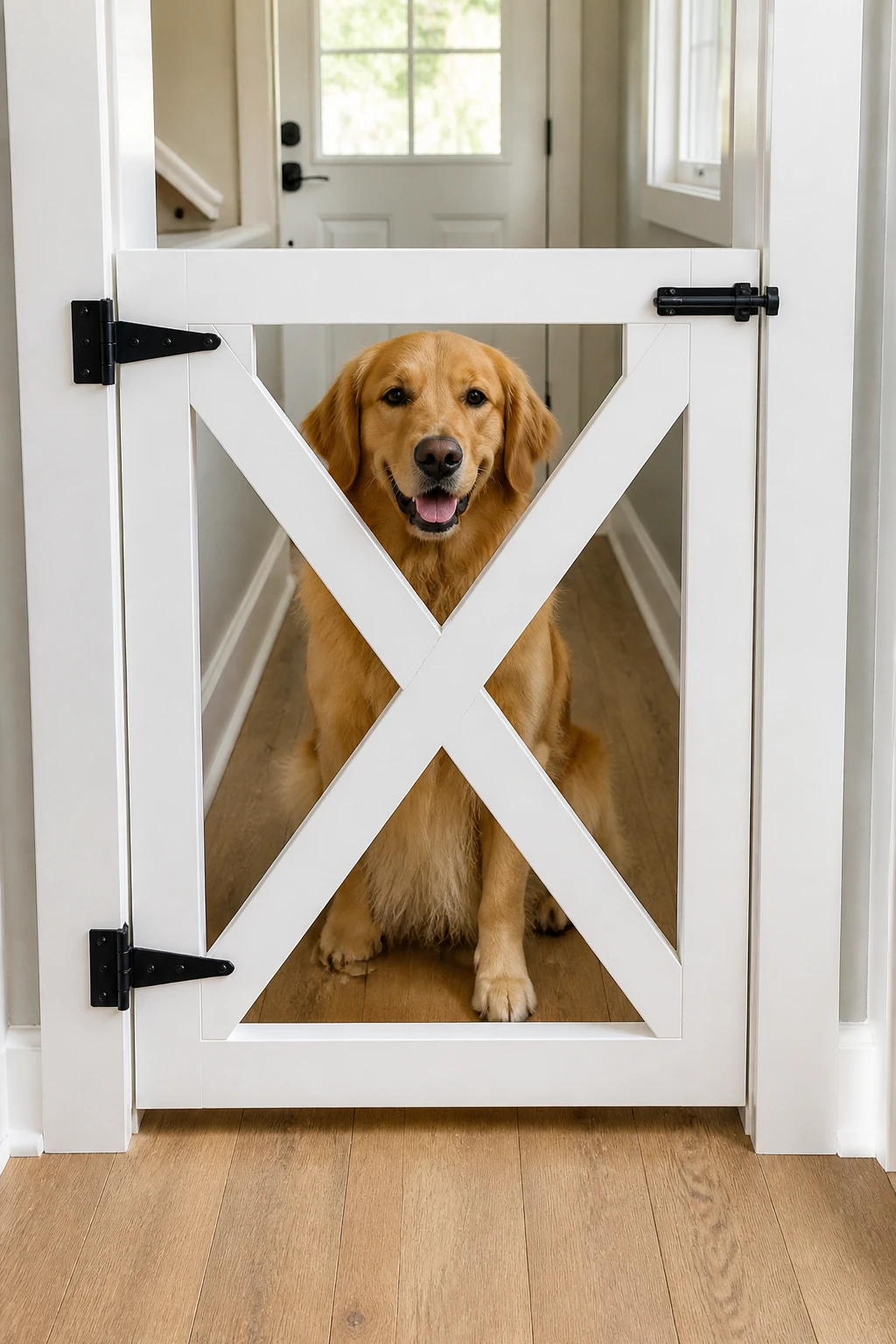
Want that “was this here when the house was built?” vibe? An X-brace panel framed from dimensional lumber nails it. It’s solid, easy to latch, and it blends with trim so well your guests will assume it came with the home.
Materials
- 1×4 or 1×3 pine or poplar for frame and X-brace
- Pocket-hole jig and 1 1/4 inch pocket screws
- Two strap or butt hinges, plus a simple gate latch or barrel bolt
- Magnetic catch (optional) and felt pads
- Water-based, dog-safe finish (poly or paint)
Build Tips
- Measure your opening at top, middle, and bottom. Floors and trim rarely sit perfectly straight, so build to the smallest width.
- Target 30–36 inches tall. Keep the bottom gap 1–1.5 inches to clear floors but block paws.
- Assemble a rectangular frame with pocket holes, then cut the X pieces to fit snug. Pre-sand edges and round them slightly to discourage chewing.
- Mount hinges on the stud side of the jamb. Use 2 1/2 inch screws to hit framing, not just casing.
Love symmetry? Add a top cap for a crisp line that echoes your baseboards. I’d pick this if you want a timeless look and dependable strength. Best for: busy entries or kitchens with medium to large dogs.
2. Bi-Fold Panel Gate That Disappears Behind the Door
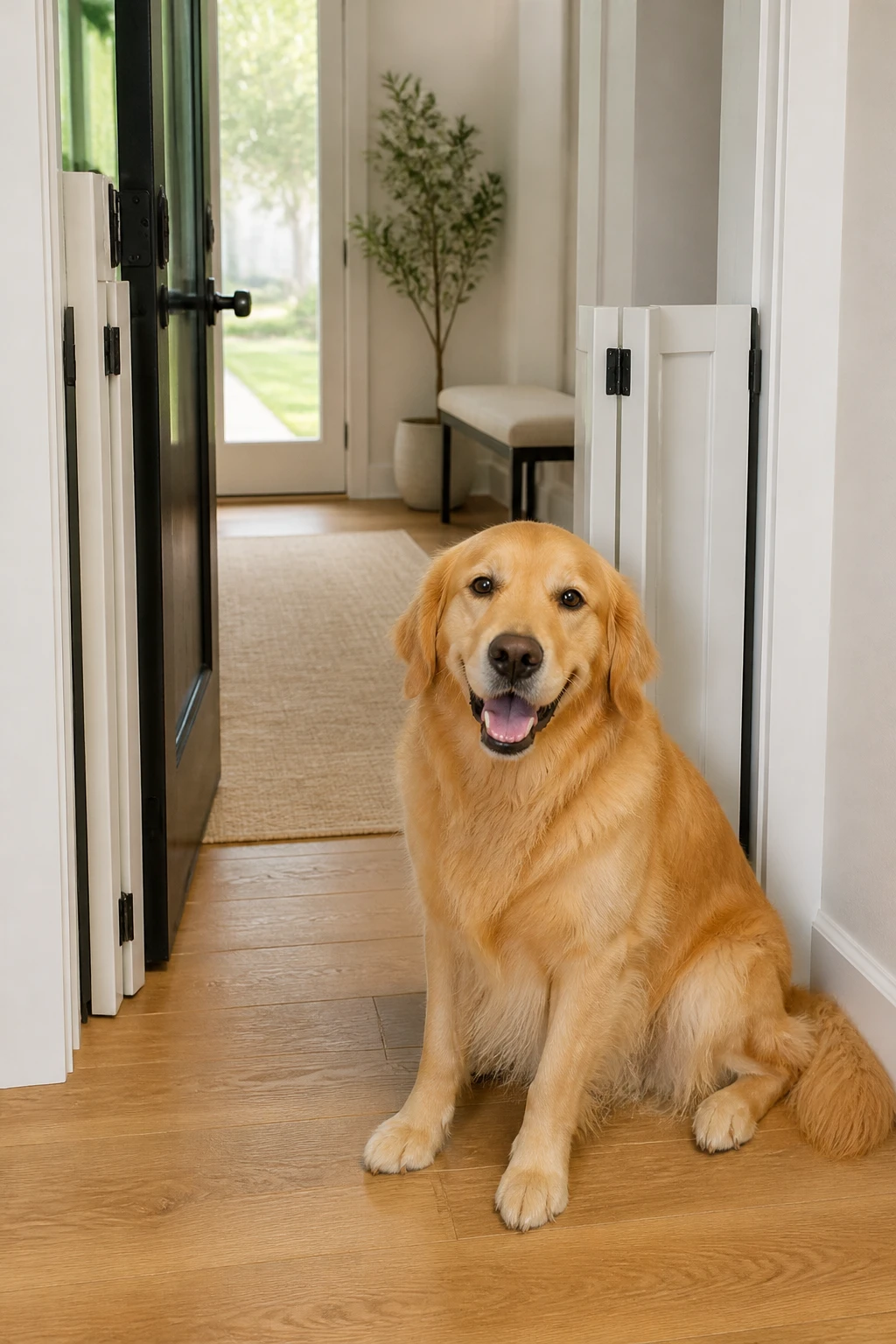
Don’t want a gate blocking the hallway when it’s open? A bi-fold panel tucks neatly against the wall or behind your main door. It pivots cleanly, stores compactly, and looks refined with vertical boards or shaker-style panels.
Materials
- Four narrow frames from 1×2 or 1×3 poplar
- Tongue-and-groove boards or plywood panel inserts
- Piano hinge (continuous hinge) and two butt hinges
- Slide bolt or magnetic catch
How to Build
- Make two slim frames per side (about 10–12 inches wide each) and connect each pair with a piano hinge to create the fold.
- Join the fold to the wall or jamb with standard hinges so the whole unit swings open.
- Add a small floor stop so paws don’t push it past your intended angle.
Fold-away function keeps traffic lanes clear without sacrificing control. I’d skip this if your dog slams into barriers at full tilt. Best for: narrow doorways or spots where you want the gate to vanish when open.
3. Sliding Barn-Track Gate for Tight Hallways
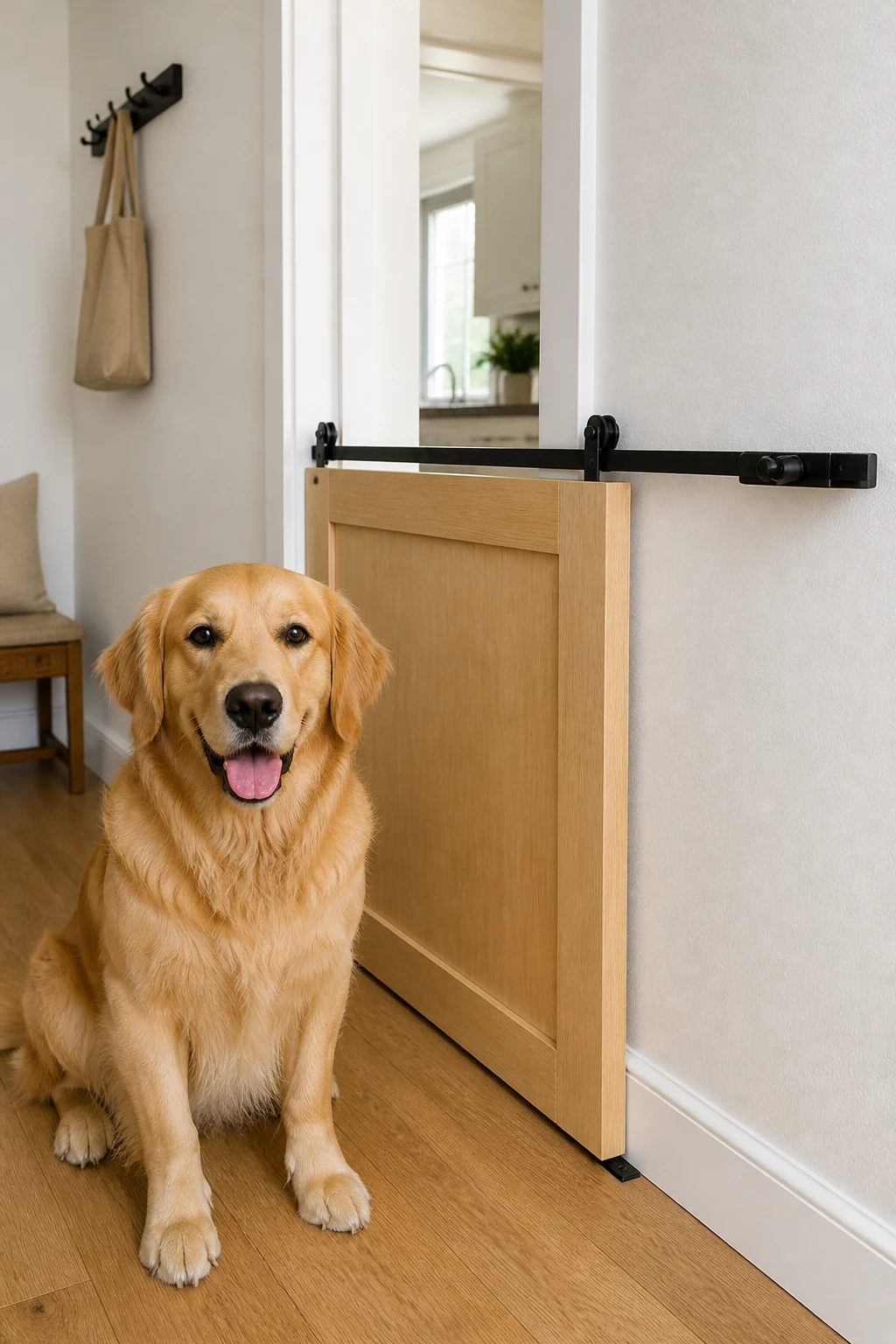
Hallway too cramped for a swinging gate? Go sliding. A mini barn-door setup glides parallel to your wall, nails modern warmth, and avoids dings in trim.
Key Points
- Use a lightweight, framed wood panel (think 1×4 rails and stiles with a 1/2 inch ply interior) to keep the weight down.
- Pick soft-close barn-door hardware rated above your gate’s weight. Mini kits work well for short spans.
- Install a low-profile floor guide to prevent sway. Keep it flush so you don’t stub toes, and position it far enough from the opening so paws can’t get pinched.
Safety and Fit
- Mount the track into studs. If studs don’t align, add a backer board first, then mount the track to the backer.
- Keep fingers and noses clear of the track ends. Add end stops and use the anti-jump clips that come with quality kits.
Sliding beats swing when every inch counts. Worth it if you love clean lines and smooth operation. Best for: hallways and entries where door swing gets in the way.
4. No-Drill Pressure-Fit Plank Gate (Renter-Friendly)
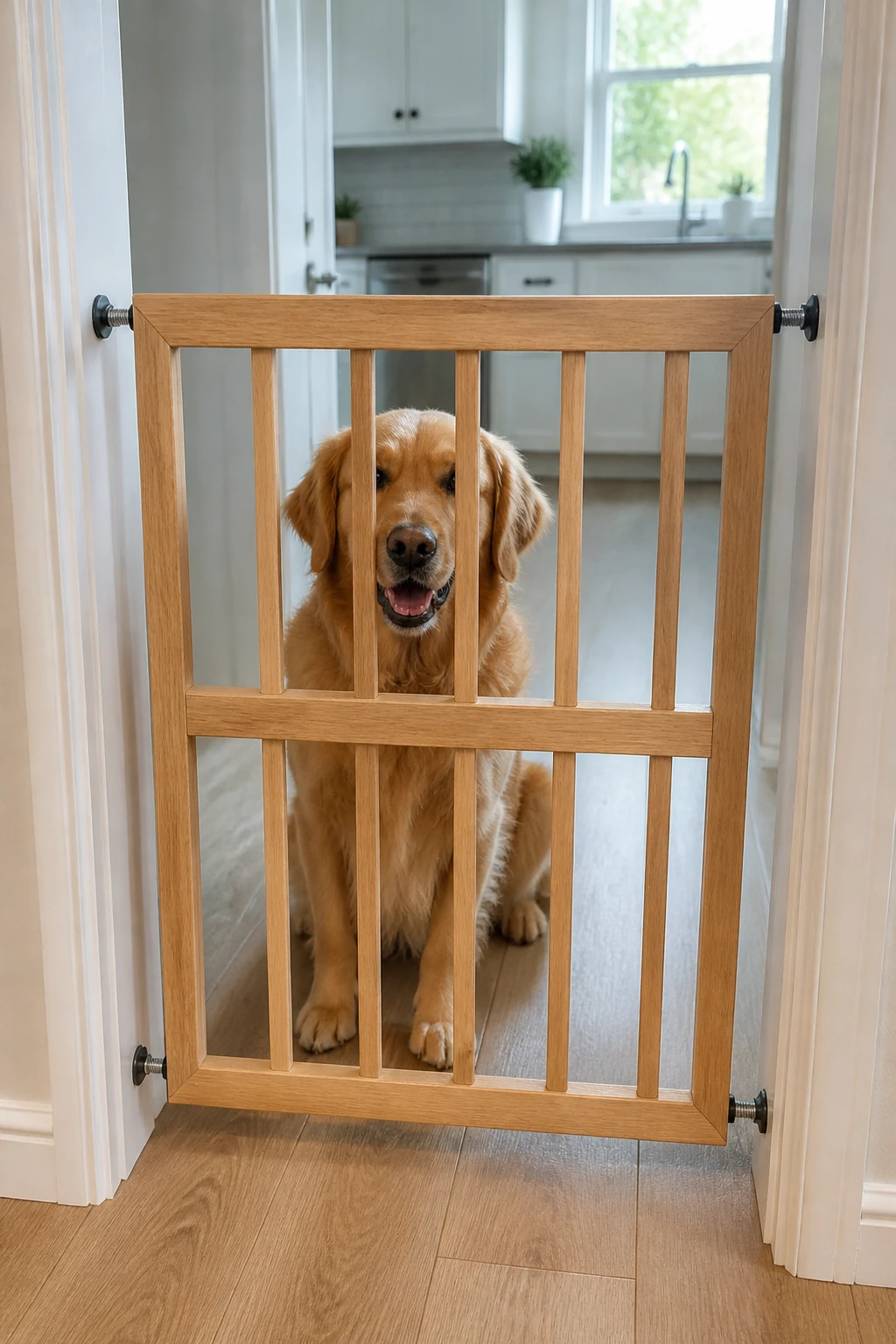
Renters, this one’s for you. A pressure-fit frame uses threaded levelers to press snugly between jambs, protecting the paint and leaving zero holes.
Materials
- 1×3 hardwood for a rectangle frame and mid-rail
- Hardwood slats or dowels for the infill
- Four adjustable furniture levelers or rubber-tipped jack screws with T-nuts
- Non-slip pads for the ends and clear protective film for trim
Assembly Tips
- Build a rigid frame and glue the joints. Add a centered mid-rail for stiffness.
- Drill the corners for threaded levelers so the feet press against the jambs. Add rubber caps to prevent scuffs.
- Check for plumb. Tighten each foot a bit at a time so you don’t bow the frame.
FYI: This isn’t for bulldozer pups who body-check barriers. I’d pick it for smaller dogs and short-term setups. Best for: apartments and temporary containment in standard openings.
5. Half-Dutch Door Conversion Using Your Existing Casing
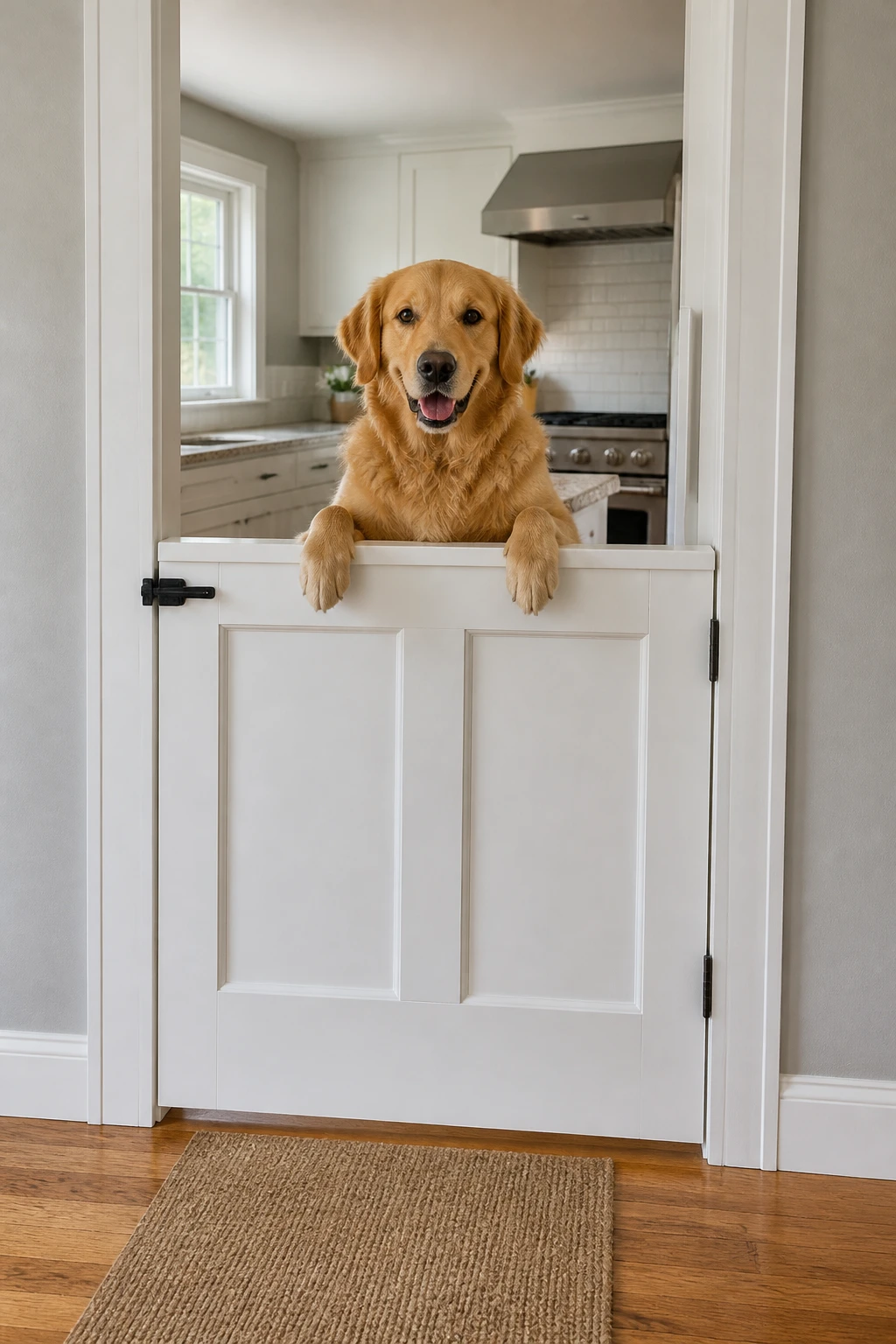
Already have a door in that opening? Turn it into a half-height gate by cutting and reinforcing. It keeps the visual flow of your home while giving you quick control of the space.
How to Do It
- Remove the door and cut it horizontally around 32–36 inches from the bottom, above the bottom panel or rail.
- Cap the new top and bottom edges with 1x lumber. Glue and clamp, then sand smooth.
- Reinstall the bottom half using the original hinges, then add a surface bolt at the top corner to lock it to the jamb.
- If you want both halves functional, install a second set of hinges for the top portion and add a flush bolt to keep it parked.
Safety Smarts
- Round over any sharp edges. Use a water-based finish only.
- Keep the latch up high so curious noses can’t flip it open.
This keeps your trim and hardware consistent across rooms, which looks polished. Worth it if you like the idea of a permanent solution that matches your doors. Best for: kitchens or laundry rooms that already have full doors.
6. Double-Swing Saloon Panels with Soft-Return Hinges
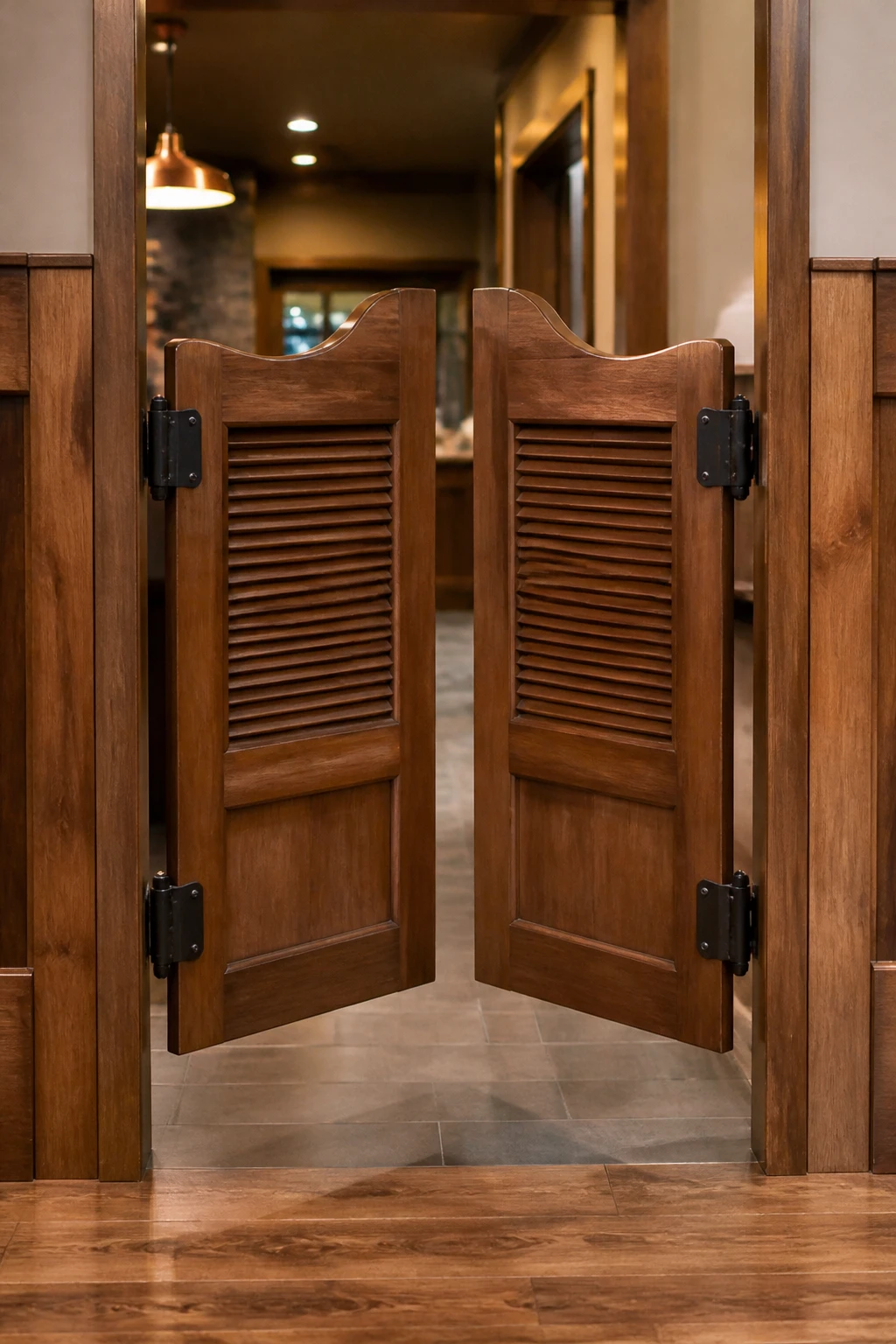
Two narrower leaves reduce weight and make passing through easier. Double-acting hinges let the panels swing both ways, then return to center, which feels slick in daily use.
Materials
- Two panel frames from 1×3 or 1×4
- Inset plywood or vertical boards for the field
- Two double-acting spring hinges per leaf
- Rubber door silencers and a high-mounted hook-and-eye or foot bolt
Pro Tips
- Balance height and visibility: 30 inches stops small pups, 34–36 inches deters jumpers.
- Set spring tension so the panels return without slamming. Add felt pads on the jamb to hush contact.
- Because these swing both ways, rely on a simple bolt or hook when you need it locked.
Saloon panels add personality without feeling bulky. I’d pick this if you want quick hands-free pass-throughs while carrying laundry or coffee. Best for: central doorways you use constantly.
7. Scandinavian Slat Gate with Rounded Dowels
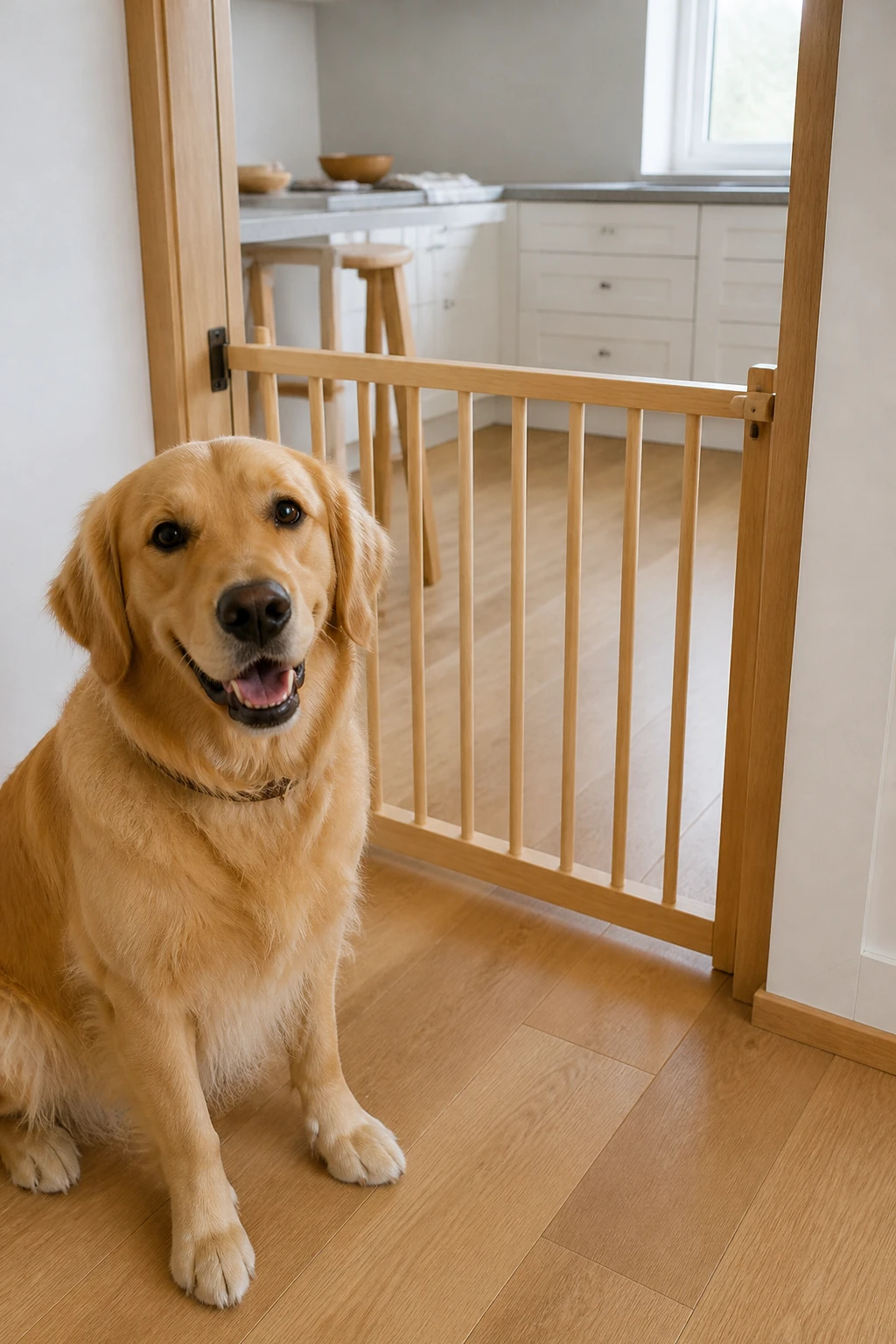
Clean lines, airy feel, and easy to keep clean. A dowel-and-rail design reads modern but warm, and it uses less lumber than full panels.
Materials
- Two vertical stiles and top/bottom rails from maple or oak
- 3/4 inch hardwood dowels cut to height
- Template jig for evenly spaced holes
- Wood glue or epoxy and clamps
Build Notes
- Drill the top and bottom rails with a spacing jig. Aim for 2 inches max spacing for small dogs; up to 2.5–3 inches for bigger breeds.
- Glue dowels into the bottom rail and dry-fit the top. Check for square, then glue and clamp.
- Ease every edge with a 1/8 inch round-over bit for a paw-friendly finish.
It looks custom without visual heaviness, and it’s a breeze to wipe down. Worth it if you like modern woodwork with great airflow. Best for: living rooms and open-plan spaces where sightlines matter.
Common Mistake to Avoid
Don’t guess on spacing or hardware. Dogs push low and hard, so undersized screws in soft trim pull out fast. Always hit studs for swinging or sliding gates, cap fresh cuts on a Dutch door, and keep slat spacing tight enough that a snout or paw can’t wedge through. Finally, stick with a water-based, non-toxic finish and let it cure fully before your dog tests it with a lick.
FAQ
How tall should a wooden dog gate be?
Most households do great with 30–36 inches. Go at least your dog’s shoulder height plus 6 inches if they’re a jumper. Taller isn’t always better though—too high and you’ll hate using it. Balance containment with easy daily movement.
What’s the safest spacing between slats or dowels?
For small breeds, stick to 2 inches or less. For medium and large dogs, 2.5–3 inches works if they can’t force a paw through. Err on the snug side near the latch and hinge areas, where pups test weaknesses first.
Which wood stands up best to scratches and chewing?
Hardwoods like maple, oak, and ash resist dings better than pine. If you’re on a budget, build the frame from poplar or pine and add a few strategic hardwood pieces at high-wear spots, like the top rail. Finish with a water-based polyurethane or enamel rated for children’s furniture.
Are pressure-mounted gates safe for strong dogs?
They’re fine for calm or smaller pups, but a determined charger can pop them loose. If your dog tests barriers, use hinges, lag bolts into studs, or a sliding track. IMO, pressure-fit is a renter solution, not a forever fix.
How do I protect my walls, trim, and floors?
Add rubber or felt pads where the gate meets the jamb and floor. Pre-drill all holes and use longer screws into studs to prevent tear-out. On sliding designs, choose a low-profile floor guide and mark a small no-shoes zone if you have little kids who might stub toes.
What kind of latch should I choose?
Keep it simple and secure: a barrel bolt, gravity latch, or hook-and-eye mounted high works great. If you have escape artists, choose a two-action latch they can’t nose open. Avoid small magnets or parts a dog could dislodge and swallow.
Pick your favorite design, measure twice, and build once. These wooden gates don’t just corral your pup—they make doorways look finished and intentional. Seriously, you’ll wonder why you waited.
🛠️ Want to build your own? Get our printable DIY Wooden Dog Gate plans – a farmhouse swing gate in 4 sizes and 2 heights, with a cut list and step-by-step instructions.
Ready to upgrade your space? Tap any of the linked products and images above to see our top picks — hand-picked options that blend seamlessly into any home while keeping your pup cozy and secure.
As an Amazon Associate, I earn from qualifying purchases.