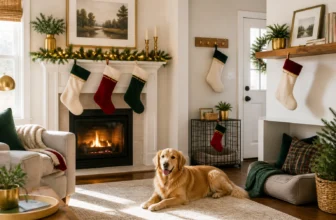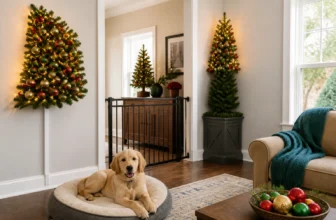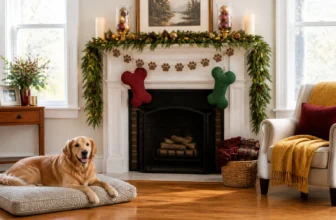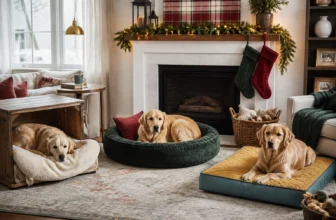
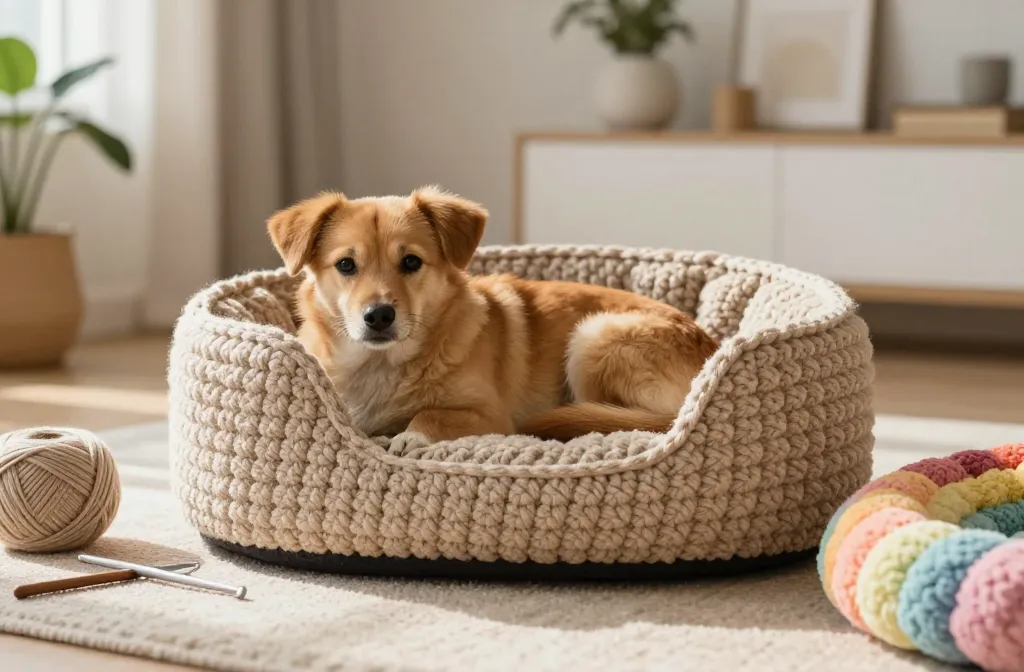
You’ve got yarn. You’ve got a dog who thinks every human pillow belongs to them. Let’s fix that with something cuter, cozier, and way more satisfying: a crochet dog bed. Whether you’ve got a teacup diva or a sprawling couch hog, you can stitch up the perfect throne in a weekend. Bonus: it looks good in your living room, unlike that sad store-bought donut that flattened after two naps.
Why Crochet a Dog Bed Instead of Buying One?
You control the vibe. Want a chic neutral basket bed? Cool. Craving a rainbow marshmallow puff? Do it. With crochet, you pick the color, texture, and shape to match your decor.
You also make it sturdy. Store beds compress fast. Crochet beds, especially with the right stitches and yarn, hold their shape and keep pups supported.
And let’s be real: you’ll enjoy the process. It’s a quick project, high impact, and your dog will “help” by sitting in the yarn while you work. Cute sabotage, 10/10.
Yarn and Hook: What Actually Works
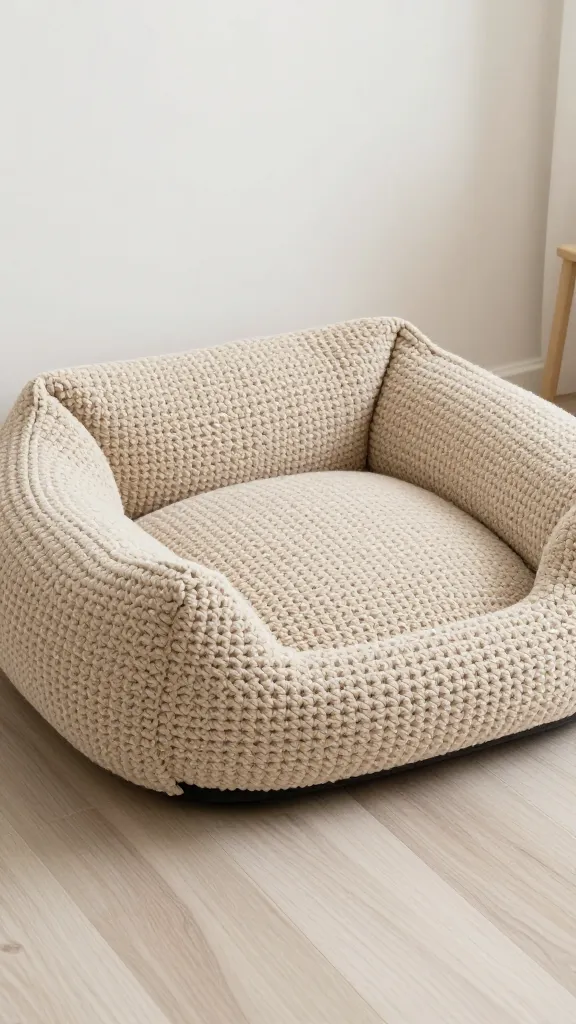
Your bed depends on materials. Choose wisely and your bed looks amazing and survives zoomies.
- Jumbo T-shirt yarn or cord: Thick, durable, slightly stretchy. Great for basket-style beds with structure.
- Super bulky wool blends: Cushy and warm. Ideal for colder homes or senior dogs. Felted wool also resists shedding and pilling, FYI.
- Cotton rope or macrame cord: Very sturdy and stylish. Less cozy unless you add a cushion insert.
- Chenille/velvet yarn: Cloud-soft and adorable. Can shed; double-check washing instructions.
Hooks: go big. 10 mm to 15 mm feels right for most bulky yarns. Larger hook = faster project, looser fabric. Smaller hook = denser fabric and stronger walls. Swatch like a responsible adult (or don’t, IMO, but be ready to frog).
Stuffing and Inserts
You can crochet a complete cushion or use:
- Memory foam scraps or a cut-to-size foam pad
- Old pillows (wash and restuff into a liner)
- Polyfil with a zippered inner liner for easy washing
Pattern Idea #1: The Classic Round Donut
Dogs love a nest. The donut bed says “curl up, buttercup,” and your pup listens.
How to build it:
- Base: Start with a magic circle, then crochet in the round, increasing evenly to your target diameter. Think 16–28 inches depending on your dog’s size.
- Walls: Switch to no-increase rounds to rise up, then add a final round where you increase slightly and fold over to create a plush rim.
- Structure: Work tight stitches—single crochet (sc) or half double crochet (hdc). Slip stitches along the top rim make it firm and tidy.
Pro Tips for Donuts
- Reinforce the rim with cotton cord inside the last round for a proper bolster.
- Mix textures: Smooth base, fluffy rim. It looks deluxe and hides fur better.
- Non-slip bottom: Stitch on silicone dots or use a rug pad underneath.
Pattern Idea #2: Modern Basket Bed
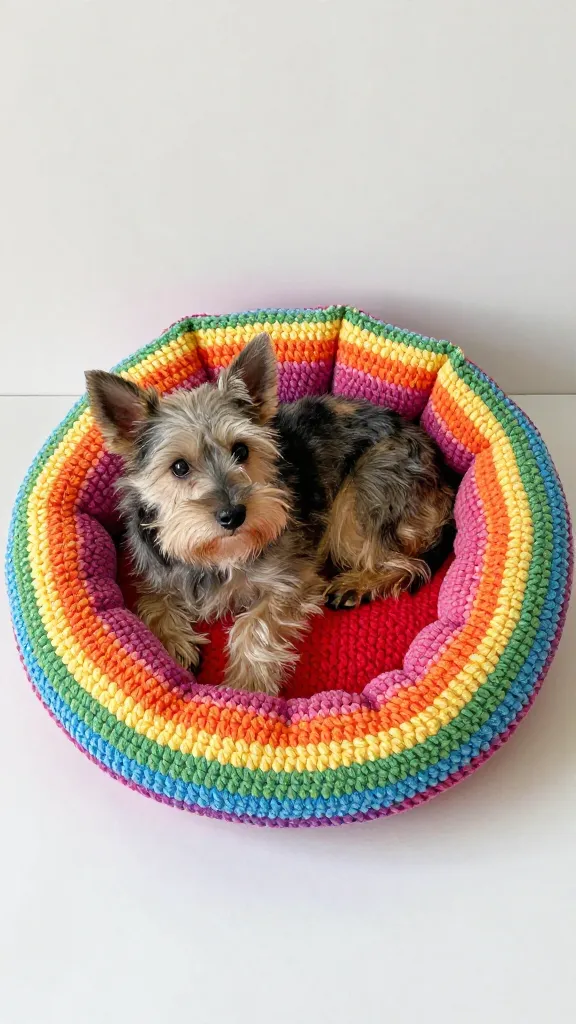
This one looks like it came from a fancy home boutique. Tall sides, firm bottom, clean silhouette.
The basics:
- Use T-shirt yarn or cord with a 10–12 mm hook.
- Work the base in a flat circle, then switch to back loop only for a crisp wall turn.
- Keep the sides dense with slip stitch or single crochet. Go slow—slip stitch in the round takes time but looks designer-level.
Add a round cushion inside and you’ve nailed the “I have my life together” aesthetic. Your dog won’t know it’s handmade, but your friends will ask.
Handles, Tags, and Extras
- Built-in handles: Chain 8–10 and skip stitches for hand holes. Reinforce with tight rows around openings.
- Leather tag: Rivet a simple label for a polished finish.
- Color blocking: Neutral base, pop-color rim. Instant upgrade.
Pattern Idea #3: The Snuggle Sack (Cave Bed)
Got a burrower? Make a cozy cave. It’s basically a padded mat with a soft hood on top.
How to approach it:
- Rectangle or oval base: Thick and cushy—double-strand bulky yarn.
- Top flap: Crochet a large panel and seam it along one long edge and half of the sides, leaving an entrance.
- Optional wire or cord channel: Thread around the opening to keep the “cave” shape.
Add faux fur yarn for the inside and watch your dog disappear like a bedtime burrito.
Pattern Idea #4: Modular Cushion Tiles
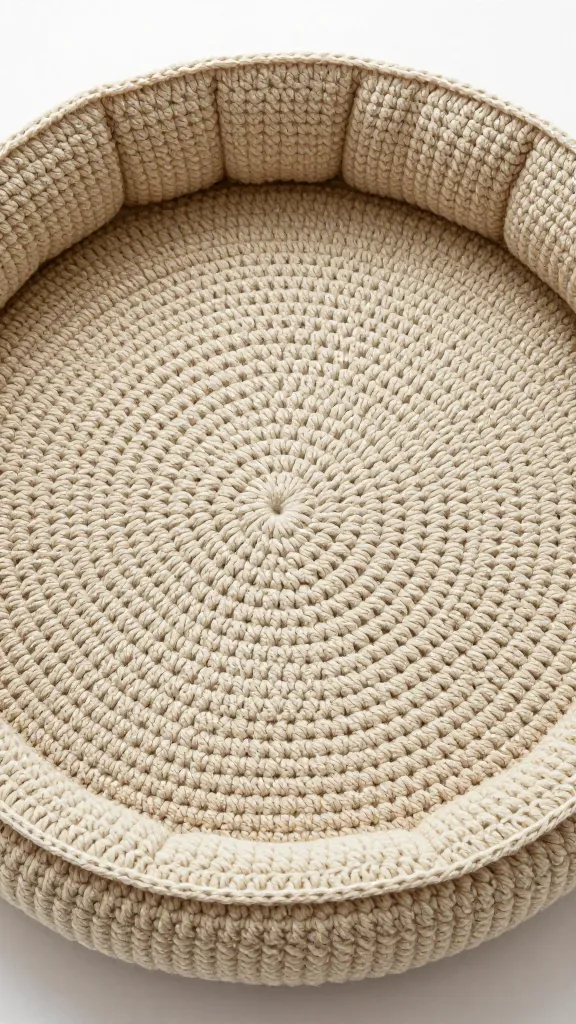
This is genius if you like washing pieces or customizing sizes. Make 6–10 small squares or hexagons, seam them into a mat, then add a removable bolster.
Why it rocks:
- Easy to wash: Unzip the liner, toss tiles in the machine (check yarn care first).
- Changeable: Swap damaged tiles. Pets chew one tile? Not the end of the world.
- Play with color: Ombre, stripes, or random stash-busting patchwork.
Joining Methods
- Whip stitch: Soft and invisible if you match yarn.
- Slip stitch join: Decorative ridges, adds grip.
- Flat braid join: Pretty and flexible—great for hexies.
Pattern Idea #5: Elevated Pad for Crates and Corners
Crate training or a tight space? Make a firm, rectangular pad that slides right in.
Build it like this:
- Dense stitch pattern: Linen stitch or waistcoat stitch to resist claws.
- Reinforced edges: Work a few rounds of crab stitch (reverse sc) for a tough border.
- Two-layer sandwich: Crochet top and bottom panels, slip a foam pad inside, then seam with mattress stitch.
Add corner ties to secure it to crate bars. No more pad migration during nightly zoom rehearsals.
Size Guide: Make It Fit Your Dog (Not Your Sofa)
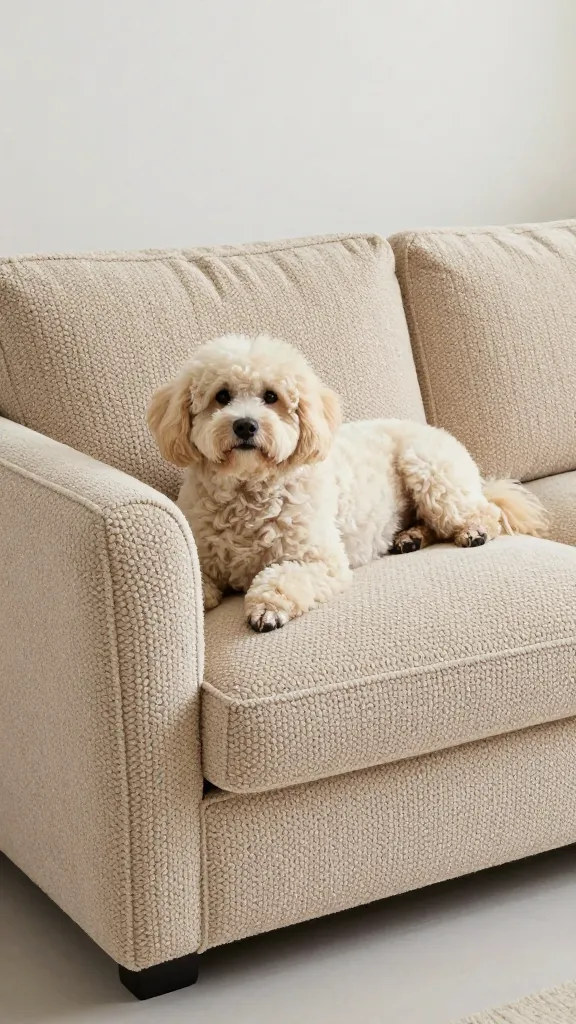
Measure your pup in their favorite sleeping position. Curled donut? Measure nose-to-tail curve. Sprawler? Measure full length and add a few inches.
Rough starting points:
- XS (toy breeds, cats): 14–18 in round base or 16×20 in rectangle
- S (small pups): 18–22 in round or 20×26 in rectangle
- M (corgi, beagle): 22–28 in round or 24×32 in rectangle
- L (border collie, lab): 28–34 in round or 28×40 in rectangle
- XL (big floofs): 34–40 in round or 34×48 in rectangle
Adjust height of walls: 4–6 inches for small dogs, 6–9 inches for medium/large.
Stitches That Shine for Dog Beds
Some stitches just work better under paws and claws.
- Single crochet (sc): Dense, simple, durable.
- Half double crochet (hdc): Slightly taller, still sturdy.
- Waistcoat stitch (knit stitch): Very dense, looks knit, amazing for floors.
- Bobble/puff accents: Add texture to the rim or a center “pillow.” Not for chewers.
- Crab stitch edging: Reinforces and looks neat.
Color and Style Ideas
- Neutrals + texture: Oatmeal T-shirt yarn with a ribbed wall—Scandi vibes.
- Bold rim: Charcoal base, coral bolster. Chef’s kiss.
- Two-tone marled: Hold two strands together for a tweed effect.
Care and Durability: Keep It Fresh
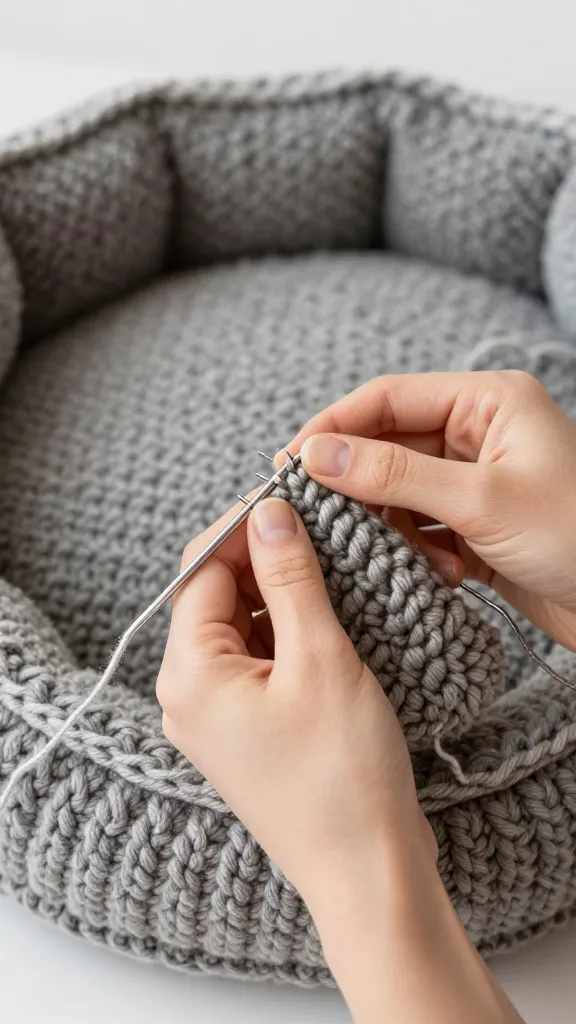
No one loves a smelly bed. Plan for cleaning from the jump.
- Removable inserts: Put stuffing in a zippered pillowcase. Wash that, not the whole bed.
- Machine-washable yarns: Cotton blends and acrylics handle frequent washes better than pure wool.
- Spot-clean strategy: Keep enzyme spray handy for muddy paw days.
- Rotate two beds: One in use, one drying. Your dog never suffers a bedless afternoon, and you look like a pro.
FAQ
What size hook should I use for a sturdy dog bed?
Go big: 10–15 mm for bulky yarns works for most beds. If your walls flop, drop a hook size or switch to a denser stitch like sc or slip stitch. Tight tension = better structure.
Which yarn won’t trap every hair in my house?
Smooth cotton blends or tightly spun T-shirt yarns collect less fur and clean up fast. Chenille and faux fur look luxurious but grab hair like a lint roller, IMO. Choose based on your shedding reality.
How do I keep the bed from sliding on hardwood?
Add a strip of shelf liner or rug pad under the base. Or dab silicone fabric paint on the underside every few inches. It dries flexible and grippy.
Can I make a bed for a heavy or senior dog?
Yes—prioritize support. Use a foam insert (2–4 inches) inside a crochet cover, and stick to dense stitches. A lower entry wall helps arthritic pups get in and out comfortably.
My dog chews everything. Is crochet a lost cause?
Not necessarily. Choose tough yarn (cotton rope, T-shirt yarn), avoid bobbles, and keep the design simple. Offer plenty of chew-safe toys so the bed doesn’t become target practice. Supervise at first, FYI.
How much yarn will I need?
It varies, but ballpark it: small round bed 300–500 g bulky yarn, medium 700–1000 g, large 1200–1600 g. Basket styles with tall walls eat more yardage than flat pads.
Wrap-Up: Make a Bed Your Dog Actually Chooses
Crochet dog beds check every box: cute, comfy, washable, and perfectly sized for your furball. Pick a shape your pup already likes, choose yarn you trust, and go for sturdy stitches. You’ll finish fast, your dog will claim it instantly, and your living room won’t look like a pet store exploded—win-win, IMO.
Ready to upgrade your space? Check out our top picks below — hand-picked options that blend seamlessly into any home while keeping your pup cozy and secure.
As an Amazon Associate, I earn from qualifying purchases.