This post contains affiliate links. As an Amazon Associate, I earn from qualifying purchases, at no extra cost to you.
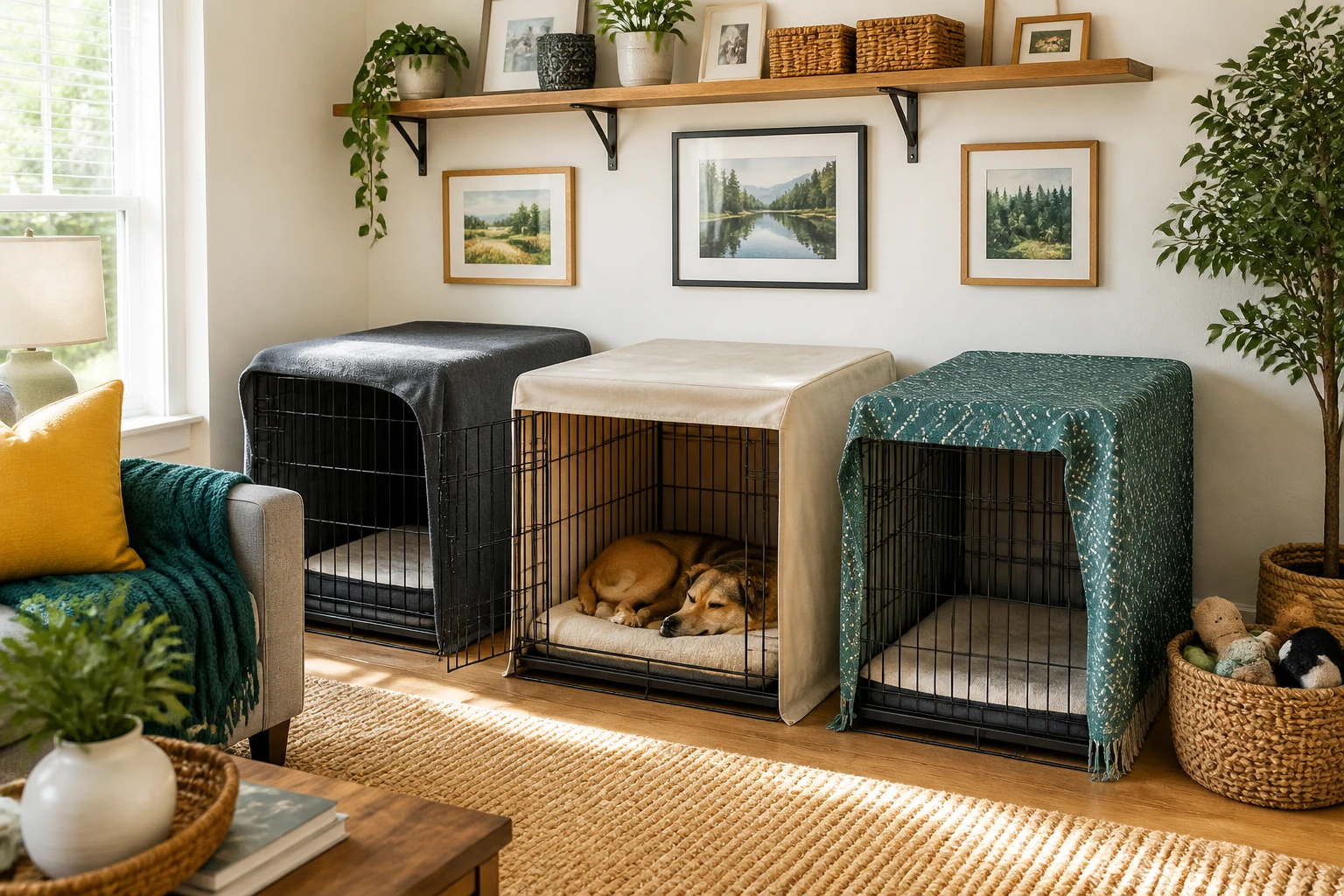
Want your wire crate to blend in and calm your dog without spending a fortune? These 8 DIY cover ideas boost coziness, reduce visual stimulation, and upgrade your room’s vibe in an afternoon. You’ll get practical tips that actually work and honest takes on what’s worth doing. Let’s make your pup’s den feel intentional, not like an afterthought.
⭐ Our Top Pick: See it on Amazon
1. The No-Sew Fleece Throw Hack
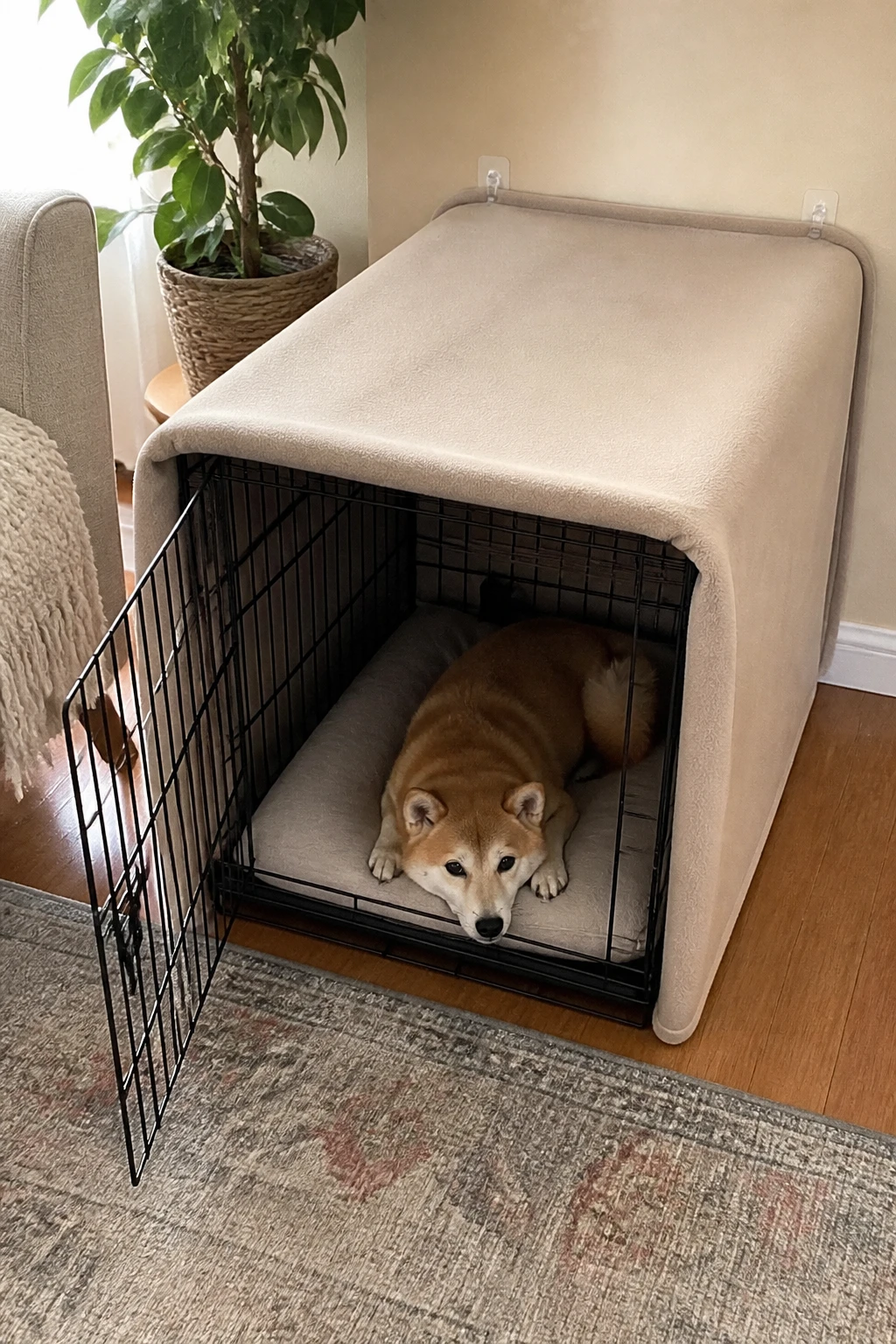
This is the fastest way to soften a wire crate. A single anti-pill fleece throw drapes smoothly, blocks drafts on two or three sides, and washes like a dream. It won’t ravel, so you can trim it to size without stitching.
How To Do It
- Choose a throw that’s at least 1.5x the crate’s top surface for side drape.
- Round the back corners with scissors so it hangs neatly and doesn’t puddle.
- Secure the back edge with two medium Command hooks on the wall or with Velcro One-Wrap straps around the rear bars.
Keep the front panel short to maintain airflow. I’d pick thicker fleece for anxious pups because it muffles noise better.
Best for: Fast weekend fix, apartments, dogs who like darkness but don’t overheat.
2. Tailored Drop-Cloth Cover With Box Corners
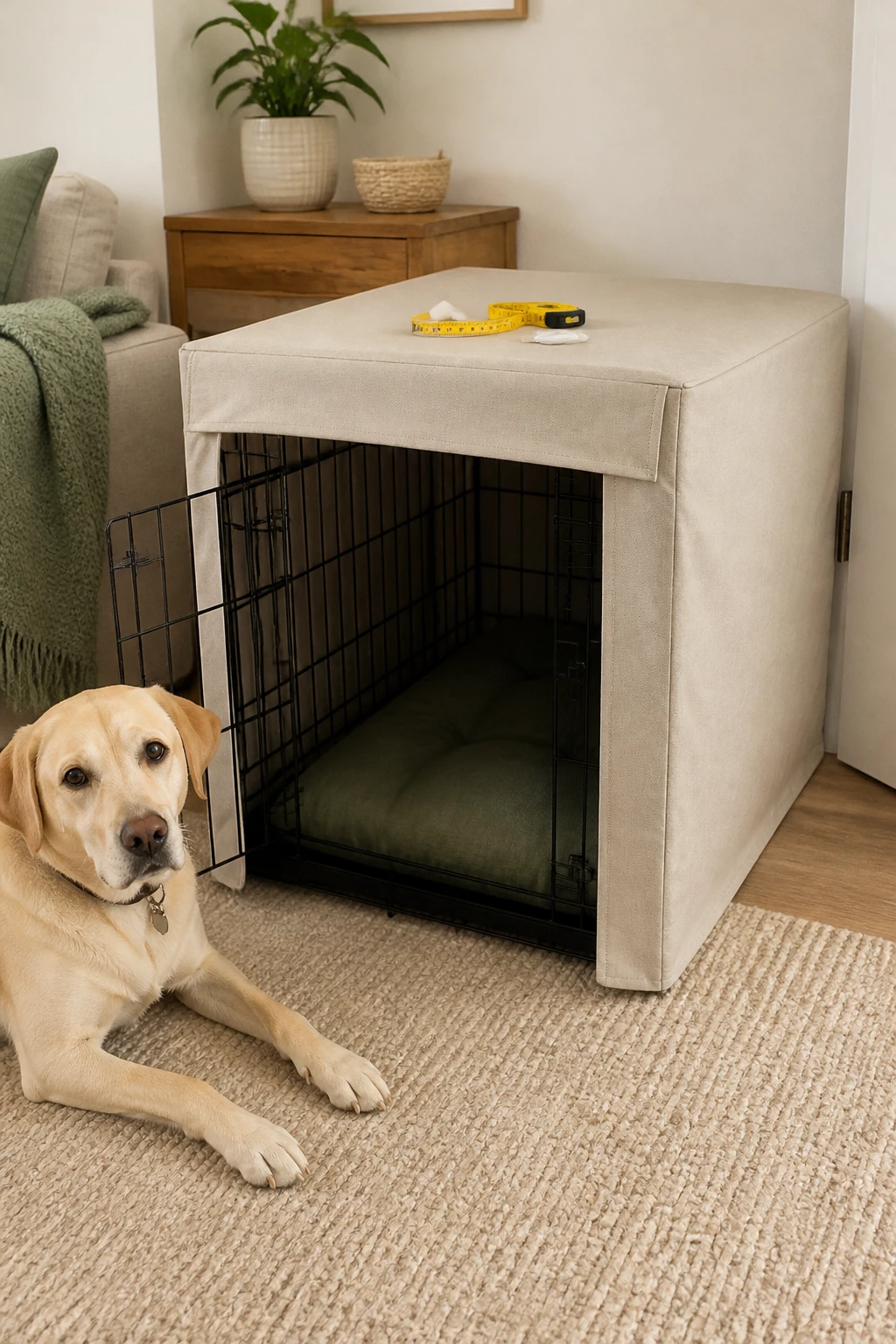
Want a custom look on a budget? A cotton canvas drop cloth turns into a fitted slipcover that rivals pricey boutique options. It’s sturdy, paintable, and stands up to snaggy paws.
Materials
- 6–9 oz cotton drop cloth (washed to pre-shrink)
- Fabric tape measure, clips, fabric chalk
- Sewing machine or fusible hem tape
- Stick-on Velcro for front closures
Steps
- Measure top, sides, and back. Add 1 inch seam allowance everywhere.
- Cut panels and sew into a box shape. Create front flaps that overlap 2–3 inches.
- Add vertical Velcro strips for a neat door opening. Hem the bottom for a clean edge.
Canvas filters light without trapping heat, and you can stencil a pattern if you want. Worth it if you crave a furniture-grade finish.
Best for: Living rooms, minimalist decor, medium to large crates.
3. Quilted Panel Set With Snap Tabs
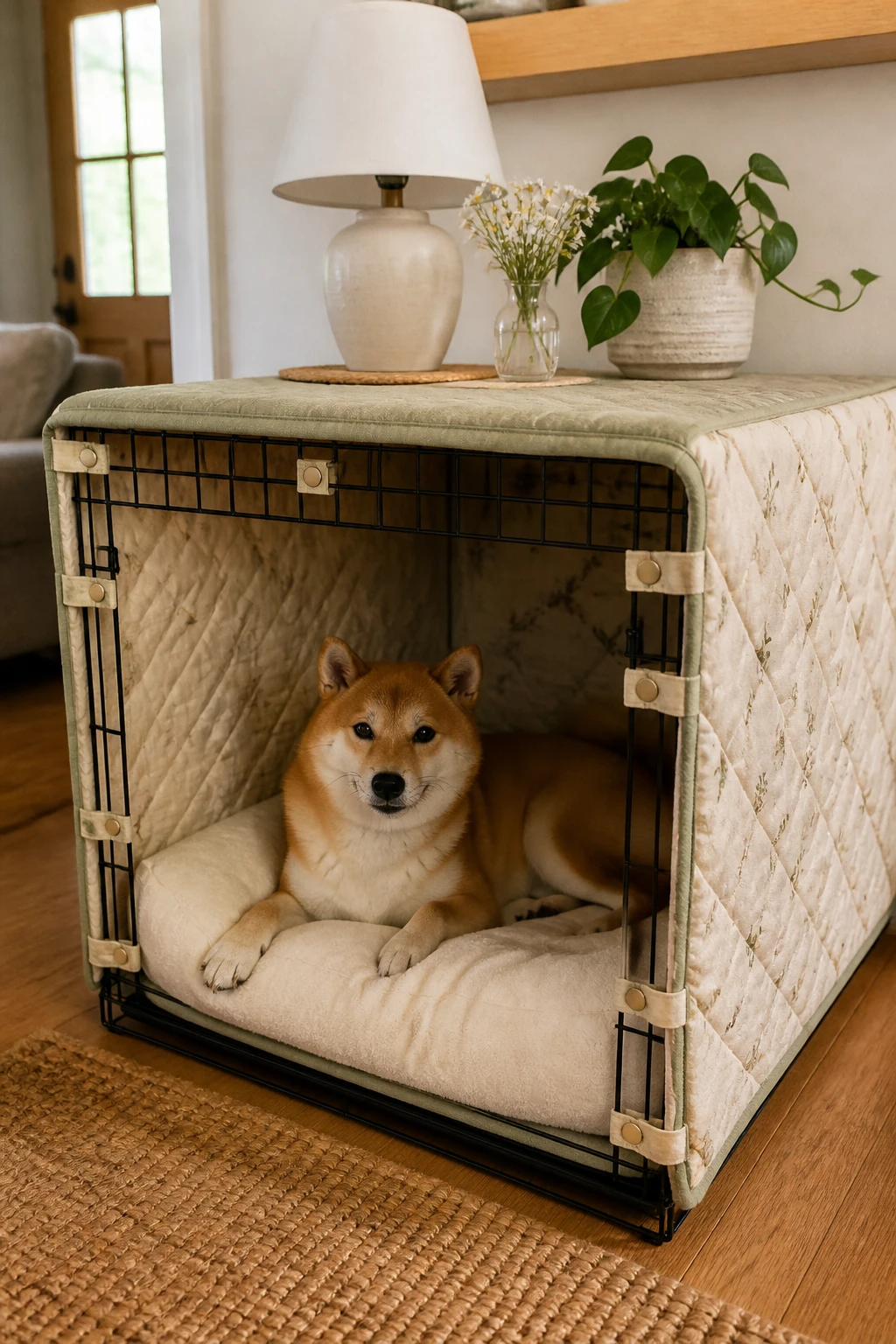
Modular panels let you cover what you need and leave the rest open. Quilted cotton or batting-backed fabric reduces echoes and creates a calm nook. Snap tabs make removal easy for washing or warm days.
Build It
- Cut three panels: top, one long side, and back. Use cotton batting and quilt straight lines for stability.
- Sew 1-inch cotton twill tape tabs along the top edges of side and back panels.
- Install plastic snaps on tabs so they wrap and click around the crate wires.
Mix prints for fun, or keep it tonal for a subtle look. I’d skip this if your dog chews fabric—snaps plus layers can tempt determined mouths.
Best for: Light sleepers, echoey rooms, people who wash often.
4. Linen Curtain Cover With Magnetic Door Flap
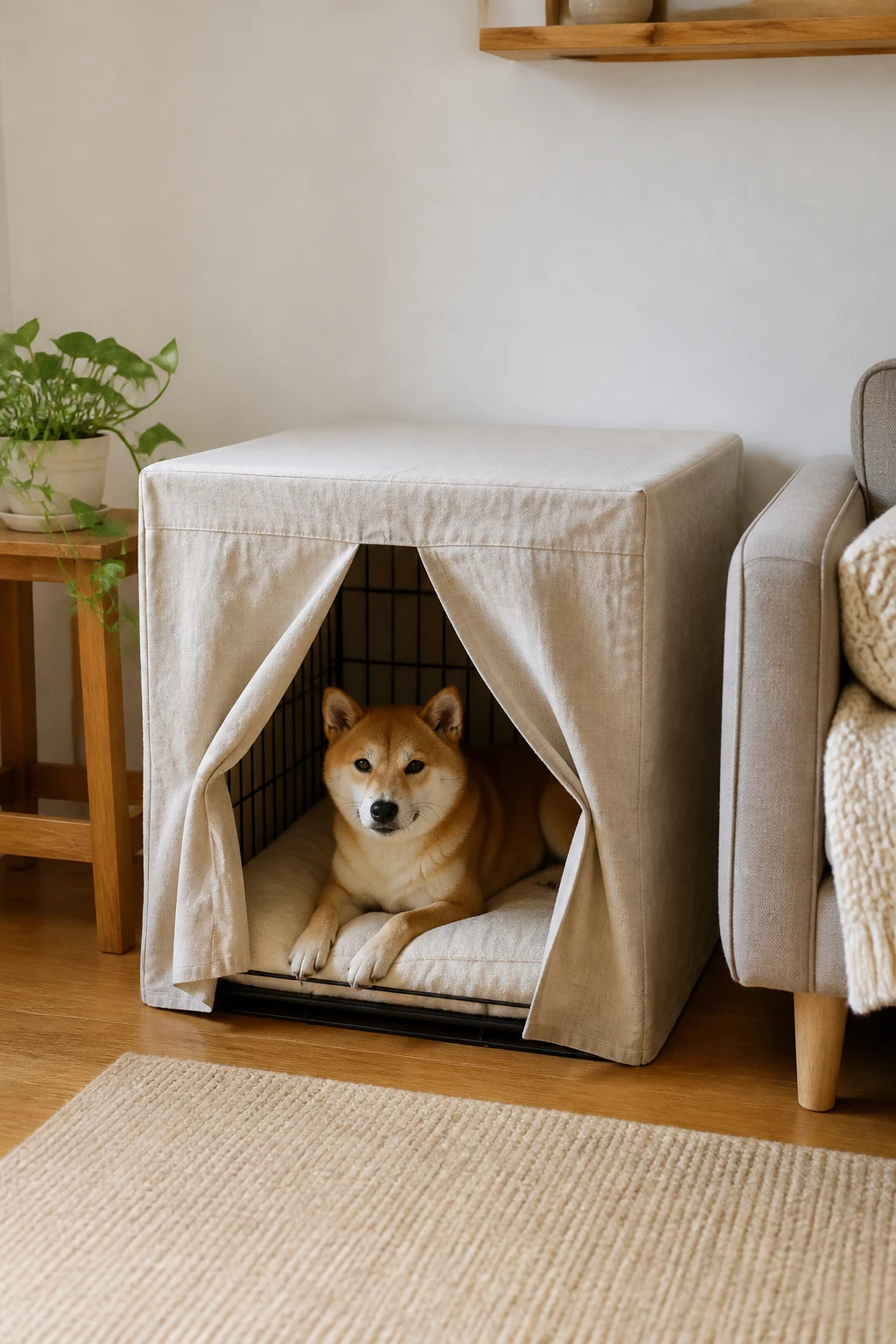
Breathable linen gives you airflow and a relaxed, airy vibe. Add a front flap with small concealed magnets so you can open or close it quickly without fiddly ties.
Tips
- Use midweight linen or linen-cotton blend. Pre-wash to avoid future shrinkage.
- Make a top panel and two side panels; join them with flat-felled seams for durability.
- For the door, sew tiny rare-earth magnets into the hem, and stick matching steel washers (taped and covered) on the crate frame to catch them.
Keep magnets fully enclosed and stitched so they can’t pop out. Seriously—safety first with anything small. This looks refined and works well year-round.
Best for: Warmer climates, boho or coastal rooms, dogs that prefer a view sometimes.
5. Reversible Flannel-and-Cotton Wrap With Corner Ties
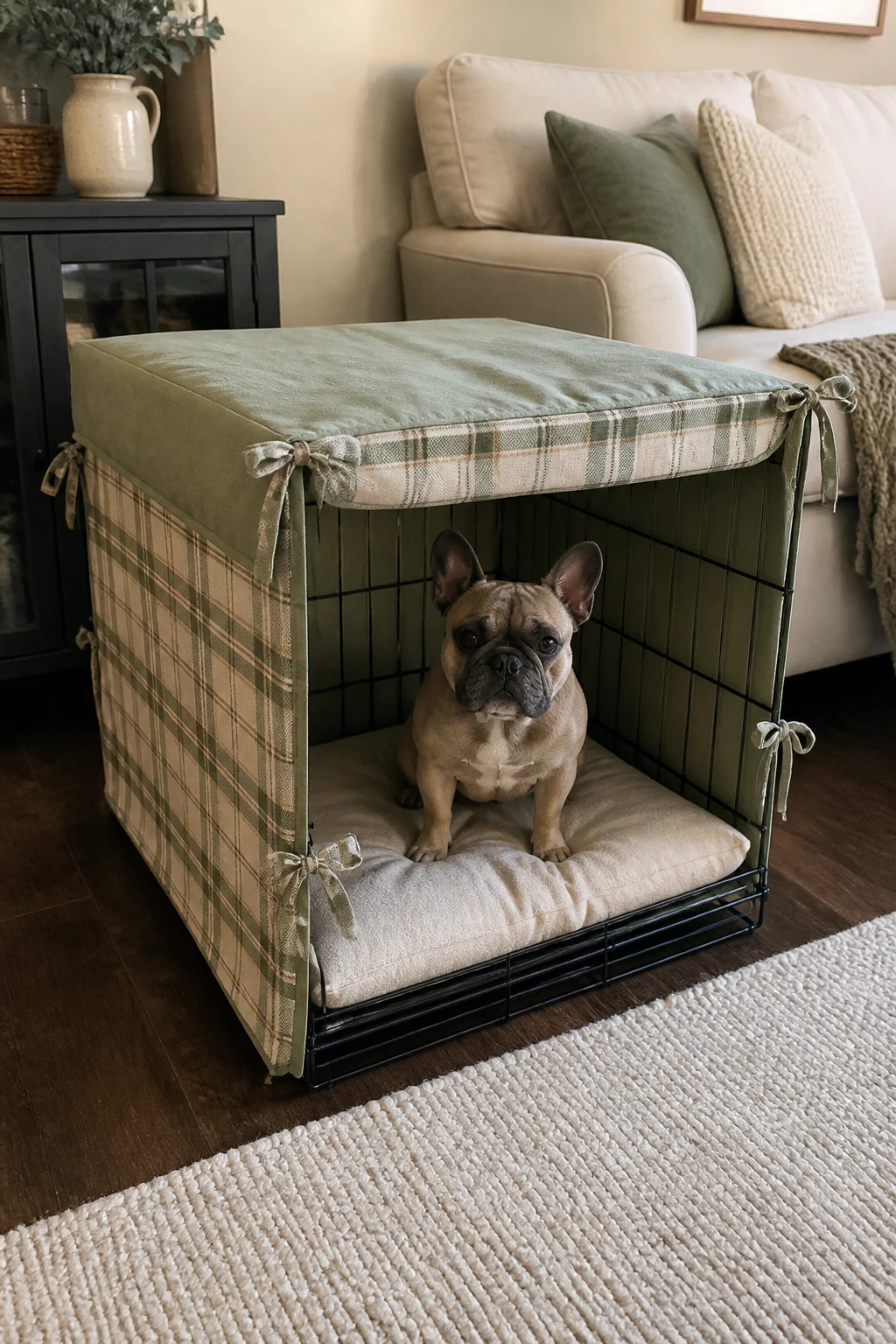
Two-sided fabric means you get a seasonal flip: cozy flannel for chilly months and crisp cotton for the rest. Corner ties keep things snug without tape or hardware.
How-To Snapshot
- Cut a single large rectangle that covers top and two sides. Sew flannel to cotton right sides together, turn, and topstitch.
- Add four fabric ties at the top corners and midway down the sides. Thread ties around crate bars and bow them tight.
- Leave the back open for ventilation or add an extra rectangle as a detachable panel with more ties.
Choose patterns that complement your throws or rug so it feels intentional. Worth it if you love swapping looks without making a whole new cover.
Best for: Bedrooms, transitional weather, dogs who like a partial den effect.
6. Wood Top + Fabric Skirt Hybrid (Furniture Vibe)
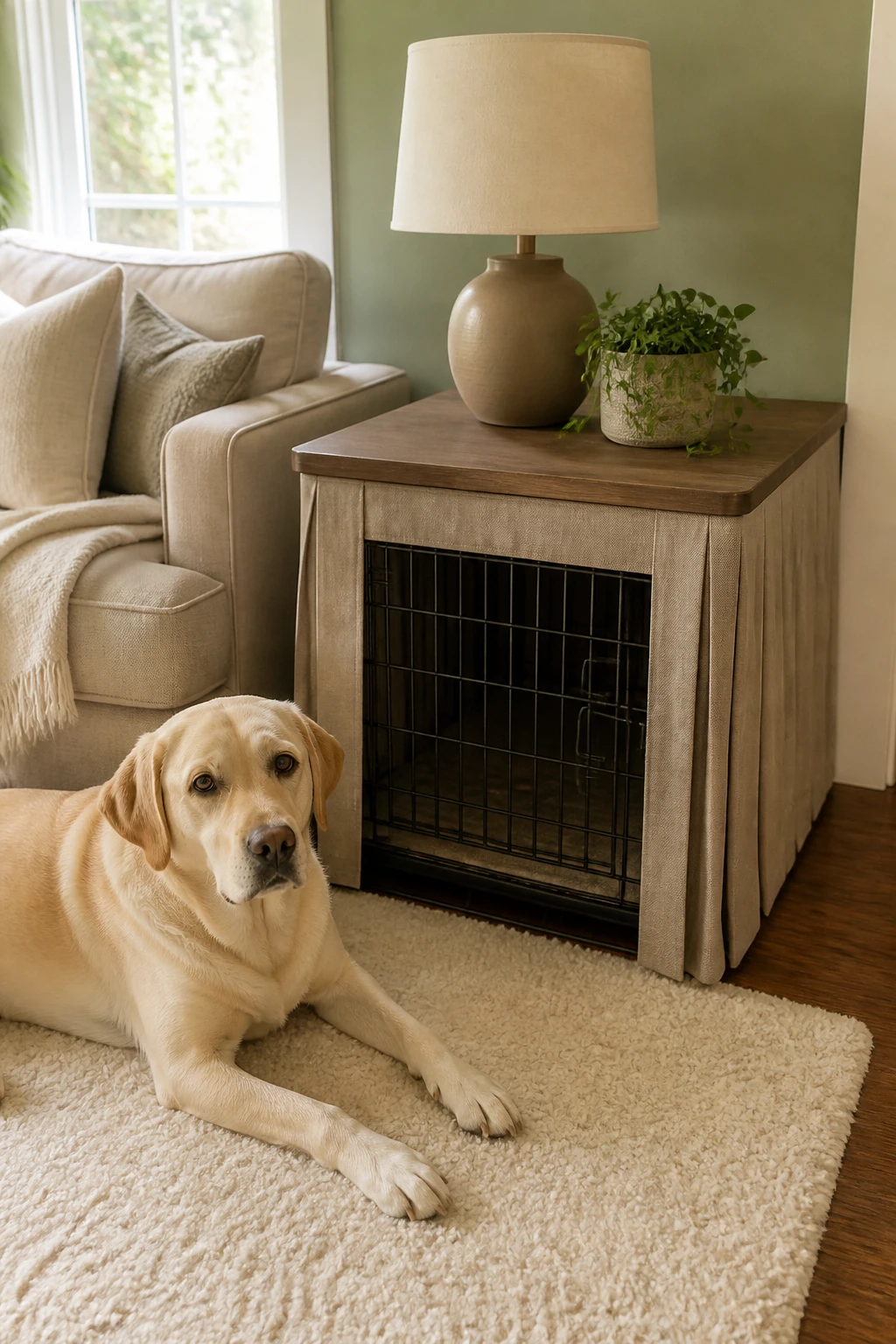
Turn a wire crate into a side table with a removable wood top and a tailored fabric skirt. You get surface space for a lamp or plant (kept out of reach) while softening the metal.
Build Plan
- Cut a plywood or pine panel 1 inch larger than the crate top. Sand, finish with water-based poly, and add felt pads underneath.
- Attach a simple skirt: sew a long fabric strip with a clean hem and use self-adhesive Velcro to the underside of the wood top and the top edge of the skirt.
- Set the top on the crate so the skirt drapes the sides. Leave the front open for air and access.
Skip heavy lamps and keep cords routed behind furniture or through cord clips—no chew temptations. I’d pick this when you need the crate to disappear in plain sight.
Best for: Small spaces, living rooms, mature dogs with steady manners.
7. Blackout Twill “Calm Zone” With Mesh Vent Windows
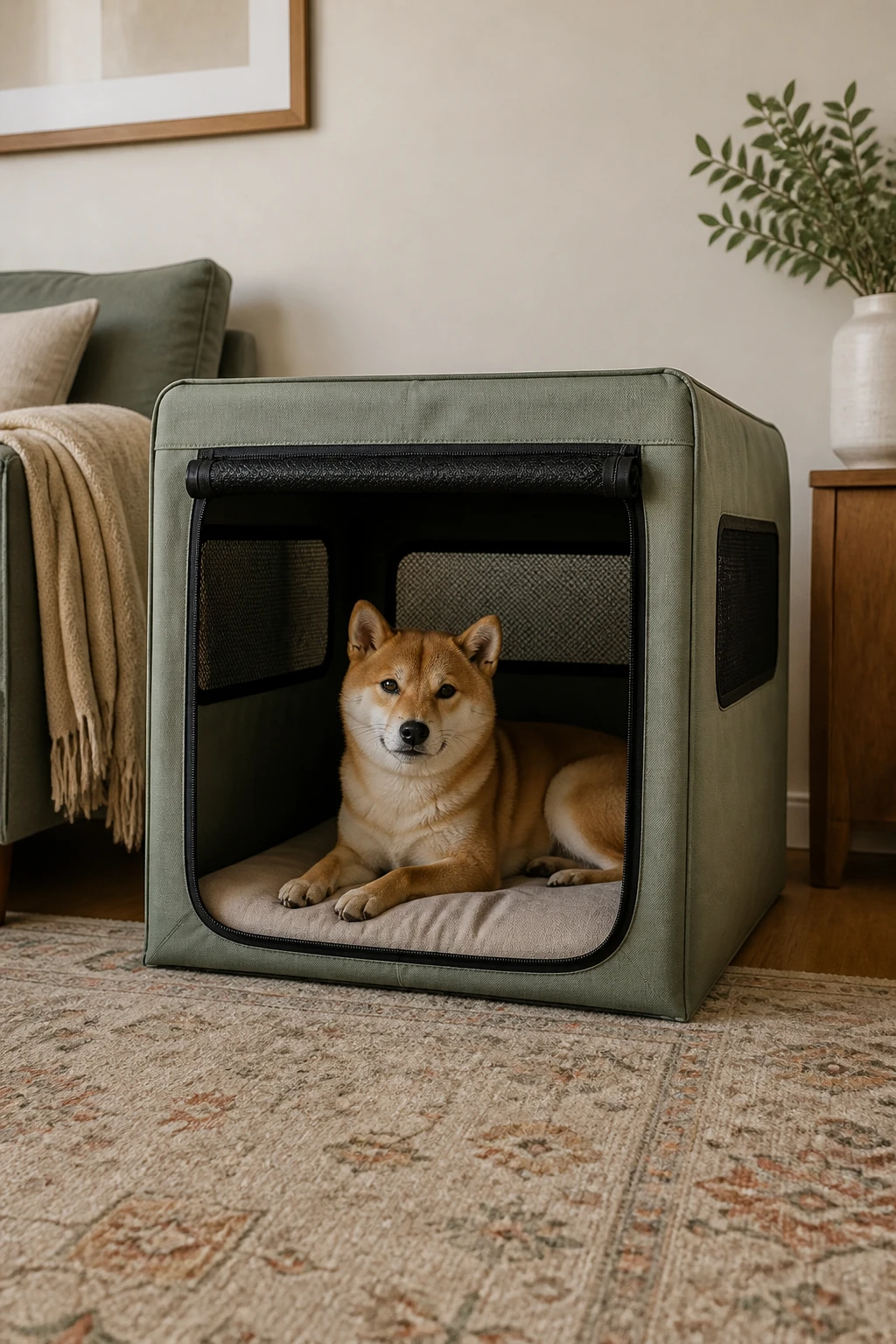
For easily overstimulated pups, a darker, structured cover can help them settle. Heavy cotton twill blocks movement outside while mesh windows keep air moving.
What You’ll Need
- Heavy twill, polyester mesh (athletic mesh or window screen), bias tape
- Zipper or hook-and-loop for the door
- Template paper to mark vent positions in the back and high on the sides
Assembly Tips
- Cut window openings and bind edges with bias tape.
- Stitch mesh from the inside so curious paws can’t lift edges.
- Add a center seam on the top panel to prevent sagging.
This one takes effort, but it pays off for anxious dogs. Worth it if outside activity triggers barking or pacing.
Best for: Busy households, front rooms with street views, reactive dogs.
8. Modular Roller-Shade Panels for the Minimalist
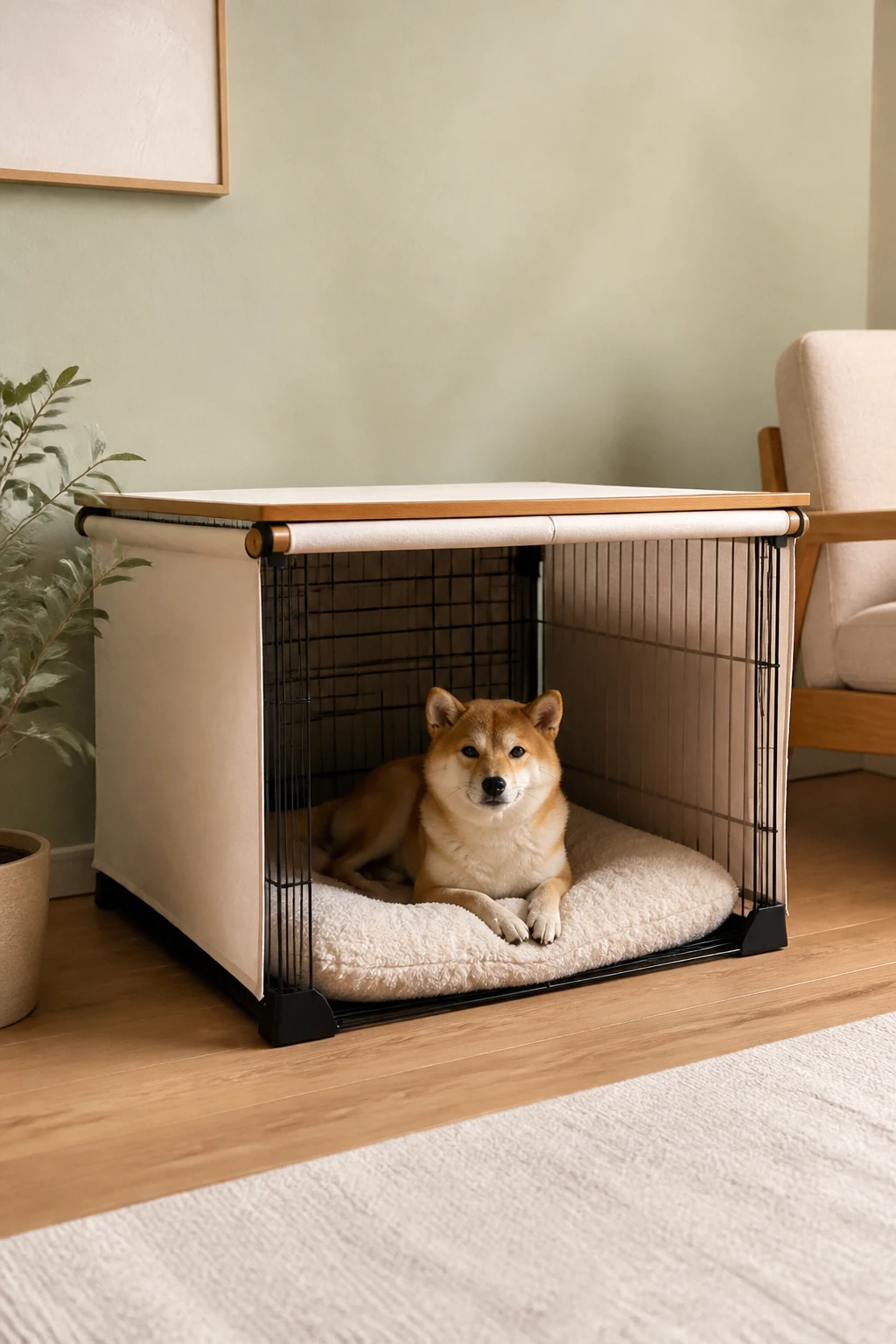
Hate fabric puddling? Mount cordless roller shades on the wall just above and beside the crate. You can lower one, two, or all three for an instant cover—then roll them up when guests arrive.
Setup
- Use safe, cordless, fabric or woven shades cut to crate width.
- Install one shade centered over the top back edge, and one on each side wall aligned with the crate’s sides.
- Lower them to the crate’s base height. Keep the front open for ventilation and access.
No sewing, no washing—just dust occasionally. I’d skip this if your dog repositions the crate, because alignment matters.
Best for: Modern spaces, renters who prefer wall-mounted solutions, non-chewers.
Common Mistake to Avoid
Don’t block airflow on all four sides. Your dog needs ventilation, especially around the front and at least part of one side. Also avoid dangling cords, loose ribbons, or small hardware—chewers turn those into snacks. Keep heat sources like radiators and space heaters several feet away so you don’t trap warmth under the cover.
FAQ
How much of the crate should I cover?
Start with the back and one long side, then test your dog’s comfort. If your pup relaxes but doesn’t pant, add the top panel. Leave the front partially open unless your trainer suggests a full blackout for specific behavior goals.
Which fabrics are safest and easiest to clean?
Cotton canvas, twill, linen blends, and anti-pill fleece wash well and don’t shed fibers. Avoid loose knits that can snag and fray. Pre-wash fabric to prevent shrinking and color bleed, and use color-safe detergent without strong fragrances.
How do I keep the cover from sliding into the crate?
Use Velcro One-Wrap straps through the top bars, snap tabs, or small binder clips at the back edge. For tailored covers, box corners and proper measurements prevent shifting. If you use a wood top, add felt pads for grip.
What if my dog chews fabric?
Choose tighter weaves like canvas, skip decorative trims, and secure edges so nothing dangles. Consider the modular shade approach or a wood-top-with-short-skirt hybrid that reduces accessible fabric. If chewing persists, remove the cover during unsupervised time and consult a trainer to address anxiety or boredom.
Will a cover help with barking?
It can reduce visual triggers and echo, which often lowers arousal. Pair it with training—reinforce quiet moments, provide a comfy bed, and position the crate away from foot traffic. For persistent noise sensitivity, a heavier cover with mesh vents works best, IMO.
Ready to give your crate a glow-up that your dog will actually appreciate? Pick one idea, take quick measurements, and knock it out this weekend. You’ll end up with a den that blends into your space and helps your pup settle faster.
As an Amazon Associate, I earn from qualifying purchases.