This post contains affiliate links. As an Amazon Associate, I earn from qualifying purchases, at no extra cost to you.
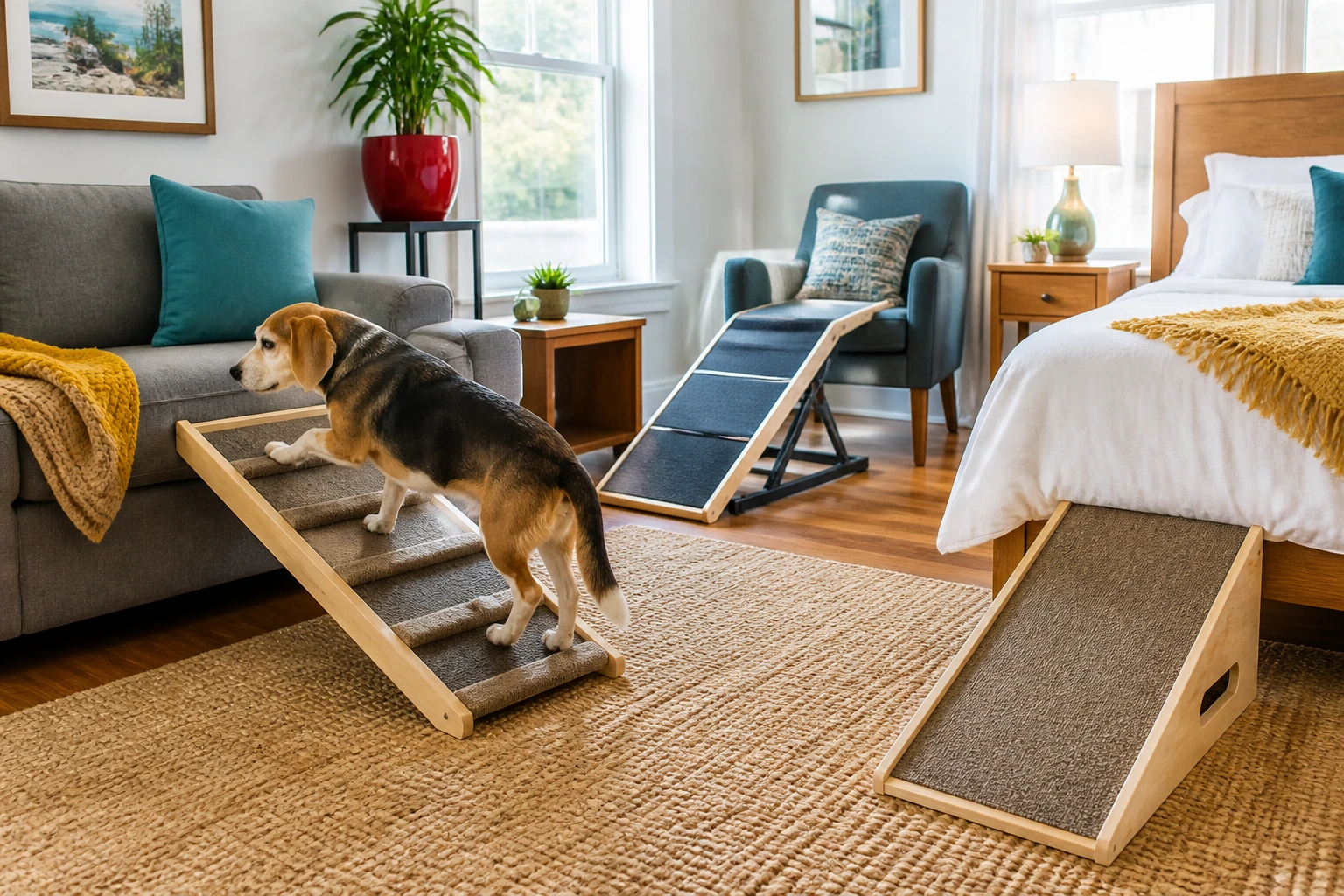
Your pup wants snuggles, not acrobatics. If jumping onto the couch or bed feels risky for their joints, these ramps fix that fast. We’ll walk through 7 builds you can tackle with basic tools, smart materials, and renter-friendly tricks. Each one keeps safety front and center and blends into your decor without screaming “pet gear.”
🐾 Want to build your own? Get my printable Easy DIY Dog Steps & Ramp Plans: a ramp length chart, cut lists and step-by-step builds for a dog ramp, bed steps and sofa steps. Instant download!
⭐ Our Top Pick: See it on Amazon
1. Fold-Flat Plywood Ramp With Carpet Treads
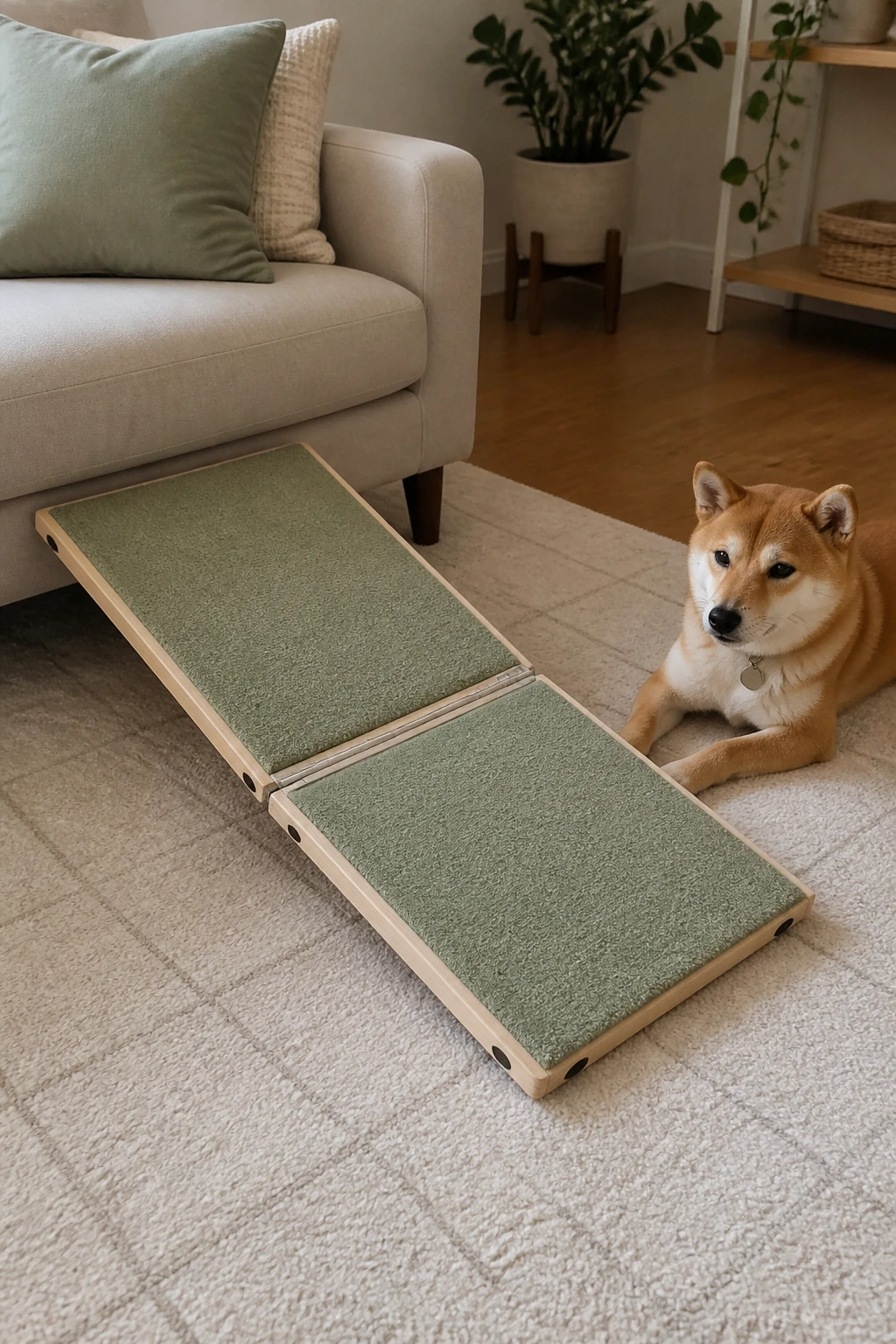
Want a clean, modern look that stores under the bed? This hinged plywood ramp checks all the boxes. It’s sturdy, affordable, and you can customize the angle for couches or low beds.
Materials
- Two pieces of 1/2-inch plywood (12–16 inches wide; lengths to match your furniture height)
- Piano hinge (same width as ramp)
- Non-slip carpet runner or stair tread pads
- Wood screws, sandpaper, paint or stain, felt pads
How-To
- Measure height from floor to couch/bed top. Aim for a gentle slope: 18–22 degrees for small dogs, up to 26 degrees for sturdy pups.
- Cut plywood to length. Sand edges smoothly to prevent splinters and snagged fur.
- Join the two boards with the piano hinge so it folds like a book. This lets you adjust length or store flat.
- Apply carpet runner with construction adhesive or use stair treads spaced every 6–8 inches.
- Add felt pads to the bottom to protect floors and keep movement quiet.
Safety tip: Seal the wood and sand corners round. If your dog chews, skip decorative trim and keep glue lines minimal and dry before use.
Best for: Minimalist living rooms and small spaces where you want a ramp that disappears under furniture. IMO, I’d pick this if you want a durable, no-frills ramp that looks sleek.
2. Adjustable Crate-Slat Ramp That Doubles as a Side Table
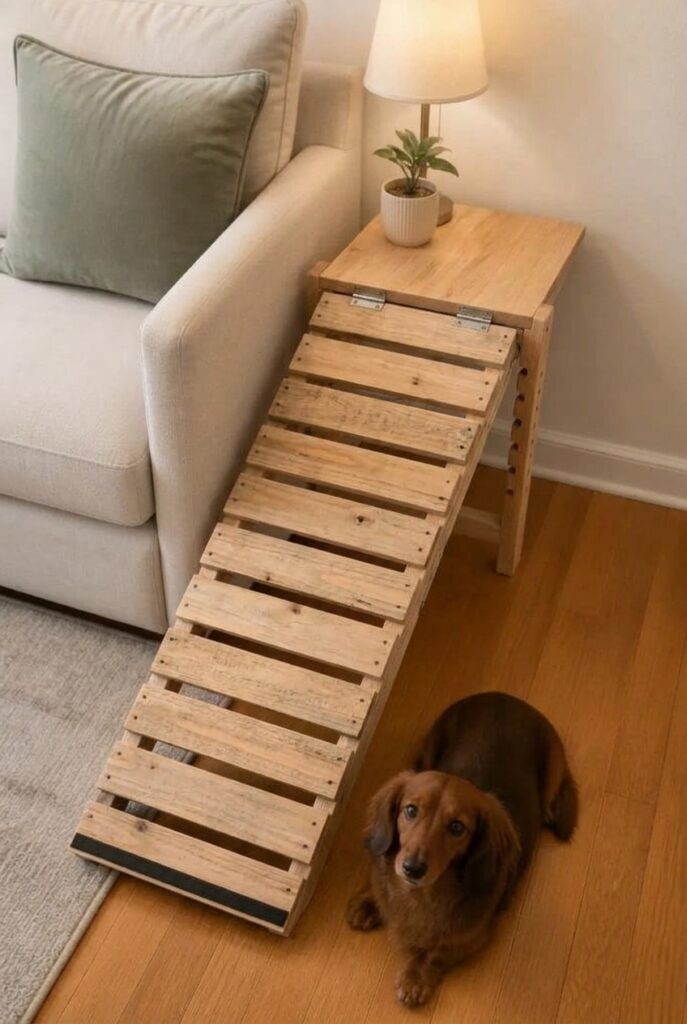
Short on space? Build a ramp that props against the couch and doubles as a slim table at the top. It’s a clever two-in-one that keeps remotes and coffee parked while your dog strolls up safely.
Materials
- 1×3 or 1×4 pine boards for slats and sides
- 1/2-inch plywood deck for the top “table” landing
- Pocket-hole screws, wood glue, edge banding (optional)
- Rubber stair nosing or cork strips for traction
Build Steps
- Create a ladder-style frame with two side rails and evenly spaced slats (3–4 inches apart).
- Attach a small rectangular landing at the top (same height as couch or bed). Add a low lip at the back to stop items from sliding off.
- Fasten rubber stair nosing to each slat or wrap with cork strips for grip without bulk.
- Finish with non-toxic polyurethane or paint to match your decor.
Pro tip: Add a simple folding leg under the landing so you can change the angle when you move it between couch and bed.
Best for: Studio apartments and anyone who needs function to do double duty. Worth it if you like multi-purpose furniture that doesn’t scream “pet ramp.”
3. PVC Frame Ramp With Washable Fabric Sleeve
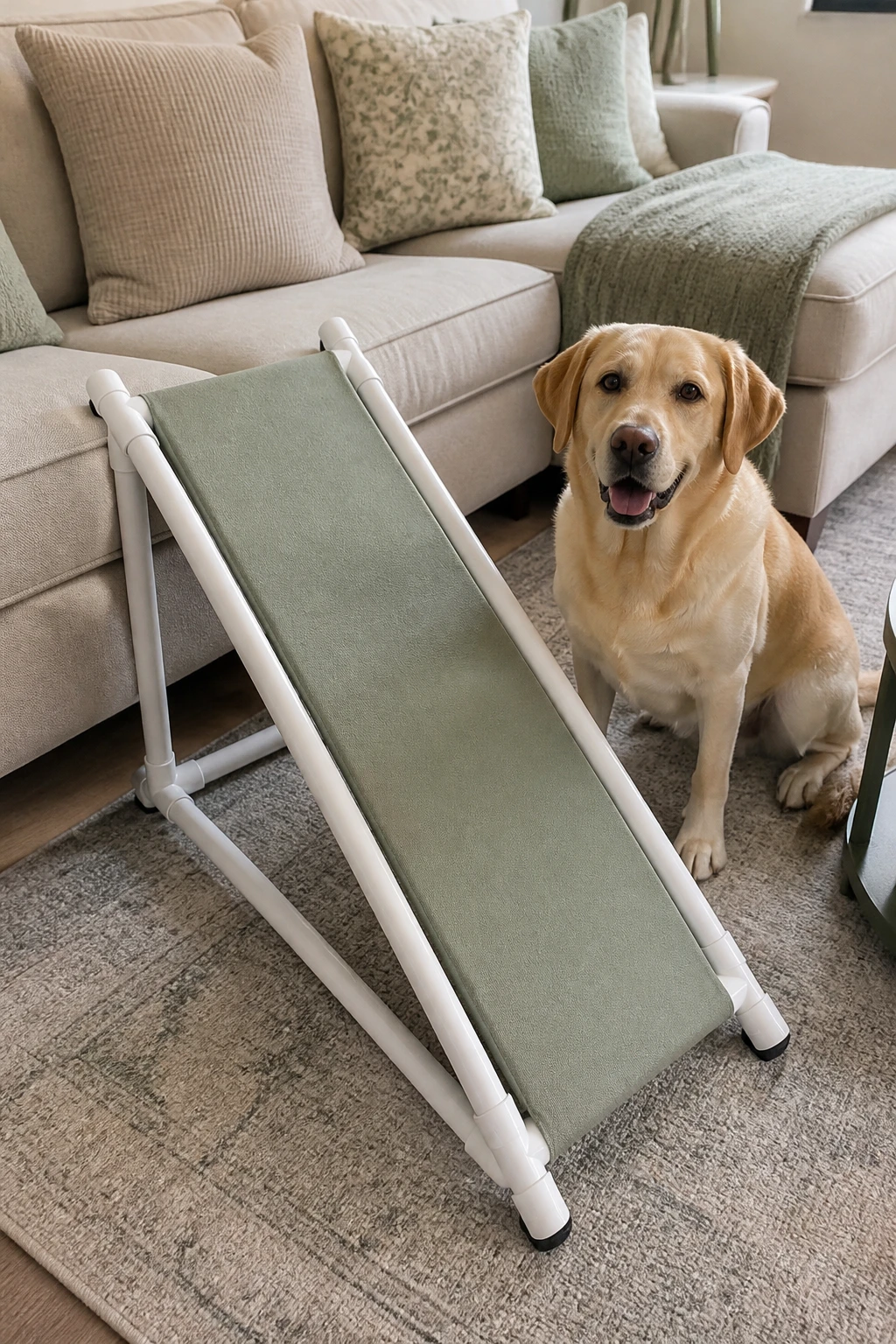
Prefer lightweight and budget-friendly? PVC pipe builds fast, handles moisture, and won’t dent walls. A tight fabric sleeve creates a smooth walking surface that you can toss in the wash.
Materials
- 3/4-inch PVC pipe, elbows, and T-fittings
- PVC cement (or skip cement to keep it modular)
- 1/4-inch plywood or corrugated plastic sheet for the deck
- Upholstery fabric or outdoor canvas; Velcro strips
- Non-slip tape for the underside feet
How-To
- Assemble a simple rectangular frame with two side rails, crossbars at both ends, and one or two mid crossbars.
- Cut the deck to size and screw into plastic brackets or zip-tie to the frame (trim ends).
- Sew a snug fabric sleeve with Velcro underneath so you can remove and wash it. Add thin closed-cell foam under the fabric for comfy traction.
- Stick non-slip tape to the bottom of the PVC feet to prevent sliding.
Safety tip: Avoid loose cords or long ribbons. Keep all ties trimmed and secured so curious pups can’t chew them off.
Best for: Renters and anyone who needs a lightweight ramp that moves room to room. I’d skip this for heavy or high-energy dogs that sprint up ramps.
4. Stair-Riser Conversion: Turn Three Steps Into a Gentle Climb
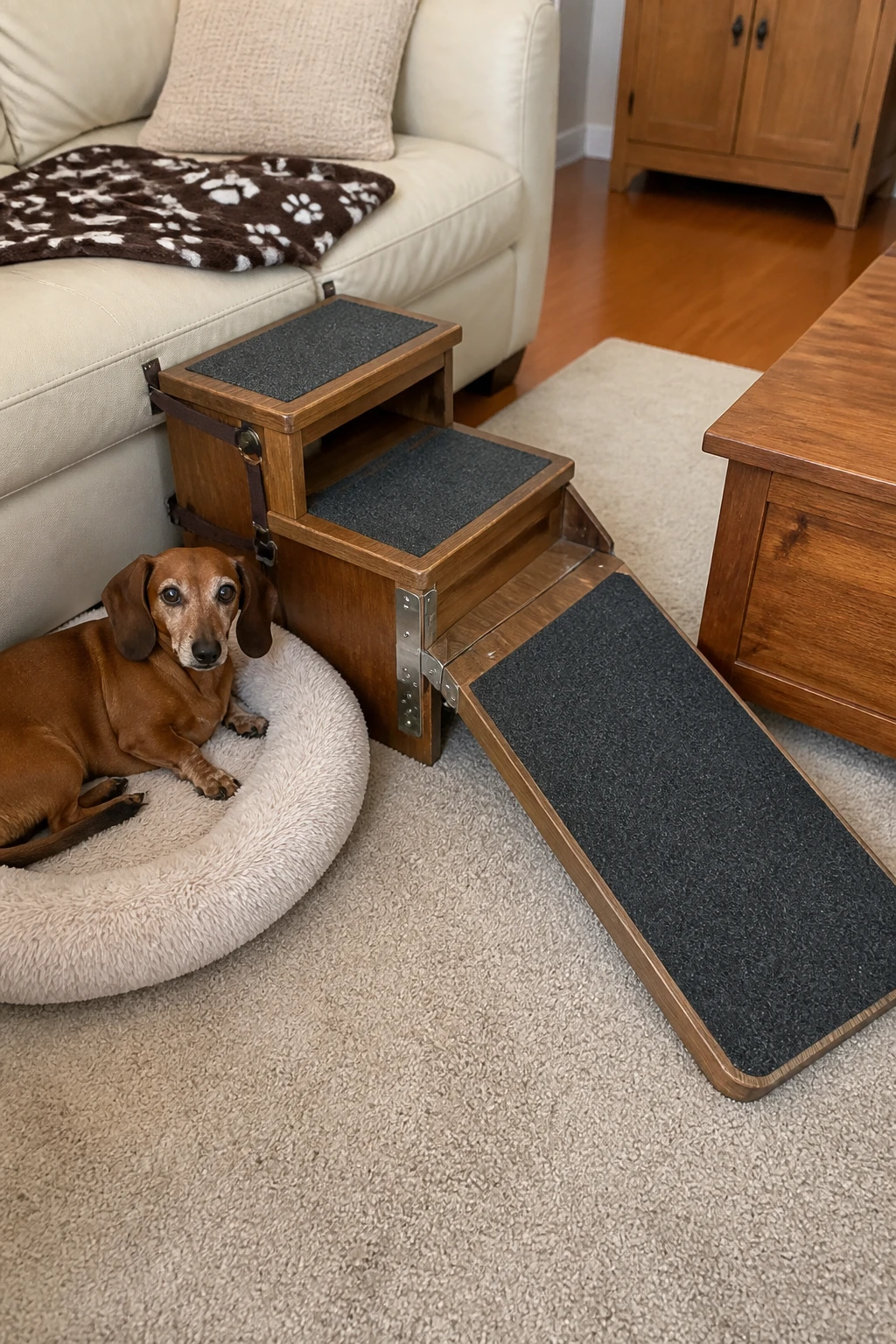
If your dog struggles with jumping but handles steps, this hybrid option rocks. Use a ready-made two- or three-step pet stair and extend it with a hinged ramp board for a longer, easier climb.
Materials
- Existing 2–3 step unit (solid wood or dense foam)
- 3/4-inch plywood ramp extender (12–16 inches wide)
- Piano hinge and latch
- Grip tape or rubber-backed runner
- Angle brackets and furniture straps
Build Steps
- Measure from the top step to the furniture edge. Cut the extender to reach it with a gentle slope.
- Hinge the extender to the top step so it folds down when not in use.
- Add a simple latch to keep it folded for storage.
- Apply grip tape or a runner on the extender. Anchor the step unit to your couch frame or wall stud with furniture straps to prevent wobble.
Why it works: Dogs learn stairs fast. Extending the top spreads out the climb and reduces joint impact.
Best for: Senior dogs who still like steps but need less height per move. I’d pick this if you already own pet stairs and want an easy upgrade.
5. Chic Box-Ramp With Hidden Storage Bins
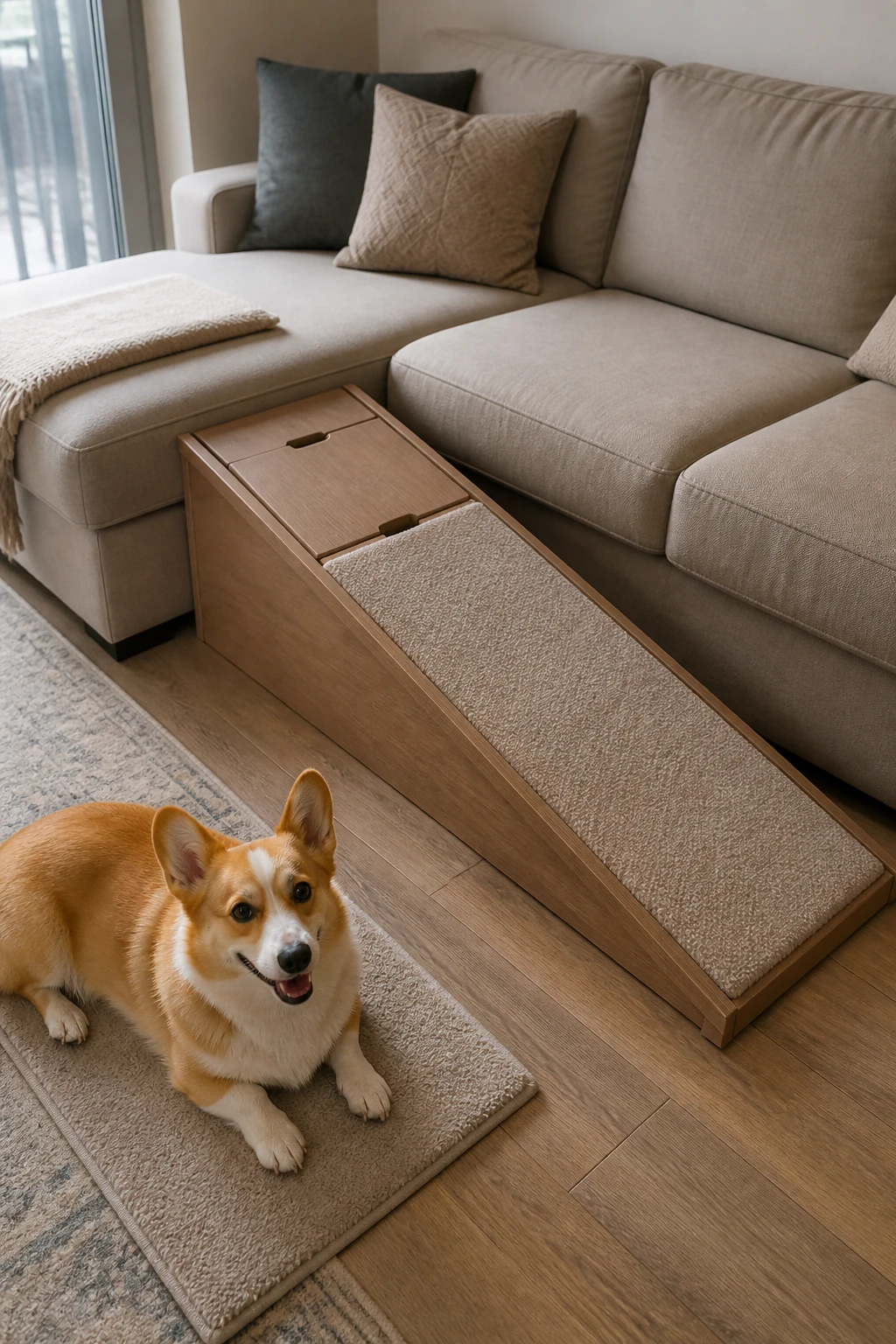
Need extra storage for leashes, brush, or blankets? Build a hollow ramp with lift-up lids and stash everything inside. It looks like a bench from the side, so it blends with your sofa setup.
Materials
- 3/4-inch plywood for sides and top panels
- 1×2 cleats for internal supports
- Soft-close hinges for access panels
- Low-pile carpet tiles or rubber mat
- Magnetic catches, felt feet
Build Steps
- Construct a tapered box: taller at the furniture end, lower at the floor end. Add internal dividers to prevent flex.
- Cut two or three access panels along one side or on top. Install soft-close hinges to avoid finger and nose pinches.
- Apply carpet tiles to the ramp surface. They’re replaceable if claws rough them up.
- Add felt feet and a hidden wall anchor to lock it in place if you have enthusiastic launchers.
Design note: Edge-band the plywood or add a thin trim lip for a polished look. Keep trim flush so paws don’t catch.
Best for: Families who love tidy spaces and want storage that does something. Worth it if you hate visual clutter.
6. Collapsible A-Frame Ramp for Bed Heights
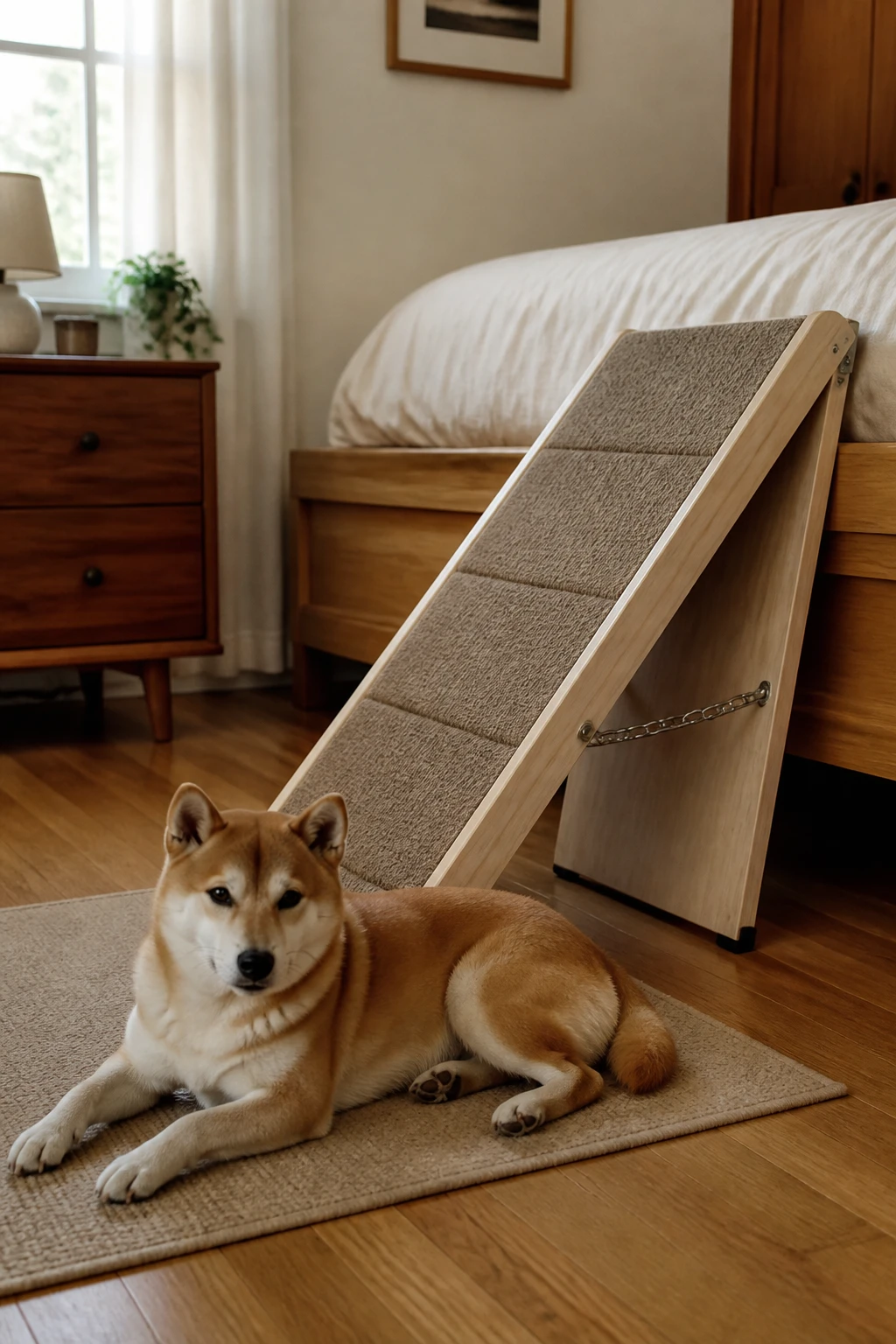
Beds run tall, and that steep angle can intimidate dogs. This A-frame design folds like a ladder, gives you a landing in the middle, and stores in a closet when company visits.
Materials
- Two ramp panels (1/2-inch plywood, 12–16 inches wide)
- Two hinges at the top to create the “A” shape
- Locking side chains or folding shelf brackets to set angle
- Outdoor rug or sisal runner for traction
- Rubber feet or silicone pads
Build Steps
- Hinge the two panels at the top. Add side chains at equal lengths to lock the open position.
- Cover both panels with a sisal runner or outdoor rug. Staple on the underside and finish edges with binding tape.
- Place the high end snug against the mattress. Add a small anti-scuff strip where it contacts the bed frame.
Training tip: Lure with treats along the centerline and reward slowly. Start with a shallow angle and shorten the chains as confidence builds.
Best for: Tall beds, guest rooms, or anyone who wants a ramp that hides fast. I’d pick this for bigger breeds that need extra surface area.
7. Renter-Friendly Foam Core Ramp With Fabric Wrap
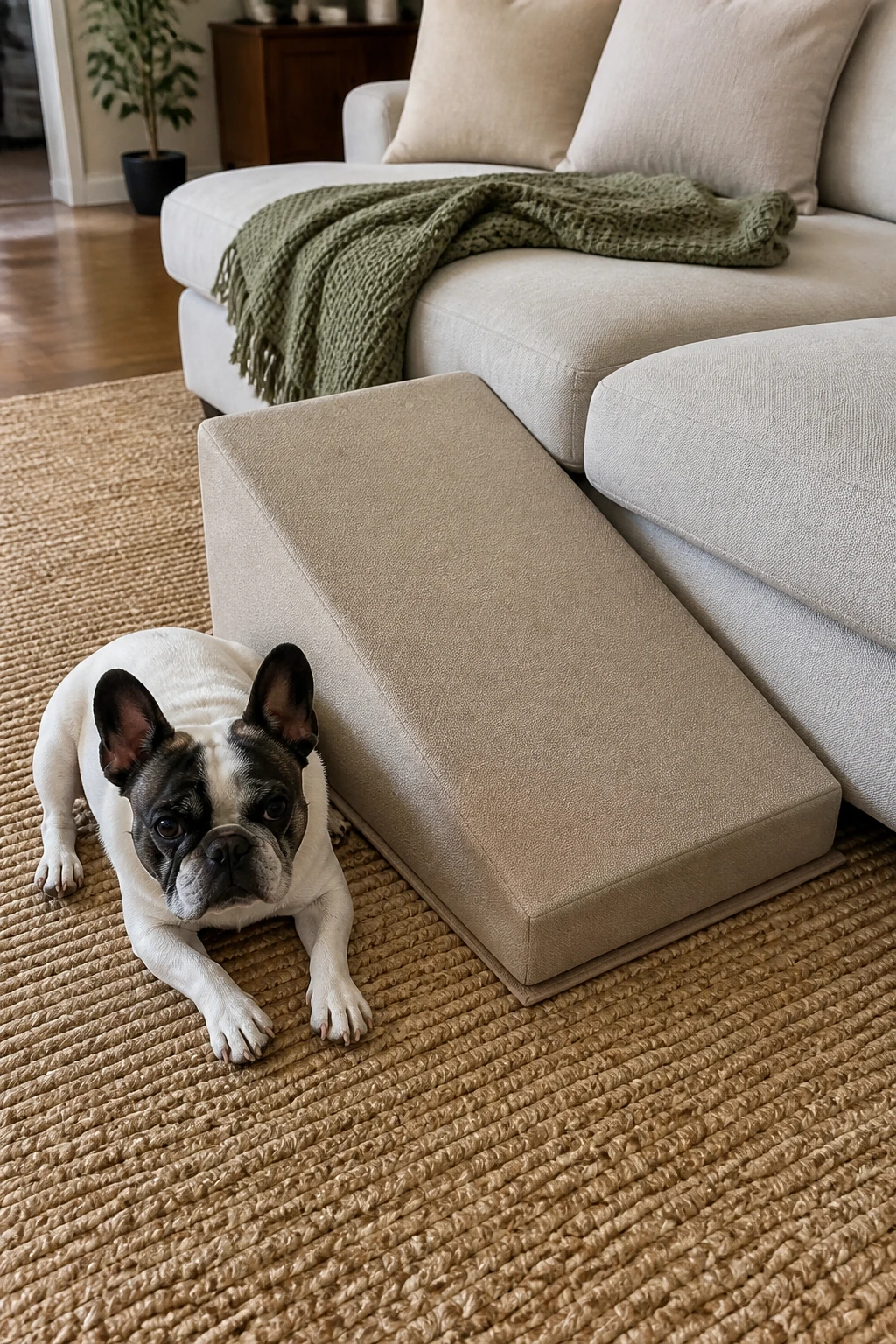
No saws? No problem. Dense upholstery foam stacked into a wedge makes a quiet, floor-friendly ramp that’s gentle on paws and easy to re-cover.
Materials
- High-density foam sheets (2–4 inches thick)
- Upholstery-grade canvas or microsuede
- Non-slip rug pad and upholstery staples or heavy-duty Velcro
- Optional thin plywood underlayment for extra support
Build Steps
- Cut foam layers into stepped pieces and glue them into a wedge with spray adhesive designed for foam.
- Wrap in canvas like a cushion cover. Add a long Velcro strip underneath so you can remove and wash it.
- Slide a non-slip rug pad beneath. If your dog is heavy, place a thin plywood sheet under the foam to prevent compression at the base.
Care tip: Choose tight-weave fabric so nails don’t snag. Avoid loose tassels or trim that invites chewing.
Best for: Apartments, low couches, and noise-sensitive dogs. I’d skip this for power chewers or pups over 80 pounds unless you add the plywood base.
Common Mistake to Avoid
Don’t ignore traction and angle. Too-steep ramps cause slips and refusals, and slick surfaces scare dogs. Aim for a gentle slope, add reliable grip (rubber, carpet tiles, or sisal), and anchor the base so it doesn’t budge. Test with your own body weight first—if it wiggles for you, it’ll feel sketchy for them.
FAQ
What’s the ideal ramp angle for most dogs?
Keep it between 18–22 degrees for small breeds and seniors, and up to 26 degrees for confident, healthy medium to large dogs. If your dog hesitates, reduce the angle by lengthening the ramp.
Which surface gives the best traction?
Rubber stair treads, low-pile carpet tiles, or sisal runners grip well without shredding paws. Avoid fluffy shag, which compresses and gets slippery.
How do I make a ramp stable on slick floors?
Add rubber feet, a non-slip rug pad, and, if needed, a discreet wall or furniture anchor. Wide bases and cross-bracing also stop side-to-side wobble.
Is wood or foam better for a heavy dog?
Wood wins for load-bearing and longevity. Use 1/2–3/4 inch plywood, add internal braces or cleats, and seal edges. Foam works for lighter pups or when noise matters, but reinforce it with a thin plywood underlayer for big dogs.
How do I train my dog to use the ramp?
Start with a shallow angle and reward each step. Use a leash for guidance, place treats in a line, and keep sessions short and upbeat. Practice going both up and down so they don’t bail on the descent.
What size ramp should I build?
Measure furniture height and back into length using your target angle. As a quick rule: couch heights around 18–22 inches pair well with ramps 36–48 inches long; tall beds around 24–30 inches may need 60–72 inches.
Ready to make couch snuggles safer and bedtime cuddles easier? Pick the ramp that fits your space and your dog’s stride, grab a weekend, and build with confidence. Your pup’s joints will thank you, and your room will still look dialed in.
🐾 Want to build your own? Get my printable Easy DIY Dog Steps & Ramp Plans: a ramp length chart, cut lists and step-by-step builds for a dog ramp, bed steps and sofa steps. Instant download!
As an Amazon Associate, I earn from qualifying purchases.