This post contains affiliate links. As an Amazon Associate, I earn from qualifying purchases, at no extra cost to you.
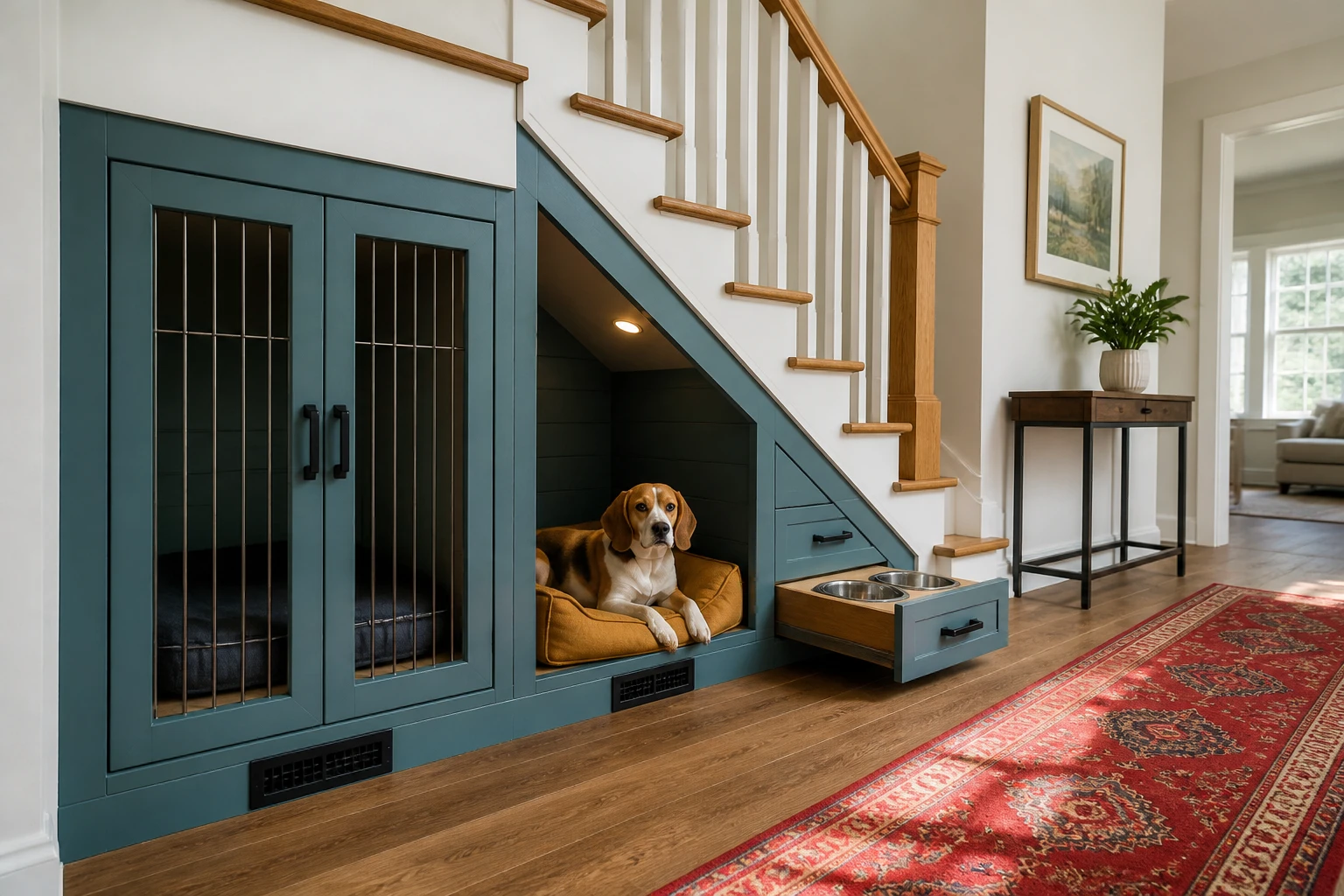
That awkward triangle under your staircase? It can become your dog’s favorite spot and your home’s most efficient upgrade. These 5 ideas turn wasted space into a practical retreat without wrecking your layout. Expect clutter-free storage, easy cleaning, and details that keep pups calm and safe. Let’s make that tiny niche work hard.
⭐ Our Top Pick: See it on Amazon
1. Built-In Crate Cabinet With Vented Doors
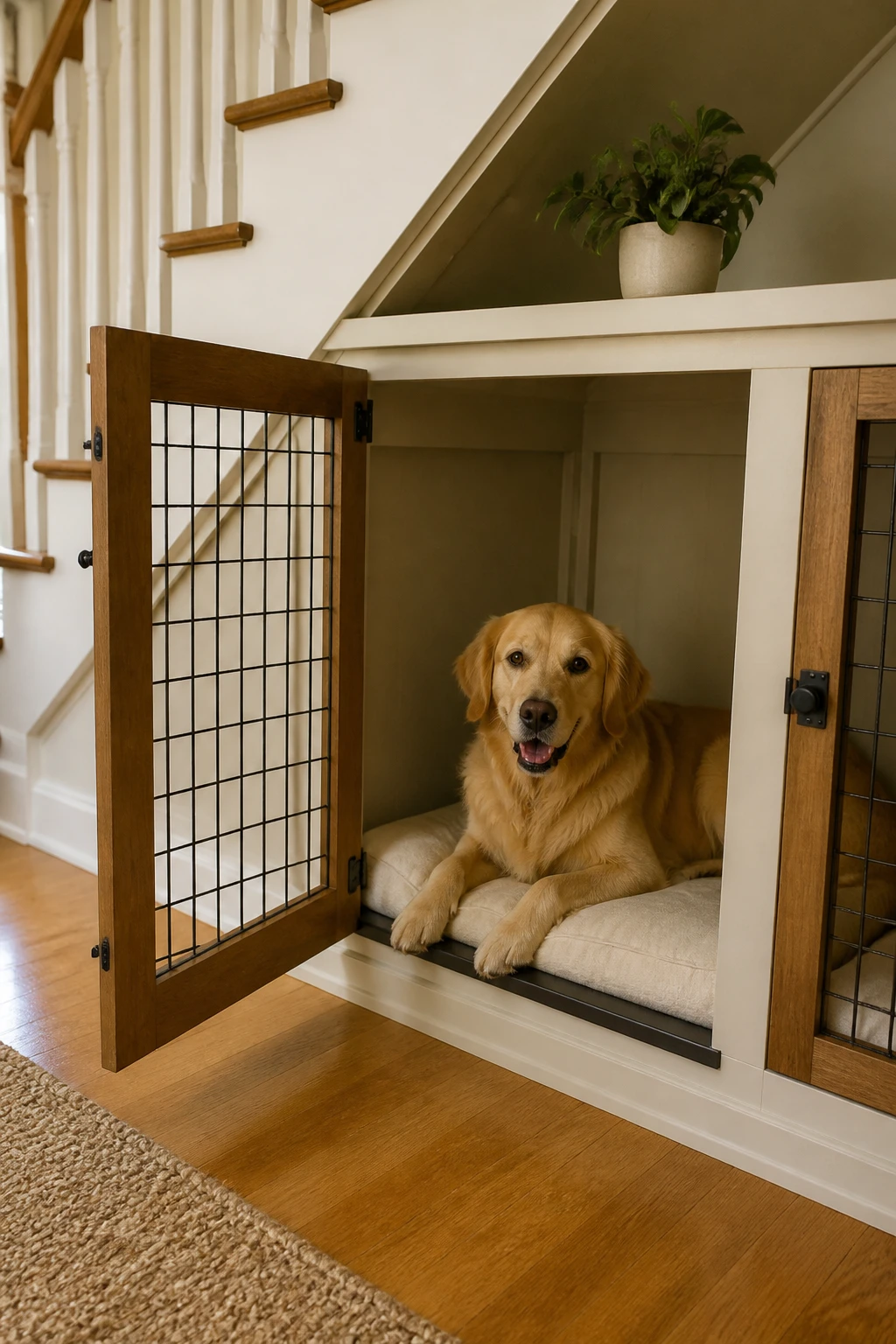
Turn the under-stair void into a legit built-in that looks like it came with the house. A cabinet-style kennel hides the crate feel while giving your pup a calm den. You’ll gain a tailored look, plus surfaces you can wipe down fast.
Materials
- 3/4-inch plywood carcass and solid-wood face frame
- Powder-coated metal grille or vertical wood slats (1–1.5 inch spacing)
- Low-VOC paint or waterborne poly
- Removable crate tray or waterproof boot tray
- Soft-close hinges and a dog-proof latch (no spring clips)
- Flooring: luxury vinyl plank or porcelain tile
Tips
- Size it right: interior length equals your dog’s nose-to-rump plus 6–12 inches; height equals standing height plus 3–4 inches.
- Drill hidden vent holes at the toe-kick and add a louvered panel up high to move air through the cabinet.
- Round over all edges with a router so curious mouths meet smooth corners.
- Use a removable base tray for quick cleanups and add a washable bed cover. Skip loose zippers or buttons.
- Anchor everything to studs. Under-stair walls can be thin; use blocking where needed.
IMO, I’d pick a metal grille over rattan or cane—dogs love to chew natural weave, and you’ll regret it. I’d skip magnetic baby latches; go with a mechanical latch your dog can’t paw open.
Best for: Medium spaces, dogs who like a den, and homes wanting a furniture-grade look.
2. Pocket-Door Pup Nook With Smart Storage
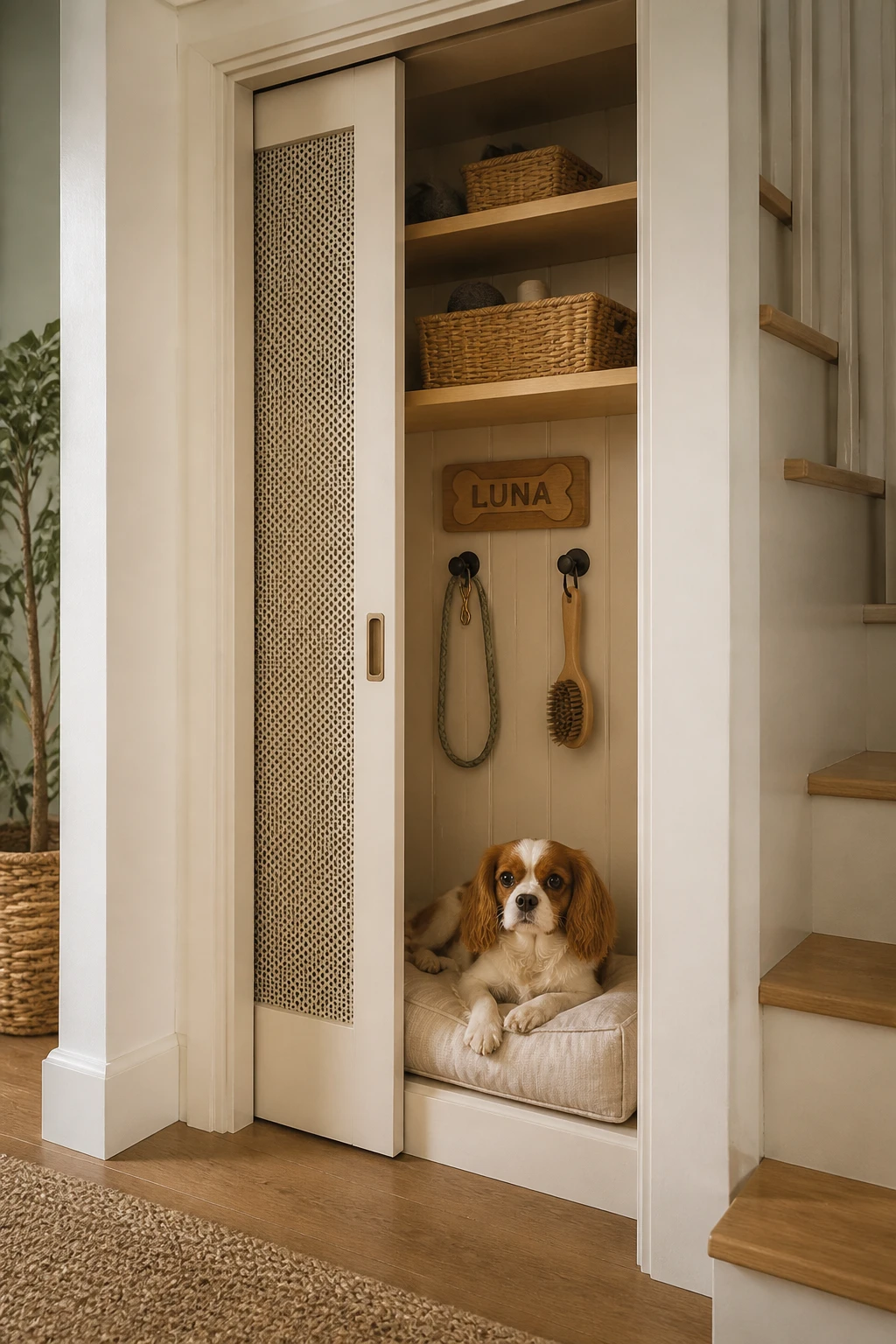
Prefer a clean opening during the day and a closed, calm zone at night? A pocket door slides out of sight, so the nook stays open when you’re home and secure when you’re out. You also win vertical storage for leashes and grooming gear.
Key Points
- Use a pocket-door kit with soft-close hardware to protect paws and tails.
- Choose a door with a perforated metal insert, slatted panel, or decorative grille for airflow.
- Keep handles flush so collars don’t catch.
Setup Tips
- Frame the opening with a header that preserves stair support. If you’re unsure about structure, consult a contractor.
- Install shallow cubbies alongside the door cavity—12 inches deep works well—for bags, brushes, and poop pickup essentials.
- Paint walls with scrubbable satin or semi-gloss. Use baseboards with caulked seams to stop hair from hiding in gaps.
- Place hooks and shelves high and out of reach. Use Command strips or screwed cleats that won’t shake loose.
Worth it if you want flexible visibility and airflow without a swinging gate that eats floor area. Add a threshold ramp if the stair slope creates a lip, so paws don’t stumble.
Best for: Narrow hallways where a swinging door gets in the way and tidy storage matters.
3. Bench-and-Kennel Combo by the Stairs
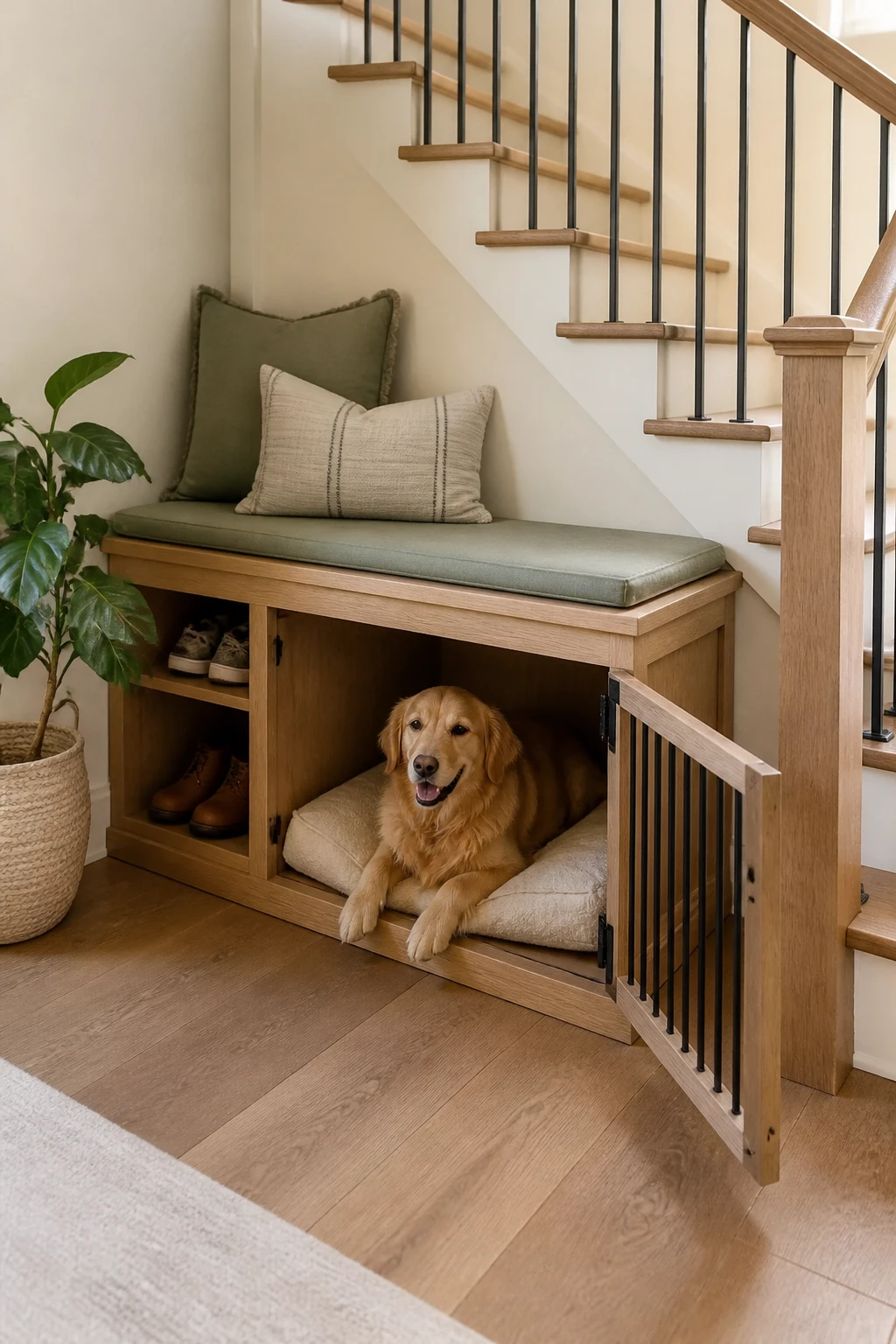
Double-duty furniture is the secret weapon in a compact home. Build (or buy) a hallway bench with a built-in kennel below, and you’ve got seating, shoe storage, and a comfy dog zone in one footprint. It looks intentional instead of “we squeezed a crate here.”
Design Moves
- Use a flip-up bench seat for hidden bins, but keep the kennel accessible from the front with a hinged or sliding panel.
- Choose a front with vertical bars, perforated steel, or decorative MDF screens—avoid anything with small removable pieces.
- Add a 2–3 inch high curb at the kennel floor to contain accidents and keep bedding dry.
Comfort and Care
- Top the bench with a tight-fit cushion in a performance fabric (stain-resistant, bleach-cleanable). Add non-slip backing so it stays put.
- Under the bed, place a rubber mat cut to size. Seal edges with silicone where the mat meets the curb to block seepage.
- Keep the area away from floor registers and heaters. Heat and dogs don’t mix in tight quarters.
I’d pick sliding bypass panels if your hallway is cramped; I’d skip felt gliders that can pop off and become chew toys. Anchor the bench to studs so it can’t tip when a dog leans against the door.
Best for: Entryways or landings that need both seating and a secure, blended-in kennel.
4. Open-Air Den With Half Wall and Metal Grille
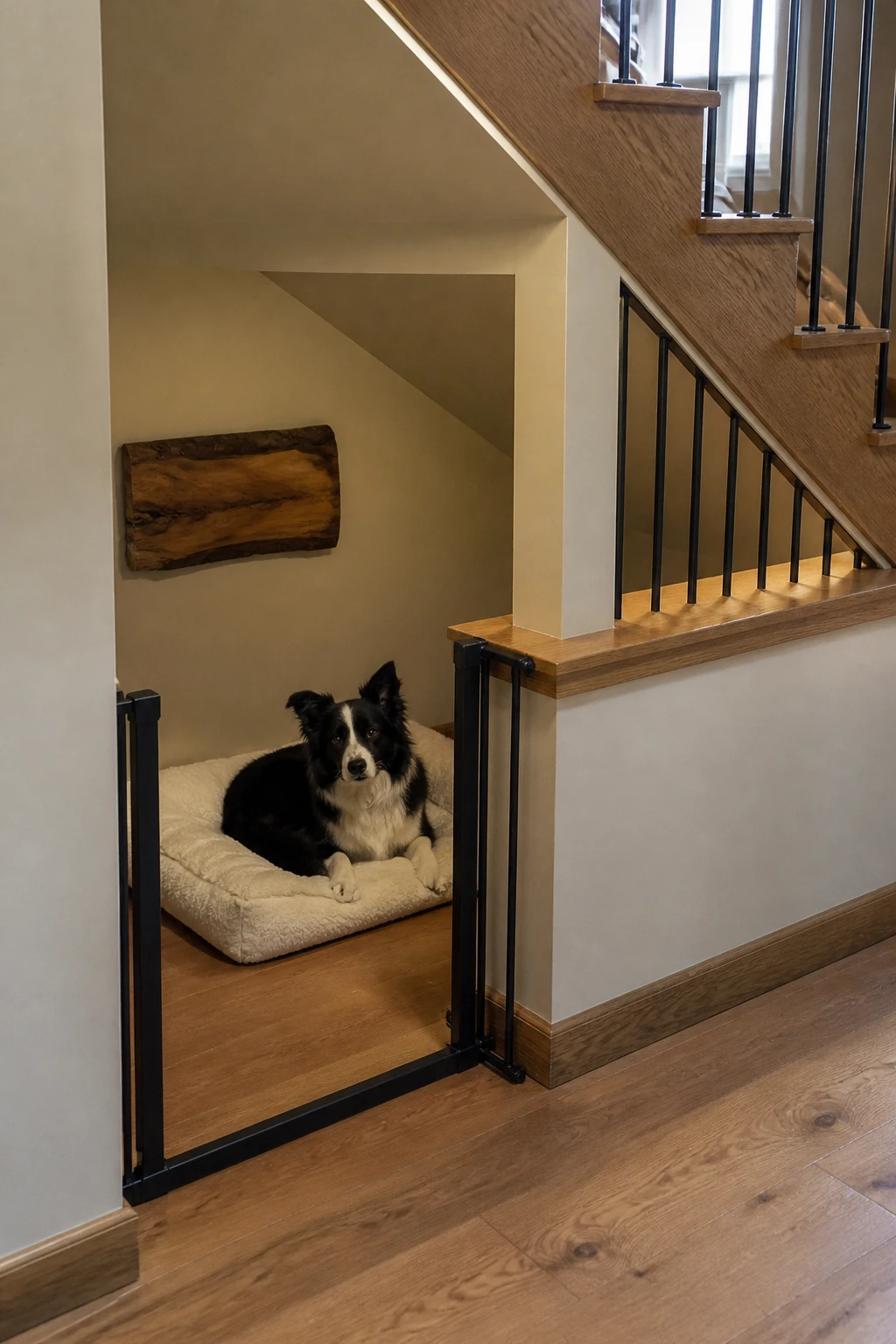
Some dogs hate feeling closed in. Create a half-height partition under the stairs with a sturdy gate so they can see you while staying contained. The open top keeps it bright and airy, and you still get a defined “dog zone.”
How to Do It
- Frame a half wall to about 36–42 inches high. Cap it with a wood ledge you can wipe clean.
- Use vertical balusters with 1.5–2 inch gaps or a powder-coated metal screen. Avoid chicken wire or anything with sharp edges.
- Install a self-closing hinge on the gate and a gravity latch that dogs can’t nose open.
- Mount any decor up high and out of reach. Think framed art and faux greenery—not within muzzle range.
Practical Touches
- Round the ledge corners, and skip overhangs that tempt chewing.
- Lay down a washable runner outside the gate to catch fur drift and dander.
- Place a floor-level nightlight in the hallway, not inside the den, so light doesn’t disturb sleep yet helps you see at night.
I’d pick a black powder-coated grille for durability and easy cleaning. I’d skip decorative rope or wire cables—dogs can fray or chew them, and that gets risky fast.
Best for: Social dogs, households that want visibility, and spaces that need max airflow.
5. Sound-Softened Retreat With Ventilation and Easy-Clean Surfaces
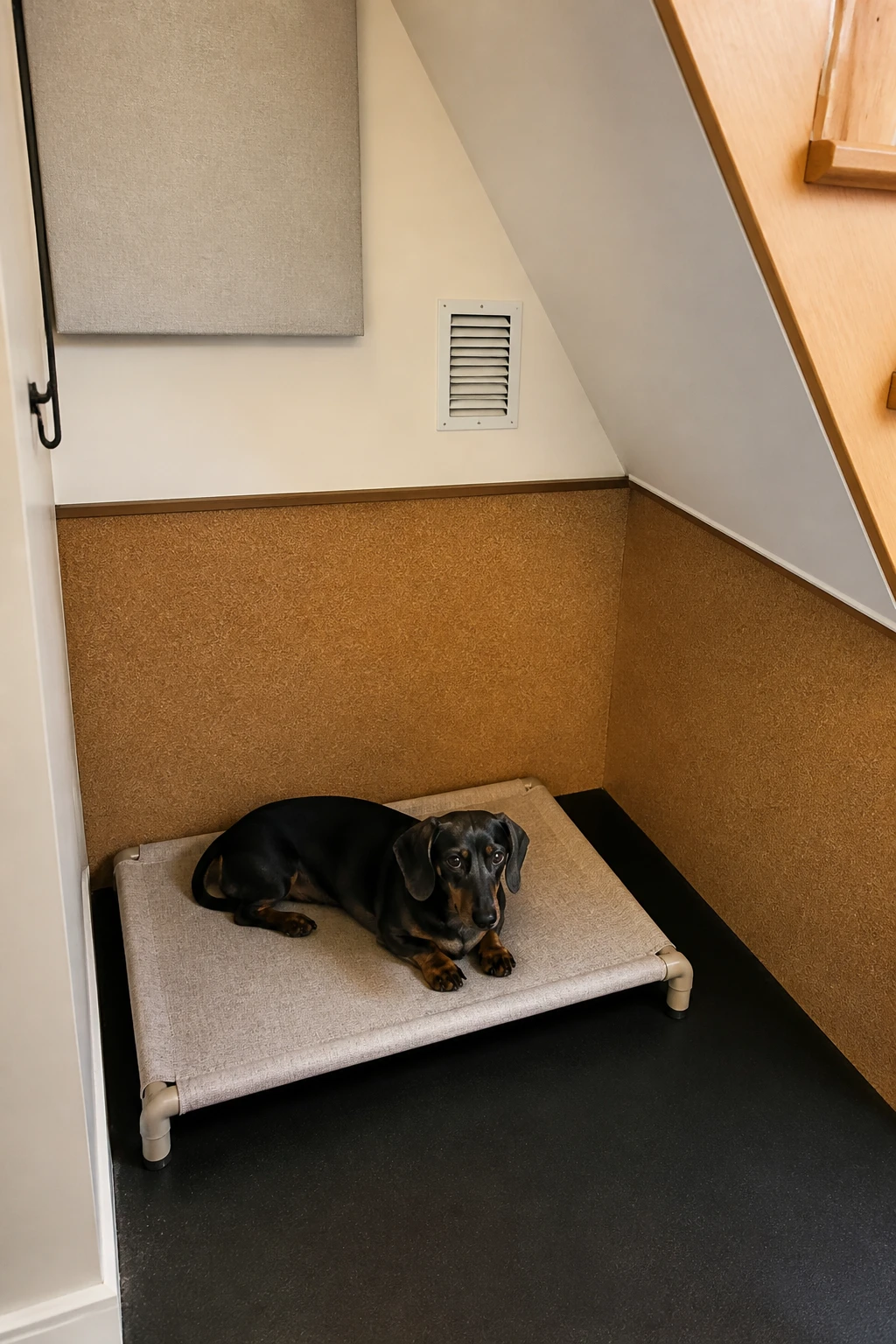
If your pup startles easily, aim for a calm, low-stimulation hideout. Focus on materials that hush noise, control odors, and breathe. You’ll reduce whining and scratching, and your ears will thank you.
What to Add
- Under-floor or wall cork underlayment to dampen footfall thumps from the stairs.
- Fabric-wrapped acoustic panels mounted high, out of reach (or use dense foam behind new drywall).
- Rubber flooring mat with taped seams or a single large cut to avoid chewing edges.
- Semi-gloss paint for wipeability, or FRP panels where splashes happen.
- Passive transfer grilles or a small, low-voltage inline fan vented to the hallway for steady airflow.
Setup Tips
- Seal every gap at the floor with silicone. Fur, dander, and odors love seams.
- Place the bed on the “quiet” wall—usually the side farthest from the stair stringer.
- Route cords elsewhere and keep outlets covered with tamper-resistant plates.
- Skip string lights or plug-in scent diffusers here; both can become hazards. If you want a glow, mount lighting outside the den.
Worth it if your dog needs a calm retreat or your stairs creak like a haunted ship. You’ll improve rest and keep the space smelling decent with way less effort.
Best for: Anxious pups, nighttime snoozers, and households sensitive to sound or odor.
Common Mistake to Avoid
Don’t undersize the space or skimp on airflow. A too-tight nook with poor ventilation turns stuffy fast, traps smells, and can stress your dog. Give generous breathing room, add vents up high and low, and avoid storing paints, chemicals, or cleaning products in the same cavity.
FAQ
How big should an under-stairs dog room be?
Measure nose-to-rump length and add 6–12 inches for stretch. Height should let your dog stand without crouching—standing height plus 3–4 inches is a good rule. Width should allow a comfy turn; aim for at least body width times 1.25. If you’re between sizes, choose larger—cramped quarters cause restlessness.
What flooring works best in a small dog nook?
Go with waterproof surfaces: luxury vinyl plank, sealed tile, or a single-piece rubber mat. Add a removable tray or washable mat under the bed for quick cleanups. Skip carpet—it traps odors—and avoid grout with huge joints that collect hair.
How do I make sure the space stays ventilated?
Use a vented door (slats or grille), add a toe-kick vent low, and a transfer grille high to promote natural convection. In a closed cabinet, consider a whisper-quiet low-voltage fan that exhausts to the hallway. Keep openings small enough that paws can’t slip through.
Is an under-stairs kennel okay for puppies?
Yes, if you puppy-proof it. Choose chew-resistant surfaces, keep hardware flush, and remove anything loose or dangly. Block access to the stair treads with a gate, and keep the nook within earshot so you can hear fussing. Crate training still applies—this is a secure den, not a punishment zone.
How do I control odors without risky fragrances?
Wash bedding weekly, wipe hard surfaces with an enzyme cleaner, and use a removable tray. Boost air exchange with vents or a small fan. If you want a scent, place pet-safe sachets or faux greenery well out of reach—but frankly, airflow and cleaning do the heavy lifting.
Ready to transform that dead zone beneath your stairs into a hardworking haven? Pick one idea, measure twice, and start with airflow and wipeable finishes. Your dog gets a calm retreat, and you reclaim valuable square footage—win-win.
🛠️ Want to build your own? See our printable DIY dog plans with step-by-step instructions, cut lists and exact measurements.
Ready to upgrade your space? Tap any of the linked products and images above to see our top picks — hand-picked options that blend seamlessly into any home while keeping your pup cozy and secure.
As an Amazon Associate, I earn from qualifying purchases.