This post contains affiliate links. As an Amazon Associate, I earn from qualifying purchases, at no extra cost to you.
Your dog shouldn’t shiver through winter while you hog the blankets. These 5 self-warming bed ideas trap heat, block drafts, and turn chilly corners into snug nap zones—without running up your electric bill. You’ll get clever layouts, budget-friendly upgrades, and pro tips that actually work. Let’s build a warm haven your pup sprints to every night.
⭐ Our Top Pick: See it on Amazon
1. The Radiator Nook Retreat
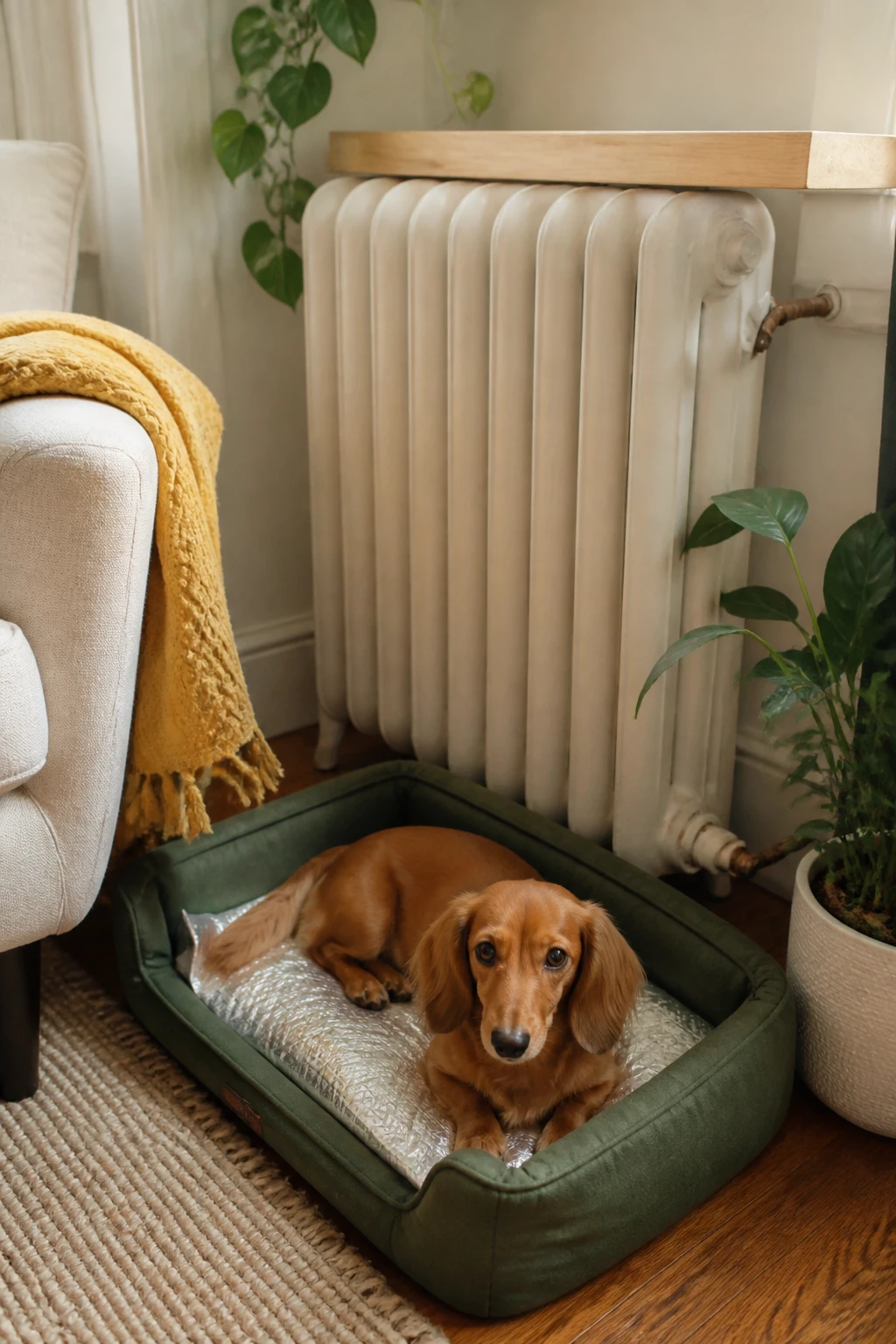
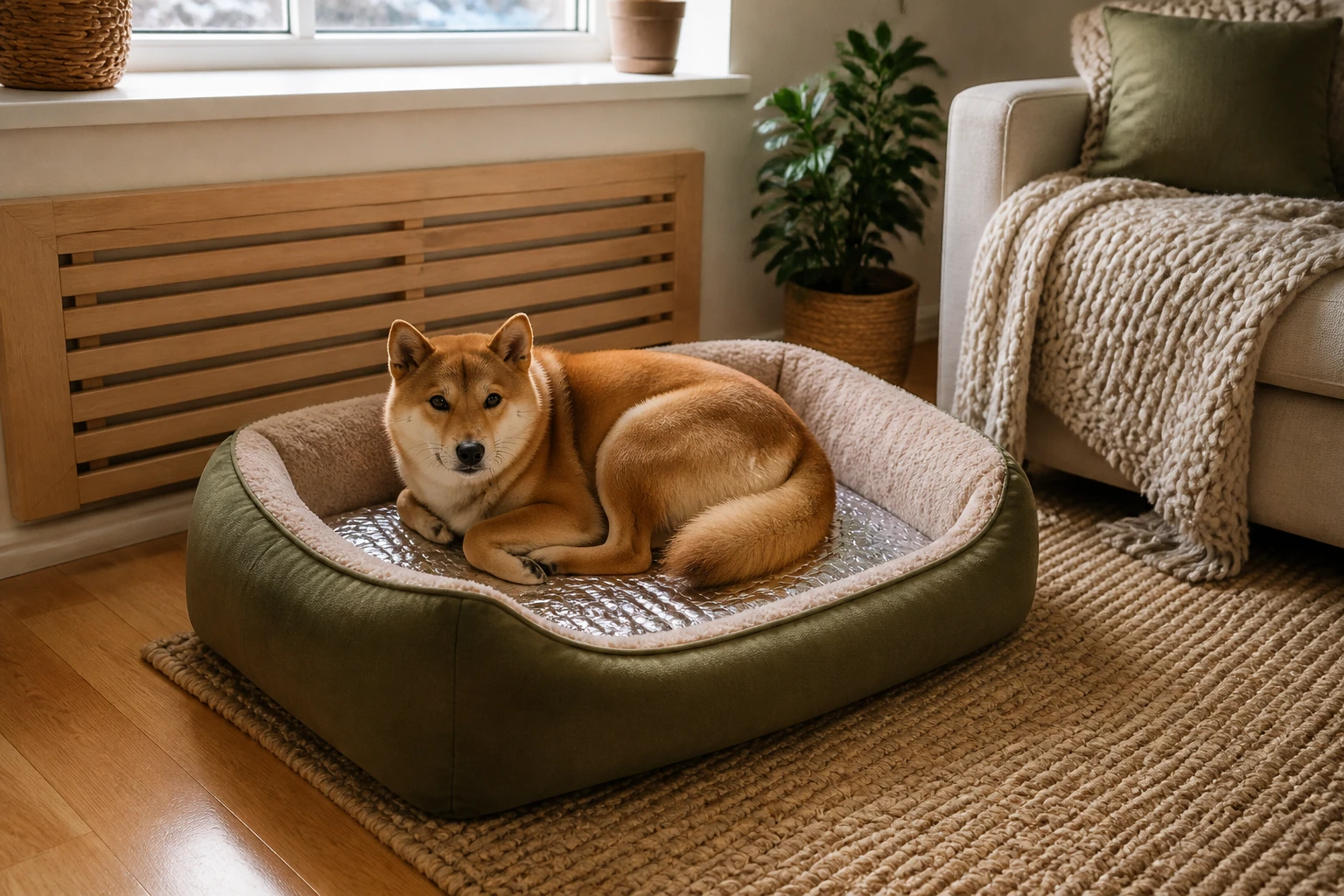
Got a baseboard heater or an old-school radiator? Use that steady warmth safely by creating a cushy “nook” a few inches away. The trick is indirect heat: you want gentle ambient warmth, not a hot surface under bellies.
How to Set It Up
- Place a self-warming pad (reflective mylar or heat-retaining fibers) inside a low-sided bolster bed.
- Slide the bed 6–12 inches from the heater or radiator. Add a heat shield like a slim wood panel or a metal radiator cover if your unit gets toasty.
- Anchor the nook: put a rubber-backed rug or cork mat underneath to prevent sliding and to insulate from cold floors.
Skip electric heating pads here—cords and heat sources don’t mix with curious mouths. I’d pick a high-back bed to block drafts and reflect heat toward your dog’s body. Worth it if your pup camps out near the warmest spot already.
Best for: Dogs that gravitate to heaters, older pups with stiff joints, apartments with reliable radiant heat.
2. The Draft-Free Corner With Thermal Layers
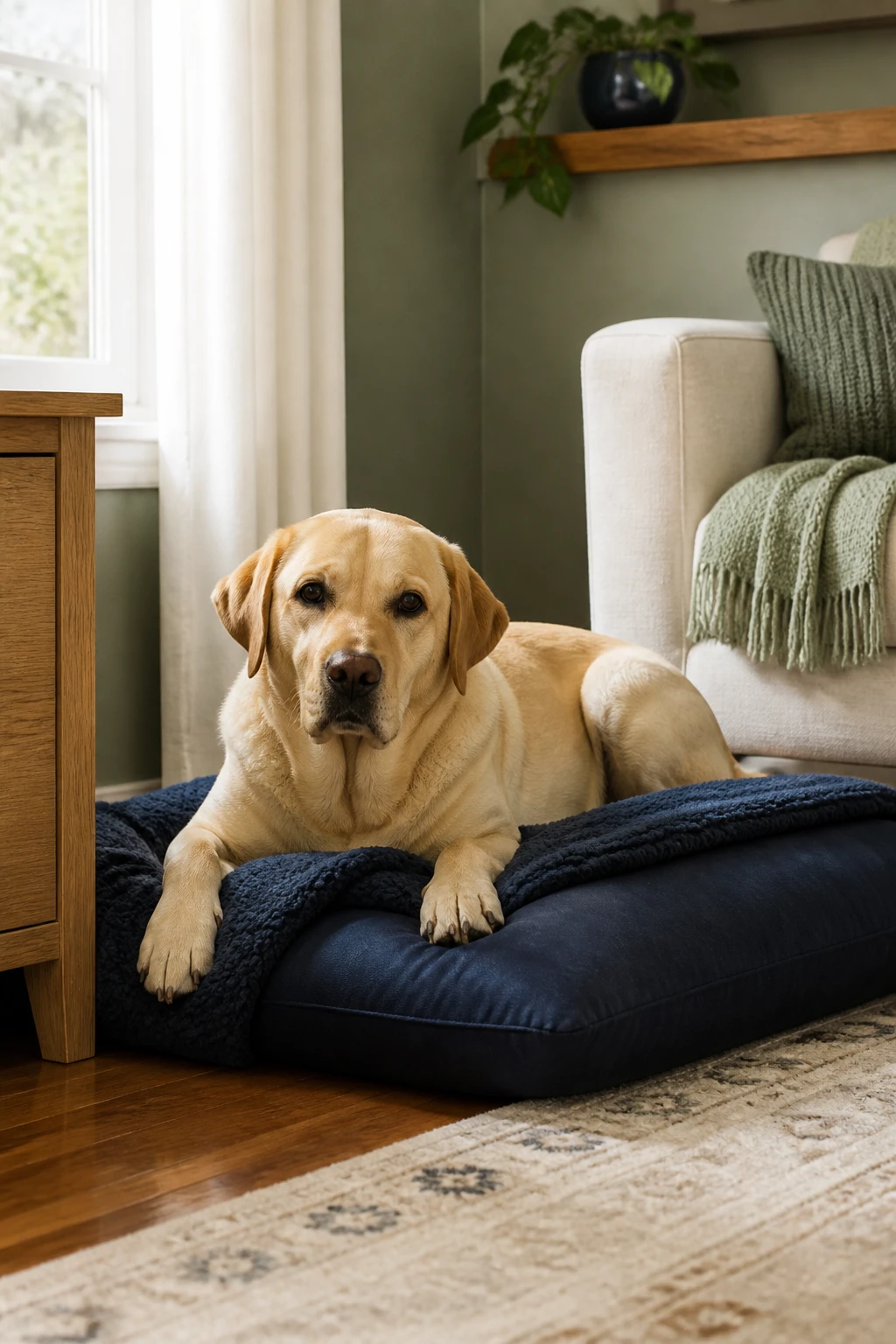
Cold floors and sneaky breezes sabotage even the fluffiest bed. Build a layered foundation that insulates from below and reflects body warmth back up.
Layering Game Plan
- Base: a closed-cell foam exercise mat or puzzle tiles—moisture resistant and insulating.
- Middle: a reflective emergency blanket (mylar) sandwiched inside a zippered pillowcase so it won’t crinkle loudly.
- Top: an orthopedic foam or memory foam bed with a washable cover, plus a fleece throw that wicks moisture.
Place the build-out in a corner away from exterior doors. If that’s not possible, add a draft stopper or weatherstripping to the nearby door. For wall chill, lean a framed cork board behind the bed for subtle insulation that looks tidy.
Tips
- Test for drafts with a lit incense stick—watch the smoke drift, then seal the gaps.
- Rotate the fleece every other day to keep it dry and warm-feeling.
I’d skip plush-only beds on tile—without insulation beneath, they feel cold fast. This setup shines when you’ve got hard floors or a breezy hallway corner.
Best for: Tile or concrete floors, dogs who flop and sprawl, households that keep the thermostat low at night.
3. The Crate-to-Cabin Makeover
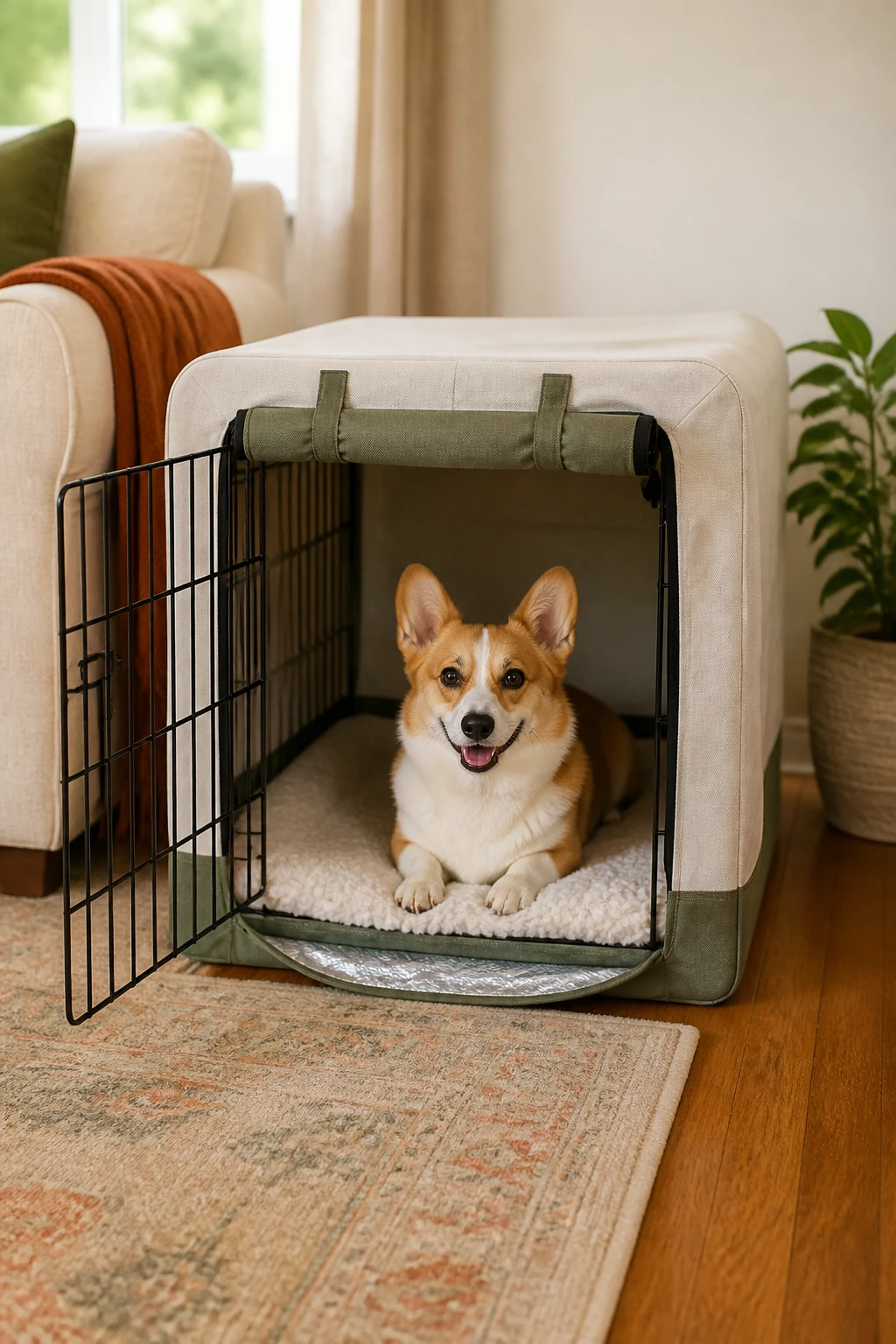
A wire crate can feel like a wind tunnel. Turn it into a snug micro-cabin using breathable covers and heat-trapping materials that still allow airflow.
What to Use
- Insulated crate mat: memory foam topped with sherpa or quilted fleece.
- Crate cover or DIY with a canvas drop cloth cut to size; secure using Velcro strips or Command hooks on nearby furniture (not on the crate wires where curious teeth can reach).
- Reflective liner under the mat: slip a cut piece of reflective sunshade inside the mat’s zippered cover or under a fitted sheet for warmth without crunch.
Leave the front panel open or partially rolled up for ventilation. Add a back panel pocket (sew or clip a small fabric sleeve) to slide in thin insulation like felt—no loose fibers, nothing chewable.
Safety Check
- No strings, tassels, or dangling ties—dogs will find them, trust me.
- No electric blankets inside the crate, ever.
- Ensure the cover can’t collapse inward—use fitted corners or light clips outside the pup’s reach.
I’d pick this for dogs who already love their crate. It’s worth it if you want predictable warmth and a dark, den-like feel that calms anxious pups.
Best for: Crate-trained dogs, puppies that nap better in covered spaces, bedrooms that get chilly overnight.
4. The Sofa-Side Daybed With Sun Assist
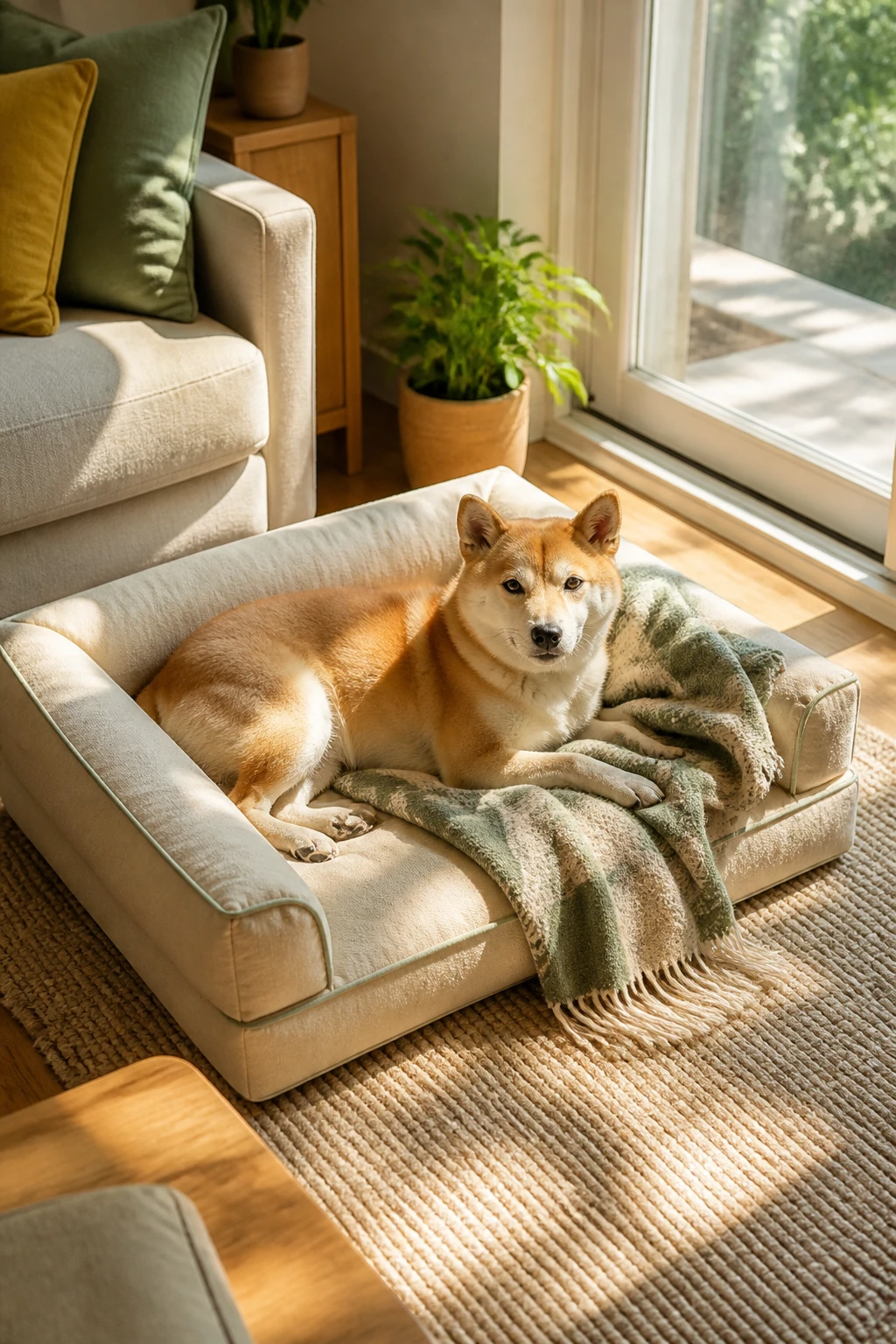
Sunlight is free heat. Combine it with a self-warming insert and you’ve got a daytime lounge that transitions into a toasty evening nest by your seating area.
Build the Spot
- Pick a bolster daybed with removable cover. Slip a mylar-lined pad or thermal cat/dog pad under the main cushion.
- Place the bed in a sun patch for afternoon warmth, then slide it a foot closer to the sofa at dusk to borrow body heat from the family zone.
- Toss on a wool blend throw (tighter weave holds warmth better than loose knits) and rotate the side that faces the sun.
Got slippery floors? Add a non-skid rug pad cut to size beneath the bed. If your dog chews, opt for hidden-zip covers and avoid any leather tags or decorative cords.
When It Shines
- South- or west-facing windows deliver the best solar assist.
- Use a shatterproof window film if your dog likes to jump up—no glass risk, softer glare, warmer spot.
I’d skip super-fluffy faux fur here—sun can flatten it and it traps fur. Choose tight-pile fleece for easy lint rolling. Great for dogs who love to “watch the neighborhood” and snooze nearby while you binge a show.
Best for: Living rooms with good natural light, medium-energy dogs who lounge near people, small spaces that need portable warmth.
5. The Elevated Bed With Heat-Reflecting Sandwich
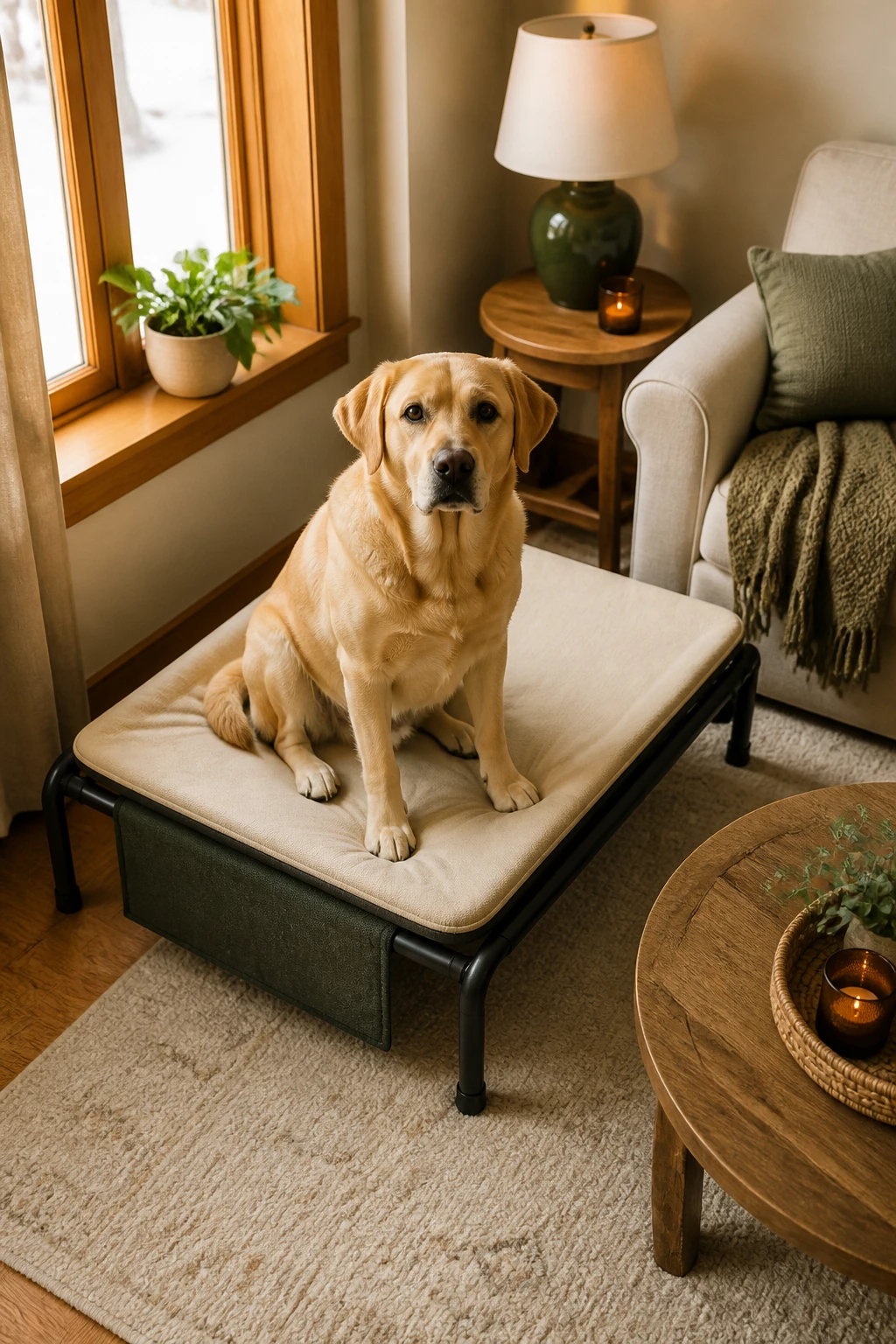
Airflow under an elevated cot keeps things fresh, but it can also steal warmth. Solve that with a clever “sandwich”: insulation above the mesh and a wind block below.
Step-by-Step
- Start with a raised cot (PVC or metal frame). Check weight rating and stability.
- On top: add a fitted pad with a hidden mylar layer or slip a reflective windshield shade inside a zippered cover.
- Underneath: Velcro a felt panel or canvas sheet to the frame’s underside on the windward side to cut drafts without blocking all airflow.
- Finish with a machine-washable fleece or wool topper that won’t slide—use corner elastics or grippy dots.
Position the cot near an interior wall and away from doorways. If you’ve got a mudroom, add a washable runner beneath for extra warmth and paw-drying duty.
Why It Works
- Reflective layer bounces body heat.
- Under-panel stops cold air from wicking warmth away.
- Elevated design keeps pups off cold floors and damp spots.
I’d pick this for big dogs that overheat on plush beds. Worth it if you want fewer odors and easy cleaning. Skip it if your pup prefers high-sided, enclosed beds.
Best for: Large breeds, mudrooms and porches (enclosed), households that need fast wash-and-dry setups.
Common Mistake to Avoid
Don’t pair electric heating elements with chew-prone dogs or enclosed crates. Cords, overheating risks, and trapped heat create hazards fast. If you insist on electric heat, use a chew-resistant, thermostat-controlled mat outside the crate with a cord protector, and monitor it closely—though IMO a quality self-warming pad plus insulation works just as well without the stress.
FAQ
How warm do self-warming beds actually get?
They don’t “heat up” like an electric pad. Instead, they reflect and retain your dog’s body heat, usually adding a noticeable bump in comfort—think cozy sweater, not space heater. Combine with floor insulation and draft control for the biggest difference.
Are reflective (mylar) inserts noisy or uncomfortable?
Raw emergency blankets can crinkle. Tuck them inside a pillowcase or a zippered bed cover, or buy inserts designed for pets with quilted layers. When sandwiched properly, the sound drops and comfort goes up.
What fabrics keep dogs warm without overheating?
Fleece, sherpa, and wool blends hold warmth while wicking moisture. Avoid loose chunky knits that snag nails or trap debris. For heavy shedders, pick tight-pile fleece—easier to lint-roll and wash.
How do I wash self-warming beds safely?
Remove any mylar inserts first unless the manufacturer says they’re washable. Use cold water, gentle cycle, low-heat dry, and reshape the bolsters while damp. Keep a spare cover so your pup never loses their spot during laundry day.
What’s the safest placement near heaters?
Keep beds 6–12 inches away from heat sources, use barriers or covers for radiators, and check surfaces with your hand—if it’s hot to the touch, it’s too close. No cords or dangling fabric near open grates.
Winter doesn’t have to mean icy paws and sad side-eye from your dog. Pick one of these setups, layer smart, and you’ll create a warm zone your pup claims the second the temperature drops—seriously, you might need to call dibs.
As an Amazon Associate, I earn from qualifying purchases.