This post contains affiliate links. As an Amazon Associate, I earn from qualifying purchases, at no extra cost to you.
Tired of clunky gates that scream “pet gear”? These 7 DIY builds blend in with your decor, hold up to daily zoomies, and won’t tank your vibe. You’ll get practical designs that look like real furniture, with clear tips to build, place, and use them safely. Ready to corral the chaos and keep your home looking pulled together? Let’s do it.
⭐ Our Top Pick: See it on Amazon
1. Shaker-Style Half Door With Hidden Latch
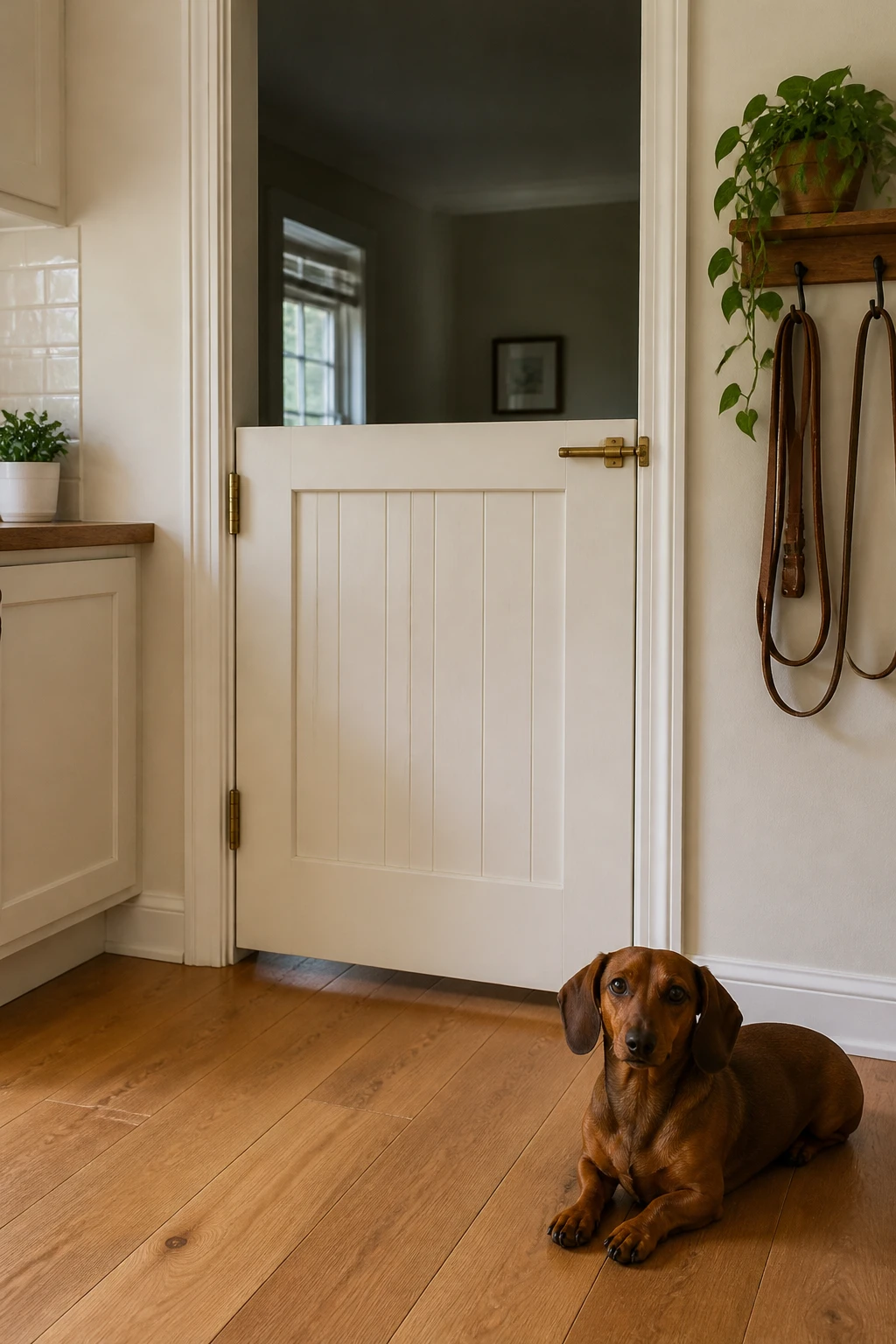
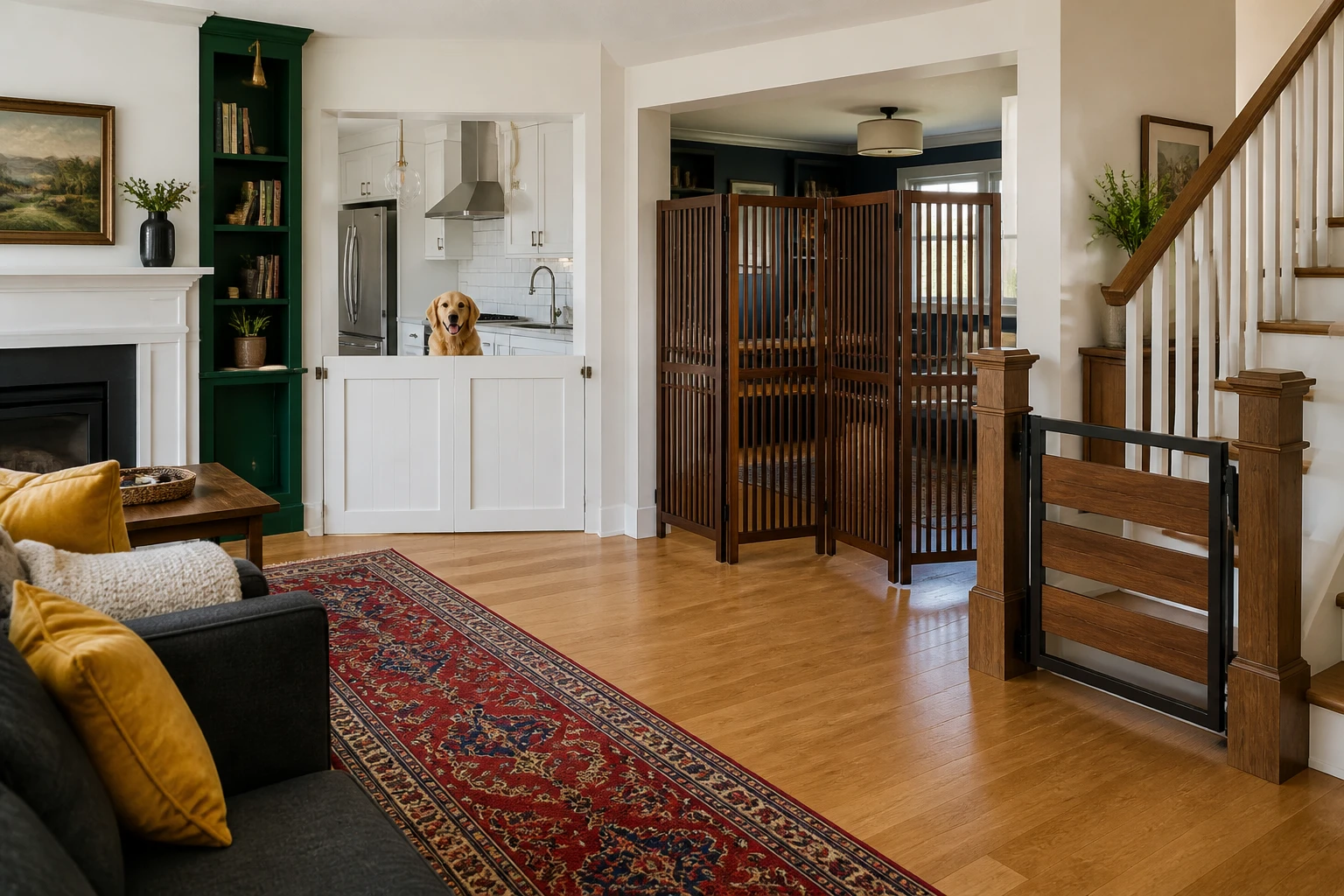
Think “mini interior door,” not dog gate. A Shaker-style half door matches your trim, closes with a clean latch, and instantly upgrades a hallway or kitchen entry. Paint it to match your baseboards and people will assume it came with the house.
Materials
- 1×3 poplar for stiles and rails
- 1/2-inch plywood or beadboard panel
- Three 3-inch butt hinges
- Surface bolt or hook-and-eye latch mounted high
- Water-based, non-toxic paint or poly
Build Tips
- Keep a maximum 1-inch clearance at the floor so paws won’t slip under.
- Ease every edge with sandpaper or a 1/8-inch roundover bit.
- Add a top cap ledge, but keep decor high and out of reach—no small objects.
Want a peek-through? Add a small window with inset acrylic and a wood grille. I’d skip the window if your pup chews or paws at openings. This door looks polished, shuts securely, and cleans up with a damp cloth—seriously convenient.
Best for: Medium to large dogs; farmhouse or classic trim; high-traffic entries where you want a built-in look.
2. Low Sliding Barn-Door Gate That Disappears Against the Wall
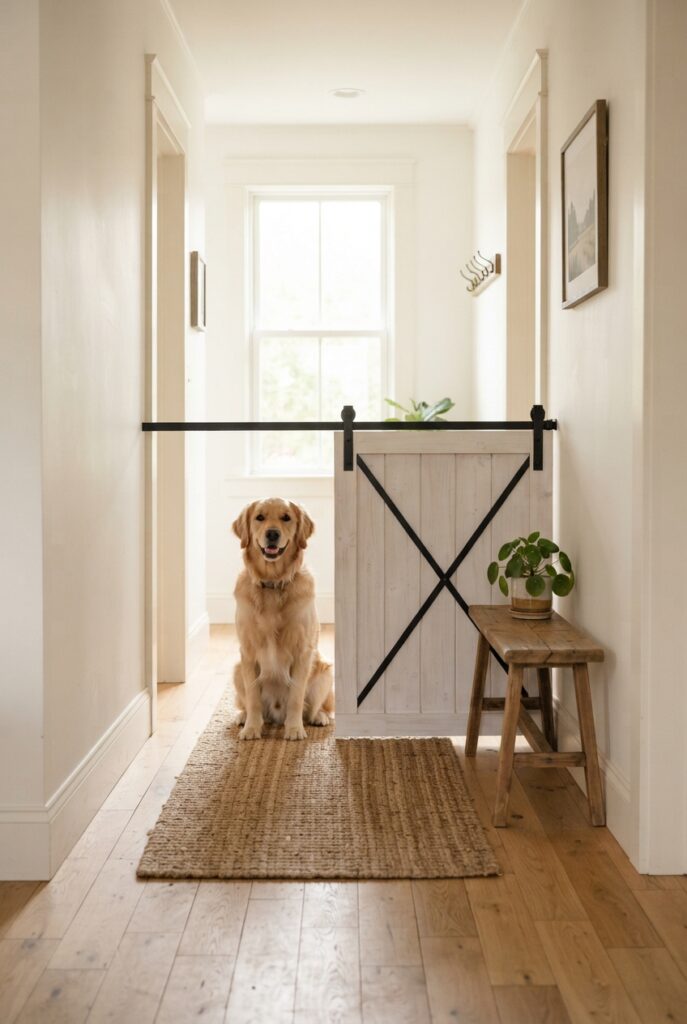
Love barn doors but need them dog-height? Build a shorter slider that tucks flat against the wall. It reads like a design choice, not a pet barrier, and it glides out of the way when you host.
Key Points
- Use sliding hardware rated above your gate’s weight.
- Install anti-lift stops and a bottom floor or wall guide to prevent sway.
- Add a finger pull instead of a bulky handle to keep it understated.
Safety and Sizing
- Height: 32–36 inches for most dogs; go higher if yours hops.
- Keep pinch points away from curious noses; test glide before regular use.
- Choose a sturdy latch at the strike side—barrel bolt or gate latch mounted high.
Stain to match nearby furniture or paint to match the wall so it fades visually. I’d pick this if you want clear floor space and a statement piece that still functions day to day.
Best for: Medium spaces where a swing gate would hit furniture; design-forward rooms that love architectural moments.
3. Pivot-Bookcase Gate (Yes, It Actually Swings)
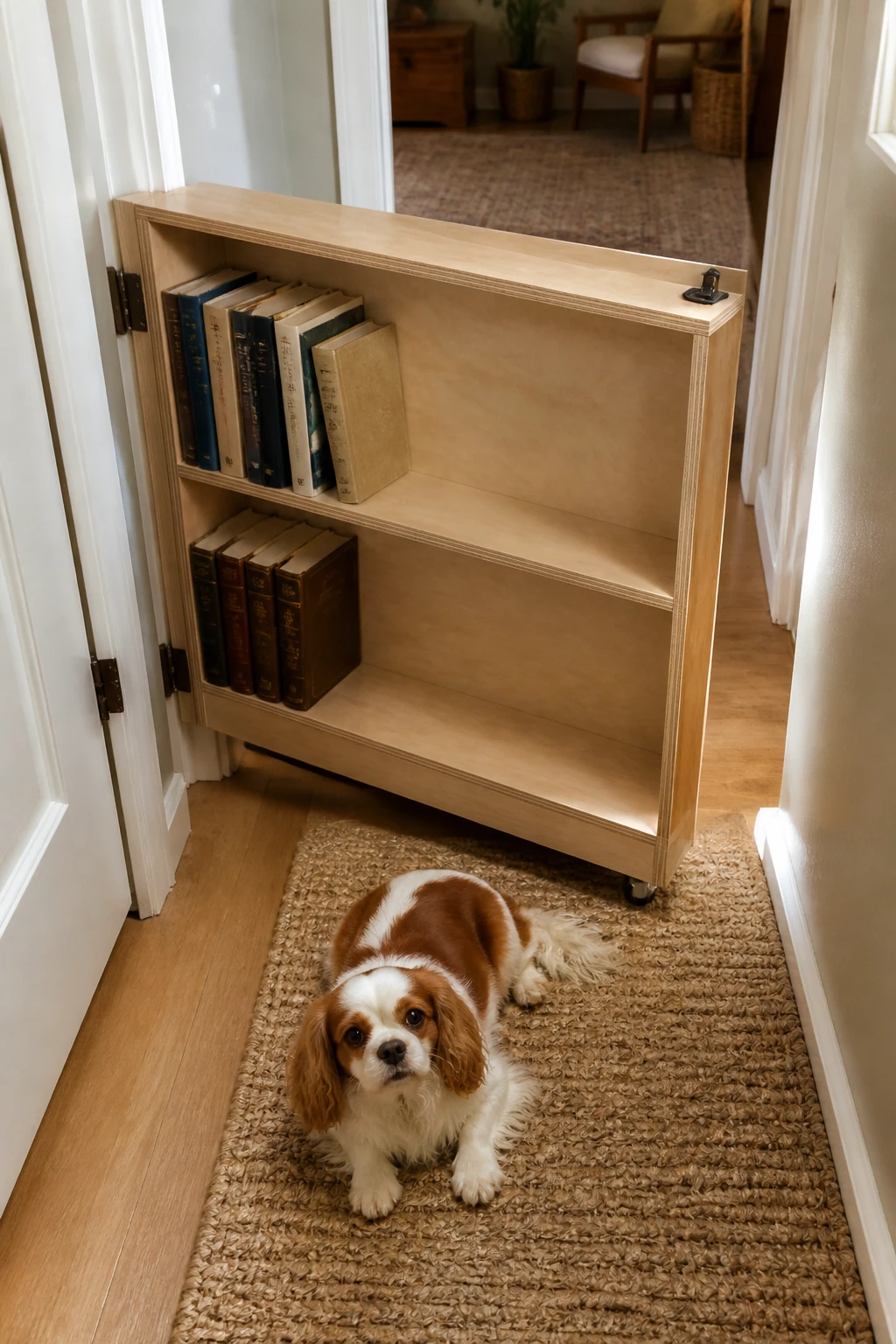
Hide your gate in plain sight: build a shallow bookcase that pivots to block the hallway. Front view? Shelves. Side view? A sturdy barrier. It screams “custom millwork” without screaming at your wallet.
How to Pull It Off
- Build a 10–12-inch-deep bookcase from 3/4-inch plywood with a fixed bottom shelf for strength.
- Mount to studs with heavy-duty hinges on the pivot side and install a hidden caster under the opposite side for smooth movement.
- Use a concealed slide bolt or hook-and-eye latch mounted high on the wall side to keep it shut.
Safety Notes
- Anchor the hinge stile solidly; don’t rely on drywall.
- Load heavy items low, lighter decor up top. No small chewable objects near the bottom shelf.
This one takes a bit more planning, but the payoff looks custom. Worth it if you want function plus a furniture moment that guests will ask about, guaranteed.
Best for: Hallways and open-plan cut-throughs; dogs who respect barriers but challenge freestanding screens.
4. Folding Wainscot Screen With Floor Anchors
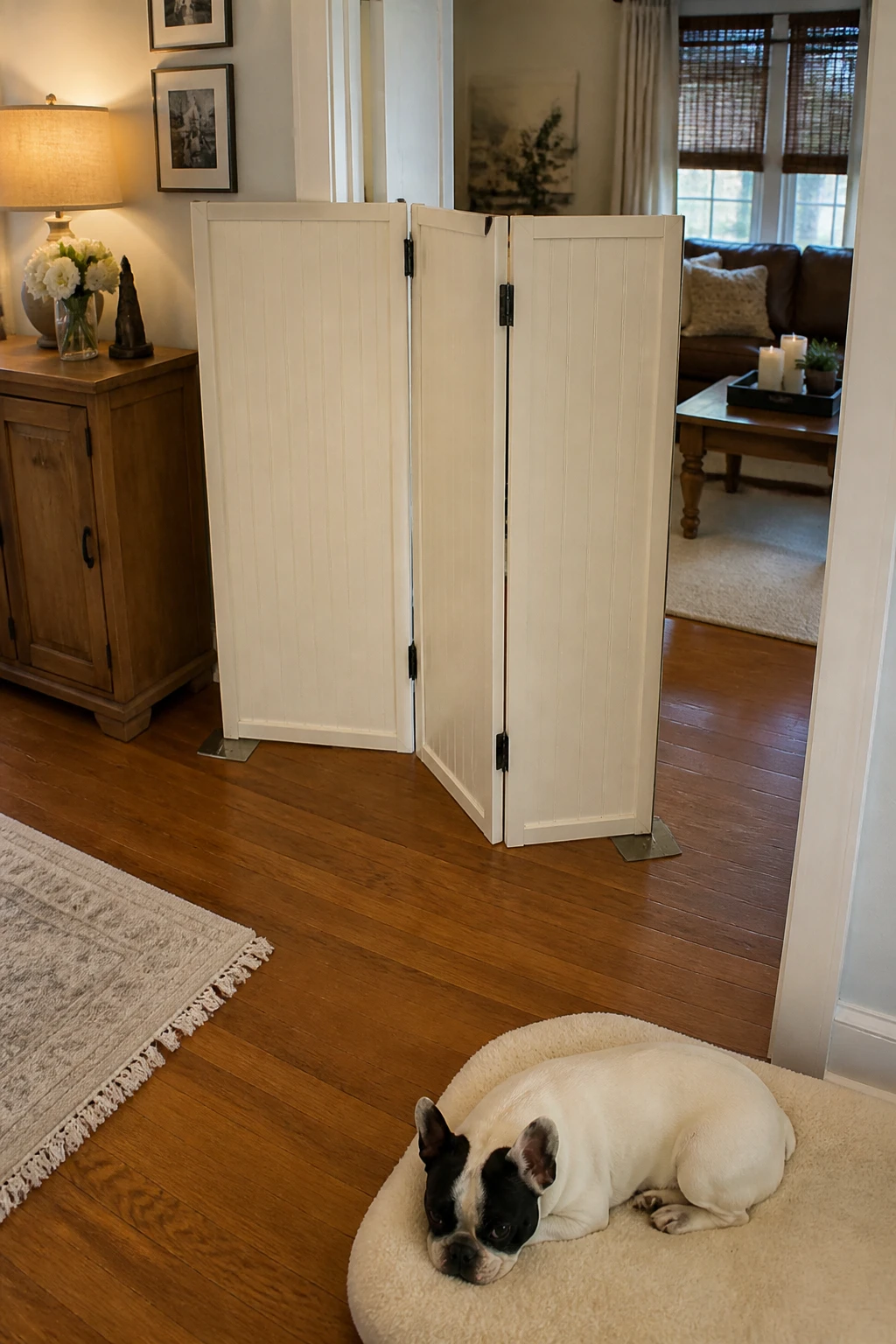
Need something you can fold away? A tri-fold wainscot screen solves quick containment and folds flat behind a cabinet when you don’t need it. Beadboard panels with simple trim look like actual millwork, not a pet fence.
Materials
- Three panels: 24–30 inches wide x 30–36 inches tall
- Beadboard or flat panels framed with 1x2s
- Two piano hinges or pairs of reversible strap hinges
- Removable floor brackets or wide stabilizing feet
Tips
- Hinge panels so they zig-zag for stability.
- Add wide feet to the end panels if you rent and can’t use floor brackets.
- Use felt pads to protect floors and reduce slide.
I’d skip this for jumpers; they’ll see it as a hurdle. For calmer pups, it looks refined, stores fast, and works across irregular openings.
Best for: Apartments and flexible spaces; dogs who don’t test barriers; quick setup during meal prep.
5. Mid-Century Slatted Gate With Rounded Edges
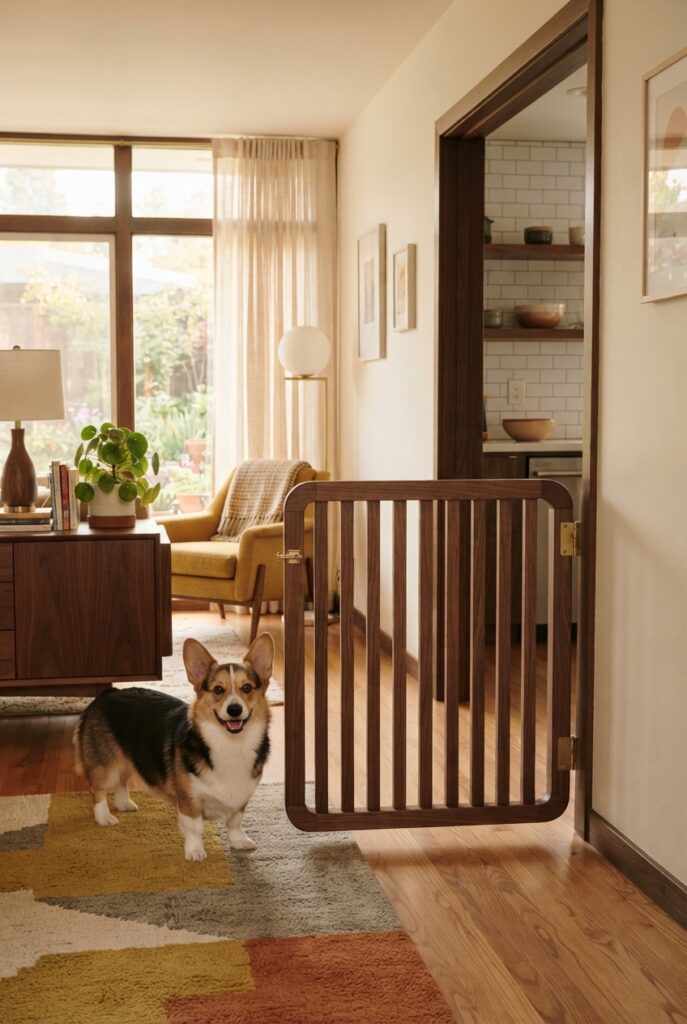
If your home leans mid-century, build a vertical-slat gate that echoes your furniture. Slim rails, rounded corners, and a walnut or oak finish deliver that warm, tailored vibe without shouting “pet zone.”
Key Details
- Use 1×2 hardwood for the frame and 3/4-inch dowels or 1×1 slats for infill.
- Maintain slat spacing of 2 inches for small dogs, up to 3 inches for larger ones—no stuck heads.
- Round every exposed corner and end; splinters and sharp edges don’t belong near noses.
Hardware
- Standard butt hinges mounted to a jamb or a wall-mounted post
- A self-closing spring hinge on one side helps prevent accidental gaps
- Secure it with a slide bolt mounted high
Seal with water-based, low-VOC poly for durability. IMO, this one blends best in living rooms where you care about lines and color match—seriously clean.
Best for: Design-first rooms; pups who like to watch but not barge; households that prize warm wood tones.
6. Dutch-Door Conversion: A Real Door That Splits For Paws
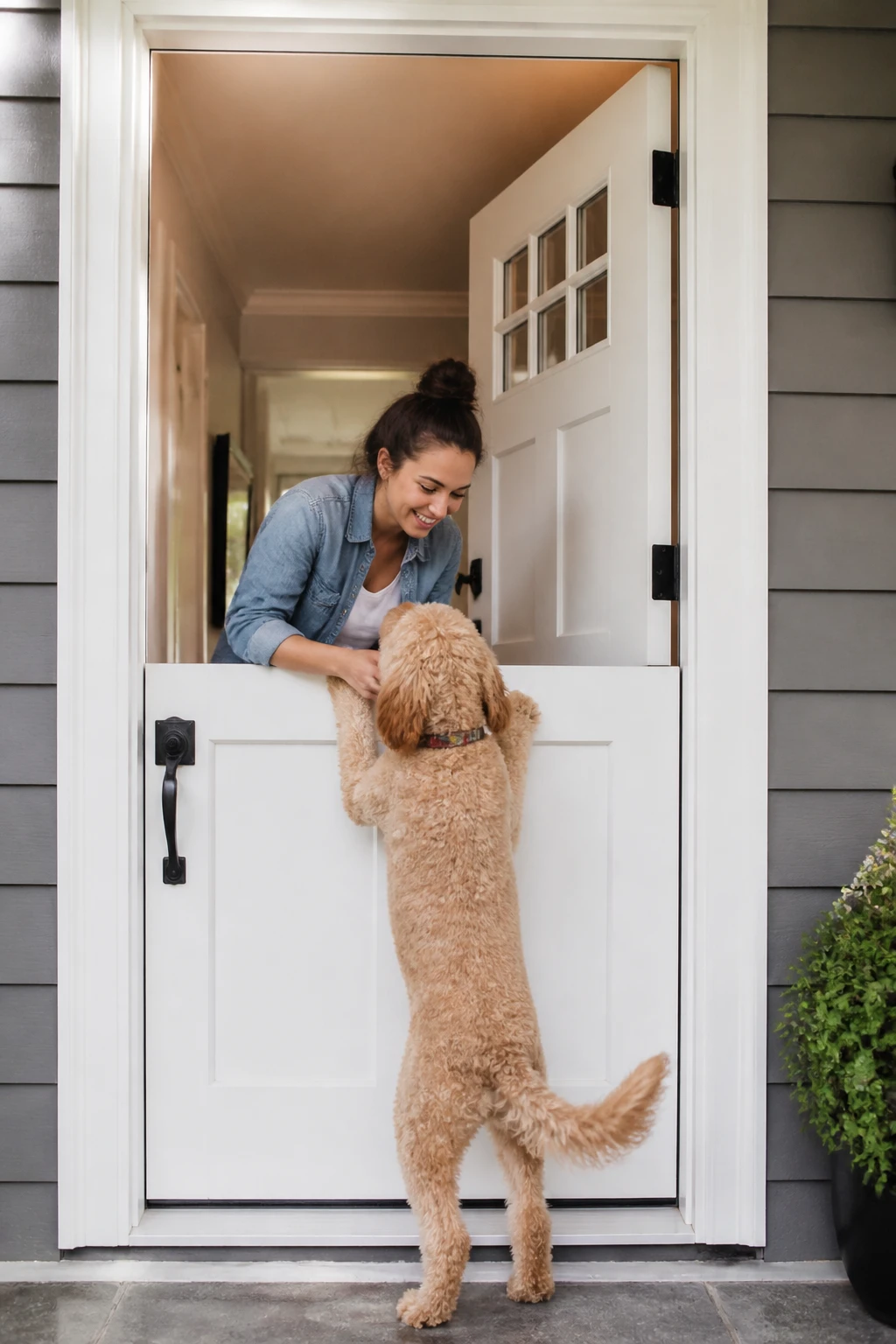
Convert a standard interior door into a Dutch door so the bottom half keeps your dog safe while the top stays open for airflow and conversation. It looks built-in because it is—well, after your weekend project.
How-To Highlights
- Mark a cut line about 36 inches up, remove the door, and cut cleanly with a track or circular saw.
- Add an extra hinge per half and a vertical astragal or overlapping trim to close the seam neatly.
- Install a connecting bolt or latch so you can rejoin both halves when you want a full door.
Finishing
- Match existing paint; touch up the cut edge with a hardwood cap for strength.
- Attach bumpers to protect jambs from enthusiastic greetings.
I’d pick this if your doorway already suits a door and you want an integrated solution that looks intentional. It feels original to the home and works beautifully near kitchens or laundry rooms.
Best for: Permanent containment in busy zones; moderate to large dogs; homeowners, not renters.
7. Console Table With Secret Swing Panels
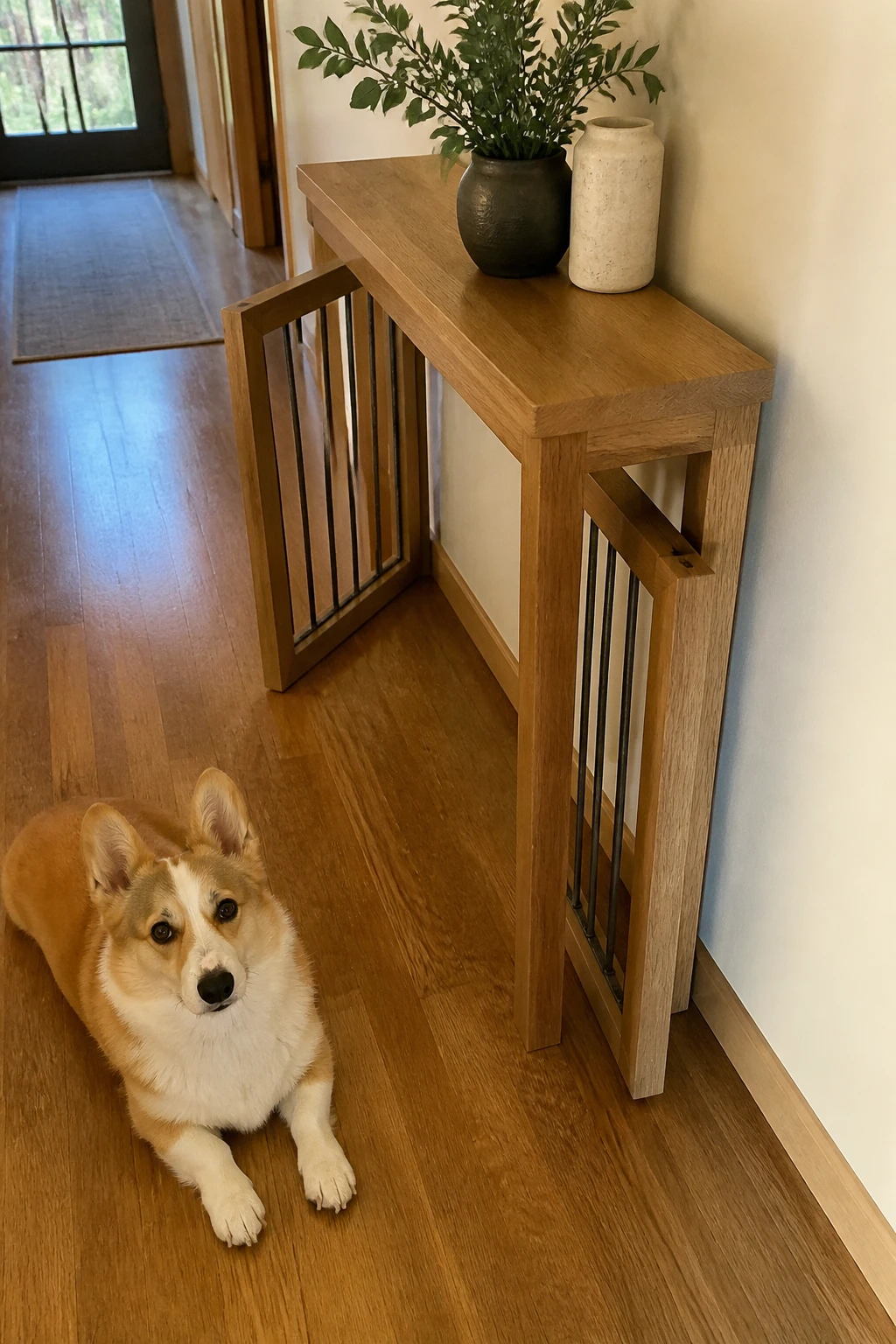
Turn your hallway console into a stealth gate system. Two hinged side panels hide behind the console legs, then swing out to block the passage when needed. When closed, the panels sit flush, so everything looks like regular furniture.
Build Notes
- Construct a sturdy console (30–34 inches tall) and add inset frames behind the legs that pivot on heavy-duty hinges.
- Use solid wood frames with narrow metal rods or wood slats to keep it airy yet chew-resistant.
- Anchor the console to studs so excited pups can’t tip it forward.
Daily Use
- Install discreet slide bolts to hold panels open and closed.
- Add adjustable feet for uneven floors and felt pads to keep things smooth.
Worth it if you want barrier function without any visual clutter. I’d skip it for very strong pushers; go with a mounted gate instead.
Best for: Entryways and narrow halls; small to medium dogs; homes that value hidden utility.
Common Mistake to Avoid
Don’t underbuild the latch or hinge side. Dogs learn fast, and a weak latch invites testing. Skip thin trim nails alone—use pocket screws, dowels, or proper joinery so the gate doesn’t wobble. Watch for baseboards that push the hinge out and leave a gap at the latch; add a mounting strip to create a flat surface. Keep finishes pet-safe and avoid small decorative hardware that a chewer could grab. Finally, measure twice for height and slat spacing—too short or too wide, and your “gate” becomes a launch pad or head trap.
FAQ
How tall should an indoor dog gate be?
Choose a height that clears your dog’s standing shoulder by at least 1.5x. For small breeds, 24–30 inches usually works. Medium to large dogs often need 32–40 inches. If your pup loves parkour, add extra height or choose a style that discourages climbing, like a smooth solid panel.
What’s a safe spacing between slats?
Go with 2 inches for small dogs and 2.5–3 inches for larger ones. Smaller gaps protect paws and prevent curious snouts from getting stuck. If you’re unsure, test with a scrap mock-up before committing to the full build.
Can renters install these without drilling into walls?
Yes—pick freestanding options like the folding wainscot screen or build a console table with swing panels. If you must mount, use a removable post anchored to furniture, or add a floor-to-ceiling compression pole with protective pads. Always protect surfaces with felt and avoid permanent anchors unless your lease allows them.
What wood and finishes work best around dogs?
Poplar and pine keep costs down and paint well. Oak, ash, or maple resist dents if you prefer stain. Seal with water-based, low-VOC polyurethane or enamel paint so claws and drool wipe off fast. Avoid oil finishes until they cure fully.
How do I keep a determined chewer from destroying the gate?
Use hardwood frames, reinforce edges, and avoid woven panels or cane near the bottom. Add a chew-safe edge guard if needed and move tempting decor away from reach. Then train consistently: reward calm behavior near the gate and never let pushing or pawing open it—consistency beats brute force.
Any tips to make these look like they belong with my furniture?
Match either the door trim color or a key furniture tone. Repeat a detail—like Shaker rails, vertical slats, or a walnut stain—so the gate echoes nearby pieces. Keep hardware consistent with other doors and cabinets in the same area for a cohesive feel.
Contain your floof without cramping your style—yes, you can have both. Pick the build that suits your space, your dog’s personality, and your tools, then customize the finish so it blends right in. You’ll wonder why you waited.
🛠️ Want to build your own? See our printable DIY dog gate plans with step-by-step instructions, cut lists and exact measurements.
Ready to upgrade your space? Tap any of the linked products and images above to see our top picks — hand-picked options that blend seamlessly into any home while keeping your pup cozy and secure.
As an Amazon Associate, I earn from qualifying purchases.