This post contains affiliate links. As an Amazon Associate, I earn from qualifying purchases, at no extra cost to you.
Winter calls for warm textures, classic patterns, and a crate that looks like it belongs in your living room. Plaid crate covers deliver instant cabin-core charm and help your dog relax by blocking drafts and reducing visual distractions. From tailored slipcovers to quick DIY hacks, these 8 ideas balance comfort, function, and safety. Ready to make your crate blend in like furniture and not an eyesore? Let’s do it.
⭐ Our Top Pick: See it on Amazon
1. Tailored Buffalo Check Slipcover That Fits Like Furniture
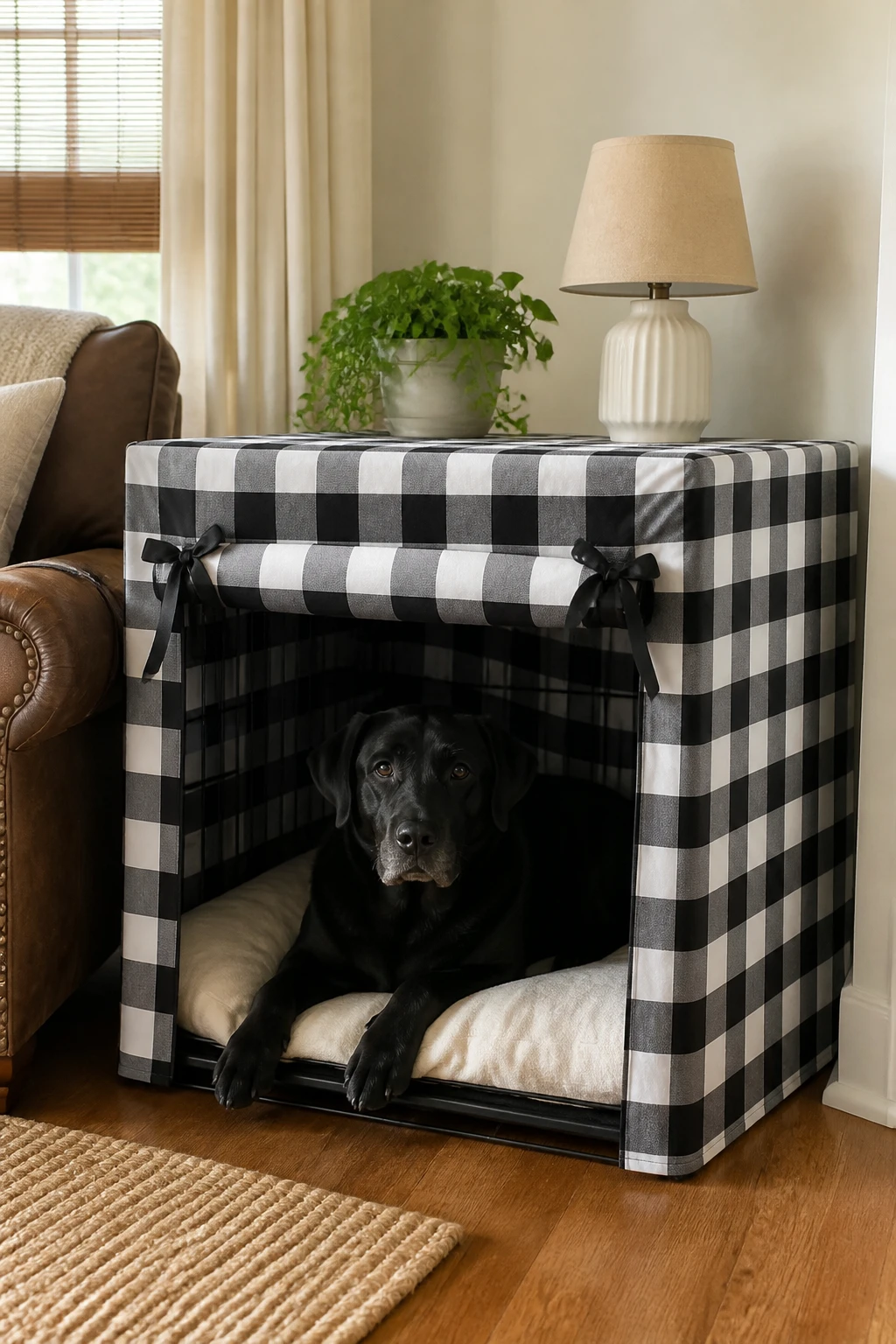
Give your crate the “actual furniture” treatment with a custom-fit slipcover in bold buffalo check. The square pattern reads clean and intentional, so your crate looks like a cabinet instead of kennel bars. Pick a mid-weight cotton or upholstery-grade fabric for structure that holds its shape.
Tips
- Measure every side (including door clearance) and add 1 inch for seam allowance.
- Include a front panel that rolls up with sewn-in fabric ties or Velcro placed high and out of reach.
- Choose darker checks if you want easy stain camouflage.
I’d pick reinforced corners with hidden magnets or snaps to keep edges crisp without dangling strings. Benefit: a polished look that blends into living rooms and dens while limiting drafts.
Best for: Medium to large crates in main living spaces where you want a refined, built-in vibe.
2. Moody Tartan With Thermal Lining For Drafty Corners
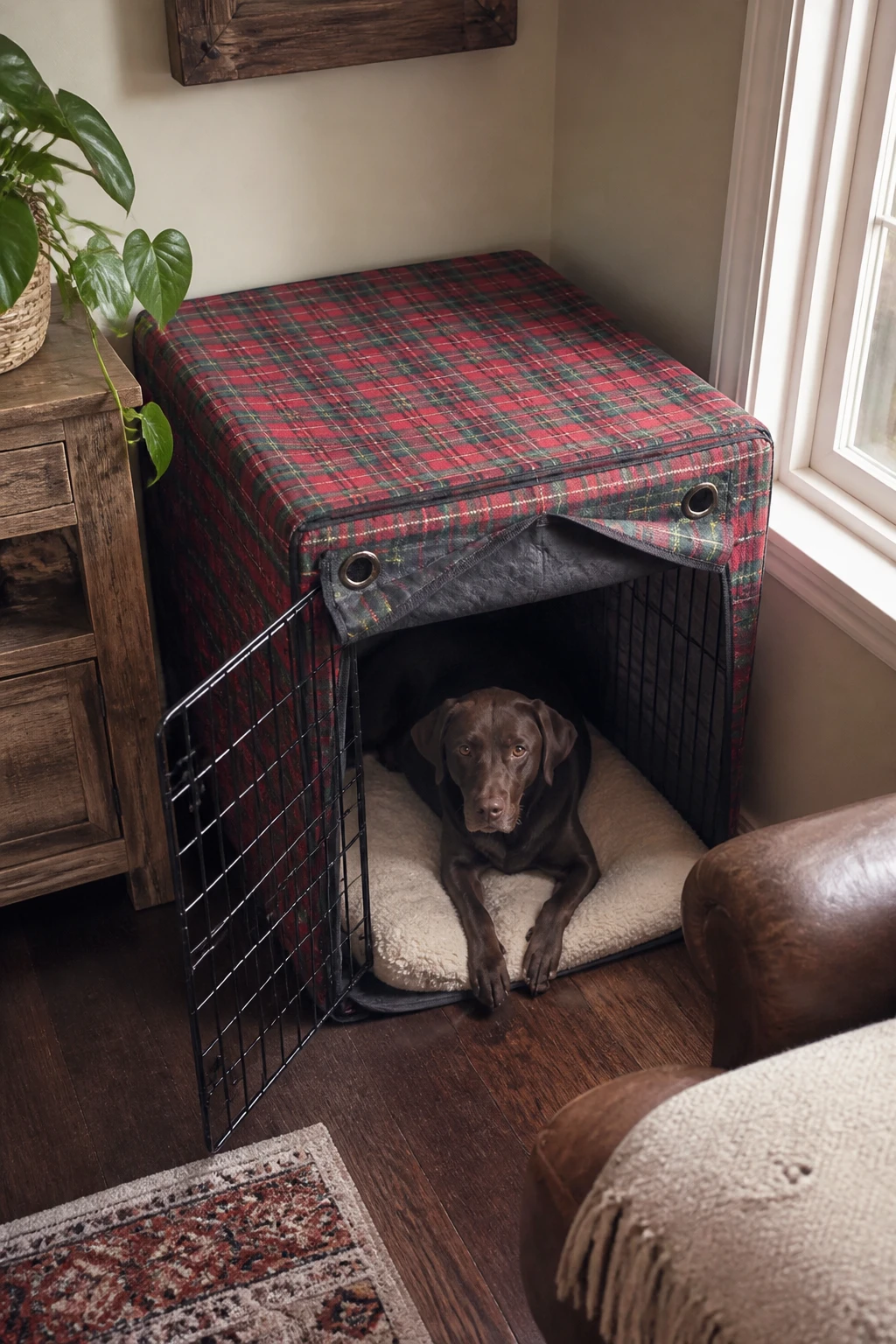
Classic tartan + insulated lining = warm nook that feels like a snug cabin. Use a plaid wool blend or flannel outside, then add a quilted or thermal layer inside to help cut chilly airflow near doors or windows.
Materials
- Wool blend or flannel tartan (outer)
- Quilted thermal batting (inner)
- Hook-and-loop closures along the back edge
Place the vent openings strategically. Leave at least one side panel partially uncovered or add mesh grommets high on the sides for airflow. I’d skip full enclosure unless your pup relaxes well in darker spaces. Benefit: extra warmth without cranking the heat.
Best for: Dogs who chill easily and homes with draft-prone corners or older windows.
3. DIY Flannel Throw Hack You Can Wash On Repeat
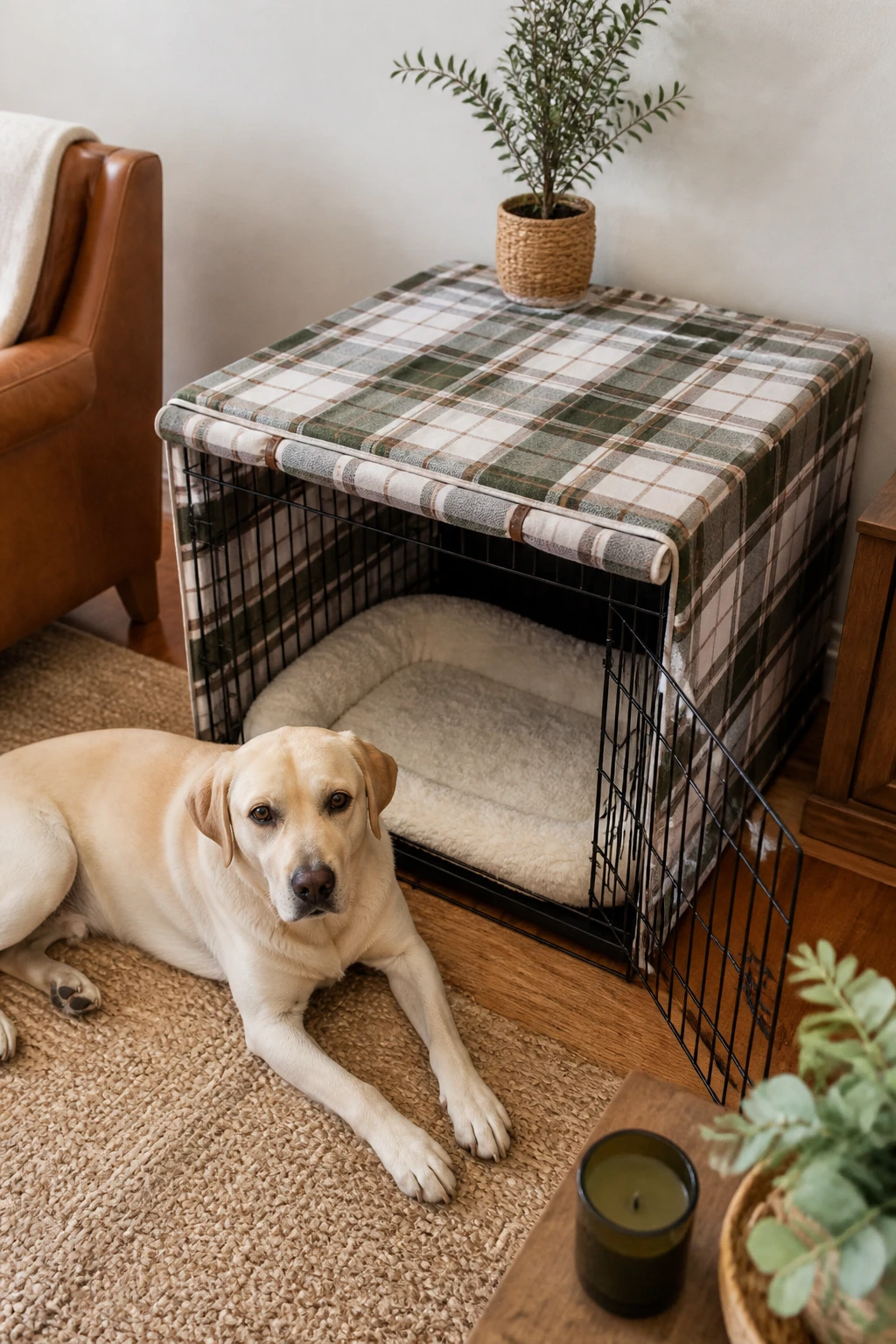
Need something quick and budget-friendly? Grab an oversized plaid flannel throw and transform it into a tidy cover in under 20 minutes. It’s flexible, washable, and easy to replace if your dog tests it with muddy paws.
How-To
- Drape the throw so the pattern centers on the top panel for visual balance.
- Secure the back with large binder clips hidden on the inside, or use stick-on Command hooks on the crate frame with elastic loops sewn to the throw.
- Fold and hem the front edge so it rolls up neatly; add two high-placed fabric ties.
FYI: keep all fasteners outside chewing range and avoid any dangling bits. Worth it if you want something practical you can toss in the wash mid-winter. Benefit: low effort, low cost, high impact.
Best for: Busy households that need easy-care textiles and renters who move furniture often.
4. Plaid-On-Plaid Layering With Neutral Piping
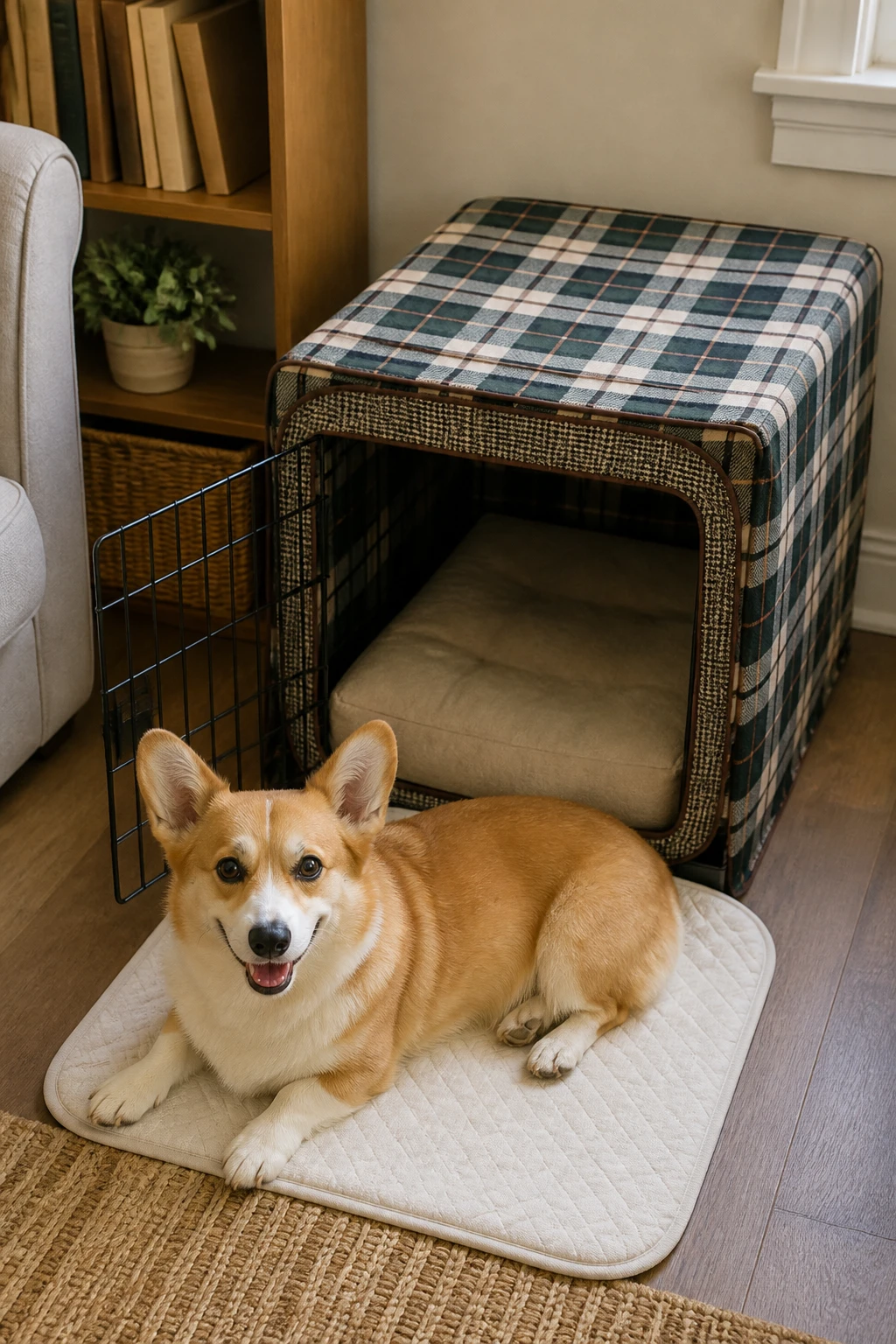
You can layer patterns without chaos. Pair a large-scale plaid cover with a subtle micro-check trim or piping to frame edges. The contrast adds finesse and makes the crate look intentional rather than “covered.”
Key Points
- Stick to one dominant color story (e.g., black, cream, and forest) across patterns.
- Add cotton or faux-leather piping along seams for structure and wear resistance.
- Keep the base pad neutral so the eye rests and the mix doesn’t feel busy.
I’d pick stain-resistant finishes for the piping since paws meet edges first. Benefit: designer feel with minimal materials, while still totally dog-safe.
Best for: Style-focused spaces where you want pattern play without visual noise.
5. Farmhouse Skirted Cover With Hidden Storage
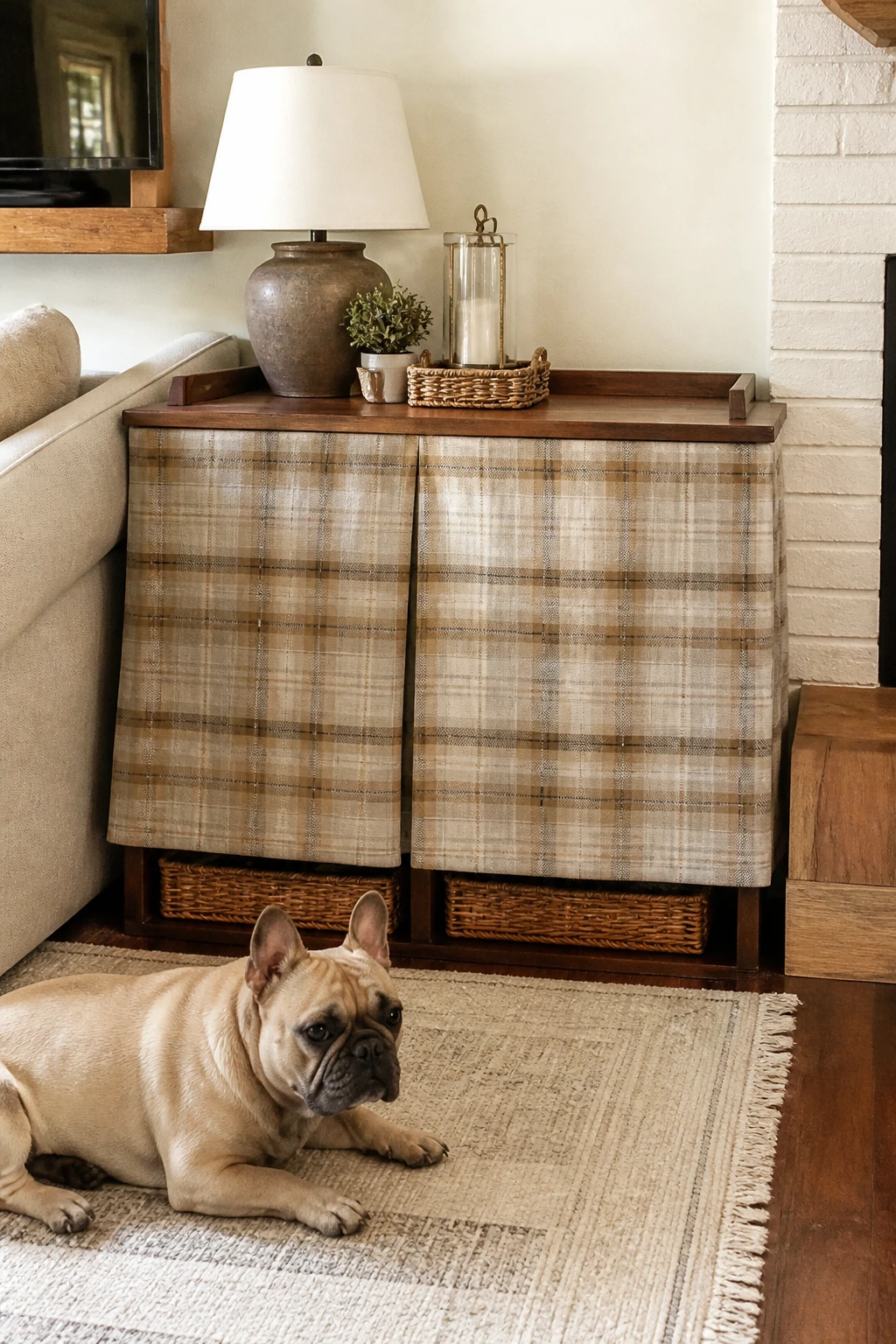
Turn the crate into a side table lookalike with a skirted cover in brushed plaid. Add a box-pleat front and panels that drop just past the tray lip to hide the base and slide a flat basket or two beneath for leashes and poop bags.
Build It Smart
- Use a lining layer so the skirt hangs straight and doesn’t cling.
- Keep storage shallow so it won’t block vents or rub the crate walls.
- Attach the cover with corner ties high on the frame; avoid long ribbons.
IMO this solves clutter while making the crate look intentional next to a sofa. Benefit: extra stash space without adding another piece of furniture.
Best for: Small homes or apartments where every inch counts.
6. Winter Cabin Look: Plaid Topper Plus Solid Sides
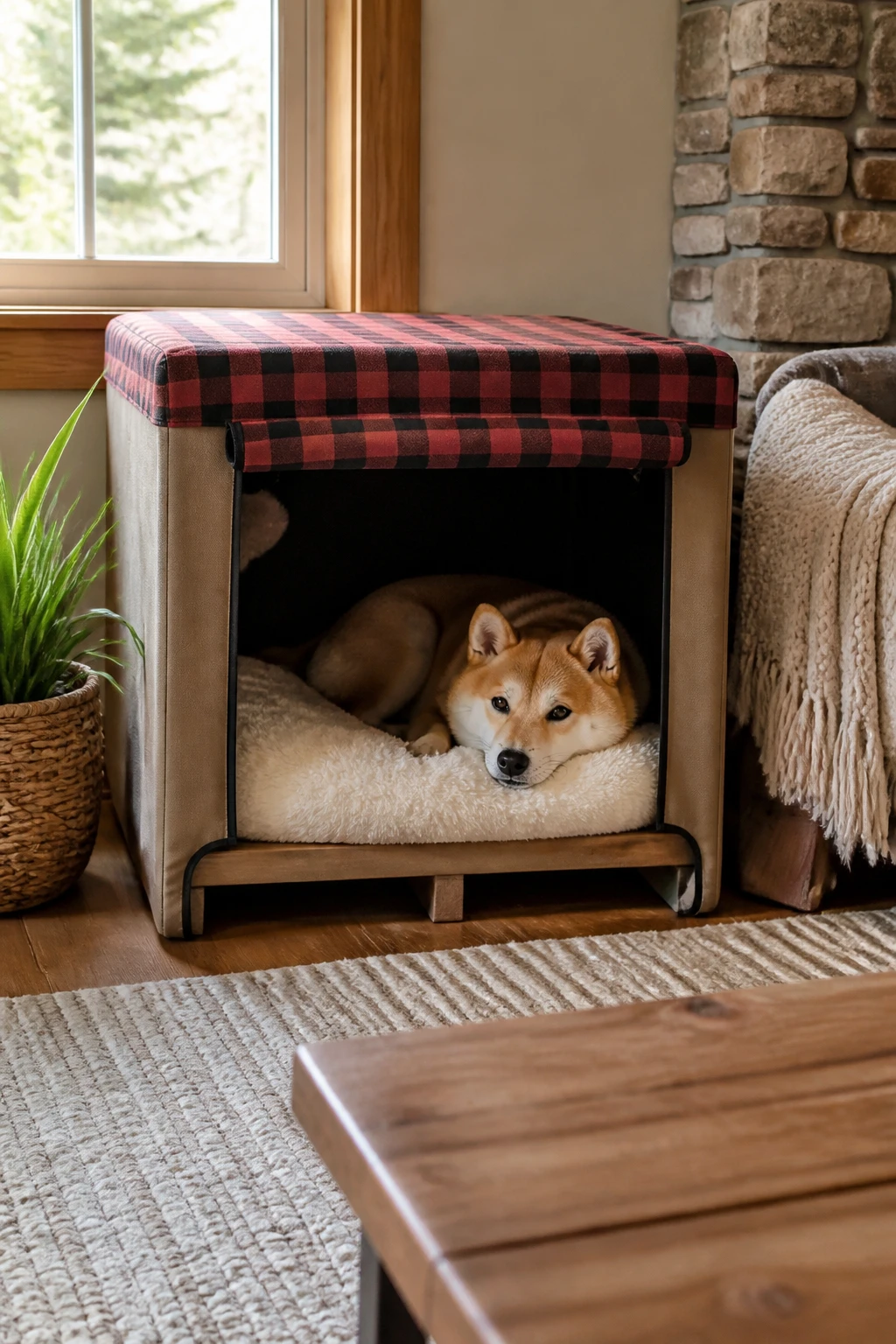
Not every panel needs pattern. Put the plaid only on the top and front flap, then use durable canvas or twill on the sides and back. You get the cozy aesthetic while keeping the profile calm.
Why It Works
- Pattern on the most visible planes draws the eye and camouflages hair.
- Solid sides resist scuffs against walls or baseboards.
- Swappable toppers mean you can change looks each season with a single panel.
Choose a breathable solid fabric and leave a couple inches above floor level on the back for air circulation. I’d pick this setup if your crate sits against a wall. Benefit: polished design with practical durability.
Best for: Households with kids or high-traffic zones where sides get bumped.
7. Performance Plaid: Stain-Resistant Fabric You Can Spot-Clean
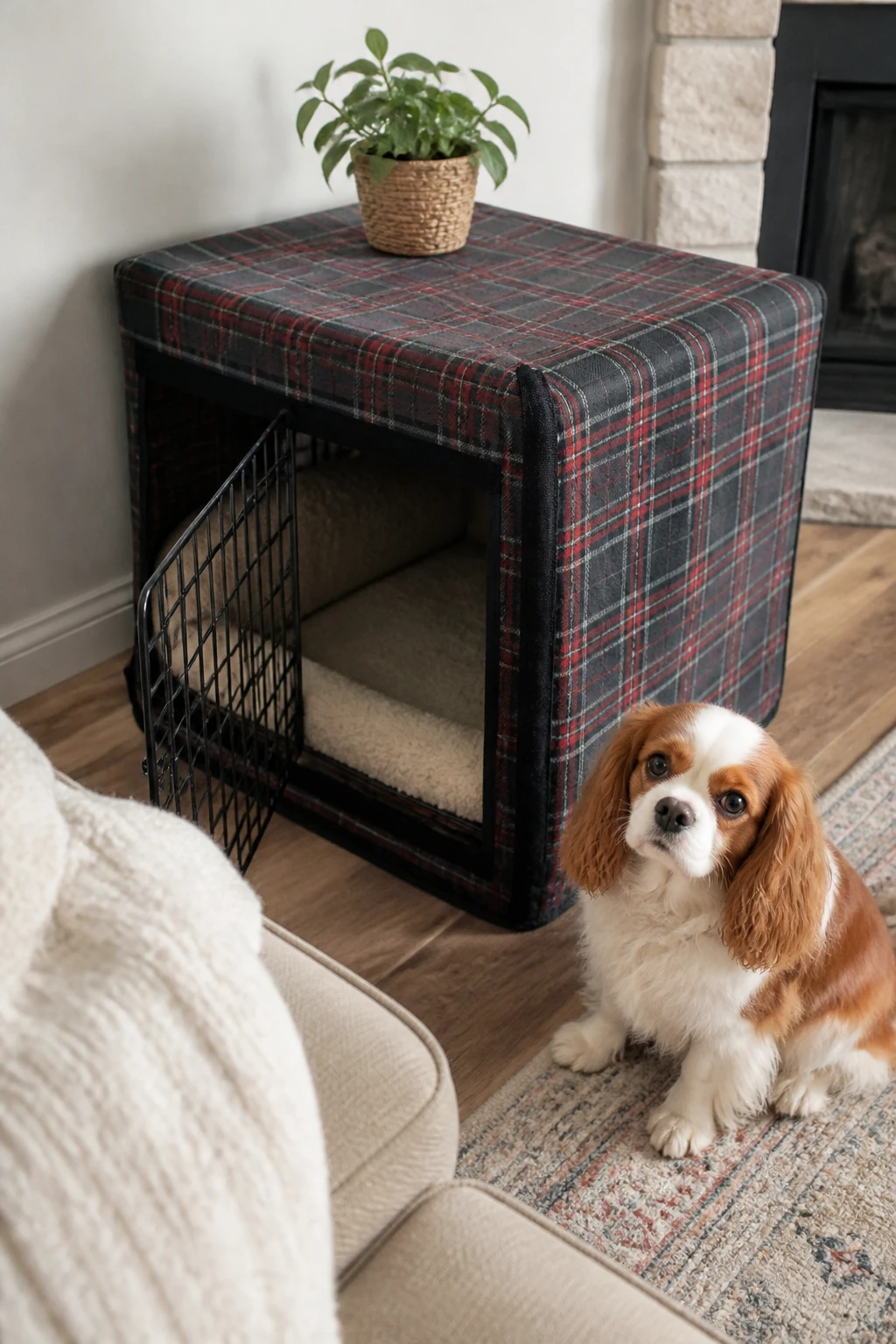
Love the pattern but dread mess? Use performance plaid made for upholstery. These fabrics resist moisture and stains, yet still feel cozy to the touch.
What To Look For
- OEKO-TEX or GREENGUARD certifications where possible.
- Tight weaves that won’t snag on crate wires.
- Machine-washable or at least spot-clean friendly care labels.
Secure closures with wide hook-and-loop strips instead of buttons or zippers that can tempt chewers. Worth it if your dog drools or tracks in slush. Benefit: long-term durability without sacrificing style.
Best for: High-energy pups, multi-dog homes, and mud-season realities.
8. Plaid Panel Doors With Roll-Up Windows
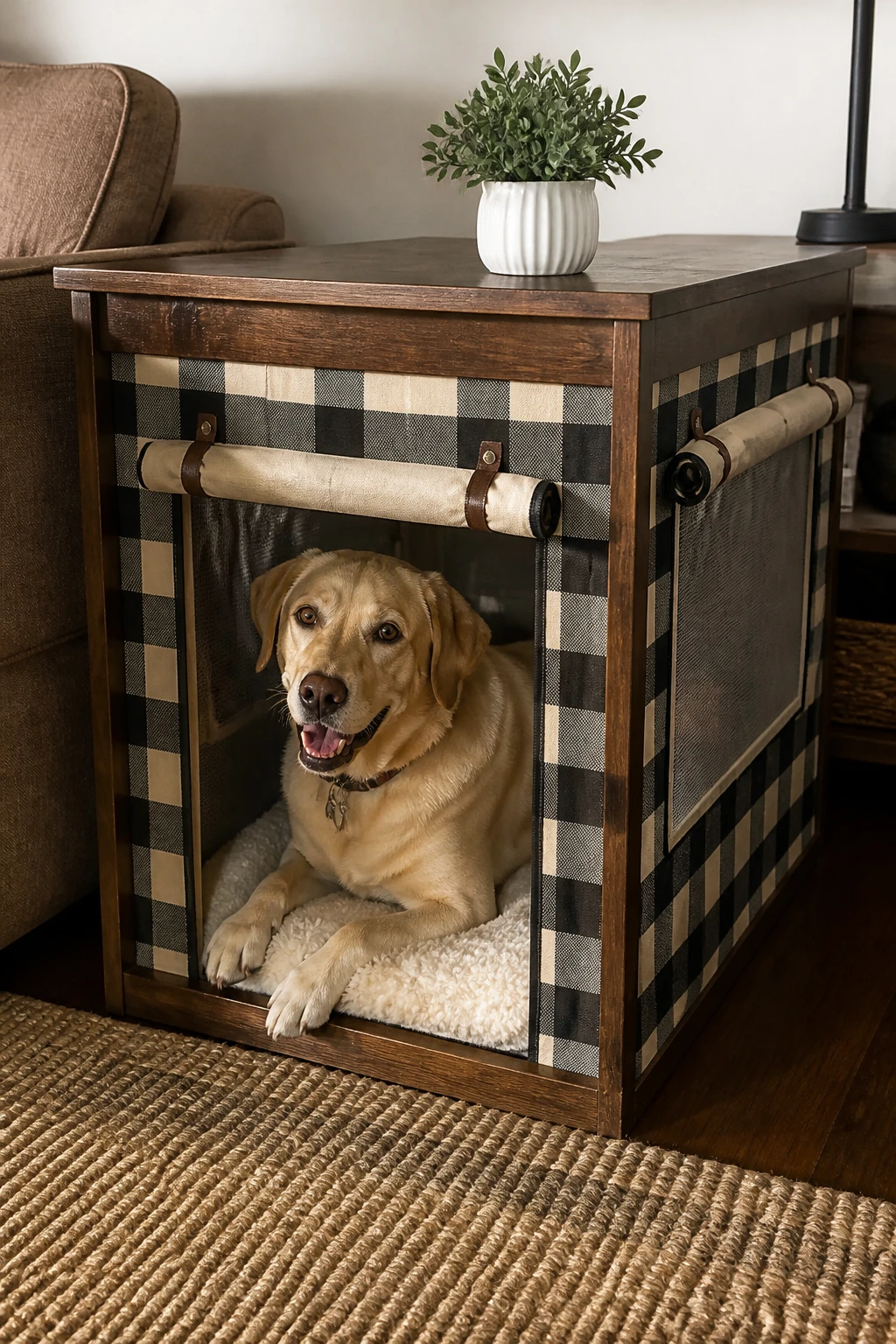
Need more flexibility for naps and nighttime? Create a cover with roll-up “windows” on the sides or front. Use plaid for the main body and line the window flaps with a coordinating solid for contrast.
Build Details
- Add mesh in the window openings for airflow if your dog runs warm.
- Use short fabric tabs with snaps placed high, so nothing dangles near curious teeth.
- Hem edges cleanly to prevent fraying and future chewing temptation.
I’d pick this if your dog likes to watch you during the day but needs darkness at bedtime. Benefit: light control and ventilation in one adaptable piece.
Best for: Crates in bedrooms or offices where lighting changes throughout the day.
Common Mistake to Avoid
Don’t over-insulate the crate or block ventilation on all sides. Dogs need fresh air and a clear exit, especially if they run warm or get anxious. Leave at least one panel partially open, and keep covers away from heaters, fireplaces, and floor vents.
FAQ
How do I measure my crate for a proper plaid cover fit?
Measure width, depth, and height from the outside edges, including the tray lip. Add 1 inch to each dimension for seam allowance, and plan extra length for roll-up doors. If your crate has side doors, mark those placements so the cover includes access panels.
Is plaid too busy for a small room?
Not if you balance it. Choose medium-scale checks in muted tones and pair with solid sides or a neutral base pad. Keep nearby textiles simpler, and repeat one color from the plaid in a pillow or rug to make the space feel cohesive.
What fabric works best for dogs that shed a lot?
Go with mid-tone, tight-weave fabrics like performance twill or durable cotton blends. They don’t trap hair as easily, and patterns with a bit of contrast disguise fur between cleanings. Keep a lint roller in that hidden storage basket for quick touch-ups.
How do I keep the cover safe for chewers?
Avoid dangling ties, loose cords, or metal hardware at nose level. Use short fabric tabs with snaps or hidden Velcro high on the frame. If your dog fixates on edges, reinforce hems with bias tape and monitor during the first few uses.
Can I use a heated mat inside the crate in winter?
If you add warmth, choose a pet-safe, low-wattage heated pad designed for crates and follow the manufacturer’s guidelines. Never place heating elements under thick insulation, and always allow space for the dog to move off the heat. Keep cords routed outside the crate and protected with a chew-resistant cover.
How often should I wash a plaid crate cover?
For most homes, every 2–4 weeks works, with spot-cleaning in between. During wet weather or if your dog has allergies, wash weekly. Always follow fabric care labels and pretest stain removers on a hidden corner.
Winter gives you the perfect excuse to turn a plain crate into a handsome accent. Pick one of these eight ideas, add thoughtful details, and you’ll get a calming den your dog actually chooses. Ready to cozy up the corner and smile every time you walk by?
As an Amazon Associate, I earn from qualifying purchases.