This post contains affiliate links. As an Amazon Associate, I earn from qualifying purchases, at no extra cost to you.
Winter windows are basically dog TV. Give your pup a comfy perch and you’ll get fewer nose smudges on the glass, less pacing, and more adorable snoozing between “squirrel alerts.” These 5 ideas range from quick weekend projects to sturdy, built-in vibes. Pick one that matches your space, your dog’s size, and your skill level—then enjoy the peace and the views.
⭐ Our Top Pick: See it on Amazon
1. The Cushioned Bench Riser (Using a Storage Cube Shelf)
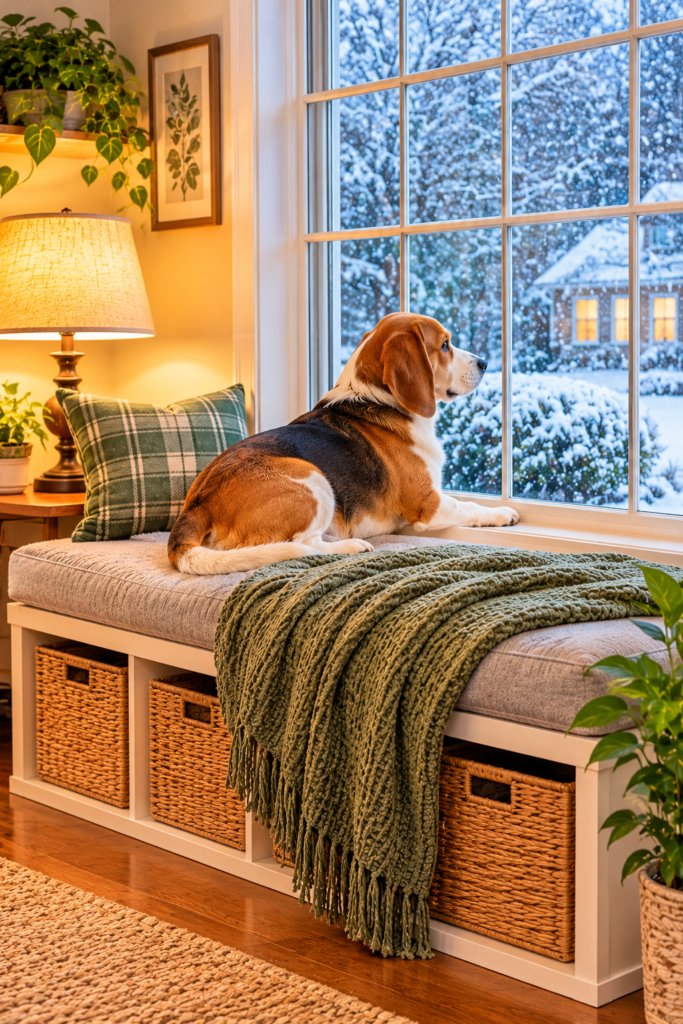
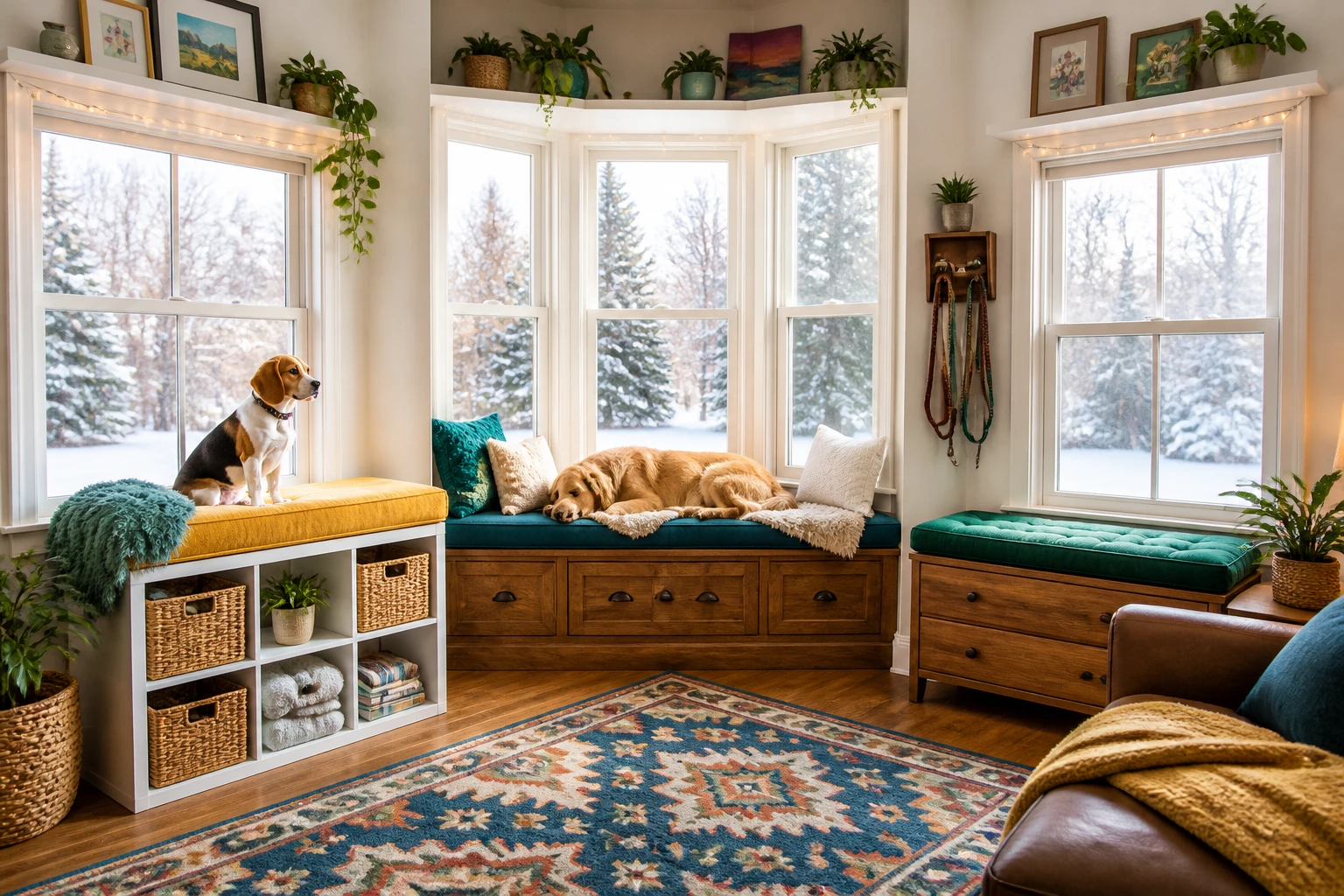
Want height without drilling into walls? Turn a sturdy 3-cube or 6-cube organizer into a window-height perch. It gives your dog a comfy lookout while you score bonus storage for leashes, blankets, and lint rollers.
Materials
- 3- or 6-cube shelf unit rated for at least 100 lbs distributed
- High-density foam cut to fit the top (2–3 inches thick)
- Washable, zippered cushion cover or outdoor fabric
- Non-slip rug pad or silicone furniture dots
- Corner brackets if you want extra reinforcement
Assemble the shelf and slide it under the window so the top sits just below the sill. Add the foam cushion inside a washable cover and secure a non-slip pad under the cushion so it won’t skate during dramatic squirrel sightings. If you’ve got a big dog, I’d add corner brackets to the shelf frame and push it fully against the wall for stability.
Tips
- Measure your dog’s shoulder height and aim for a platform 2–4 inches below the window so they can rest their chin on the sill.
- Choose tightly woven fabric that resists nails and fur. Outdoor cushion fabric holds up well.
- Keep decor up high. Use shatterproof bits only, mounted out of reach with Command hooks.
Best for: Apartments or small rooms that need storage and a clean look. I’d pick this if you want a fast, renter-friendly solution.
Bonus: You’ll reduce drafty floor lounging and encourage calm window time.
2. The Sturdy Sill Extension With Hidden Brackets
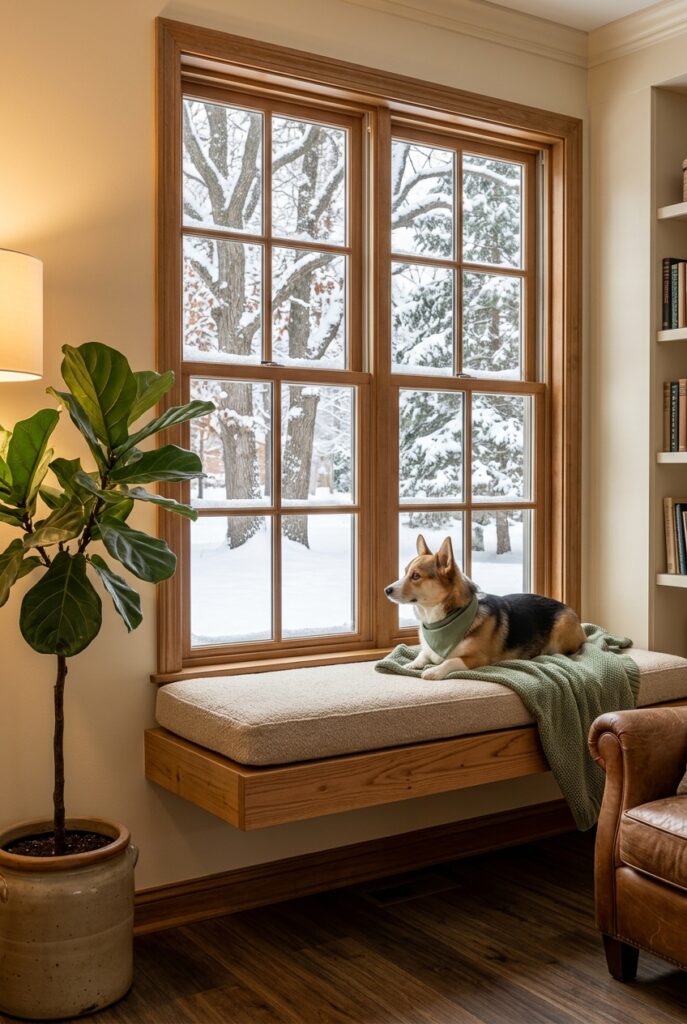
Have a deep window? Expand it into a safe lounging shelf. A sill extension gives a built-in appearance, holds serious weight, and keeps floors clear.
How-To
- Use a 1-inch-thick hardwood board (maple, oak, or poplar) cut to extend 6–10 inches past the existing sill and span the window width.
- Install two or three heavy-duty L-brackets or floating shelf brackets into wall studs beneath the sill line.
- Round over the front edge with sandpaper and seal with a pet-safe, low-VOC finish.
- Top with a custom cushion secured by Velcro at the back edge for easy laundering.
Pre-drill into studs and confirm bracket load ratings exceed your dog’s weight by at least 2x. Yes, overkill is the goal. Keep cords and blinds out of reach; swap in cordless shades or mount pulls high.
Safety and Comfort
- Add a non-slip cushion bottom so excited paws don’t slide.
- Leave at least 2 inches clearance from any baseboard heaters or radiators. Heat and foam don’t mix.
- Skip fragile plants on the ledge. Choose faux greenery tucked in stable planters, placed away from the lounging zone.
Best for: Homeowners or confident DIYers who want a seamless, long-term upgrade. Worth it if you have medium to large dogs and a draft-free window wall.
You’ll get a sleek look that doubles as subtle storage space beneath if you add baskets on the floor.
3. The Trunk Turned Lounge (Storage Chest Makeover)
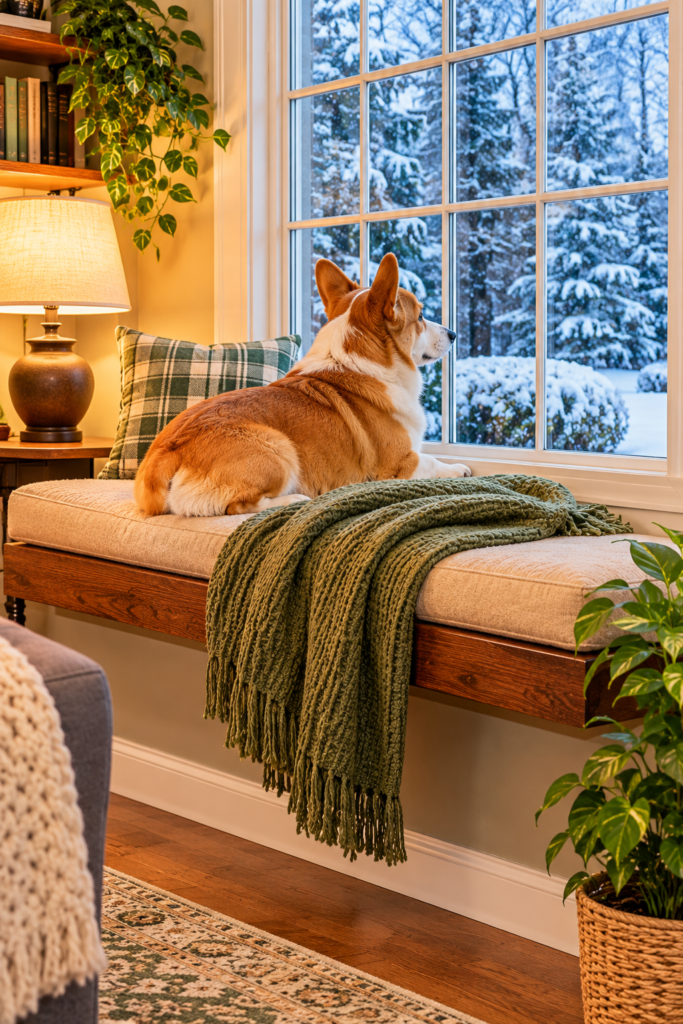
Got an old blanket chest or hope chest? Convert it into a cushy viewing spot that hides throws and winter gear. It’s a fast refinishing project with big payoff.
Steps
- Check the chest’s weight capacity and hinge strength. Replace old hinges with soft-close safety hinges to protect curious noses and paws.
- Add felt pads under the feet and slide the trunk under the window.
- Create a fitted topper: cut foam to size, wrap with a removable cover, and secure with wide elastic straps or non-slip matting.
- Line the inside with cedar planks or sachets (sealed and out of reach) to keep textiles fresh—just avoid any loose pieces that could become chew targets.
Choose a low-sheen paint or stain to match your trim. If your dog is a chewer, avoid decorative rope pulls or leather tassels on the exterior—temptation city.
Smart Add-Ons
- Mount a simple wall bumper behind the chest so it can’t tap the wall or radiator.
- Use soft-close lid supports rated for the chest’s weight to prevent finger or snout pinches.
- Stick a small silicone strip along the lid rim to reduce drafts through the seam.
Best for: Entry windows, living rooms, or bedrooms that need hidden storage. I’d pick this for households that rotate seasonal bedding and want a fast weekend project.
Bonus: The chest makes a handy spot to stash wet leashes or boot trays below, while your pup keeps watch.
4. The Crate-Base Window Nook (Two-in-One Space Saver)
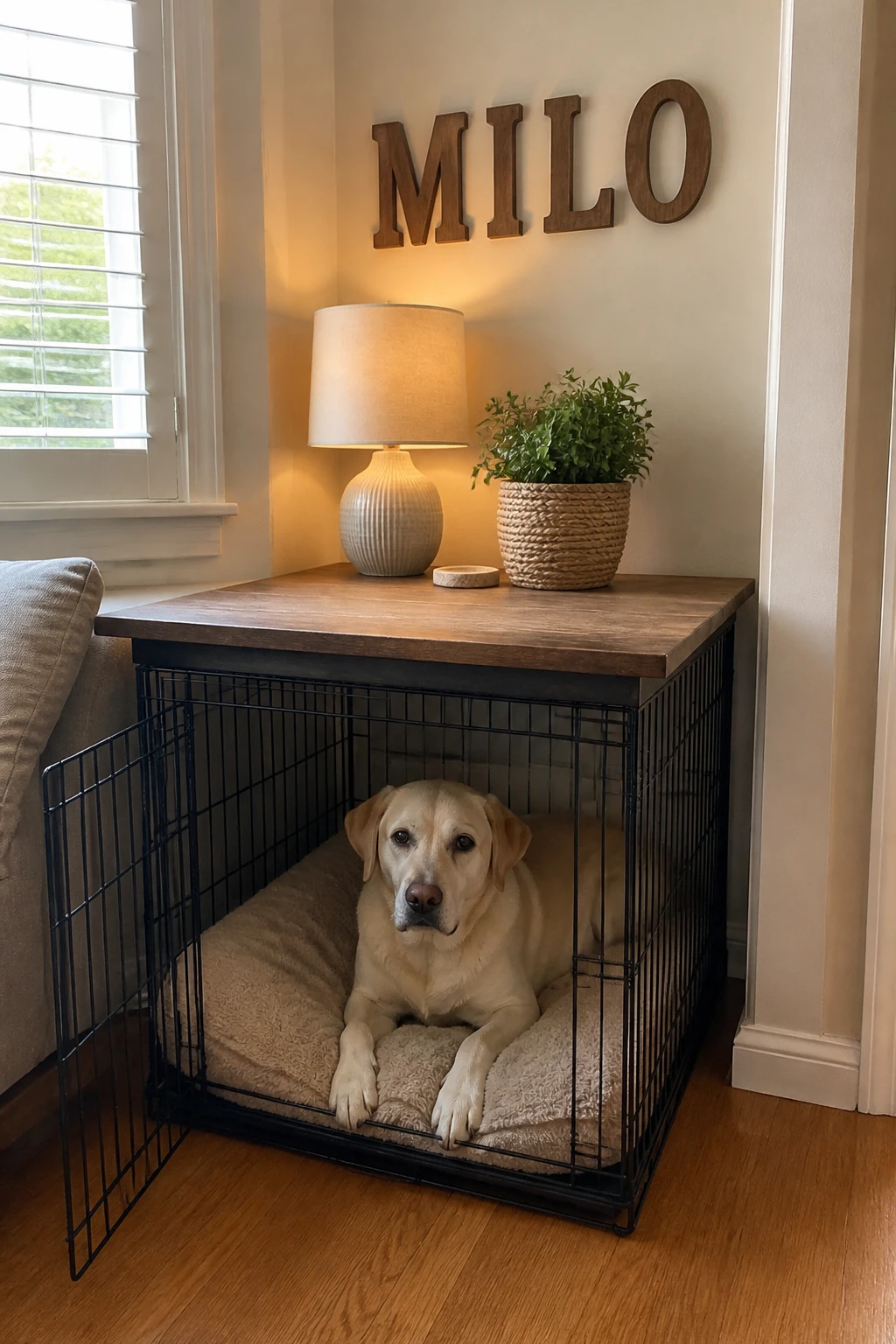
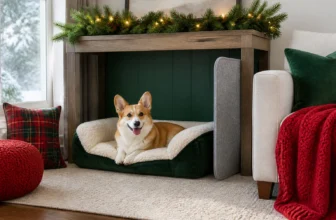
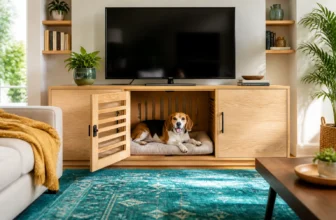
Combine a dog crate with a solid top to create a multi-use perch. Your dog gets a den under a sturdy tabletop, and you get a tidy window corner that looks intentional, not “temporary.”
Build Outline
- Start with a metal or furniture-style crate sized for your dog to stand, turn, and stretch.
- Add a custom top: 3/4-inch plywood or a pre-cut furniture panel that overhangs 1–2 inches on all sides.
- Edge the panel with iron-on veneer or wood trim for a furniture finish.
- Fasten the top to the wall with an L-bracket at the back edge; leave the crate free underneath for cleaning and access.
- Top with a washable pad secured via corner ties or Velcro dots.
Position the setup so the crate door opens away from the window to prevent nose prints on colder days and to keep drafts off your dog while resting inside. Keep any decor on the tabletop minimal and heavy so it doesn’t slide during takeoffs and landings.
Practical Notes
- Run cords behind a cable raceway or keep them out of this zone entirely.
- Use rubber feet under the crate to protect floors and stop rattling.
- Skip hanging blankets over the crate near heat sources; maintain airflow.
Best for: Smaller spaces and multi-dog homes that need structure and calm. Worth it if you want one footprint to handle resting, containment, and window watching.
You’ll free up floor area while giving your dog a familiar spot that feels secure.
5. The Layered Stair-Step Perch (Modular and Senior-Friendly)
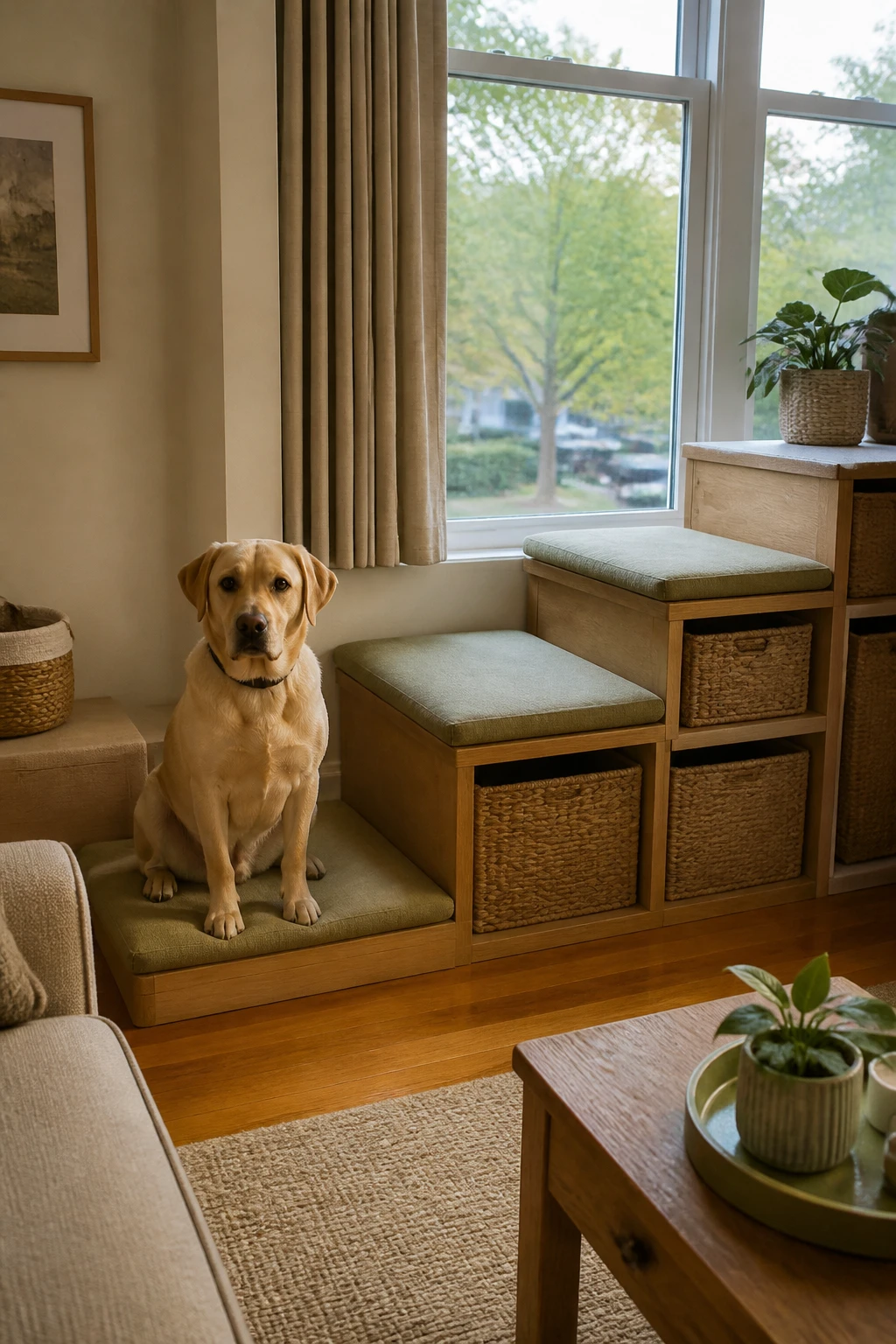
Some pups don’t love jumps. Create a low-impact, stair-step approach to the window using modular cubes or sturdy pet steps topped with a long cushion. It’s flexible, renter-safe, and easy to reconfigure.
Plan
- Arrange two or three solid cubes or a combo of a low bench plus a short riser to form steps up to the sill.
- Anchor each module with grippy dots underneath so nothing shifts.
- Lay a single, continuous cushion across the top for an even landing zone. No gaps = no paw traps.
- If using commercial pet stairs, choose ones with a wide tread depth (10–12 inches) and non-slip covers.
Go with closed-sided cubes rather than open wire frames—closed sides keep toes safe and reduce visual clutter. Add a washable runner rug along the path for traction and warmth in winter.
What I’d Do
- I’d skip lightweight foam-only stairs for bigger dogs; they can tip or compress weirdly.
- I’d pick wood or dense-plastic modules with a published weight limit at least 1.5x your dog’s weight.
- For extra polish, cap exposed edges with rounded trim and sand everything smooth.
Best for: Senior dogs, short-legged breeds, or renters who want zero drilling. It shines in bedrooms and bay windows.
Benefit: Low-impact access means fewer slippery leaps and happier joints, especially during colder months.
Common Mistake to Avoid
Don’t ignore drafts and sun exposure. A drafty sill or blazing afternoon spot can undo all your effort. Test the area for leaks and consider thermal curtains or window film. Keep perches a few inches from heat sources and use cordless shades to eliminate dangling hazards. Lastly, don’t overload shelves beyond their rated capacity—excitement plus gravity is a combo you don’t want to meet.
FAQ
How high should a dog window seat be?
Aim for a platform 2–4 inches below the sill so your dog can rest their chin comfortably. Small dogs may need steps to get up safely. Prioritize a stable base over extra height.
What cushion material works best for winter?
High-density foam with a washable, tightly woven cover keeps warmth without sagging. Add a non-slip bottom and rotate the cushion weekly. If your window is cold, a thin insulating mat under the foam helps block drafts.
Can I put a dog window seat near a radiator or vent?
Keep at least a 2–3 inch gap from radiators and never block vents. Heat can degrade foam and overheat your dog. If the only spot is warm, choose a wood or metal platform with breathable padding and monitor temps.
How do I keep it safe for chewers?
Skip rope handles, fringe, or loose ties. Use smooth wood, sealed edges, and durable fabrics. Route cords away using a wall-mounted raceway, and choose shatterproof decor placed high and out of reach.
What if my dog won’t use the new perch?
Start with short, positive sessions. Sit beside the perch, reward calm behavior, and add a familiar blanket. Make sure the view is actually interesting and adjust height if your dog strains to see out.
Do renters have options without drilling?
Yes—use storage cubes, trunks, or a crate topped with a panel that anchors to the wall with removable brackets or sits flush against a wall corner. Non-slip pads and rubber feet add stability without holes.
Pick the project that fits your space and your dog’s needs, then enjoy those snowy sidewalk stakeouts together. With a little DIY, you’ll get a tidy corner, fewer zoomies, and the cutest winter lookout in the neighborhood.
As an Amazon Associate, I earn from qualifying purchases.