This post contains affiliate links. As an Amazon Associate, I earn from qualifying purchases, at no extra cost to you.
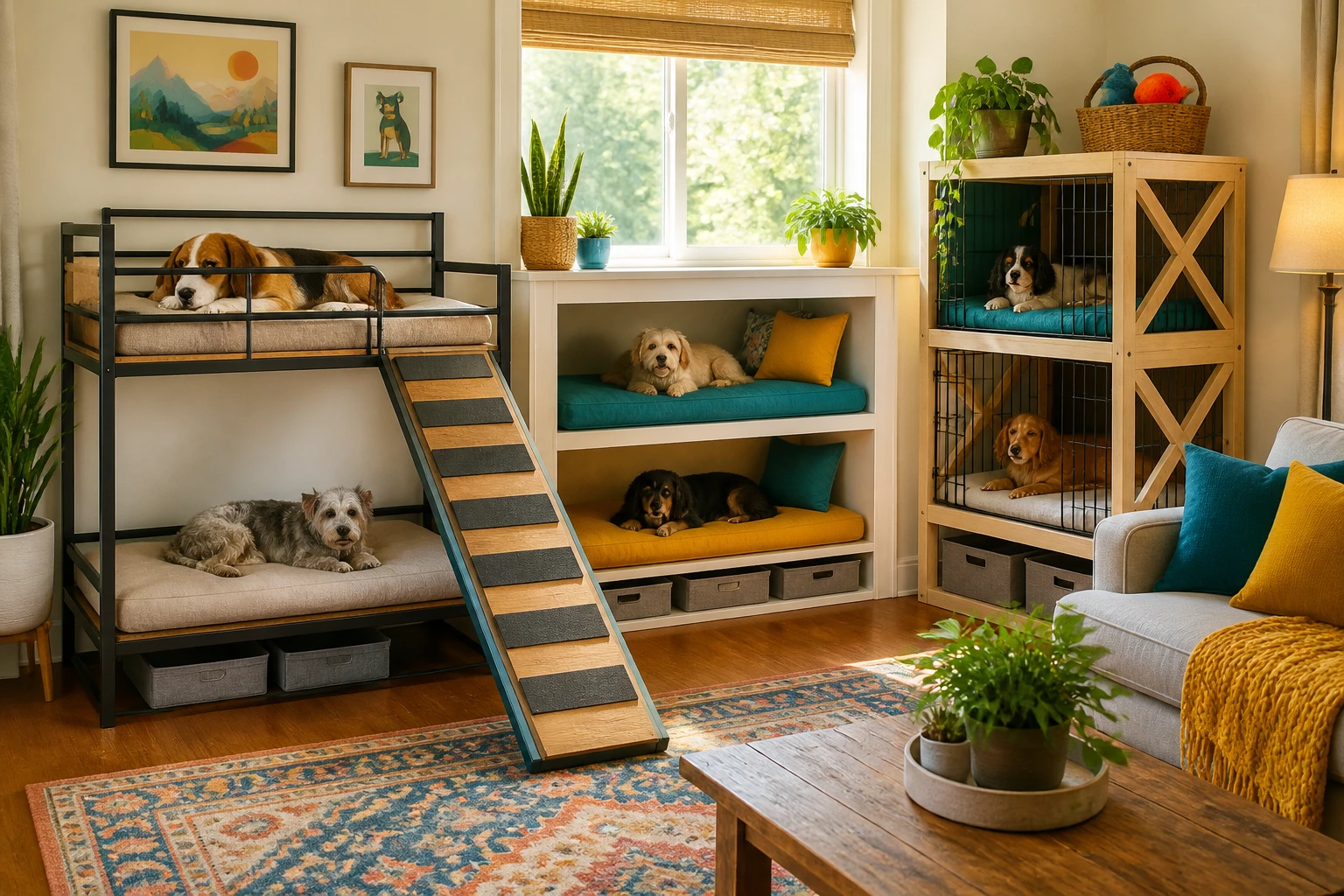
Two dogs, one small space? Bunk beds solve it with smart design and zero turf wars. They give each pup a personal nook while freeing up your floor for, you know, actual walking. Whether you want ready-made furniture or a weekend DIY, these 5 ideas balance comfort, safety, and style. Let’s get your duo settled without cramping your living room.
⭐ Our Top Pick: See it on Amazon
1. The Modern Frame Bunk: Sleek, Sturdy, and Apartment-Friendly
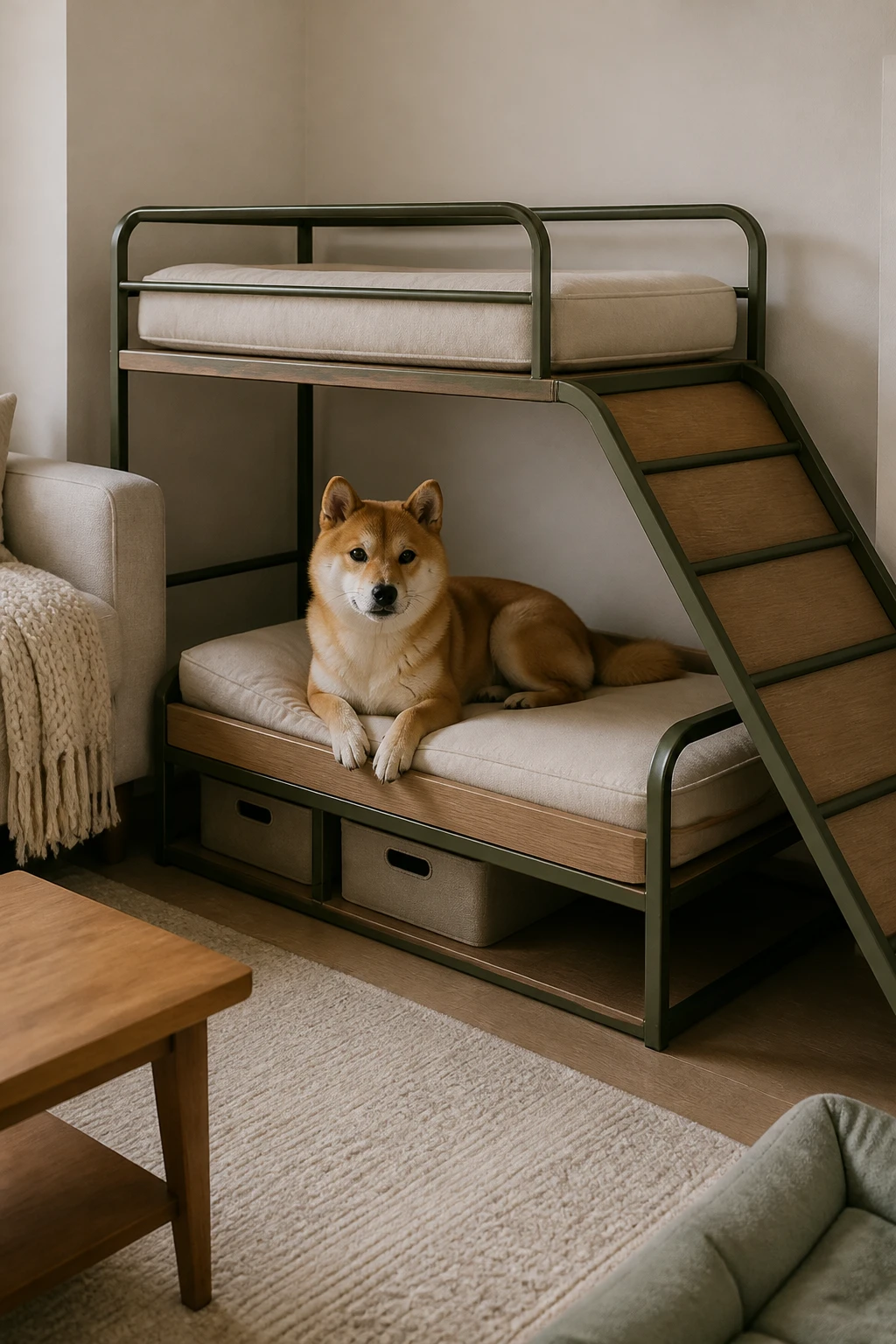
Want a clean-lined piece that looks like it came from a fancy catalog? A modern frame bunk gives you stacked sleeping zones in a compact footprint. It blends into minimalist rooms, resists wobble, and lets you tuck storage bins under the bottom tier.
Key Points
- Material: Powder-coated steel or hardwood with smooth, rounded edges.
- Size: Measure your dogs nose-to-tail while sleeping curled and stretched; choose tiers at least 1.5x that length.
- Access: Add a wide step or ramp for the top bunk—no leaping off couches, please.
Look for beds with cross-bracing and a weight rating listed for each tier. For the bottom level, pick a low entry so seniors and small breeds glide right in. I’d pick a frame with removable covers and zip-off cushions, because messes happen, and machine-washable saves your sanity.
Setup Tips
- Line both bunks with orthopedic foam to protect joints.
- Install raised lips or guard rails on the top bunk to stop roll-offs.
- Secure the frame to a wall stud with furniture anchors if your pups zoom around.
Best for: City apartments, modern living rooms, and dogs with decent mobility. Worth it if you love a contemporary look and want serious stability.
2. The Crate-Base Bunk: Safe Den Below, Chill Loft Above
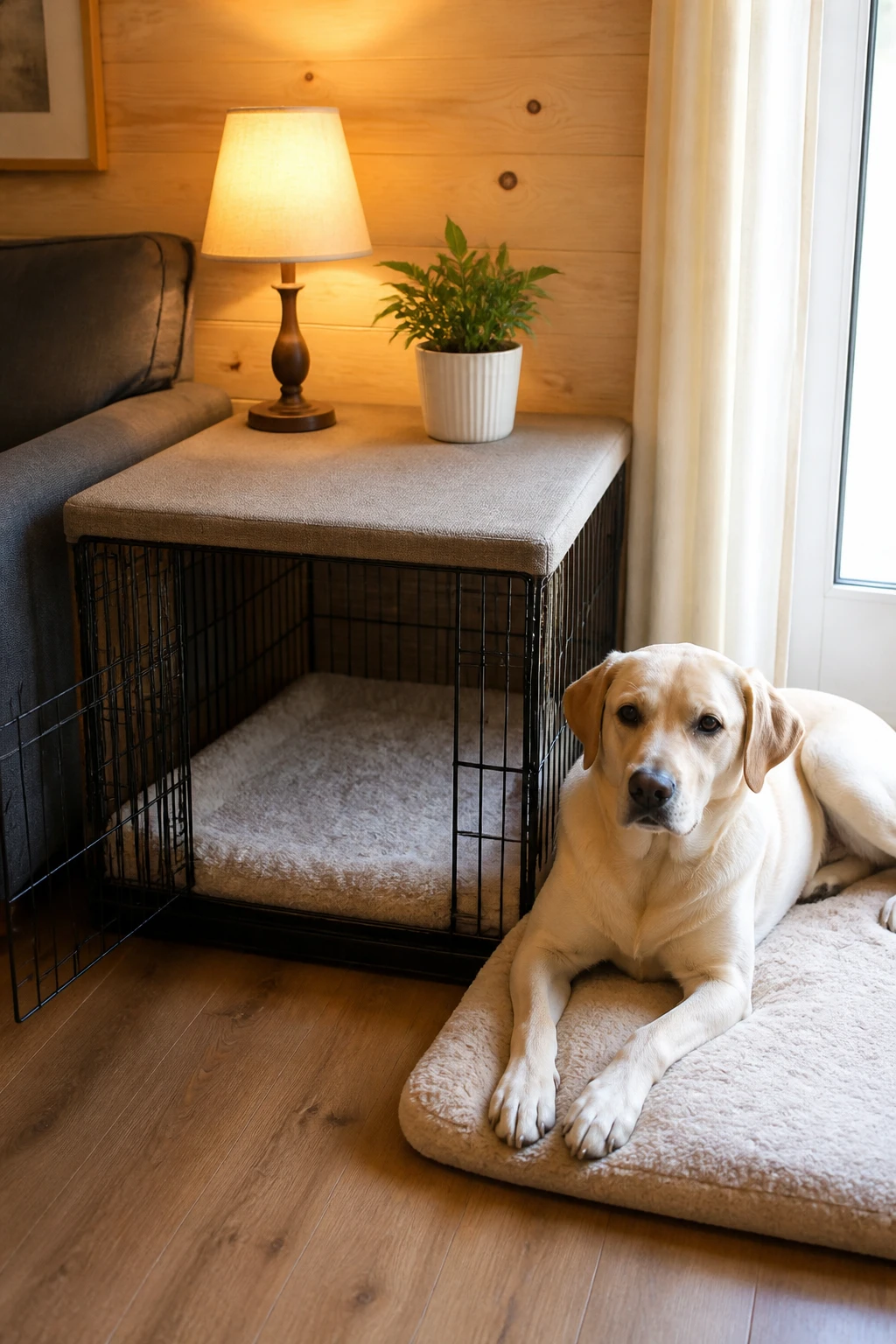
Got a crate-loving pup? Turn that lower level into a secure den and stack a cozy bed on top. You get the safety of a crate without eating your entire room, while the second dog lounges overhead like royalty.
How to Build It
- Base: Heavy-duty wire or furniture-style wooden crate with front door access.
- Top Platform: 3/4-inch plywood cut to crate footprint, wrapped in a washable fabric cover or bolted under a wooden topper with ventilation holes.
- Support: L-brackets or a collar of 2×2 lumber screwed into the crate’s outer cabinet (not thin wire alone). If using a wire crate only, add a perimeter frame that carries weight to the floor, not the wire mesh.
- Surface: Non-slip rug pad under a removable cushion on the upper deck.
For safety, keep the crate well-ventilated and never run cords through it. If your dog chews, skip dangling tags or zipper pulls inside. I’d skip stacked setups for escape artists that panic in confined spaces—no furniture solves anxiety like training does.
Training and Use
- Let the crated dog choose the bottom voluntarily with treats and calm praise.
- Teach a simple “up” and “down” cue for the loft.
- Rotate who gets which level at first so nobody “claims” resources forever.
Best for: One den-loving pup and one confident climber, families who like furniture that hides a crate, and rooms where you want less visual clutter.
3. The Stairs-and-Nook Bunk: Built-In Vibes Without a Remodel
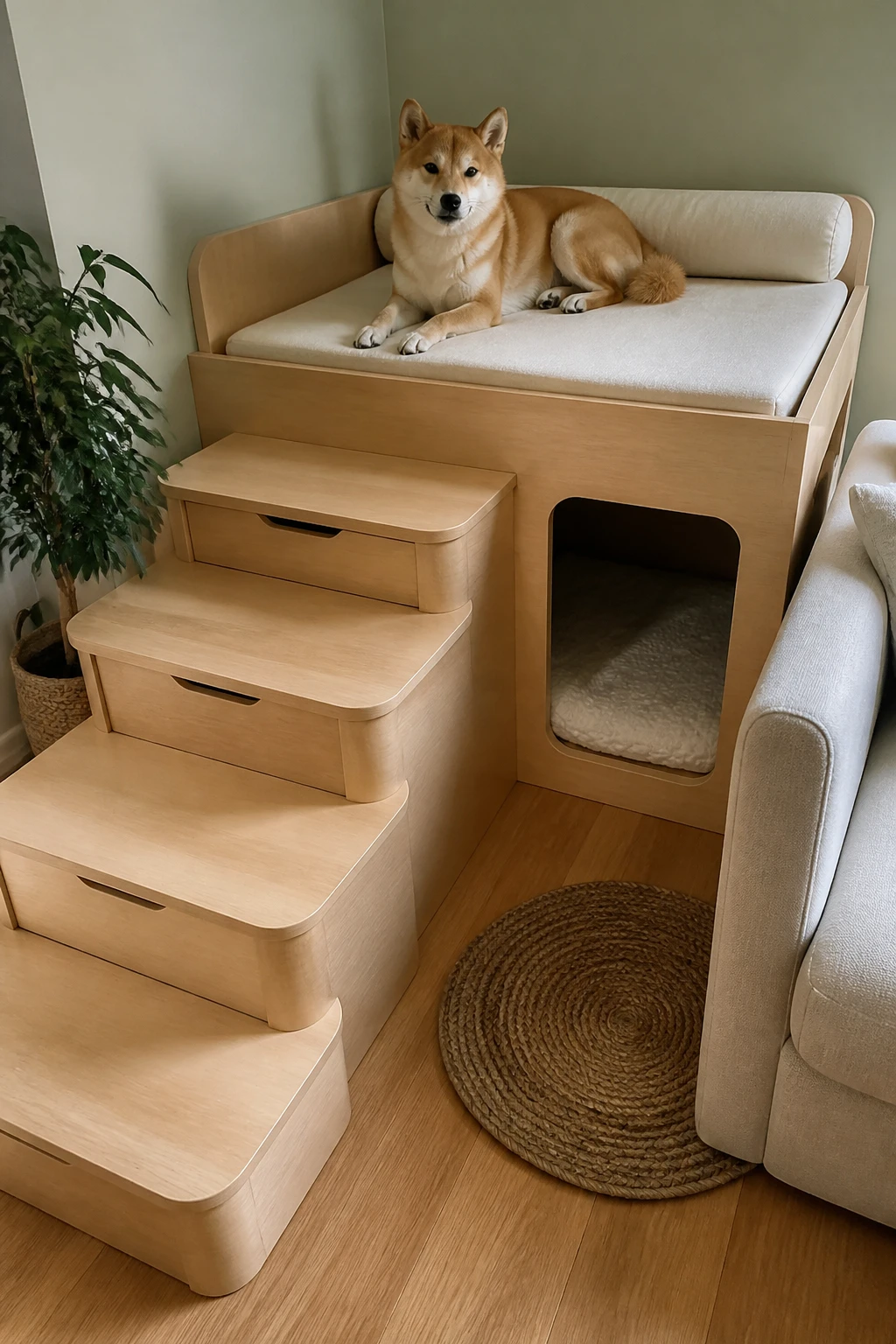
Think of this as a mini staircase with a sleeping cubby tucked under the steps and another bed on top. It feels custom, looks polished, and doubles as storage if you add drawers beneath the treads.
Design Features
- Footprint-Smart: Stair depth around 10–12 inches, gentle rise under 6 inches for easy climbing.
- Under-Stair Den: Side opening large enough for your pup to turn around comfortably.
- Top Landing: Flat platform with a bolster to prevent roll-offs.
Use sanded plywood with rounded corners or a pre-made step shelf rated for pets. Add peel-and-stick traction treads so paws never slip. For the nook, line the walls with washable upholstery fabric or a fitted crate pad so it feels snug but breezy.
Materials and Finishes
- Low-VOC paint or a water-based polyurethane—no strong fumes near animals.
- Soft-close hardware if you add storage drawers to the stair fronts.
- Felt pads under the base to protect floors and reduce rattling.
IMO, this style wins for households with pups of different ages: the elder gets the ground hideaway, the youngster gets the top. It also blends into living spaces without screaming “pet furniture.”
Best for: Design-forward homes, dogs with different confidence levels, and anyone who wants storage plus a bed solution in one neat unit.
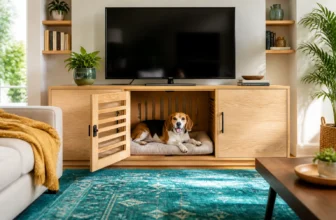
4. The Lofted Console Bunk: Media Stand by Day, Dog Lounge by Night
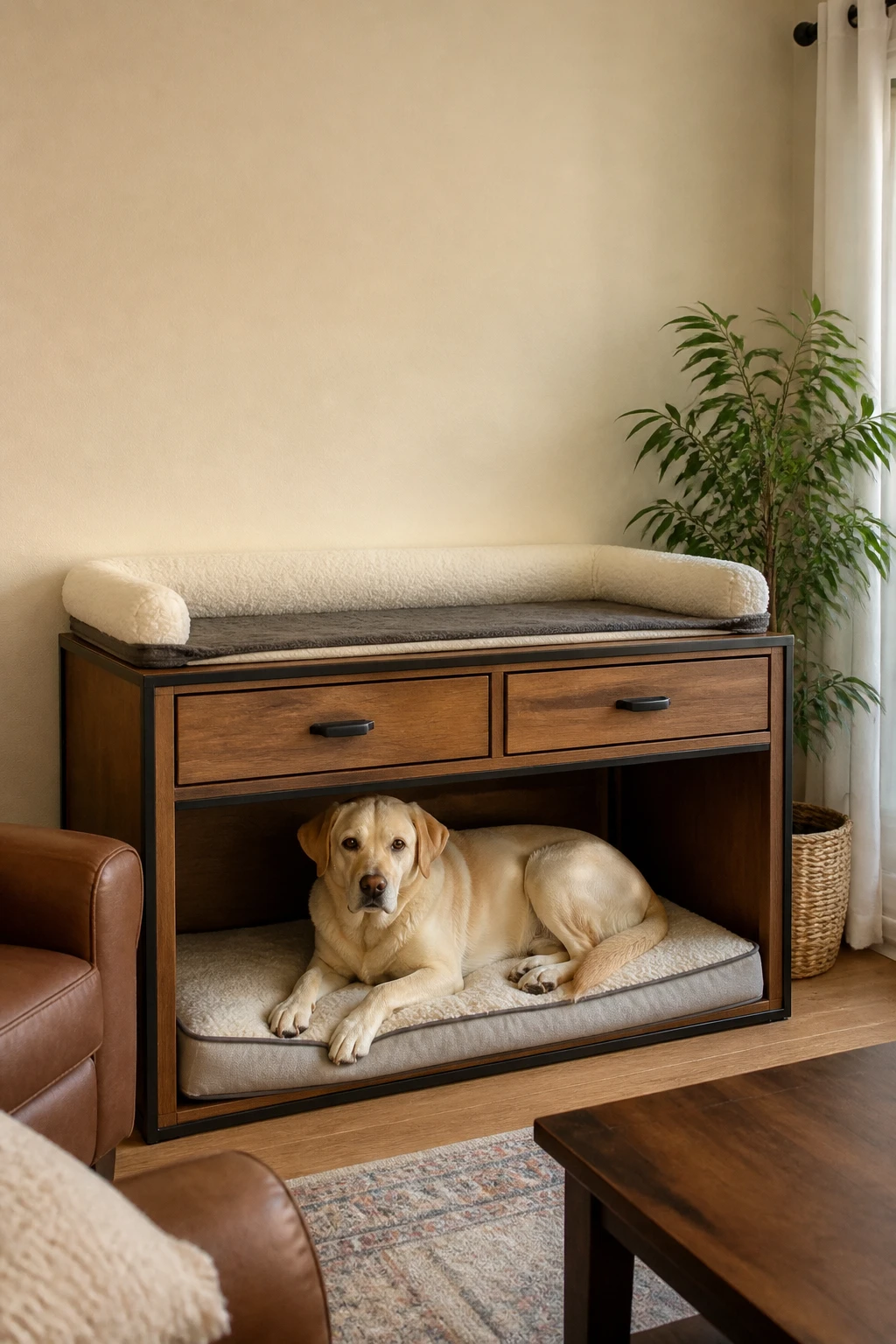
Why not let your TV console or entry bench do double duty? A console with open cubbies can house one bed below, while the top surface hosts a plush cushion for the second sleeper. It’s a stealthy way to integrate pet zones into rooms you use constantly.
How to Make It Work
- Choose the Right Console: Look for solid wood or metal frames, not flimsy particleboard. Weight rating should exceed combined pup weight plus cushion.
- Top Safety: Add a non-slip mat under the top cushion and a low-profile bolster along the back edge to prevent slides.
- Cable Management: Route TV cords through grommets and secure with cord covers or adhesive channels out of reach. Chewing dogs and loose wires don’t mix—ever.
Use shatterproof decor up high and keep small objects off the edges. For the lower cubby, add a curtain with a tension rod and washable panel if your dog relaxes better with a bit of privacy.
Styling Tips
- Pick cushion covers that match your sofa textiles for a cohesive look.
- Slide narrow bins beside the lower bed for leashes, poop bags, and spare covers.
- Mount a small wall shelf above the console for plants—choose pet-safe varieties or faux greenery placed well out of reach.
I’d pick this if you want your dogs near you during movie nights without beds scattered everywhere. Skip it if your top-bunk dog loves launching off furniture at high speed.
Best for: Living rooms, small condos, and pups who like being in the action while staying contained.
5. The DIY Ladder Bunk: Rustic Charm with Budget Control
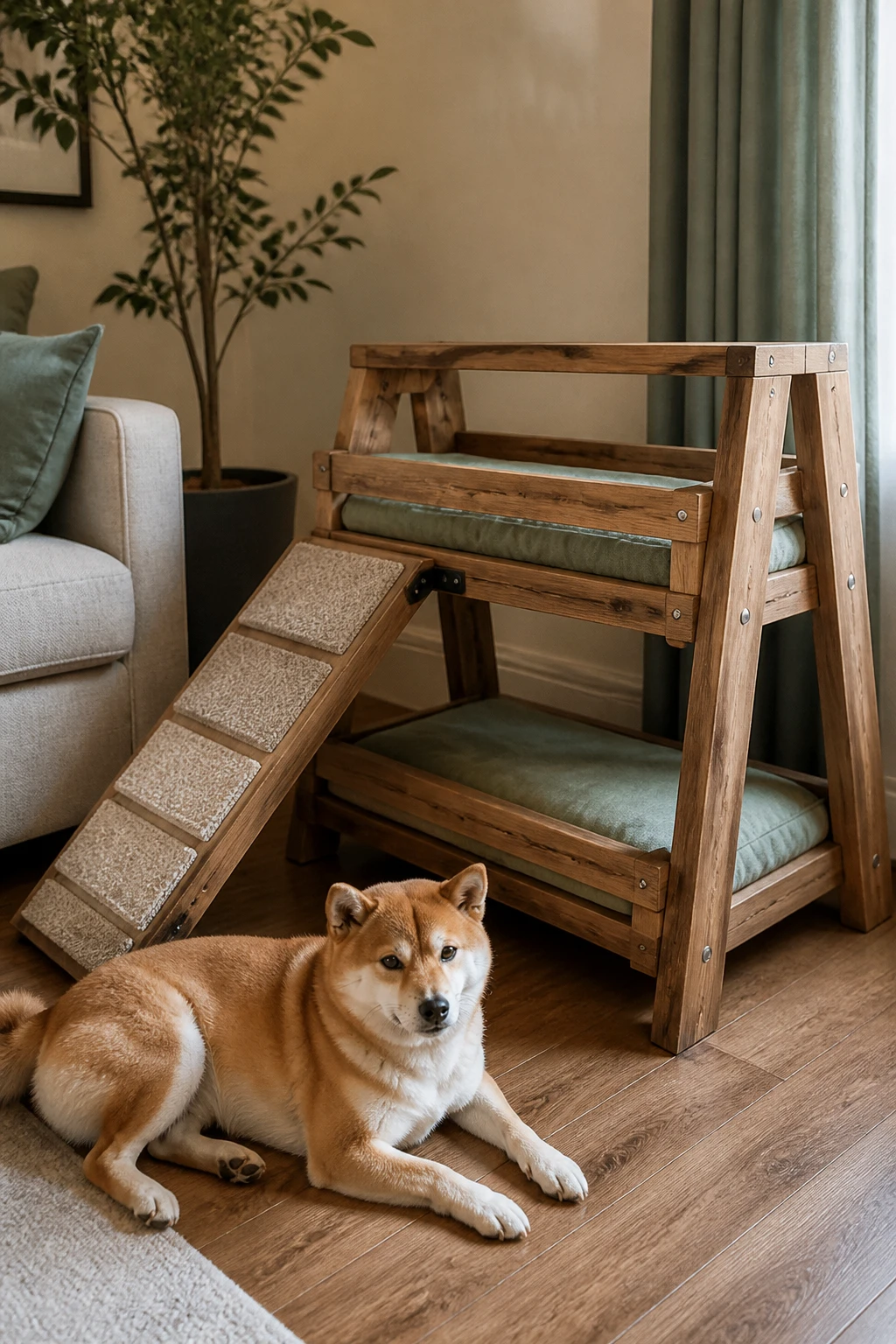
Love a hands-on project? Build a ladder-style bunk with two platforms on a simple A-frame. It’s budget-friendly, strong, and surprisingly quick if you keep the cuts straightforward.
Build Basics
- Frame: Two 2×4 legs cut to height, connected with a 2×4 top brace.
- Platforms: 3/4-inch plywood shelves dadoed or lag-bolted into the legs at two heights.
- Railings: 1×3 guards on the top level, rounded with sandpaper.
- Ramp: A hinged ramp with carpet tiles or rubber treads for safe climbing.
Pre-drill all holes and countersink screws so nothing snags fur. Sand until everything feels smooth—no splinters allowed. Use non-toxic glue where needed, and seal with water-based polyurethane so cleanup stays easy after muddy adventures.
Measurements That Matter
- Top tier at shoulder height for your larger dog, or lower if anyone’s unsure on ramps.
- Platform depth equal to your dog’s body length from chest to rump when curled, plus a few inches.
- Ramp angle under 30 degrees with cleats every 5–6 inches for traction.
Worth it if you enjoy weekend projects and want custom sizing. I’d skip this path if you don’t own basic tools or you’d rather not double-check load calculations—then choose a tested retail model instead.
Best for: Rustic, farmhouse, or eclectic spaces, multi-dog families on a budget, and pups who appreciate a sturdy ramp.
Common Mistake to Avoid
Don’t assume dogs will instantly share stacked spaces without guidance. Rushing placement causes guarding, refused beds, or unsafe jumps. Introduce the bunk slowly with high-value treats, assign each dog a specific level, and reinforce calm “go to bed” cues. Anchor furniture, add traction, and never place the top tier near a heat source like radiators or fireplaces.
FAQ
How do I pick the right size for each bunk?
Measure your dog while sleeping curled and stretched. Choose a platform that’s at least 1.5 times the curled length and as wide as your dog’s shoulder span plus 3–4 inches. If you’re between sizes, go larger on the top tier so turning around feels easy.
Is a ramp better than stairs for the top bunk?
For seniors, long-bodied breeds, or pups with joint issues, a ramp wins. Keep the incline gentle and add textured treads. Confident, compact dogs often like stairs, but ensure shallow rises and deep treads so paws land fully with each step.
What materials are safest for chewers?
Stick to hardwood, sealed plywood, and metal frames with minimal exposed edges. Use tightly woven, machine-washable covers without tassels or fringe. Avoid small decorative pieces, dangling pulls, or anything they could swallow. If chewing persists, redirect with training and remove bedding until safe choices become habit.
Can bunk beds help with dogs that bicker?
They can help by creating defined zones. Assign each dog a consistent level and reward them for staying there. If tension continues, add visual barriers like a short bolster or curtain on the lower bunk, and consult a trainer for resource-guarding protocols.
How do I keep the setup from wobbling?
Level the feet with shims, add corner braces, and anchor to a stud with furniture straps. Place a rug pad underneath to stop sliding and dampen vibration. Re-tighten hardware every few months—yes, furniture loosens over time thanks to everyday use.
What bedding works best for easy cleaning?
Choose zip-off covers over dense foam or shredded memory foam inserts. Add a waterproof liner under the fabric cover to protect the core. Keep two sets of covers in rotation so wash day doesn’t leave anyone bedless.
Ready to reclaim your floor and give both pups a spot they’ll love? These five bunk ideas balance comfort with smart design so your dogs rest well and your home stays tidy. Pick the build that fits your space and lifestyle, then train calmly and enjoy the quiet.
As an Amazon Associate, I earn from qualifying purchases.