This post contains affiliate links. As an Amazon Associate, I earn from qualifying purchases, at no extra cost to you.
Your pup deserves a little nook that doesn’t look like an afterthought. These 6 ideas flip awkward corners and neglected closets into snug, functional retreats that look great in real life. Expect upgrades that control clutter, absorb sound, and make clean-up easy. Ready to reclaim that dead zone and give your dog the comfiest hangout ever?
⭐ Our Top Pick: See it on Amazon
1. Built-In Nook With a Low Platform Bed
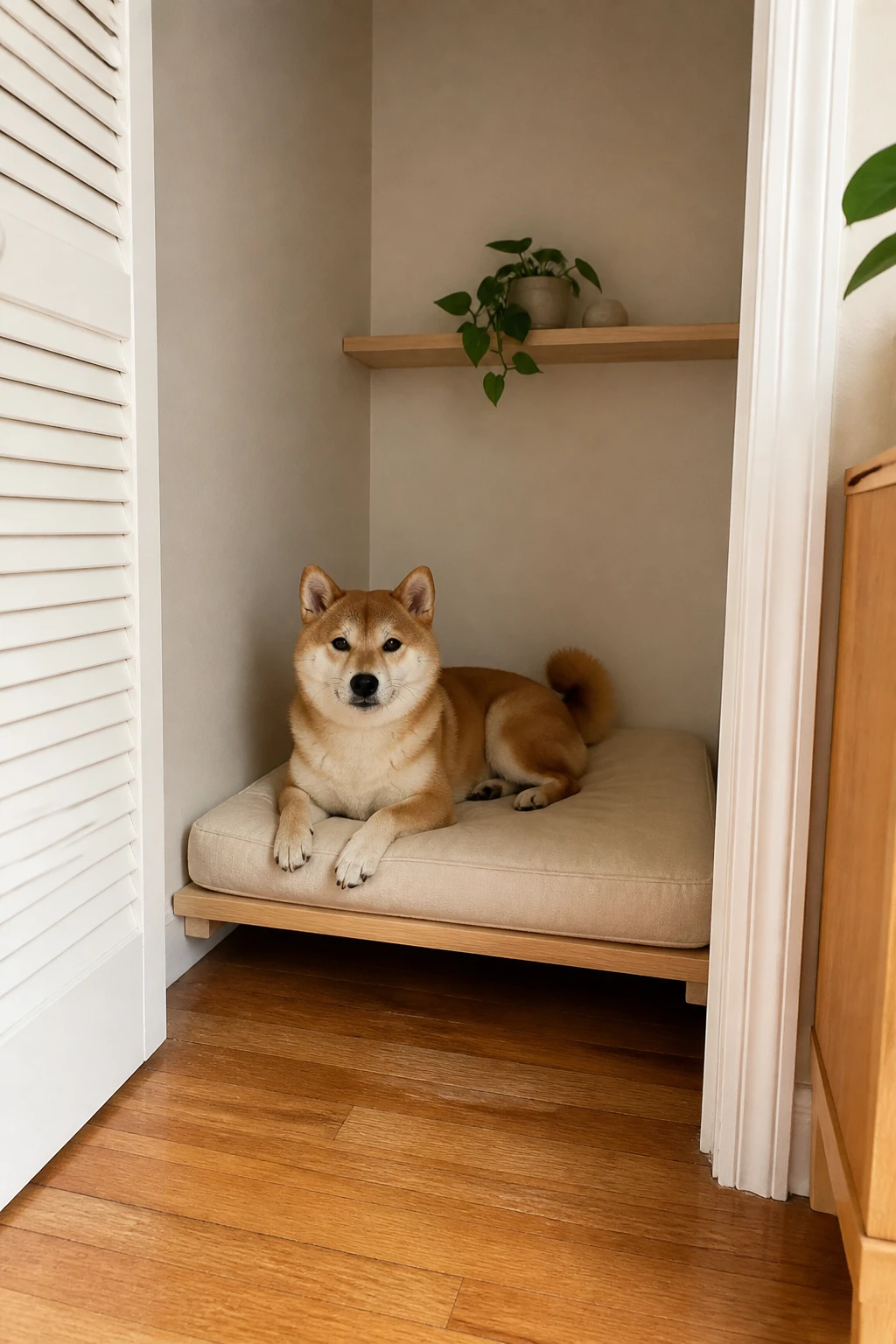
Turn a basic closet into a mini “room” with a simple platform bed that sits a few inches off the floor. That tiny lift helps airflow and keeps bedding fresher between washes. Add a washable cushion on top and you’ve got a calm landing zone that looks tailored, not temporary.
How to Build It Fast
- Measure the interior width and depth of the closet and cut a plywood sheet to fit.
- Attach 1×2 cleats to the side walls with anchors, 5–7 inches above the floor.
- Set the plywood on the cleats and sand the edges smooth.
- Finish with a water-based polyurethane and add non-slip pads under the cushion.
Use a low bolster bed so your dog can lean without hitting trim. I’d pick stain-resistant fabric here—mud happens.
Safety Notes
- Counter-sink screws and fill holes so no sharp edges catch paws.
- Skip dangling cords or long ties on cushions that a chewer could swallow.
Best for: Medium spaces and dogs that like a defined “den” without full crate bars. Worth it if you want a clean, built-in look that still feels soft.
2. Crate-In-Closet With Ventilated Doors
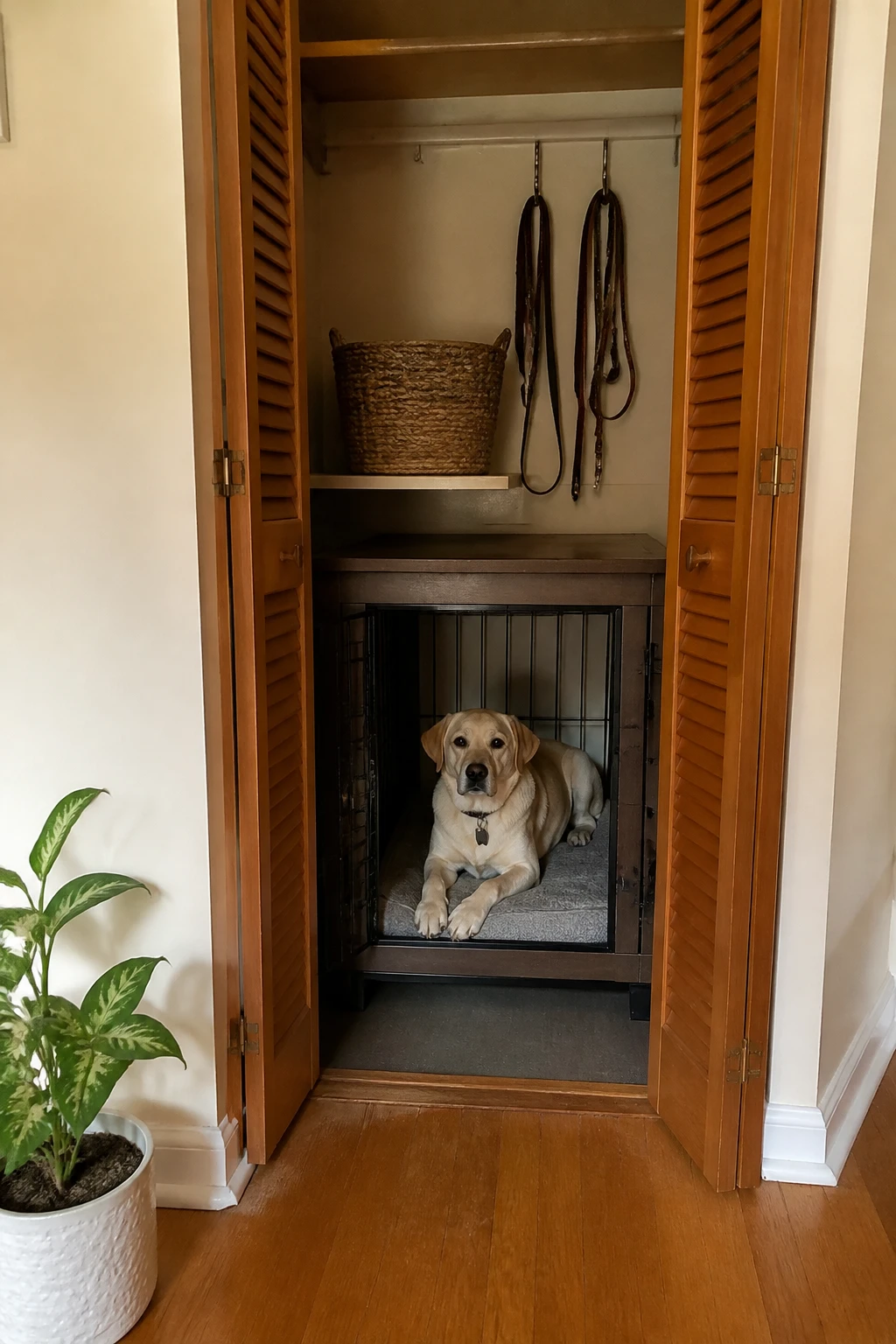
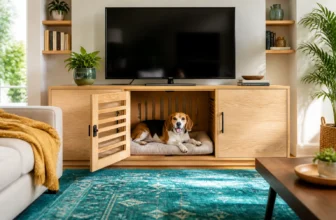
Love the security of a crate but hate the look? Slide the crate inside the closet and swap the door for a slatted or louvered panel. You’ll keep airflow while disguising the crate so your hallway doesn’t scream “kennel.”
Tips That Make It Work
- Pick a crate with a side door so you can access it easily inside the closet.
- Replace the closet door with a bifold louvered style; add magnetic catches so it closes snugly.
- Line the crate with a fitted, chew-resistant pad (no zippers for determined nibblers).
- Mount a motion night light outside the crate so you can peek without disrupting sleep.
IMO, I’d skip heavy curtains or fabric panels here—they trap fur and block ventilation. Opt for wood slats or metal grills instead.
Safety Notes
- Keep at least two inches of clearance around the crate for airflow.
- Avoid placing heating vents that blow directly into the crate.
Best for: Dogs who prefer enclosed spaces and households that want a streamlined hallway or mudroom. Worth it if you crate during meals or when guests visit.
3. Mudroom-Style Closet With Washable Surfaces
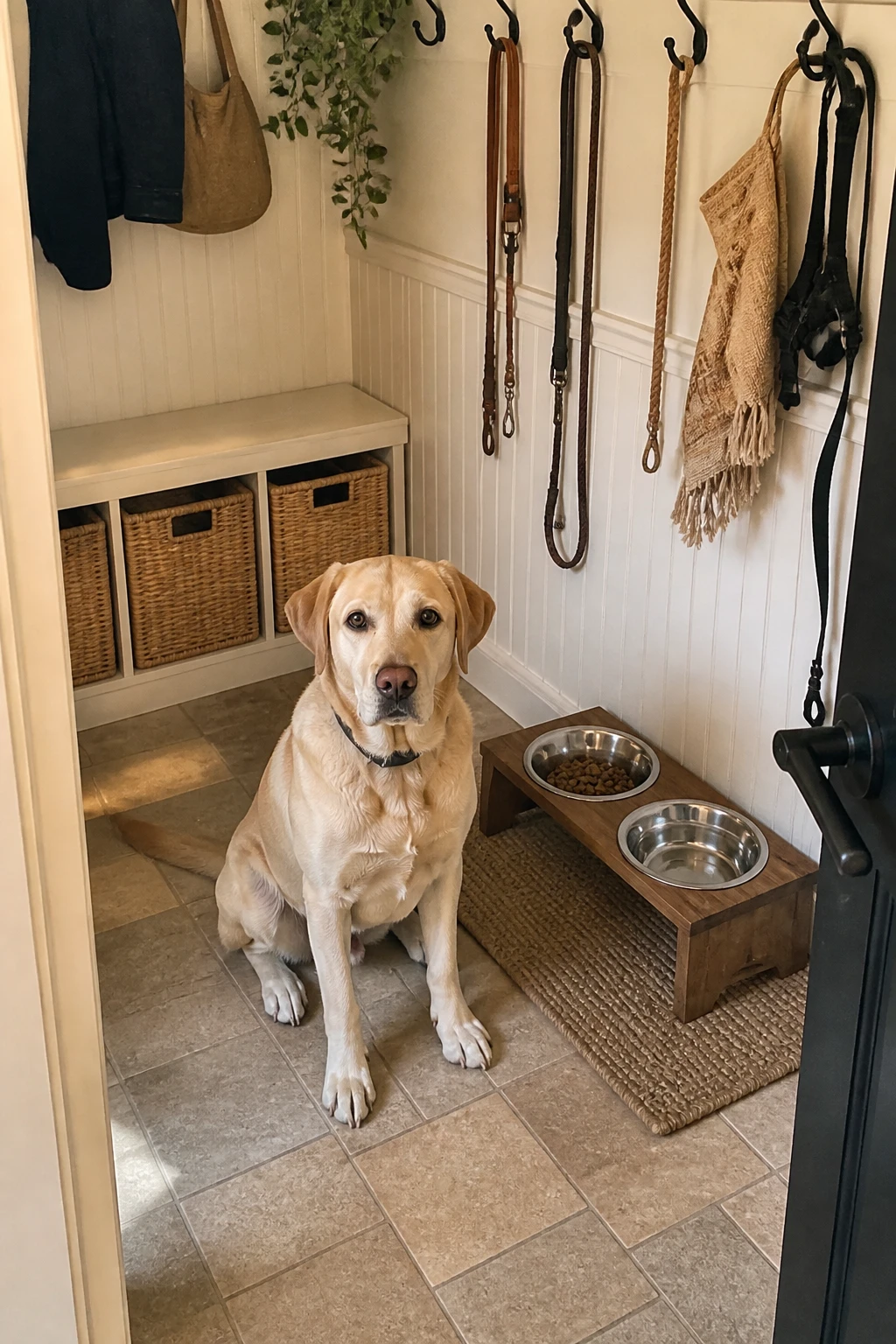
Turn the closet into a dog-ready “entry station.” Think beadboard walls, vinyl or tile flooring, and hooks for leashes. Everything cleans fast, which saves your weekends and your sanity after rainy walks.
Materials That Hold Up
- Peel-and-stick luxury vinyl tile (LVT) or rubber floor tiles for easy mopping.
- Beadboard or PVC wall panels on the lower half to block scuffs.
- Closed baskets for grooming tools and paw wipes on a lower shelf.
- Command hooks up high for harnesses and spare collars.
Slide in a low-profile bed or mat to define your dog’s spot. If you’ve got a digger, I’d pick a bed without piping—they love to chew those seams.
Quick Setup Strategy
- Install a shallow shelf at 48–54 inches high for supplies—out of mouth range.
- Add a small door sweep to keep fur from drifting into the hallway.
Best for: Busy homes and pups who track in the outdoors. Worth it if you want low maintenance and a crisp look that still feels warm.
4. Double-Decker Closet: Bed Below, Storage Above
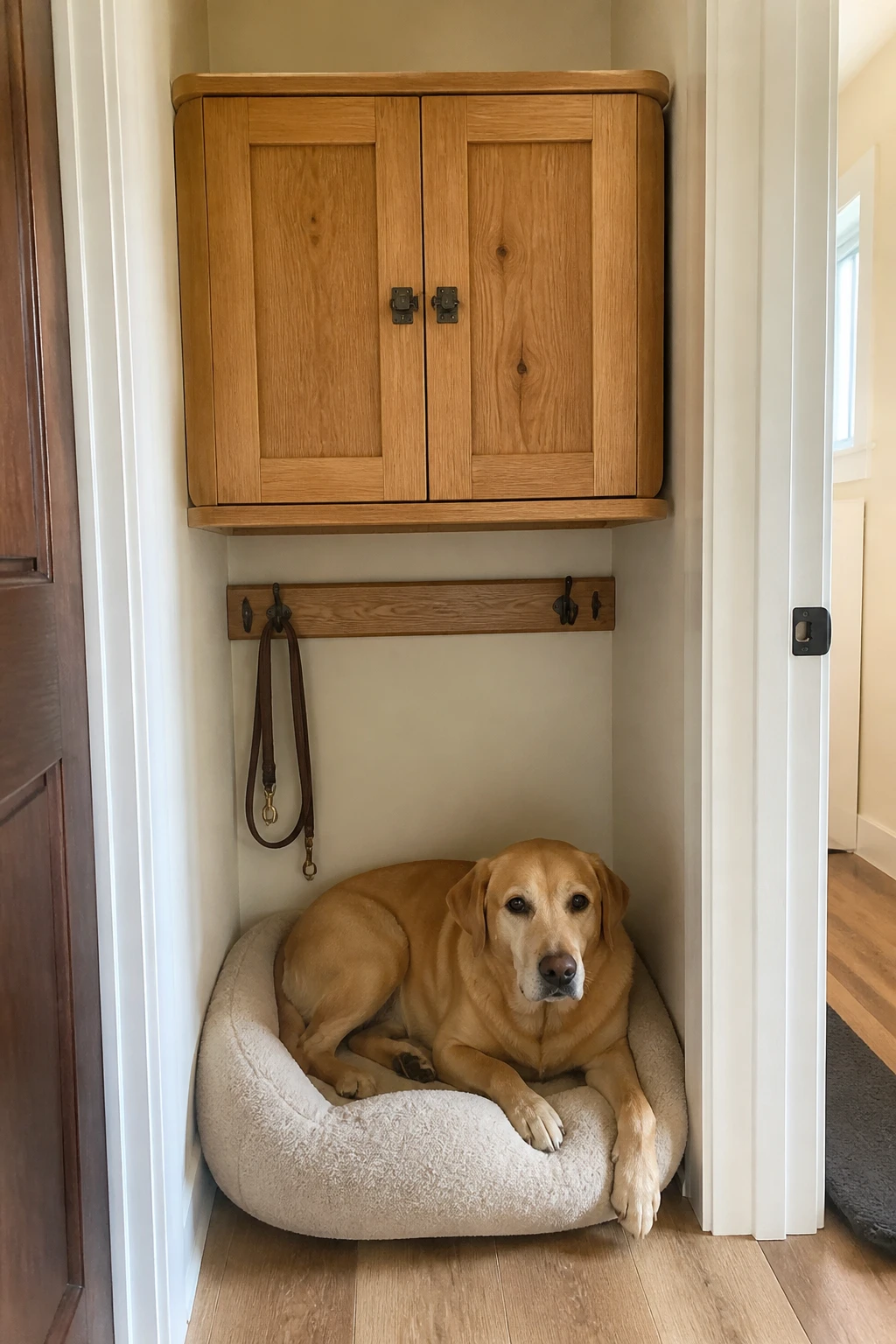
When square footage plays hard to get, go vertical. Create a sleeping zone on the floor with soft edges, then hang a sturdy shelf or cabinet above for food containers, meds, and spare linens. Everything your dog needs, none of the visual clutter.
Layout Tips
- Install a deep shelf (12–16 inches) at least 20 inches above your dog’s standing height to prevent head bumps.
- Use latching doors or bins with tight-fitting lids so curious noses can’t pry them open.
- Add edge banding or rounded trim on shelf fronts to avoid dings.
I’d pick opaque bins over clear ones—some dogs get fixated when they can see treats. Label the fronts and call it a day.
Safety Notes
- Anchor shelves into studs, not just drywall; dog zoomies happen.
- Store meds and cleaners in a latched box, never loose on a shelf.
Best for: Small homes and multi-pet families who need smart storage. Worth it if you want everything centralized but out of reach.
5. Soft-Sound Sanctuary With Acoustic Panels
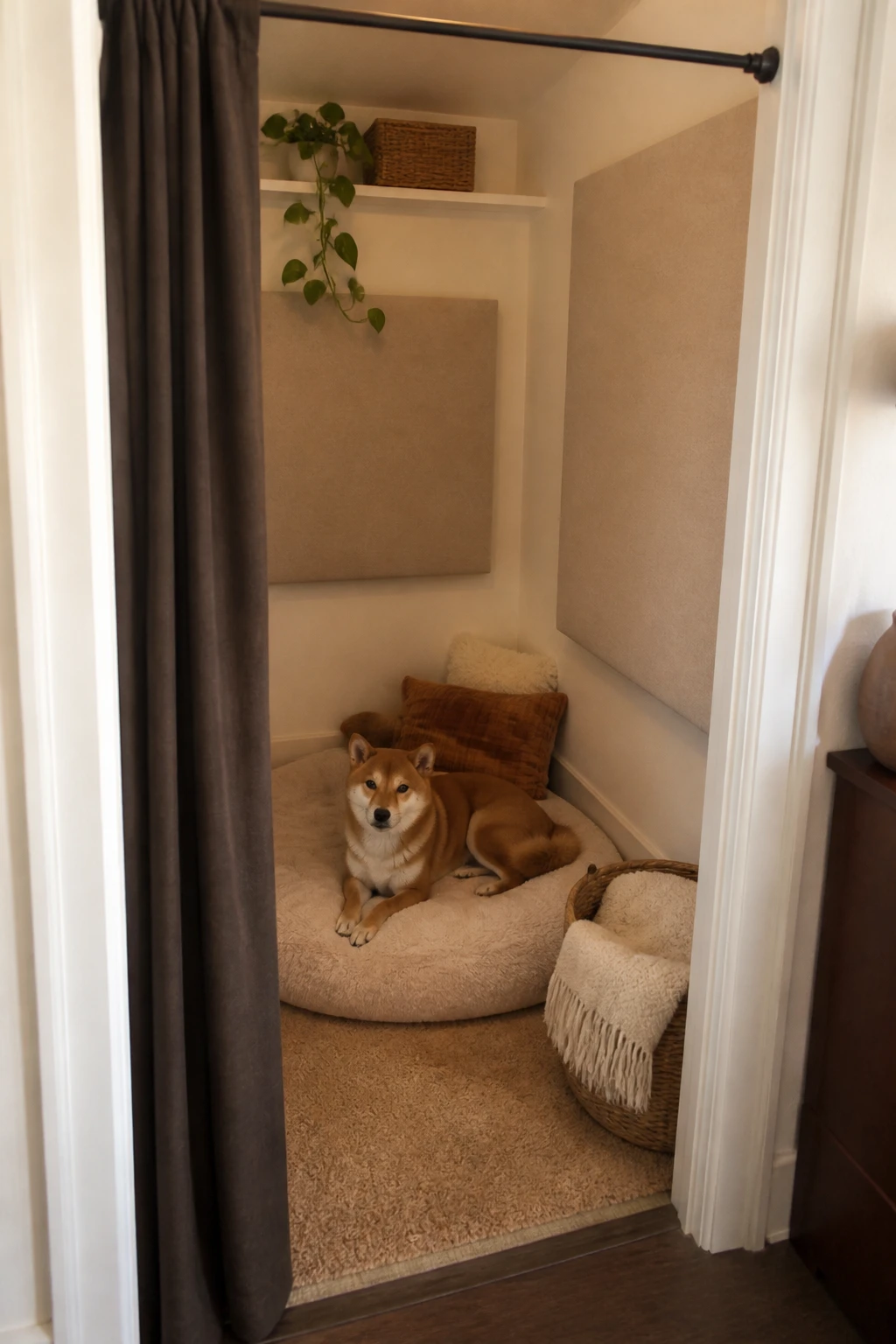
Have a noise-sensitive pup? Dress the closet with acoustic panels and cushy textiles to damp echoes and outside sounds. Less reverb means quicker naps and fewer startle-barks when a delivery shows up.
How to Calm the Space
- Mount fabric-wrapped acoustic tiles or felt panels on two walls at head height.
- Lay a thick rug pad under the dog bed to absorb footfall thumps.
- Hang a blackout curtain inside the doorway with a tension rod to dim light during rest.
Choose panels with hidden mounting brackets—cleaner look, less temptation to paw. I’d skip loose tassels or fringed blankets that invite chewing.
Extras That Help
- A battery-operated, cord-free white-noise machine placed high and out of reach.
- Breathable bed covers so the area stays cool even with layers.
Best for: Anxious dogs, seniors, or households with kids and constant motion. Worth it if your dog startles easily or if your floors echo.
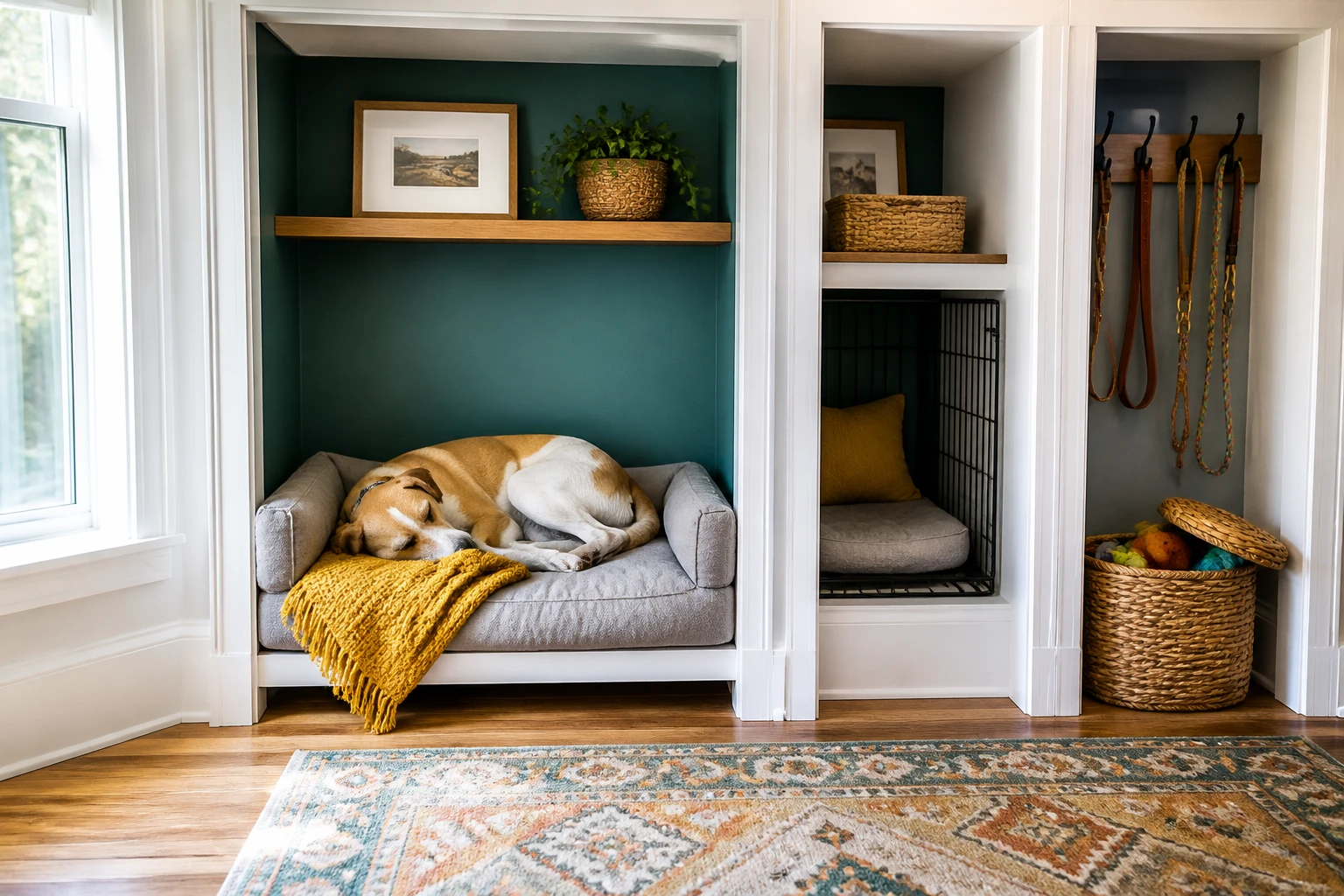
6. Closet-to-Lounge Makeover With Low Shelves and Art Up High
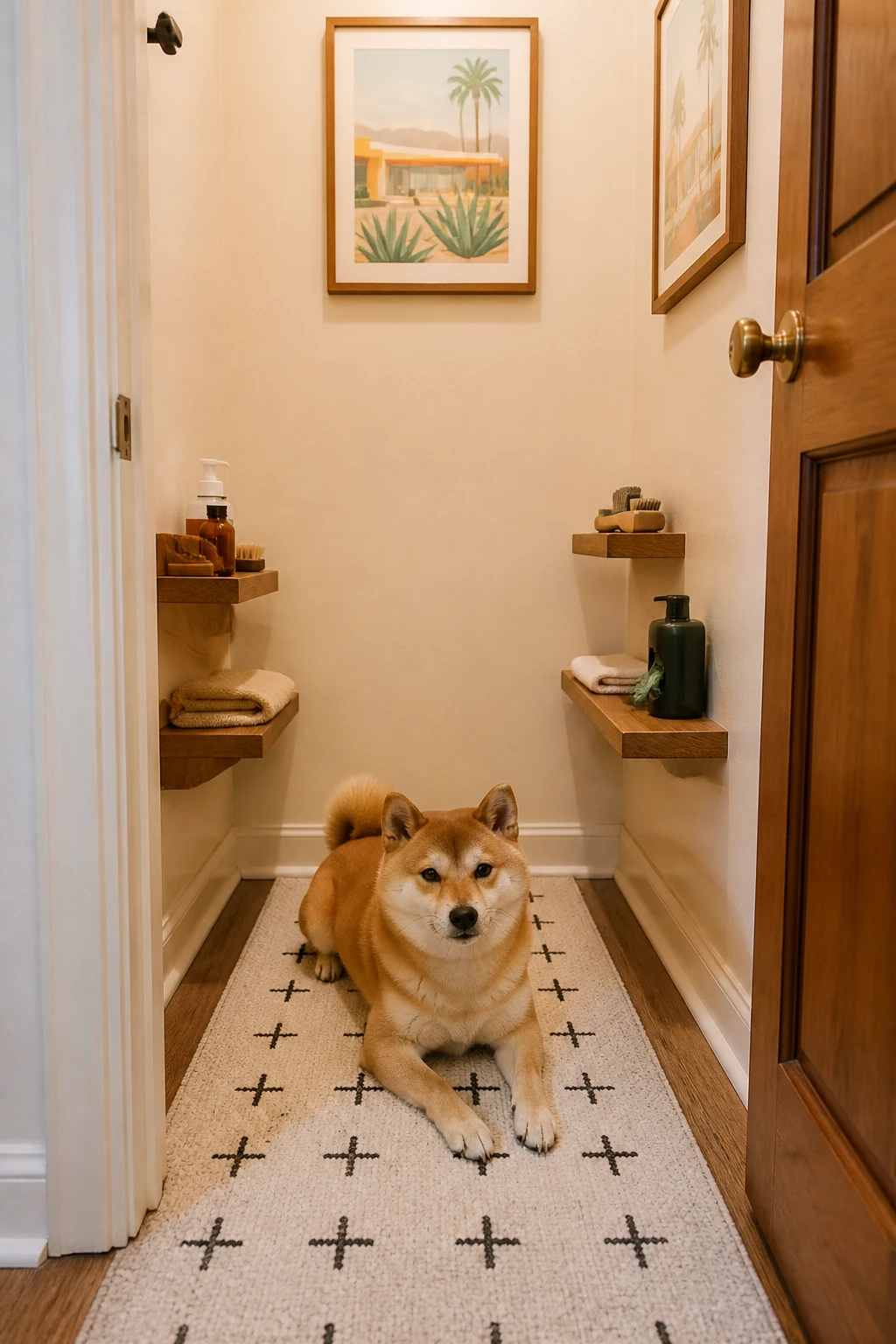
Want a space that feels intentional? Add a pair of shallow shelves along the sides for grooming supplies and poop bags, then mount framed prints above eye level. The lower zone stays distraction-free while the upper half adds personality—without tempting teeth.
Design Moves
- Keep shelves 6–8 inches deep so your dog can’t bang into them.
- Use shatter-resistant frames or wood plaques; hang them well above jumping height.
- Lay a washable runner trimmed to fit and tape edges down with rug tape to prevent bunching.
Pick one accent color for the bed and a matching collar hook—cohesive without trying too hard. I’d pick a matte paint finish on the walls; it hides scuffs better than glossy.
Care Tips
- Vacuum corners weekly to keep fur tumbleweeds from multiplying.
- Rotate two bed covers so one always stays fresh.
Best for: Style-focused owners and calm dogs who like to lounge. Worth it if you want the closet to look like part of your home’s design, not an afterthought.
Common Mistake to Avoid
Don’t cram every dog thing into the closet. Overstuffing kills airflow, invites odors, and makes the area feel cramped. Prioritize sleeping space first, then add storage only where it doesn’t intrude on your dog’s ability to stretch and turn.
FAQ
How big should a dog closet room be?
Your dog should stand, turn, and sprawl out comfortably. As a rule, aim for at least the footprint of a crate sized for your dog, plus 6–8 inches on each side for bedding and airflow. If you have a large breed, consider removing bi-folds and using a curtain or slatted door for more width.
What flooring works best inside a dog closet?
Water-resistant options win. Luxury vinyl plank, sealed hardwood, or rubber tiles handle accidents and muddy paws. Add a non-slip rug pad under washable mats so nothing shifts when your dog plops down.
How do I keep the space smelling fresh?
Use breathable bedding, wash covers weekly, and leave a small gap at the base of the door for ventilation. Place a charcoal dehumidifier canister on a high shelf. Skip scented diffusers or essential oils—many are unsafe for pets.
Can I add heat or cooling inside the closet?
Yes, but go indirect. Never run space heaters inside the nook. Instead, use a low-watt heat mat designed for pets with a chew-resistant cord protector, or improve airflow with a quiet, battery-powered fan mounted high. Monitor temperature and keep cords completely out of reach.
What decor is safe to use?
Stick with wood, fabric, and felt. Use shatterproof frames up high, secured with proper anchors. Avoid loose strings, beads, or anything your dog could pull down or swallow.
How do I transition my dog into the new space?
Make it positive. Feed a few meals inside, toss treats onto the bed, and hang out nearby while they relax. Keep the door open at first so it never feels like punishment, then gradually close it for short intervals once your dog settles easily.
Ready to give your dog a little sanctuary that makes your home feel more organized? Pick one idea, start small, and build on it as your pup settles in. You’ll get a tidy home and a calmer companion—seriously, that’s a win-win.
As an Amazon Associate, I earn from qualifying purchases.