This post contains affiliate links. As an Amazon Associate, I earn from qualifying purchases, at no extra cost to you.
Your tree can look amazing and still pass the dog test. These 6 ideas keep curious noses, swishy tails, and determined chewers away from trouble while you keep the sparkle. Expect easy setups, renter-friendly hacks, and zero stress about broken ornaments. Let’s make holiday magic that survives puppy zoomies.
⭐ Our Top Pick: See it on Amazon
1. Elevate the Tree on a Solid Pedestal Base
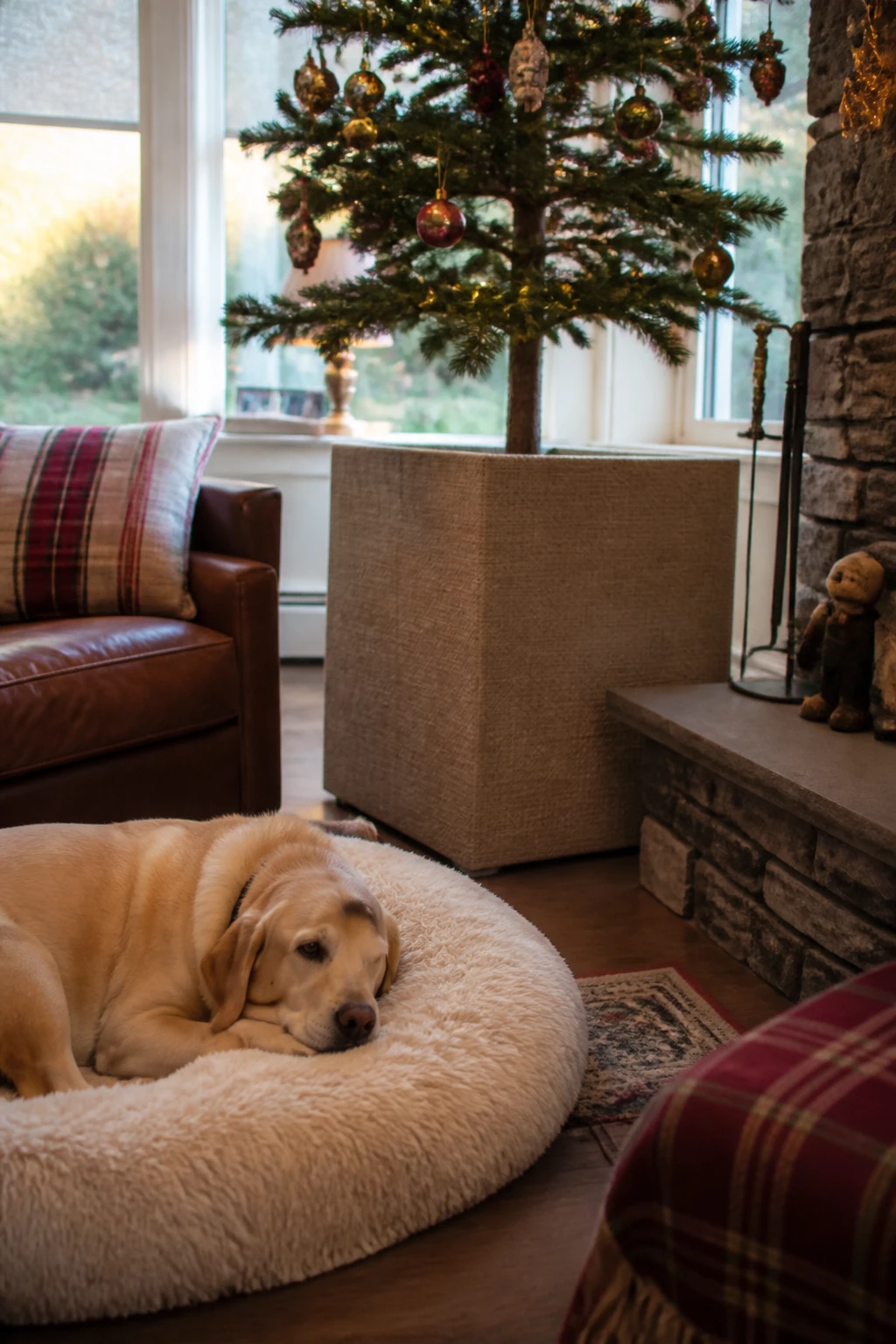
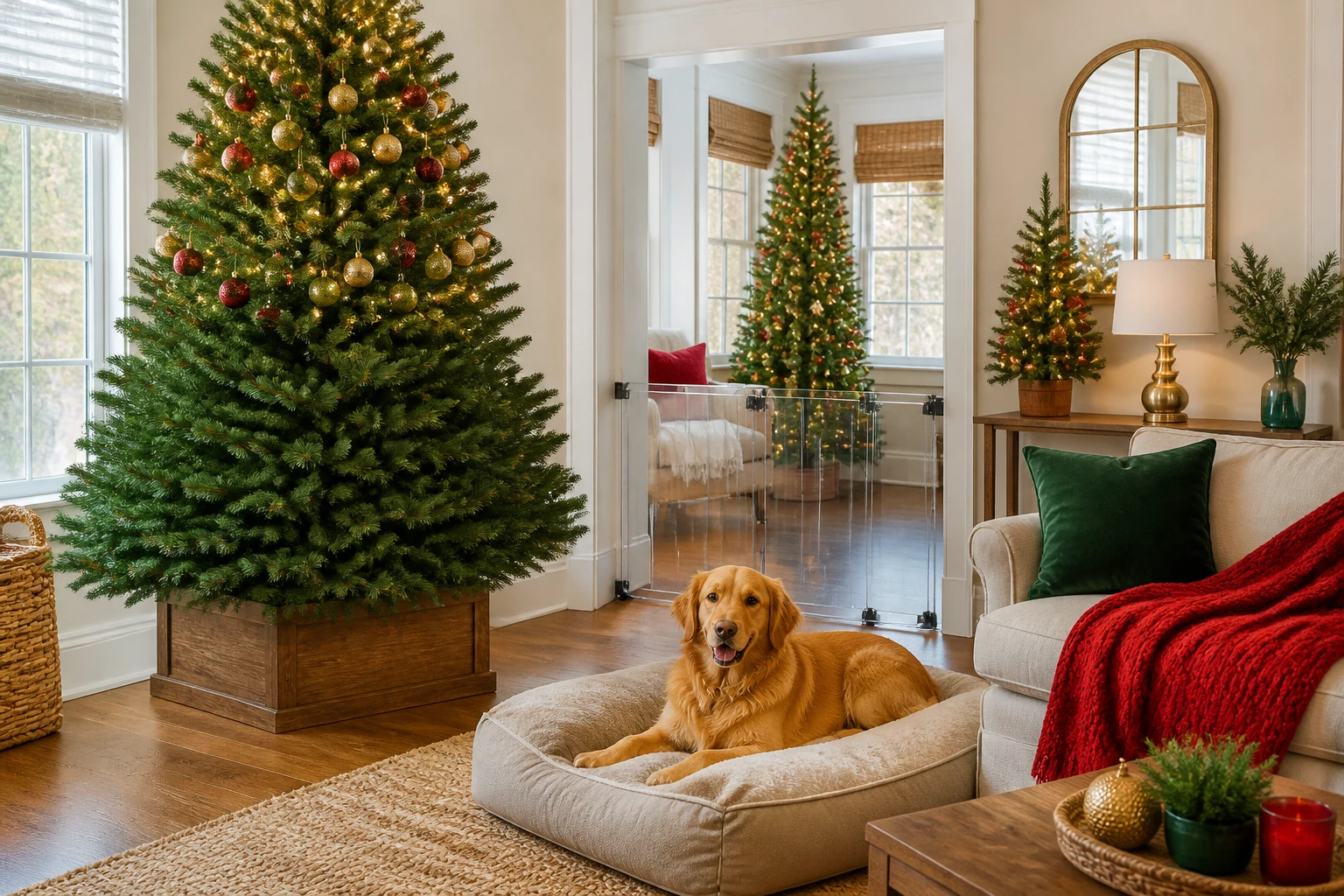
Raising your tree by 8–12 inches removes that tempting “nose-level” ornament zone. A sturdy pedestal or enclosed box gives you height, hides cords, and turns the base into decor. Bonus: it makes your tree look taller and more intentional.
How to Do It
- Use a wide, enclosed wood planter or a lidded storage cube that fits your stand.
- Add weight inside (sandbags or bricks) so it won’t tip if a dog leans on it.
- Secure the tree stand to the pedestal with screws or heavy-duty zip ties.
- Wrap the pedestal with a fitted tree collar or a thick fabric skirt that’s clipped tight—no loose folds.
Skip flimsy baskets that flex. I’d pick a box with a closed front and sides so paws can’t sneak under to the water bowl.
Tips
- Use shatterproof ornaments on the lowest row above the pedestal—just in case.
- Route light cords straight up the trunk, not across the floor.
- Place a washable rug under the setup for traction and easy cleanup.
Best for: Medium to large dogs, busy living rooms, and renters who want a quick, no-construction lift.
Benefit: You keep the floor clear and shift all the action out of reach—simple and effective.
2. Corner-It and Anchor Like You Mean It

A corner placement lowers the “360-degree access” issue. Add a tension anchor and your tree becomes a fortress that still looks stylish. Dogs might sniff, but they won’t topple anything—seriously, it’s night-and-day.
Key Moves
- Pick a corner with an outlet behind the tree to minimize dangling cords.
- Use clear Command hooks high on both walls and run fishing line or twine to the trunk.
- Place furniture as natural boundaries—sideboard on one side, armchair on the other.
- Lay a low-profile runner as a boundary cue; dogs read textures more than signs.
IMO, I’d skip heavy garlands draping low in a corner—they act like dog lures.
Safety Details
- Shatterproof ornaments only on the lowest third; felt and wood rule here.
- No edible decor—ever. Dogs don’t care about your theme, they care about snacks.
- If you use a real tree, cover water with a rigid collar so pets can’t drink it.
Best for: Energetic pups who patrol the room, apartments with tight layouts, and anyone who wants foolproof stability.
Benefit: A corner tree feels intentional, frames beautifully in photos, and removes the crash-risk anxiety.
3. Go Slim and Tall With Minimal Low Decor
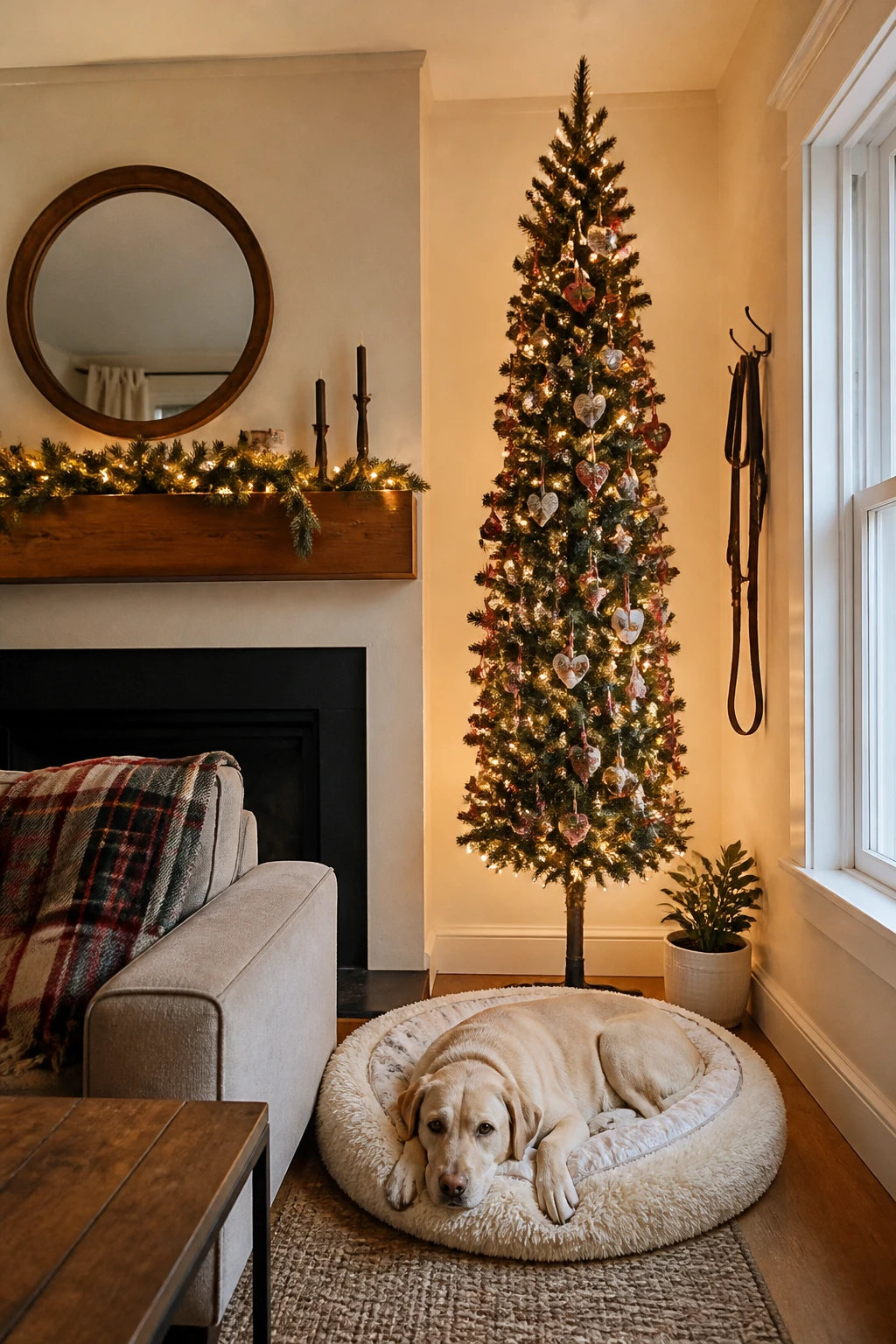
A slimmer, taller tree gives you holiday presence without the bottom-heavy branch spread that invites paw exploration. With fewer low branches, there’s less to swat or pull. You still get sparkle, just concentrated higher up.
How to Style It
- Choose a pencil or slim profile tree with a narrow base (great near windows).
- Keep the lowest 12–18 inches ornament-free—yes, nothing. Fill higher zones instead.
- Use fabric or felt ornaments in the mid-range and save any fragile pieces for eye level.
- Run a soft, fabric garland vertically rather than spiraling low around the bottom.
I’d pick neutral felt balls, carved wood shapes, or lightweight metal that won’t shatter. I’d skip anything dangly at knee height.
Pro Tip
- Cluster ornaments in threes higher up for impact so the bare lower area feels intentional.
- Attach a cable tie or ornament clip on the inner branch to lock pieces in place.
Best for: Small homes, hallways, and homes with curious puppies who target low branches.
Benefit: You reduce temptation zones and still keep the drama where guests actually look—up and center.
4. Create a Decorative Barrier That Blends In
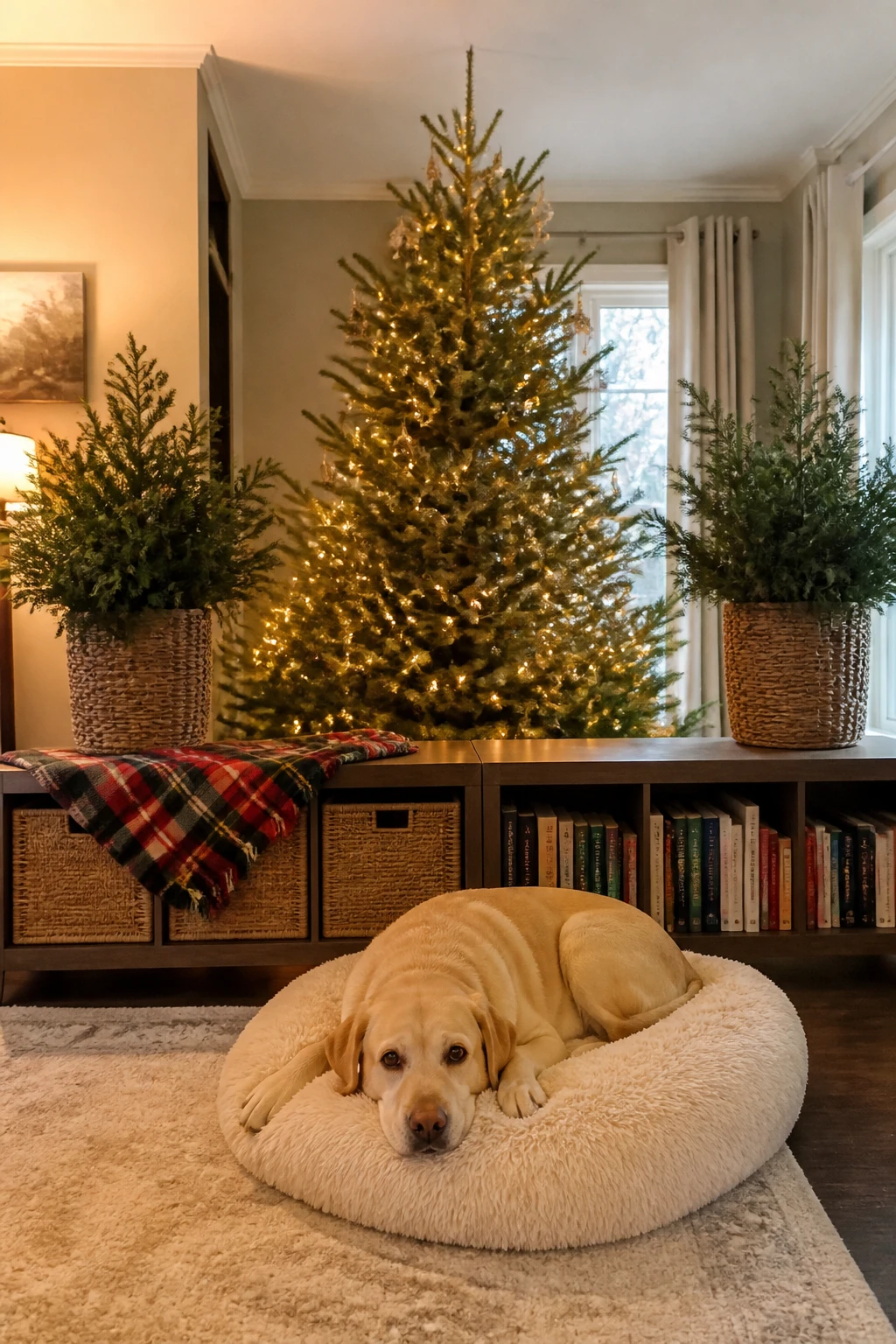
Think of this as a stylish “no-go” fence. You’ll use furniture and decor to create a subtle perimeter instead of an obvious pen. Dogs respect layout cues, especially when your setup doesn’t invite them through.
Smart Layout Ideas
- Place a storage bench or console in front of the tree to act as a buffer.
- Use two large planters (faux greenery only) flanking the tree—no berries or toxic plants.
- Add a low bookcase or ottoman as a visual wall; align the opening away from your dog’s favorite path.
- Lay a tight-weave runner with a different texture at the perimeter as a tactile cue.
Worth it if your dog respects boundaries but tests them when guests arrive. This looks like decor, not a kennel, which is the point.
Materials to Choose
- Faux greenery in matte finishes
- Weighted planters that won’t tip
- Closed-weave rugs that can handle muddy paws
Best for: Social spaces where you want form and function—living rooms, dining nooks, and entry corners.
Benefit: You set a clear “this zone is special” message while keeping everything photo-ready.
5. Decorate High With Felt, Wood, and Fabric Only
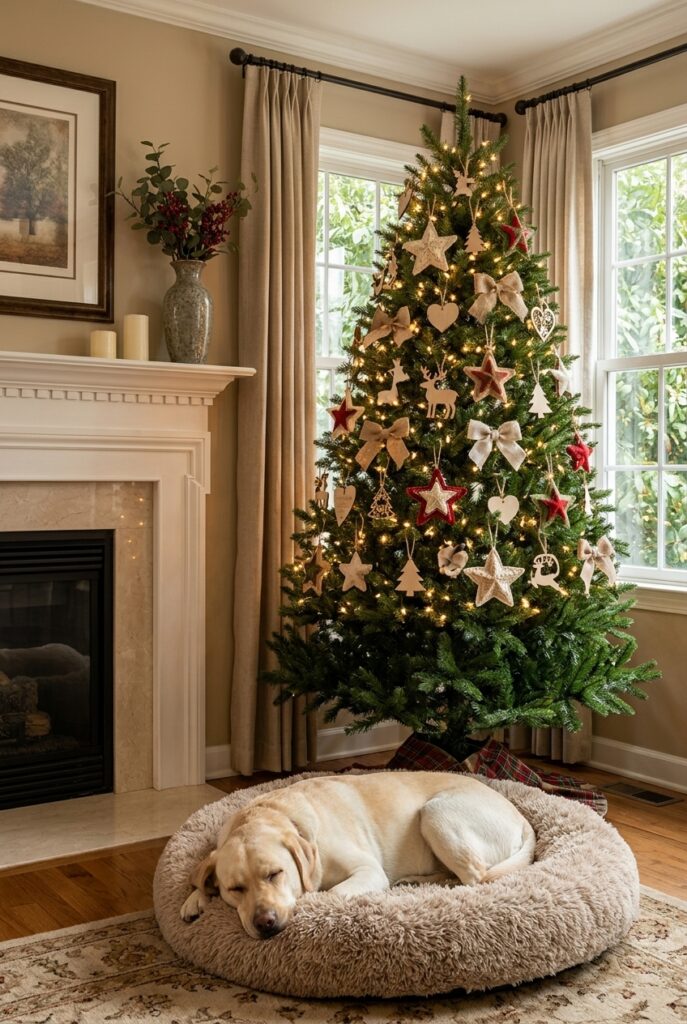
You can absolutely keep the sparkle—just choose durable, chew-safe materials and hang them strategically. Dogs can’t break what they can’t reach or shatter. Cleaner look, less worry, same holiday joy.
Safe Ornament Strategy
- Bottom 18 inches: bare branches or a few wired fabric bows secured tightly to the trunk.
- Mid to top: felt shapes, wood cutouts, cloth stars, and matte, shatterproof balls.
- Garland: fabric ribbon, paper chains made from thick cardstock, or felt strips—secured with clips.
- Tree topper: lightweight and anchored with a zip tie so it doesn’t wobble.
I’d skip glass anything. I’d pick matte shatterproof over shiny because reflections can trigger interest.
Hanging Tips
- Use ornament clips or twist ties wrapped tight around inner branches.
- Push ornaments several inches into the tree, not dangling at the edge.
- Keep hooks closed or replaced with cord loops—no sharp metal ends.
Best for: Homes with chewers, hardwood floors, and anyone who hates sweeping up fragments.
Benefit: Your tree stays beautiful even if a tail whips through the airspace.
6. Hide and Secure Cords Like a Pro
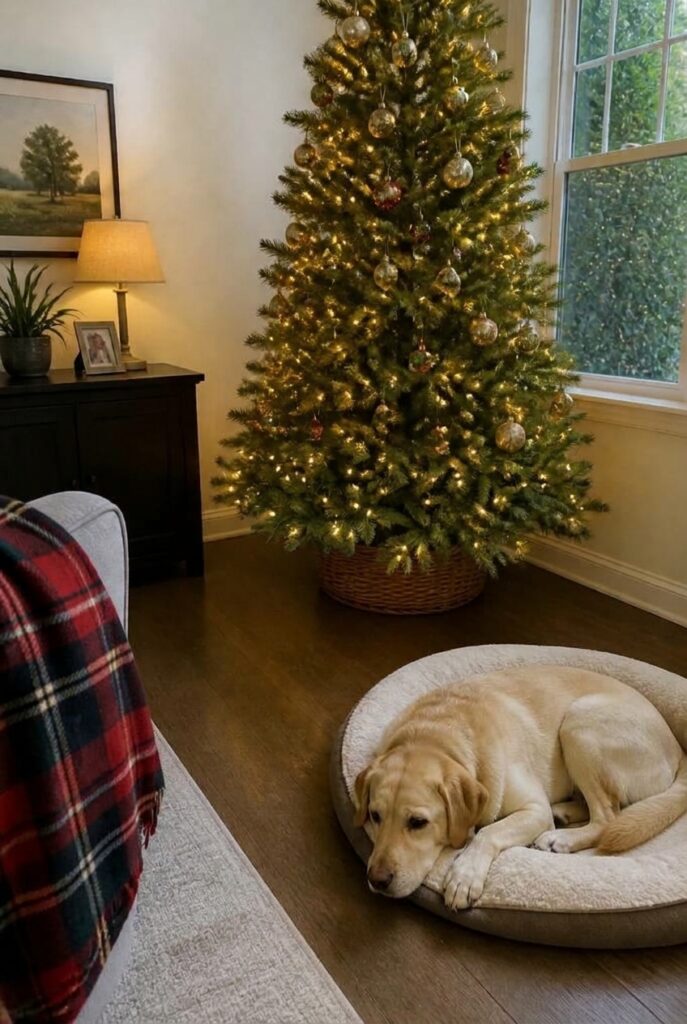
Cords are the silent troublemakers—chewable, tug-friendly, and way too interesting. Handle them first and your setup gets safer and cleaner instantly. Out of sight means out of mind for most dogs.
How to Route Safely
- Use a cord cover or floor cable raceway from the outlet straight behind the tree.
- Feed the light plug up the trunk, zip-tied at intervals, so nothing dangles.
- Choose a power strip with an on/off switch hidden behind furniture.
- Bundle excess length in a cord box placed behind the pedestal or console.
FYI, no cords under fabric tree skirts—they shift and invite paw exploration. Worth it if you’ve got a teether or a curious adolescent pup.
Extra Precautions
- Check for heat buildup—cords shouldn’t feel warm.
- Use UL-listed lights and inspect for damage before hanging.
- Keep outlets blocked from view with a solid panel or a storage bin.
Best for: Every home with a dog, especially open floor plans where cables cross walkways.
Benefit: You prevent chewing hazards and keep your backdrop tidy for all the holiday photos.
Common Mistake to Avoid
Don’t set out low, dangly decor “just for the photo.” Dogs learn fast, and one successful grab turns into a habit. Keep the bottom clear, secure the tree, and anchor cords before you add anything decorative. Do those three steps and half the battle is won.
FAQ
Should I choose a real or artificial tree with dogs?
Both can work, but artificial trees simplify life. You won’t deal with water bowls, sap, or pine needles that can irritate paws or tummies. If you love a real tree, block access to the stand water with a rigid collar and sweep needles daily.
How do I keep my dog from chewing branches?
Pick an artificial tree with sturdy, PVC or PE branches that don’t shed bits. Keep the lowest row bare and consider a pedestal lift so branches start higher. Provide chew-safe alternatives elsewhere in the room to redirect interest, and praise when your dog ignores the tree.
What’s the safest tree location in a small apartment?
A corner near an outlet with furniture on at least one side. Anchor the trunk to the wall with clear hooks and fishing line, and route cords straight behind the tree. Use a slim profile tree so your dog has clear walking paths without brushing branches.
Are battery-powered lights safer for dogs?
Battery packs remove long floor cords, which helps. Still secure the pack high in the branches and choose a cool-touch, UL-listed set. Check batteries regularly and keep spare cells stored far away—no loose items your dog could access.
What can I use instead of a traditional tree skirt?
Use a fitted tree collar, a tailored fabric wrap clipped tight, or an enclosed planter box. The goal is no puddling fabric and no access to cords or water. Aim for clean lines and no tempting edges to paw at.
How can I train my dog to ignore the tree?
Set a boundary line with a runner or low furniture, reward your dog for staying out, and interrupt calmly if curiosity spikes. Keep the bottom of the tree boring (no ornaments, no garlands), and manage the environment so training succeeds consistently.
Give these ideas a try and watch the stress melt away. You’ll get a gorgeous holiday scene, and your dog stays safe and drama-free. That’s a win for your living room and your sanity.
As an Amazon Associate, I earn from qualifying purchases.