This post contains affiliate links. As an Amazon Associate, I earn from qualifying purchases, at no extra cost to you.
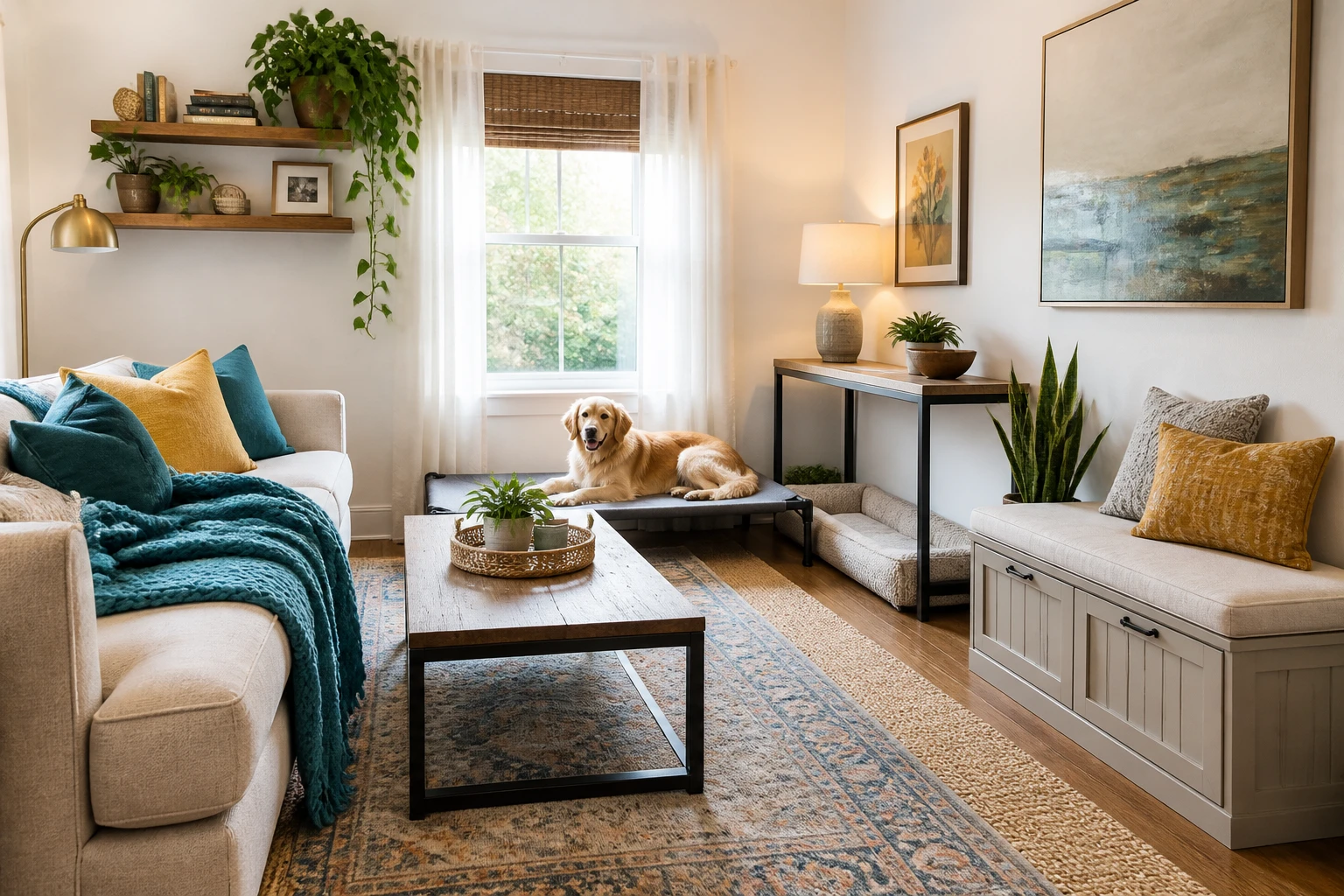
Squeezing a big pup into a tight space? You don’t need to sacrifice style or floor space. These 8 ideas make room for an extra-large snoozer while keeping your living room looking intentional. From stealth storage to multi-use furniture, you’ll find smart picks that fit, clean easily, and survive daily zoomies.
⭐ Our Top Pick: See it on Amazon
1. Go for a Low-Profile Bolster Bed That Slides Under a Console
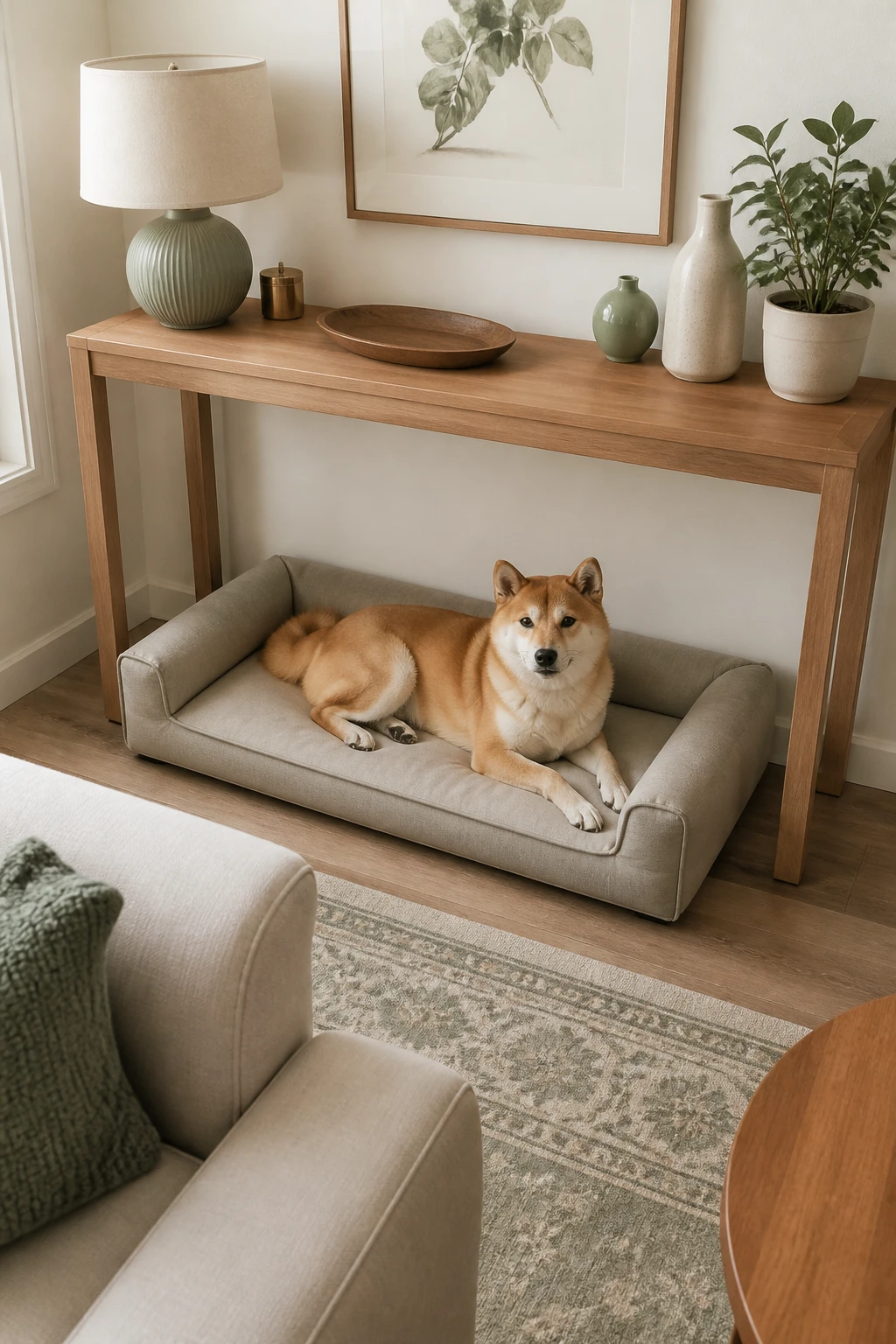
A streamlined bolster bed stays out of the walkway and tucks neatly under a console or floating shelf. The raised sides give joint support while the slim silhouette avoids bulk.
Tips
- Measure the console’s clearance and buy a bed 1-2 inches shorter in height so it slides easily.
- Pick a neutral, upholstery-like fabric that matches your sofa to make it feel built-in.
- Look for a washable cover with hidden zippers to avoid chew temptation.
Place felt pads under the console legs so you can pull the bed in and out for cleaning. Worth it if you want structured support without hogging visual space.
Best for: Long, narrow rooms and dogs who like headrests.
2. Choose a Raised Cot With a Removable Slipcover
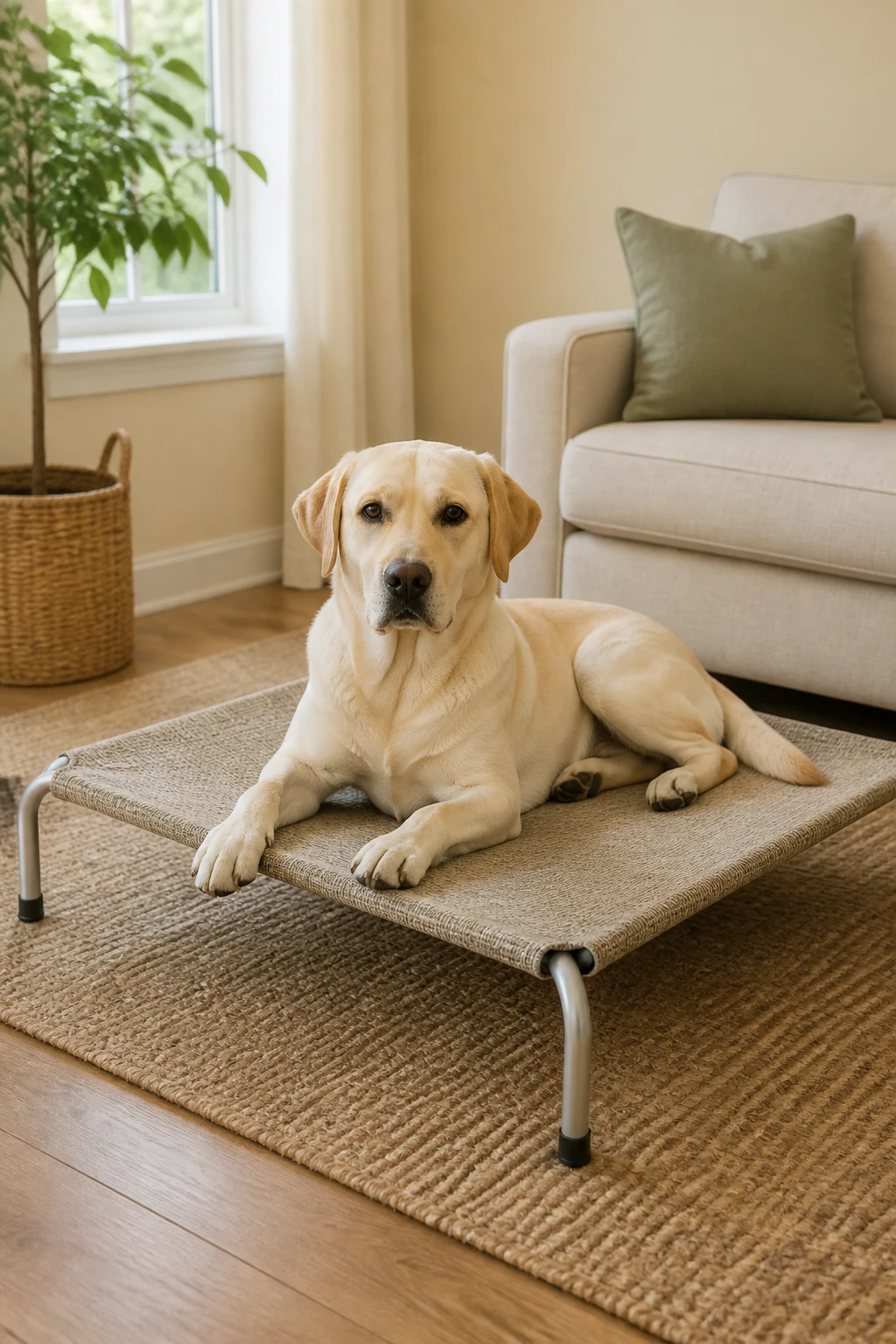
An elevated cot keeps a large dog cool and off the floor, and it visually reads lighter than a chunky pad. Add a tailored slipcover or fitted sheet to soften the look and catch fur.
Key Points
- Aluminum or steel frames handle heavy weights; avoid thin plastic corners if your dog chews.
- Use a snug, machine-washable slipcover in a color that matches your rug for a cohesive feel.
- Place rubber caps on legs to protect floors and prevent sliding.
I’d pick this for airflow and easy cleaning. Skip fluffy toppers if your dog overheats or has allergies.
Best for: Warm climates, drooly pups, and minimalist spaces.
3. Tuck a Memory-Foam Mat Inside a Window Nook
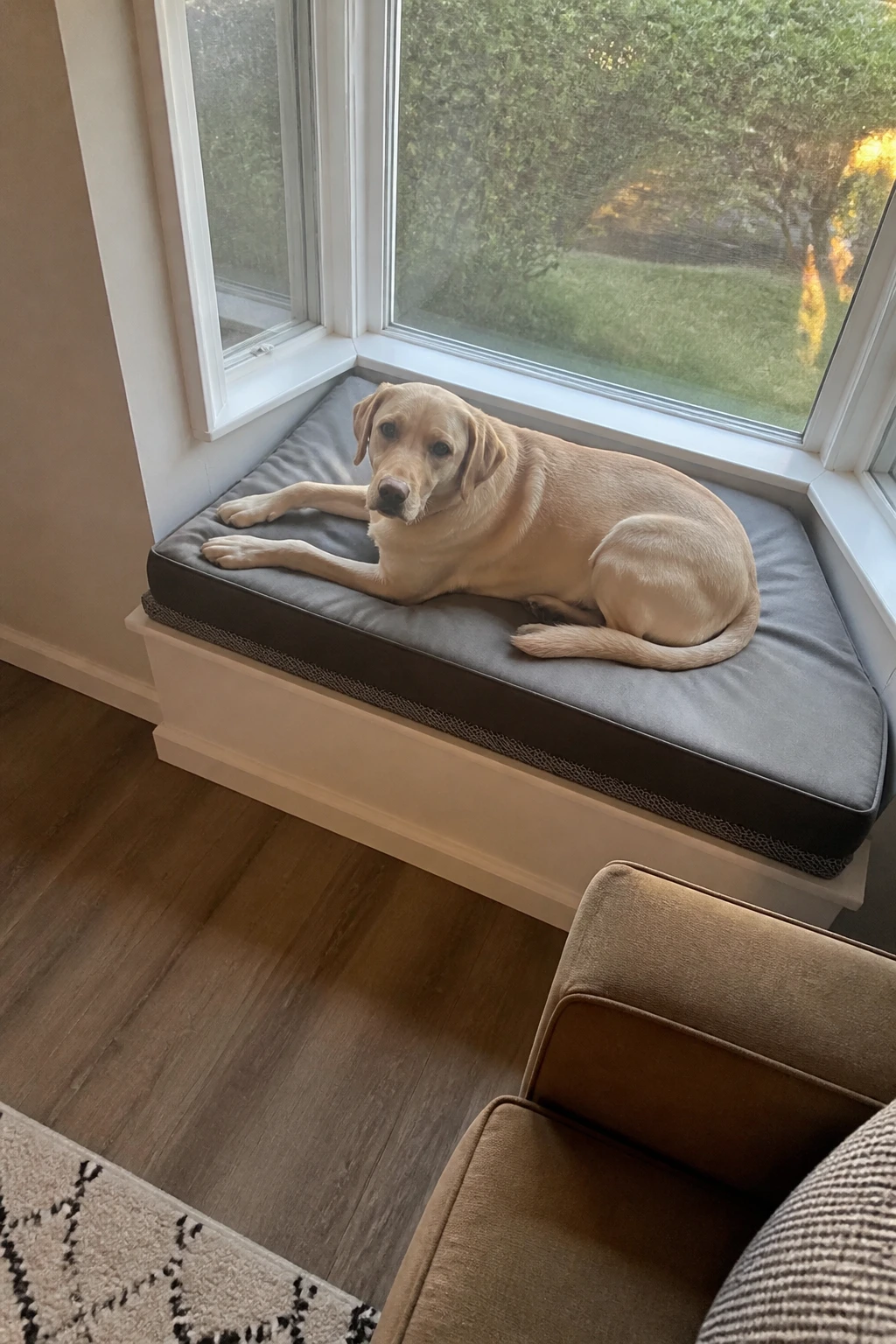
If you’ve got a bay window or low sill, turn it into the nap zone. A dense memory-foam mat trimmed to size creates a lounge spot that doesn’t steal floor area.
How to Do It
- Measure the nook and order a custom-cut foam slab (3-5 inches thick for big breeds).
- Add a zippered, water-resistant cover and a separate washable liner.
- Secure the mat with grippy shelf liner underneath so it won’t slide.
Keep cords and plants far from curious noses. Worth it if your dog loves people-watching and sunbathing.
Best for: Window-rich apartments and dogs who like to perch.
4. Pick a Coffee Table With a Built-In Dog Den
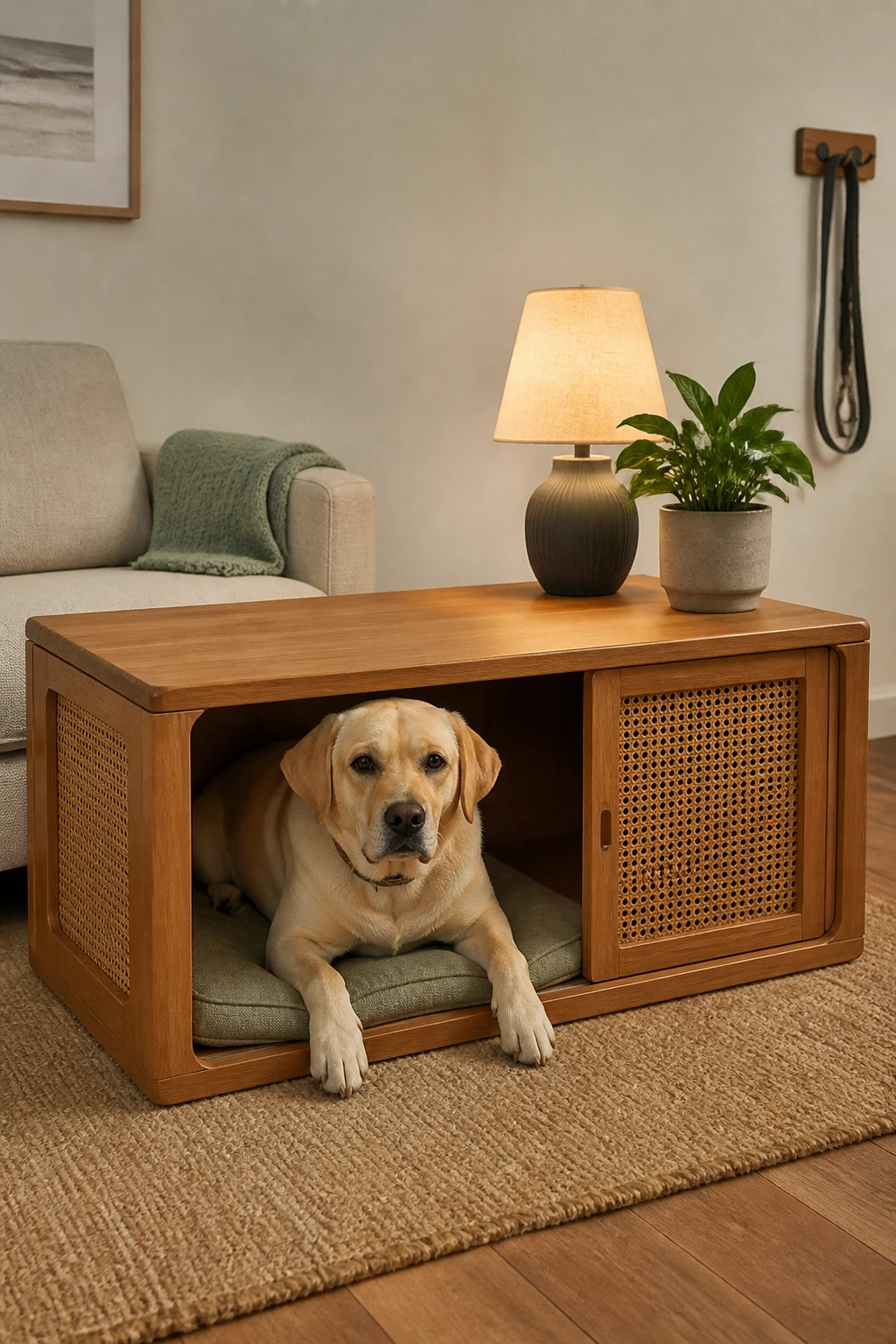
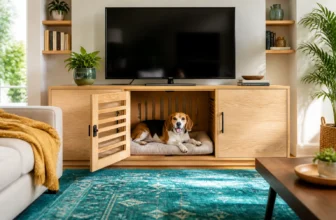
Dual-purpose furniture saves precious square footage. A coffee table that hides a crate-sized cavity or an open cubby can serve as a quiet retreat and a surface for drinks and remotes.
Materials to Look For
- Solid wood or metal frames for stability; no sharp edges.
- Ventilated sides (slats or cane) for airflow and visibility.
- Smooth, chew-resistant finishes and magnetic or slide doors that lock safely.
Place a flat orthopedic pad inside, not a thick pillow that blocks airflow. I’d skip anything with decorative rope, fringe, or dangling hardware—chew hazard, FYI.
Best for: Studio layouts and pups who like a den feel.
5. Use a Foldable, Travel-Grade Orthopedic Bed as Your “Guest Mode” Option
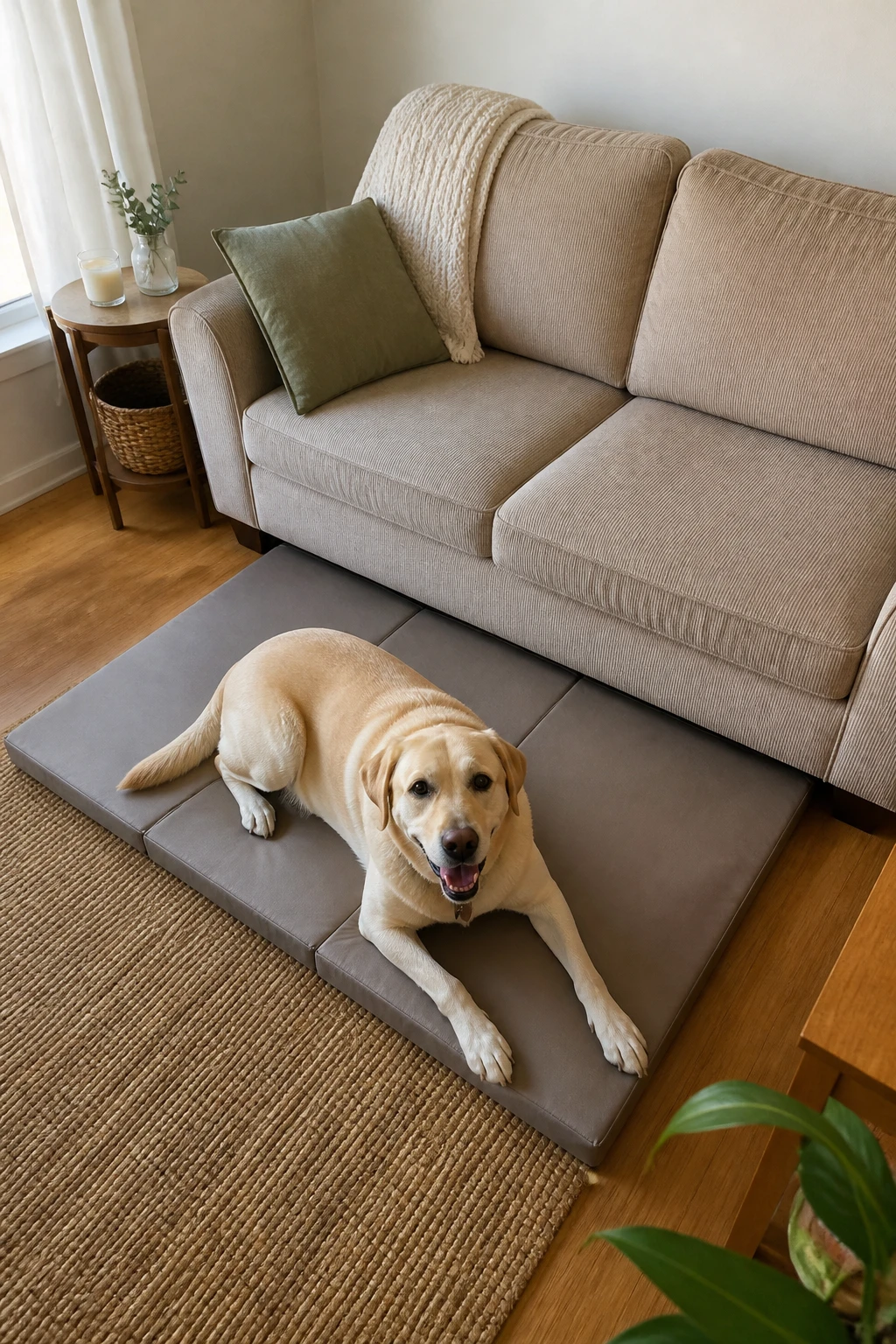
Need flexibility? A tri-fold orthopedic bed gives big-dog support when it’s down and hides in a closet or under the sofa when guests visit.
Tips
- Choose high-density foam (at least 30D) so it won’t pancake under a heavy dog.
- Non-skid bottom is a must on hardwood or tile.
- Stick to covers with sturdy stitching; flimsy seams rip fast under shifting weight.
Rotate the panels weekly to prevent dents. Worth it if you move furniture often or live in a small walk-up.
Best for: Tiny living rooms, renters, and multi-use spaces.
6. Opt for a Corner-Fit Bolster With a Curved Back
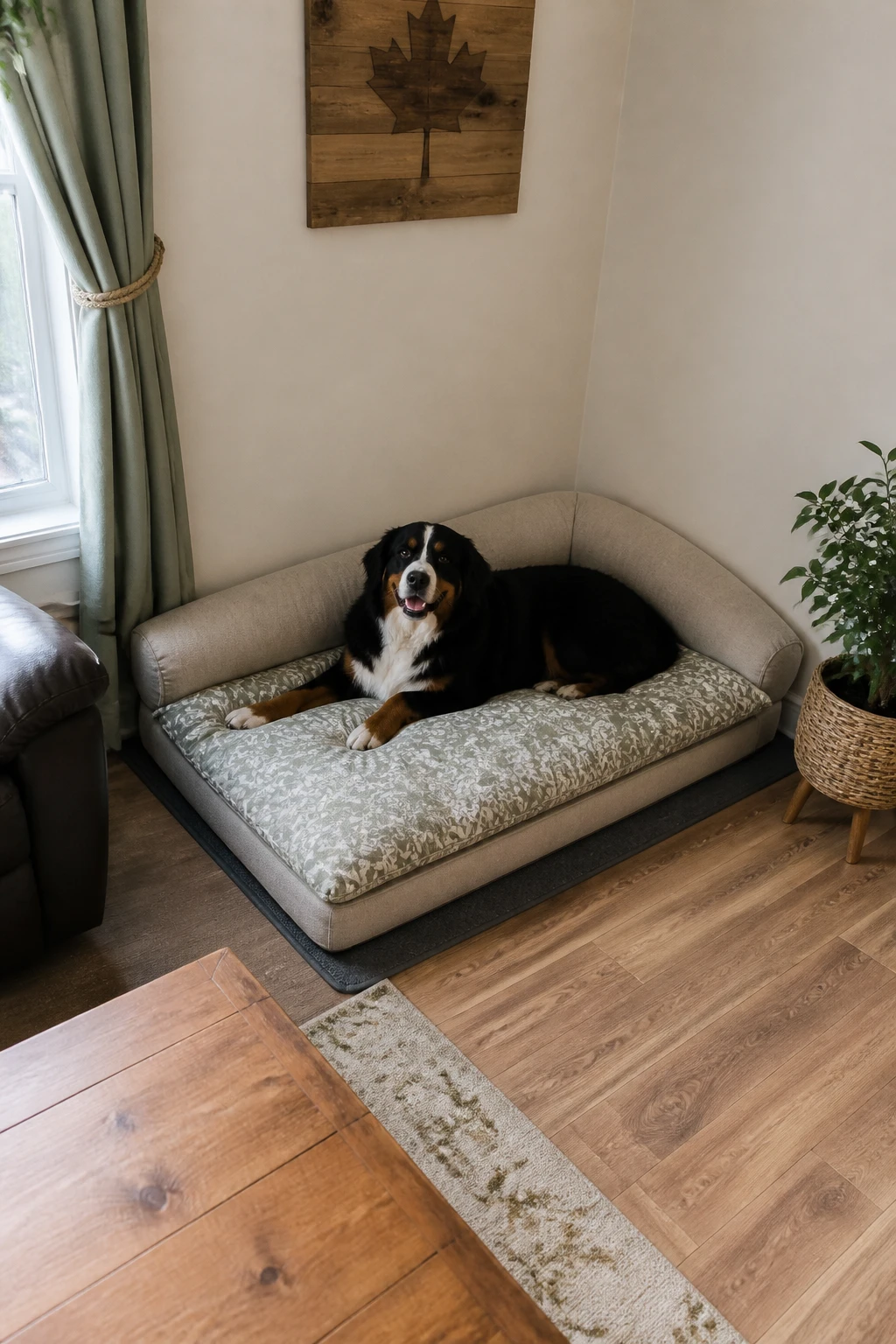
Corners often waste space. A curved-back bed hugs the wall and leaves the main walkway clear while still offering a generous footprint for sprawling.
Key Points
- Measure both walls and pick a bed that fills the corner without blocking vents.
- Curved bolsters support hips and shoulders; look for at least 4-inch side height.
- Add a washable throw that matches your curtains for visual cohesion.
Place a rubber-backed mat under the bed to protect baseboards from scuffs. I’d pick this layout when your coffee table sits close to the sofa and you need that path open.
Best for: Small square rooms and dogs who like to curl up.
7. Try a Low Wooden Platform With a Made-to-Measure Cushion
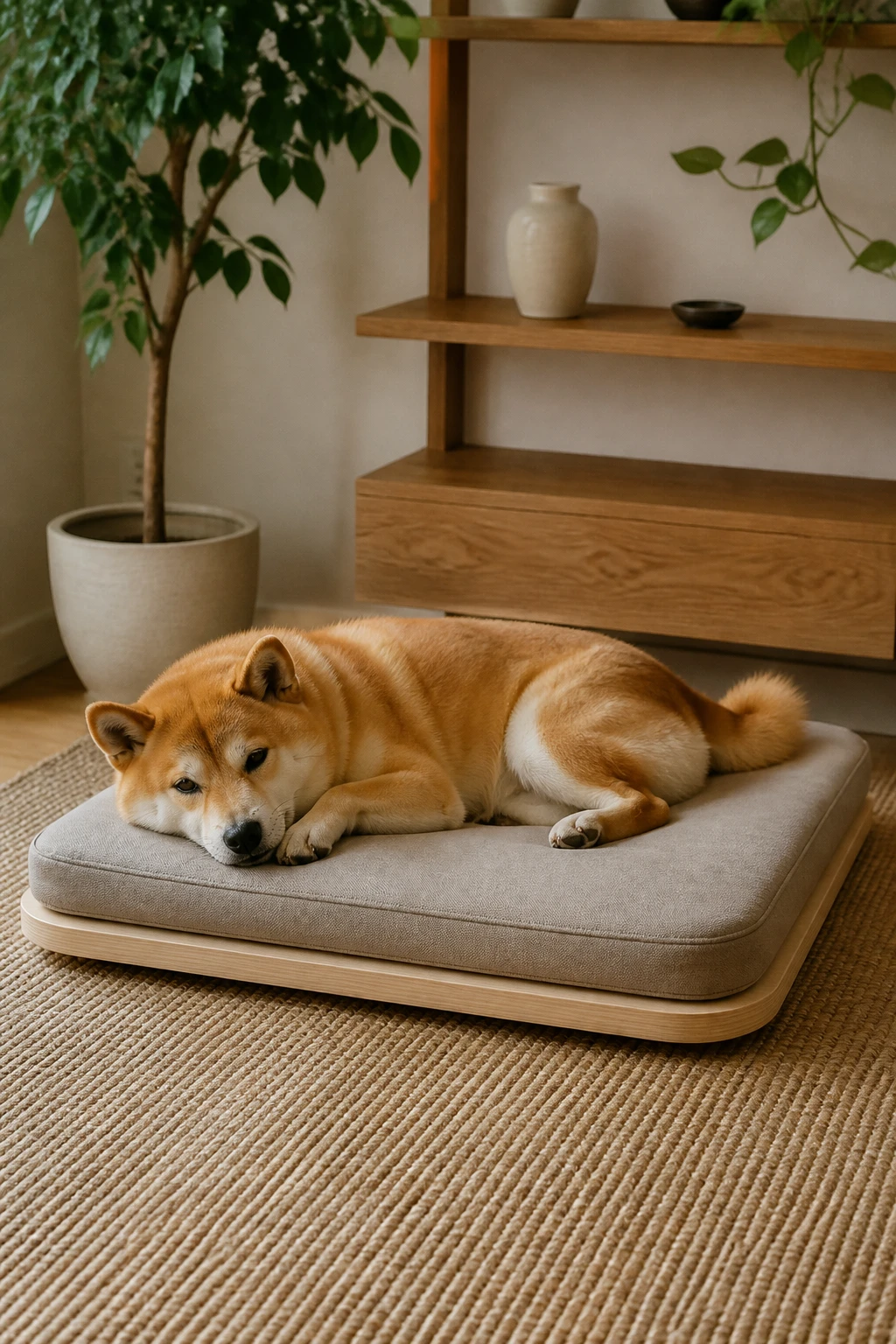
A slim platform elevates the cushion off drafts and looks like intentional furniture, not pet clutter. The clean lines make a massive bed feel tailored instead of overwhelming.
DIY-Friendly Steps
- Use sanded plywood or hardwood slats sealed with pet-safe polyurethane.
- Round the corners to avoid bumps and splinters.
- Add recessed felt feet for glide and to avoid trapping cords or toy bits underneath.
Top it with a firm, zippered cushion in performance fabric. Skip tall legs if your dog jumps down hard—joint safety first.
Best for: Modern decor lovers and seniors who need a stable landing.
8. Hide a Giant Cushion Behind the Sofa With a Slide-Out Rug Zone
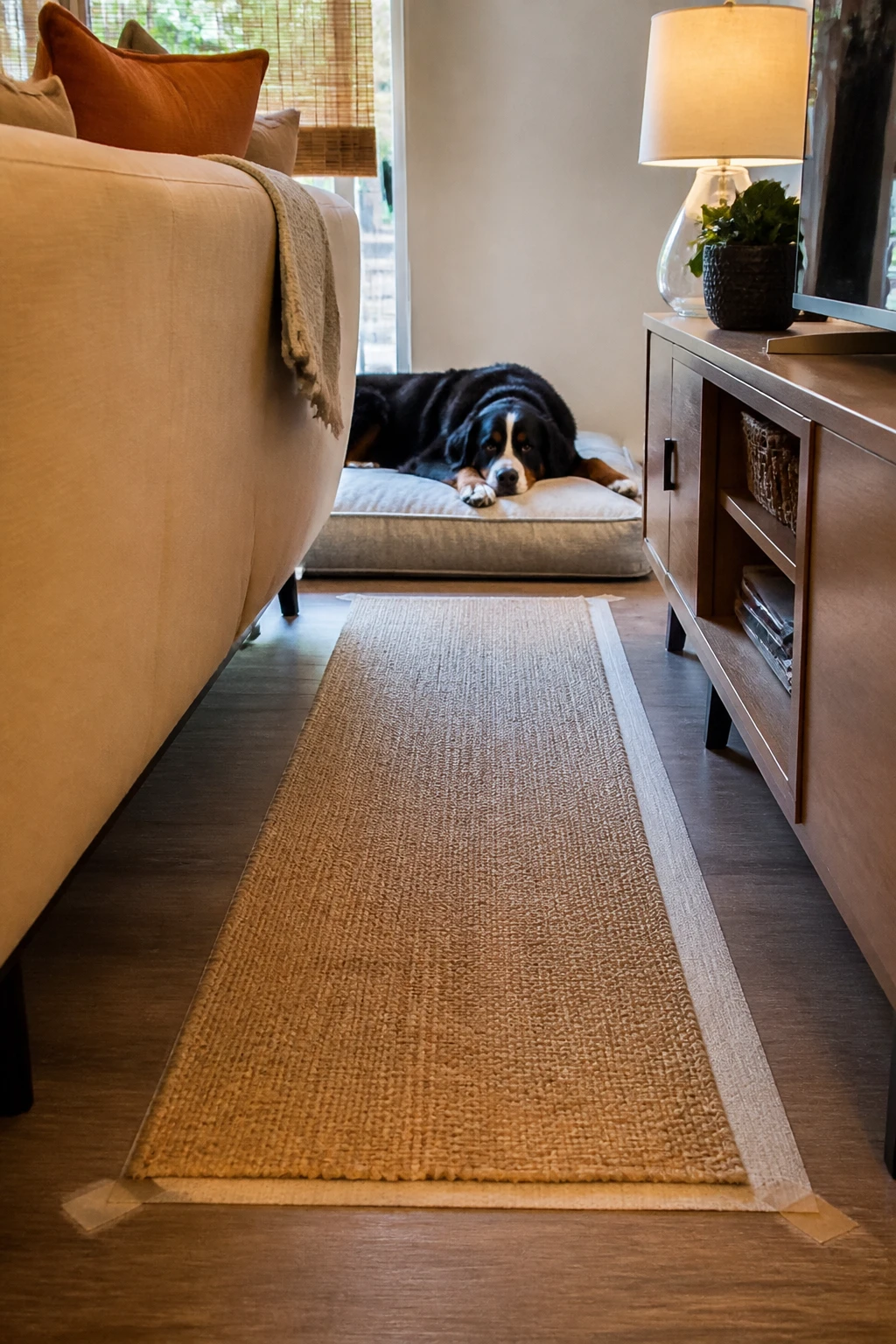
Create a designated “bed lane” behind the couch by floating the sofa a foot off the wall. Slide a runner rug down that channel and park an oversized cushion on it.
How to Set It Up
- Use rug tape or a grippy underlay so nothing shifts during zoomies.
- Choose a cushion that matches the sofa height so it looks intentional from the side.
- Keep lamps, cables, and chargers outside that lane—no chewable cords allowed.
This trick keeps the main seating area clear and gives your dog a private lounge. Worth it if your living room doubles as a hallway.
Best for: Narrow apartments and dogs who like their own zone close to you.
Common Mistake to Avoid
Don’t size down the bed to “make it fit.” Large dogs need elbow and hip room, especially for side-sleeping. A cramped bed leads to restlessness—and guess where they’ll move next? Your sofa. Instead, right-size the bed and reclaim space with multi-use furniture, vertical storage, and tight layouts that keep walkways clear. Also, place beds away from heaters and drafts, and avoid decor with small detachable parts, tassels, or anything stringy your dog could swallow.
FAQ
How big should a large dog bed be for a tight living room?
Measure your dog from nose to base of tail while sleeping on their side, then add 6-10 inches. Depth matters more than width in narrow rooms, so choose a shape that allows full extension without blocking doors or pathways.
What type of filling works best for heavy dogs?
High-density memory foam or thick orthopedic foam (4-6 inches) keeps joints supported. Fiberfill flattens fast for big breeds. If you want airflow, a raised cot with tensioned fabric distributes weight while staying cool.
How do I keep a big bed from looking cluttered?
Match the bed’s fabric to your main textiles—sofa color, rug tones, or curtains. Choose low-profile shapes, hide beds under consoles, or opt for furniture-integrated dens. Keep one throw or blanket on top and wash it often to reduce visual mess and fur.
What’s the easiest bed to clean in a small apartment?
Elevated cots and foldable orthopedic mats win for quick cleaning. Look for removable, machine-washable covers and water-resistant liners. Place a washable runner or mat underneath to catch drool and dirt before it hits your floors.
Any safety tips for placing a dog bed in a living room?
Keep beds away from heaters, fireplaces, and direct sun hot spots. Route cords high or behind furniture so they’re not chewable. Avoid decorative elements with small pieces, beads, or fringe, and use non-slip backing to prevent slides on hard floors.
Big dog, small room? You’ve got options. Mix one space-saving layout with a durable, easy-clean material and you’ll have a chill zone your dog claims immediately—and that you won’t mind showing off.
As an Amazon Associate, I earn from qualifying purchases.