This post contains affiliate links. As an Amazon Associate, I earn from qualifying purchases, at no extra cost to you.
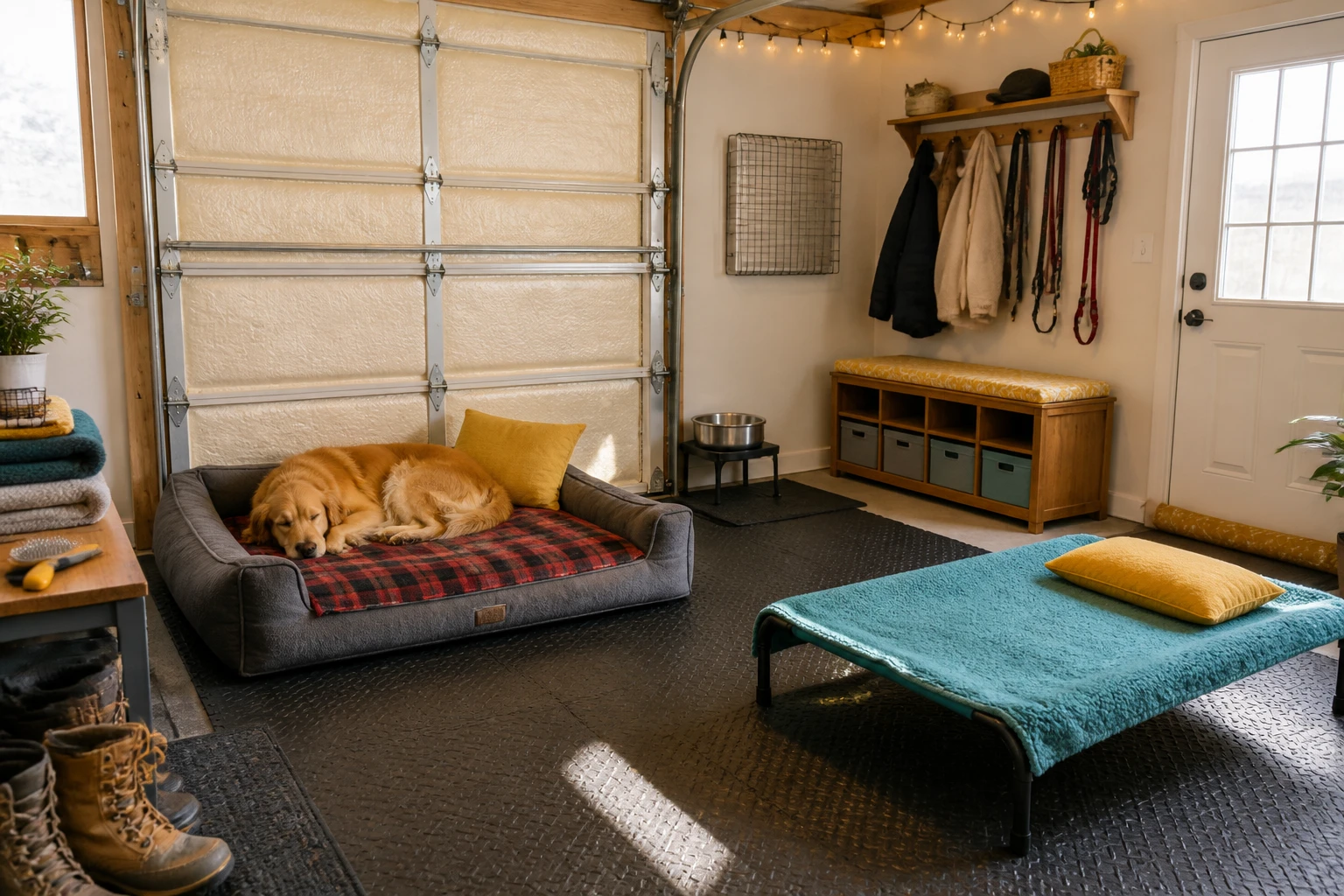
Your garage can become a warm, comfortable hangout for your dog without wrecking your parking situation. These 8 ideas tackle drafts, damp floors, and chilly corners with solutions that look clean and work hard. We’ll cover layouts, safe heat strategies, smart bedding, and storage that keeps clutter out of snout range. Let’s build a winter-ready nook your pup will actually nap in.
⭐ Our Top Pick: See it on Amazon
1. Insulate The Envelope, Then Seal The Gaps
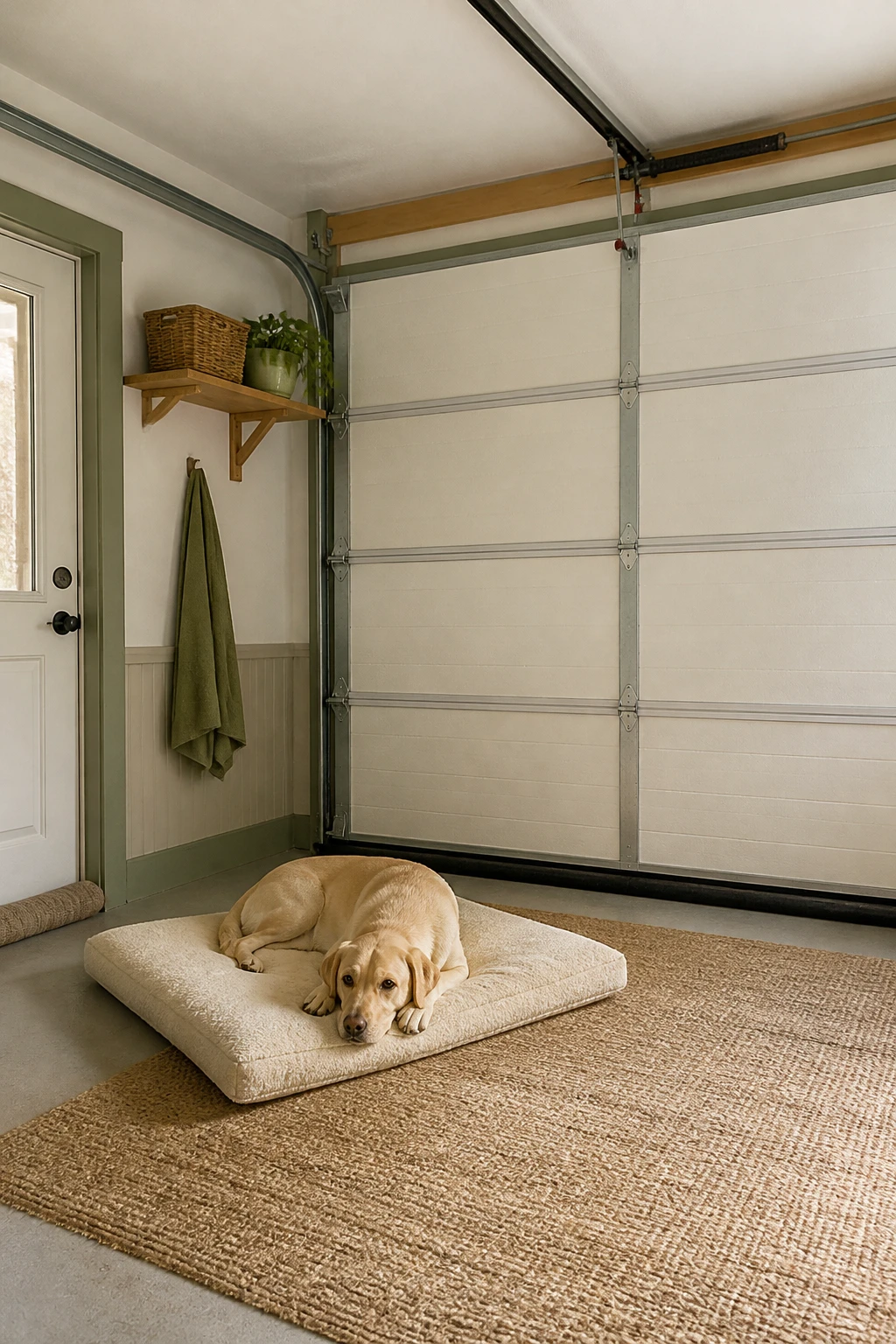
Warmth starts with the shell. Before adding fancy beds or decor, reduce heat loss from the door, walls, and floor edges. You’ll trap warmth, cut energy bills, and create a consistent temp that’s easier on senior joints.
Quick Wins:
- Install a garage-door bottom sweep and side weatherstripping to block drafts.
- Use foam board insulation on the garage door panels (cut to fit; secure with adhesive rated for foam).
- Seal wall cracks with paintable caulk; use door snakes for side doors.
Keep all foams covered or out of reach if your dog chews. I’d pick closed-cell foam or rigid board over fiberglass for easier dog-safe coverage. Worth it if your garage feels windy even with the door shut.
Best for: Any size dog in a drafty space where temps swing during cold snaps.
2. Warm Floors = Happy Paws
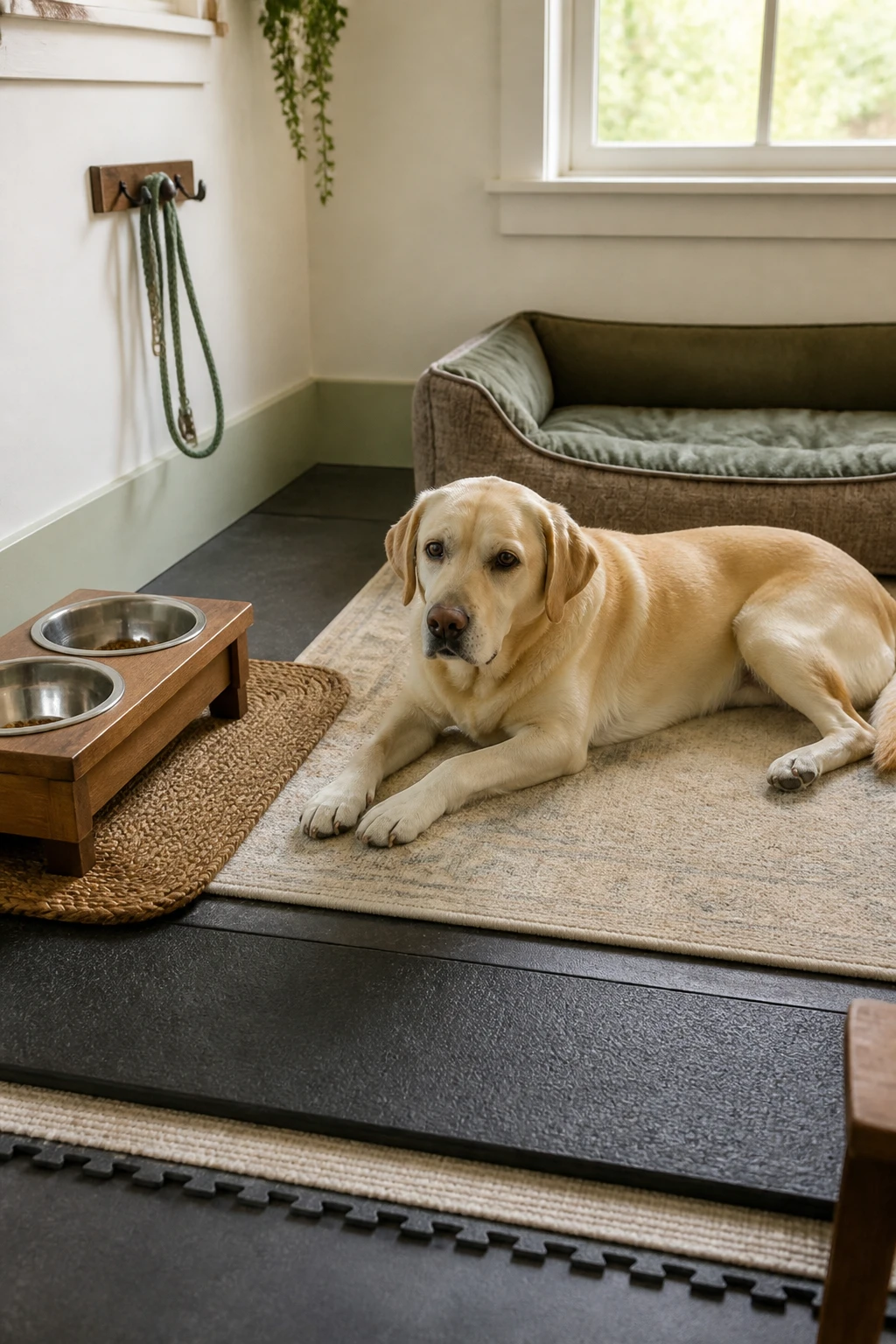
Cold concrete steals body heat fast. Add layers that insulate and grip, so your dog lounges comfortably and doesn’t slide around when zoomies strike. Bonus: it dampens echo and makes the room feel finished.
Layering Formula:
- Start with rubber stall mats or interlocking EVA foam tiles (edge-trim for a flush look).
- Top with a washable, low-pile rug or runner under the bed area.
- Add a non-slip rug pad to keep layers stable.
Choose rugs labeled machine-washable and avoid fringe. If your dog is a chewer, I’d skip EVA foam and go for heavy rubber mats—they’re tougher. This setup helps seniors, big breeds, and any pup that lounges belly-down.
Best for: Medium to large dogs, arthritic pups, and high-traffic corners that need traction.
3. Choose A Bed Built For Cold Weather
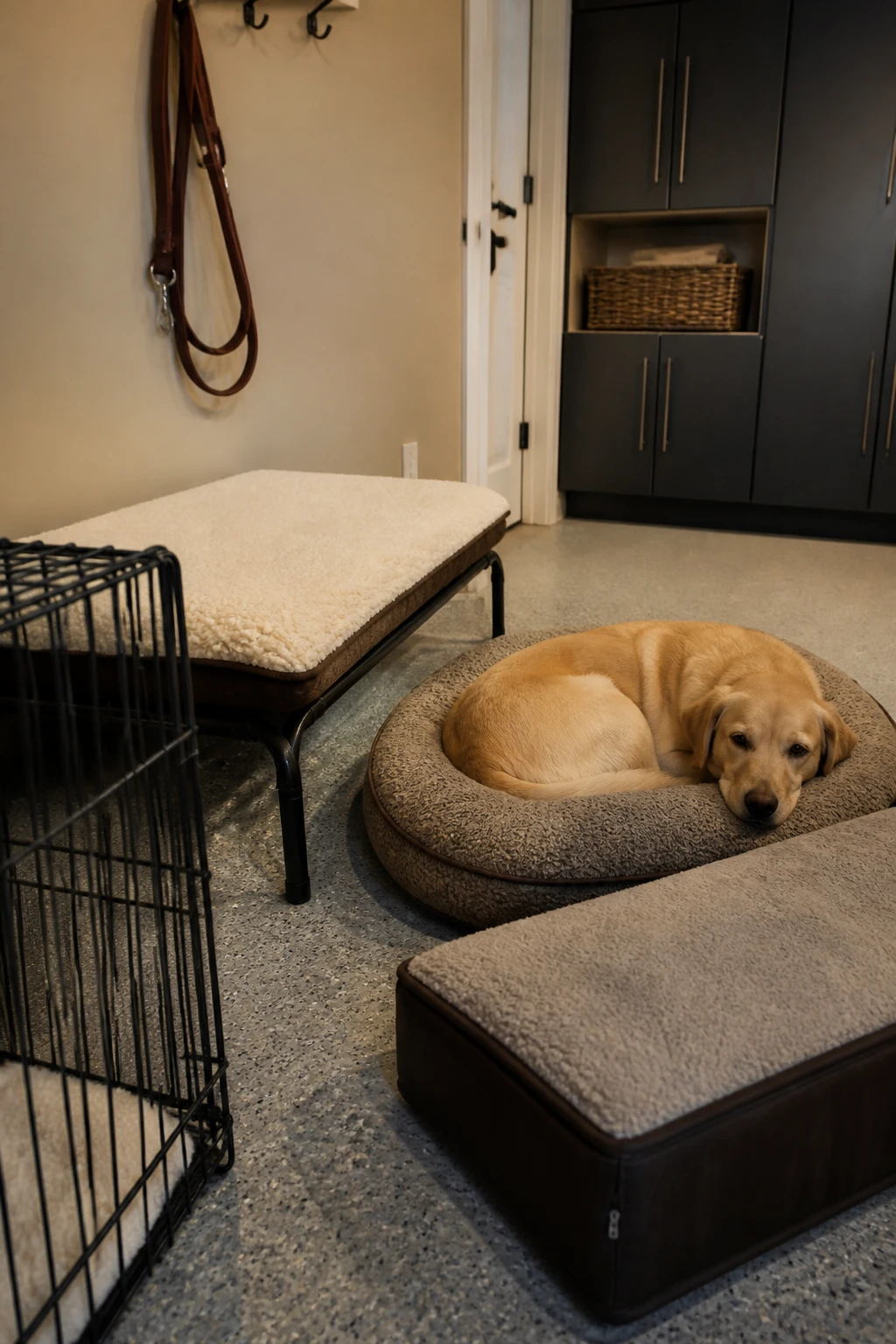
The right bed traps heat, lifts off cold floors, and resists damp. You want warmth without bulk, easy washing, and materials that don’t hold odors.
What To Look For:
- Bolster beds with firm sides to block drafts.
- Elevated cots with a fitted, washable fleece topper for airflow plus insulation.
- Orthopedic foam (CertiPUR-US) inside a zippered, washable cover.
Skip anything with dangling zippers or decorative ties. Add a thermal crate pad or self-warming layer inside a crate for extra heat retention. IMO, I’d pick a bolster bed for drafty walls and an elevated cot for damp floors. Use this wherever your dog rests longest.
Best for: Seniors, short-haired breeds, and dogs who tuck into corners.
4. Safe Heat: Radiant Panels And Micro-Zones
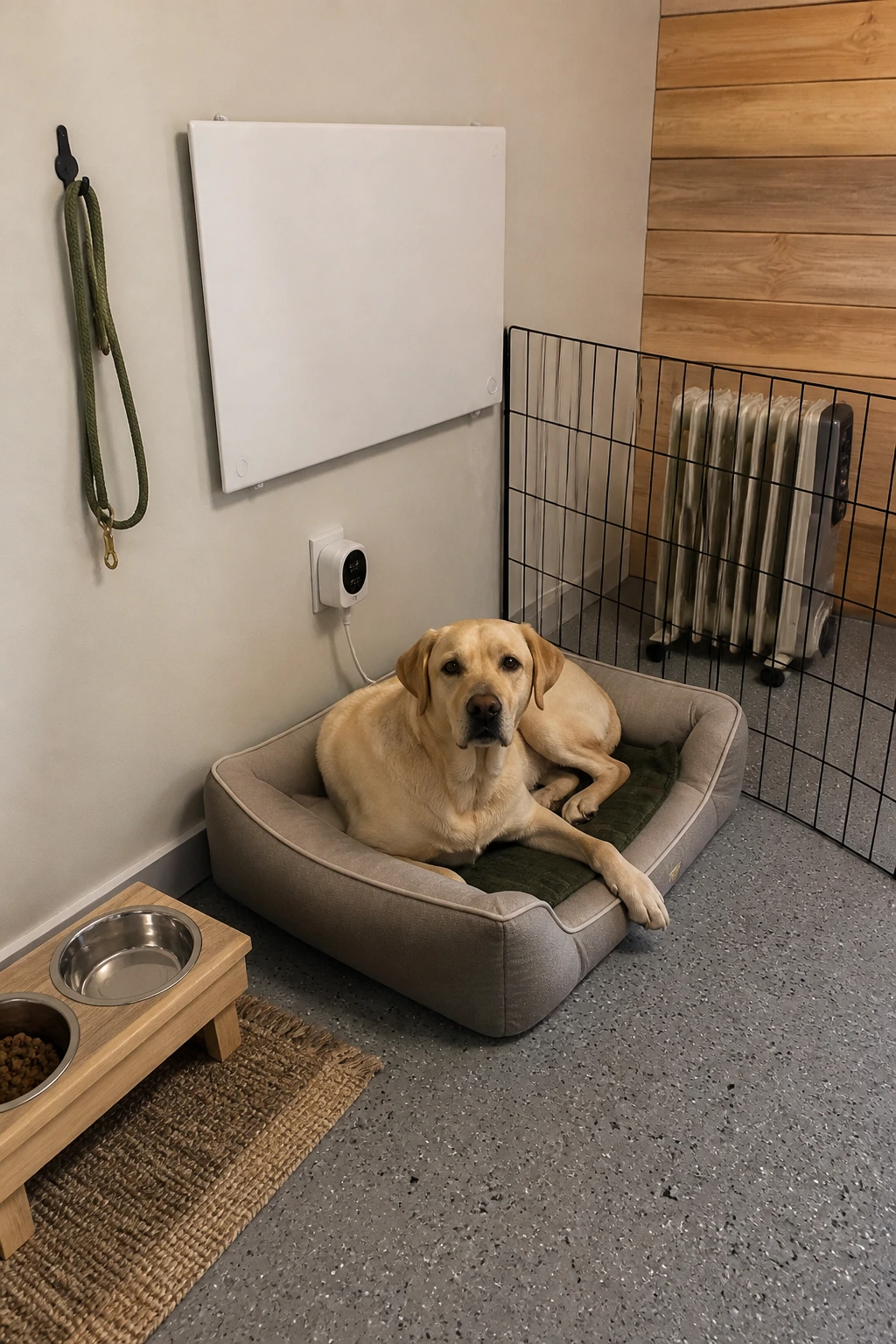
Heat the dog’s zone, not the whole garage. Radiant options warm surfaces and bodies without blasting hot air or exposing coils your pup might touch. That means fewer hot spots and less dryness.
Safer Options:
- Wall-mounted radiant panels with overheat protection and proper clearances.
- Oil-filled radiators placed behind a sturdy barrier or ex-pen to prevent contact.
- Heated beds or pads with low-voltage chew-resistant cords, used under supervision.
Install a plug-in thermostat or smart outlet to hold 60–65°F near the bed area. Keep cords inside cord covers or behind furniture. I’d skip ceramic space heaters with exposed elements. Use this when insulation alone won’t cut it.
Best for: Cold climates and detached garages that drop below 50°F.
5. Draft-Blocking Partitions That Double As Style
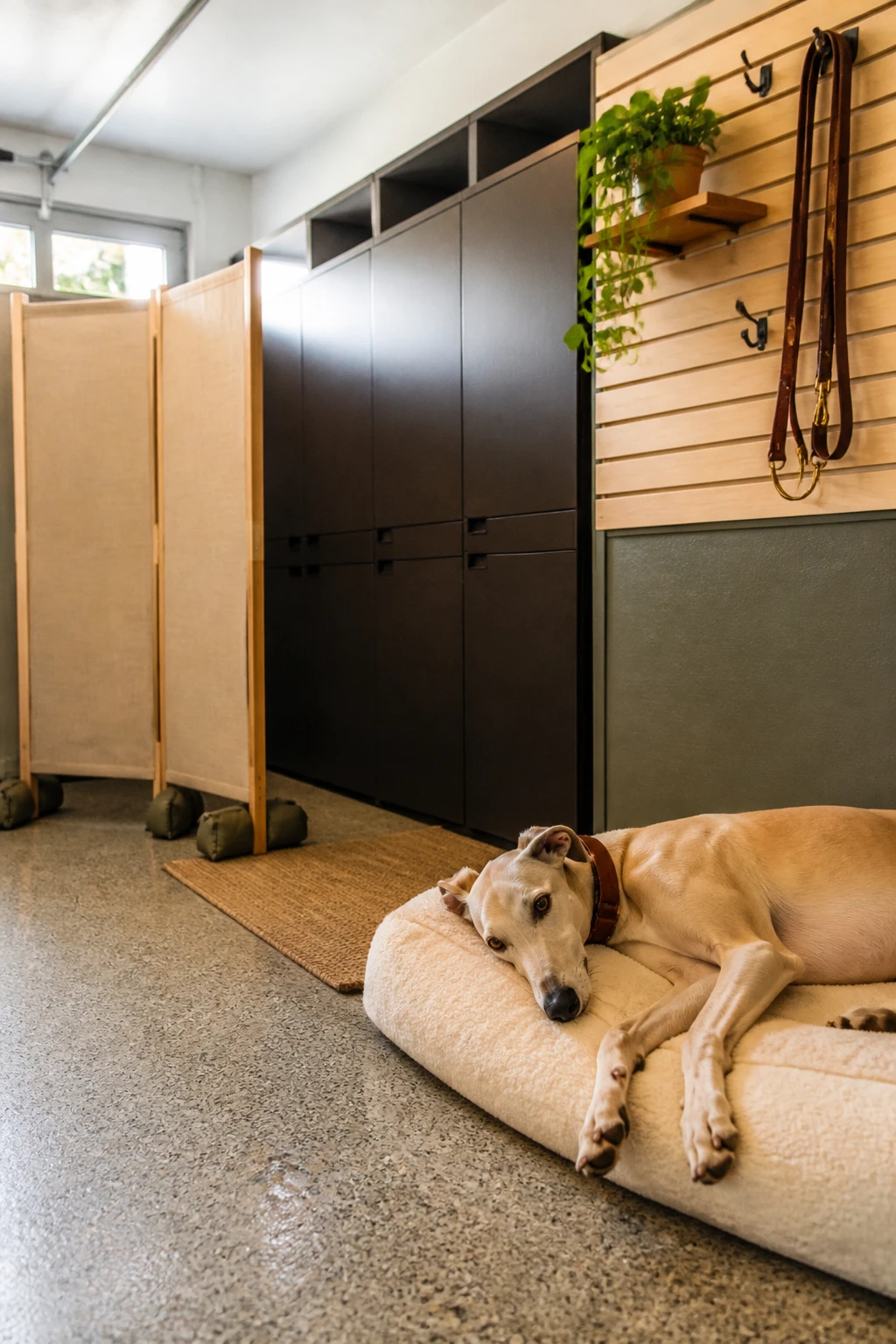
Don’t heat the whole bay—carve out a snug zone. Lightweight partitions corral warmth, cut visual clutter, and create a defined “den” that feels secure.
Easy Partition Ideas:
- Freestanding room dividers anchored with sandbags and Command strips for stability.
- A DIY slat wall frame with plywood panels; paint with scrubbable enamel.
- Storage lockers or cabinets arranged back-to-back to form a wall (anchor to studs).
Leave a 2–3 inch gap at the top for airflow. Avoid fabric curtains near heaters. If your dog fencesurf-chews, cap edges with aluminum trim. Worth it if you share the garage with tools or laundry and want a calm, defined nook.
Best for: Multi-use garages and anxious pups who relax in semi-enclosed spaces.
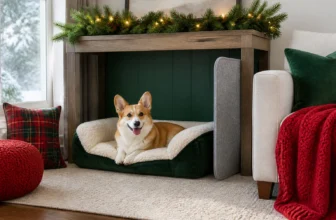
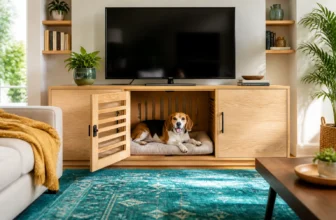
6. Crate Or Pen Layout With Real Furniture Vibes
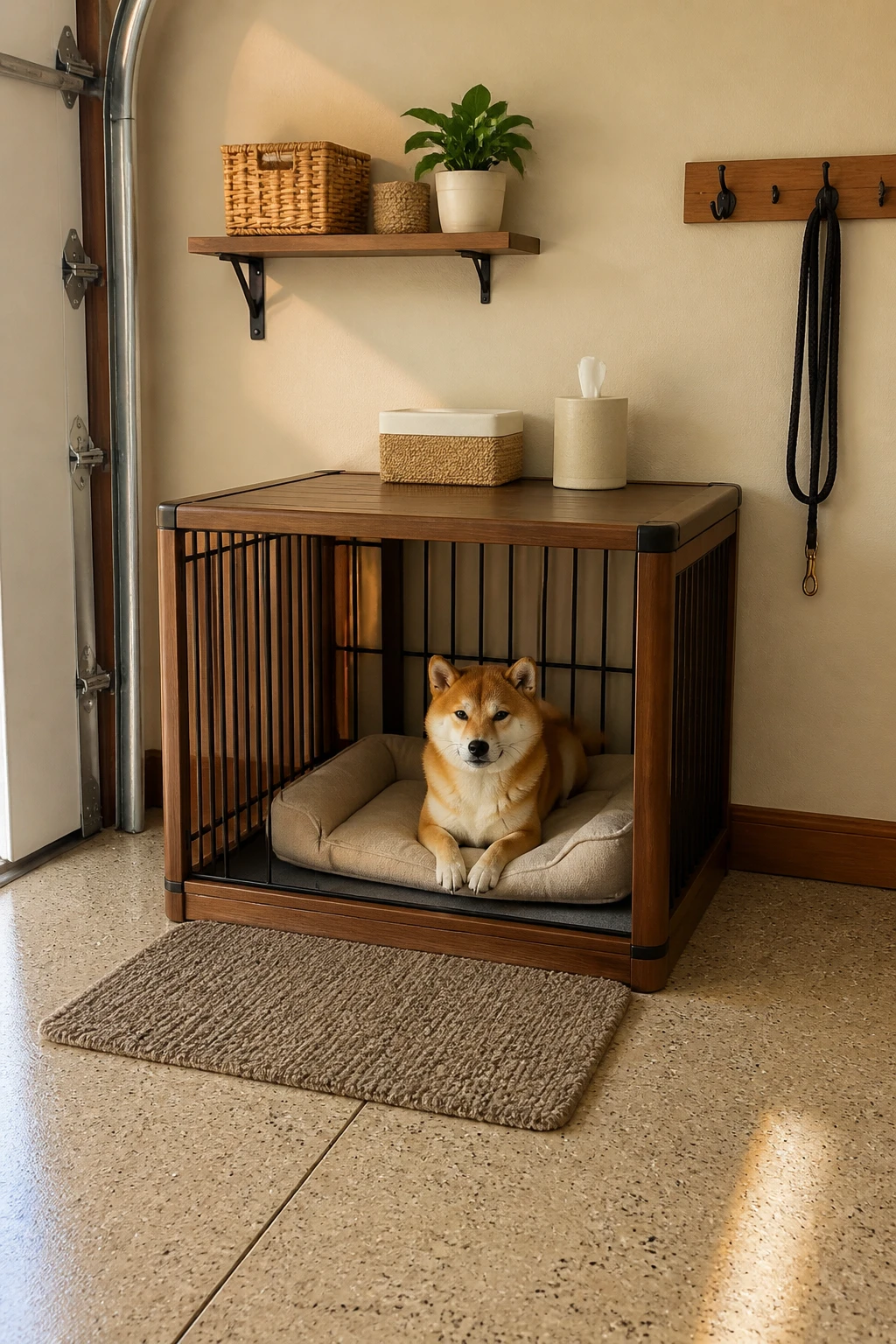
A crate can look polished and help with routine. Style it like furniture and add practical storage so everything lives within reach but stays tidy.
Layout Tips:
- Position the crate with the door facing away from the main garage door to avoid blasts of cold air.
- Use a crate topper or a sturdy board to create a side table for bins and wipes.
- Add a washable mat at the entry for paw-drying and traction.
Choose crates with rounded edges and no peeling paint. Keep decor high: wood signs, framed photos, and faux greenery on upper shelves—no ribbons or tiny pieces at dog height. I’d pick a furniture-style crate for open areas; skip wire-only if the space is drafty. This setup simplifies winter routines.
Best for: Dogs who crate comfortably and homes that want a neat, integrated look.
7. Ventilation, Moisture Control, And Air Quality
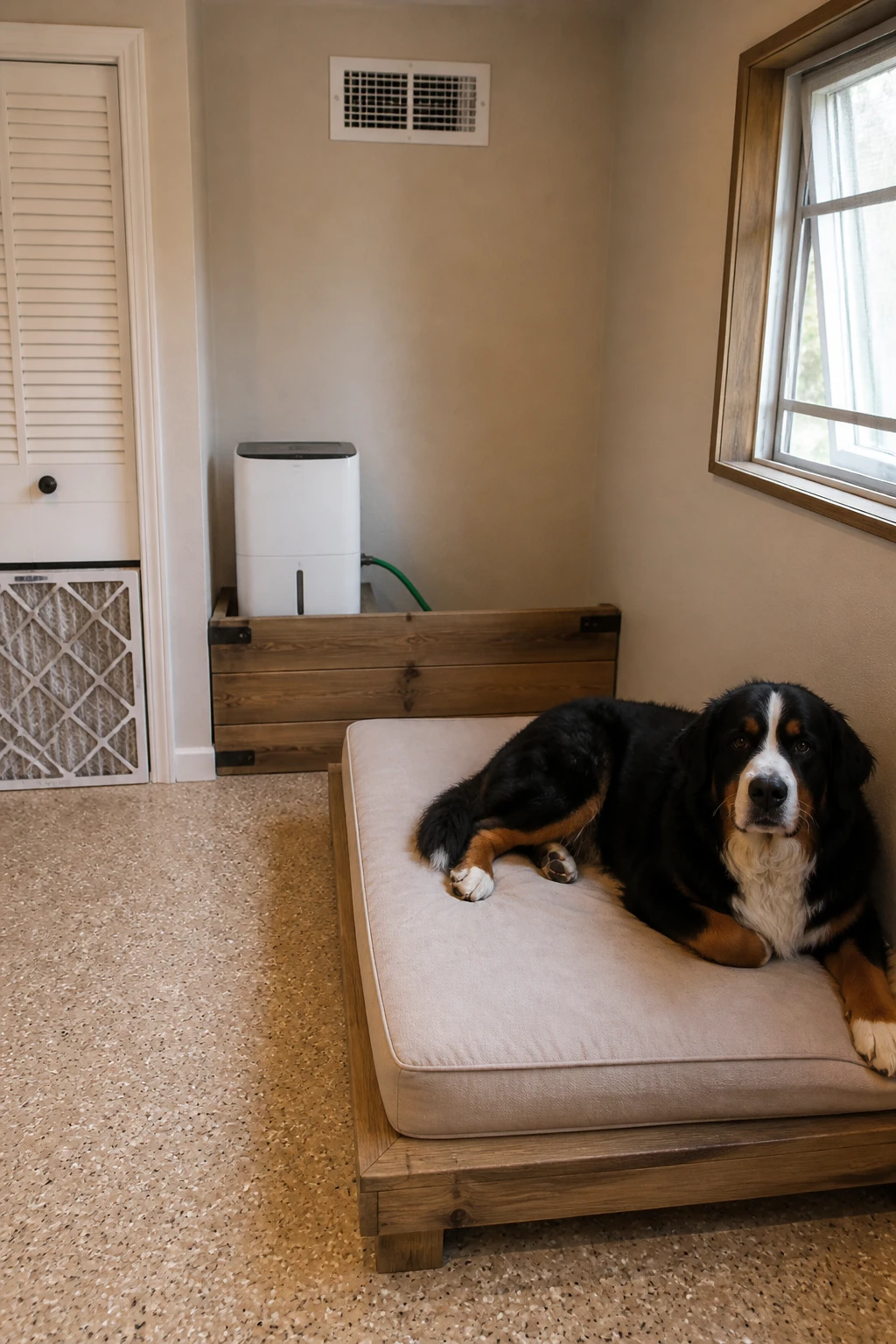
Warm air without ventilation gets stuffy fast. Balance heat with controlled airflow to prevent condensation, musty smells, and mold that can irritate sensitive noses.
What Works:
- Run a dehumidifier with a hose to a drain; target 40–50% RH.
- Add a through-wall vent or crack a safe side window with a bug screen, away from the bed.
- Use washable wall panels or semi-gloss paint for easy wipe-downs.
Keep dehumidifiers behind a barrier if your dog chews cords. Change furnace-style filters if your garage shares an HVAC zone. Worth it if pawprints feel damp or windows fog in winter.
Best for: Humid regions and garages with laundry machines or wet snow gear.
8. Storage That Keeps Winter Gear Off The Floor
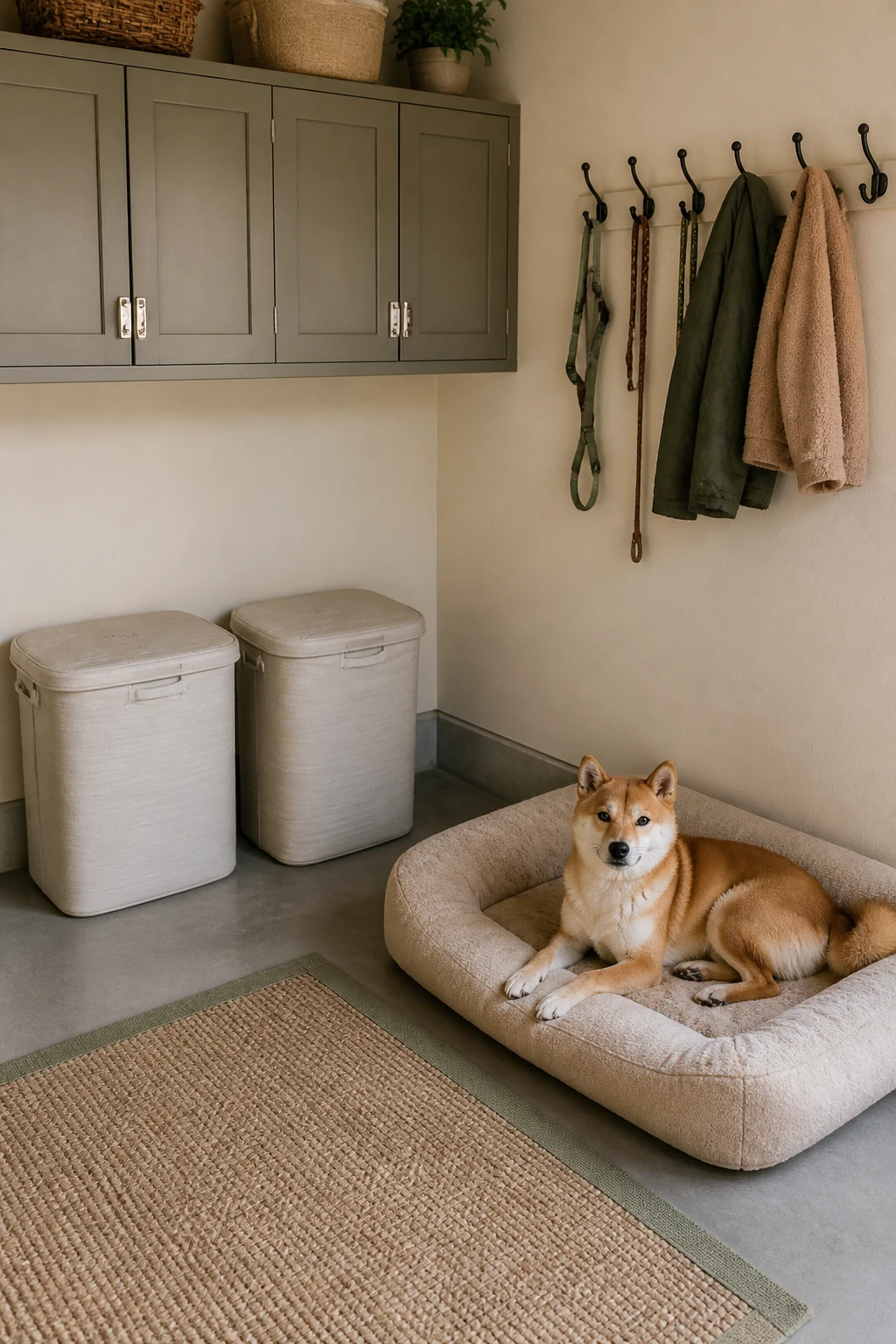
Clutter can creep into the dog’s area and bring grime. Smart storage keeps leashes, towels, and cleaning supplies close without tempting curious mouths.
Organize Like This:
- Mount closed cabinets for chemicals and small items—always latched.
- Use wall hooks for harnesses and coats, high enough to stay out of reach.
- Stash lidded bins for blankets and back-up bed covers.
Label everything so winter routines run on autopilot. I’d skip open shelves at dog height—stuff will slide off or become chew toys. This approach keeps floors clear for easy sweeping and safer playtime.
Best for: Busy households and messy winters with slush, salt, and constant towel use.
Common Mistake to Avoid
Don’t pile on heat without addressing drafts and moisture first. Over-relying on a space heater in a leaky garage wastes energy and creates hot-cold swings that never feel comfortable. Insulate, seal, and manage humidity, then add targeted warmth—your dog will rest better and you’ll spend less.
FAQ
How warm should a garage dog room be in winter?
Most healthy adult dogs do well around 60–65°F in a draft-free zone with a quality bed. Short-haired, small, or senior dogs often prefer closer to 65–70°F. Watch your pup’s behavior—curling tight or shivering means bump it up.
Is a heated dog bed safe in a garage?
Yes, if you choose a low-voltage model with chew-resistant cords and overheat protection. Place it on a stable surface, route the cord through a cover, and inspect weekly. Never combine with loose blankets that can trap heat directly over the pad.
Can I use a standard space heater?
You can, but prioritize oil-filled radiators or enclosed radiant panels with tip-over and overheat shutoff. Keep a barrier so your dog can’t bump it, and maintain clearances per the manual. Avoid exposed-element heaters around bedding.
What flooring works best for messy winters?
Rubber stall mats over concrete with a washable rug on top. They insulate, add grip, and clean easily. If your dog chews, pick heavy rubber over foam tiles and secure rug corners with rug tape made for concrete.
How do I prevent garage fumes from reaching my dog?
Never idle vehicles inside. Store paints, gasoline, and fertilizers in sealed cabinets or a shed. Add a carbon monoxide detector, improve ventilation, and keep the dog zone partitioned from any chemical storage.
Where should I position the crate?
Place it away from the main garage door and exterior walls if possible. Angle the door away from drafts, leave a 6–12 inch gap from heat sources, and keep the front clear for airflow. Add a mat at the entrance to catch moisture and salt.
You don’t need a full renovation to make winter comfortable for your dog. Tackle the shell, warm the floor, and create a defined zone with safe heat and smart storage. You’ll end up with a space that feels calm, warm, and easy to maintain—exactly what your pup deserves.
As an Amazon Associate, I earn from qualifying purchases.