This post contains affiliate links. As an Amazon Associate, I earn from qualifying purchases, at no extra cost to you.
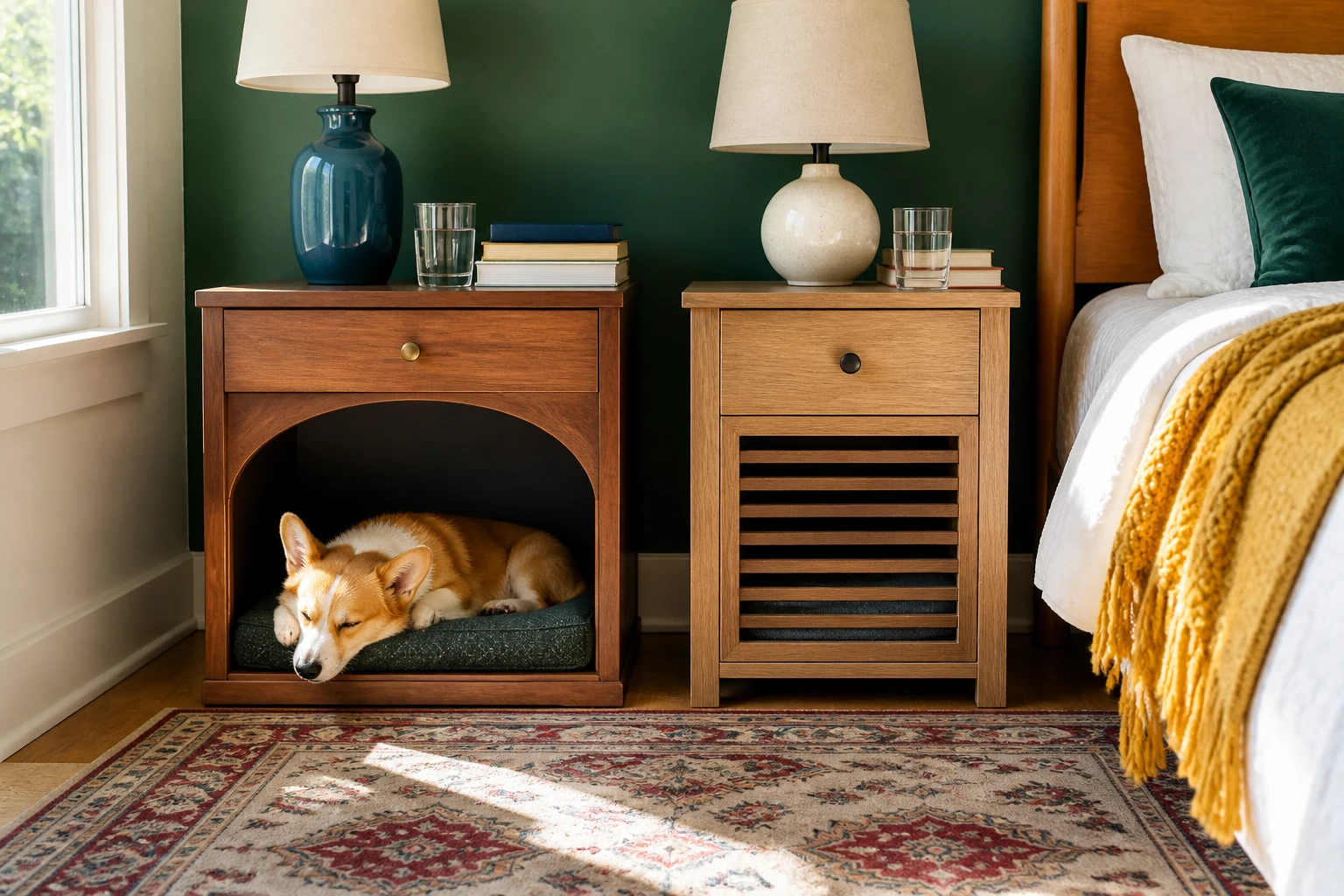
Small bedroom, big dog energy? Let’s fix that. These 8 builds tuck your pup’s sleep spot right into a bedside table, freeing up floors and giving you an easy place for a lamp, water, and late-night reads. You’ll score calm, clutter-free vibes while your dog chills inches from your pillow. Grab a tape measure, because a made-to-fit setup beats a clunky crate every time.
⭐ Our Top Pick: See it on Amazon
1. The Open-Cubby Nightstand Makeover
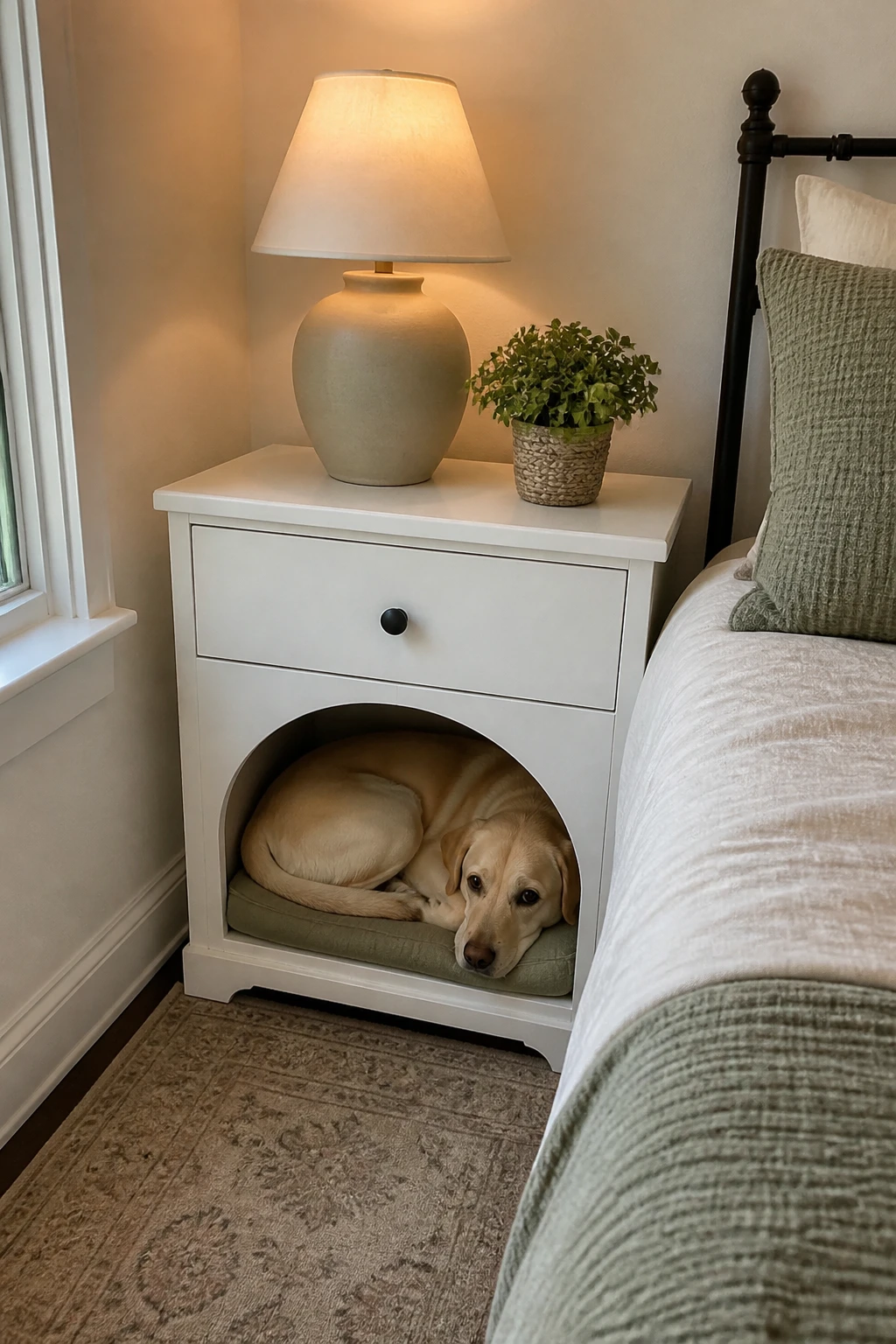
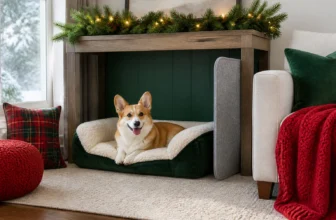
Got a dated nightstand with a door or a low shelf? Turn it into a snug alcove by removing the door and trimming the front into a soft arch. The top still holds your lamp while the lower space becomes your dog’s den.
Materials
- Solid wood or plywood nightstand (avoid flimsy particleboard if your dog chews)
- Jigsaw and sandpaper (120–220 grit)
- Zero-VOC paint or water-based poly
- Edge banding or thin trim for a clean opening
- Low-profile cushion or crate pad
Build Tips
- Mark an opening at least 1.5x your dog’s shoulder width and 1x shoulder height.
- Round over edges; no sharp corners near muzzles or paws.
- Add felt pads under the legs to stop wobble and protect floors.
Paint the interior a darker shade so it feels calm, but keep ventilation clear. If you want privacy, install a fabric panel on the sides with staple-on cane or slatted trim (no strings or tassels). Worth it if you want a fast weekend project with a big payoff.
Best for: Calm adults who like a semi-enclosed nook; renters who want an easy flip.
2. The Floating Nightstand With a Den Below
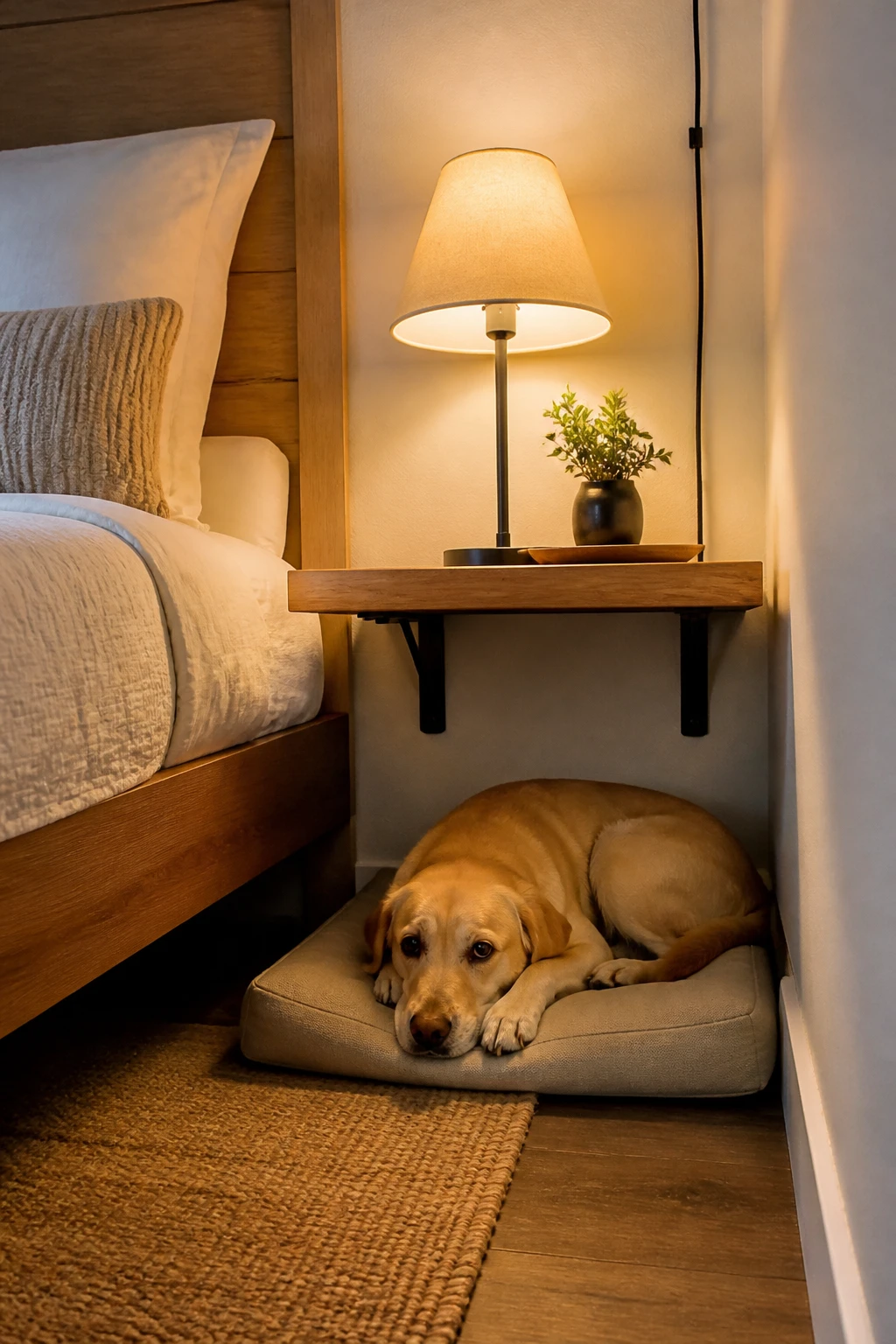
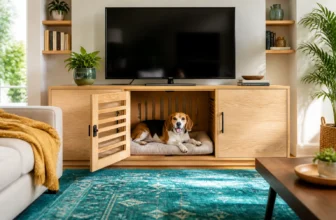
When every inch counts, mount a floating nightstand (or shallow wall cabinet) and slide a low bed underneath. Your surface stays clutter-free and your pup claims the footprint you already use.
Materials
- Wall-mounted shelf or shallow cabinet (10–14 inches deep)
- Stud finder, lag screws, and bracket rated for 2–3x expected load
- Cable clips to route lamp cords upward
- Low-profile dog cushion with non-slip backing
Pro Moves
- Anchor into studs at two points. Drywall anchors alone won’t cut it.
- Mount the underside 18–22 inches from the floor so your dog can turn easily.
- Use rounded hardware and keep all cords wrapped and tucked high with clips.
FYI, this one visually lightens the room and makes cleaning a breeze. I’d skip it for heavy chewers who might target wall edges or cords.
Best for: Tiny rooms, platform beds, and dogs who prefer an open, airy sleep spot.
3. The Slim C-Table Pup Nook
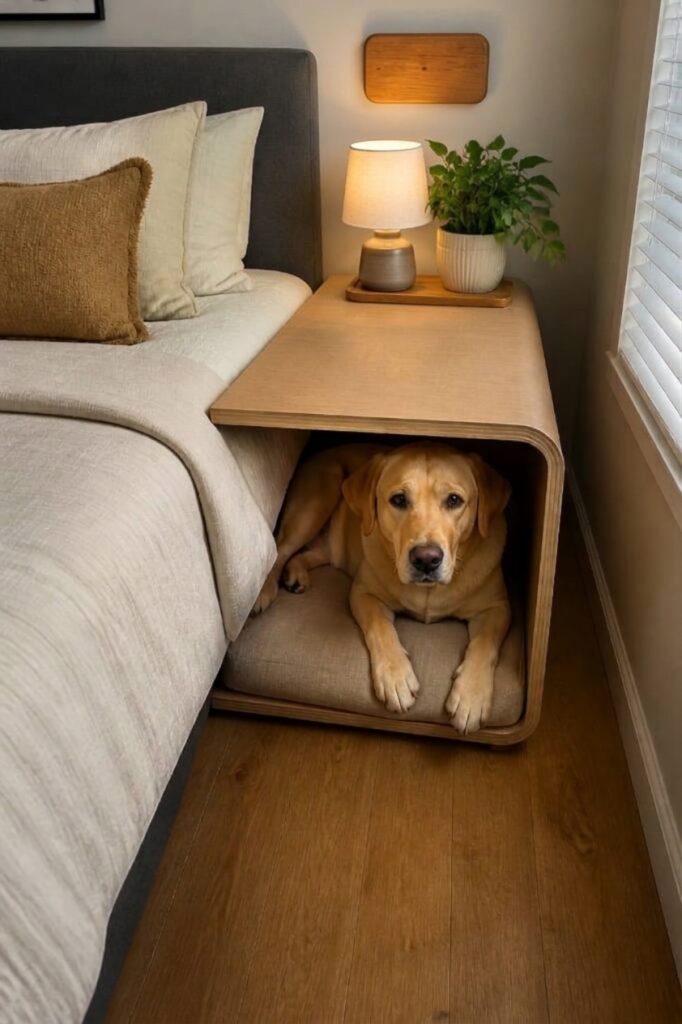
This is the slide-under winner. A C-shaped table tucks its base beside your mattress while the top hovers over, leaving a small alcove below for your dog. It feels custom even if you build with basic plywood.
Materials
- 3/4-inch plywood or solid wood panels
- Pocket screws or dowels, wood glue
- Edge banding for finished plywood edges
- Optional: locking casters rated for furniture
Build Tips
- Target 24–26 inches high for the tabletop; match your mattress height.
- Leave a 16–20 inch interior height for the lower nook; add vents with cane inset or narrow slats on the side panel.
- Round every outside corner. Dogs clip corners. Humans do too, honestly.
Slide the base under the bed frame to save even more room. Worth it if you like a modern, minimal look without visual heaviness.
Best for: Streamlined spaces and dogs who sprawl but like a defined boundary.
4. The Two-Cube Stack: Drawer Up, Den Down
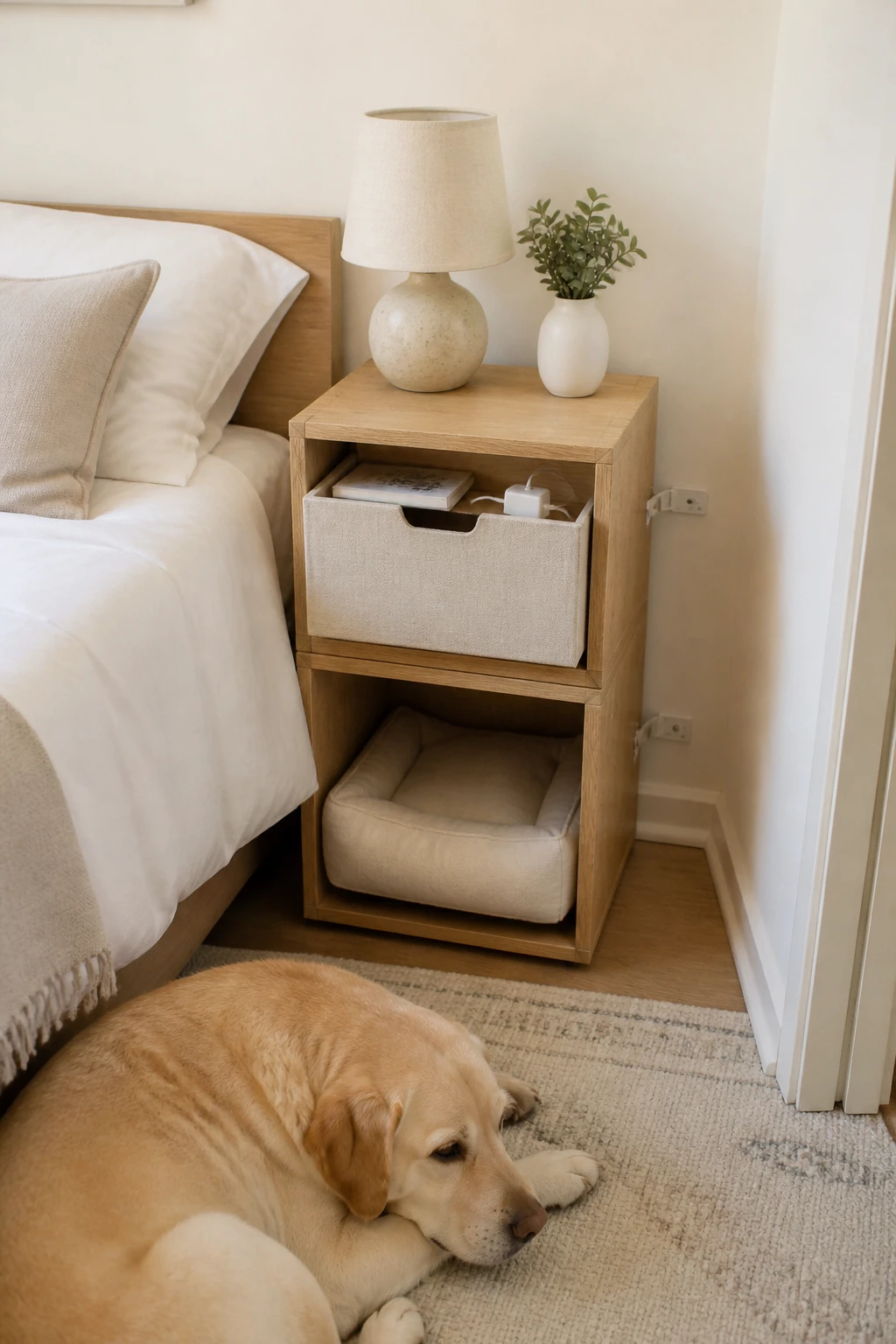
Stack two sturdy cubes, convert the upper one to a drawer or basket zone, and leave the bottom open as a sleep nook. You get storage for chargers and books, plus a dedicated dog alcove that looks built-in.
Materials
- Two wood cubes (12–15 inches wide)
- Metal brackets or knock-down connectors for stacking
- Anti-tip strap to secure to wall
- Fabric bin or shallow drawer insert for the top cube
- Washable cushion for the lower cube
Assembly Notes
- Join cubes with brackets at the back and sides; clamp while drilling.
- Add a simple face frame to the bottom cube to hide raw edges and make it feel like furniture.
- Strap it to a stud. Small dogs still shift furniture when they launch out of bed.
I’d pick this for renters because it disassembles easily. Keep bin handles minimal so nothing dangles into chewing range.
Best for: Extra storage needs and pups who like cozy, boxy spaces.
5. The Rolling Crate-Nightstand With Locking Wheels
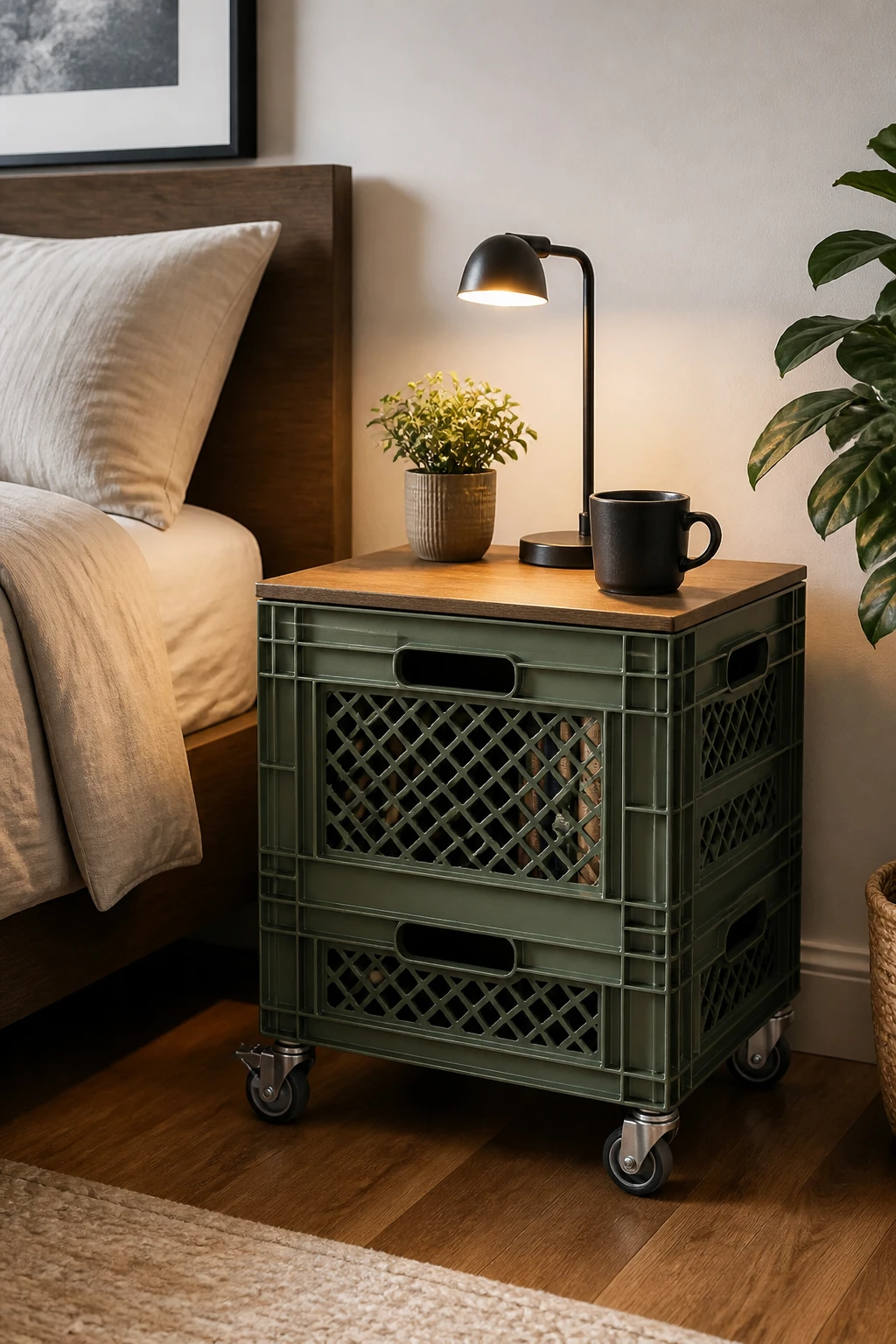
Love the open-bar look? Build a wood-slat crate with a sturdy top as your nightstand. Add locking casters so you can roll it for vacuuming or pull it closer when your dog wants reassurance.
Materials
- 1×2 or 1×3 slats and 3/4-inch plywood top
- Butt hinges and a magnetic or roller catch for a side door (optional)
- Four furniture-grade locking casters
- Non-toxic finish (safe for pets, no harsh fumes)
Safety and Sizing
- Space slats 1–1.25 inches for airflow but no paw trapping.
- Use a side door only if your dog already does well in a crate; never force it.
- Install soft-close lid stays if the top opens for cleaning to prevent finger or nose pinches.
Seriously, lock the wheels. Rolling furniture plus zoomies equals chaos. Worth it if you deep clean often or rearrange a lot.
Best for: Dogs comfortable with crate-like spaces; households that value easy cleaning.
6. The Lift-Top Nightstand With Side Entry
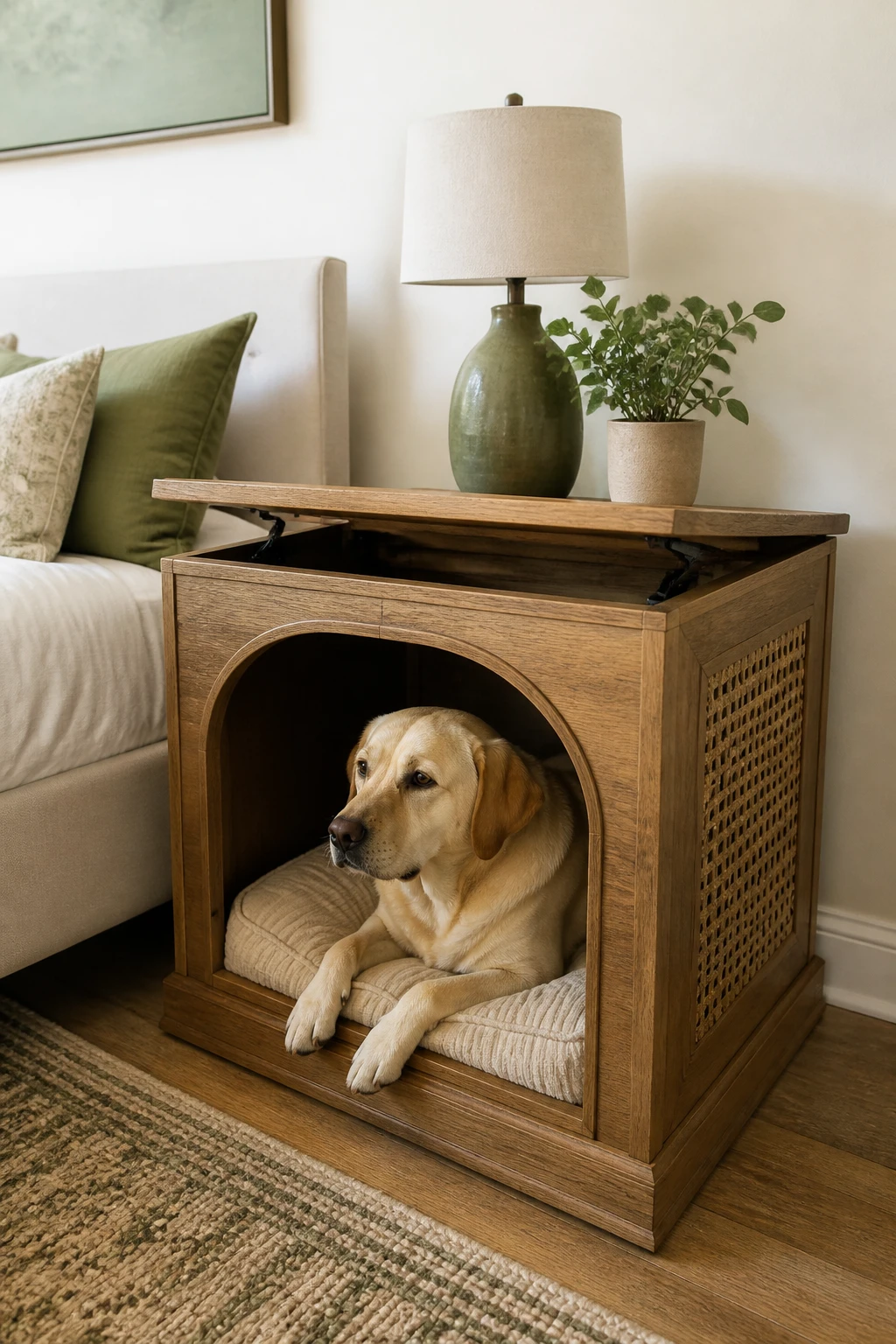
Picture a compact trunk with a side cutout for your pup and a hinged top for storage and cleaning. It looks like a classic cabinet but functions like a washable den with easy access.
Materials
- Solid wood box (or build from 3/4-inch plywood)
- Toy-box safety hinges or soft-close torsion hinges
- Vent inserts: perforated panels or framed cane
- Rubber bumpers and felt feet
Build Tips
- Cut a side opening with a gentle arch; line with thin trim for a smooth edge.
- Add ventilation opposite the entry. Crossflow keeps things fresh.
- Seal with water-based poly; allow full cure per manufacturer before use.
The lift-top makes washing pads painless. I’d skip this for anxious dogs that dislike enclosed spaces; go with an open cubby instead.
Best for: Tidy folks who want hidden storage plus a contained dog nook.
7. The Corner Wedge Nightstand Nook
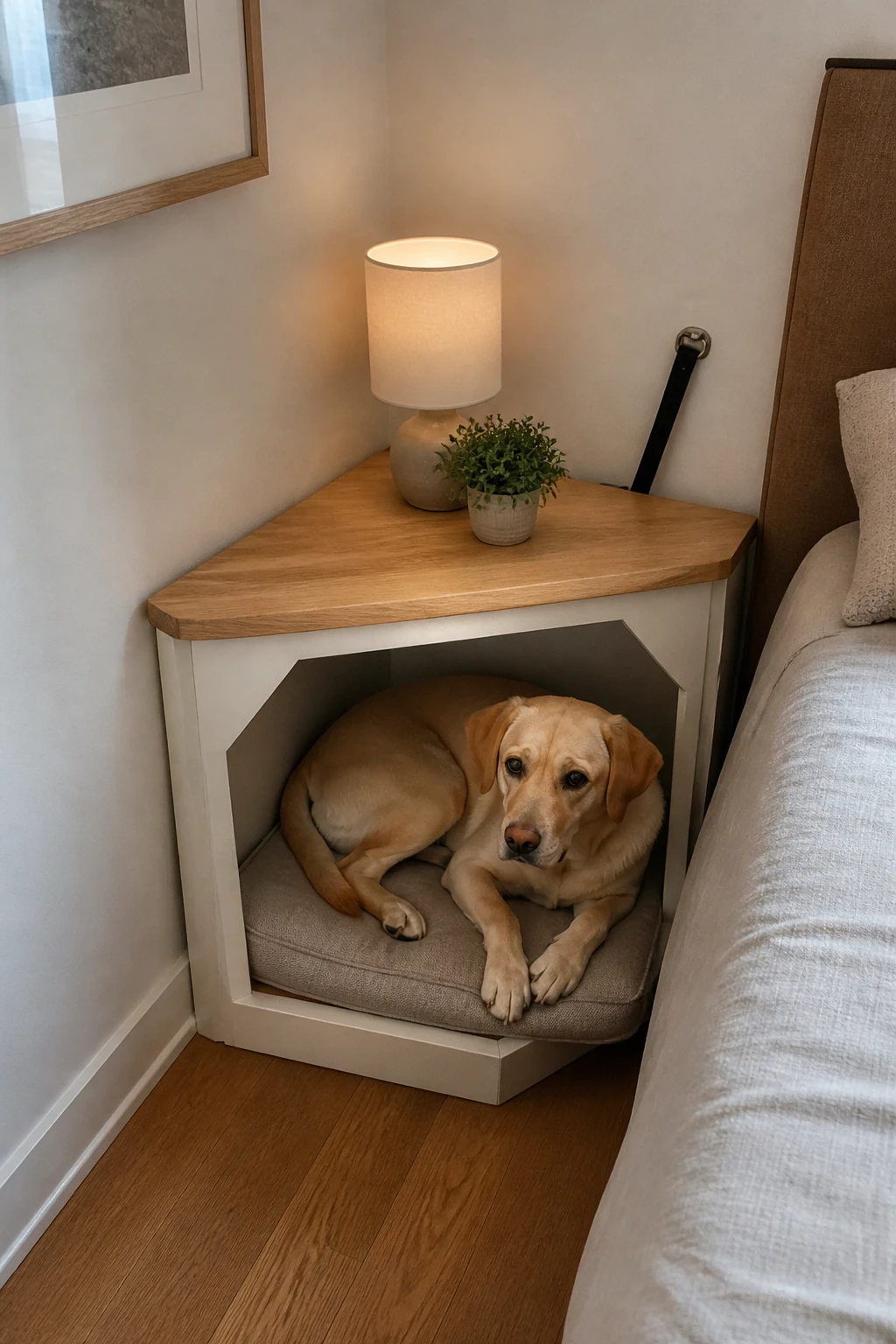
Corners waste space. Capture that triangle with a wedge cabinet: flat across the front, angled sides that hug the wall, and an open lower bay for your dog. The top fits a lamp without crowding your pathway.
Materials
- Triangular top cut from plywood or solid wood
- Side panels set at 45 degrees, front frame opening
- French cleat or anti-tip strap
- Washable, corner-fitting cushion
How to Size It
- Front opening should be at least 14–16 inches wide for toy breeds, wider for stocky pups.
- Keep total depth under 18 inches so you do not shrink walkway space.
- Add a low toe-kick to stop toys from rolling underneath.
Use wood slats or cane on side panels for airflow while keeping the look light. Worth it if your bed sits close to a corner and every inch matters.
Best for: Awkward layouts, studio apartments, and dogs that like tucking into corners.
8. The Tray-Top Ottoman Nightstand With Hidden Pup Pocket
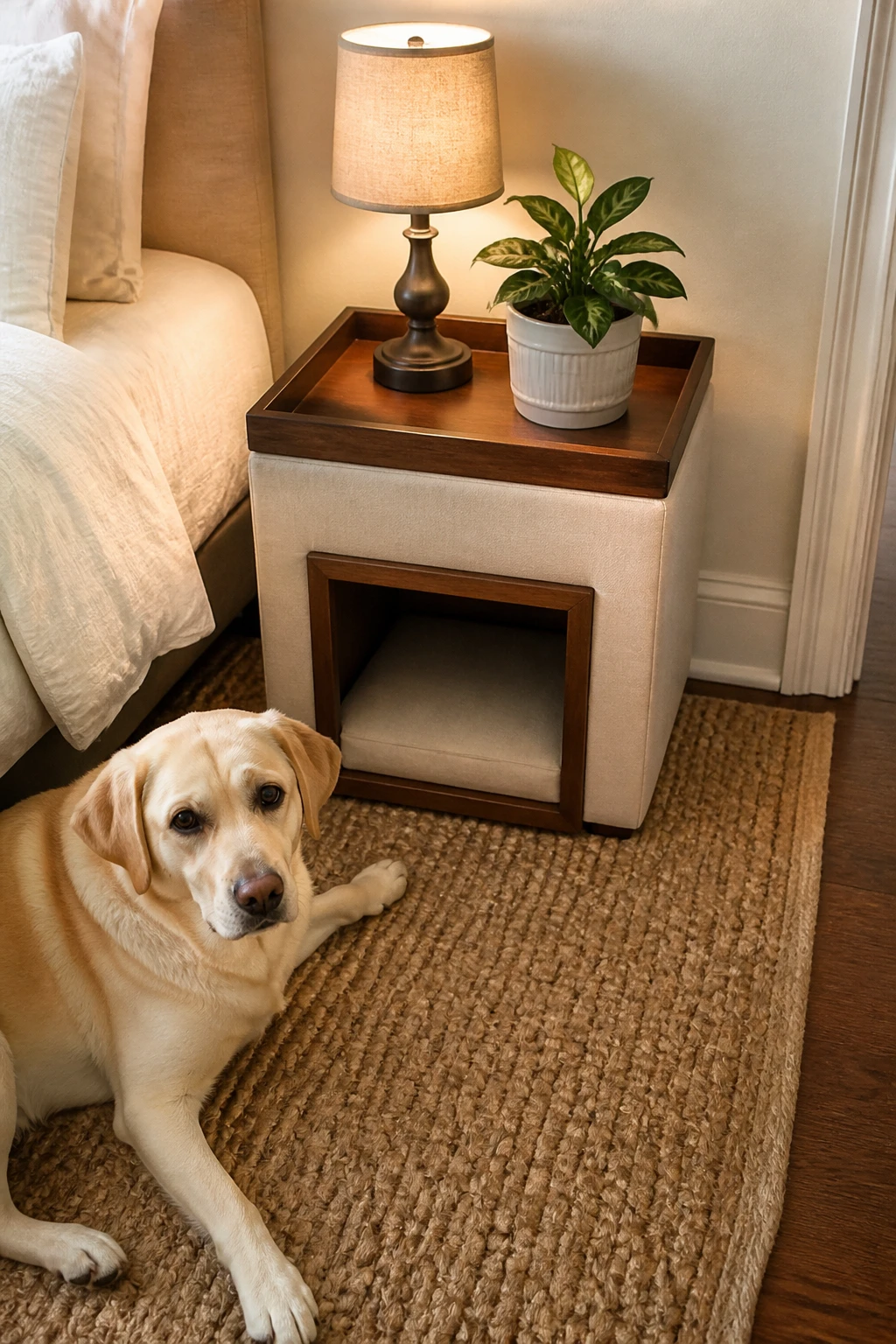
Turn a sturdy storage ottoman into a bedside table by adding a removable tray on top and a framed side opening for your dog. You get soft edges, storage for throws, and a comfy hideout in one cube.
Materials
- Firm, wood-framed storage ottoman (check internal structure first)
- Jigsaw, 1×2 bracing to frame the cutout
- Removable wood tray with raised lip for the tabletop
- L-brackets to reinforce corners if needed
Build Tips
- Open the upholstered side carefully and add internal 1×2 braces so it stays strong.
- Line the opening with a wood trim ring to cover fabric edges—no staples exposed.
- Choose a low, orthopedic pad so your dog has headroom; add non-slip dots under it.
Place the tray top with felt pads so it does not slide when you reach for water at 2 a.m. I’d pick this when you want soft silhouettes and hidden storage in a tiny footprint.
Best for: Minimalist rooms, skittish dogs who like padded surroundings, and renters.
Common Mistake to Avoid
Do not undersize the entry. A too-small opening makes your dog hesitate and can scrape shoulders. Match the bed height to your mattress height so the table reads as intentional, not makeshift. Finally, always use pet-safe finishes and let them cure fully; off-gassing in a tight nook is a hard no.
FAQ
How tall should the nightstand be next to my bed?
Match or sit 1–2 inches below your mattress top. That height looks balanced and keeps your lamp reachable. For builds with a lower dog cubby, ensure at least 16 inches of interior height for small breeds.
What finish is safe for dogs inside an enclosed nook?
Use zero-VOC paint or a water-based polyurethane labeled low odor once cured. Let pieces cure per the can (often 3–7 days) before introducing bedding. Skip oil-based finishes inside nooks where airflow is limited.
Can I use a door to close the dog area at night?
Only if your dog already loves a crate and you introduce it kindly. Install a finger-safe latch, round the door edges, and provide cross-ventilation. If your dog protests, remove the door and keep it open—sleep should feel safe, not forced.
How do I keep my dog from chewing the edges?
Round and sand to 220 grit, then cap edges with hardwood or a trim ring. Offer acceptable chew alternatives during the transition, and keep cords routed high with clips. If chewing persists, choose a design with cane or slat panels that discourage gnawing.
What size opening works for small breeds?
As a quick rule, opening width should be 1.5x shoulder width, and height roughly shoulder height or a touch taller. Always test with cardboard first—cut a mock opening, and see how your dog moves through it before you commit to wood.
How do I keep the setup stable in a small room?
Level the feet with felt pads, strap tall pieces to studs, and lock casters. Keep tabletop decor minimal and place anything delicate high on shelves with Command hooks. Stability matters most when zoomies meet midnight water breaks.
Ready to build something your pup will claim on day one? These 8 space-smart projects blend bedside function with a snug sleep zone, so your room stays calm and your dog gets a den that feels just right. Measure twice, round those edges, and enjoy the extra floor space.
🛠️ Want to build your own? See our printable DIY dog end table plans with step-by-step instructions, cut lists and exact measurements.
Ready to upgrade your space? Tap any of the linked products and images above to see our top picks — hand-picked options that blend seamlessly into any home while keeping your pup cozy and secure.
As an Amazon Associate, I earn from qualifying purchases.