This post contains affiliate links. As an Amazon Associate, I earn from qualifying purchases, at no extra cost to you.
You love both species, but peace at home? That takes a plan. These 7 ideas create separate lanes, shared hangouts, and calm routines—without wrecking your decor. You’ll give your pets choices, manage traffic, and make your place look intentional, not improvised. Ready to stop the door-dashing and bowl-stealing?
⭐ Our Top Pick: See it on Amazon
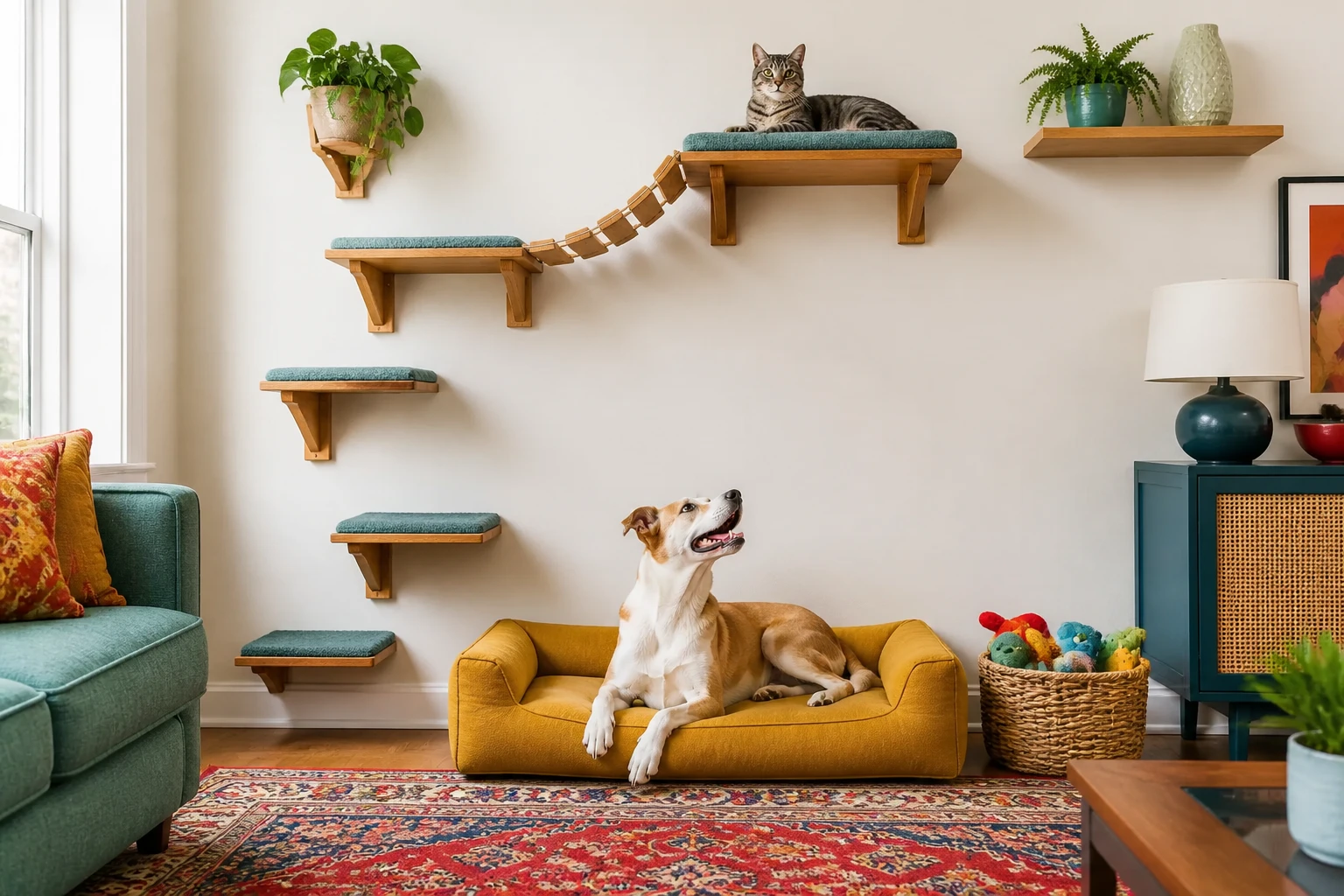
1. Build Up, Chill Down: Vertical Cat Paths with Ground-Level Dog Zones
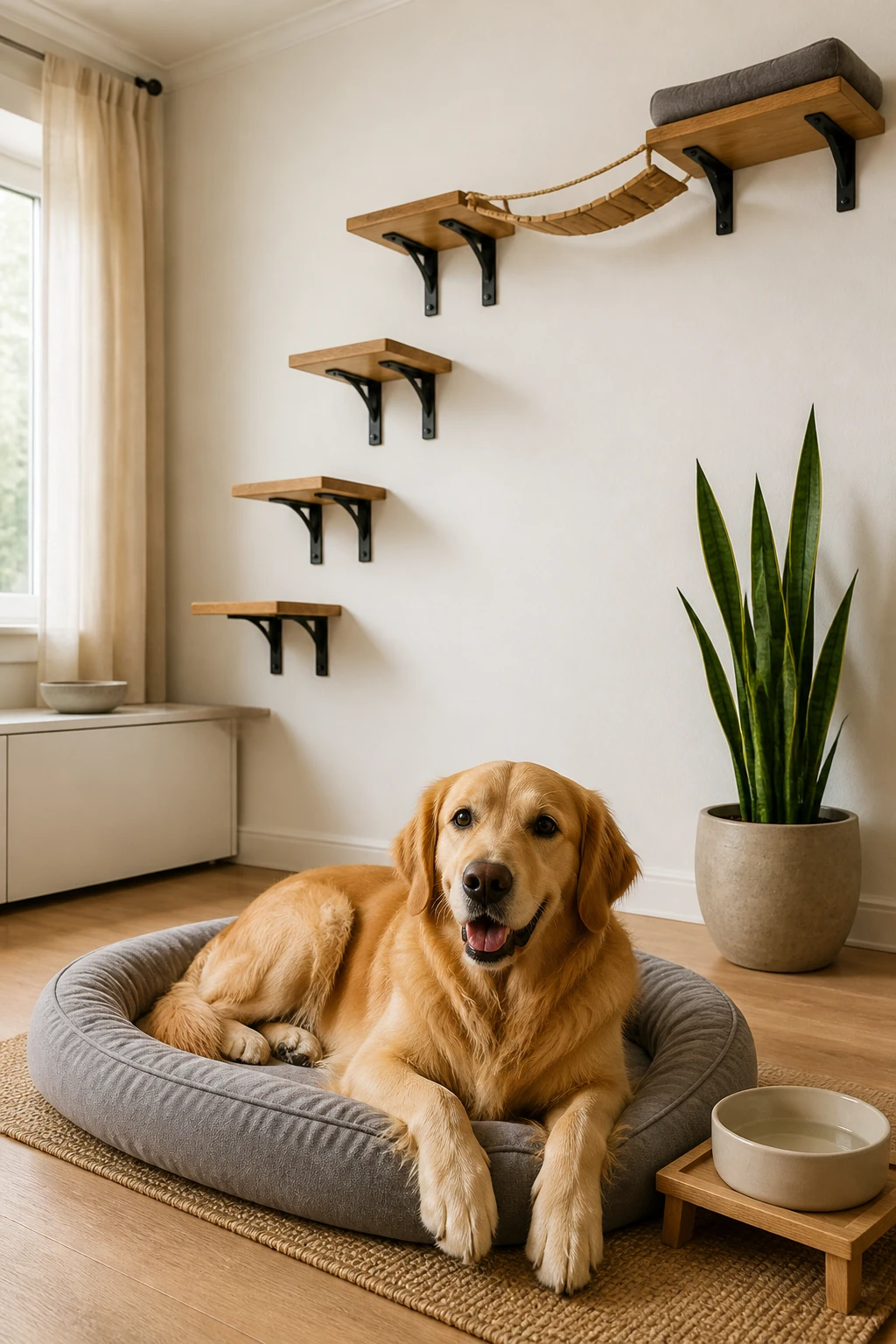
Cats process the room in layers, while dogs live life at floor level. Give your feline a safe route overhead and your pup a defined rest spot down low, and you’ll slash hallway standoffs. Vertical zoning also burns cat energy without turning your sofa into a launchpad.
Tips
- Mount shelves or a cat bridge 12–18 inches apart, starting near a base cabinet and ending at a perch away from the dog’s bed.
- Fasten into studs, use wide brackets, and choose grippy tops (felt, cork, or rubber-backed carpet squares).
- Create a “no-fly zone” above your dog’s crate or bed so your cat can bypass canine traffic.
- Wrap one post in sisal or seagrass so your cat has a legal scratch station near the path.
I’d pick wood shelves with rounded edges and hidden brackets for strength. I’d skip suction-cup window shelves for heavier cats—great idea, sketchy long-term hold.
Safety first: secure any cords away from landing spots and keep shelves clear of fragile or glass decor. Place faux greenery high, and use Command hooks for leashes instead of nails near climbing areas.
Best for: Apartments or small homes where cats need height and dogs need predictable floor space.
2. Feeding Peace: Split Kitchens and Elevated Bowls on Washable Mats
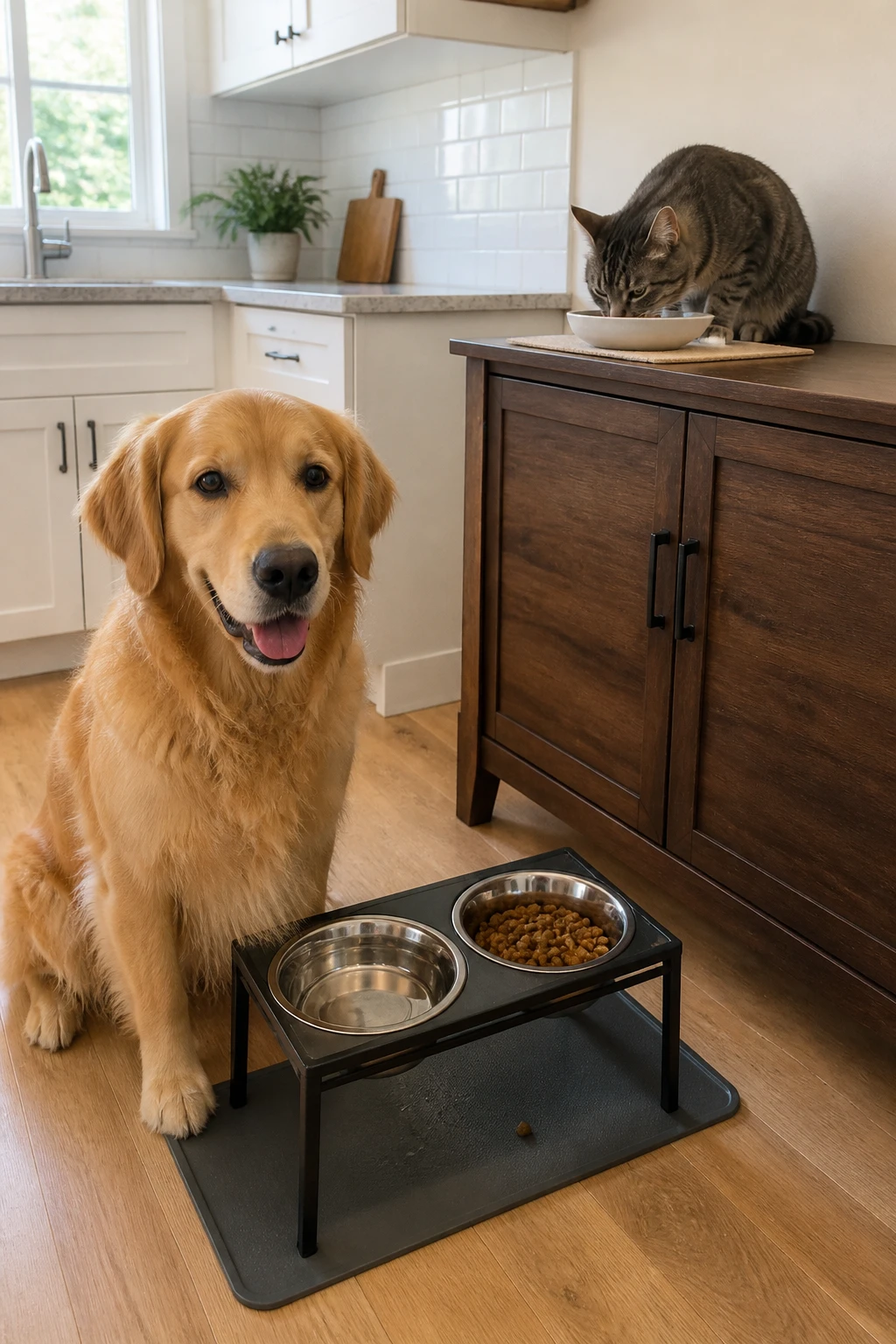
Food drama ends when you separate the buffet. Feed your dog on a stable mat at floor level and your cat on a credenza, shelf, or counter-height hutch. This stops “buffet raids” and gives each pet a stress-free mealtime.
Layout Checklist
- Place the cat’s station 36–42 inches high (or behind a gate) with a shallow bowl to protect whiskers.
- Choose a raised stand for dogs sized so the rim sits around lower-chest height—no higher—to keep swallowing comfortable.
- Use a washable, non-slip mat under each setup; silicone or rubber-backed fabric works great.
- Keep water away from litter, and put bowls several feet from sleeping zones to discourage guarding.
Worth it if you’ve got a food-motivated dog, a cat that nibbles slowly, or both. IMO, a tidy feeding hutch with doors looks better than a pile of bowls in the corner.
Safety note: avoid ceramic stands with sharp edges and keep any small parts (rubber feet, screws) tight so curious chewers don’t snack. No trailing cords near water—ever.
Best for: Multi-pet kitchens and dining nooks where you can split height and location.
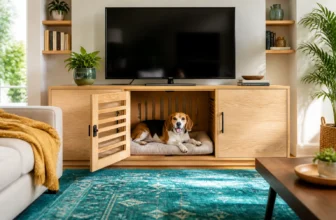
3. Crate-But-Make-It Furniture: Stylish Kennel Consoles and Bench Nooks
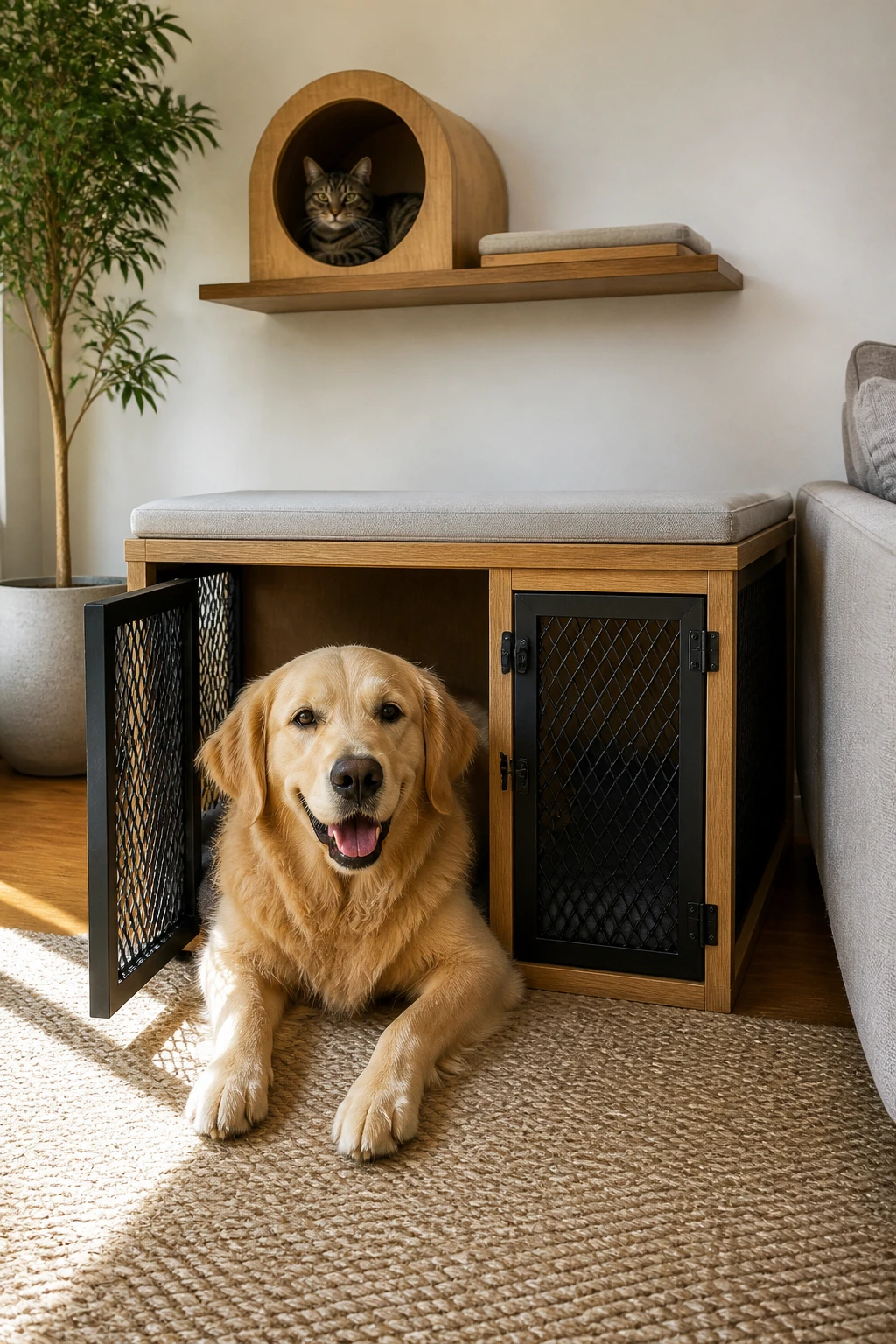
Your dog needs a den; your cat wants a lookout. Combine both with a furniture-style crate that doubles as a console or bench, and add a cat cubby or shelf above. It streamlines the room while giving each pet a personal zone.
Sizing
- Measure your dog from nose to base of tail while standing; add 2–4 inches to length and height for interior size.
- Opt for wide slats or mesh sides for airflow—especially if you tuck the unit between other furniture.
Materials
- Solid wood or powder-coated steel for durability.
- Chew-resistant bars, smooth edges, and a latching door—no flimsy hardware.
- Breathable crate cover (canvas or linen) for light control, leaving two sides open for ventilation.
I’d pick a credenza-style unit in a finish that matches your trim. I’d skip string lights inside or on the crate (heat and chew hazards). Add felt bumpers under the unit to protect floors and a shatterproof tray inside for easy cleanup.
Bonus: top it with a lamp using a cool-to-touch LED bulb and a cord cover to prevent nibbling. Seriously, you’ll wonder why you didn’t do this earlier.
Best for: Living rooms and entryways where you need seating or storage plus a dog den.
4. Smart Barriers: Gates with Cat Ports and Sleek Room Dividers
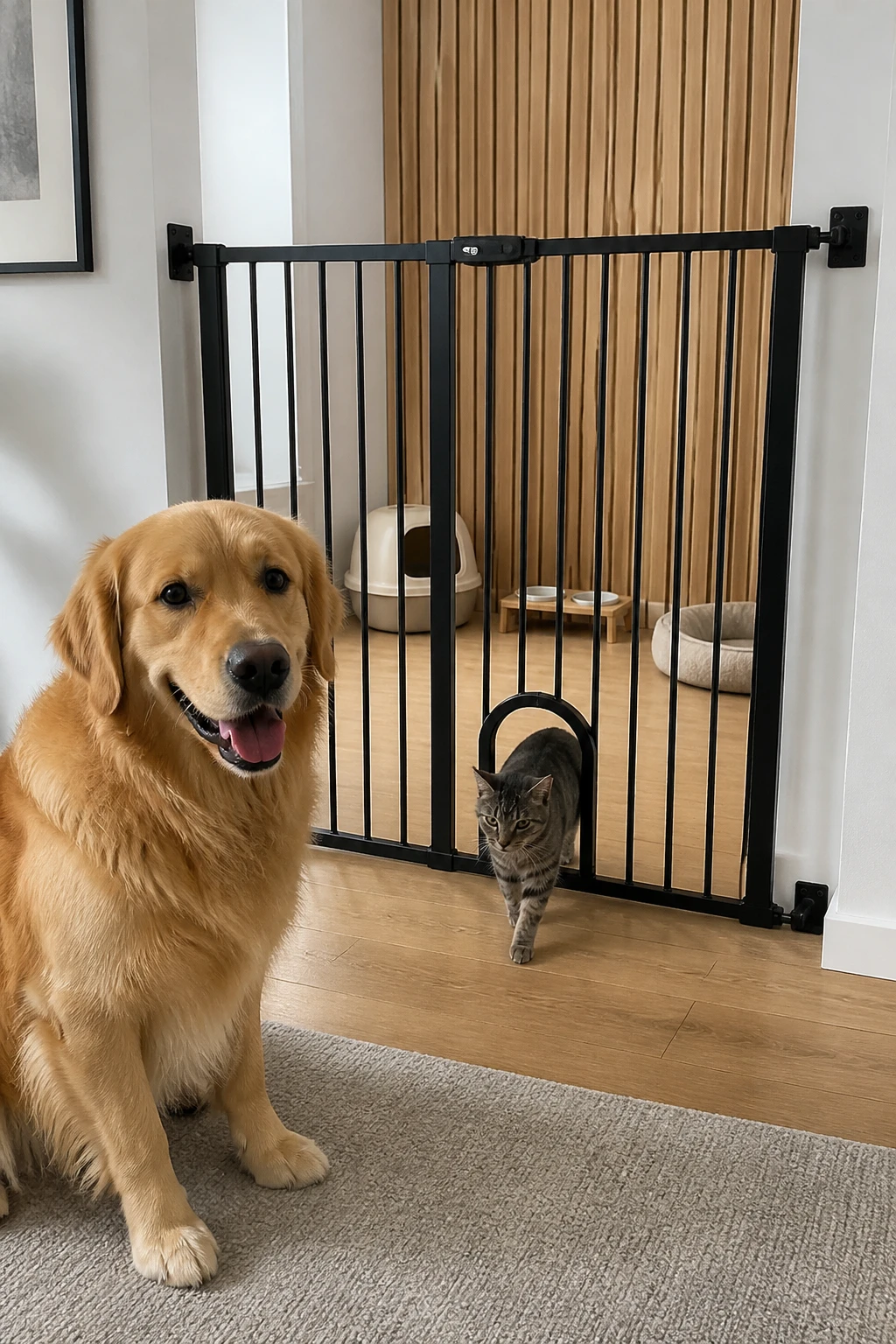
Open floor plans look great but can stress pets. A hardware-mounted gate with a cat pass-through or a narrow slat divider creates “quiet wings” for litter, beds, and feeding areas. Your dog sees less temptation, and your cat moves freely.
Pick the Right Gate
- For big dogs or jumpers, choose at least 36 inches high with a secure latch.
- Look for vertical bars with 2–2.5 inch spacing to avoid heads slipping through.
- If you rent, tension-mount gates work, but check they don’t bow—shim for a tight fit.
Place the cat door at one side so your feline can skirt past the dog rather than running through the center. If you use a folding screen, add felt feet and angle it 15–30 degrees for stability, millwork-style.
Worth it if your cat needs safe passage to litter or food. Add a small wall shelf near the gate as a “pause” spot for cats who prefer to scout before committing.
Best for: Hallways, laundry rooms, and kitchen entries where traffic control matters.
5. Litter Lounge, Dog-Proofed: Ventilated Cabinets and Safe Placement
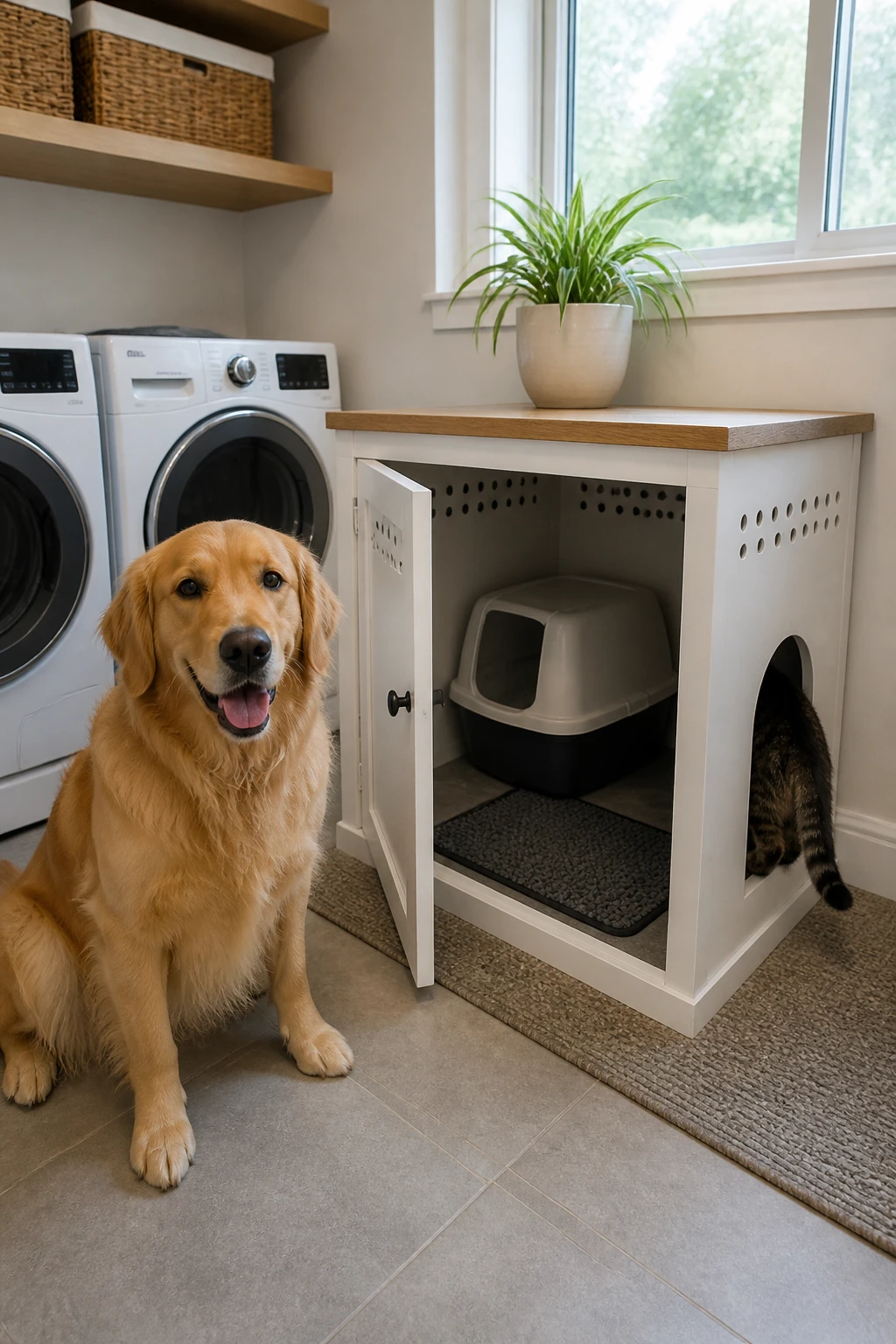
No one wants a litter box in full view—or where the dog “helps.” A litter cabinet with a side entrance and interior baffle hides the mess, blocks the dog, and traps scatter. Add airflow and you’ll control odors without weird sprays.
Build or Buy
- Choose a cabinet at least 1.5x the footprint of the box to allow turning space and a mat.
- Drill 1–2 inch ventilation holes high on the side walls and back; cover with mesh so dogs can’t dig.
- Use peel-and-stick vinyl or linoleum inside for wipeable surfaces; seal raw wood edges.
I’d pick a front panel with a high entry cutout so litter stays in. I’d skip magnetic doors that swing wide without a stop—install soft-close hinges or a chain limiter.
Placement matters: keep 6–8 feet from food and water, and at least a short hop from your cat’s vertical path. For timid cats, orient the entrance so they can see the room before stepping out.
Best for: Bathrooms, laundry rooms, and offices where you can spare a 30–40 inch cabinet.
6. Rug Routes and Scratch-Friendly Surfaces: Traction Without Claws on the Sofa
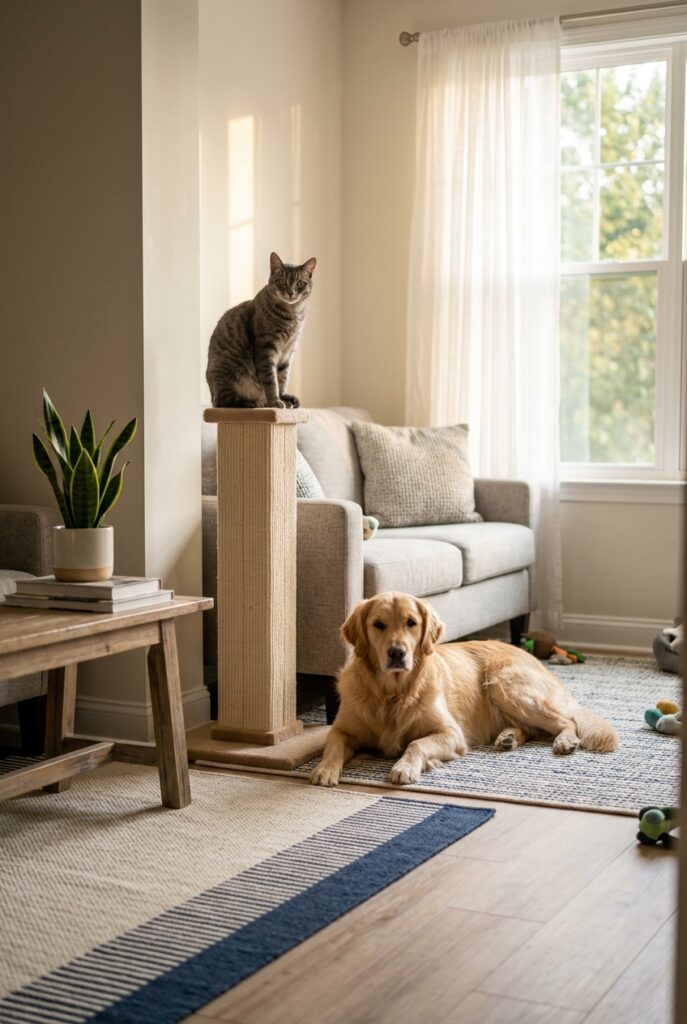
Rugs do more than look nice—they create lanes and help senior dogs keep footing. Choose low-pile, washable runners for hallways and a flatweave in living spaces to cut fur cling and snagging. Add scratch zones right where cats feel the urge.
What to Choose
- Indoor/outdoor or cotton-blend flatweaves with busy patterns hide paw prints.
- Rug pads trimmed 1 inch smaller than the rug edges keep corners from flipping.
- No fringe, tassels, or pompoms—chew magnets (and a vet bill waiting to happen).
- Sisal-wrapped panels or a vertical scratch post next to the sofa corner redirect clawing.
FYI: dark chocolate or heathered grays disguise fur from both black and pale-coated pets. I’d pick runners to bridge slippery areas between bed, couch, and door. I’d skip plush shags that trap litter and track dander.
Safety: tape down edges with carpet-friendly, residue-free strips and keep rug boundaries away from space heaters. If you use floor transition strips, choose flexible rubber, not metal with sharp edges.
Best for: Long hallways, high-traffic living rooms, and homes with seniors or zoomy puppies.
7. Window Seats and Retreats: Perches, Beds, and Calming Corners
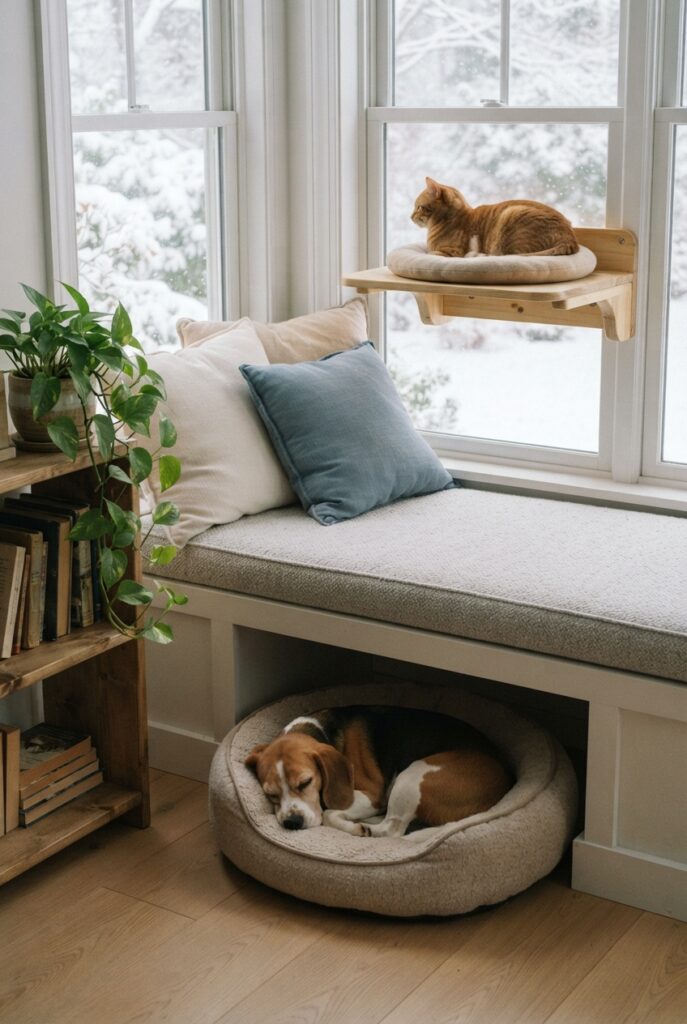
Give every pet a “this is mine” spot. A cat perch near a window satisfies bird-watching dreams, while a supportive dog bed or covered crate creates a predictable retreat. When both species have options, they pester each other less.
Calming Setup
- Use a bracketed shelf or radiator-safe perch (no real heat sources under soft bedding).
- Pick an orthopedic dog bed sized so your pup can stretch—measure from nose to rump.
- Place the dog zone out of the main traffic line, ideally with a wall at the back for security.
- Layer a breathable cover over the crate front to dim the view during naps, leaving sides open.
I’d pick neutral covers that match your sofa so the space blends in. I’d skip hanging drapes with dangling cords near perches—swap to cordless shades or tie cords high using a wall cleat.
Pro move: add a small, shatterproof side table next to the dog bed for leashes and wipes. It looks intentional and keeps clutter off the floor.
Best for: Bedrooms and living rooms where pets share the view but keep their distance.
Common Mistake to Avoid
Don’t design only for one species. When people add a great dog crate but forget a cat route, tension spikes—and vice versa. Always give two ways through the space: a floor path for the dog and a raised bypass for the cat. That single choice reduces chase scenes more than any other change.
FAQs
How do I stop my dog from entering the cat’s litter area without shutting doors?
Use a cabinet or closet with a side entrance the dog can’t fit through, or install a gate with a cat port. Place a small shelf “landing” just before and after the entrance so the cat can move confidently. Keep food and beds far from that zone to reduce curiosity.
What crate size and style blends with furniture but stays safe?
Size to your dog’s standing length and height plus a couple of inches. Choose wood or powder-coated steel with wide ventilation and a secure latch. Skip decorative cutouts that reduce airflow and avoid glass decor on top—go with durable trays and a cool-running lamp instead.
Where should I put bowls so my cat stops stealing the dog’s food?
Feed the dog on a floor mat in a corner with a clear approach path. Put the cat’s bowls on a stable, elevated surface like a credenza or wall shelf, several feet away and out of the dog’s sightline. Clean mats often; odor trails invite raids.
Can I keep a nice rug with pets?
Yes—choose low-pile, machine-washable flatweaves or indoor/outdoor materials. Anchor with a trimmed rug pad and avoid fringed edges. Pattern hides fur and accidents, and a couple of runners build safe “lanes” for older dogs.
Do cats and dogs actually relax together with these changes?
They don’t have to cuddle to coexist. When you create distinct vertical and horizontal territories, add a dog retreat, and block high-conflict zones like feeding and litter, both animals settle faster. You’ll notice fewer standoffs and more parallel chilling.
You don’t need a remodel to make peace—just smart zones and a few well-placed pieces. Start with the biggest friction point in your home, fix that, then layer the rest. Trust me, once the traffic flows, your pets (and your nerves) will thank you.
As an Amazon Associate, I earn from qualifying purchases.