This post contains affiliate links. As an Amazon Associate, I earn from qualifying purchases, at no extra cost to you.
Muddy paws happen. The fix? Create a spot outside that handles grime, splashes, and wet shake-offs without wrecking your floors. These 7 builds range from quick weekend projects to sturdier setups you’ll use for years. Pick the one that fits your space and your dog’s mood, and watch cleanup get faster and less chaotic.
⭐ Our Top Pick: See it on Amazon
1. Wall-Mounted “Wash Wall” With Smart Hose Reel
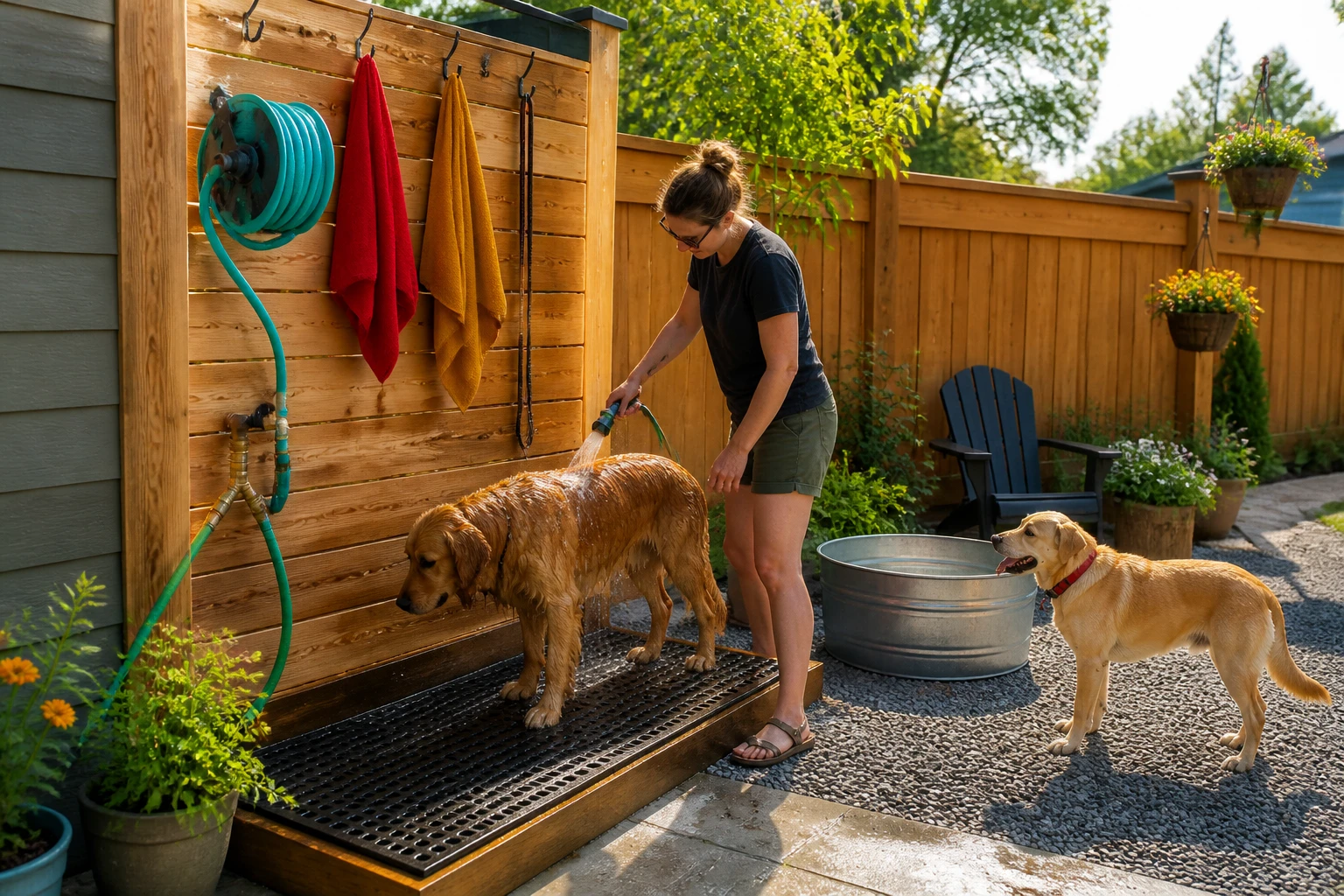
Start simple and effective: a sturdy wall panel with everything in one place. Mount a quality hose reel, a quick-connect sprayer, and a couple of hooks for towels and leashes so you never scramble mid-rinse.
Materials
- Composite or sealed cedar panel (2×4 feet works for most patios)
- Wall-mounted hose reel and 5–10 pattern sprayer
- Two heavy-duty hooks for towels and a tether ring
- Rubber mat or perforated deck tile underpaw
- Exterior screws and masonry anchors if needed
Tips
- Center the sprayer cradle at chest height for easy grab-and-go.
- Add a Y-splitter at the spigot so you can fill a bucket while spraying.
- Place the mat on a slight slope so water flows away from your door.
Why it rocks: everything stores vertically, splashes stay contained by the mat, and setup takes an afternoon. I’d pick this if you want order without heavy construction.
Best for: Small patios or side yards where you need compact, organized gear.
2. Pallet Deck With Drain-Friendly Slats
Want a raised platform that keeps paws out of puddles? A reclaimed pallet deck topped with rubber matting creates a stable stage for rinsing without standing water.
How-To
- Choose heat-treated (HT) pallets, not chemically treated. Sand any rough edges.
- Seal with pet-safe exterior finish; add non-slip rubber on top.
- Level an area with paver base and set the deck down so water drains through.
Key Points
- Clip a short tether to a ground anchor beside the deck, not to the pallet slats.
- Edge the platform with a 1-inch lip so paws don’t slide off during wiggles.
- Place a shallow gravel bed beneath to prevent mud from forming under the platform.
IMO, this is the fastest way to ditch a swampy rinse zone. Worth it if you need removable, budget-friendly flooring.
Best for: Renters or anyone who needs a portable, mud-proof staging area.
3. PVC Grooming Stall That Folds Away
Think pop-up shower, but outdoors. A PVC frame with panels keeps splash contained and gives you a place to clip a leash, which means fewer Houdini moves mid-bath.
Materials
- 1-inch PVC pipe, elbows, and T-fittings
- HDPE or corrugated plastic panels (or outdoor-safe curtain)
- Carabiner and short tether point
- Weighted base or sandbags for wind resistance
Build Notes
- Assemble a U-shape frame with a front opening; attach panels with zip ties.
- Leave a 2–3 inch gap at the bottom for drainage and airflow.
- Snap connectors let you disassemble and store flat when not in use.
I’d skip fabric curtains if your pup chews—opt for rigid panels instead. This stall shines when you need containment without a permanent build, seriously.
Best for: Wiggly dogs and shared yards where you need splatter control.
4. Raised Bench With Ramp for Achy Joints
If you’ve got a senior dog or a big breed, bring the wash height to your back instead of crouching. A raised bench with side walls and a gentle ramp saves knees and keeps the dog secure.
Design Details
- Build a masonry or pressure-treated base at 24–30 inches high.
- Top with non-porous tile or sealed composite decking and add 3-inch side walls.
- Install a thermostatic mixing valve so warm water never scalds—safety first.
- Use a wide, low-angle ramp with grit tape for traction.
Extras
- Mount a grooming arm or D-ring to the side wall for a short, secure tether.
- Add a small shelf under the bench for shampoo and microfiber towels.
Worth it if you bathe often and want comfort plus control. The stable height turns a dreaded task into a quick routine.
Best for: Large or arthritic dogs and homeowners who want a long-lasting fixture.
5. Gravel Drainage Pad That Keeps Mud at Bay
You don’t need a full structure—just stop the mud. A gravel pad topped with a rubber splash surface moves water away fast and keeps paws clean as they step off.
Step-by-Step
- Excavate 3–4 inches. Lay landscape fabric, then fill with 2 inches of compacted crushed stone.
- Top with 1–2 inches of rounded river rock for comfort underpaw.
- Set interlocking rubber tiles or perforated deck tiles on top for grip.
- Grade the pad to slope 1–2% away from the house, FYI.
Why It Works
- Fast drainage = less paw dunking in dirty water.
- Easy to rinse post-bath; hair doesn’t clog anything.
- Pairs well with a simple hose-and-reel setup.
I’d pick this if your soil turns to soup after rain. Low effort, high payoff.
Best for: Mess-prone yards and anyone who wants an easy-clean rinse zone without carpentry.
6. Outdoor Utility Sink Turned Pup Spa
Take a deep utility sink, park it outside, and give your pup a real “spa” vibe. The basin contains splashes, and integrated drains make cleanup fast.
Setup
- Use a freestanding, UV-resistant sink (stainless or thick polypropylene).
- Connect a hose to a mixing valve or an outdoor hot/cold faucet for tempered water.
- Route the drain to a gravel dry well or to an approved greywater area—follow local codes.
- Add a grate or rubber mat inside the sink for traction and joint support.
Pro Tips
- Mount a small shelf or caddy above the sink for shampoos and lint-free towels.
- Install a sprayer with a gentle setting; strong jets can startle reactive dogs.
- Secure a short tether to a side bracket, not to the faucet or sprayer hose.
Worth it if you want tidy plumbing and a contained bath zone. Skip this if you can’t drain legally in your area—check first.
Best for: Medium to small dogs, patios with nearby water access, and neat freaks (same).
7. Rolling Wash Cart for Renters and Tiny Patios
No room for a fixed station? A mobile cart corrals everything—sprayer, towels, shampoo, and a folding platform—so you can roll out, rinse, and stash fast.
What to Include
- Weatherproof rolling cart with locking wheels
- Collapsible deck tiles or a fold-out rubber mat
- Pump sprayer (great water control) or quick-connect hose sprayer
- Hooks for leashes and microfiber towels, plus a covered bin for supplies
Usage Notes
- Store the cart under cover and hang the sprayer to dry—mildew is not cute.
- Add a small caddy of treats for positive reinforcement—keep it sealed and high.
- Park the cart on the leeward side of the house to reduce splash blowback.
I’d pick this for apartment patios where permanence isn’t possible. It’s flexible, stealthy, and organized.
Best for: Renters, condo balconies, and anyone who multitasks the same space.
Common Mistake to Avoid
Don’t ignore drainage and water temperature. A flat, puddly surface turns into a mud factory, and untempered hot water risks burns. Plan a slight slope, use non-slip surfaces, install an anti-scald mixing valve if you add hot water, and place any tether on a dedicated anchor (never on the faucet, sprayer, or a flimsy fence).
FAQ
How do I get warm water outside without risking burns?
Install a thermostatic mixing valve between your hot and cold supplies near the spigot or at the wash station. Set it to a safe range (around 100–102°F) and test before each bath. Avoid carrying pots of hot water—one stumble can go very badly.
What’s the best non-slip surface for wet paws?
Perforated rubber tiles or textured composite decking work great. Add grit tape on ramps and any incline. Steer clear of glossy tile or smooth stone—those get slick fast.
Where should the water drain?
Direct runoff to a gravel dry well, a planted area that can absorb greywater, or an existing yard drain according to local rules. Use pet-safe shampoos, and never dump into storm drains unless your municipality allows it.
How big should my washing area be?
For small dogs, a 2×3 foot platform feels roomy. Medium to large pups do best with at least 3×4 feet, and add a ramp if you go elevated. Always allow standing space for you to move around comfortably.
How do I keep my dog calm during outdoor baths?
Use lukewarm water, low-pressure spray, and a short, secure tether. Keep towels warm in the sun, and introduce the area with quick rinses before full baths. Reward calmly, and keep sessions short—success beats perfection.
What materials are safest for chewers?
Go with composite decking, sealed hardwoods, PVC, HDPE panels, and metal hardware. Avoid exposed fabric edges, brittle plastics, and splintery wood. Keep all cleaners and small parts stored high or in latched bins.
Pick one build, gather your materials, and give your backyard a functional upgrade. You’ll cut bath time in half, protect your floors, and—bonus—your dog might actually enjoy the routine. Clean paws, happy home.
As an Amazon Associate, I earn from qualifying purchases.