This post contains affiliate links. As an Amazon Associate, I earn from qualifying purchases, at no extra cost to you.
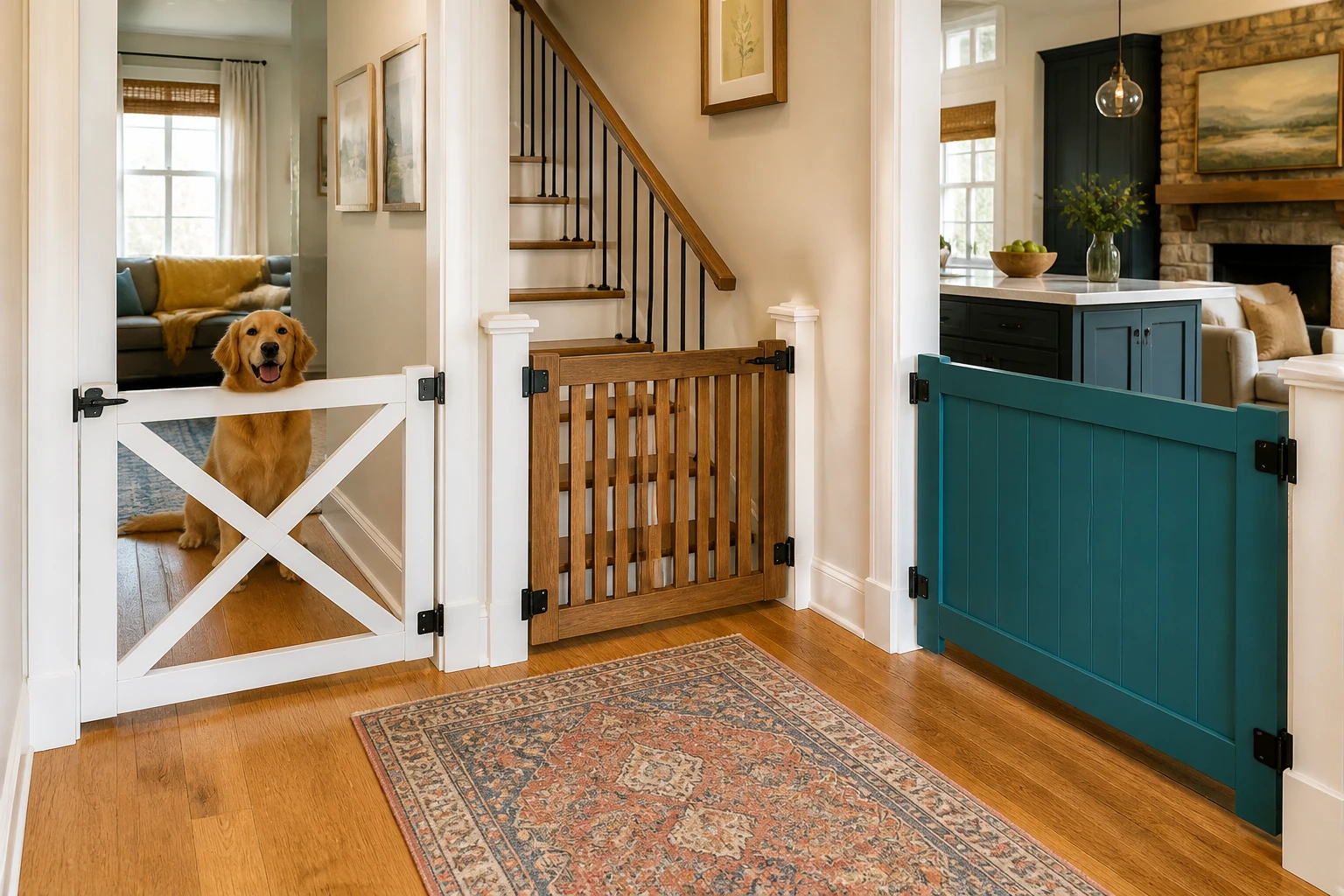
Want a dog gate that doesn’t scream “baby jail”? You can build one that actually complements your home. These 7 ideas keep your pup safe, look intentional, and cost way less than custom millwork. Pick your favorite style, grab a weekend, and you’ll have a barrier that blends right in—without wrecking your room’s vibe.
⭐ Our Top Pick: See it on Amazon
1. Farmhouse X-Frame Swing Gate
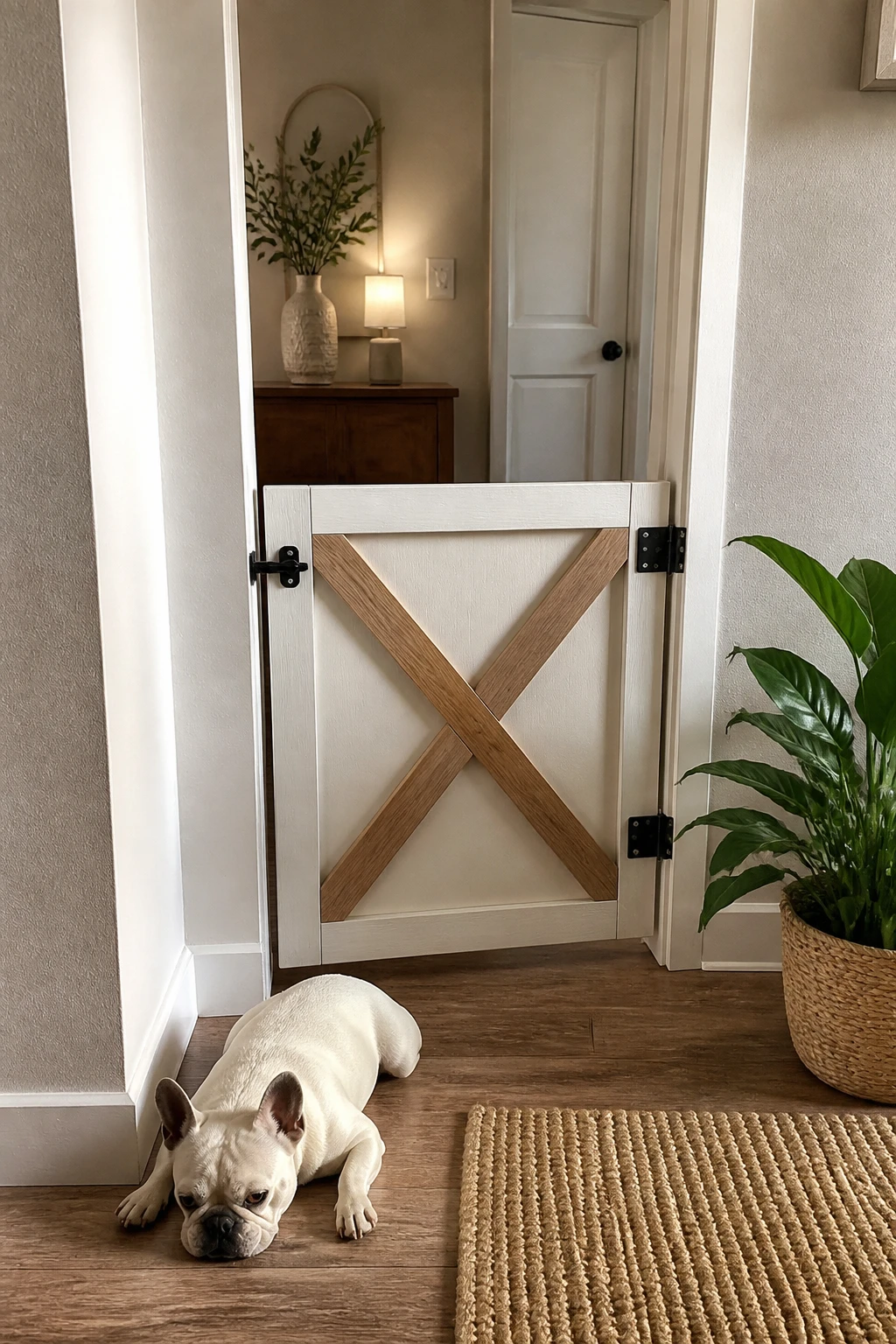
This one nails that modern-country look while staying sturdy. The classic “X” detail feels architectural, and it disguises scuffs from dog noses like a champ.
Materials
- 1×3 or 1×4 pine boards
- Plywood panel for the center (optional)
- Hinges, latch, and long screws for studs
- Wood filler, primer, paint or stain, clear matte topcoat
Build a simple rectangular frame, then add the diagonal braces to form the X. Mount hinges into wall studs, not just drywall—safety first. Sand edges smooth so there are no splinters near curious snouts. If you paint, a satin finish cleans easier; for stain, seal it to resist drool and paw prints.
Tips
- Gap safety: keep slats or openings under 2.5 inches to prevent head or paw traps.
- Use a gravity latch high enough that paws can’t flip it open.
- Match your trim color so it looks built-in.
Best for: Medium to large doorways; pups who respect a solid barrier. I’d pick this if your home leans warm and textural.
2. Minimal Slat Gate With Clean Lines
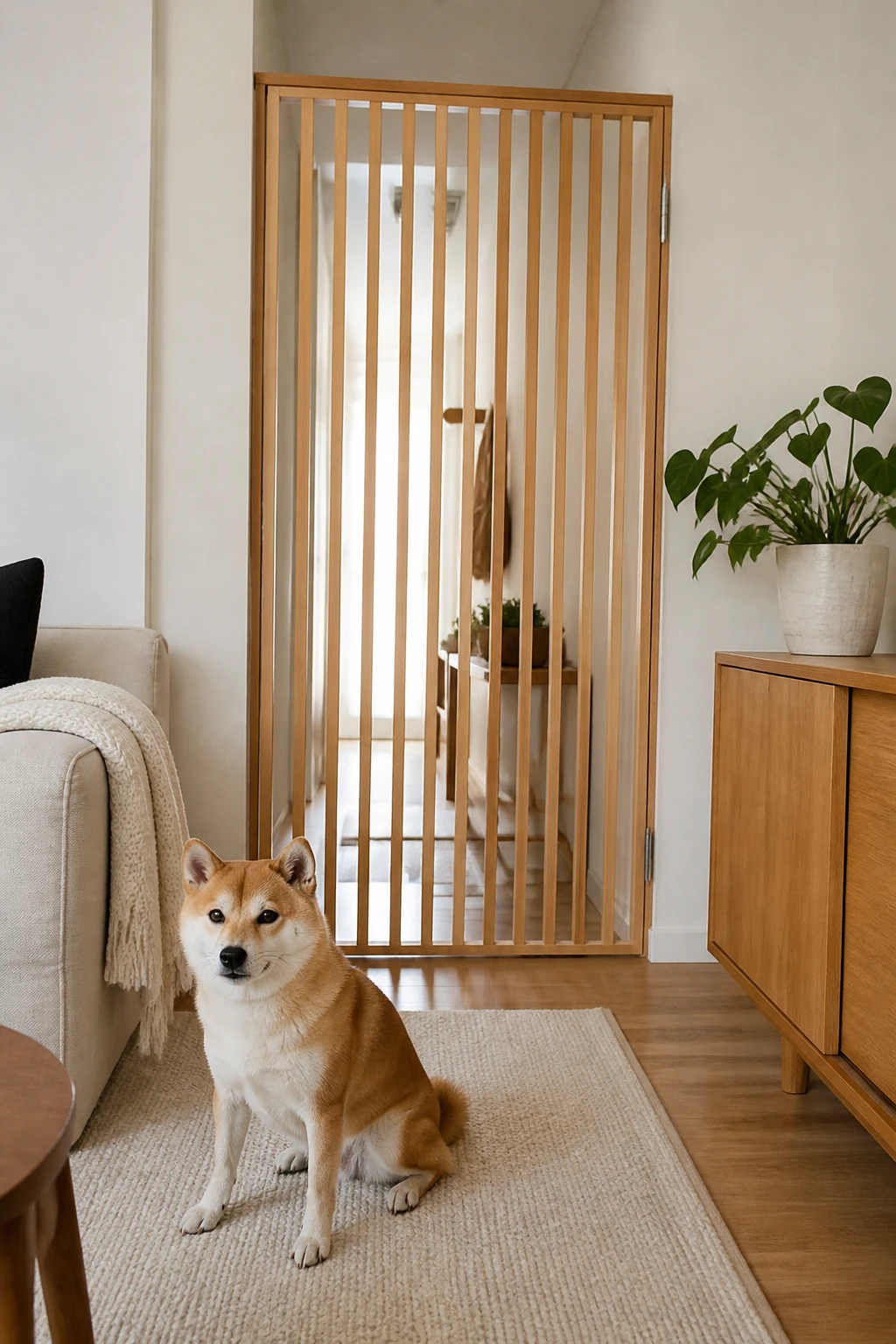
Love Scandinavian simplicity? Go with vertical slats and a super-slim frame. It’s airy, modern, and keeps sightlines open so your dog sees you without darting through.
How-To
- Rip 1×2 poplar into uniform slats and a top/bottom rail.
- Attach slats with pocket holes or brad nails and wood glue, spacing consistently with 1.75–2 inch gaps.
- Finish with water-based polyurethane for a natural tone or color-match your walls for a sleek look.
Anchor the gate with ball-bearing hinges for a smooth swing and add a magnetic catch. If you’re renting, consider a pressure-mounted frame with rubber pads, but still test daily for wiggle. Sand every edge—no sharp corners near paws.
Why It Works
- It echoes stair railings and window muntins for a unified look.
- Easy to wipe down and doesn’t feel bulky.
Best for: Open-concept spaces and design-forward homes. Worth it if you like subtle, modern details.
3. Bi-Fold Panel Screen That Tucks Away
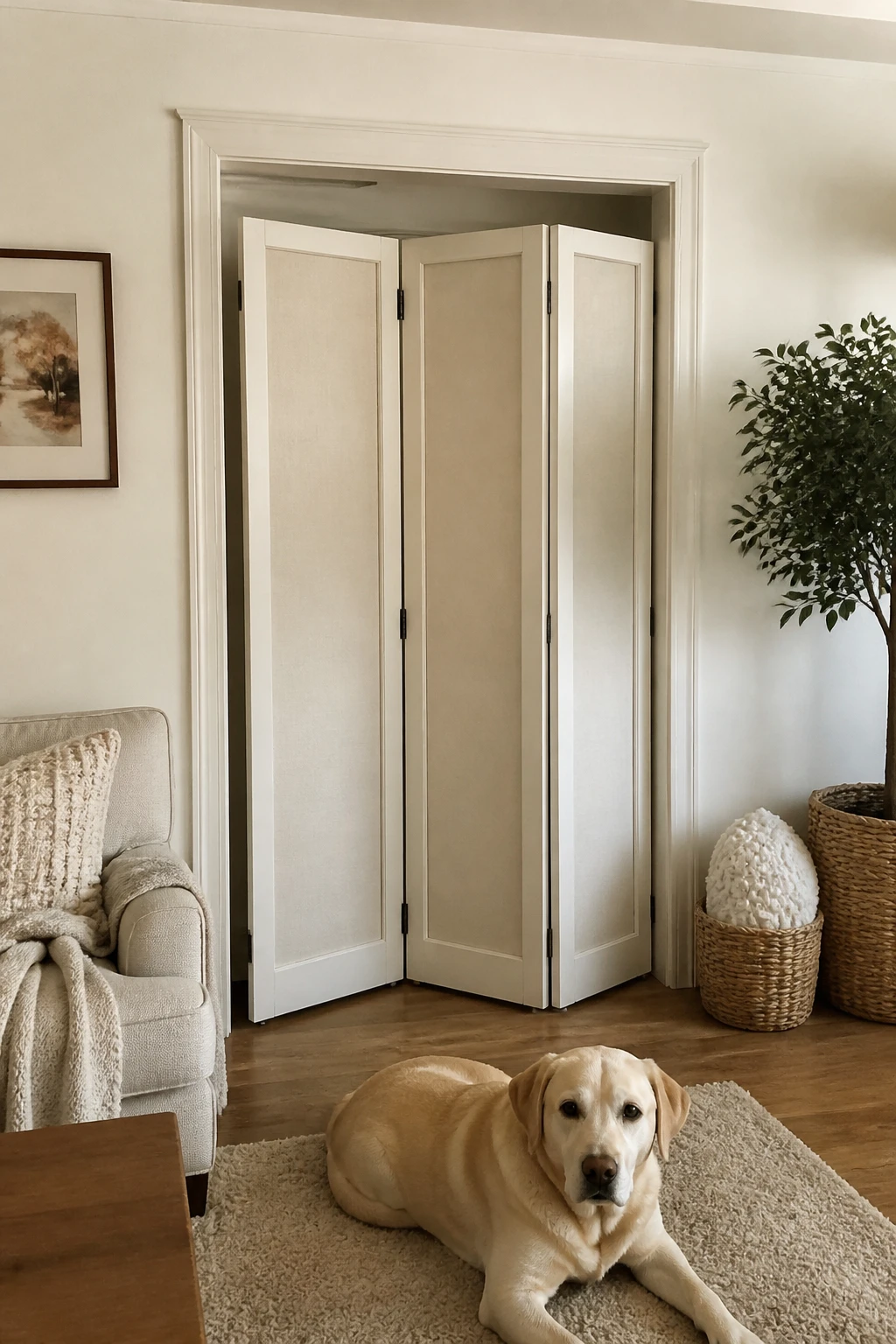
Want flexibility? A folding panel screen gives you a barrier that stacks neatly when guests arrive. You can match it to furniture finishes or wall color for a cohesive setup.
Materials
- Three or four narrow panels (plywood or MDF frames)
- Piano hinges or pairs of standard hinges per joint
- Feet or low-profile felt pads for floors
- Paint, stain, or fabric inserts behind lattice for style
Build equal-sized panels, connect with alternating hinges so it zigzags, and add low feet for stability. Keep panels tall enough—usually 30–36 inches—based on your dog’s athleticism. For safety, avoid metal mesh that can snag collars; use wood lattice or solid insets instead.
Pro Tip
- Attach discreet wall hooks and a small strap to secure the screen when not in use.
- Use child-safe barrel bolts between panels so clever paws don’t fold them.
Best for: Hallways and wide archways. I’d skip this for heavy pushers; choose a fixed mount instead.
4. Dutch-Style Half Door Conversion
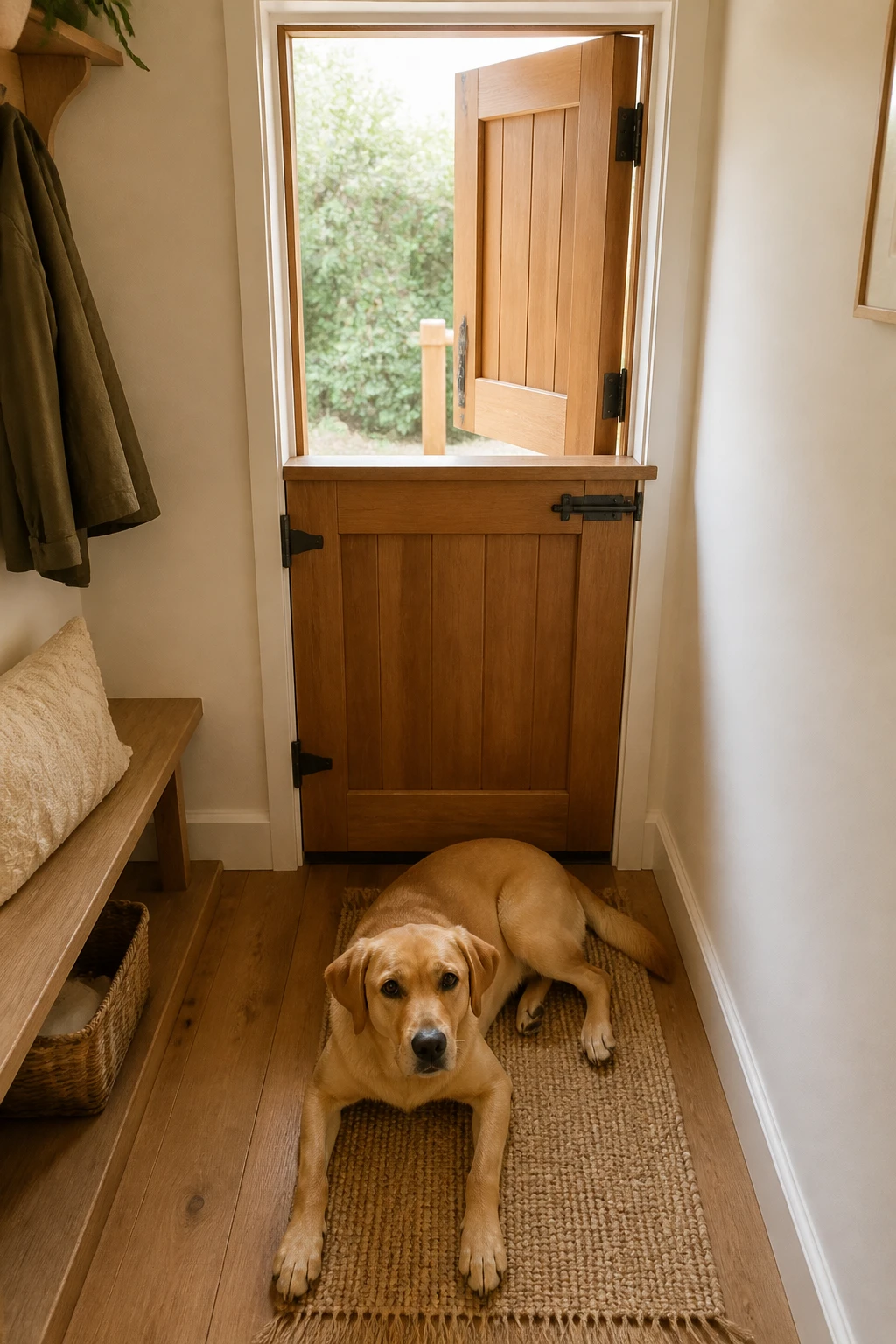
If you crave “permanent but pretty,” convert a standard door into a Dutch door. You’ll get a sturdy lower barrier and an open top for airflow and conversation.
Steps
- Cut your existing interior door horizontally at roughly 36 inches.
- Add a ledge cap to the cut edge using a 1×3 and roundover bit.
- Install a slide bolt or barrel bolt to keep the halves together when needed.
- Rehang with three heavy-duty hinges per section.
Prime cut edges thoroughly and seal the ledge—drool-resistant is the goal. Keep any decorative moldings flat and chew-resistant; consider edge guards for teething pups. Confirm clearance with your floor so the lower half swings freely.
Design Notes
- Match existing door style (Shaker, two-panel, etc.) for continuity.
- Choose a latch height out of paw reach—about 48 inches works for most homes.
Best for: Kitchen and laundry rooms where you still want visibility. Worth it if you’re planning a mini remodel anyway.
5. Sliding Barn-Style Dog Gate on a Track
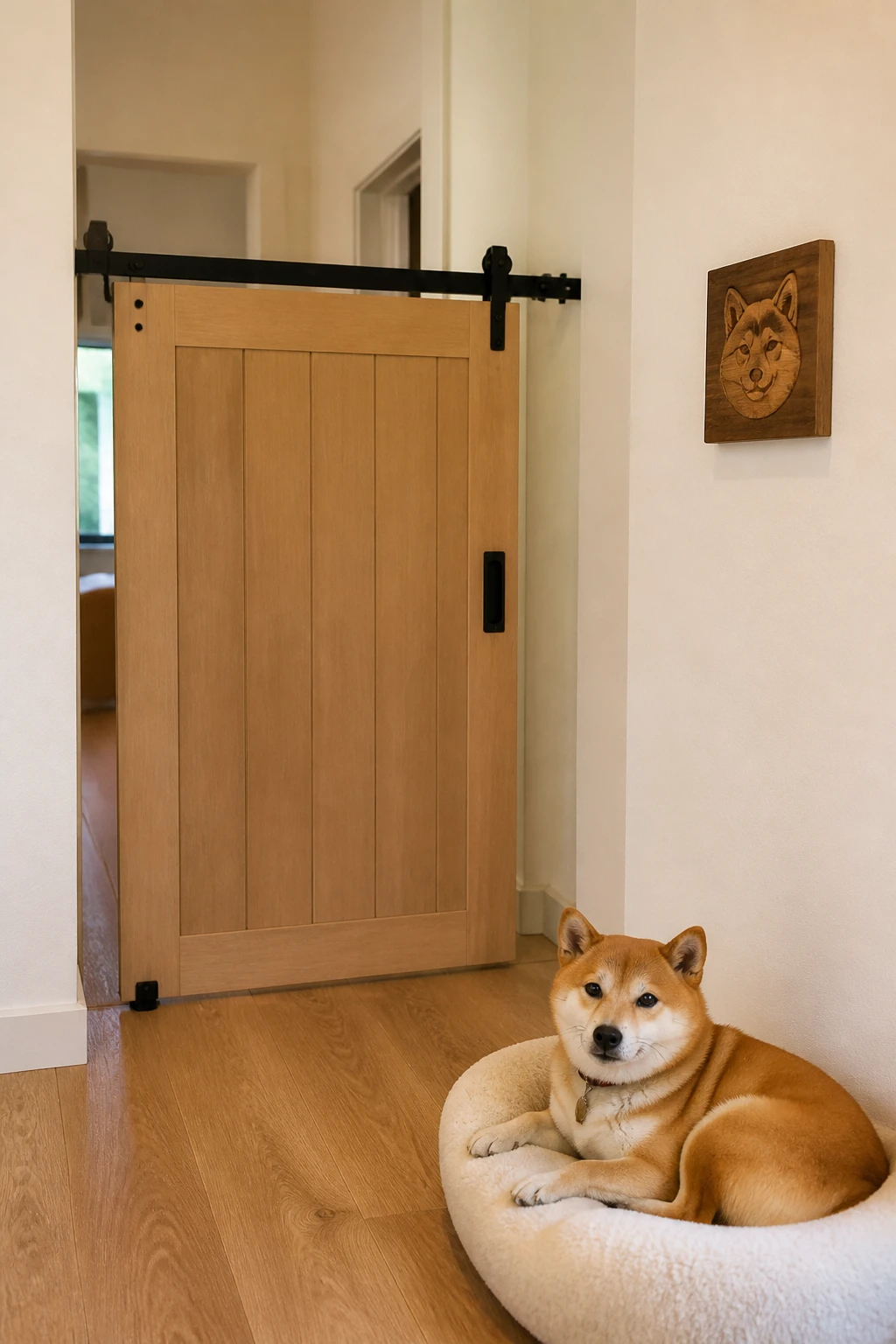
No floor swing space? Go sliding. A compact barn-style panel glides along the wall and doubles as a statement feature when open.
Materials
- Flat panel door or DIY board-and-batten slab
- Sliding door hardware rated for the panel weight
- Floor guide and soft-close stoppers
- Stud finder, lag bolts, and backer board if studs don’t align
Mount the rail into studs or a continuous backer board, then hang your panel. Add a recessed pull so collars don’t snag. Keep gaps under the door under 2 inches; add a bottom sweep if needed.
Style Tips
- Paint to match wall color for discreet vibes, or stain to echo flooring tones.
- Add simple batten strips for dimension without fussy details.
Best for: Tight corridors, top of stairs, or spots where a swing gate hits furniture. I’d pick this if you like functional wall art.
6. Woven Cane Insert Gate With Mid-Century Warmth
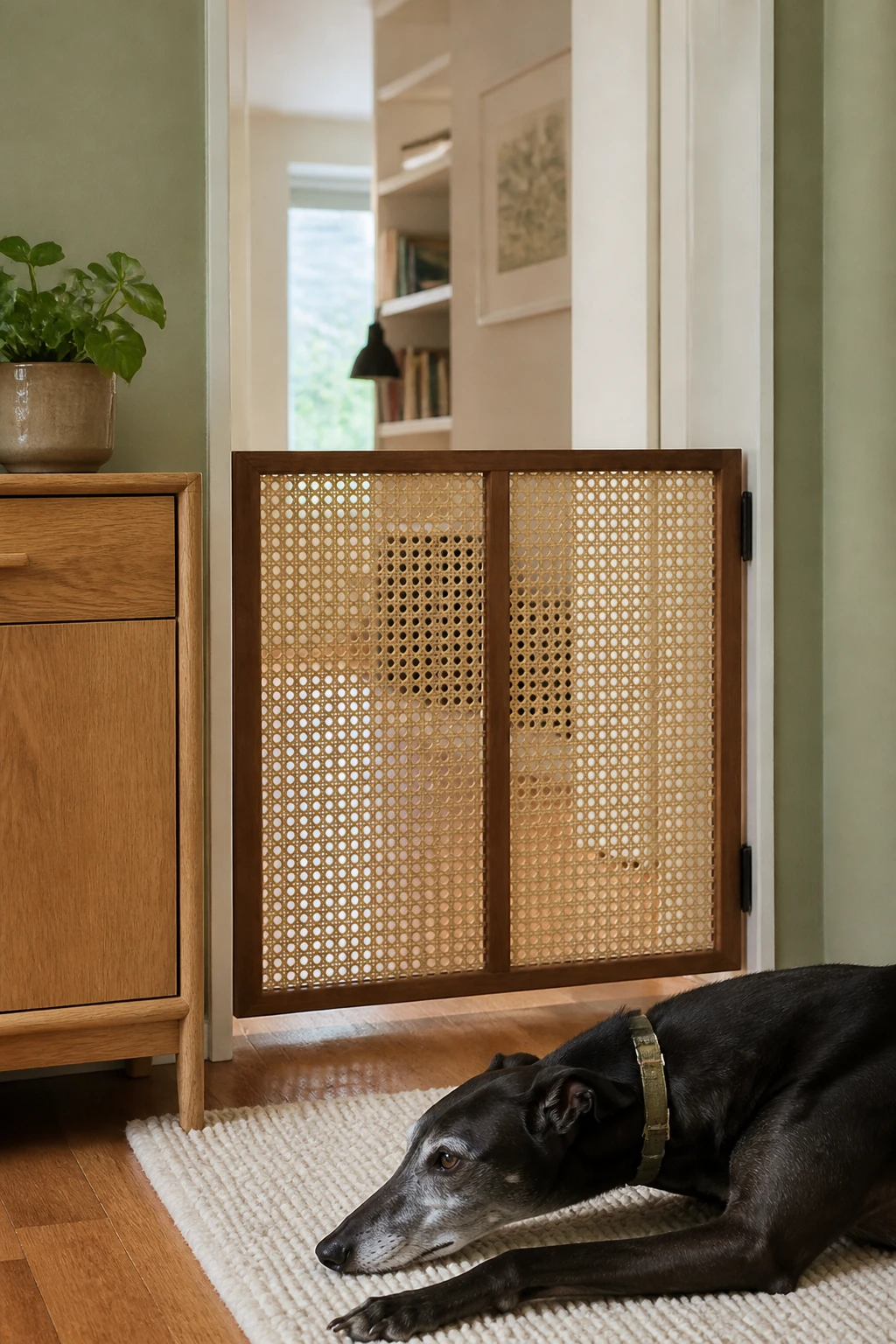
Light, textural, and less visually heavy than solid wood—cane looks elevated without trying. Dogs can see through it, and it pairs with walnut, oak, or painted frames.
Build Basics
- Create a rectangular frame from 1×2 hardwood with a shallow rabbet for inserts.
- Soak pre-woven cane and stretch it over the opening; secure with spline or a trim stop.
- Seal cane with a water-based clear coat to resist moisture and peanut-butter smears.
Keep cane tight so paws don’t poke through. If your dog chews, add a narrow interior grill behind the cane for backup. Install a top and bottom latch for stability—cane flexes a bit, so dual latching helps.
Finish Ideas
- Natural cane with walnut-toned frame for retro vibes.
- Painted frame in your trim color for a custom built-in look.
Best for: Calm dogs or smaller breeds and design lovers. I’d skip this for heavy chewers—choose slats or plywood instead.
7. Modular Bookcase Barrier That Doubles as Storage
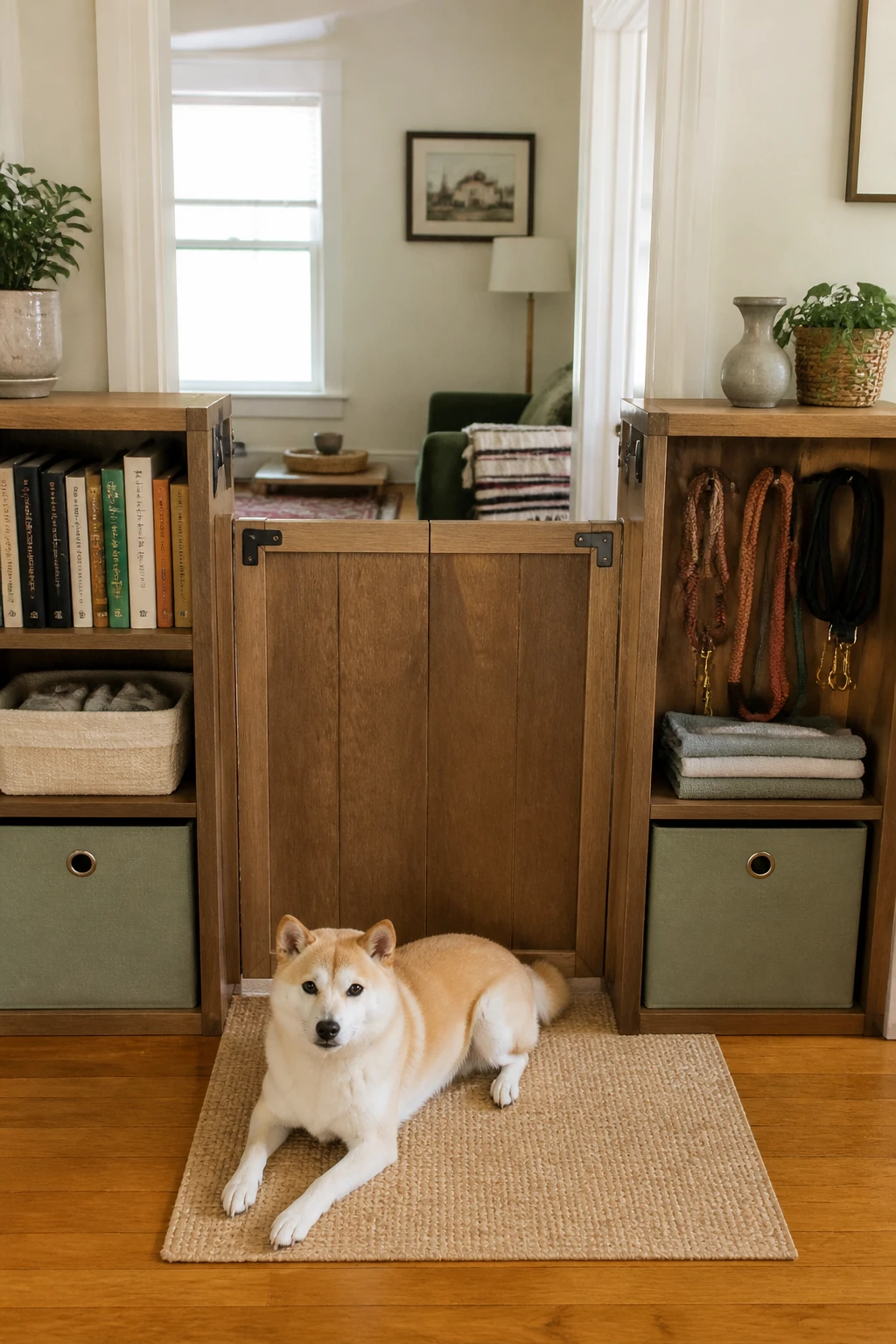
Hide a gate in plain sight by turning a low bookcase into a barrier. It zones a room while storing leashes, towels, and grooming gear—function meets form.
How-To
- Use two narrow bookcases placed back-to-back or at a right angle to frame the opening.
- Add a matching center swing panel or a short sliding insert between them.
- Anchor everything to studs with L-brackets for tip resistance—safety is non-negotiable.
Choose closed bins on the lower shelves to hide chewable items. Avoid knobs or cords at nose level. Soft-close hardware levels up the finish and prevents slams that could startle skittish pups.
Styling
- Bin fronts in durable fabric or wood veneer to match furniture tones.
- Keep decor pieces high and out of reach; think faux greenery and hardcover stacks.
Best for: Apartments and multi-use rooms where storage is a win. Worth it if you need organization and separation in one project.
Common Mistake to Avoid
Don’t skip measuring your dog’s shoulder height and jump capability. A 24-inch gate won’t hold a springy herder. Aim for at least your dog’s shoulder height plus 6–8 inches. Also, avoid big openings between slats, wobbly pressure mounts without daily checks, and finishes that aren’t sealed—unsealed wood traps odors and grime.
FAQ
How tall should an indoor dog gate be?
Measure your dog’s shoulder height and add 6–8 inches. For athletic breeds, go 36 inches or consider a Dutch door. If your dog free-jumps counters, choose a full-height solution or add a second top latch to deter push-throughs.
Is pressure mounting safe for strong dogs?
It can work for calm pups and short-term use. For strong or determined dogs, hard-mount into studs with long screws and solid hinges. Check stability weekly, especially in high-traffic areas.
What finish is safest for dogs?
Use water-based, low-VOC primer and polyurethane once fully cured per manufacturer timing. Satin or matte hides smudges better than gloss. Avoid raw twine, loose rope, or finishes that flake—chewing risk, FYI.
How do I make a gate that matches my trim?
Copy your home’s casing profile: same paint sheen, color, and rail thickness. Add simple battens or Shaker-style panels to mirror nearby doors. When in doubt, paint the gate the same color as baseboards to make it disappear.
What if my doorway is extra wide?
Use a sliding panel, a bi-fold screen, or a center-swing gate with fixed side returns. For spans over 48 inches, add a top guide or header for rigidity so the gate doesn’t bow. Modular builds let you expand later if your layout changes.
Pick one idea, measure twice, and commit to quality hardware—your future self will thank you. You’ll get a barrier that looks intentional, keeps your pup safe, and actually complements your space. Seriously, you’ll wonder why you lived with that clunky plastic gate for so long.
As an Amazon Associate, I earn from qualifying purchases.