This post contains affiliate links. As an Amazon Associate, I earn from qualifying purchases, at no extra cost to you.
Your pups deserve a comfy spot that doesn’t wreck your living room vibe. These 7 projects turn clunky kennels into handsome furniture that actually works with your home. You’ll save floor space, tame visual clutter, and get smart storage while giving each dog a secure retreat. Ready to upgrade their digs and your decor at the same time?
⭐ Our Top Pick: See it on Amazon
1. Sideboard-Style Double Kennel That Doubles as a Dining Buffet
Think elegant dining room cabinet on the outside, two calm dens on the inside. This design uses a long console footprint with a center divider so each dog gets a separate space. You get closed storage above or on the sides for leashes and grooming gear. Win-win.
Key Materials
- 3/4-inch plywood or furniture-grade panels for the carcass
- Hardwood face frame and rails for durability
- Powder-coated metal bars or welded wire panels for doors
- Crate pans or waterproof liners for each bay
- Pocket screws, wood glue, soft-close hinges, and magnetic catches
Build Tips
- Add a full-depth center wall to prevent crowding and reduce stress.
- Use a 1-inch overhang top with a back cleat to hide cord clutter from nearby outlets.
- Router generous vent slots or leave 1-inch spacing on side slats for airflow.
- Finish with a water-based polyurethane or plant-based hardwax oil rated for children’s toys.
I’d pick this if you want something that looks polished in a dining room or entry. I’d skip it if your dogs chew aggressively—then opt for metal bars and a hard maple face frame. Best for: medium to large dogs who crate calmly and households wanting extra serving space.
2. Under-the-Window Bench Crate Duo With a Washable Cushion
Turn that wasted window wall into a resting spot for humans on top and a resting spot for pups below. Two side-by-side kennels tuck under a deep bench seat with a lift-up top or front drawers for supplies. It brightens the room and blocks nothing because the height stays low.
Materials
- Cabinet-grade plywood, 2×2 supports, and a solid wood or laminate bench top
- Slow-close lid supports if using a lift-up seat
- Perforated metal or vertical slats for doors
- High-density foam cushion with a zip-off, machine-washable cover
Practical Notes
- Keep the bench height around 18–20 inches for comfortable seating.
- Line the interior with removable crate pans; caulk edges lightly to block crumbs and fur.
- Use concealed ventilation at the back (a continuous 2-inch gap along the wall) plus open front doors.
- Secure the cushion with non-slip fabric or corner ties so curious noses don’t redecorate.
FYI, bench builds echo your trim and feel built-in with a matching baseboard and paint color. Worth it if you need more seating without adding another bulky sofa. Best for: family rooms, breakfast nooks, and dogs that like to watch the neighborhood without jumping.
3. Modular Bookcase Kennel Wall You Can Reconfigure Later
Renters, this one’s for you. Combine two sturdy bookcases or cabinet boxes with a center divider and doors to create a flexible double kennel that breaks down when you move. Finish it with attractive trim to make it look intentional, not cobbled together.
How to Pull It Off
- Choose 15–18-inch-deep cabinets for small to medium dogs; 20–24 inches for larger breeds.
- Add a continuous toe-kick base so the units act like one piece and don’t tip.
- Use a removable back panel with cutouts for airflow and wall anchors for safety.
- Install premade metal grille inserts or cut your own bar openings with a jig for repeatable spacing.
Why It Works
- You can rearrange or expand without rebuilding from scratch.
- Doors and trim unify mixed pieces—paint everything the same color for a custom vibe.
- Removable parts make cleaning a breeze when shedding season hits hard.
IMO, this is the easiest path to a clean look without advanced tools. I’d skip flimsy flat-pack units; pick cabinets rated for at least 150 pounds. Best for: multipurpose rooms and people who might change layouts down the road.
4. Farmhouse Table Turned Twin Kennel Console
Have a solid wood table gathering dust? Convert it into a two-bay kennel by adding side panels, a center divider, and swing doors. It keeps that rustic character while solving real storage and pet needs.
Conversion Steps
- Confirm leg and apron strength; reinforce with corner brackets if the table wobbles.
- Build a 3/4-inch plywood insert box under the tabletop that becomes the kennel body.
- Skin the sides with vertical slats spaced 1–1.5 inches to discourage reaching paws.
- Keep the tabletop overhang but round the corners to protect excited dog noggins.
Finishing Touches
- Use blackened steel pulls and strap hinges for that farmhouse vibe.
- Seal with a durable satin topcoat; skip wax finishes that smear and attract fur.
- Add felt feet or floor glides so you can clean underneath without groans and scrapes.
I’d pick this if you love character wood and already own a table worth saving. I’d skip if the table’s pine and chewers live in your house—hardwood handles nibbling better. Best for: living rooms and entryways where a console table looks natural.
5. Rolling Double Crate With Locking Casters for Laundry or Garage
Need flexibility? Put your dual kennel on wheels. You can roll it for cleaning, move it closer when storms hit, or tuck it away when company arrives.
Smart Details
- Choose heavy-duty casters with brakes—rated for at least 3–4x your combined dog and furniture weight.
- Build a stout base: 2×4 perimeter frame with cross-bracing under each bay.
- Line the floors with removable rubber stall mats to dampen noise and keep paws comfy.
- Add bumpers or a recessed base so toes don’t get clipped when you roll it.
Safety Callouts
- Lock casters before use, every time. No one enjoys a drifting kennel.
- Keep electrical cords and detergents far away—laundry rooms hide hazards.
- Use ventilated doors and leave a rear gap so heat from dryers doesn’t trap inside.
Seriously, mobility changes your cleaning routine overnight. Worth it if you hustle through chores and need adaptable space. Best for: laundry rooms, workshops, or homes that rearrange for holidays.
6. Split-Level Crate Tower for Small Dogs Only
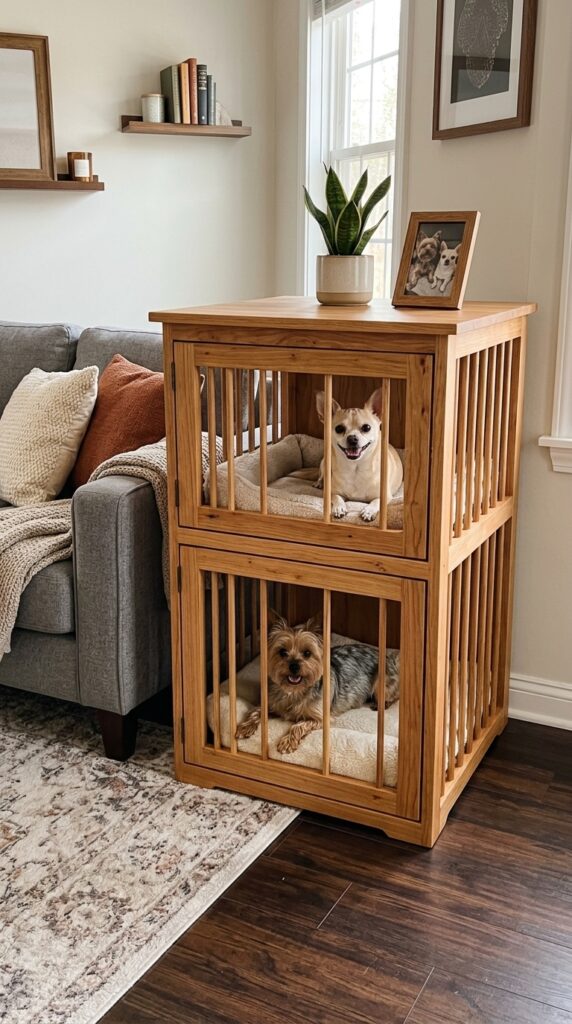
Stacking saves space, but it suits little dogs with calm temperaments. Build a two-story unit with separate doors, a solid divider, and a robust frame that won’t rack when bumped.
Build Notes
- Use 1×2 or 2×2 framing with plenty of bracing; secure to wall studs with L-brackets.
- Limit total height to around 48 inches so the top bay doesn’t feel like a treehouse.
- Incorporate slide-out trays for easy cleaning—gravity is your friend here.
- Install wide doors (at least 75% of bay width) for smooth entry and exit.
When to Choose It
- Apartment layouts that demand vertical storage.
- Two small companions who prefer their own floor—no roommates, just neighbors.
- Homes without kids climbing on furniture; anchor it and set clear rules.
I’d skip this for big or bouncy dogs—keep it small-breed only for safety. Add anti-tip straps and rubber feet for stability, trust me. Best for: compact homes, office corners, and petite pups who nap hard.
7. Built-In Nook Conversion With Matching Cabinet Doors
Got a weird alcove or under-stairs cavity begging for purpose? Transform it into a custom two-bay kennel with trim and doors that match your home’s cabinetry. It disappears visually while giving both dogs a dependable retreat.
Planning Steps
- Measure the narrowest width and base your design on that—walls aren’t always straight.
- Frame a center divider from 3/4-inch material secured to floor and header.
- Cut a removable back panel for deep cleaning and emergency access.
- Match profiles: copy your home’s shaker rails or ogee edges for a legit built-in look.
Ventilation and Light
- Use decorative grille inserts high on the doors for crossflow while keeping noses inside.
- Skip interior lighting; instead, leave a small transom opening or perforated panel near the top.
- Keep at least one side or the back slightly open to a larger void for air exchange—do not seal it tight.
Worth it if you love seamless architecture and want floor space back. I’d pick paint over stain here—it hides patchwork in older nooks beautifully. Best for: hallways, under-stair zones, and homes chasing that custom millwork aesthetic.
Common Mistake to Avoid
Don’t undersize the bays. Each dog should stand up, turn around, and sprawl comfortably, or the furniture becomes a stress box. Also avoid finishes that off-gas, skimping on ventilation, and using flimsy dowels that snap under pressure—choose metal bars or thick hardwood slats instead.
FAQ
How big should each section be for two dogs?
Measure each dog from nose to base of tail and add 4–6 inches to length. For height, measure to the top of the head or ears when standing and add 3–4 inches. If sizes differ, build unique bays rather than a one-size-fits-none rectangle.
Can two dogs share the same open space inside a double crate?
Use a solid divider. Many dogs enjoy company, but combining into one open compartment can cause guarding or crowding. Separate spaces reduce conflict and help each pup settle faster.
What wood and finish are safest?
Hardwoods like maple, oak, or poplar for frames hold up to bumps and nibbling. For finishes, choose water-based polyurethane, child-safe acrylics, or hardwax oils rated for toys. Let everything cure fully before use—no lingering odors near sensitive noses.
How do I control odors and keep it clean?
Install removable crate pans or trays, seal seams, and use washable mats. Add ventilation slots high and low to move air. Weekly wipe-downs with pet-safe cleaners beat deep-clean marathons, every time.
Are metal bars or wooden slats better?
Metal resists chewing and keeps sightlines open; wooden slats blend with decor and feel warmer. For heavy chewers, go metal or hardwood with tight spacing. For mellower dogs, stout slats spaced about 1–1.5 inches work great.
Can I use a double kennel as a TV stand?
Yes, as long as the top handles the load and you manage heat. Vent the back generously, keep electronics elevated on feet, and route cords where curious mouths can’t reach. Never block airflow with baskets pressed tight to the rear panel.
Each of these projects turns pet essentials into furniture that earns its floor space. Pick the layout that fits your room, match your trim or paint, and give both dogs a den that feels calm and secure. Start simple, upgrade hardware as you go, and enjoy furniture that works as hard as it looks.
🛠️ Want to build your own? See our printable DIY dog plans with step-by-step instructions, cut lists and exact measurements.
As an Amazon Associate, I earn from qualifying purchases.