This post contains affiliate links. As an Amazon Associate, I earn from qualifying purchases, at no extra cost to you.
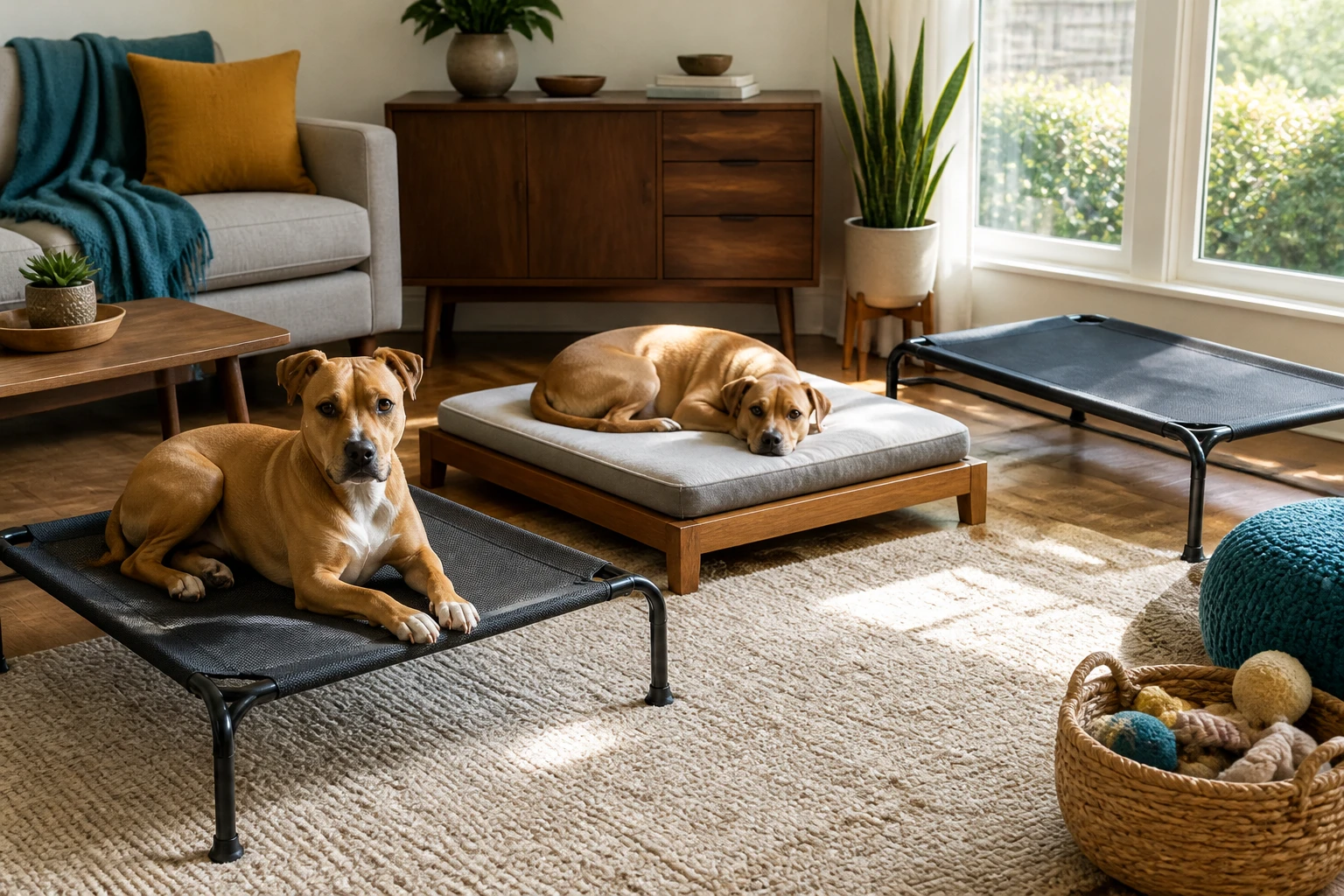
Cold floors? Hard pass—your dog deserves better. These 6 raised bed ideas boost airflow, reduce drafts, and look great with your furniture. You’ll find options for chewers, seniors, tiny floofs, and mud-loving adventurers. Ready to keep paws warm and your decor on point?
⭐ Our Top Pick: See it on Amazon
1. The Classic Cot-Style Frame With Breathable Mesh
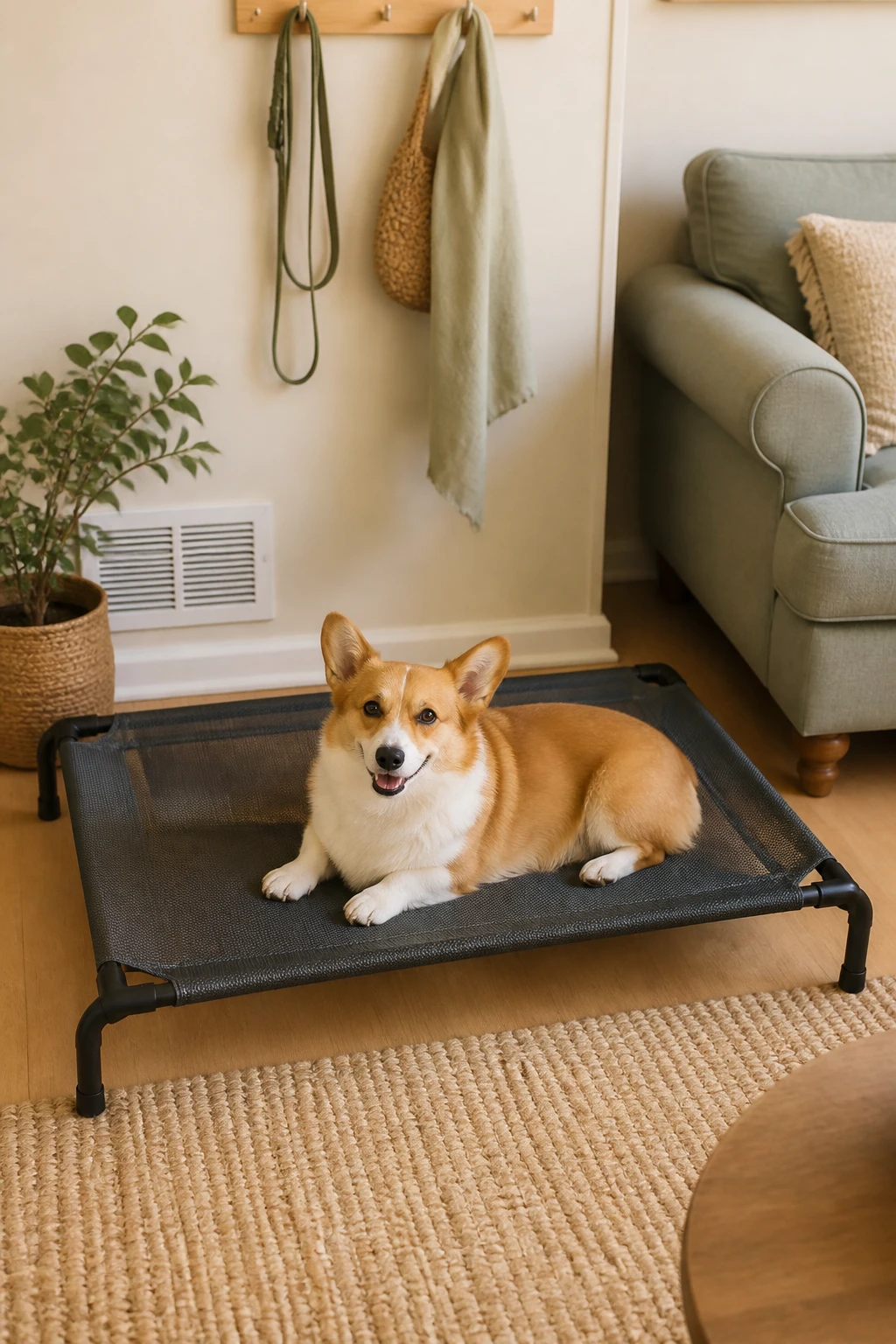
The cot-style bed is the MVP for keeping dogs off chilly tile or concrete. The mesh sling keeps air moving in warmer months and blocks that icy floor feel in winter. It’s lightweight, wipeable, and easy to move from living room to patio.
Why It Works
- Elevated platform interrupts floor drafts and moisture.
- Taut fabric supports joints better than squishy cushions that bottom out.
- Hose-off cleaning for muddy paws and shedding season.
Tips
- Pick a frame with non-skid feet for slick floors.
- Choose textilene or heavy PVC-coated mesh for durability and chew resistance.
- Size so your dog can sprawl without overhang—measure nose to tail when stretched.
Best for: Busy households, patios, and dogs who run hot. I’d pick this for durability and airflow; I’d skip it for heavy chewers unless the fabric is explicitly rated chew-resistant.
2. Mid-Century Wood Platform With Orthopedic Insert
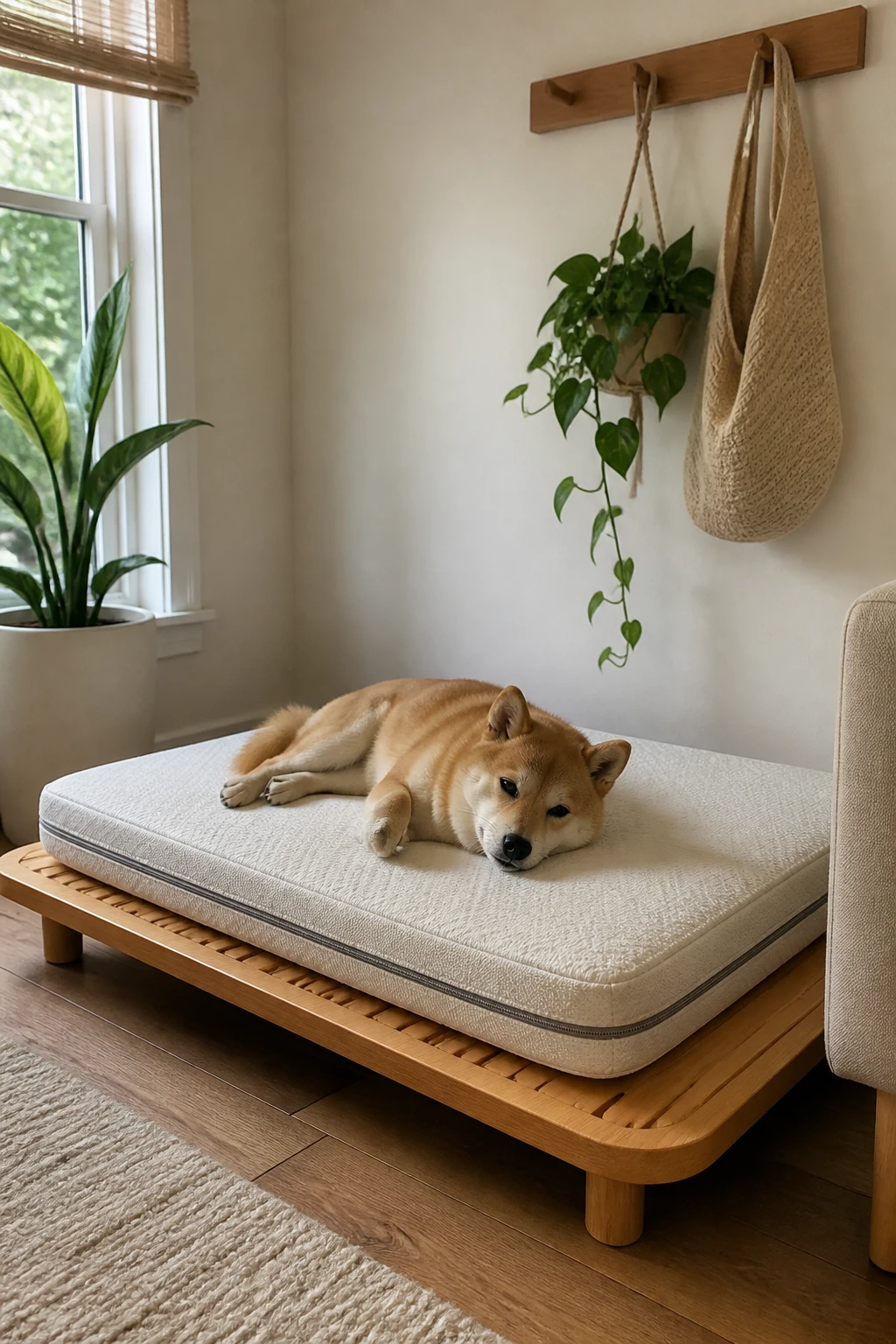
Want something that looks like it came from a boutique pet studio? A low wood platform paired with a memory foam or latex mattress blends right in with modern furniture. The slatted base lifts your dog just enough to dodge cold floors without blocking sightlines.
Materials
- Solid wood or bamboo frame with rounded edges for safety.
- Orthopedic foam insert with a zippered, washable cover.
- Non-toxic finish (water-based) to avoid off-gassing around pets.
Build or Buy Tips
- If DIY, keep legs 4–6 inches high for airflow and easy access.
- Add felt pads under the legs to protect hardwood.
- Use a tight-fitting cover so pups won’t catch a tooth on loose fabric.
Best for: Style-focused living rooms and medium to large dogs who like a firmer surface. Worth it if you want decor-friendly design and joint support in one piece.
3. Metal Tube Frame With Replaceable Slings
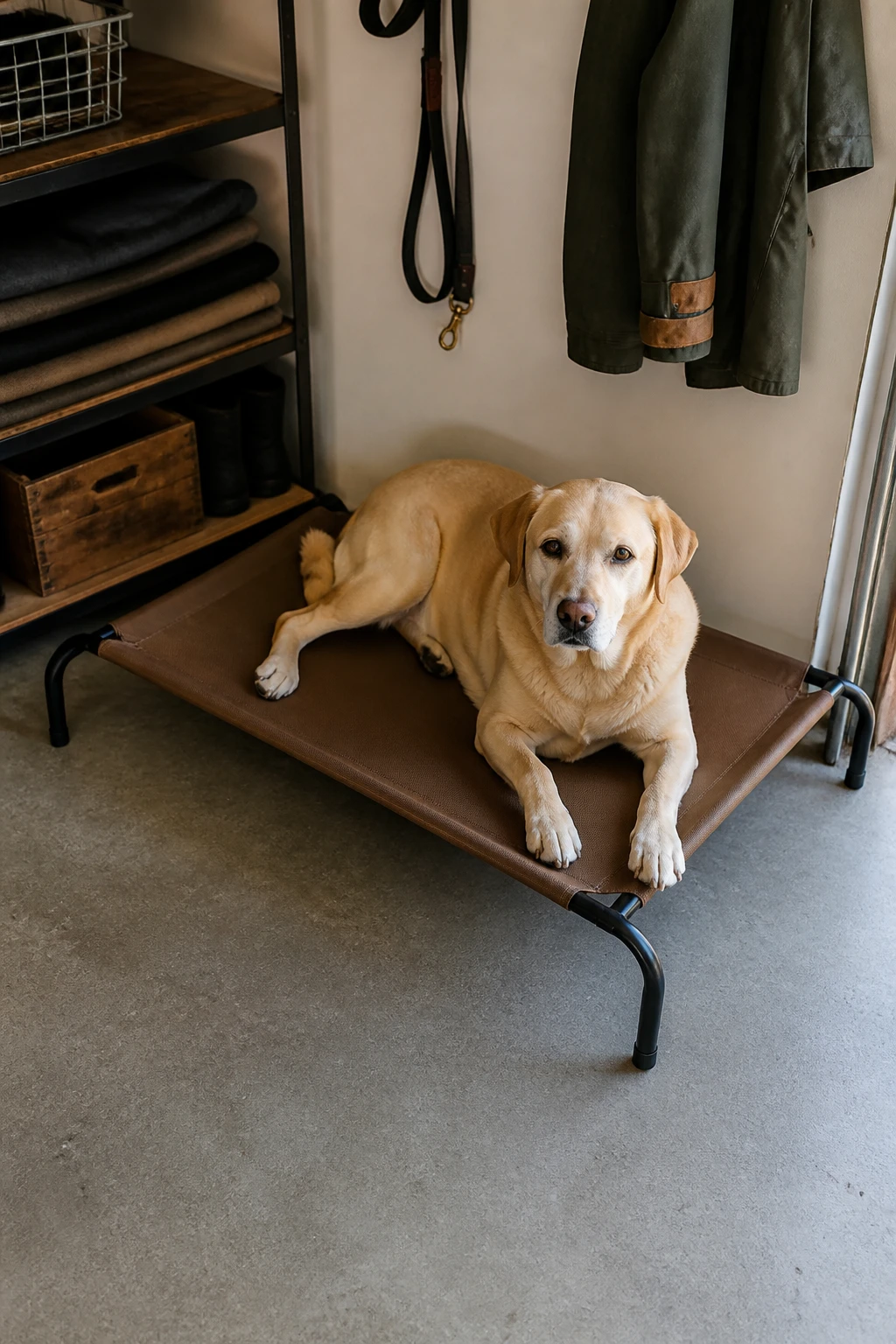
For dogs who treat furniture like a sport, go sturdy. A powder-coated steel or aluminum frame with replaceable fabric slings handles rough use, damp garages, and frequent washes. You can swap in a canvas, ballistic nylon, or mesh sling depending on the season.
Key Points
- Modular design means you replace the sling, not the whole bed.
- Rounded corners prevent snagging on collars.
- Tensioned fabric equals stable support for big breeds.
Safety and Set-Up
- Check that all hardware sits flush to avoid paw catches.
- Keep the bed at least 12 inches from heaters or space heaters—overheating risk is real.
- Choose closed-end caps on tubes so curious noses can’t get stuck.
Best for: Heavy, athletic, or energetic pups; garages, mudrooms, and covered porches. I’d pick this for German Shepherds, Labs, or bully breeds that need structure.
4. Upholstered Raised Bench With Hidden Storage
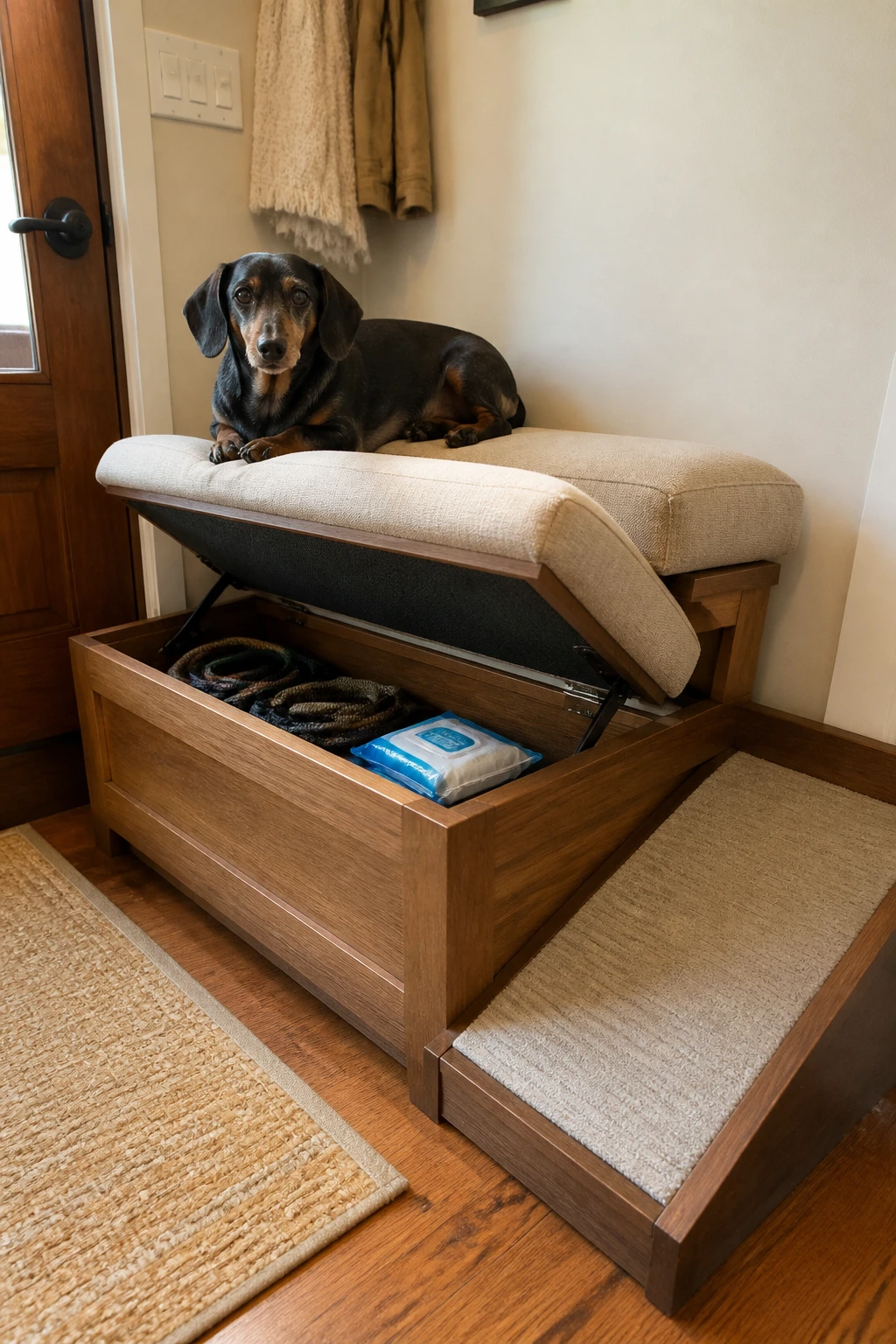
Double-duty furniture? Yes, please. A compact bench with a lift-top or side drawers turns into a raised dog bed with a cushion on top while stashing leashes and wipes inside. It keeps clutter contained and your dog off the icy floor by the door.
How to Set It Up
- Choose a bench 16–18 inches high for medium dogs; add a small ramp or steps for short legs.
- Top it with a machine-washable cushion or memory foam pad inside a durable cover.
- Stick grippy drawer liners under the cushion so it won’t slide.
Safety Notes
- Avoid decorative nailheads or buttons—chewing hazard.
- Secure lids with soft-close hinges so they won’t slam near curious noses.
- Keep any cords or straps tucked inside drawers, out of reach.
Best for: Entryways and apartments where every inch counts. Worth it if you want form, function, and a clean look in one tidy setup.
5. PVC Frame With Slip-On Covers For Wet Weather
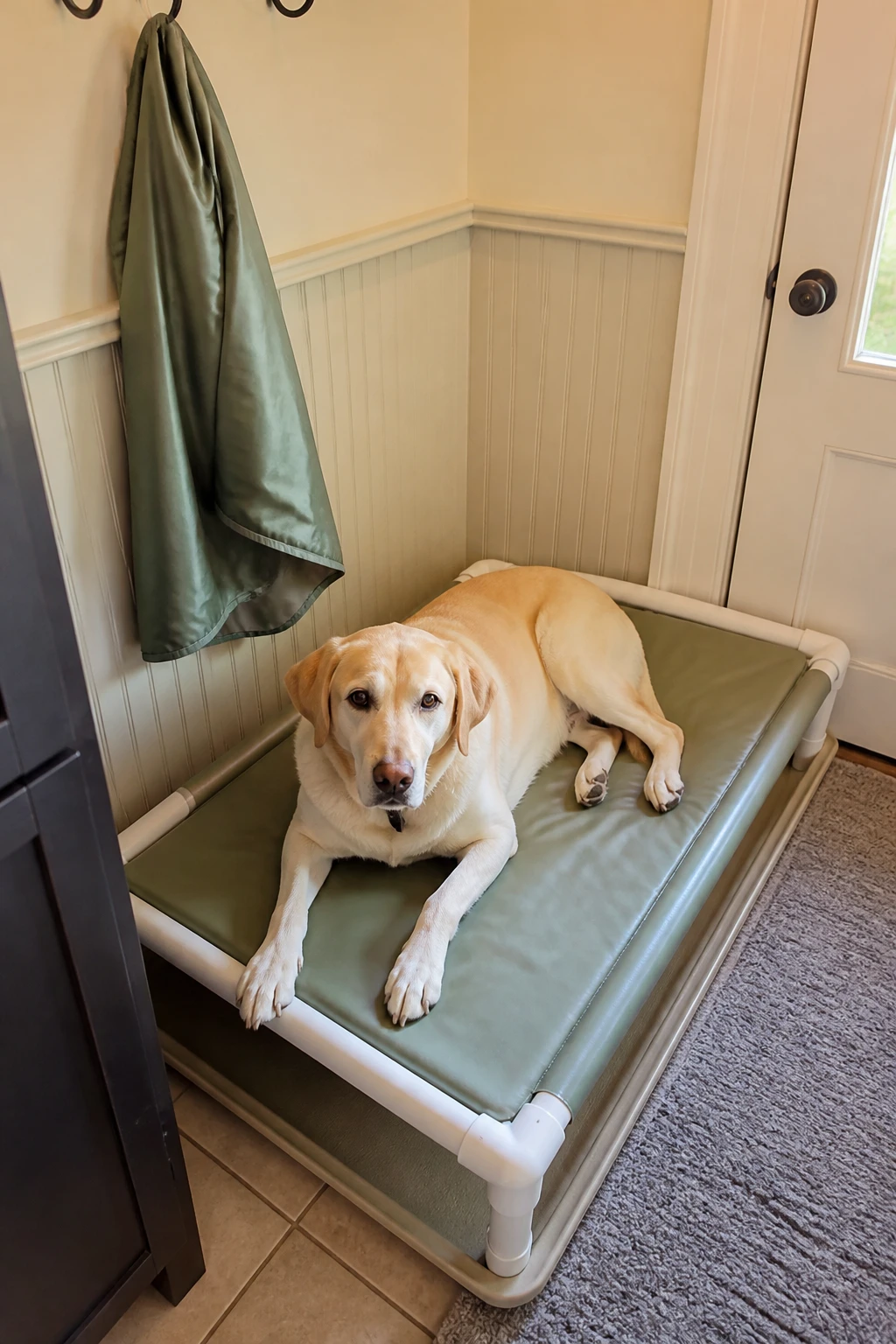
If your dog drips water like a mop after walks, a PVC-raised bed with swappable covers saves your floors. The frame resists rust and moisture, and the slip-on cover style lets you toss one in the wash while another stays in rotation.
What to Look For
- Schedule 40 PVC for strength and chew resistance.
- Heat-welded seams on the cover to prevent fraying.
- Non-wicking fabrics like vinyl-coated polyester for rainy seasons.
DIY Angle
- Cut PVC with a miter box; connect with furniture-grade fittings (no exposed burrs).
- Choose raised rubber feet to keep the frame steady on tile.
- Size the cover 1–2 inches smaller than the rectangle so it tensions properly.
Best for: Mudrooms, laundry rooms, beach houses, and dogs who come in damp—frequently. I’d pick this for the easiest cleaning routine; I’d skip it for heavy chewers without supervision.
6. Raised Crate Deck With Insulated Pad
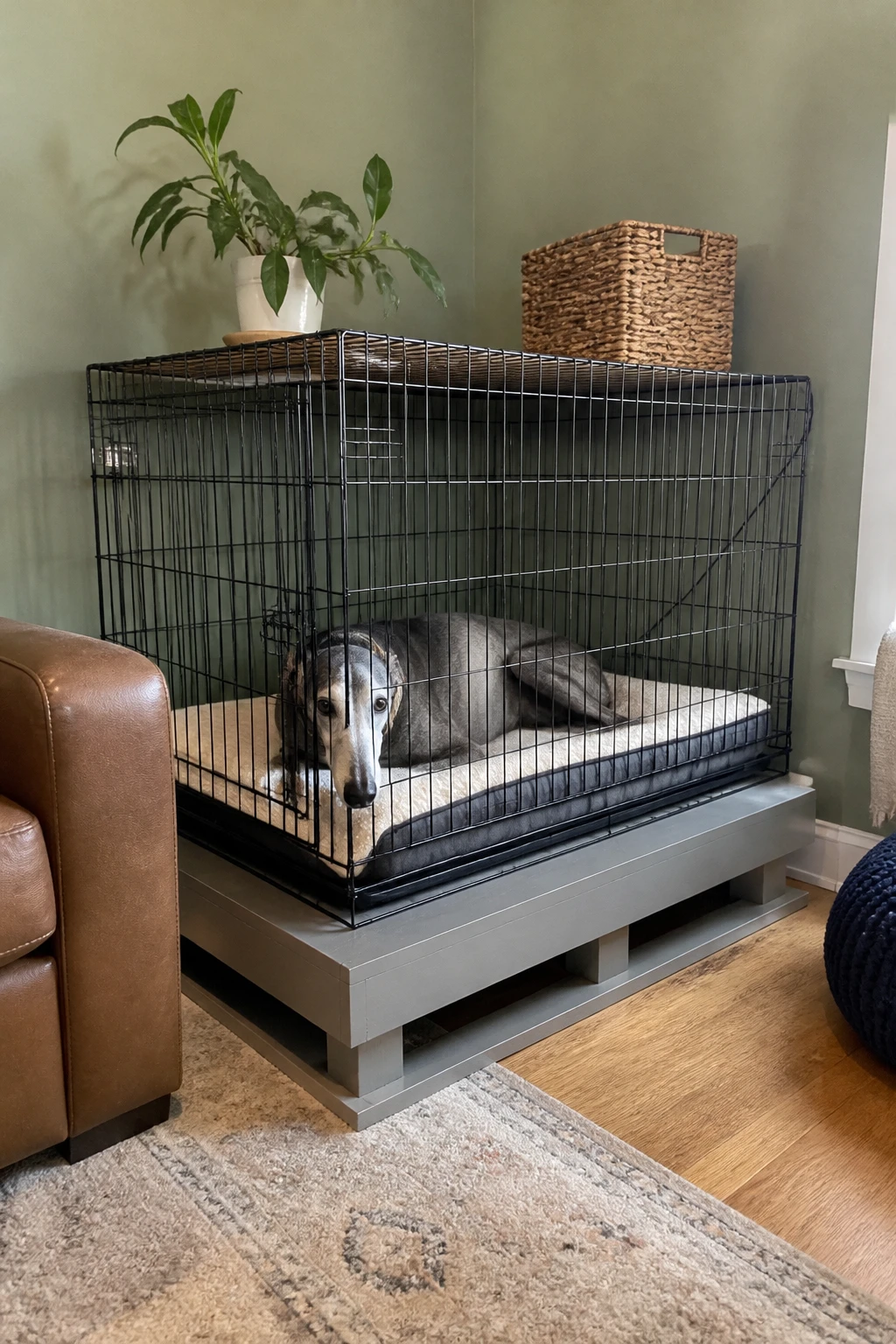
If your dog loves a den, lift the entire crate off the floor. A low platform or deck under the crate blocks cold transfer and creates a stable base. Pair it with an insulated pad to keep body heat where it belongs—under your pup.
Build Details
- Use a plywood deck on 2×2 braces with vent gaps for airflow.
- Add closed-cell foam or reflective insulation under a washable cover inside the crate.
- Finish the platform with water-resistant paint or a pet-safe sealant.
Placement Tips
- Keep the crate away from drafty doors and direct vents.
- Level the deck carefully—wobble equals anxiety for some dogs.
- Skip fluffy blankets for chewers; choose tough, fitted pads with hidden zippers.
Best for: Nighttime sleepers, anxious pups who prefer a nook, and homes with tile or concrete floors. Worth it if you want warmth without sacrificing crate training.
Common Mistake to Avoid
Don’t over-pad a raised bed. If the cushion sinks enough to touch the cold surface beneath, you lose the whole point. Aim for firm support with at least an inch of clearance between the lowest point of the sling or pad and the floor. And never place elevated beds near heaters, fireplaces, or space heaters—overheating and burns can happen fast.
FAQs
How high should an elevated dog bed be?
Four to eight inches works for most dogs. Seniors and small breeds often prefer the lower end for easy on-and-off. Bigger, heat-prone pups can go higher for airflow, but always keep stability and step-in comfort in mind.
What fabric holds up best to nails and light chewing?
Textilene mesh, ballistic nylon, and vinyl-coated polyester handle scratching and frequent cleaning. For determined chewers, I’d pick a sling that wraps into the frame so edges stay hidden. Always supervise if your dog gnaws furniture.
Do elevated beds help with joint discomfort?
Yes—many dogs rest easier with a firm, tensioned surface or a supportive foam insert. Elevated designs also reduce pressure points from hard floors and keep muscles warmer, which can help stiff pups feel better.
How do I keep an elevated bed from sliding on smooth floors?
Add rubber feet, silicone furniture pads, or a low-profile rug underneath. Check weekly for loose screws or uneven legs—wobble makes some dogs avoid the bed altogether.
Are these safe for puppies?
Generally, yes—choose low heights, skip loose blankets, and avoid beds with exposed zippers, cords, or decorative hardware. If your puppy chews everything, go with a taut sling bed and supervise until the chomp phase passes.
What’s the easiest option to clean?
Cot-style and PVC-frame beds win. You can hose them off or swap a spare cover. Upholstered benches look polished but need removable, machine-washable covers to stay fresh.
Pick one, set it up, and watch your dog claim it like they pay the mortgage. Elevated beds keep paws warm, joints happy, and your space looking considered. You’ll wonder why you didn’t try one sooner—seriously.
As an Amazon Associate, I earn from qualifying purchases.