
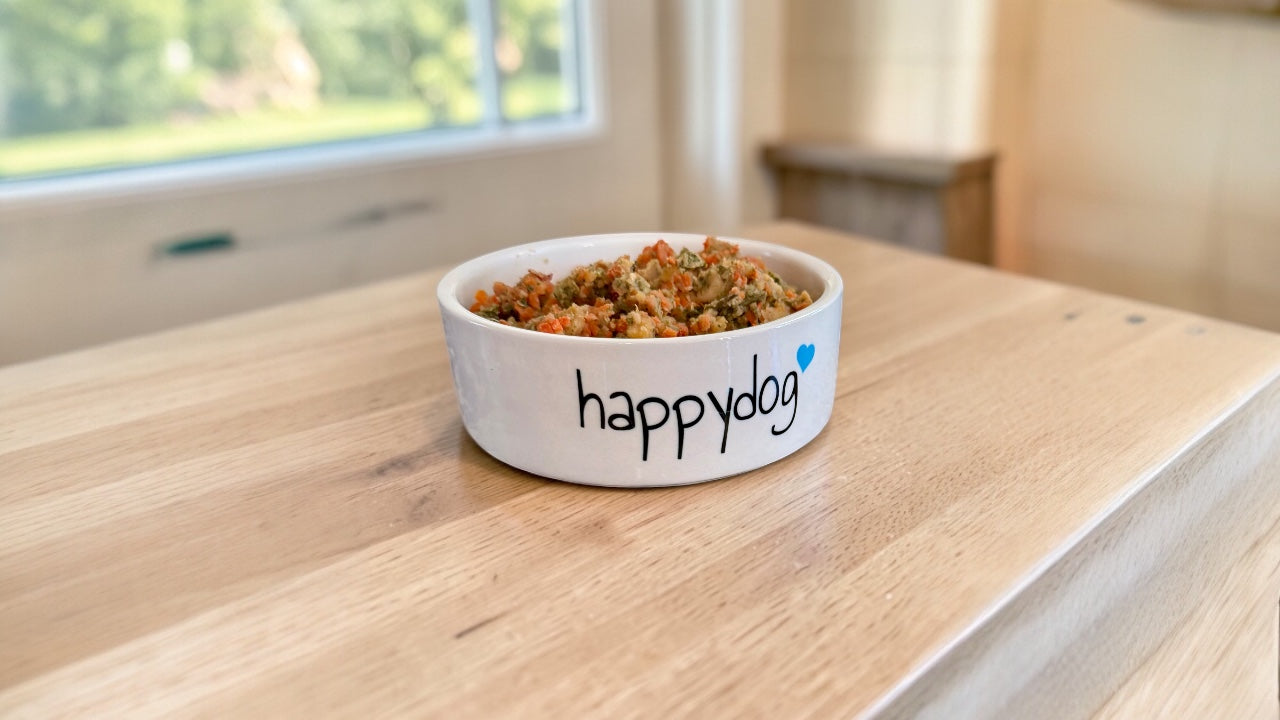
Feeding your dog homemade food is one of the best decisions you can make for their health.
But here is the truth.
Most homemade diets are not balanced.
Even when meals include high-quality ingredients like fresh meat and vegetables, they often lack essential nutrients dogs need to thrive long term.
If you want to feed homemade the right way, balance is everything. It starts with understanding dog nutrition basics.
What “Complete and Balanced” Really Means
A complete and balanced diet provides all the nutrients your dog needs in the correct proportions every day.
This includes:
- Protein
- Fats
- Carbohydrates
- Vitamins
- Minerals
It is not just about ingredients. It is about ratios.
Without the right balance, even a fresh, natural diet can lead to deficiencies over time.
The Core Components of a Balanced Homemade Diet
To build a properly balanced meal, every bowl needs these key elements.
Protein (Foundation of the Meal)
Protein supports muscle, energy, and overall health.
Good sources include:
Protein should be the primary component of your dog’s meal.
Carbohydrates and Fiber
Carbs provide energy and support digestion.
Healthy options include:
- Brown rice
- Barley
- Sweet potatoes
- Vegetables
They also help create a more complete nutrient profile.
Healthy Fats
Fats are essential for:
- Skin and coat health
- Brain function
- Energy
Sources include:
- Fish oil
- Animal fats
- Certain plant oils
Vitamins and Minerals
This is where most homemade diets fall short.
Dogs require precise levels of:
- Calcium
- Phosphorus
- Zinc
- Iron
- Vitamin D
- B vitamins
These are not reliably provided through meat and vegetables alone.
The Calcium Problem (Most Common Deficiency)
One of the biggest issues with homemade dog food is calcium imbalance.
Meat contains phosphorus but very little calcium. Without adding a proper calcium source, the ratio becomes dangerous over time.
This can lead to:
- Weak bones
- Dental issues
- Long-term skeletal problems
Calcium must be added intentionally and in the correct amount.
Where Taurine Fits In
Taurine is an essential amino acid that supports heart health.
Some dogs can develop taurine deficiencies depending on their diet and how it is formulated.
While not all dogs require supplementation, poorly balanced homemade diets increase the risk.
This is why balance and formulation matter.
Why Guessing Does Not Work
Many pet parents try to balance meals by:
- Rotating ingredients
- Following random recipes
- Estimating portions
This approach is unreliable.
Dogs need consistency and precision over time, not just variety.
A Smarter Way to Balance Homemade Dog Food
Balancing every nutrient from scratch is complicated and time-consuming. A properly formulated complete and balanced base mix removes the guesswork while keeping the benefits of homemade feeding.
A more practical approach is to use a properly formulated base mix made from real, whole food ingredients.
This allows you to:
- Add your own fresh protein
- Maintain control over your dog’s diet
- Ensure essential nutrients are included
It removes the guesswork while keeping the benefits of homemade feeding.
How to Get Started
If you are transitioning to a balanced homemade diet:
- Choose a consistent protein source
- Add a properly formulated base mix
- Follow feeding guidelines based on your dog’s size
- Transition gradually over several days
This creates a stable, complete diet your dog can thrive on.
The Bottom Line
Homemade dog food can be one of the healthiest ways to feed your dog.
But only when it is done right.
Balance is what turns fresh food into complete nutrition.
Without it, even the best ingredients fall short.
What to Do Next
If you have not already, learn the most common mistakes pet parents make when feeding homemade diets so you can avoid them from the start. Homemade dog food mistakes