This post contains affiliate links. As an Amazon Associate, I earn from qualifying purchases, at no extra cost to you.
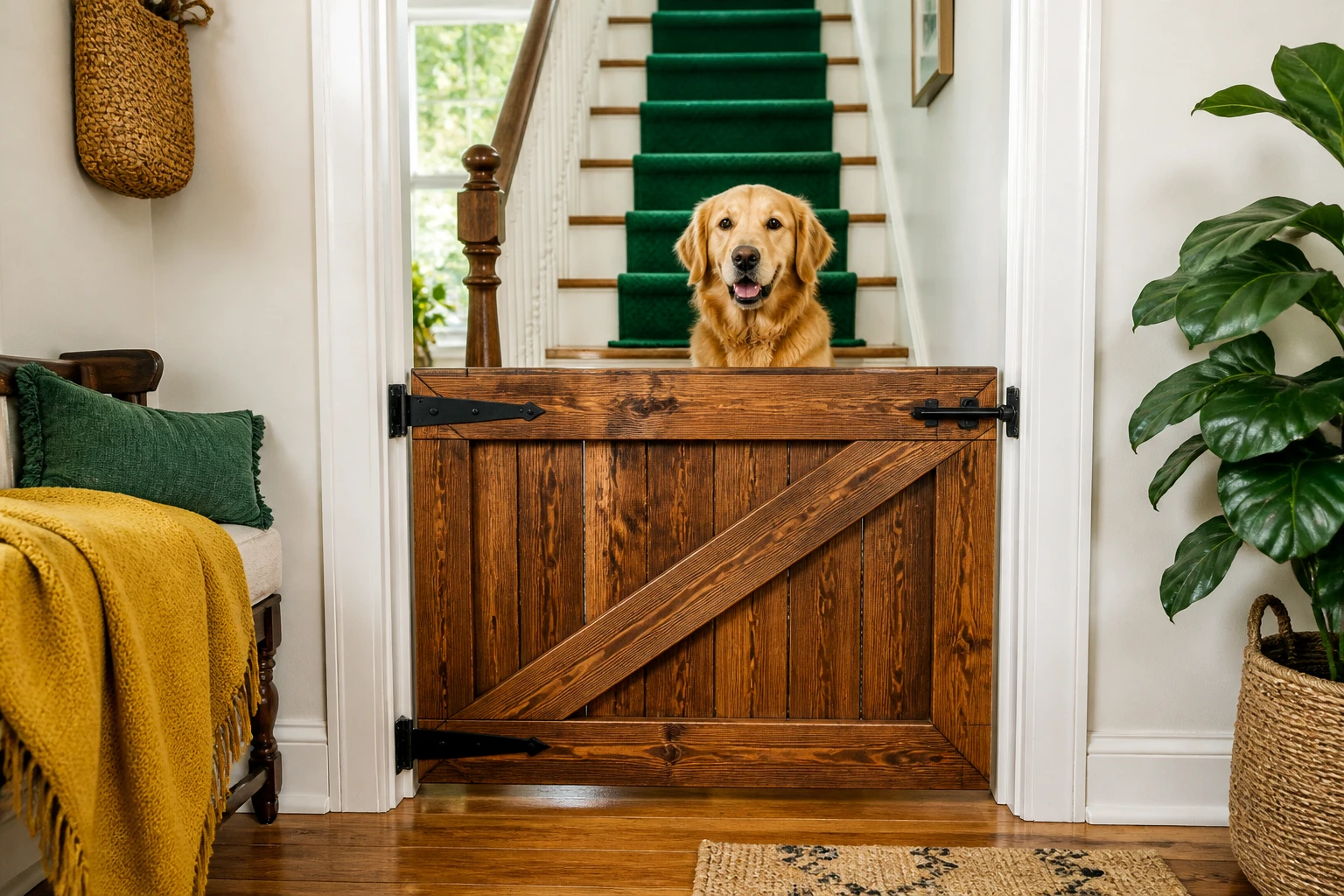
Plastic gates ruin a room faster than muddy paw prints. Build one of these 6 DIY wooden dog gates and keep your pup safe while your house still looks pulled together. Every idea solves a real layout headache—awkward stair angles, rental walls, wide doorways, you name it. Pick your favorite, grab a weekend, and you’re off.
⭐ Our Top Pick: See it on Amazon
1. Farmhouse Z-Bar Swing Gate That Doesn’t Sag
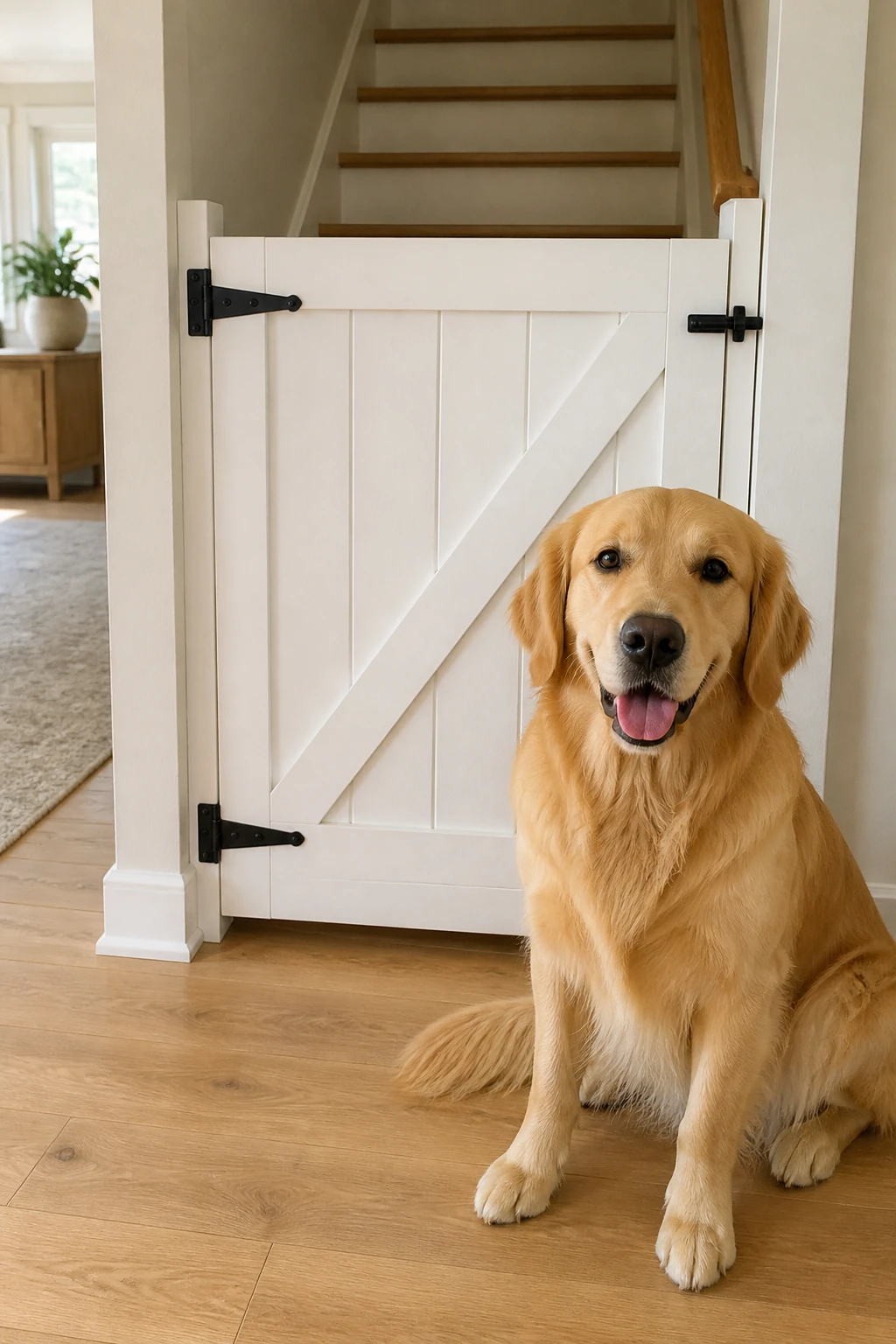
Want a classic look that can handle zoomies? The board-and-batten gate with a Z-brace gives you serious strength without looking bulky. It opens like a door, latches cleanly, and blends with trim you likely already own.
Materials
- 1×4 and 1×6 pine or poplar (knot-free holds up best)
- Two heavy-duty strap hinges and a gate latch (magnetic or barrel bolt)
- 2.5-inch exterior screws, wood glue, and sandpaper (120–220 grit)
- Stud finder, level, and countersink bit
Build Tips
- Measure your opening at the top, middle, and bottom. Use the smallest width for a snug fit with 1/4-inch clearance on the latch side.
- Run vertical boards first, then add a horizontal top and bottom rail. Install the diagonal from the lower hinge side to the upper latch side so it carries weight.
- Mount hinges into a stud or a 1×4 backer board you anchor to studs. Don’t trust drywall alone.
Finish with a water-based polyurethane or low-VOC paint. Round over edges with sandpaper so curious noses don’t find sharp corners. Keep slat spacing under 3 inches to protect small pups from slipping through.
Why it rocks: The Z-brace fights gravity and looks intentional next to moldings. I’d pick this for high-traffic doorways where you want reliability over bells and whistles.
Best for: Medium to large breeds, hallway or kitchen doorways, farmhouse or transitional interiors.
2. Sliding Barn-Style Gate That Saves Floor Space
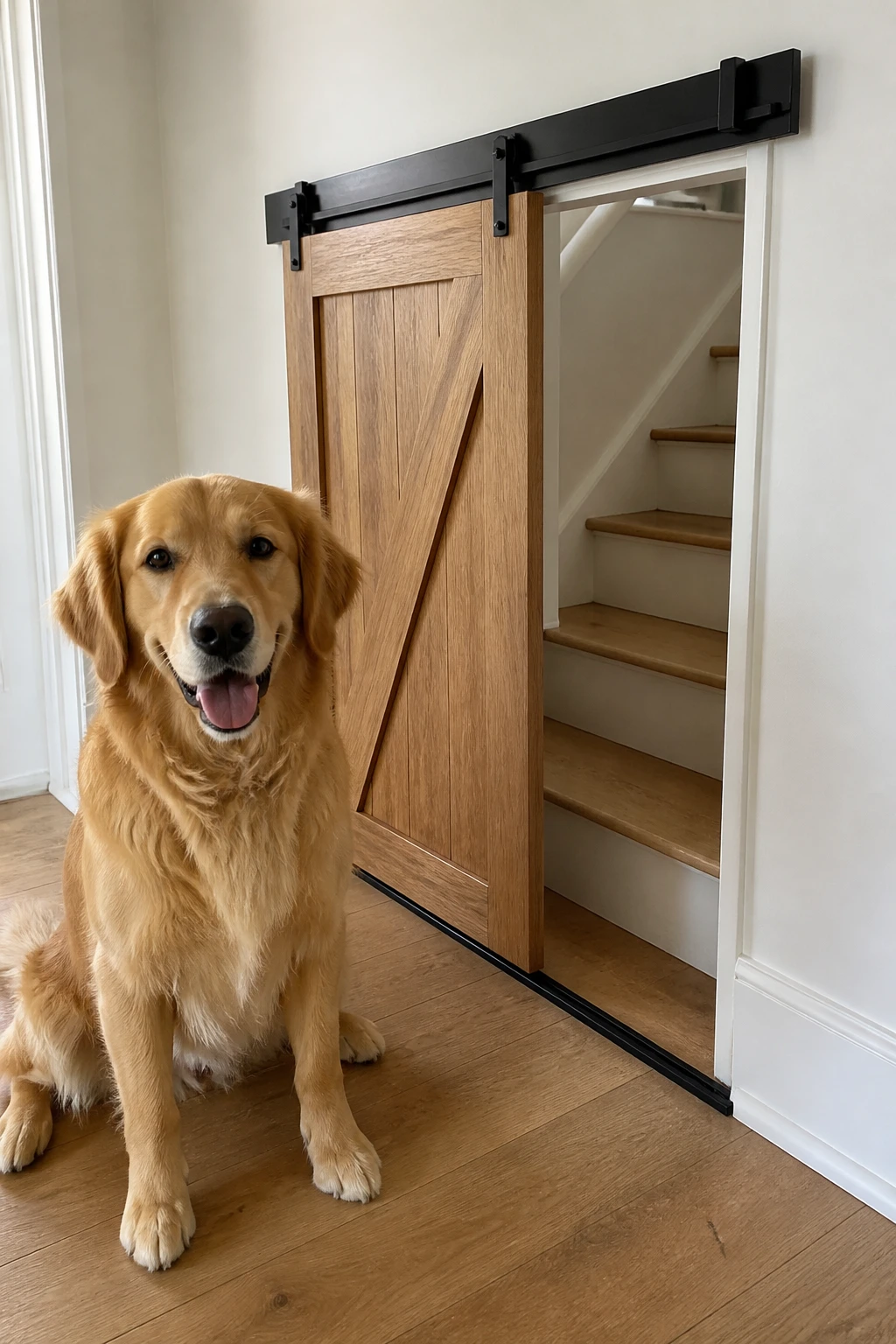
No swing room? Go sliding. A wall-mounted track keeps the gate close to the wall and out of the walkway, which helps in narrow halls or at the base of stairs.
Key Points
- Choose a quiet, enclosed track rated for at least 2x your gate’s weight. Quieter hardware = calmer dogs.
- Add a floor guide so the panel can’t sway. A shallow U-channel screwed to the floor or baseboard works well.
- Install a soft-close kit if your dog head-butts doors. It spares your trim and your nerves.
Build Notes
- Make the gate 1–2 inches wider than the opening so it fully overlaps when closed.
- Use vertical slats with a top rail. Skip horizontal mid-rails that can turn into tiny ladders for agile pups.
- Anchor your header board (a 1×6 or 2×6) to studs, then mount the track to that board. The header spreads the load and avoids drywall blowouts.
Add a recessed finger pull instead of a knob to avoid snagging clothes. Keep at least 1/2 inch between gate and wall to prevent paw pinch points.
Why it rocks: You keep full clearance in tight spaces while adding a statement piece. Worth it if you want function plus an architectural moment.
Best for: Narrow hallways, bottom of stairs, modern farmhouse or loft vibes, multi-dog households.
3. Fold-Flat Accordion Panels You Can Stash in a Closet
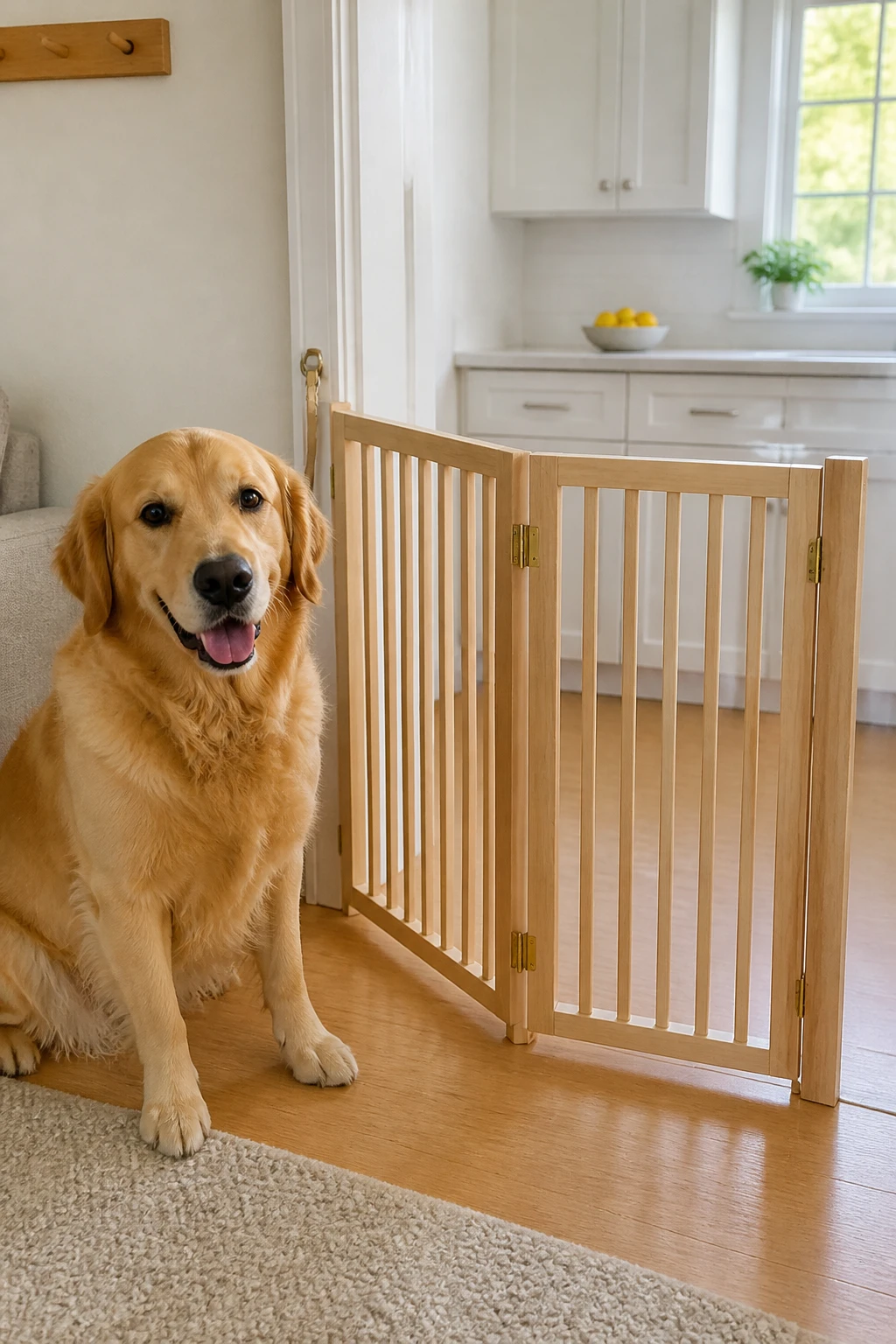
Need a gate you can deploy in five seconds? A tri-fold accordion panel stands on its own, blocks a doorway, and stores behind a coat rack when guests arrive.
What to Use
- Three lightweight frames (1×2 poplar), each 18–22 inches wide
- Two continuous hinges (piano hinges) or pairs of small hinges per joint
- Vertical slats or lattice inserts with openings under 3 inches
- Non-slip silicone feet
Smart Tips
- Alternate hinge directions so the panels zigzag and stand sturdily.
- Add a removable wall tether (Command hook plus a discreet cord) if your dog leans on things.
- Keep the height 1.5x your dog’s shoulder height—usually 28–36 inches for medium pups.
Sand every edge and blunt the hinge corners. Hinges can nip fingers and paws, so cover ends with small wooden caps or felt pads.
Why it rocks: You get flexibility without drilling a single hole. I’d skip this for bulldozer breeds that test boundaries, but it’s great for polite pups and renters.
Best for: Apartments, guest areas, travel, small to medium dogs that respect barriers.
4. Pressure-Mounted Wooden Frame That Respects Rental Walls
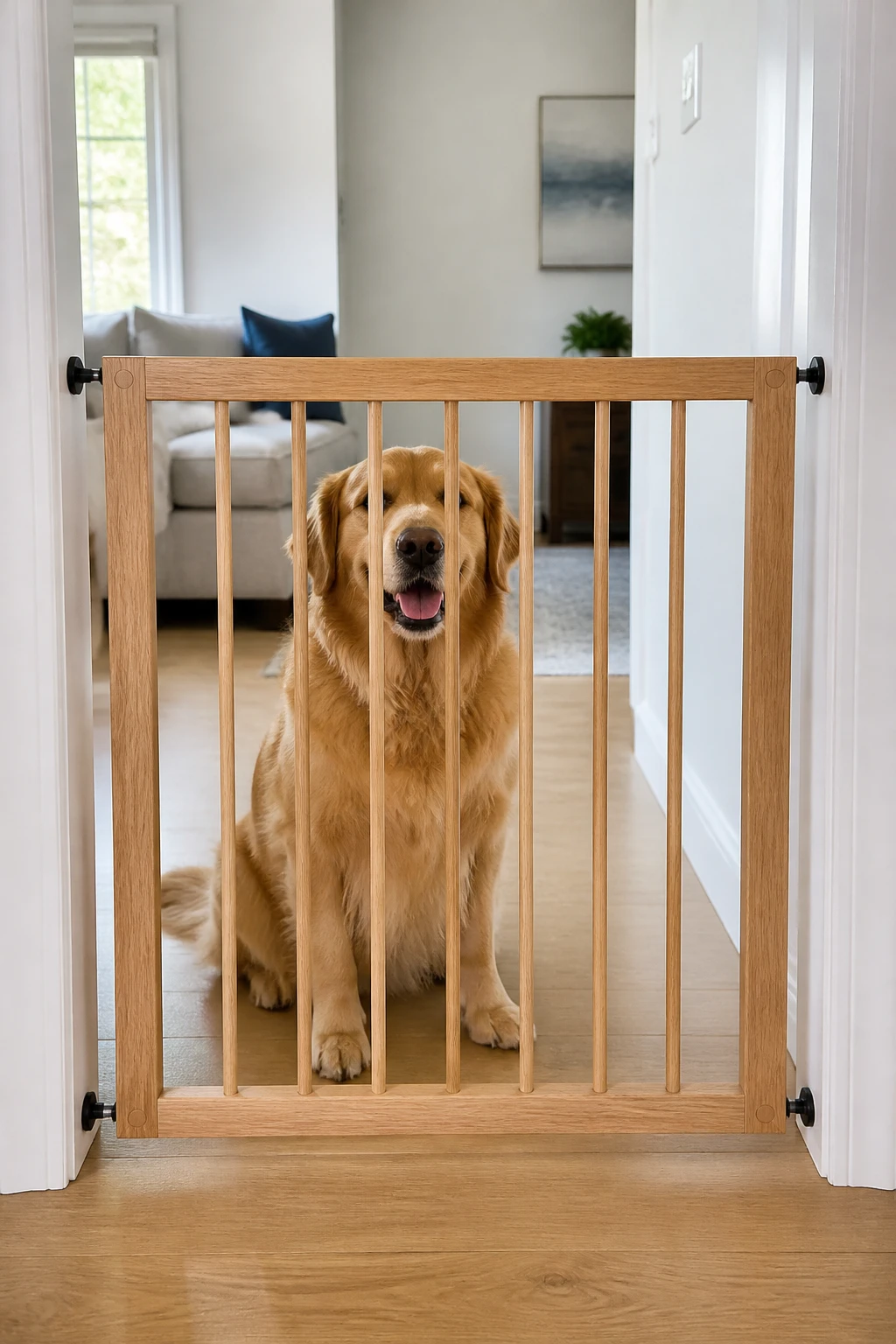
Can’t drill? Build a pressure-fit wooden frame with adjustable feet. It wedges securely, looks far nicer than plastic, and pops out when you move.
Materials
- 1×3 oak or poplar for the outer frame
- Threaded furniture levelers or rubber-tipped jack screws in each corner
- Half-lap or pocket-hole joinery for strength
- Vertical dowels or slats spaced under 3 inches
How to Nail It
- Make the frame 1 inch narrower than the opening. The adjusters fill the gap and create pressure.
- Place two adjusters top and two bottom, offset from corners to avoid trim seams.
- Use felt where the frame contacts painted surfaces. Check pressure weekly so vibrations don’t loosen it.
Add a center handle to pull it out easily. Keep the design low-profile so you can step over it without doing a gymnastics routine.
Why it rocks: It protects walls while looking clean. I’d pick this for small to medium dogs; I’d skip it for powerhouse chewers or jumpers who barrel through anything not bolted down.
Best for: Renters, powder rooms, laundry rooms, mellow pups.
5. Half Dutch Door Conversion That Doubles as a Gate
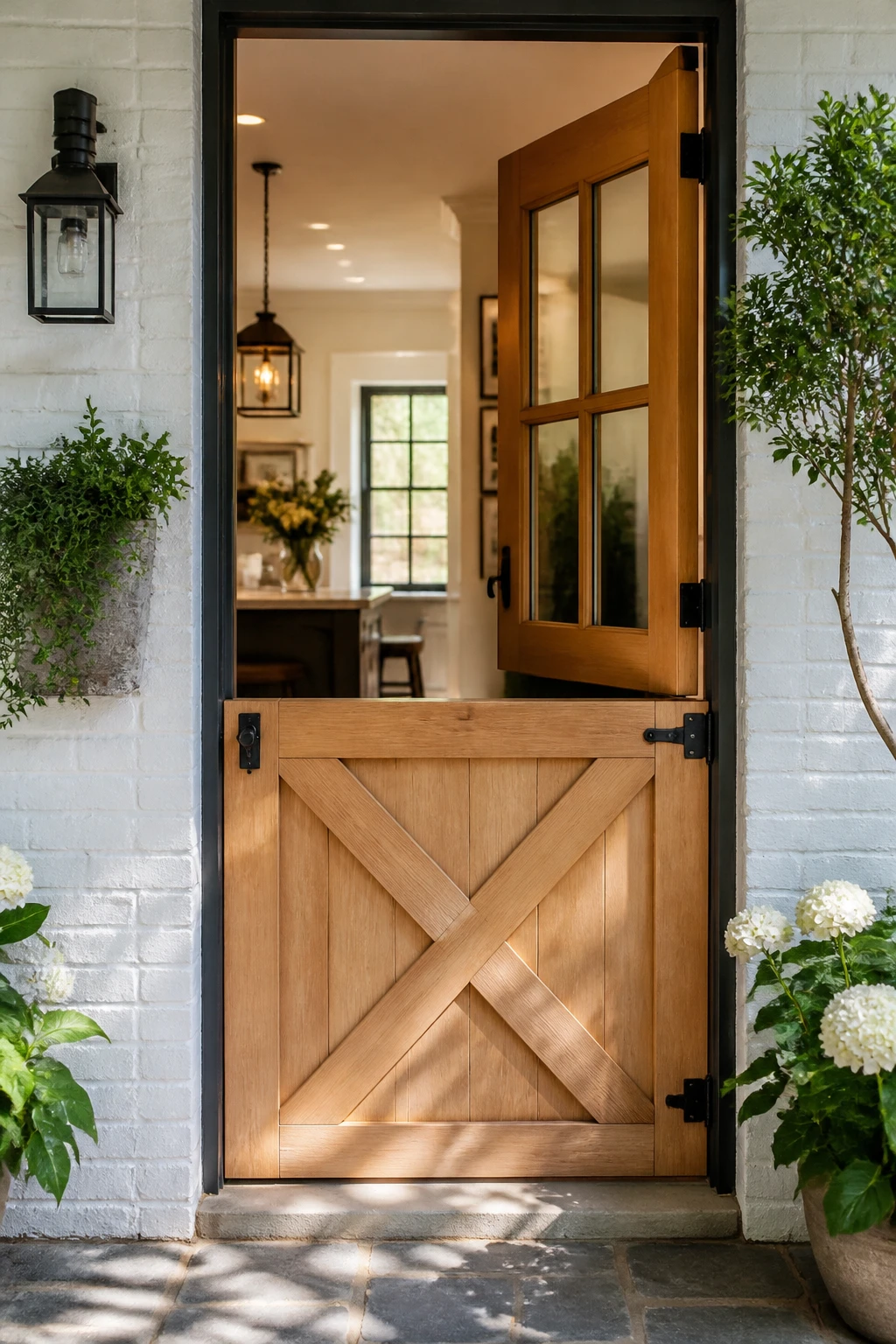
Turn a regular door into a half-height barrier with classic charm. You keep airflow and sightlines, and you can close the full door when you need silence.
Conversion Steps
- Mark a level cut line about 36–40 inches from the floor. Remove the door, cut with a fine-tooth blade, and add a new top cap (1×2) to the lower half.
- Add two additional hinges to the lower section to handle weight. Align them with the original hinge mortises for a crisp swing.
- Install a latch between halves so you can rejoin them as one piece when needed.
Finishing Touches
- Wrap the cut edges with wood edging or a thin hardwood band for durability.
- Use a ball-catch or magnetic latch on the top half so it doesn’t rattle.
- Weatherstrip the seam if you want a quieter close and less pet hair drifting around.
Keep hardware simple and rounded so it won’t catch collars. As always, go with non-toxic finishes, since some dogs sample their surroundings with enthusiastic teeth.
Why it rocks: You get everyday convenience and a custom look in one project. Worth it if you love architectural details and want a long-term solution.
Best for: Main-floor rooms, cottage and traditional homes, families who like flexibility.
6. Stair Newel-To-Newel Gate That Matches Your Railing
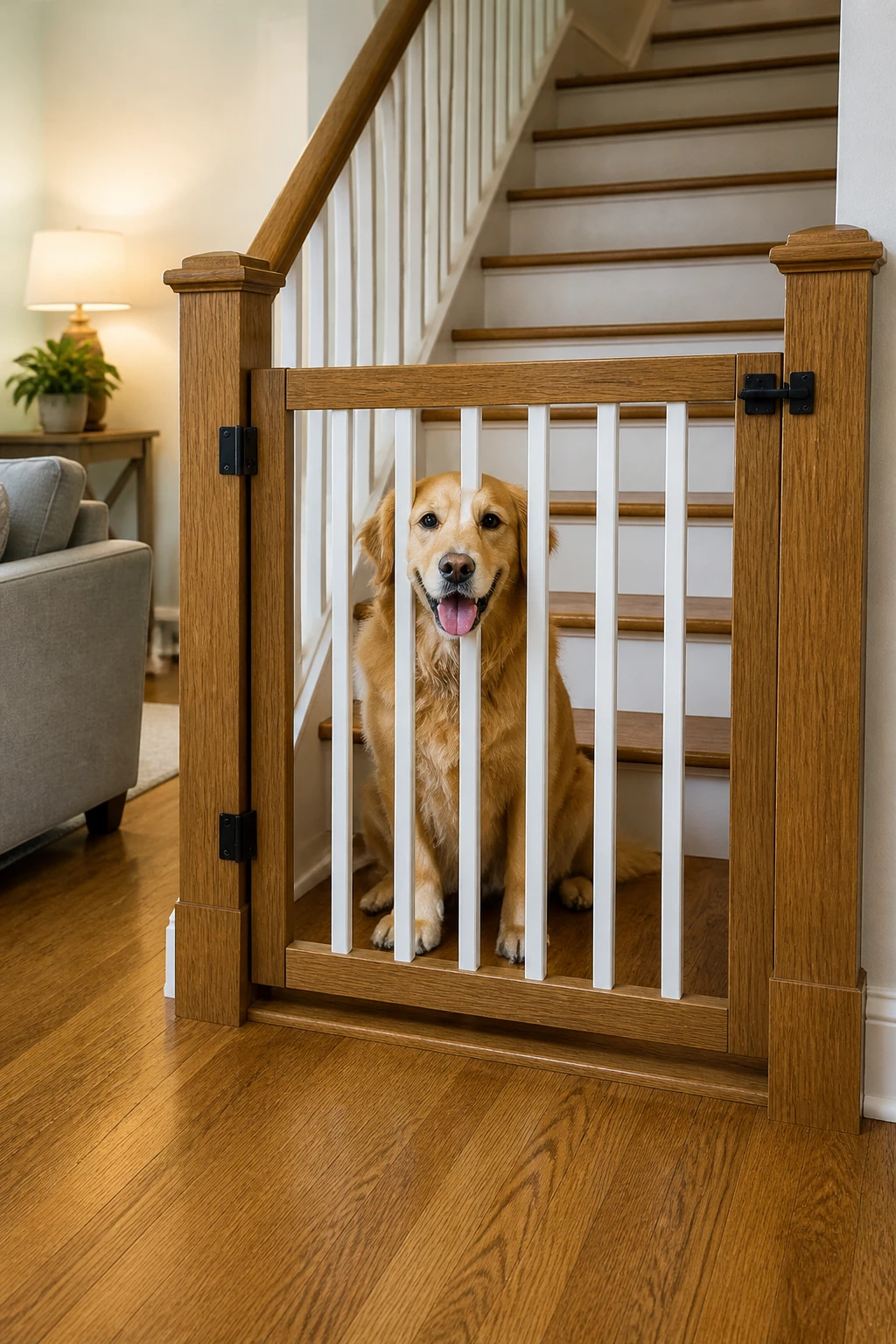
Stairs create tricky angles, but a custom gate tied into your newel posts looks seamless. Build a panel that mirrors your baluster spacing, then mount it with self-closing hinges to keep the gate shut without thinking about it.
Design Moves
- Use the same baluster spacing as your railing. Keep gaps under 3 inches for pup safety.
- Install a strike post on the latch side if you don’t have a full-height newel. A 2×2 wrapped with trim blends right in.
- Add a bottom shoe rail so the panel clears stair nosings and doesn’t drag.
Hardware and Safety
- Pick spring hinges that return the gate to closed. Adjust tension so it closes firmly but doesn’t slam.
- Mount hardware into solid wood—newels or blocking—never just into spindles.
- Use a latch you can operate one-handed from both sides, but mount it above nose level so snoots can’t flip it.
Round over the top rail so it doesn’t tempt climbers. Dogs love a foothold, so keep rails vertical to remove “ladder” opportunities.
Why it rocks: It looks built-in and functions every single day. I’d pick this where kids and dogs mix near stairs, since self-closing hinges reduce human error.
Best for: Top or bottom of stairs, traditional and craftsman homes, energetic households.
Common Mistake to Avoid
Don’t ignore stud anchoring and spacing. Hardware that hits only drywall will fail, and gaps over 3 inches invite accidents. Also skip horizontal mid-rails that dogs can climb. Go vertical, anchor into studs or blocking, sand edges, and seal with pet-safe finishes.
FAQ
How tall should a wooden dog gate be?
Aim for 1.5x your dog’s shoulder height. Most medium dogs need 28–36 inches; larger breeds often need 36–42 inches. If your dog jumps, add height and remove horizontal footholds.
What wood works best for a durable yet lightweight gate?
Poplar and select pine balance weight and cost. Oak and maple last for decades but feel heavier, so use them for frames with thinner slats. Avoid warped construction-grade boards—they fight hinges and look rough.
How do I keep my floors and trim safe from gate wear?
Add felt pads under swing points and a silicone floor guide for sliders. Pre-drill and countersink screws so metal doesn’t scratch trim. Keep at least 1/4-inch floor clearance to avoid rubbing.
Which latch should I choose so my dog can’t pop it open?
Pick a double-action latch or a covered barrel bolt mounted higher than nose level. Magnetic catches feel nice but pair them with a mechanical latch for determined dogs.
What finish is safe if my dog chews the gate?
Use water-based polyurethane or a low-VOC paint labeled for children’s furniture. Let it cure fully per the can (often 7 days) before use. If your dog gnaws wood, add an aluminum edge protector at the latch side.
Can I rely on a pressure-mounted gate for a large dog?
For big, pushy pups, I wouldn’t. Go with a hinged or sliding gate anchored to studs. Use pressure-fit only for smaller dogs or for short-term setups in low-traffic spots.
Pick one project and start with careful measurements—everything gets easier from there. These gates keep pups safe, calm the chaos around stairs and doorways, and make your place look put-together. You’ll wonder why you waited.
🛠️ Want to build your own? Get our printable DIY Wooden Dog Gate Plans with step-by-step instructions, cut lists and exact measurements for 4 sizes.
Ready to upgrade your space? Tap any of the linked products and images above to see our top picks — hand-picked options that blend seamlessly into any home while keeping your pup cozy and secure.
As an Amazon Associate, I earn from qualifying purchases.