This post contains affiliate links. As an Amazon Associate, I earn from qualifying purchases, at no extra cost to you.
Tile chills, concrete bites, and your dog knows it. The fix? Smarter bedding that blocks drafts, traps body heat, and cushions joints. These 8 ideas tackle icy floors head-on with layers, height, and safe warming—without wrecking your decor. Pick one, or stack a couple for a seriously snug setup.
⭐ Our Top Pick: See it on Amazon
1. Raise It Up: Elevated Cot + Insulating Pad
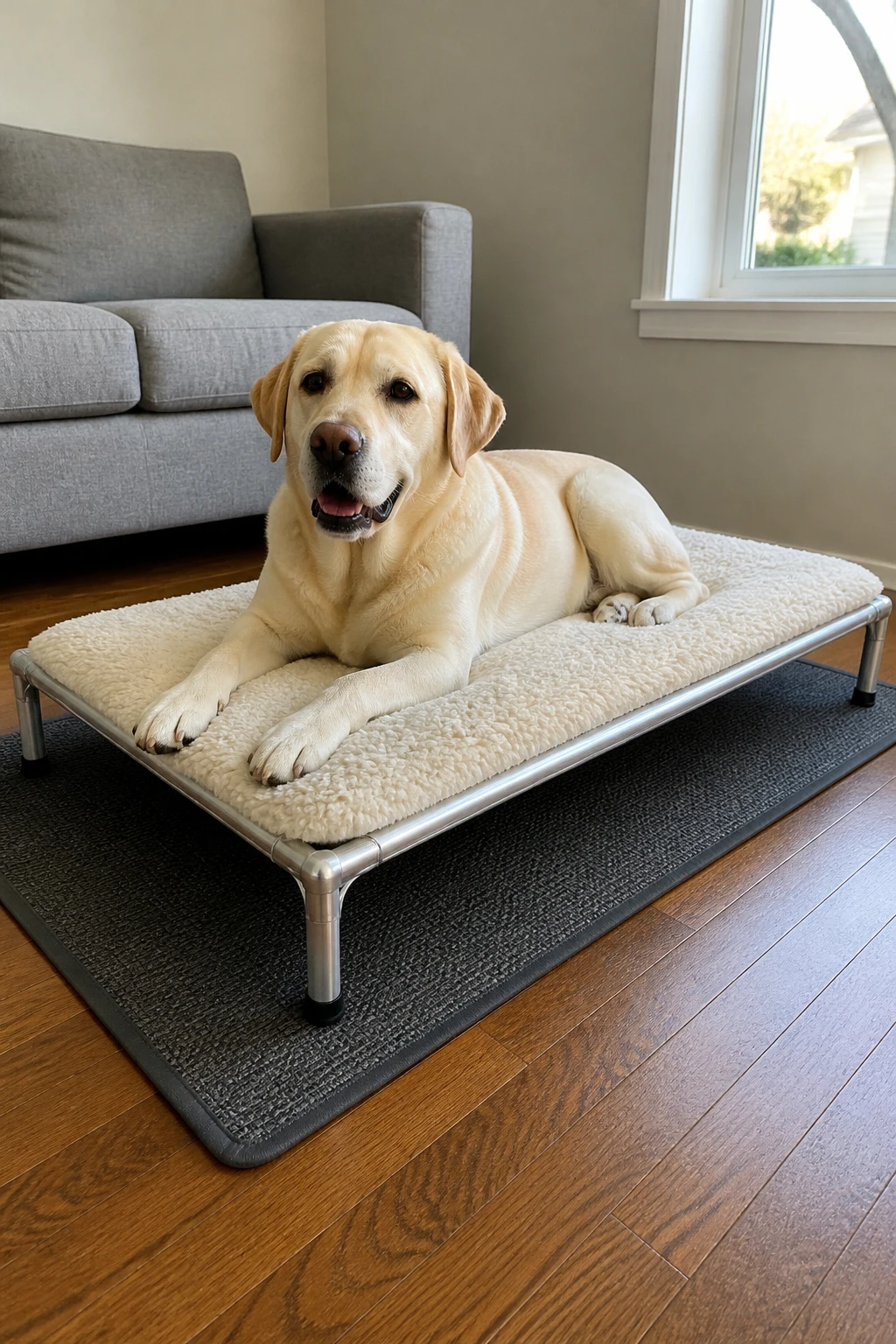
Getting your pup off the floor stops cold transfer instantly. An elevated cot lets air circulate, keeps bedding dry, and pairs perfectly with an insulating topper for winter. It’s clean-looking, easy to vacuum under, and holds shape for larger dogs.
How to Set It Up
- Choose a cot with non-slip feet and a steel or aluminum frame.
- Add a closed-cell foam pad (camping pad style) cut to fit, then cover with a washable sherpa or fleece sleeve.
- Place the cot over a rubber-backed runner to stop drafts from below and protect floors.
I’d pick a cot with fabric tension you can re-tighten; saggy fabric equals cold spots. I’d skip mesh that feels plasticky—dogs slide and won’t settle. This combo shines in basements or laundry rooms where surfaces feel frigid.
Best for: Medium to giant breeds, shedders, and damp rooms where you want airflow plus insulation.
2. Heat-Reflective (Self-Warming) Beds That Don’t Plug In
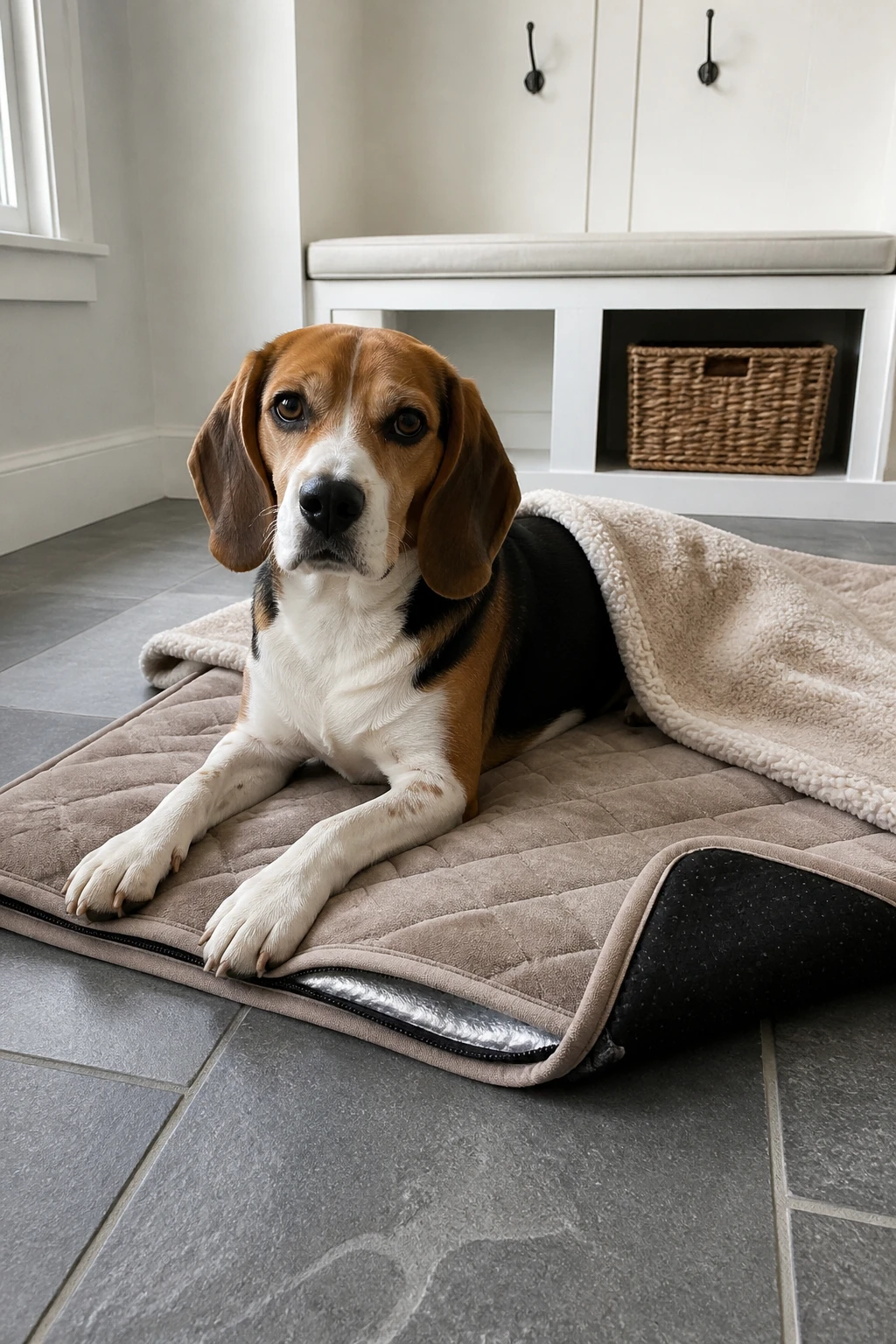
Prefer no cords? Self-warming beds use a thin heat-reflective layer to bounce your dog’s body warmth back to them. No electricity, minimal risk, and impressively effective under a plush cover.
What to Look For
- Quilted construction that hides the reflective layer—less crinkle noise.
- Grippy underside so it doesn’t skate on slick tile.
- A removable, machine-washable cover with sturdy stitching.
Slip one inside a bolster bed or under a favorite blanket to amplify the effect. Worth it if your pup loafs in one spot for long stretches; skip it for power chewers who’ll rip thin fabrics. Safety bonus: no heat source to monitor.
Best for: Apartment living, anxious dogs who like a quiet nest, anyone avoiding electrical beds.
3. Orthopedic Foam Bed With A Thermal Base Layer
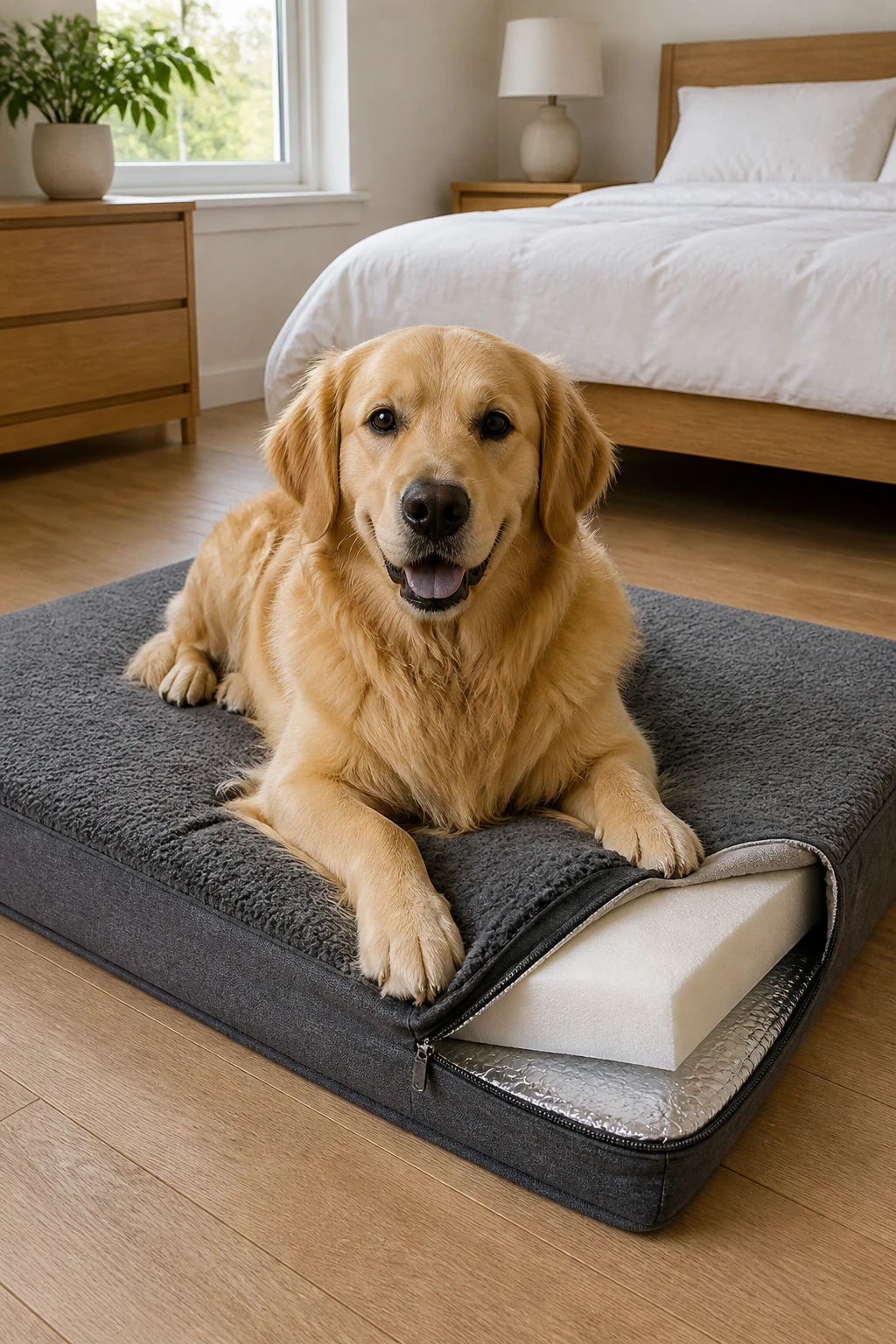
A thick orthopedic mattress eases pressure points and blocks the chill when paired with a proper base. The trick is stacking smart: foam for joints, then a thermal barrier under the cover so the cold can’t creep up.
Key Tips
- Pick 4-inch high-density foam (real orthopedic, not squishy fluff).
- Add a reflective bubble-foil pad or closed-cell foam sheet beneath the insert, inside the cover if there’s room.
- Use a waterproof liner to protect the foam, then a soft top cover for traction.
Rotate the mattress monthly to keep it from developing cold “valleys.” I’d pick zippered covers with hidden seams—easier to wash and harder to chew. Great when joints feel stiff or when your dog avoids lying down on bare surfaces.
Best for: Seniors, big breeds, and any pup recovering from activity who needs cushioned support.
4. Low-Watt Heated Bed (With Real Safety Features)
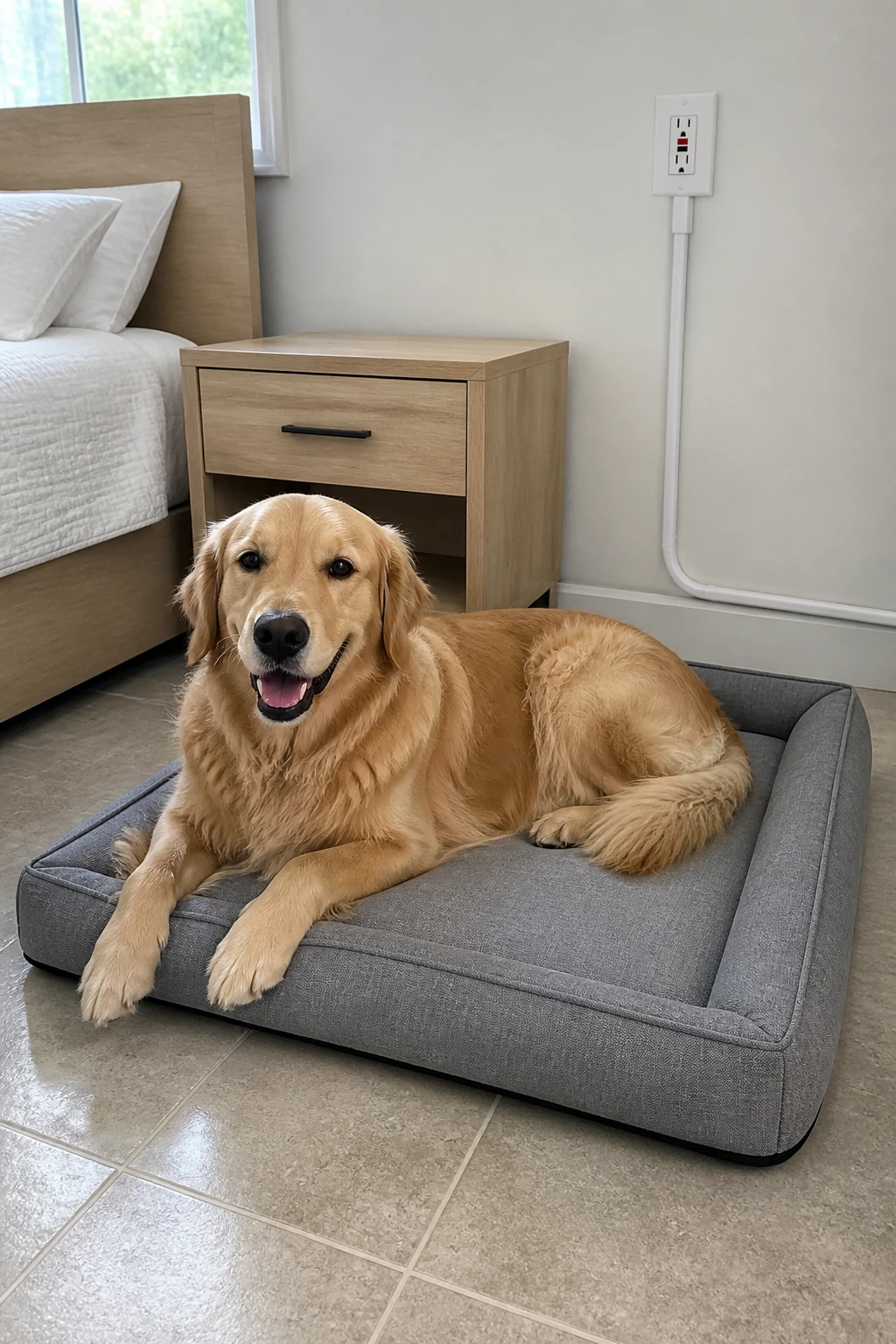
When temperatures dip, a thermostatically controlled heated bed can help your dog relax and loosen tight muscles. Choose one purpose-built for pets with chew-resistant features and a modest temperature range.
Safety Checklist
- Thermostat-limited heat (typically warms to your dog’s natural body temp).
- Chew-resistant, steel-wrapped cord and a GFCI outlet.
- Place under or inside a bed with clearance—never bury the heater under thick layers.
Always supervise early sessions and watch for licking, scratching, or signs of overheating. I’d pick a mat you can wipe clean; I’d skip any off-brand without clear safety certifications. Amazing for drafty corners when you want consistent warmth without cranking the whole house.
Best for: Short-coated breeds, arthritic pups, and supervised lounge time in a chilly room.
5. The Winterized Crate: Cover, Elevate, and Draft-Block
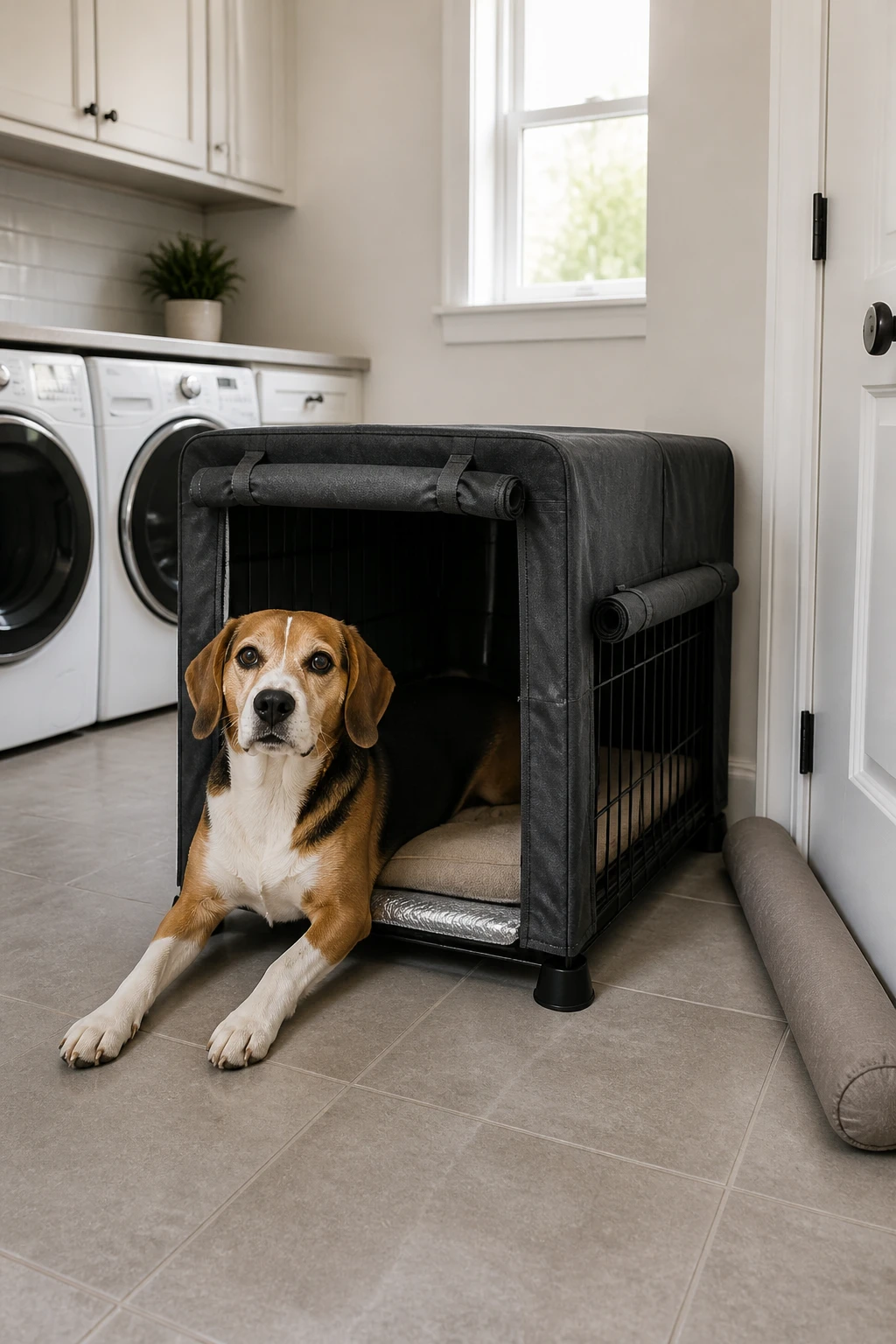
Turn your dog’s crate into a snug den without suffocating airflow. A tailored cover blocks breezes, while a raised base and crate pad add insulation and support.
Setup Steps
- Use a fitted crate cover with roll-up sides for adjustable ventilation.
- Lift the crate slightly with rubber furniture cups or a low platform to stop cold seeping up.
- Slide in an orthopedic crate mat plus a thin reflective layer beneath it.
- Seal gaps along the floor with a door draft stopper—outside the crate, away from chewing.
Don’t drape heavy blankets over every panel; air still needs to circulate. I’d pick canvas-style covers that won’t snag; I’d skip thick quilts inside the crate for unsupervised chewers. This works wonders if your dog prefers a cave-like spot.
Best for: Dogs who sleep best in a den, nighttime setups, and consistent schedules.
6. High-Sided Donut or Bolster Bed That Traps Body Heat
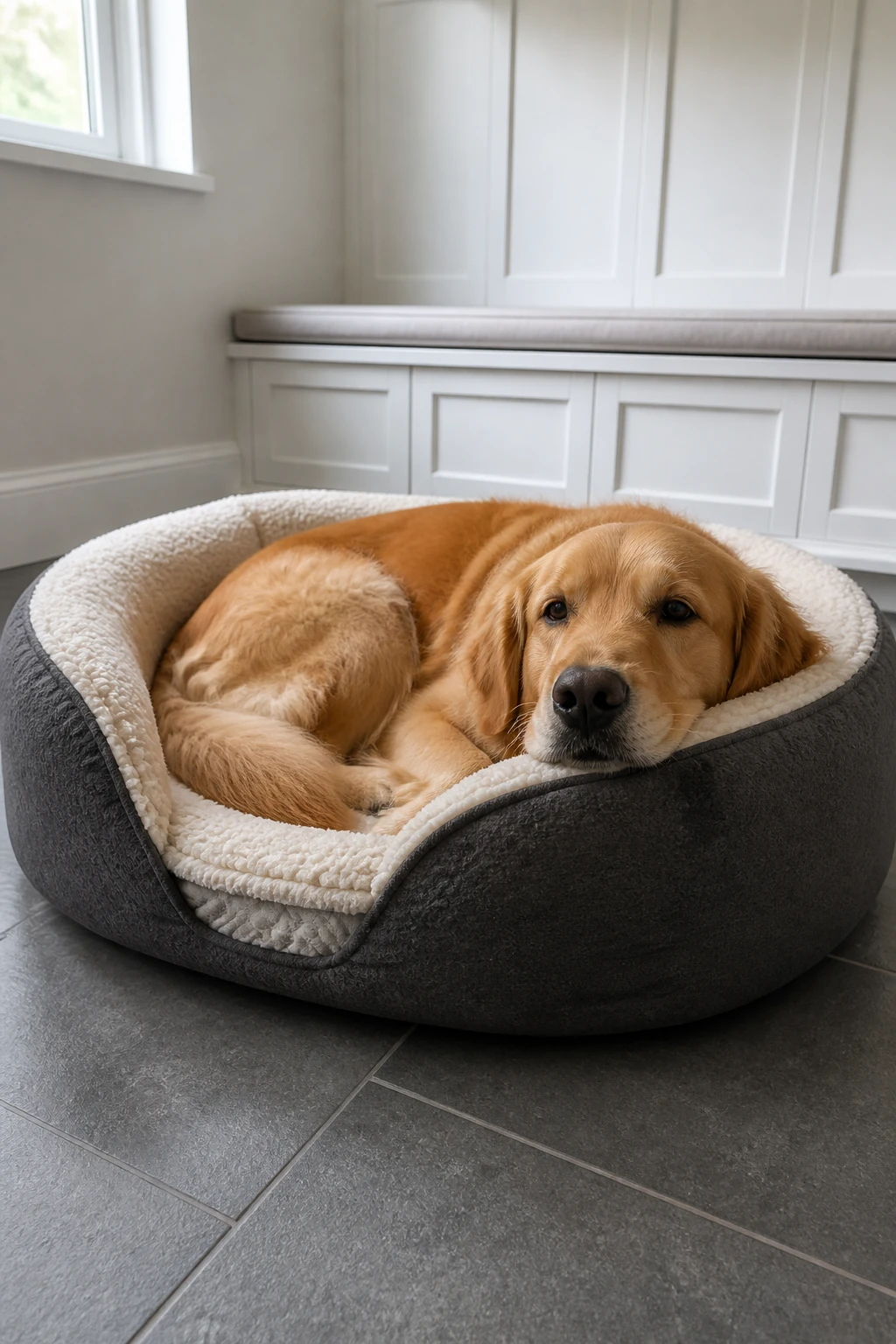
Walls matter. Tall bolsters shield from breezes at ground level and give neck support. Line the base with a thermal insert and you’ve got layers that keep heat where it belongs.
Buying Tips
- Size up one so your dog can curl and stretch comfortably.
- Choose dense, supportive bolsters over floppy rims.
- Look for removable covers made from sherpa, microvelour, or teddy fleece—easy to launder.
If your dog sprawls like a starfish, pick an oval with a lower front entry. I’d skip beds that flatten in a week—they won’t block drafts. Bonus: these beds look great in living rooms and blend into adult furniture, not a pup-only zone.
Best for: Curlers, small to medium dogs, and open rooms where breezes skim the floor.
7. Wool-On-Wool Layering: Rug + Bed + Throw
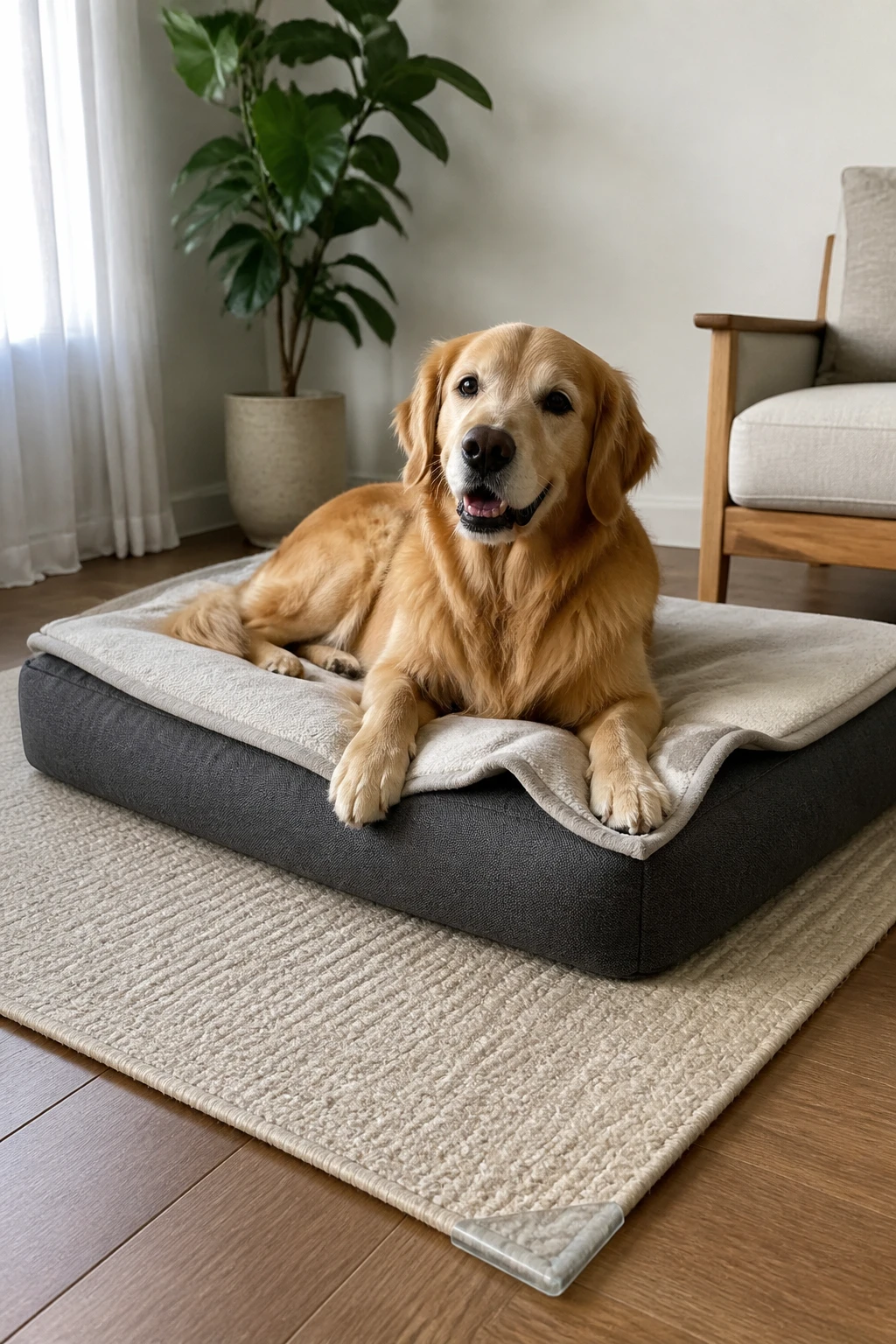
Layering natural fibers creates a thermal sandwich under and over your dog. Wool resists moisture, insulates even when damp, and lasts ages with the right care.
How to Layer
- Start with a wool or wool-blend rug (2×3 or runner) under the bed to cut ground chill.
- Add your dog’s favorite mattress or bolster bed.
- Top with a washable wool throw for burrowers to nuzzle into.
Use a rug pad or silicone corner grippers so the base layer won’t slide. Wool costs more, but it earns its keep through durability and odor control. I’d pick machine-washable blends if you want low maintenance.
Best for: Style-conscious spaces, dogs that nest, and areas close to doors where damp paws happen.
8. Quick DIY Insulated Base You Can Hide Under Any Bed
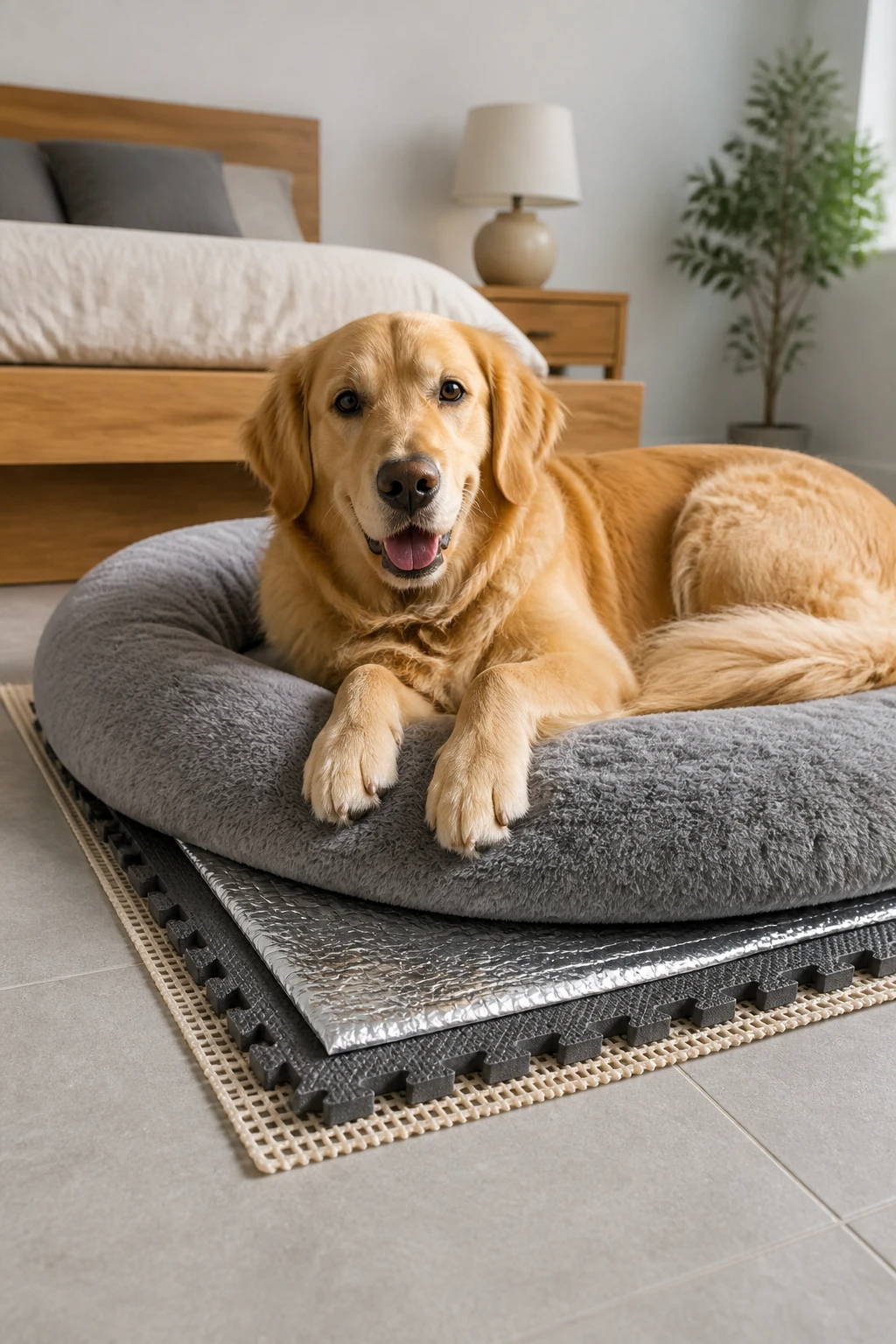
Don’t want to buy a whole new setup? Sneak in a discreet thermal base under the bed your dog already loves. You’ll lift them just enough to interrupt floor chill, plus add a heat-reflective layer.
Materials
- Interlocking EVA foam tiles or a yoga mat (cut to size)
- Reflective bubble-foil insulation (trim to fit)
- Non-slip rug pad to prevent sliding
Assembly
- Lay the rug pad, then EVA tiles, then the reflective sheet shiny side up.
- Place the dog bed on top and check for wobble or rustle—adjust layers as needed.
- Tape edges on the underside if curious chewers live here, and inspect often.
I’d pick this hack for renters and budget fixes; I’d skip it for heavy chewers who peel layers. It’s fast, reversible, and you can move it room to room when sunlight shifts.
Best for: Budget-conscious upgrades, guest rooms, and travel setups where floors feel icy.
Common Mistake to Avoid
Don’t pile so many blankets on top that your dog sinks to the floor anyway. Thickness means nothing if the bottom layer touches cold tile or concrete. Always start with a ground barrier (elevation, foam, or reflective layer), then build up with cushioning and soft textures.
FAQ
How thick should a winter dog bed be for drafty rooms?
Go for at least 4 inches of dense foam or a multi-layer stack that includes a thermal barrier under the cushion. Thickness alone won’t fix cold transfer, so elevate slightly or add a reflective base beneath the bed.
Are heated dog beds safe to use overnight?
They can be, if you choose a pet-specific mat with a thermostat, chew-resistant cord, and use a GFCI outlet. Keep cords out of reach, avoid burying the heater under heavy layers, and monitor during the first few nights. If your dog chews cords, skip electrical options and use self-warming or layered solutions instead.
What’s the best spot to place a bed in winter?
Avoid door drafts, exterior walls, and floor vents. Corners with two interior walls hold warmth better, and placing the bed over a rug or small platform boosts comfort. Sun patches in the afternoon can also help, just rotate as light moves.
Do I need a waterproof liner in winter?
Yes, especially with snow, slush, and damp paws. A waterproof liner protects foam from moisture that steals heat and creates odors. Choose one that zips closed fully so the insert stays dry after walks.
What if my dog runs hot and kicks off bedding?
Use breathable layers: an elevated cot with a thin sherpa topper or a bolster bed with a lighter microfleece cover. Skip deep shag fabrics and keep the base insulated so your dog stays comfortable even when they push blankets aside.
Winter floors don’t stand a chance when you combine height, insulation, and smart fabrics. Pick one idea to try this week, and layer a second if your house runs extra chilly—your dog will claim the warm spot and refuse to trade it for anything, including your couch.
As an Amazon Associate, I earn from qualifying purchases.