This post contains affiliate links. As an Amazon Associate, I earn from qualifying purchases, at no extra cost to you.
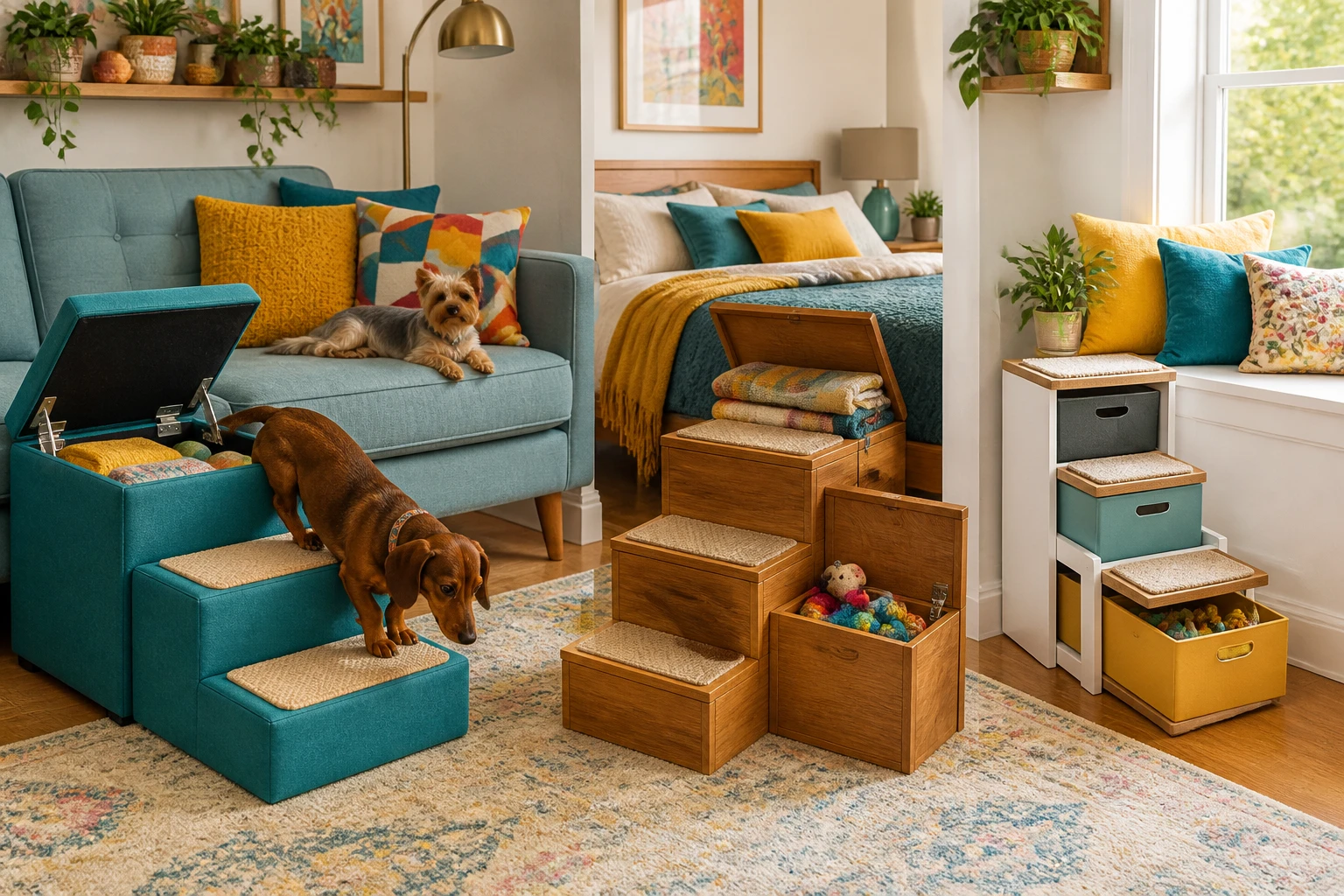
Small dogs deserve a safe boost onto couches and beds—without turning your place into a pet obstacle course. These 6 DIY dog stairs double as storage, look polished, and won’t hog your floor. Build one weekend project, stash blankets and leashes inside, and watch your pup strut up like a champion. Ready to make a smarter step-up that actually looks good?
⭐ Our Top Pick: See it on Amazon
1. Flip-Top Ottoman Stairs That Hide Everything
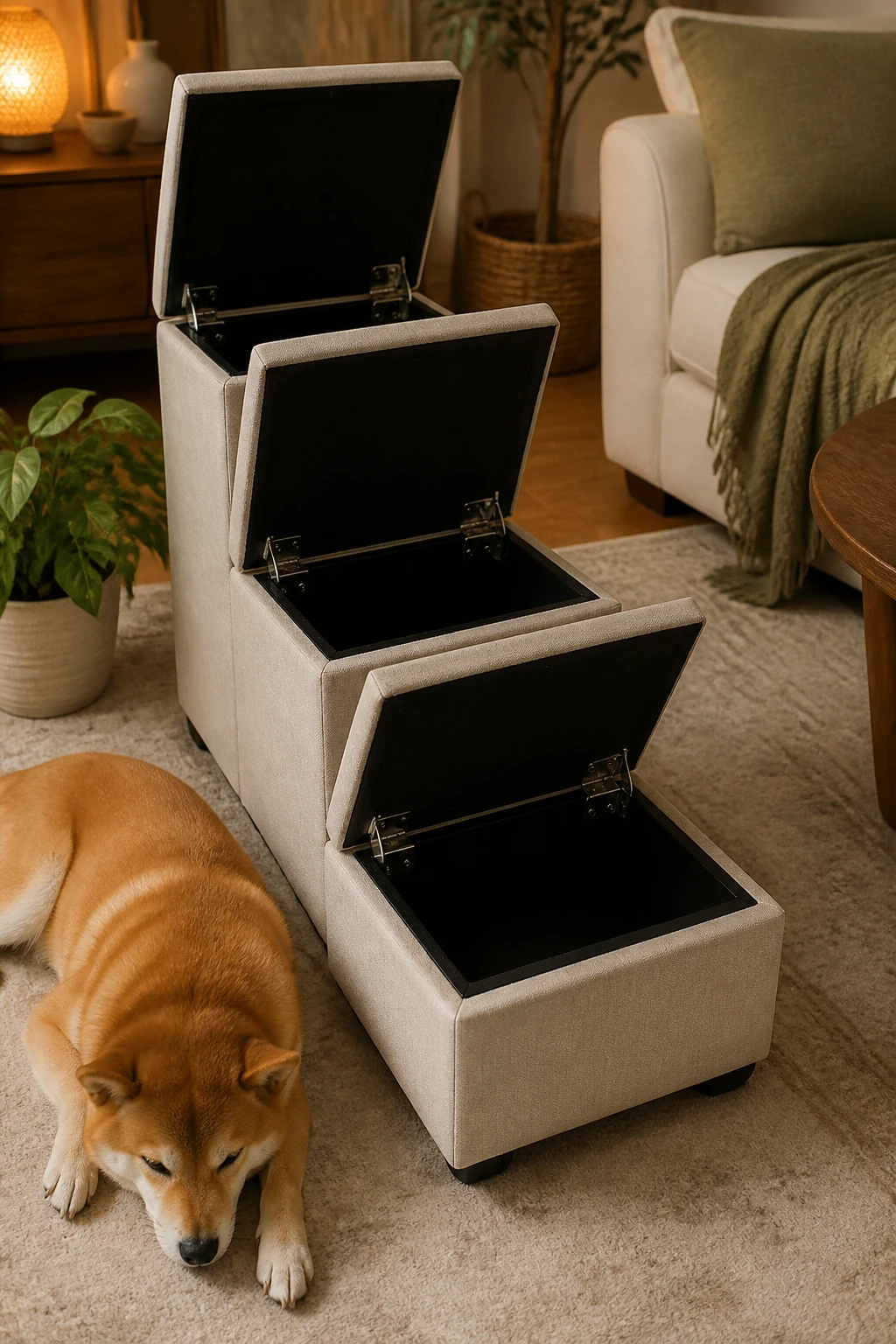
Love a clean living room? This three-step “stair-ottoman” uses hinged lids so each tread opens like a storage chest. You’ll tuck blankets, grooming tools, or extra harnesses inside and still give your dog a comfy lift to the couch.
Materials
- 3/4-inch plywood or pre-cut furniture panels
- Piano hinges or soft-close lid supports
- Non-slip stair tread tape or low-pile carpet tiles
- Wood glue, screws, and edge banding (optional)
- Upholstery foam and durable fabric (optional)
Cut three nested boxes: each step slightly smaller and set back to form stairs. Hinge the lids at the back so they open away from the dog’s path. Add foam and fabric to the treads or stick down carpet tiles—no loose staples where paws could snag. Keep the front edges slightly rounded (sand well) to prevent shin bumps and paw scrapes.
Tips
- Keep risers 4–6 inches high for small breeds.
- Use soft-close supports so lids don’t slam near sensitive ears.
- Line interiors with peel-and-stick vinyl for easy wipe-downs.
Best for: Apartments and living rooms where clutter needs to vanish. I’d pick this if you want multipurpose furniture that passes the “looks intentional” test.
2. Crate-Cubby Stair Tower for Bedside Access
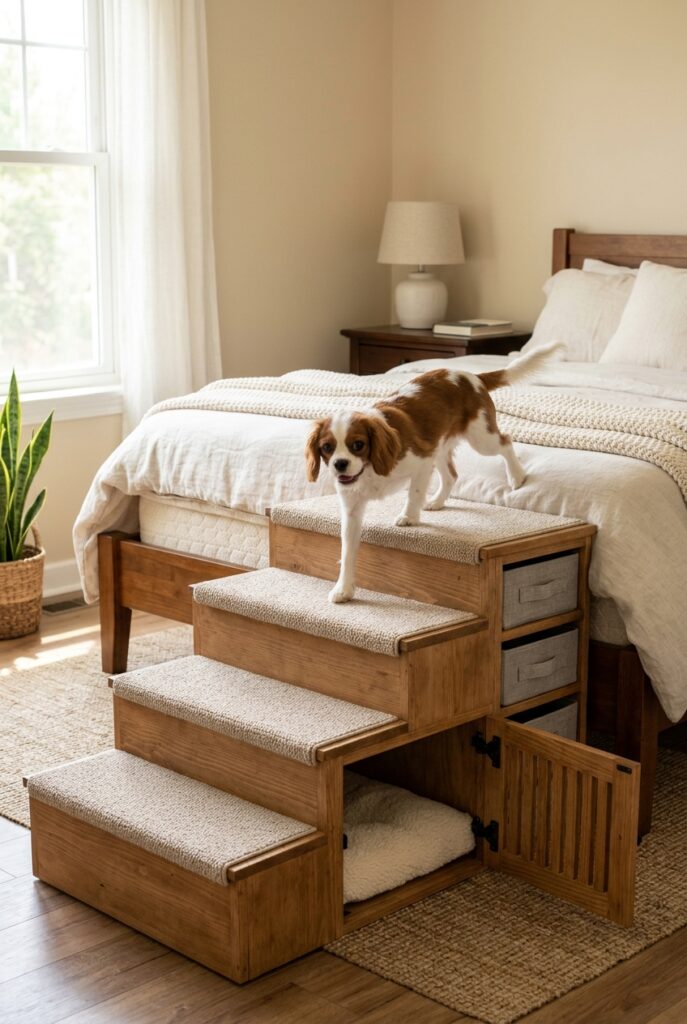
Turn vertical space into function with a slim nightstand that doubles as steps. Think stacked cubes: the top two form the staircase, and the bottom one holds a small dog crate or open cubby with bins.
Key Points
- Make a vertical unit about mattress height, then step down 6–8 inches per tread toward the room.
- Build a lower cube sized for a small crate or basket set—leave good airflow.
- Fasten the unit to the wall with L-brackets to prevent wobble.
Add felt pads under bins so they slide quietly. For traction, use ribbed rubber mats cut to size. If you include a crate, skip anything with dangling ties or string; use snug-fitting covers or a fitted fabric panel with Velcro tabs on the outside.
Safety and Setup
- Round over front step edges with a router or sandpaper.
- Anchor to studs—no “tower of terror” at 2 a.m., please.
- Place away from heaters and avoid power cords near the steps.
Best for: Tight bedrooms where you want a nightstand, storage, and a safe bed ramp in one. Worth it if you need a stable, anchored solution for jumping-averse pups.
3. Modular Milk-Crate Hack (Upgraded and Chic)
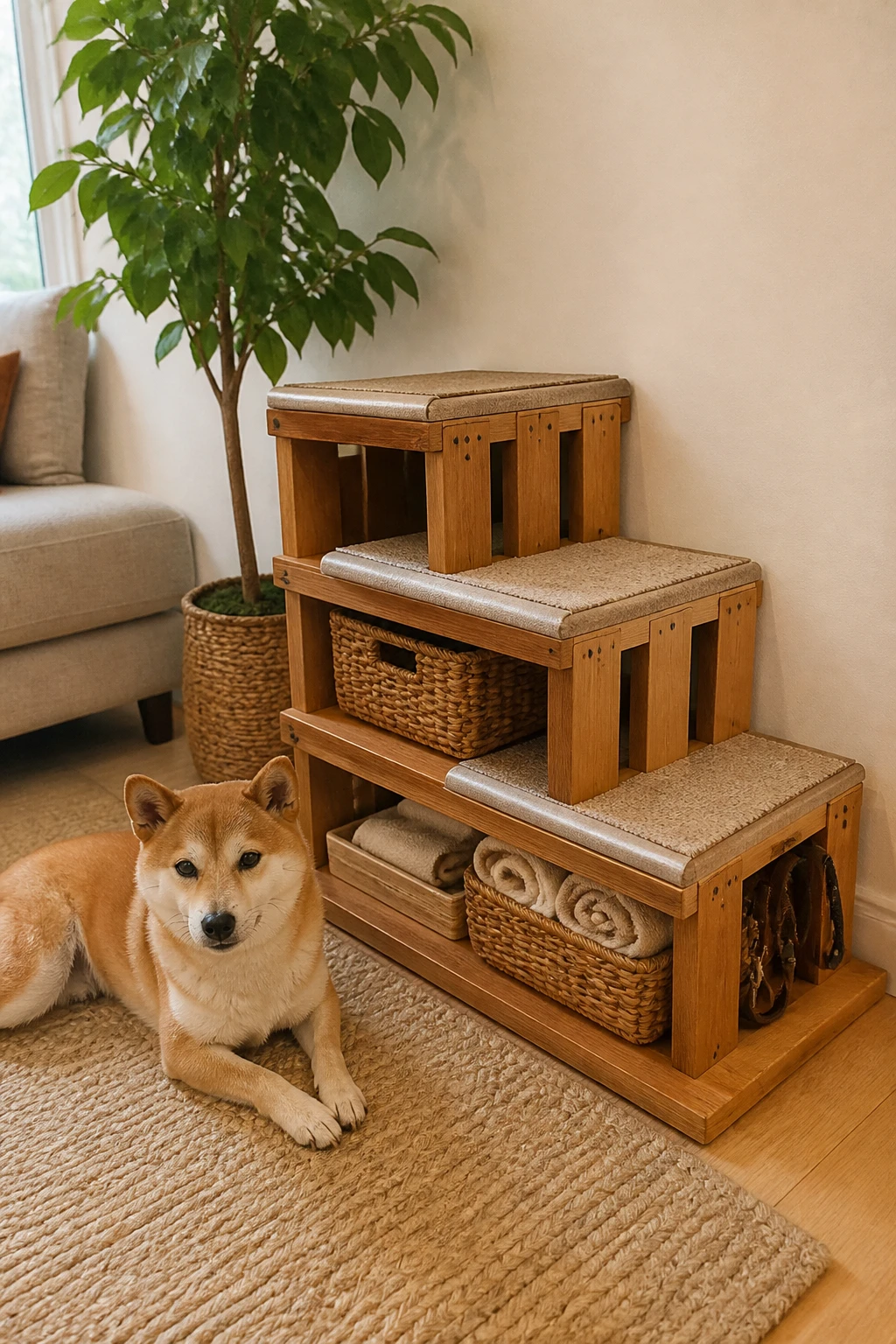
Want a fast weekend build? Reinforce three sturdy wooden crates or furniture-grade cubes and stack them into steps with the open faces toward the side for hidden storage. Slide baskets, rolled towels, and leashes inside—easy.
How-To
- Use wood crates rated for weight, not flimsy decor-only ones.
- Stack two crates for the highest step, one for the next, and none for the lowest—forming a 3-step triangle.
- Screw crates together and to a plywood base to stop shifting.
- Top with cut-to-size anti-slip rug pads or cork sheets glued down.
Paint or stain the exterior and seal with water-based poly for durability. Skip glossy finishes; paws grip better on satin or matte. If your dog chews, avoid exposed woven baskets—go with smooth bins that can’t unravel.
Quick Tips
- Attach a side panel of thin plywood to hide the crate openings for a streamlined look.
- Add a wall cleat if it sits against a bed or sofa to keep everything snug.
Best for: Budget-friendly builds and renters who want a no-saw approach. I’d skip this for very energetic jumpers unless you add that base plate and wall anchor.
4. Slide-Out Drawer Stairs Under a Bench
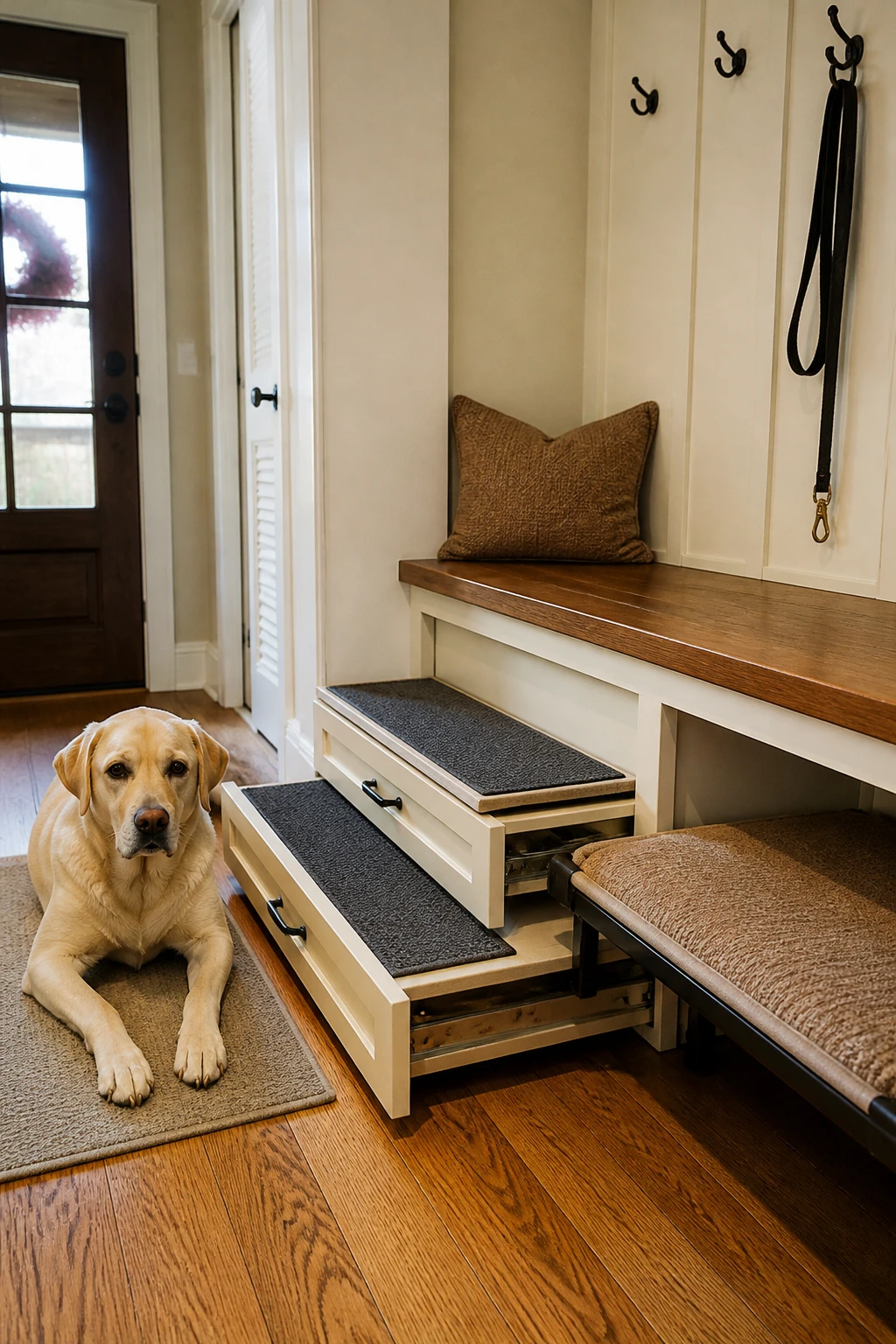
Build a hallway or mudroom bench with secret slide-out steps. Pull the drawers forward, and boom—instant stairs for getting onto the bench or a raised dog bed nearby. Push them in when you need floor space.
Design Notes
- Use heavy-duty, full-extension slides rated 100 lb+ per drawer.
- Face frames sit flush with the bench to keep a clean line.
- The top of each “step drawer” gets a fixed tread with non-slip covering.
Each drawer box stays closed with magnetic catches or a child-safe latch so curious pups don’t nose them out mid-zoomies. Inside the bench, store shoes, towels, or a foldable crate mat. Keep chemical cleaners elsewhere—dog noses explore everything.
Build Tips
- Reinforce drawer bottoms with 1/2-inch plywood so they don’t flex.
- Leave 1/8-inch clearance on sides for smooth sliding and zero paw pinches.
- Mark a small dot on the face so you know which drawer is which step.
Best for: Entryways and compact spaces that need flexibility. Worth it if you love clever, out-of-sight solutions and have a pup who waits patiently while you pull the steps out.
5. Carpeted Stair-Cubby Bookcase Hybrid
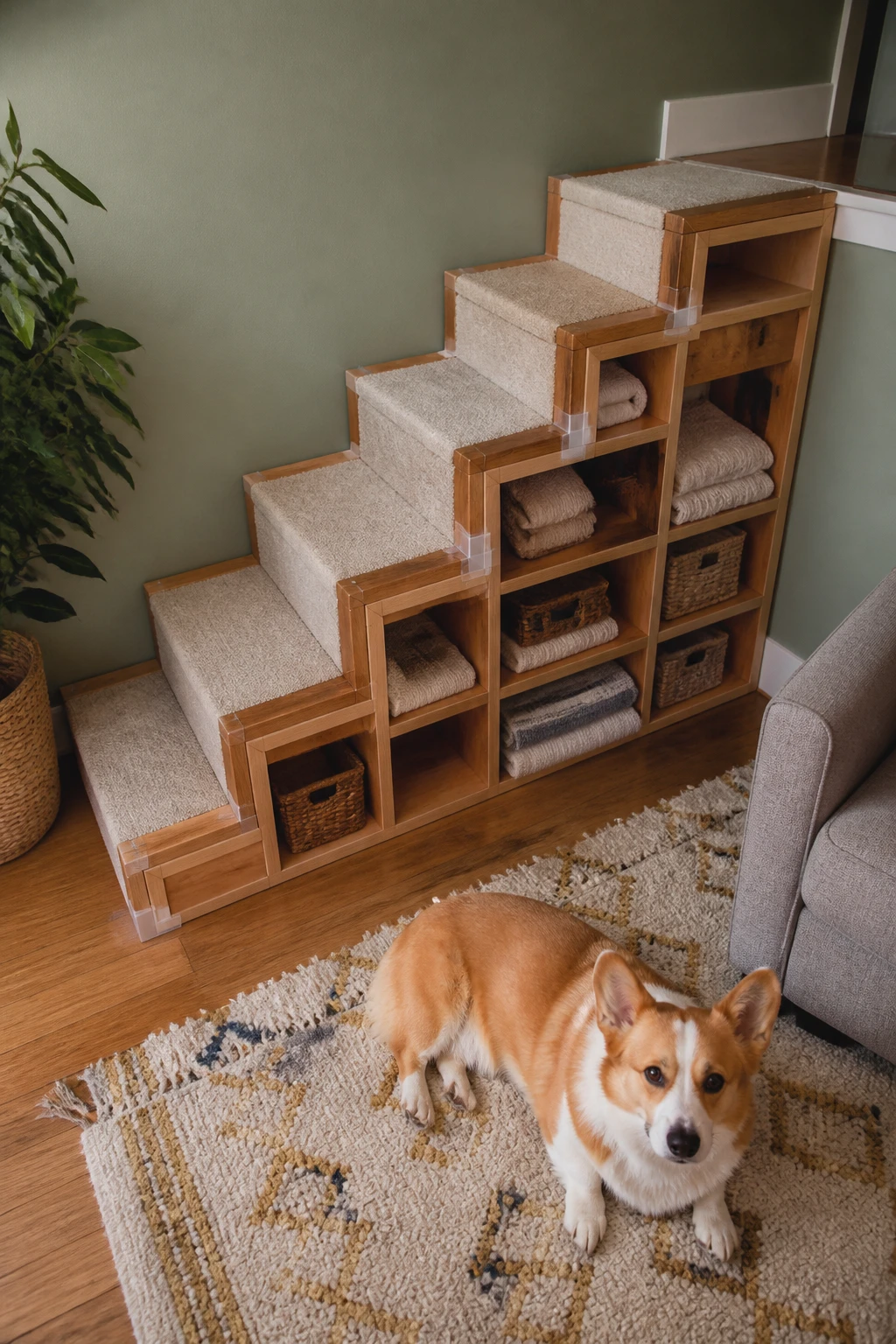
If you like the “stair shelf” look, this one nails it. Build a stepped bookcase profile where each tread is deep enough for paws, and the vertical spaces underneath become cubbies for baskets and folded throws.
Materials
- 3/4-inch plywood, pocket-hole screws, wood glue
- Edge banding or solid wood trim
- Low-pile carpet tiles or textured stair runners
- Corner guards for outside edges (clear or wood)
Plan for 10–12 inches of tread depth so paws land securely. Wrap each tread with a carpet tile cut flush and stuck down with carpet tape for easy replacement. Want color? Paint cubby interiors and keep treads neutral so your dog focuses visually on the walking surface.
Layout Tips
- Height per step: 5 inches for toy breeds, 6 inches for slightly bigger small dogs.
- Secure to a wall stud line with a French cleat for rock-solid stability.
- Keep books and decor in upper cubbies; use lower ones for soft goods only.
Best for: Living rooms and dens where shelves meet function. I’d pick this if you want display space without sacrificing your pup’s safe path to the sofa.
6. Foldable Ramp-Stair Combo With Under-Step Bins
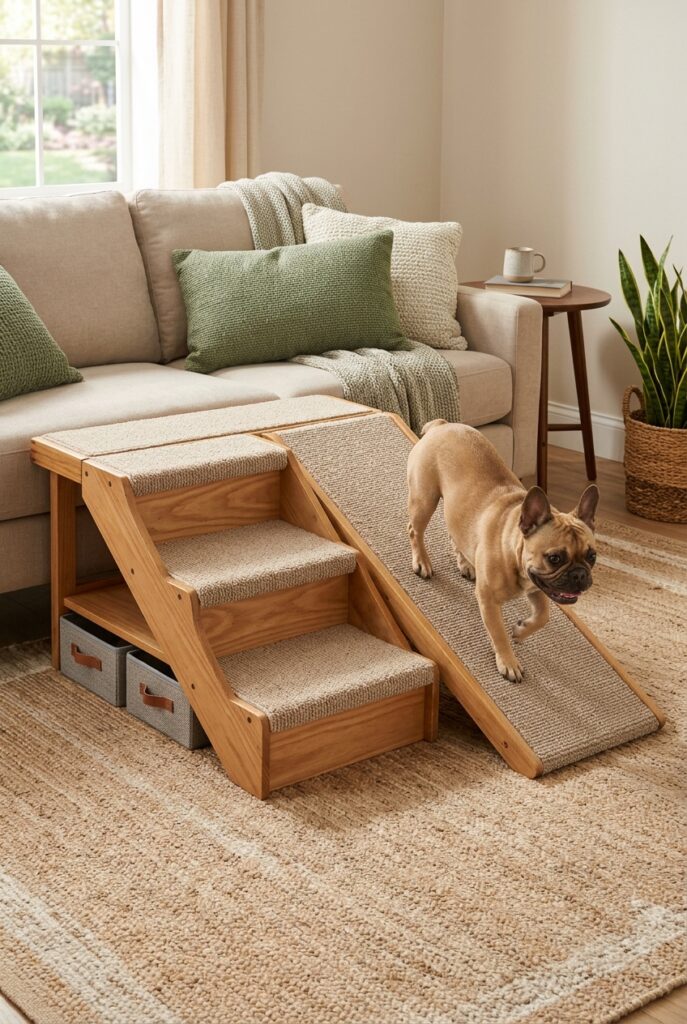
Can’t decide between stairs and a ramp? Do both. Build two hinged stair modules that fold out into a gentle ramp, with shallow bins tucked beneath the treads for collars and waste bags.
How It Works
- Two boxes hinge along the long edge; opened flat, they form a ramp.
- Closed and stacked, they create 3–4 low risers.
- Inside, dividers create small compartments with finger holes for easy grab-and-go.
Cover the walking surface with rubber runner material or marine-grade carpet. Add a folding leg under the midpoint when used as a ramp for extra support. Use locking lid supports so the units don’t collapse when paws hit the edge—non-negotiable for safety, seriously.
Build and Use Tips
- Install barrel bolts to lock the modules in stair mode.
- Add side rails (1-inch strips) in ramp mode to guide nervous pups.
- Store flat under the bed when you need it out of sight.
Best for: Multi-room use and travel between bed and sofa. Worth it if your dog prefers a low-angle approach or has joint concerns.
Common Mistake to Avoid
Don’t build steps that are too tall or slick. Anything over 6 inches per rise feels like a leap for tiny legs, and shiny finishes can turn into a slip-n-slide. Also, avoid open-back steps that can catch paws or collars; enclose risers or reduce gaps. Finally, skip decorative hardware on treads—no knobs, nails, or staples where paws land.
FAQ
How high should each step be for a small dog?
Stick to 4–6 inches per rise. Toy breeds appreciate 4–5 inches, while sturdier small dogs handle 6 inches. Keep tread depth around 10–12 inches so pups can place all four paws securely.
What’s the best non-slip surface for dog stairs?
Textured rubber mats, cork with a matte seal, or low-pile carpet tiles work well. Avoid thick, plush carpet that hides the tread edge—clear visibility helps dogs feel confident.
How do I keep DIY stairs from wobbling?
Use a wide base plate, add cross-bracing on the back, and anchor the unit to studs with L-brackets or a French cleat. If it’s freestanding, increase depth front-to-back and add hidden feet with grippy pads.
Are there finishes or materials I should avoid?
Skip glossy polyurethane, splinter-prone softwoods without sanding, and anything with loose fibers that a dog could chew and swallow. Choose water-based finishes with low odor and let them cure fully before use.
Can I move these stairs between rooms?
Yes—design with weight in mind. Use lighter plywood, add recessed handholds, and consider the foldable ramp-stair combo if you want easy portability without sacrificing stability.
What storage should I keep inside the steps?
Soft items only: blankets, harnesses, training pouches, spare poop bags, and towels. Keep cleaning chemicals, medicines, and fragile decor elsewhere so curious noses don’t get into trouble.
Ready to give your small dog a confidence boost and reclaim your floor space? Pick one of these builds, match it to your room, and enjoy furniture that actually works for you and your pup. Your couch snuggle routine just got way easier.
As an Amazon Associate, I earn from qualifying purchases.