This post contains affiliate links. As an Amazon Associate, I earn from qualifying purchases, at no extra cost to you.
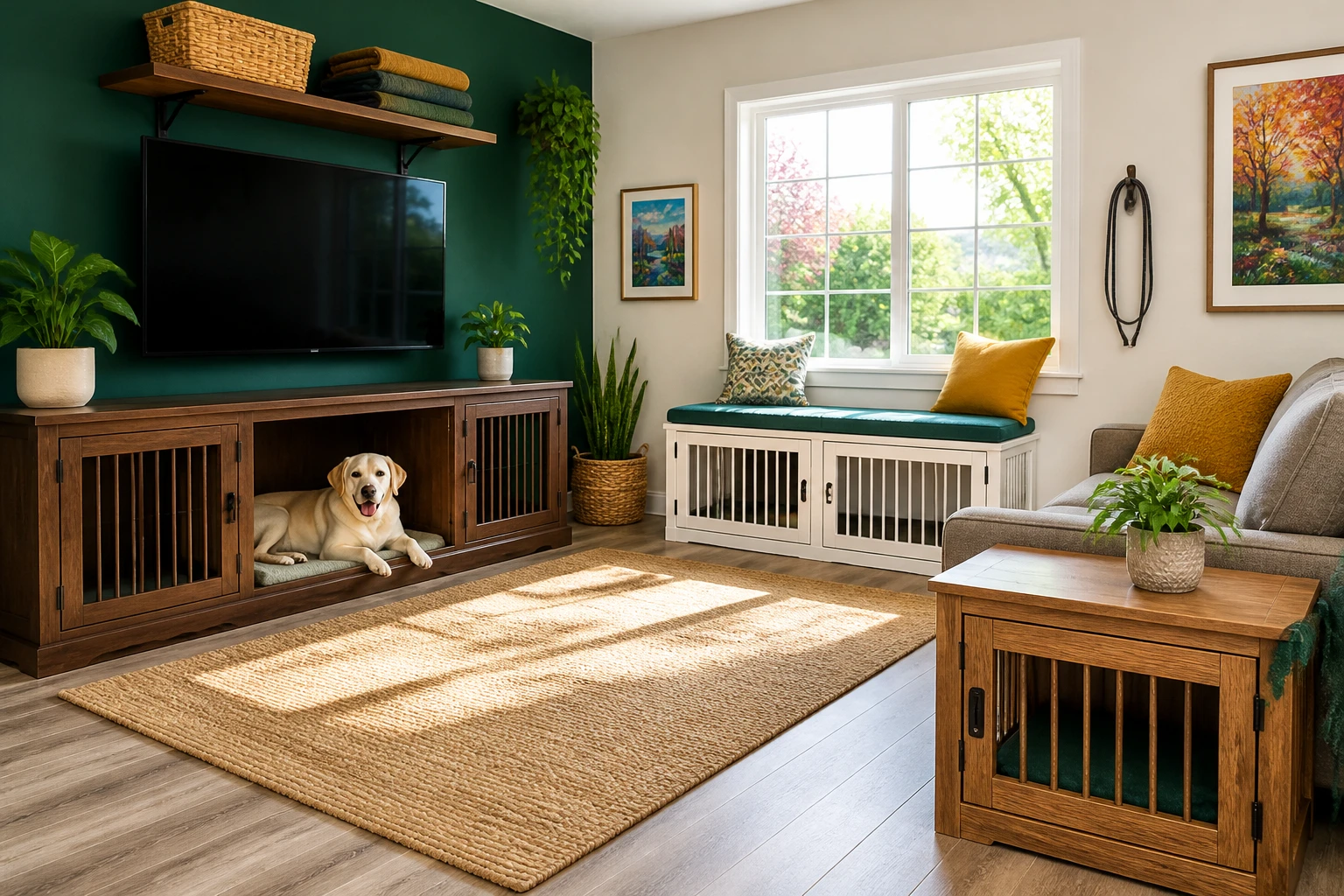
Got a Labrador and a living room that deserves better than a clunky wire box? Same. These 7 furniture-style crate ideas blend into your decor, handle big-dog energy, and keep your pup comfy without shouting “kennel” from across the room. From credenza-style builds to bench conversions, I’ll show you what to look for, what to skip, and how to make each setup safe for a large breed. Ready to make your crate pull double duty?
⭐ Our Top Pick: See it on Amazon
1. The Credenza Crate That Doubles as Media Storage
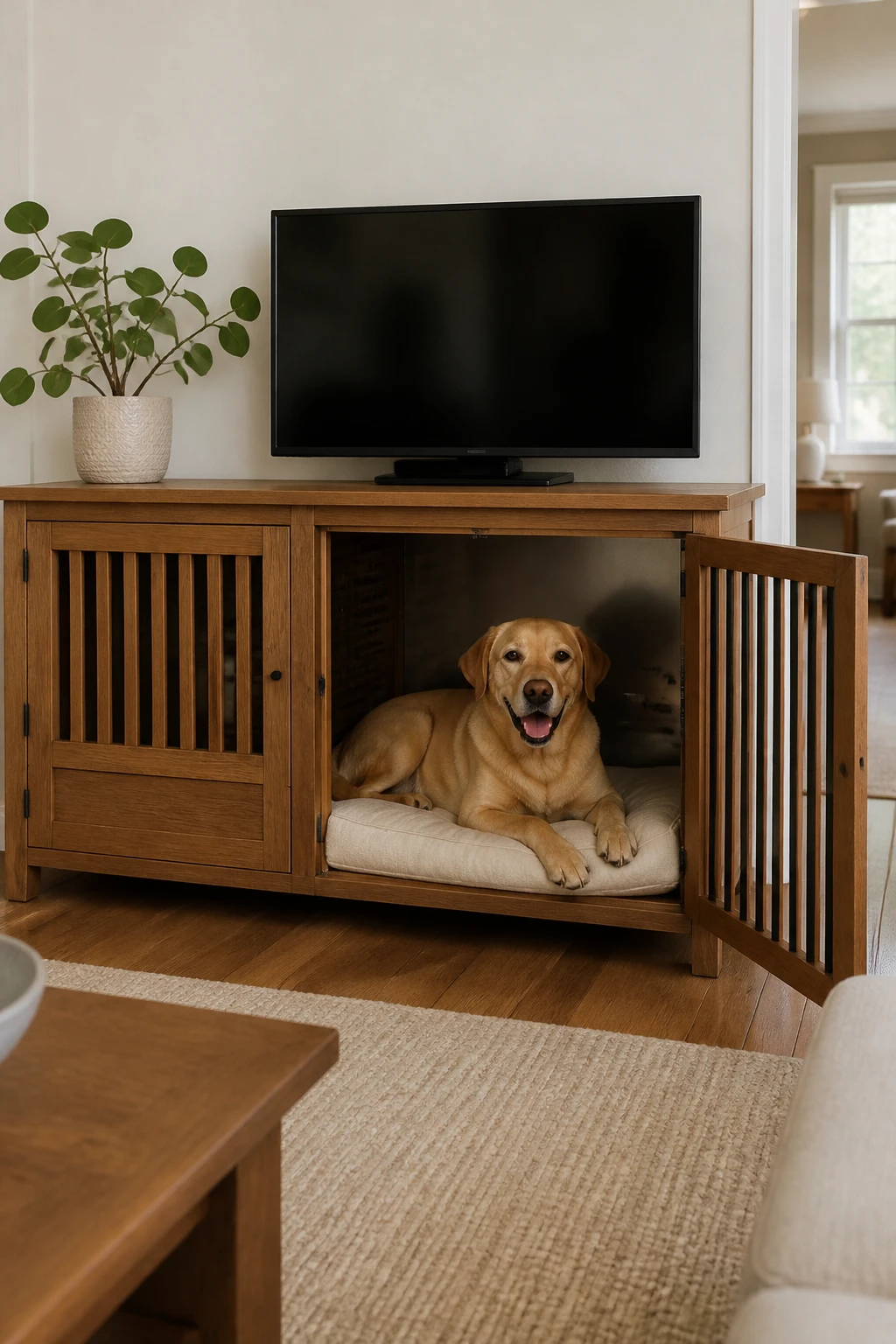
A low, long credenza pairs surprisingly well with a Labrador-sized crate. You get surface space for a TV or decor while your dog lounges behind stylish doors. The trick lies in breathable panels and a frame built to handle weight and movement.
What to Look For
- Ventilated doors with metal or wood slats spaced for airflow (no sharp edges).
- Solid top with at least a 100–150 lb rating if you plan to add a TV.
- Chew-resistant interior (powder-coated steel or hardwood, never soft pine strips inside reach).
Measure your Lab lying down and add a few inches for length and height. Most adult Labs need roughly 42–48 inches long, so confirm internal dimensions first. I’d skip flimsy particleboard-only builds for large breeds—worth it if the unit uses real wood or reinforced steel frames.
Best for: Living rooms that need a low-profile crate with storage perks.
2. Farmhouse-Style End Table Crate With Reclaimed Wood Vibes
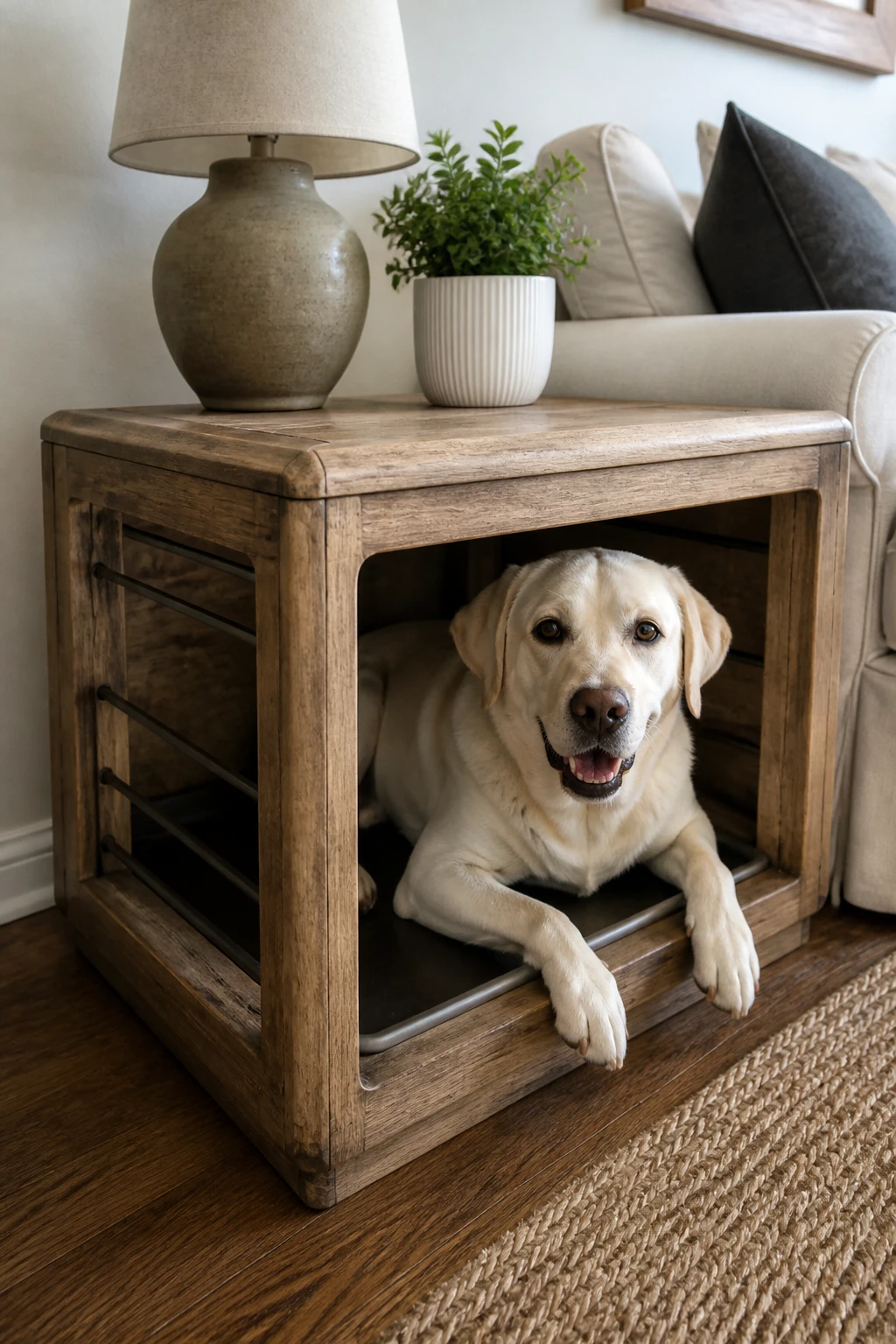
Prefer rustic charm? An end-table crate next to your sofa keeps your Lab close and your remotes corralled. Clean lines and slatted sides blend in with modern farmhouse or cottage decor.
Tips
- Choose rounded edges and sealed, non-toxic finishes (water-based poly) to resist drool and scratches.
- Opt for metal bars or thick hardwood slats rather than thin decorative lattice.
- Use a chew-proof tray or metal pan inside to protect the base.
End-table crates work best for lounging and downtime, not for Houdini-level escape artists. IMO, they look fantastic, but confirm the latch is robust and the door clearance doesn’t slam into your sofa.
Best for: Family rooms where you want a side table that hides a big-dog hangout.
3. Bench-Seat Entryway Crate With Mudroom Storage
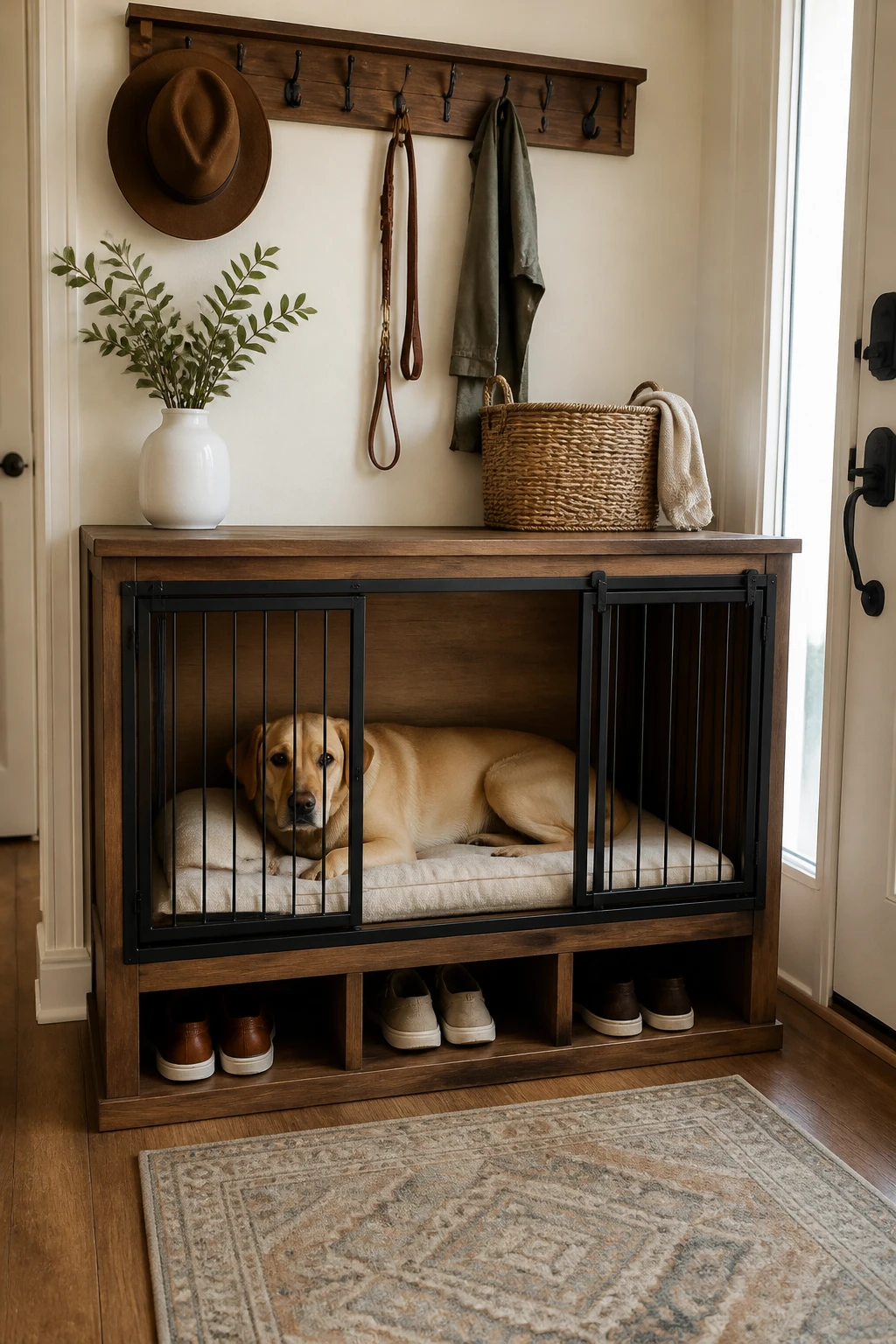
Turn that underused entryway into a multipurpose zone. A bench-seat crate gives you a landing spot for shoes and bags while your Lab rests after outdoor adventures. It keeps the chaos organized and the dog contained during high-traffic moments.
How to Pull It Off
- Pick a 48-inch internal width if your Lab stretches out. Add a 2–3 inch memory-foam pad inside a washable cover.
- Use front-sliding doors to save space in narrow halls.
- Install Command hooks up high for leashes—keep cords and straps outside the crate’s reach.
Place this away from baseboard heaters or radiators. A bench crate shines for busy households; I’d pick one with a reinforced center support to stop sagging over time.
Best for: Mudrooms and hallways that need seating and durable storage.
4. Modern Slat Console With Hidden Crate Bay
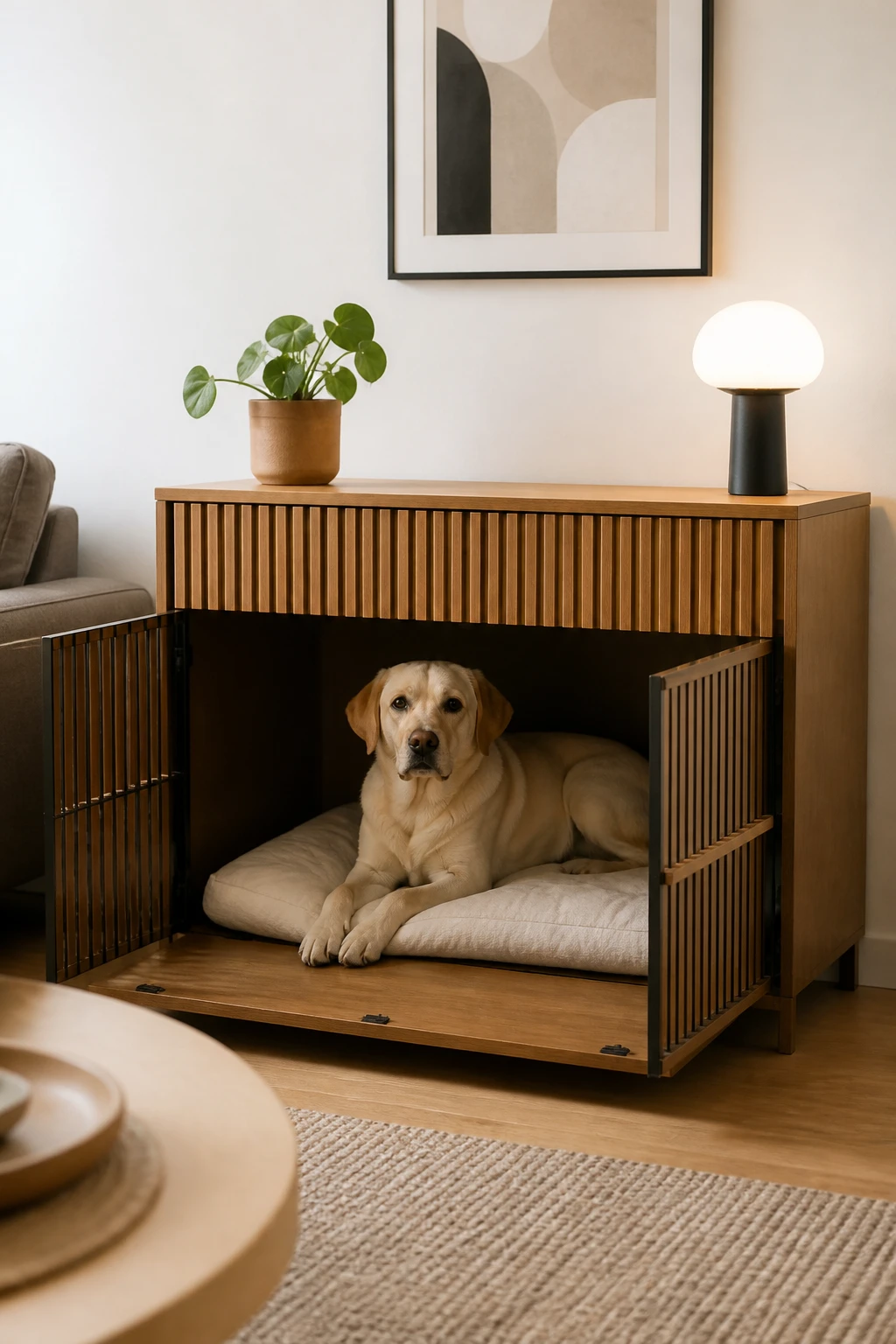
You’ve seen those sleek consoles with vertical slats—use that style to hide a roomy crate bay. The clean silhouette works with contemporary spaces while the slats provide airflow and visual rhythm.
Key Points
- Top clearance: Leave 2–3 inches above your Lab’s withers so they can stand comfortably.
- Door style: Pocket doors or flip-down fronts reduce swing space and look streamlined.
- Materials: Oak, walnut, or ash for the shell; powder-coated steel internal frame for strength.
Add felt pads under decor so nothing rattles when your dog shifts. This option shines if you want a design-forward piece that doesn’t scream “pet.” Worth it if you love modern lines and need a long-term solution.
Best for: Open-plan living spaces with a minimalist aesthetic.
5. DIY Coffee Table Crate With Lift-Off Top
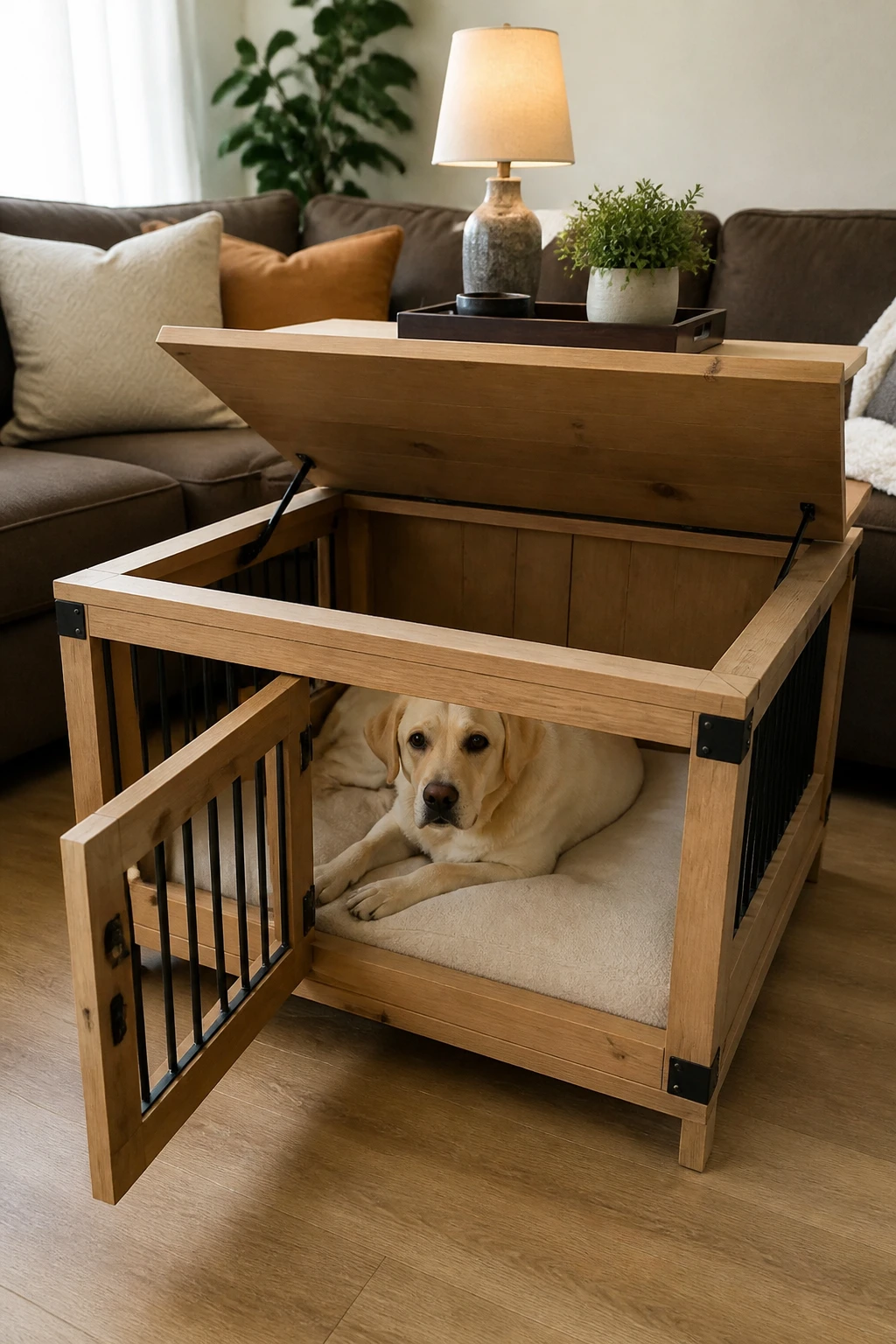
Want a weekend project? Build a coffee table crate that looks custom and fits your Lab’s size exactly. A lift-off or hinged top makes cleaning painless and gives you full interior access.
Materials
- 3/4-inch plywood or hardwood panels for the shell, sealed with dog-safe finish.
- Metal bar inserts or pre-made crate panels for sides and door.
- Soft-close hinges or lid supports to prevent slamming.
Keep slat spacing small enough to prevent snouts from getting stuck—aim for under 2 inches. Add corner braces inside for stability. I’d skip glass tops for large breeds; use wood or a thick composite for durability.
Best for: Small living rooms where every inch of surface area matters.
Build Tips
- Pre-drill and countersink screws to prevent splits.
- Ventilate on at least three sides for comfort.
- Add non-slip feet so the table won’t slide when your Lab hops in.
Great if you love DIY and want a made-to-measure piece that fits your rug layout.
6. Bedroom Nightstand Crate That Replaces a Bulky Kennel
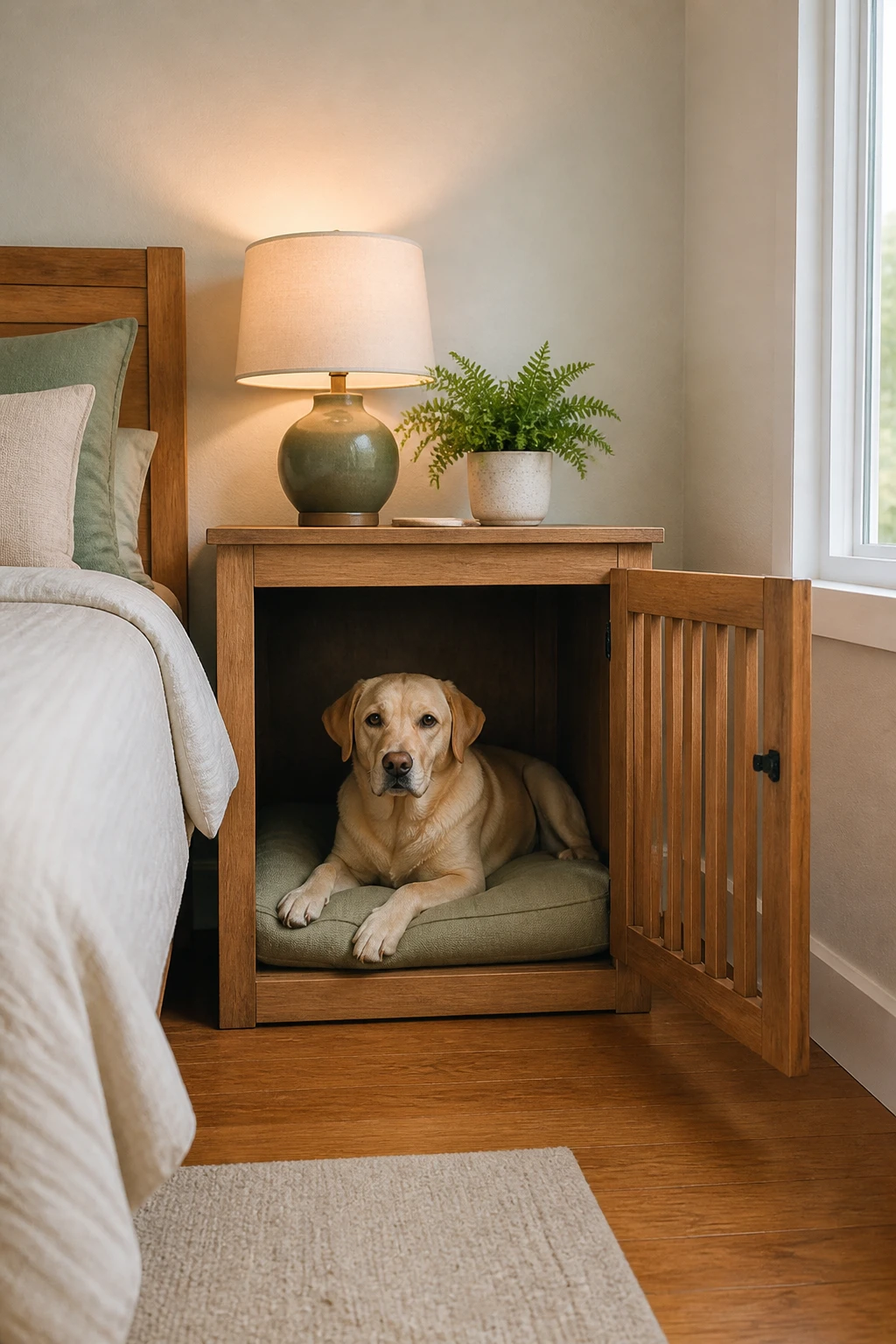
A nightstand crate keeps your Lab close without wrecking the bedroom vibe. You get a tidy silhouette, lamp space, and a calming nook for your dog to settle at bedtime.
What Matters Most
- Height: 26–30 inches gives lamp clearance and drawer storage while fitting a large crate footprint beside a queen or king bed.
- Front or side door: Pick based on your room layout so you’re not squeezing around it at 11 p.m.
- Quiet hardware: Magnetic closures or quality latches reduce nighttime clinks.
Skip ornate handles that dangle within reach. Keep cords for lamps routed behind the unit using cable clips. Worth it if your dog settles faster when they can see you.
Best for: Primary bedrooms or guest rooms that need calm, unobtrusive storage.
7. Convertible Open-Frame Crate With Swap-In Panels
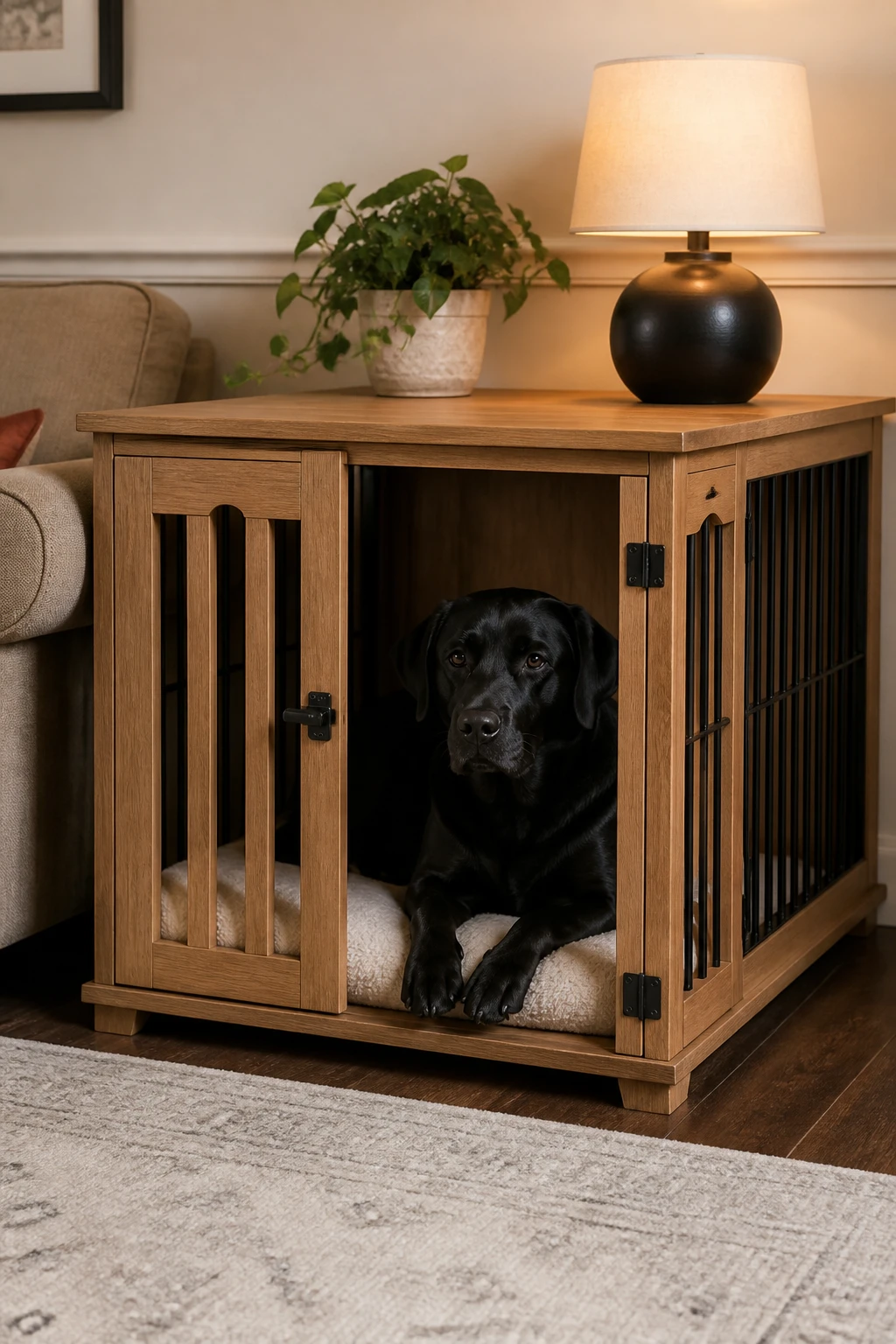
Need flexibility? Try an open-frame crate that lets you swap between wood slats and metal bars. It adapts to different rooms and grows with your Lab’s habits.
Smart Features
- Removable panels for cleaning or style changes (e.g., wood on the front, metal on high-wear sides).
- Two-door access so you can reorient the crate as your furniture moves.
- Latch you can operate one-handed but your dog can’t nudge open.
Pick neutral finishes that match your trim or floors. I’d pick this if you rearrange frequently or move homes—it flexes with your layout and decor shifts.
Best for: People who love to redecorate and want longer-term adaptability.
Common Mistake to Avoid
Don’t prioritize looks over structure. A large-breed crate must handle weight, movement, and chewing. If a unit uses thin MDF without internal reinforcement, pass. Look for solid joinery, secure latches, and non-toxic finishes. And always place crates away from heat sources and dangling cords.
FAQ
How big should a furniture-style crate be for a Labrador?
Most adult Labs need internal dimensions around 42–48 inches long, 28–30 inches high, and 28–30 inches deep. Measure your dog from nose to base of tail while lying down and add a few inches. Ensure they can stand, turn, and lie flat without curling.
Are wood furniture crates safe for heavy chewers?
They can be, if they use hardwood or a steel interior frame and chew-resistant bars. Skip thin decorative lattice and soft pine near the door. Add a metal pan and a fitted bed to reduce gnawing opportunities, and redirect chewing with training—furniture can’t solve anxiety alone.
Can I put a cushion or bed inside?
Yes—use a snug, washable mat or a memory-foam pad with a tough cover. Avoid loose piping, buttons, or zippers that a dog could pull off. Keep it low-profile so your Lab doesn’t brush the top when standing.
What kind of ventilation do I need?
At least three ventilated sides, ideally with slats or bars. Front-only airflow can feel stuffy, especially in warmer climates. If your room runs hot, choose wider openings and position the crate away from sunlight and heaters.
How do I keep the crate from scraping my floors?
Add rubber feet or felt sliders. Many furniture crates weigh a lot, so protect hardwood and tile. A tight-weave rug under the unit works too—just ensure the door still swings or slides freely.
Is a furniture crate okay for puppies?
You can use one, but monitor closely. Puppies chew and have accidents, so pick sealed finishes, a metal pan, and a divider panel to reduce interior space during house training. If your puppy tests limits, consider a standard steel crate first and upgrade once behaviors settle.
Blend function with aesthetics and your Labrador’s den becomes part of the room rather than an eyesore. Pick one of these 7 approaches, measure carefully, and dial in the details—your space (and your dog) will thank you.
As an Amazon Associate, I earn from qualifying purchases.