This post contains affiliate links. As an Amazon Associate, I earn from qualifying purchases, at no extra cost to you.
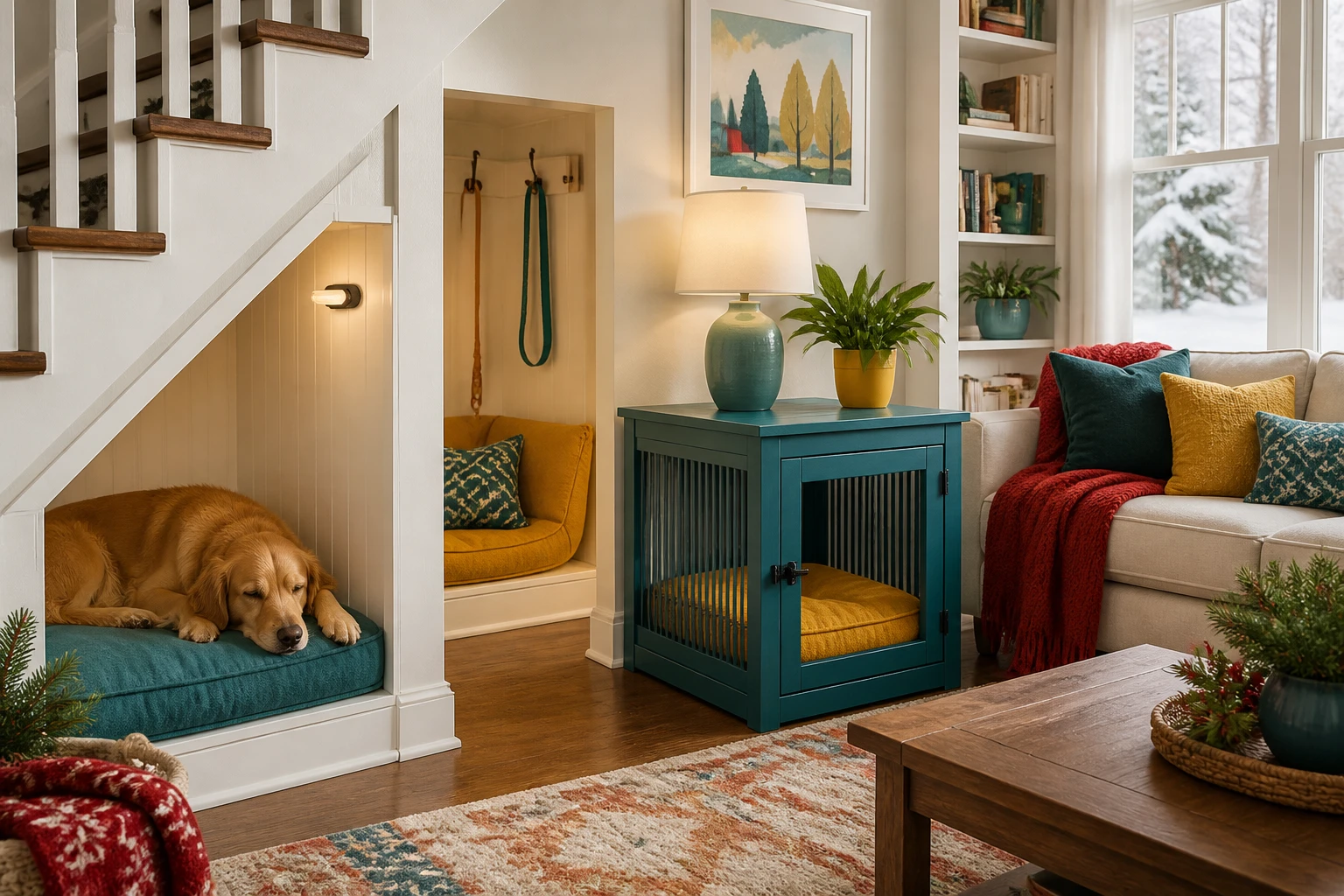
Cold paws and drafty floors? Let’s fix that. These 10 indoor dog house ideas turn any corner into a snug retreat that looks great and keeps your pup snoozing happily. Expect practical builds, renter-friendly upgrades, and smart storage that doubles as decor. Grab a cup of cocoa and pick your favorite—your dog will thank you with louder snores.
⭐ Our Top Pick: See it on Amazon
1. Built-In Nook Under the Stairs
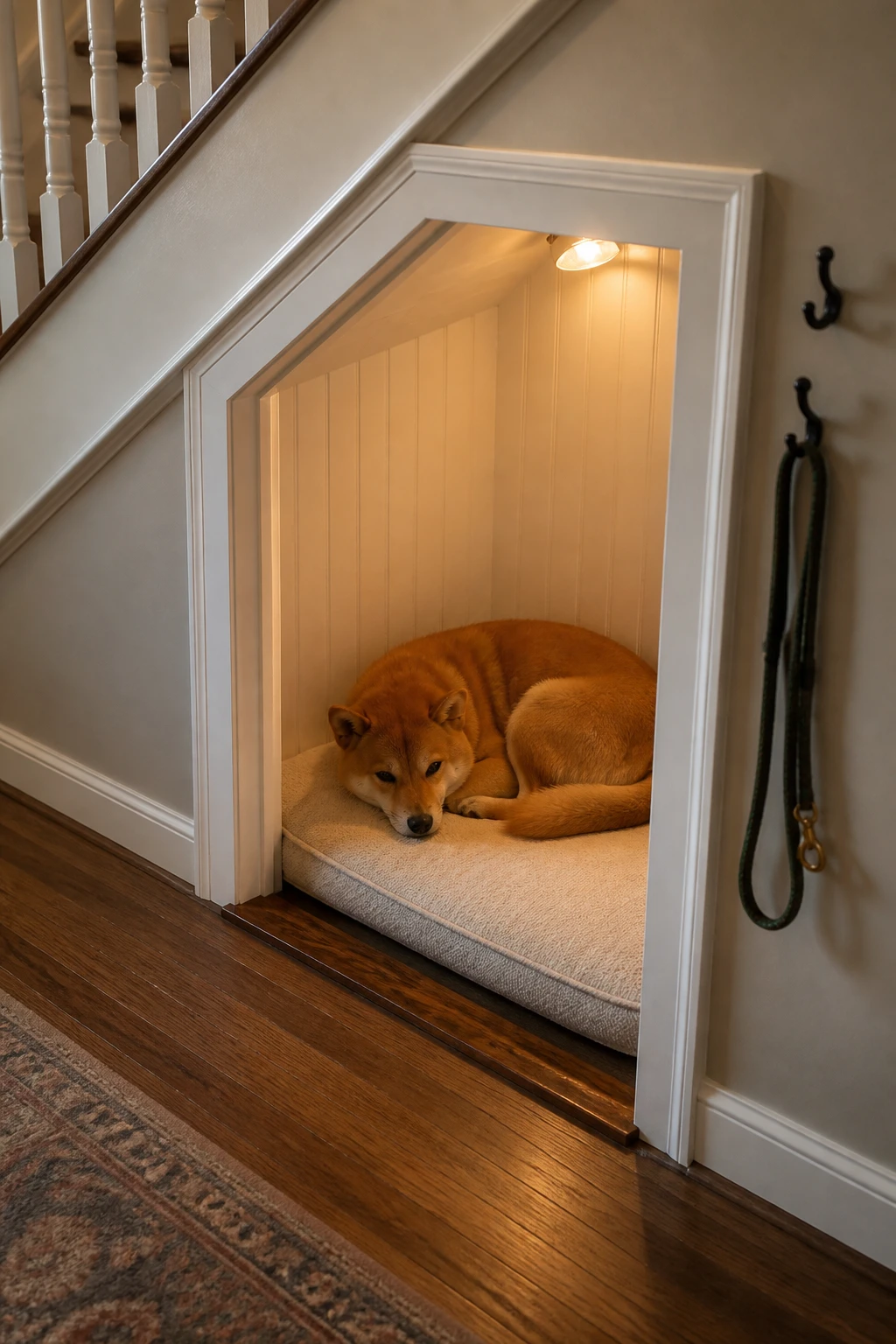
Make that awkward under-stairs cavity do something useful. Framing a small alcove creates a sheltered den where sound softens and drafts drop off. Add a washable cushion and you’ve got instant winter comfort that blends into your home.
Tips
- Line walls with moisture-resistant beadboard or vinyl panels for easy cleanup.
- Install a low, battery-powered motion light mounted high and out of reach.
- Add a threshold strip to block cold air seeping from the floor gap.
I’d pick this if you want a custom look without chewing up floor space. Best for: homes with stairs and medium dogs that love snug hideaways. Safety note: seal any wiring, and cap unused outlets inside the cavity.
2. Furniture-Style Crate That Doubles as an End Table
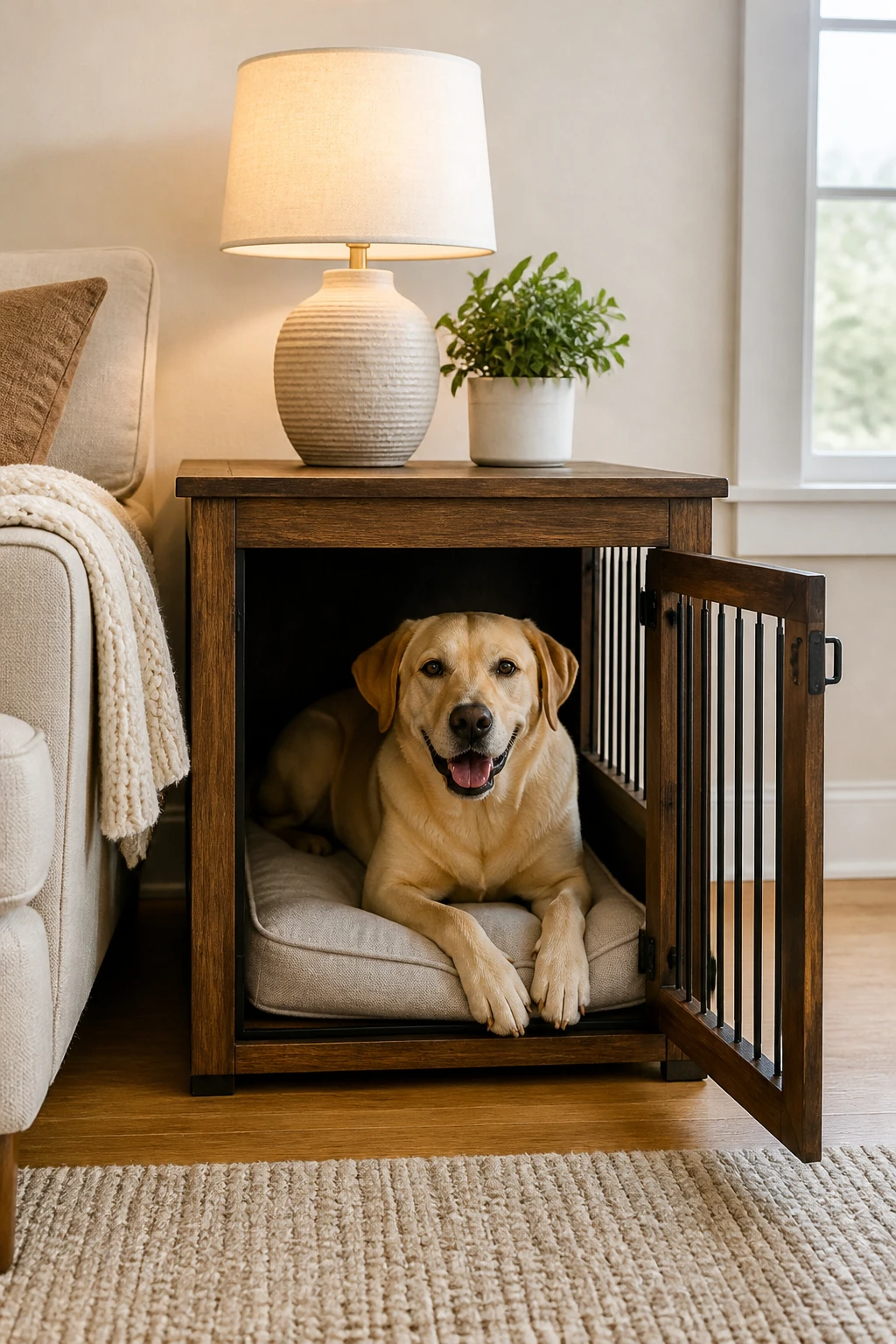
Want form and function in one piece? A furniture-style crate looks like a side table but delivers the security dogs crave. It anchors the living room while keeping your pup close during family movie nights.
Key Points
- Choose solid wood or metal bars with tight spacing—no sharp edges or flimsy latches.
- Use a supportive pad with a waterproof liner and a removable cover.
- Place away from radiator heat and direct vents to avoid overheating.
Worth it if you need storage for remotes on top and a quiet den below. Best for: small to large dogs who crate comfortably and families short on space. IMO, I’d skip models with soft rattan panels for heavy chewers.
3. Insulated DIY Plywood Cabin With Removable Roof
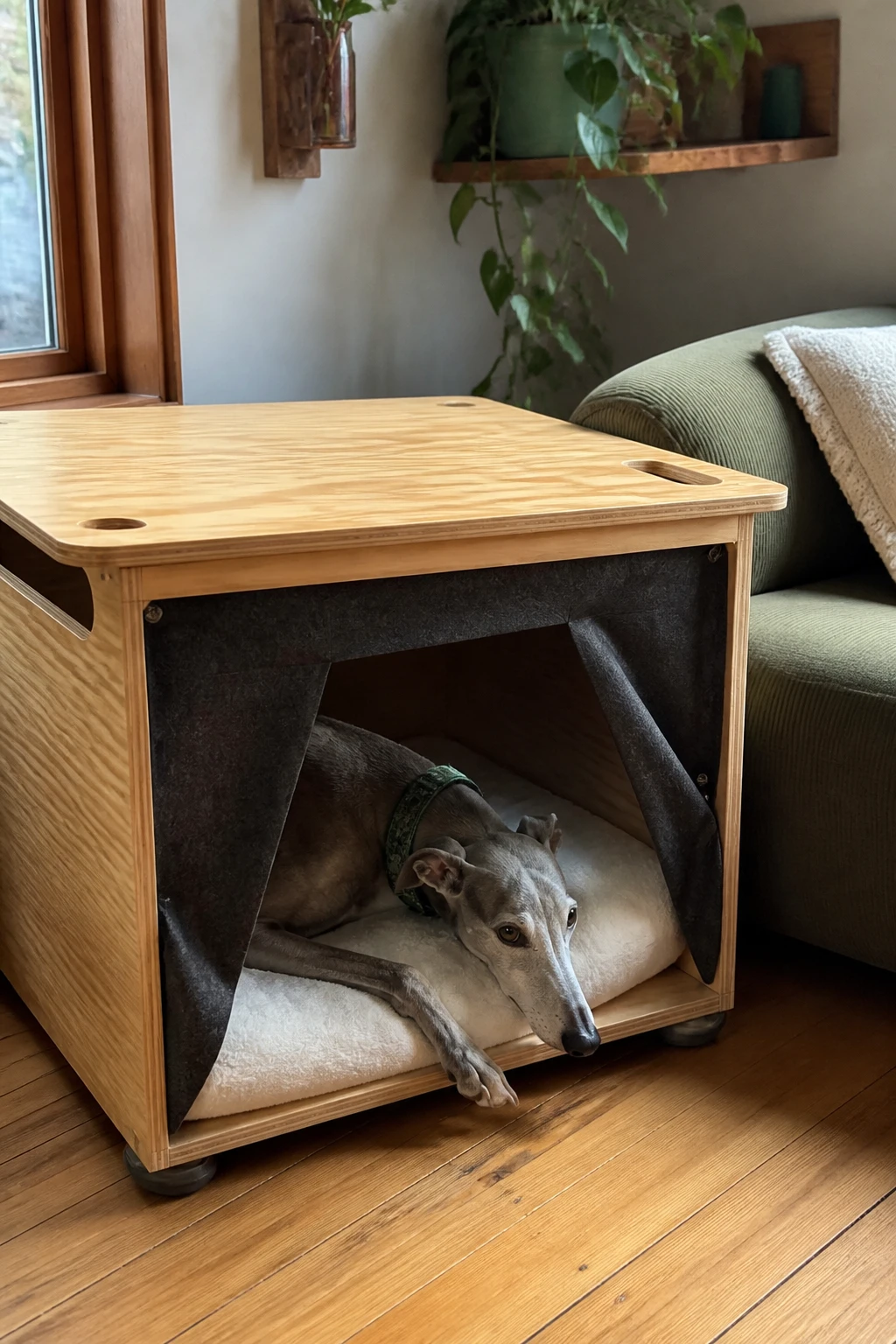
Go DIY and build a simple box cabin with a lifted floor and removable lid. A slight air gap under the floor plus foam board in the walls keeps warmth in and cold out, without making it stuffy.
Materials
- 3/4-inch sanded plywood, 1×2 cleats, foam board insulation
- Non-toxic water-based polyurethane sealer
- Hinges and pull handles for the roof, felt pads for the base
Seal all edges so moisture can’t sneak into the insulation. Add a curtain-style entry flap cut from heavyweight felt for extra draft control. Best for: garage entries, mudrooms, and big dogs that sprawl. Safety tip: keep screw heads flush; no metal corners that could catch collars.
4. Closet-to-Canine Suite Conversion
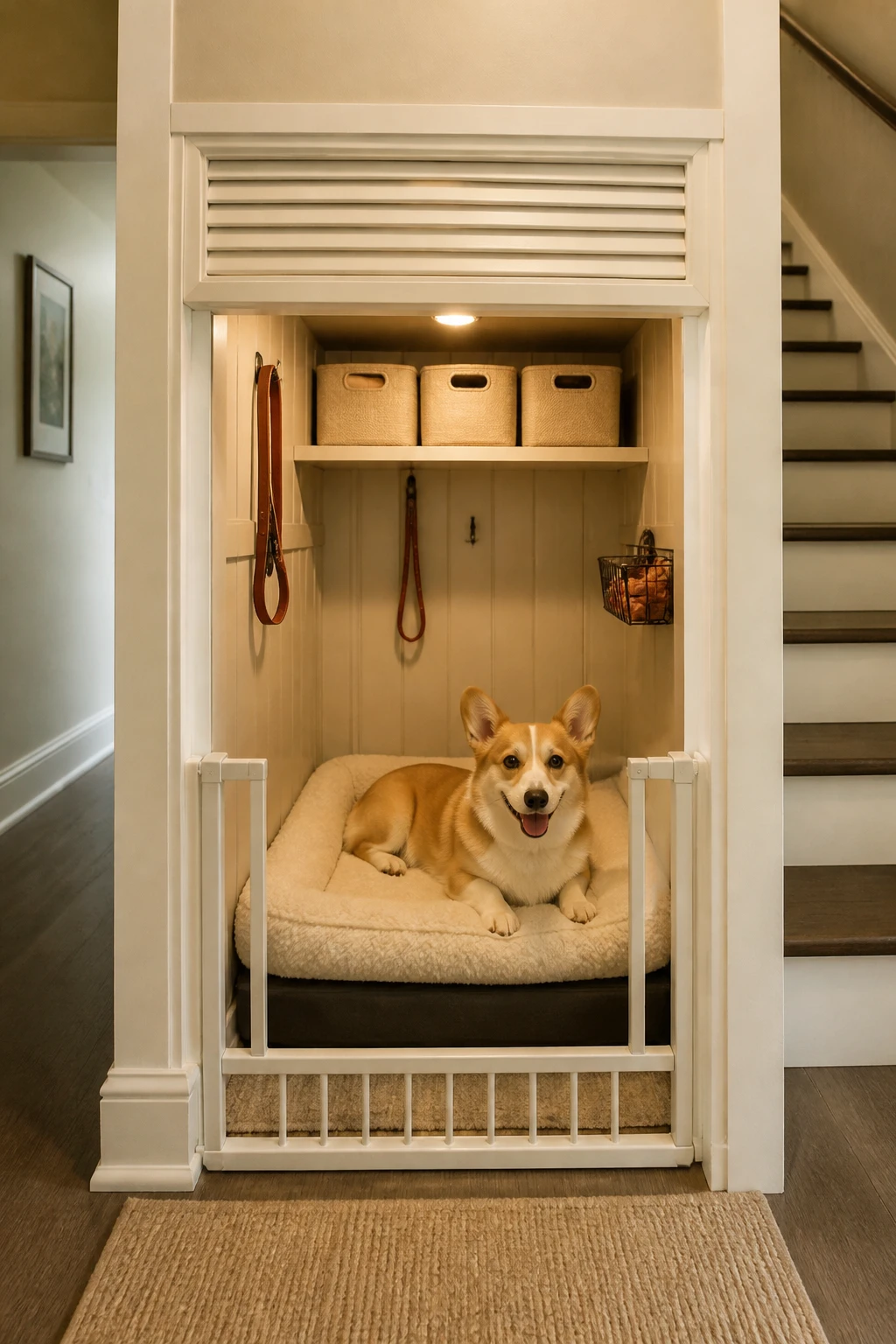
An unused hall closet can morph into a peaceful sleep station. Remove the door, add a half-height panel or baby gate, and style the interior with durable panels and a thick bed.
How To Set It Up
- Vent it: leave a 2-inch gap at the top or use a louvered panel for airflow.
- Floor it: put down a rubber mat under a machine-washable rug.
- Organize: mount hooks high for leashes and stash bins overhead.
This saves floor space and looks deliberate instead of improvised. Best for: multi-dog households and entryways that need order. I’d pick this if you love a tidy look and want a calm retreat near the action.
5. Radiator-Free Window Alcove With Draft Blockers
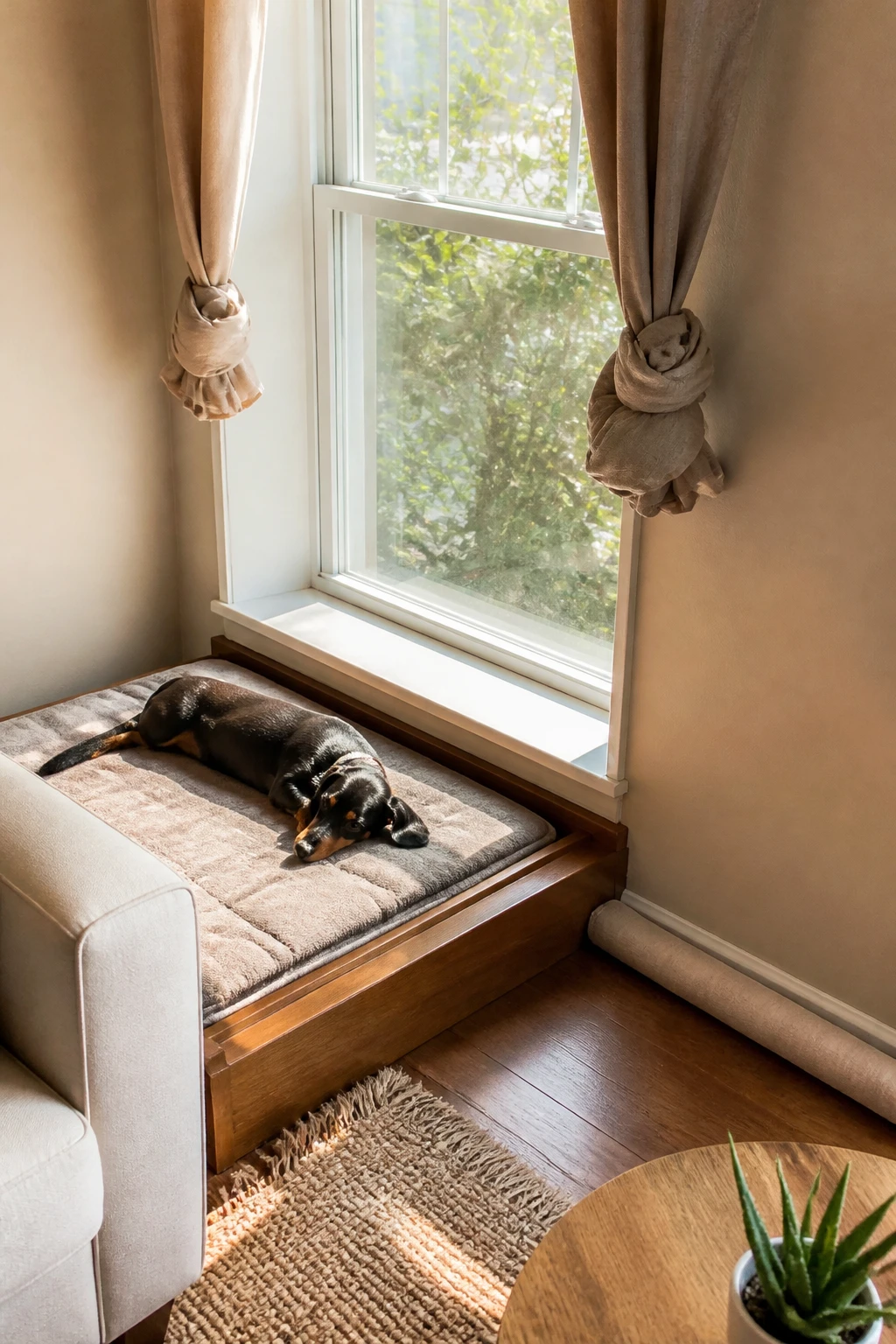
Sun puddles are dog magnets, but winter windows leak cold air. Create a low platform near a window, then line the sill with weatherstripping and add a fabric draft snake along the baseboard.
Quick Fixes
- Install thermal curtains kept tied back and high out of reach.
- Use a low-profile orthopedic pad with grippy backing.
- Add a wooden lip on the platform so bedding doesn’t slide.
Best for: senior pups who love warmth but need joint support. Skip this spot if the window sits above a heater or tangled cords—heat and cables don’t mix. The reward: a bright nap zone without cold gusts.
6. Hygge Corner With Layered Textiles (Washable Everything)
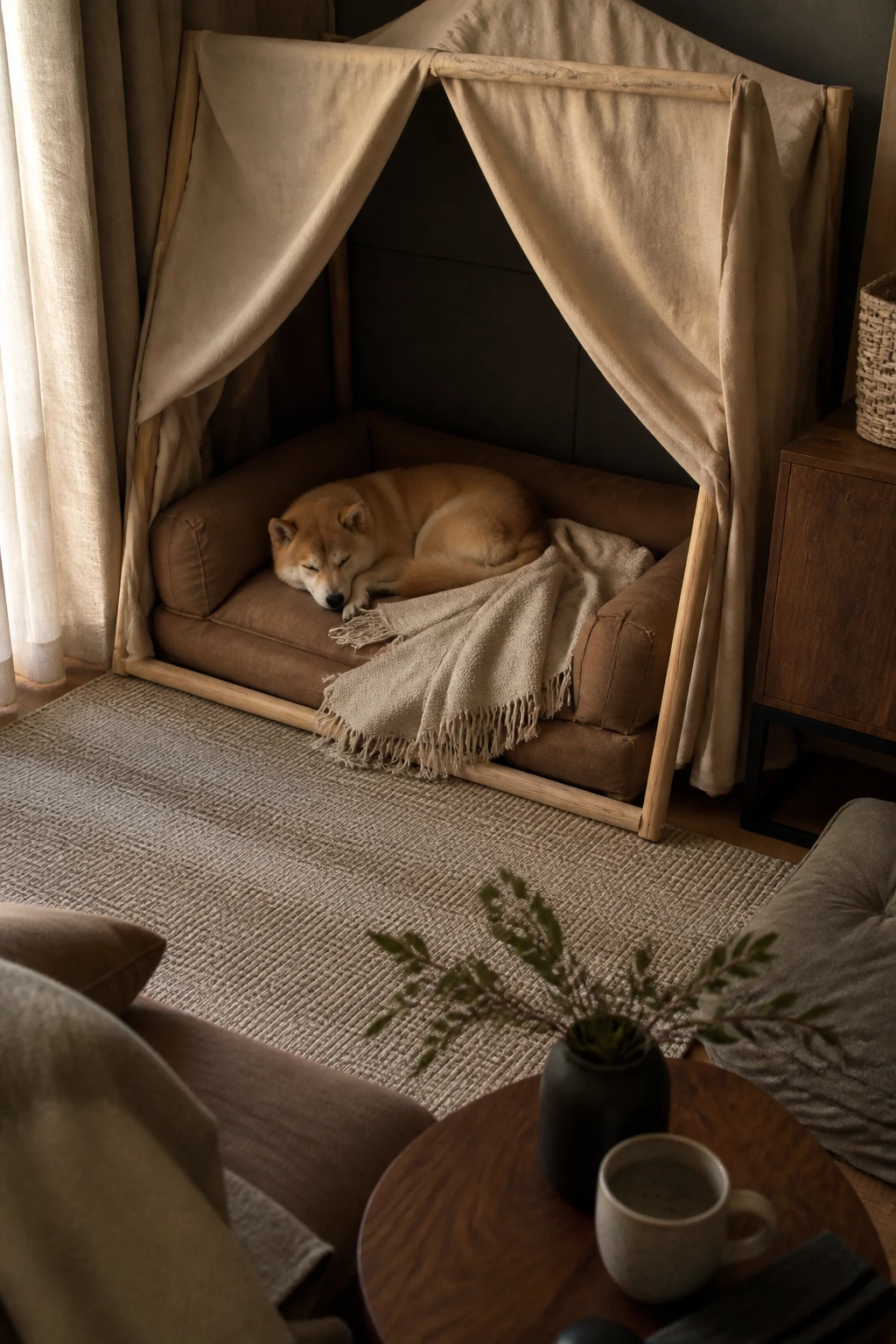
Create a cocoon with layers that trap heat and muffle noise. Think wool rug under a bed, backed by a felt pinboard to tame echoes, and a low canopy frame draped with heavy cotton.
Layering Checklist
- Base: non-slip rug pad, then a flat-weave rug.
- Bed: bolster-style sides to block drafts.
- Back: felt board or cork panel for sound and insulation.
Choose textiles labeled machine-washable and colorfast. Best for: anxious dogs that relax with soft boundaries. I’d skip fluffy fringe or tassels—tempting to chew and not worth the vet bill.
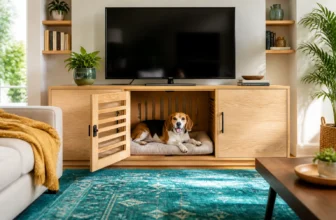
7. Modular Cube System With Hidden Crate Bay
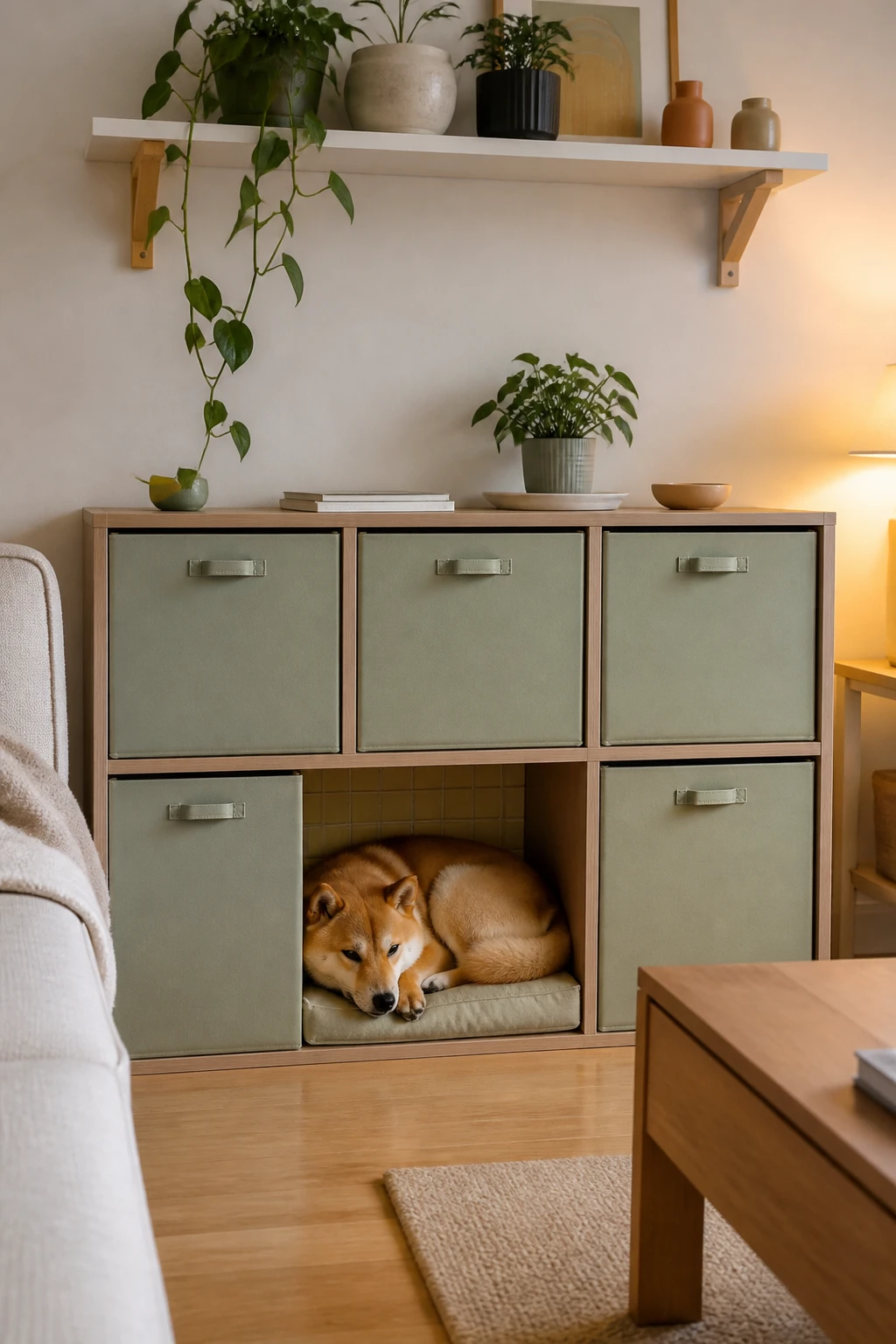
Turn cube shelving into a sleek pup station. Leave the bottom center cube open (or two for larger dogs), add a custom cushion, and store blankets and grooming gear up top.
Build Smarter
- Secure the shelving to the wall with brackets—no tip hazards.
- Line the dog bay with peel-and-stick vinyl tiles for wipeable sides.
- Use fabric bins with lids to keep scents from drifting into the sleep spot.
Perfect for apartments where every inch works hard. Best for: small to medium pups and design lovers who want symmetry. Worth it if you like a clean look that hides clutter.
8. Corner Cabin With Faux Greenery and Sound Buffer
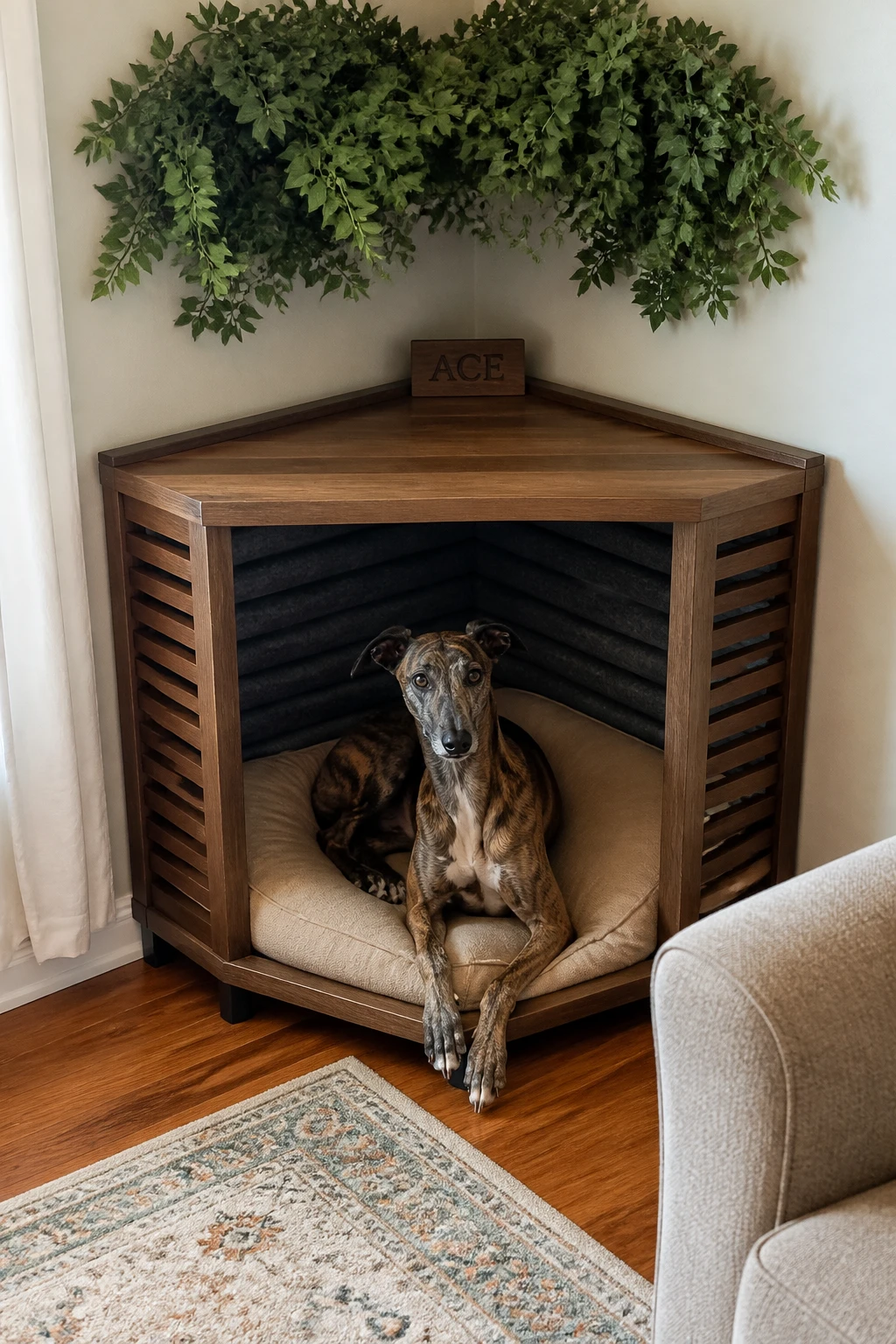
Corners feel safe because they cut out traffic on two sides. Add a triangular wood frame with slatted sides, then finish with a cozy bed and a panel of acoustic felt on the wall.
Finishing Touches
- Mount faux greenery high above the cabin—no dangling vines within reach.
- Use shatterproof decor placed well out of nose level.
- Place rubber feet under the frame to stop wobble on hard floors.
Best for: energetic dogs who sleep better with predictable boundaries. I’d pick this for living rooms where a full crate feels bulky. Safety reminder: avoid real plants that could be toxic.
9. Heated Pad Setup With Thermostat and Chew-Safe Routing
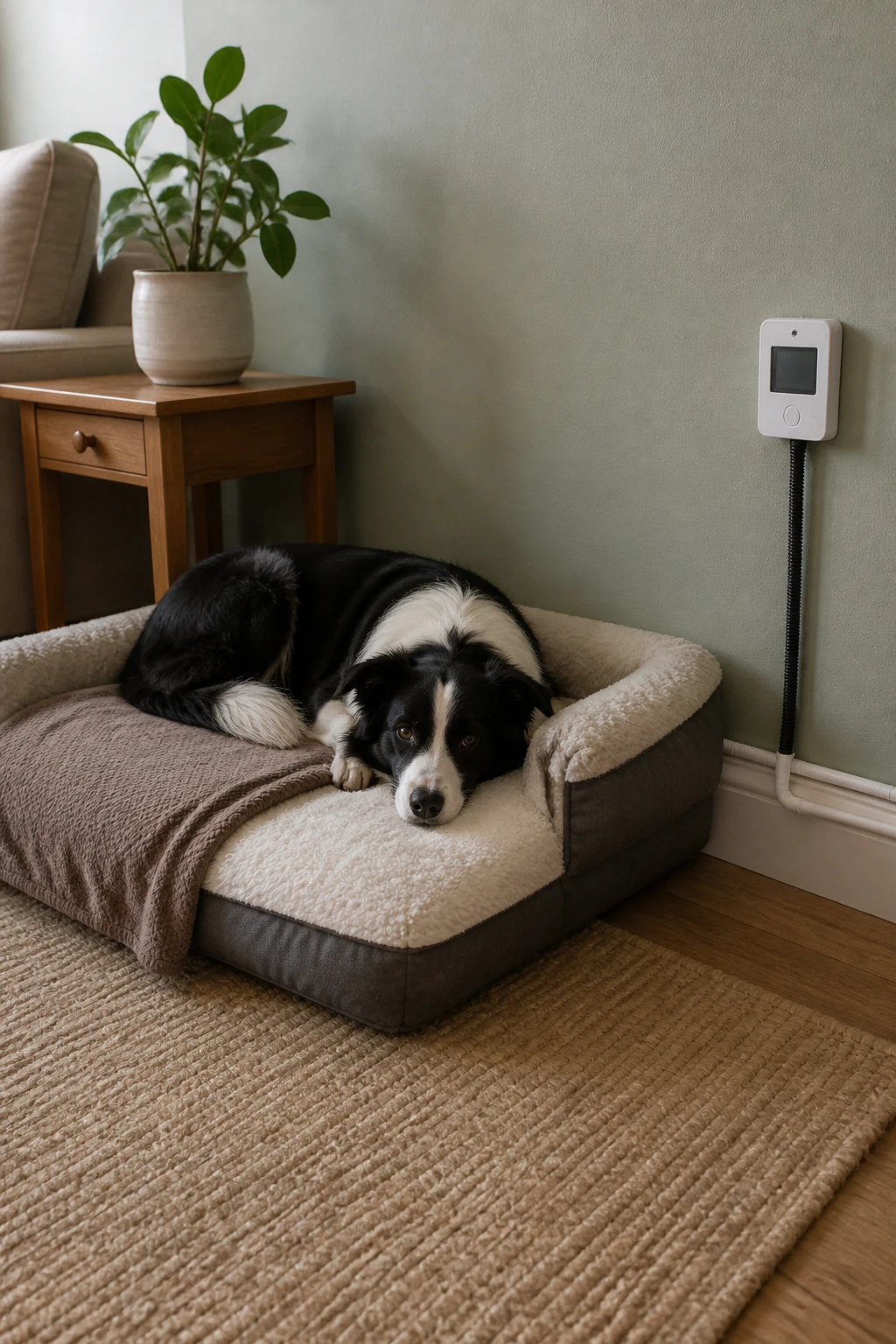
When the temperature drops, a low-watt heating pad made for pets can make naps dreamy. Pair it with a thermostat control and place it under half the bed so your dog can choose a cooler spot.
Setup Tips
- Use a pad with a steel-wrapped cord and automatic shutoff.
- Route the cord through PVC conduit or a cable channel along the wall.
- Cover with a thick, washable layer so heat disperses gently.
Best for: seniors, short-haired breeds, or pups recovering from activity. I’d skip heat for chewers who attack cords—choose extra insulation instead. Keep it away from water bowls for obvious reasons.
10. Slide-Under Loft Bed Den for Studio Spaces
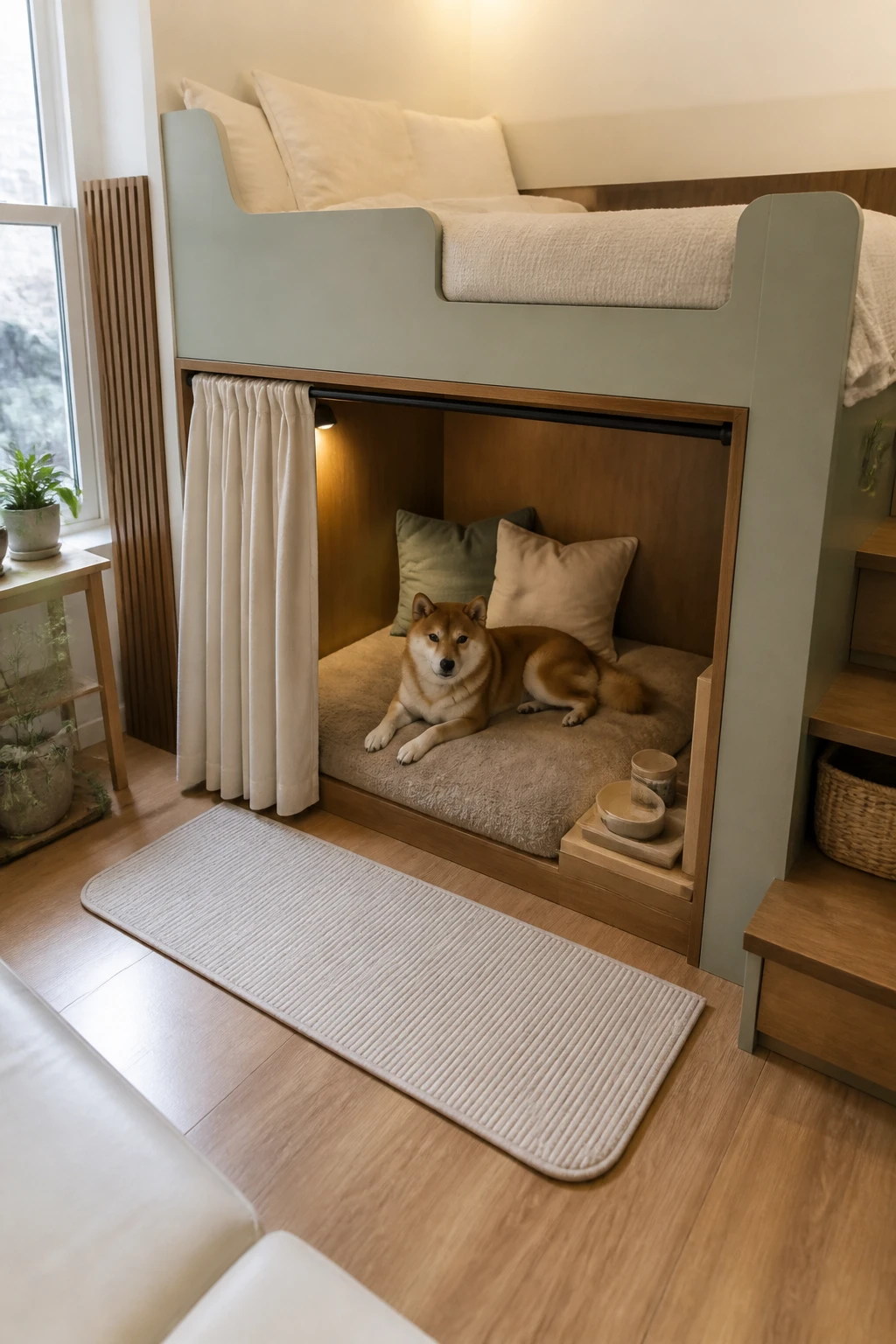
Short on square footage? Elevate your own bed or a daybed and dedicate the underside to a canine cave. Add a low façade with a wide entry and soft lighting mounted high.
Make It Work
- Run a curtain track but keep fabric short and tidy to avoid chewing.
- Place a washable runner to protect floors and define the zone.
- Include a small tray outside the den for paws and wipes.
Best for: small apartments and dogs that love your scent nearby. Worth it if you like minimal furniture while giving your pal a private retreat.
Common Mistake to Avoid
Don’t over-insulate the space so much that airflow disappears. Dogs generate body heat fast, and a cramped, sealed den can trap humidity and odors. Always allow a vent gap, choose breathable fabrics, and place dens a few inches from walls so air circulates. A fresh-smelling retreat keeps your pup snoozing longer and makes cleaning easier.
FAQ
How big should an indoor dog house be?
Your dog should stand up, turn around, and lie flat without bumping sides. Aim for interior height 2-4 inches above withers, and length equal to nose-to-tail base plus a few inches. Too large can feel drafty in winter, so size it just right.
What bedding works best for winter?
Use an orthopedic foam base with a waterproof liner and a fleece or sherpa cover. Layer a thin wool blanket for added warmth. Avoid loose stuffing that shifts and traps moisture.
Where should I place the dog house?
Pick a quiet corner away from door drafts, heaters, space heaters, and busy walkways. Keep it within sight of family activity so your dog feels included but not overwhelmed. Avoid kitchens where spills and hot appliances raise risks.
How do I keep it clean without harsh smells?
Choose removable covers, vacuum weekly, and wash with fragrance-free detergent. Wipe hard surfaces with diluted vinegar or pet-safe cleaner, then dry fully. Add a spare set of covers so you can swap fast on laundry day.
Can I decorate it for winter?
Sure—use felt banners mounted high with Command hooks, wooden nameplates, and shatterproof accents placed out of reach. Skip ribbons, tinsel, and anything stringy or glass. Keep it simple so your dog doesn’t see decor as chew toys.
Is heating necessary?
Not always. Many dogs stay comfortable with insulation, raised beds, and draft control. If your pup shivers or is older or short-coated, consider a pet-rated heated pad with chew-safe cords and a thermostat.
Ready to build a snuggle spot your dog actually chooses? Pick one of these ideas, measure once (okay, twice), and set up a den that looks good and feels even better. Winter naps just got way more relaxing—both for your dog and for you.
As an Amazon Associate, I earn from qualifying purchases.