This post contains affiliate links. As an Amazon Associate, I earn from qualifying purchases, at no extra cost to you.
Cold floors, sneaky drafts, and a shivery pup? Hard pass. These 8 winter-ready crate ideas lock in warmth, hush chilly gusts, and still look great in your home. Most use simple materials, a few smart upgrades, and a dose of common sense about airflow and safety. Let’s keep your dog comfy without turning your living room into a campsite.
⭐ Our Top Pick: See it on Amazon
1. Wrap The Crate With An Insulated Cover (But Leave A Vent)
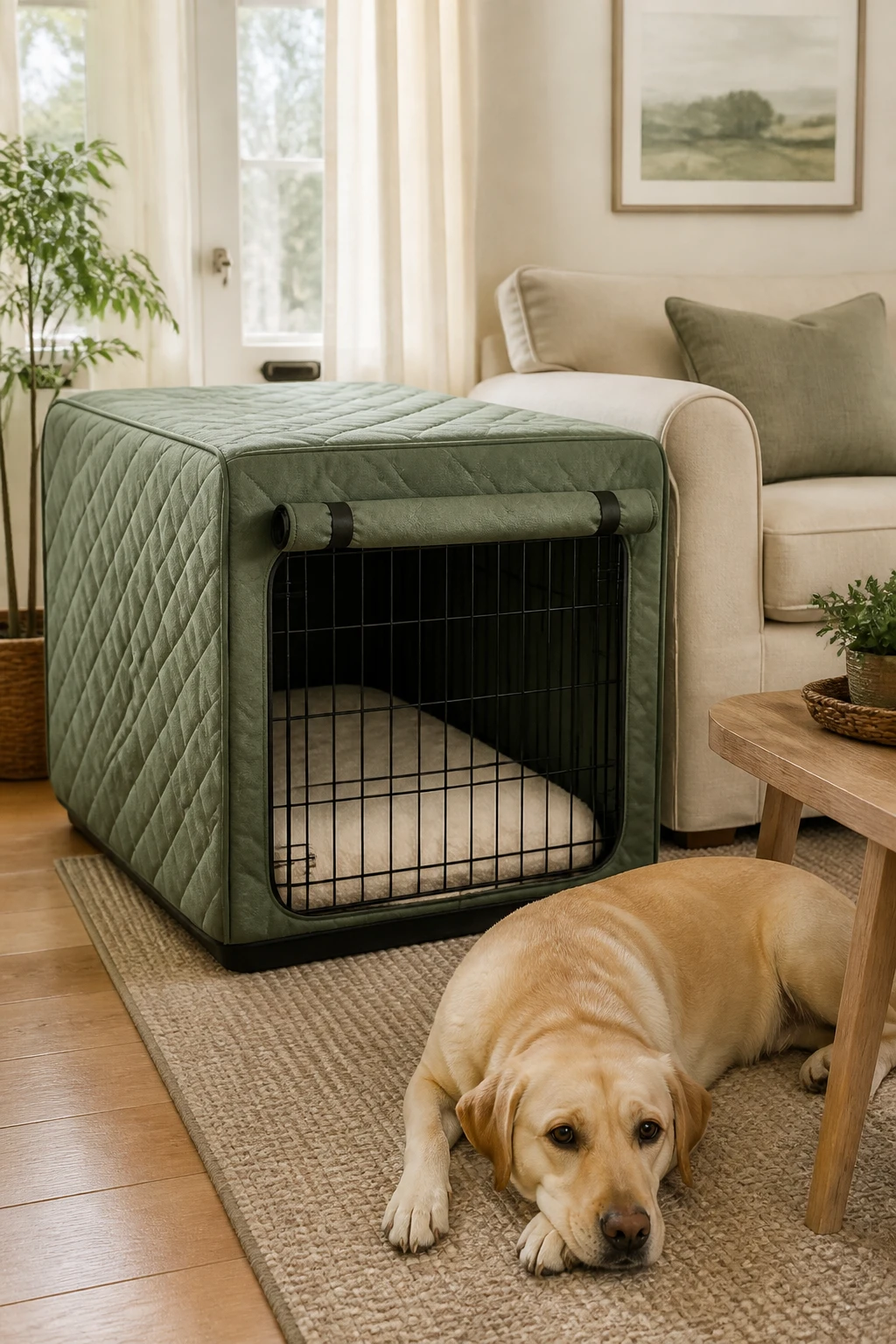
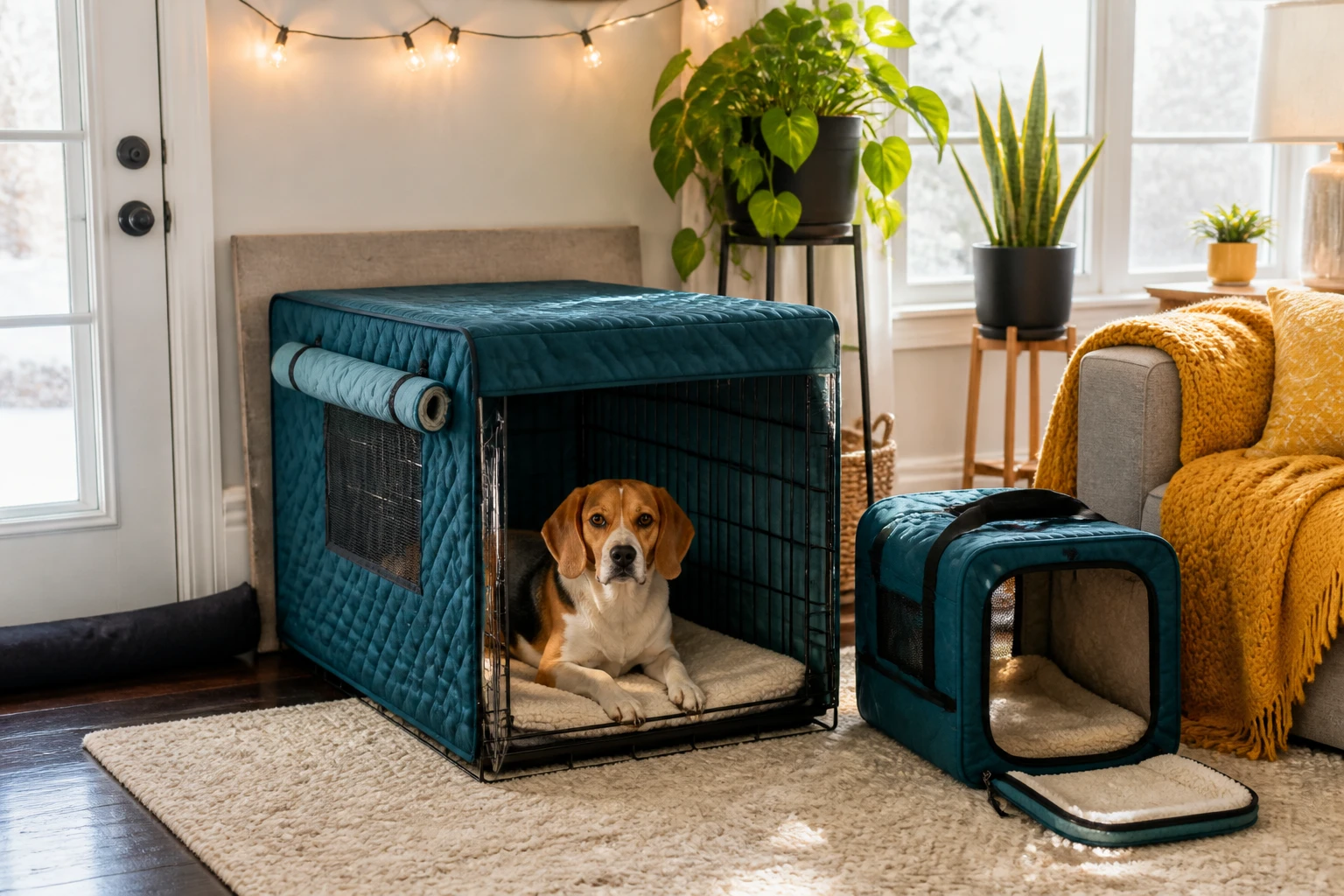
An insulated crate cover keeps cold air out and traps your dog’s body heat where it belongs. Look for covers with quilted or thermal linings that fit snugly over wire crates without sagging into the interior.
Tips
- Choose a cover with roll-up panels and secure toggles so you can leave the back or a side partially open for ventilation.
- Measure your crate carefully; a too-loose cover flaps and leaks air, a too-tight one interferes with doors and latches.
- Skip fleece drapes near heaters or fireplaces; maintain clearance from any heat source.
I’d pick models with machine-washable fabric and reinforced corners. Best for: Wire crates near exterior walls or entryways where drafts linger.
2. Add A Wind-Blocking Backer Board Behind The Crate
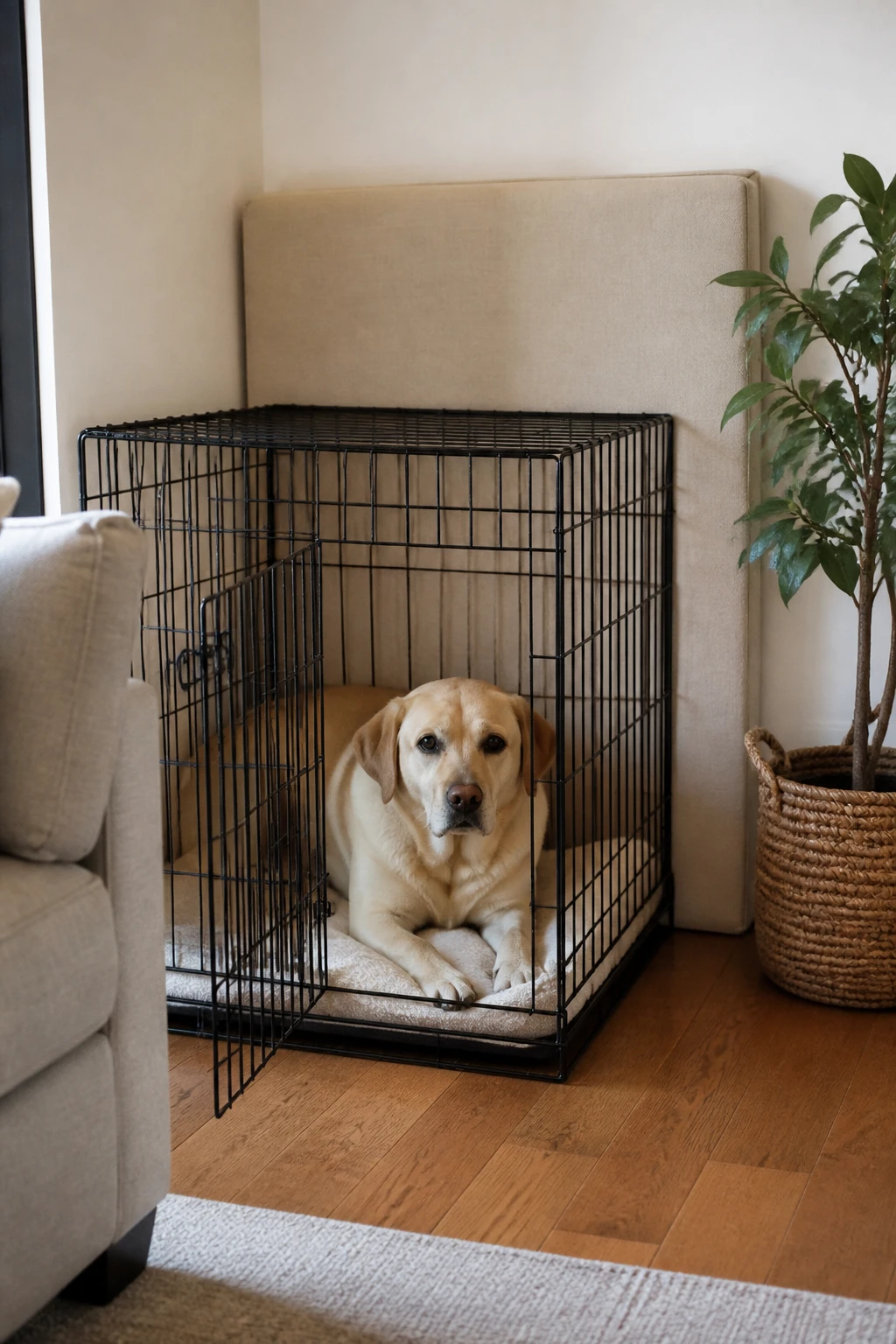
If your crate sits on a wall that feels cold to the touch, block that chill at the source. A rigid backer—think foam board wrapped in upholstery fabric—creates a thermal barrier without altering the crate.
How To Do It
- Cut a piece of 1-inch foam board to match the crate’s back profile.
- Wrap it with thick cotton duck cloth or felt and secure with fabric tape or a staple gun (if building a wood frame).
- Stand it an inch behind the crate to allow airflow while blocking the draft.
I’d skip flimsy cardboard; it warps fast. Worth it if your dog’s crate lives by a chilly wall. Best for: Apartments or older homes with cool plaster or brick.
3. Elevate The Crate Off Cold Floors
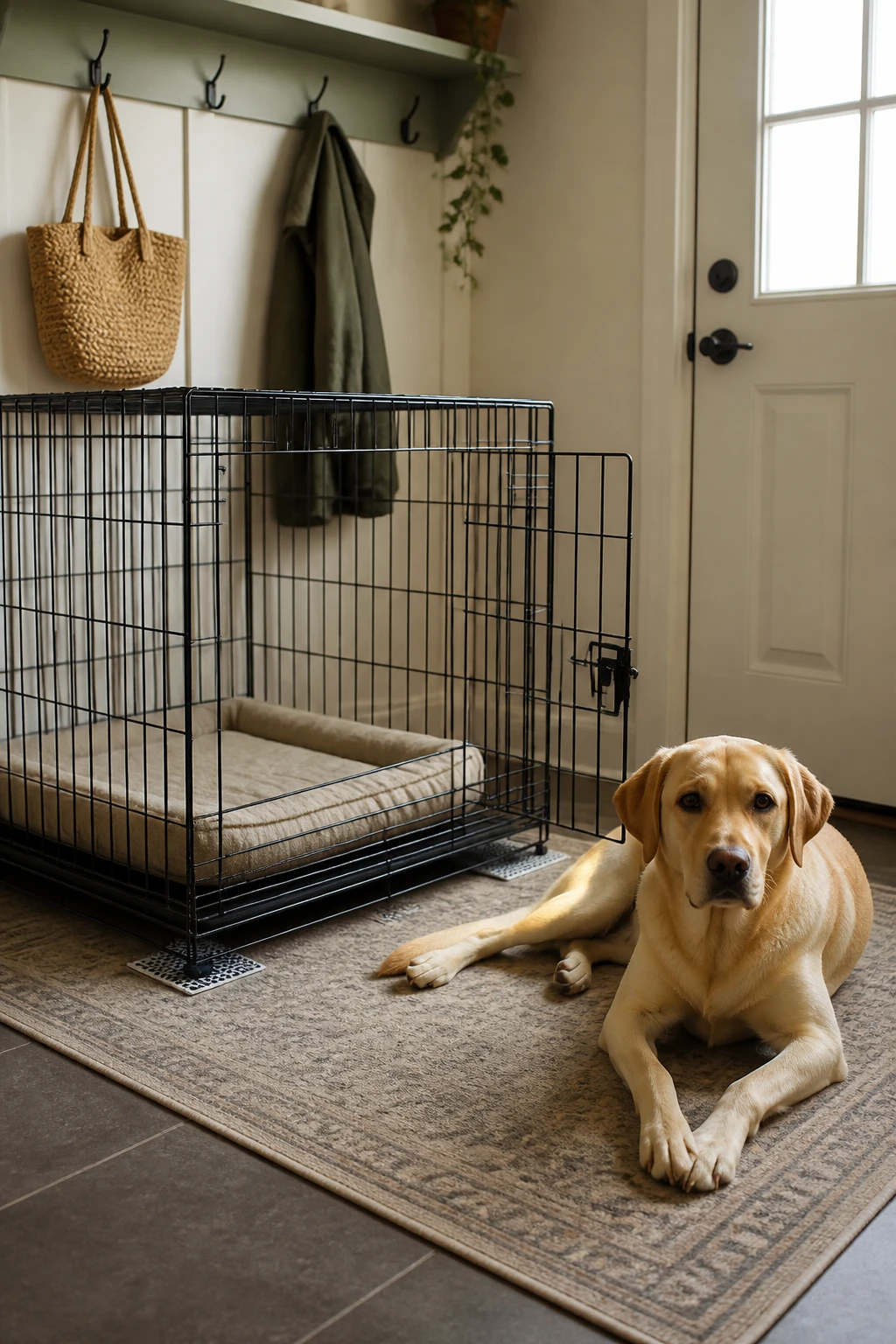
Cold travels through floors like a rumor. Lift the crate just a couple of inches and you’ll cut the chill dramatically, especially on tile or concrete.
Simple Materials
- Rubber anti-vibration pads or furniture risers rated for your crate’s weight
- A grippy rug underlay to prevent sliding
- A washable area rug beneath the whole setup
Keep the lift modest—1 to 2 inches—to avoid wobble and maintain safe entry for seniors. I’d pick rubber over wood to reduce rattle. Best for: Basements, mudrooms, and spaces over garages.
4. Layer A Warm, Non-Slip Base Inside
Start with an insulated base inside the crate and build up from there. You want softness, warmth, and a surface that won’t bunch up or tempt chewing.
Build The Stack
- Bottom: A cut-to-size closed-cell foam pad or yoga mat segment for insulation
- Middle: A waterproof liner or crib mattress protector (tucked edges) to handle accidents
- Top: A fitted crate pad with a zippered cover—look for sherpa or microfiber
For young chewers, choose a tougher fabric and avoid loose fringe. IMO, skip thick memory foam if your dog runs hot. Best for: Most dogs who like a cushioned nap and need spill protection.
5. Use A Draft-Deflecting Screen On The Door Side
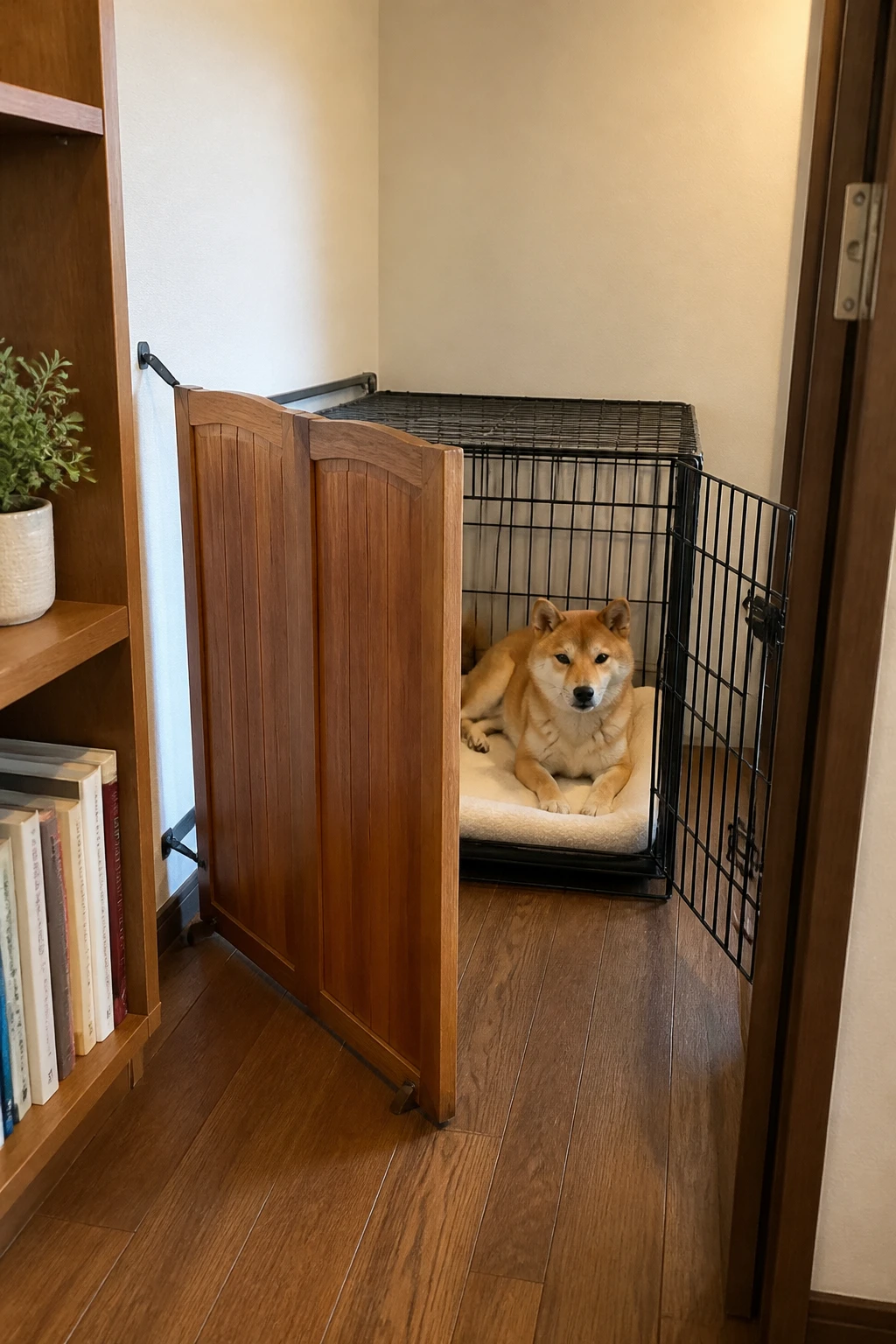
Front door near a hallway draft? Set a simple folding screen or bookcase a foot or two in front of the crate door to redirect airflow. It maintains visibility while shielding your dog from gusts.
Placement Tips
- Keep at least 12 inches of space between the screen and door for easy access.
- Anchor tall pieces with wall-safe Command strips or anti-tip straps.
- Choose solid-panel designs over slatted ones for better wind control.
I’d pick a wood panel with felt pads to prevent floor scratches. Best for: Open-concept homes where air moves like it owns the place.
6. Create A Cozy Nook: Corners, Curtains, And Carpets
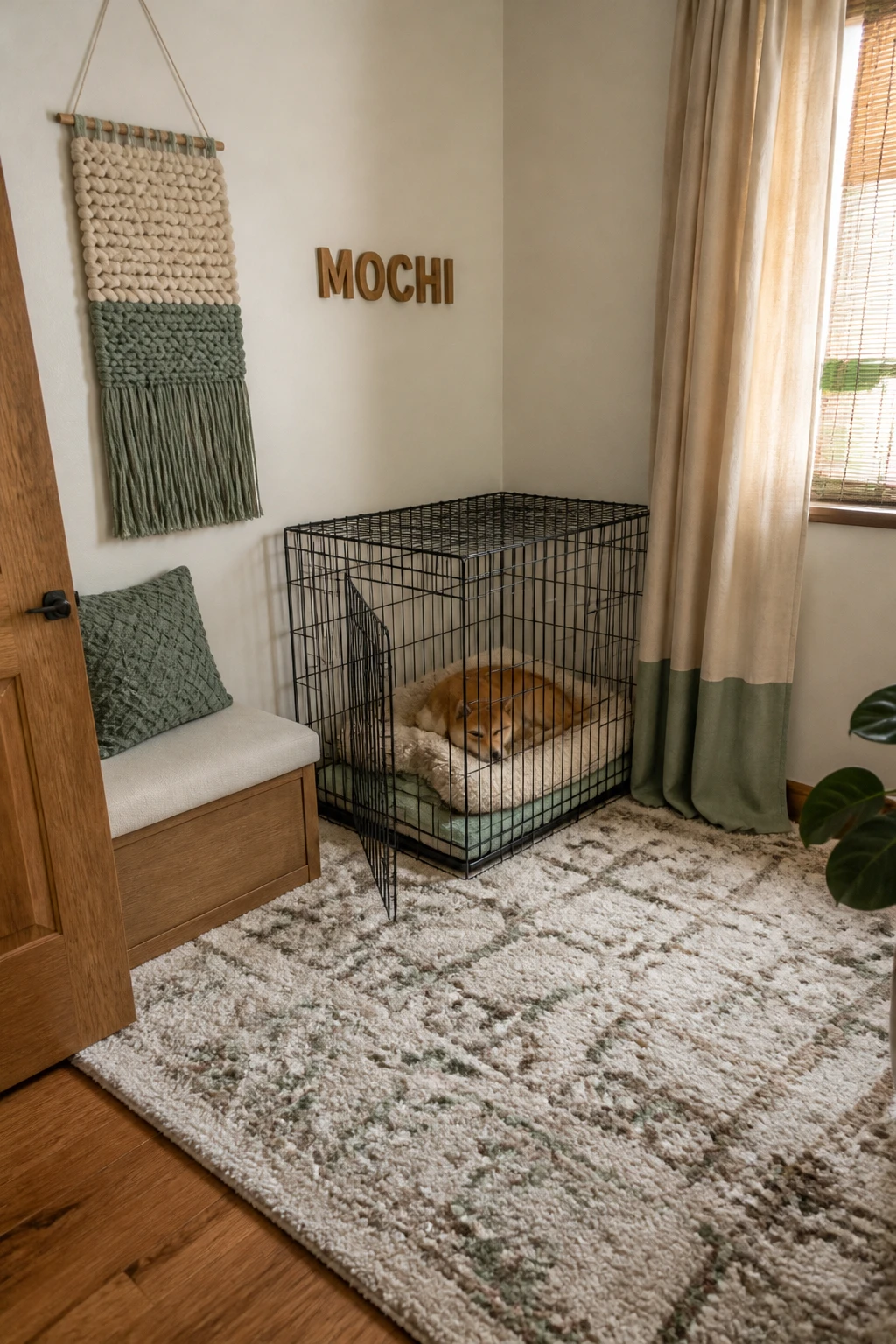
Location matters more than you think. Move the crate into an interior corner away from leaky windows, then add soft surroundings to absorb cold and noise.
What To Add
- A thick area rug under and around the crate
- Floor-length curtains on nearby windows to block seeping air (keep cords out of reach)
- Fabric wall hangings or an upholstered bench nearby to dampen drafts and echo
Avoid placing the crate under window sills with condensation or near frequently opened doors. I’d skip placing it near space heaters—safety first. Best for: Dogs who relax better in semi-enclosed spots.
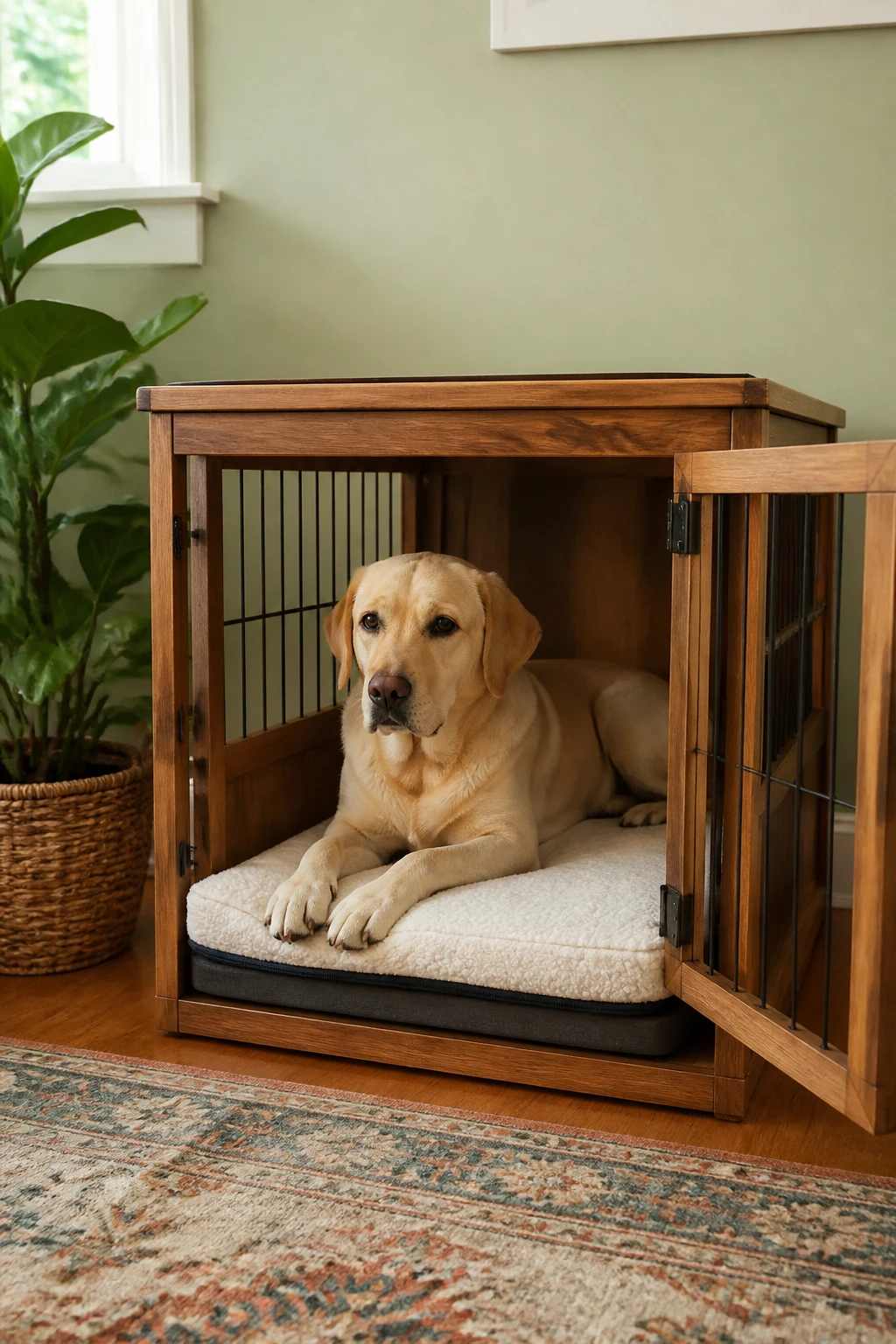
7. Swap To A Furniture-Style Crate With Solid Sides
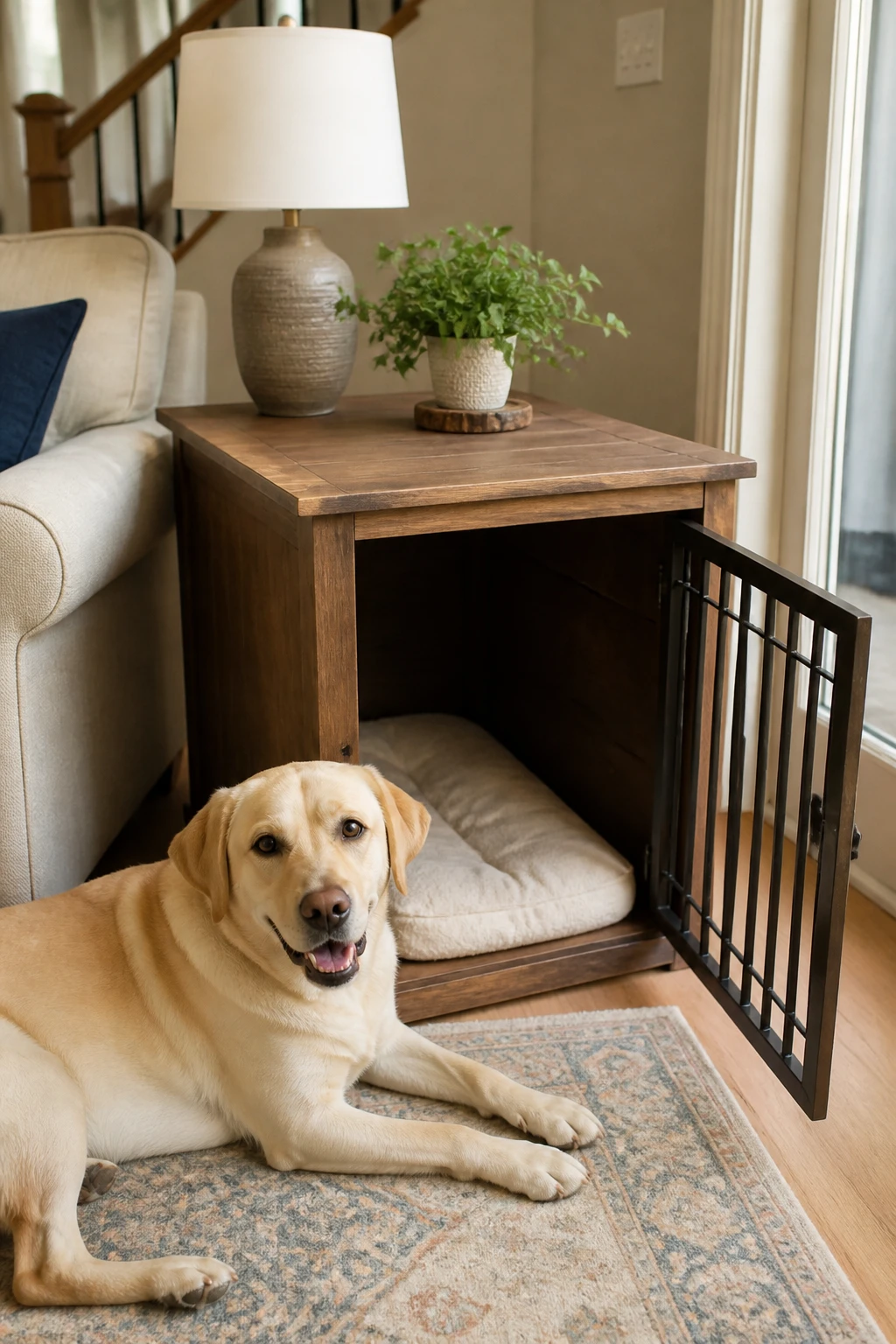
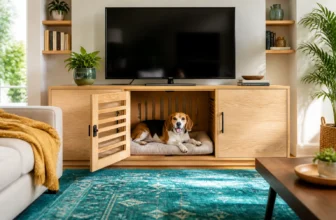
Furniture-style crates look like end tables and act like wind blockers. Solid wood or composite sides reduce airflow while the front and top vents manage fresh air.
What To Look For
- Real wood or sturdy engineered panels with smooth, sealed edges
- Metal bars on the door for visibility and safety
- Removable, washable interior pad
They cost more, but they double as décor and reduce the need for extra covers. Worth it if you want a sleeker living room and a calmer dog. Best for: Main living spaces and dogs who prefer den-like enclosures.
8. Add Safe, Low-Level Warmth—The Right Way
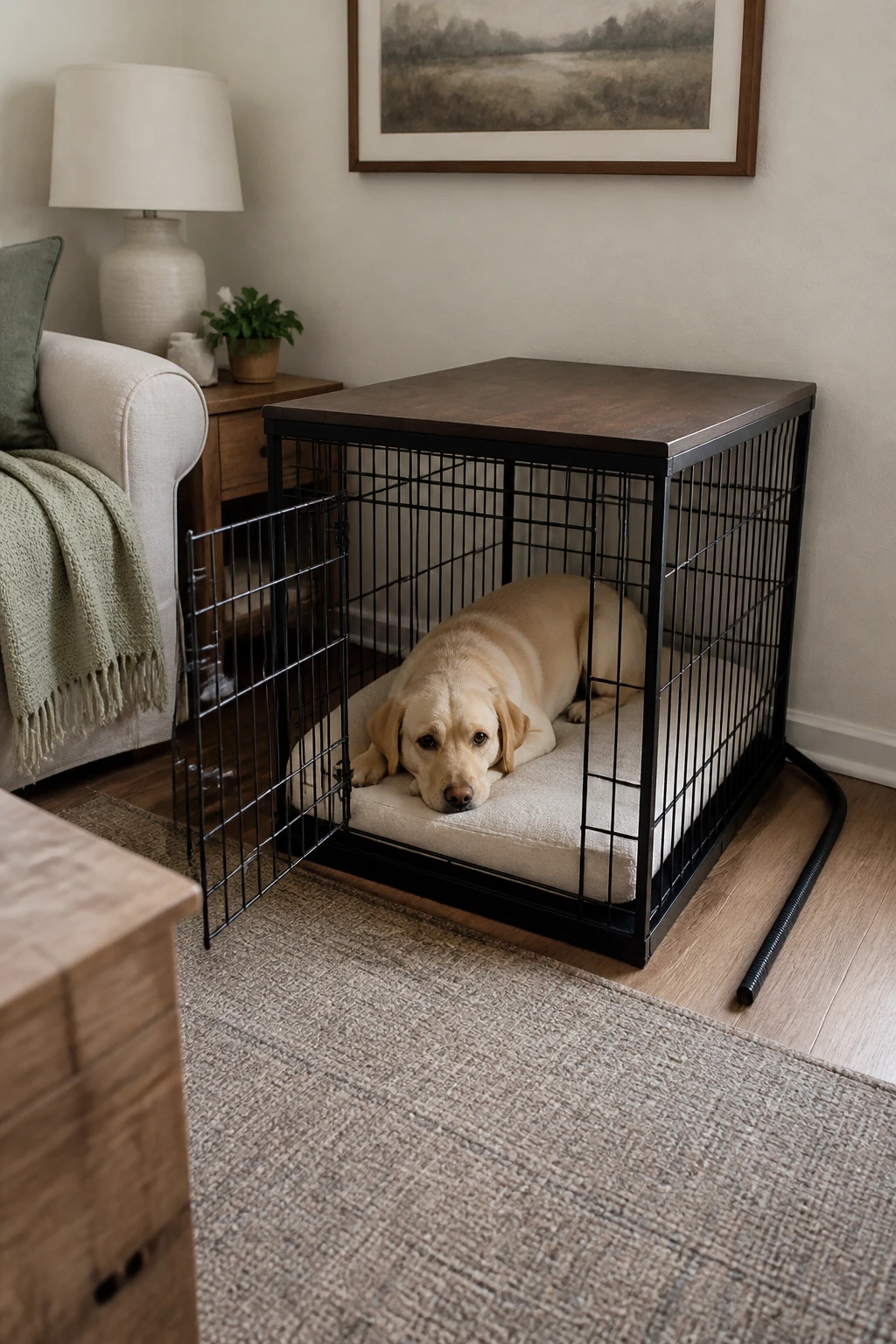
Need an extra nudge of heat? Use pet-safe warming pads designed for crates, or slip a microwaveable heat disc under the bed cover for short stints.
Safety First
- Only use chew-resistant cords with cord protectors routed outside the crate and away from teeth.
- Choose low-wattage pads with thermostat control and a tough cover; place beneath a fitted pad so your dog can move off it.
- Never stack heating elements or place them near metal bars touching skin.
I’d pick a vet-recommended low-watt pad for seniors or short-coated breeds. Best for: Cold-prone pups, nighttime setups, and older dogs with stiff joints.
Common Mistake to Avoid
Don’t seal the crate like a submarine. Dogs need airflow to avoid condensation, odors, and overheating. Always leave at least one panel or vent partially open and check the interior with your hand—if it feels stuffy or damp, adjust the cover, reduce layers, or relocate the crate away from heat sources.
FAQ
How do I know if my dog is too cold in the crate?
Watch for shivering, curled-up tight sleeping, or reluctance to settle. Touch the bedding and the dog’s ears—if both feel chilly, add insulation layers or move the crate away from drafts. If your dog pants or sprawls, you probably overdid the warmth—remove a layer.
Are crate covers safe to use overnight?
Yes, as long as you maintain ventilation. Choose covers with roll-up sides and never drape fabric directly over vents without a gap. Keep the crate several feet from space heaters, fireplaces, or radiators.
What should I put under the crate to stop cold coming up?
Use a rubber-backed rug and a layer of closed-cell foam or cork underlayment. Add rubber feet or pads to lift the crate slightly. This combo blocks cold transfer and reduces vibration noise.
Can I use an electric blanket or human heating pad?
I’d skip both. Human devices run too hot and lack chew protection. Pick a pet-specific low-watt pad with temperature regulation and place it under a fitted crate mat so your dog can move off the warmth.
Is a wooden crate warmer than a wire crate?
Typically yes, because solid sides limit airflow. If you already own a wire crate, you can mimic that effect with a good insulated cover, a backer board, and a warm base layer.
Ready to banish winter drafts and keep your sidekick comfortable? Mix one or two of these ideas and tweak as needed—your dog will tell you what feels right. Small changes deliver big comfort, and you’ll love the calmer, snug vibe at home.
As an Amazon Associate, I earn from qualifying purchases.