This post contains affiliate links. As an Amazon Associate, I earn from qualifying purchases, at no extra cost to you.
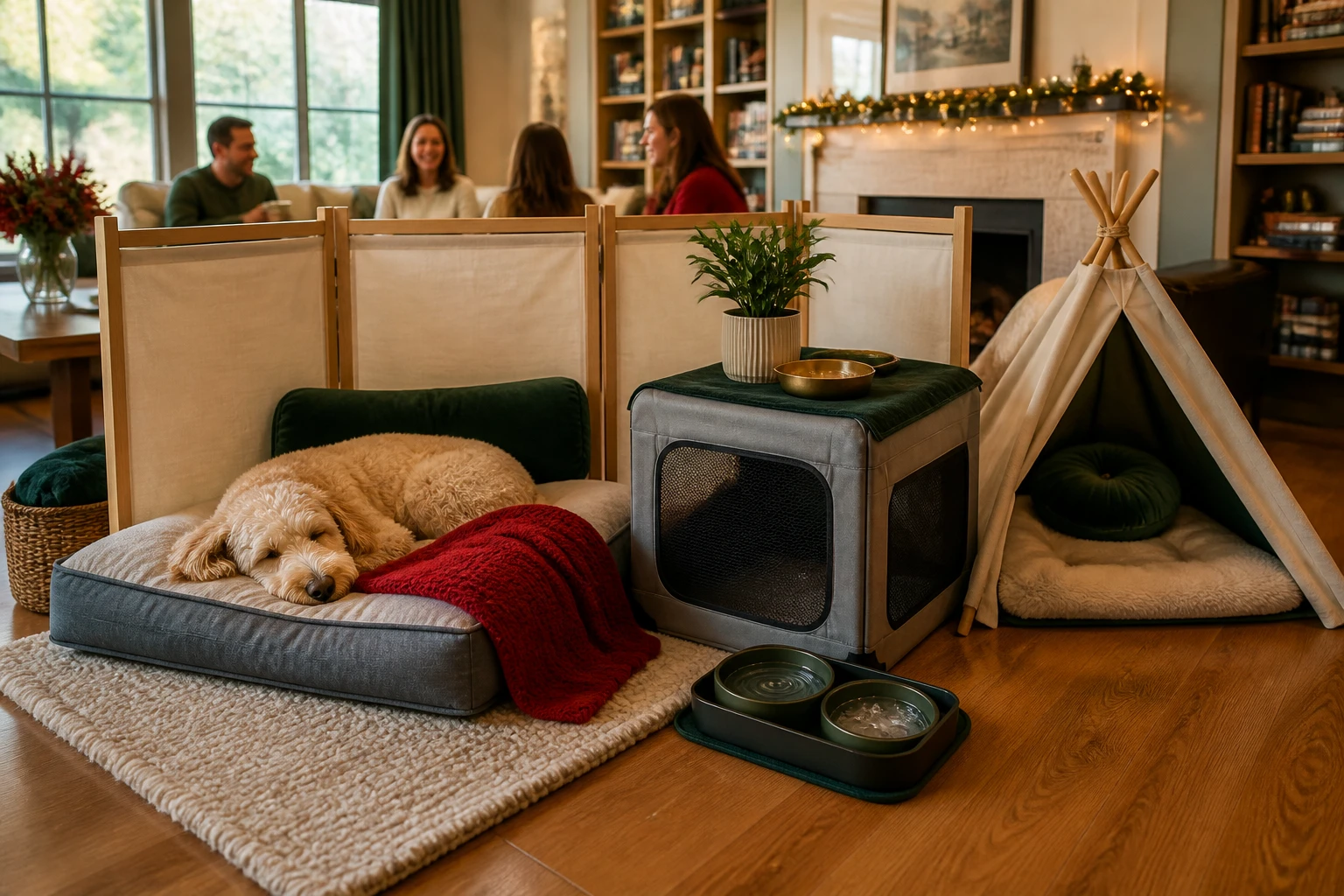
Holiday chaos can rattle even the chillest pup. Give your dog a peaceful hideaway so guests can mingle while your best friend decompresses. These 5 ideas blend smart layout, soft materials, and low-stress decor—without sacrificing your seasonal vibe. Ready to host like a pro and keep your dog zen?
⭐ Our Top Pick: See it on Amazon
1. Build a “Quiet Corner” With Soft Sound Buffers
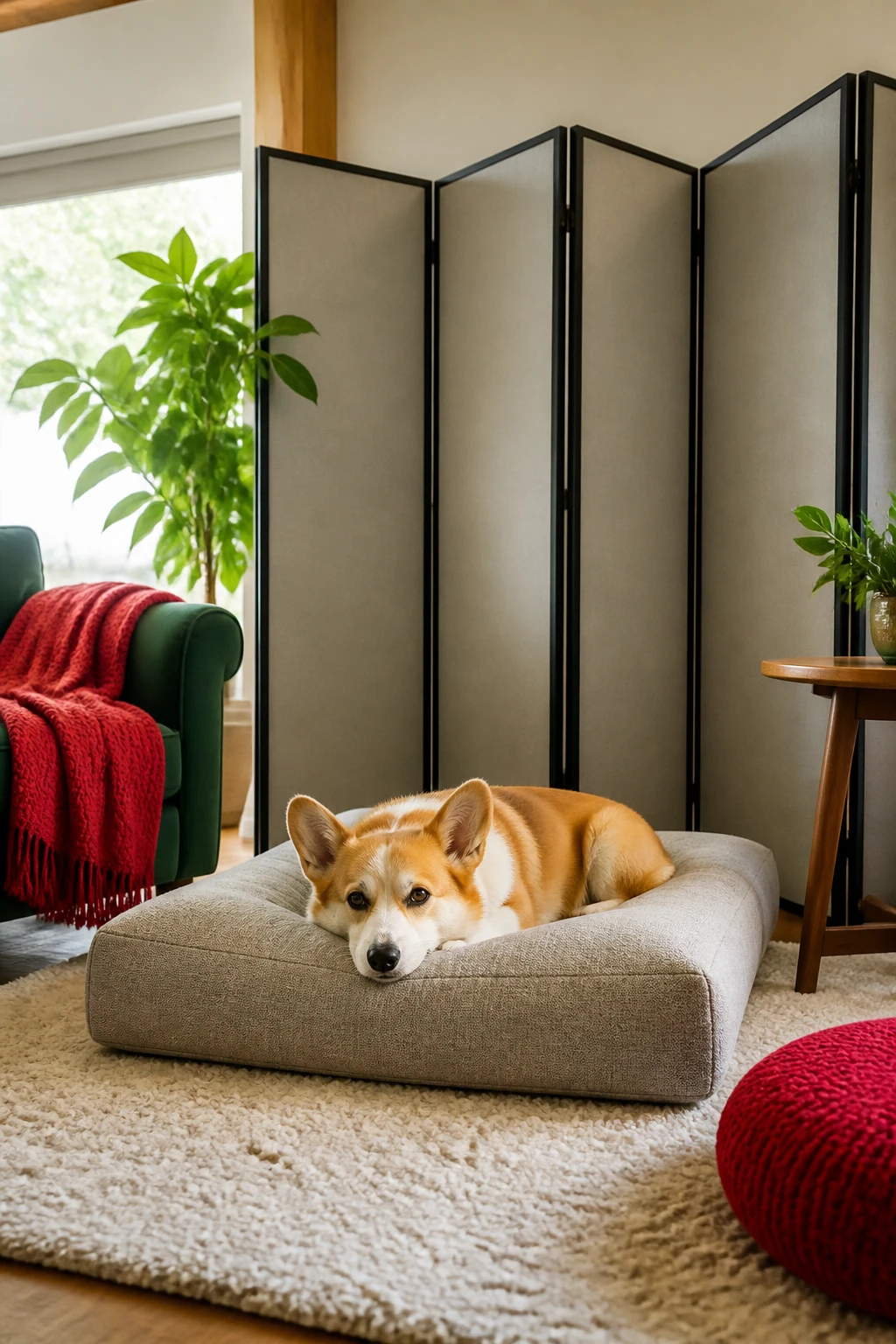
When doorbells chime and aunties squeal, dogs need somewhere predictable and hush. A quiet corner—kinda like a mini reading nook for canines—absorbs noise and gives your dog a visual boundary. Think cushy textures and simple lines, not clutter.
How to Set It Up
- Anchor with a thick, low-profile dog bed (orthopedic foam or memory foam keeps joints happy).
- Add a washable cotton or wool rug under the bed to dampen sound and keep the area defined.
- Use a folding room divider with fabric panels or a tall bookcase to block foot traffic. Place it so your dog sees the room but doesn’t feel “on display.”
- Hang light curtains with Command hooks if you need extra muffling—choose tightly woven fabric and keep drapes above chewing height.
- Place a water bowl on a non-slip mat a few feet away from footpaths.
Skip hard clattery decor here. I’d pick textile-heavy pieces over anything shiny or breakable. Keep holiday accents high—faux greenery, framed prints, or wood ornaments on a ledge. Safety first: no cords, no glass, no dangly bits your dog can snag.
Tips
- Test the spot before guests arrive. Sit there with your dog for five minutes while you play low-volume music or a vacuum sound to simulate hustle.
- Place the corner away from the front door and kitchen triangle. Your dog shouldn’t feel like a traffic cop.
- Use neutral colors and a small scent-free diffuser shell (no oils—just the look) to avoid overwhelm.
Best for: Dogs who like proximity but need a buffer from commotion. Great in living rooms with an open plan.
Benefit: A defined sanctuary reduces startle responses and lets you host without constant dog-wrangling.
2. Style a Covered Crate Nook That Looks Like Furniture
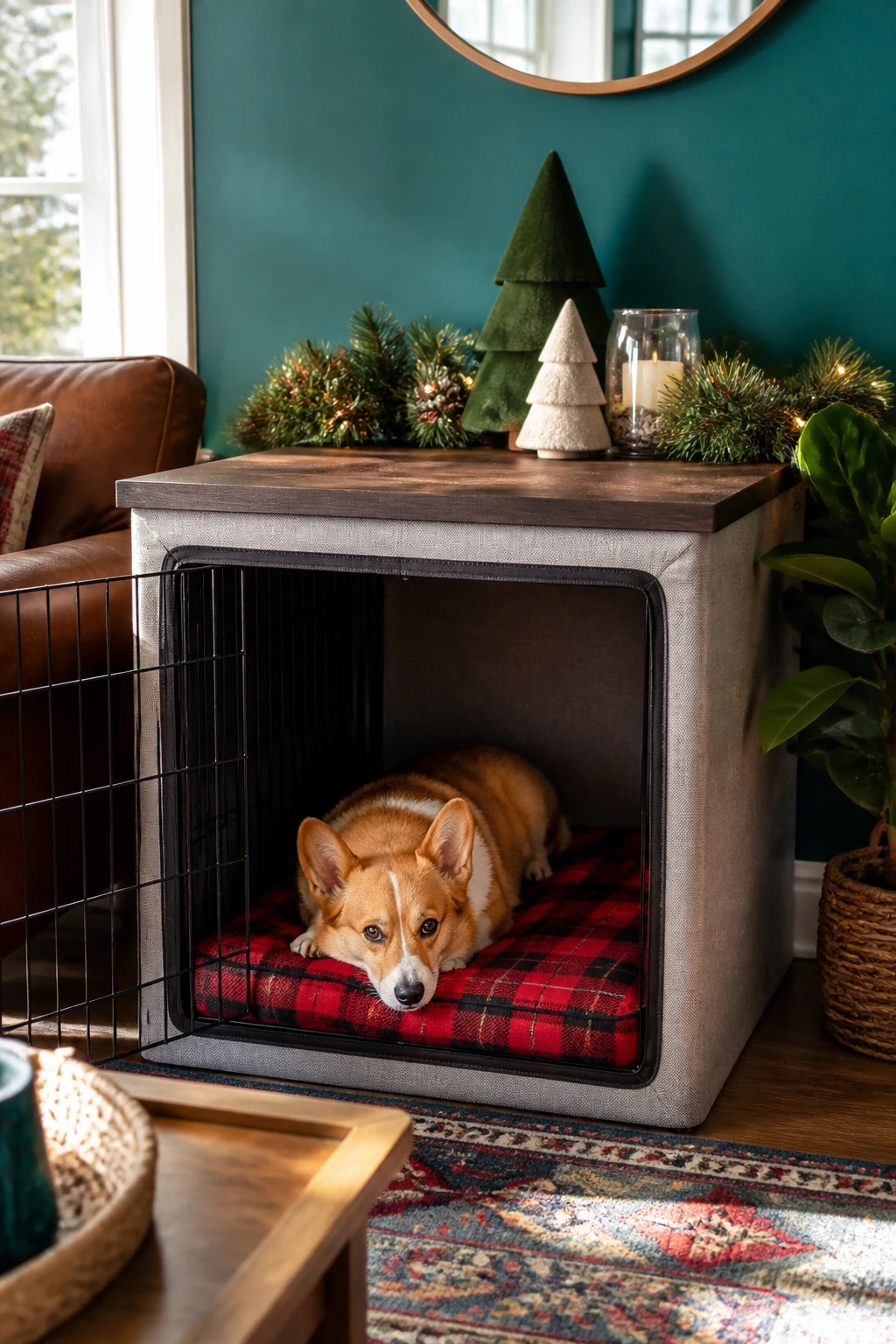
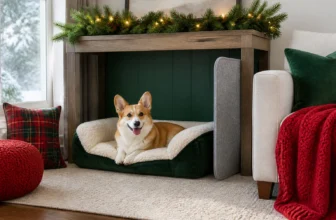
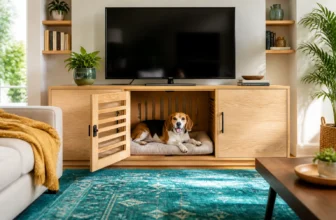
A covered crate can double as an accent table, which means you get form and function. Dogs love den-like spaces, and guests love a tidy living room. Win-win, right?
Design It Like a Side Table
- Choose a sturdy crate with smooth edges. For chewers, go with metal bars and a fitted crate cover that secures tightly at the corners.
- Top the crate with a thick wooden board cut to size, then add felt pads underneath to prevent rattling.
- Style the top with shatterproof decor: a stack of hardcover books, a small wood figurine, or a fabric runner. Keep everything stable and out of sniff range.
- For the cover, pick heavyweight canvas or twill with roll-up doors. Leave at least one side open for airflow and visibility.
- Lighting: Place a battery-operated faux “candle” lamp on the top surface—no flames, no cords, no risk.
IMO, I’d skip bright patterns on the crate cover that shout “present-wrapping station.” Go for calm colors that blend with your sofa and area rug. Your dog chills better in low-contrast spaces.
Safety Checks
- Ensure no ties, tassels, or loose trim dangle into the crate.
- Anchor nearby cords or move them entirely.
- Use a fitted, chew-resistant bed. If your dog shreds, choose a flat mat designed for durability.
Best for: Dogs who already crate comfortably or need a structured retreat. Ideal for apartments or small homes.
Benefit: A polished, multi-use piece that keeps your dog a step away from the action without feeling exiled.
3. Create a “Doorway Decompression Zone” With a Bench and Rug Layers
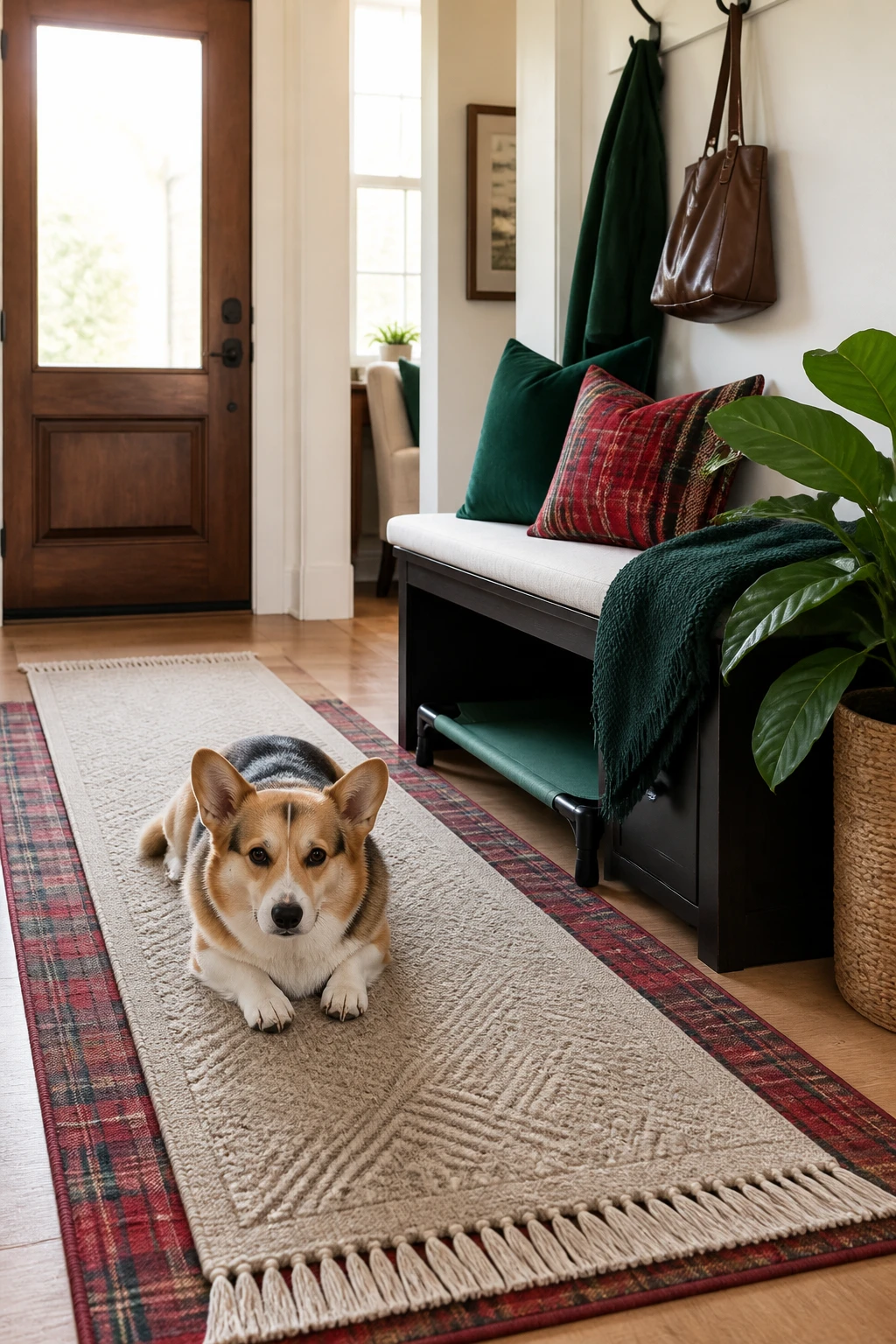
Guests pour in through the entryway, which can spike your dog’s excitement. A decompression zone near—but not in—the foyer helps your dog watch arrivals from a calmer perch. You get less jumping, fewer zoomies, and more control.
Layout Blueprint
- Position a storage bench 6–10 feet from the main door, at a slight angle so your dog sees but doesn’t block traffic.
- Layer a runner over a rug pad to reduce echo and provide traction.
- Slide a low dog cot or thick mat under the bench opening if it has space; otherwise, place a cushy bed just to the side.
- Mount wall hooks high for leashes and coats so nothing dangles at snout level.
- Hang a framed sign (cheesy but effective) that says “Dog Break Space” so guests get the hint.
Accent with faux greenery in a heavy planter you can’t easily tip, or a wooden bowl filled with pinecones set up high. Shatterproof only. No bells, no ribbons, no glitter—your vacuum will thank you.
Training-Friendly Touches
- Place a slip-resistant mat where your dog sits for greetings. Reward calm sits before opening the door.
- Keep a fabric basket on the bench shelf for leashes and poop bags—clutter stresses dogs too.
- Mark the dog’s “parking spot” with a small, washable throw.
I’d pick a bench with closed storage if you hide extra throws or cleaning wipes. Worth it if your entry sees heavy traffic or if your dog loves to supervise arrivals.
Best for: Social dogs who need a predictable “wait here” station during doorbell theatrics.
Benefit: Smooth guest hellos while your dog learns calm behavior in a comfy setup.
4. Set Up a Guest-Free Snuggle Room With Low Lighting
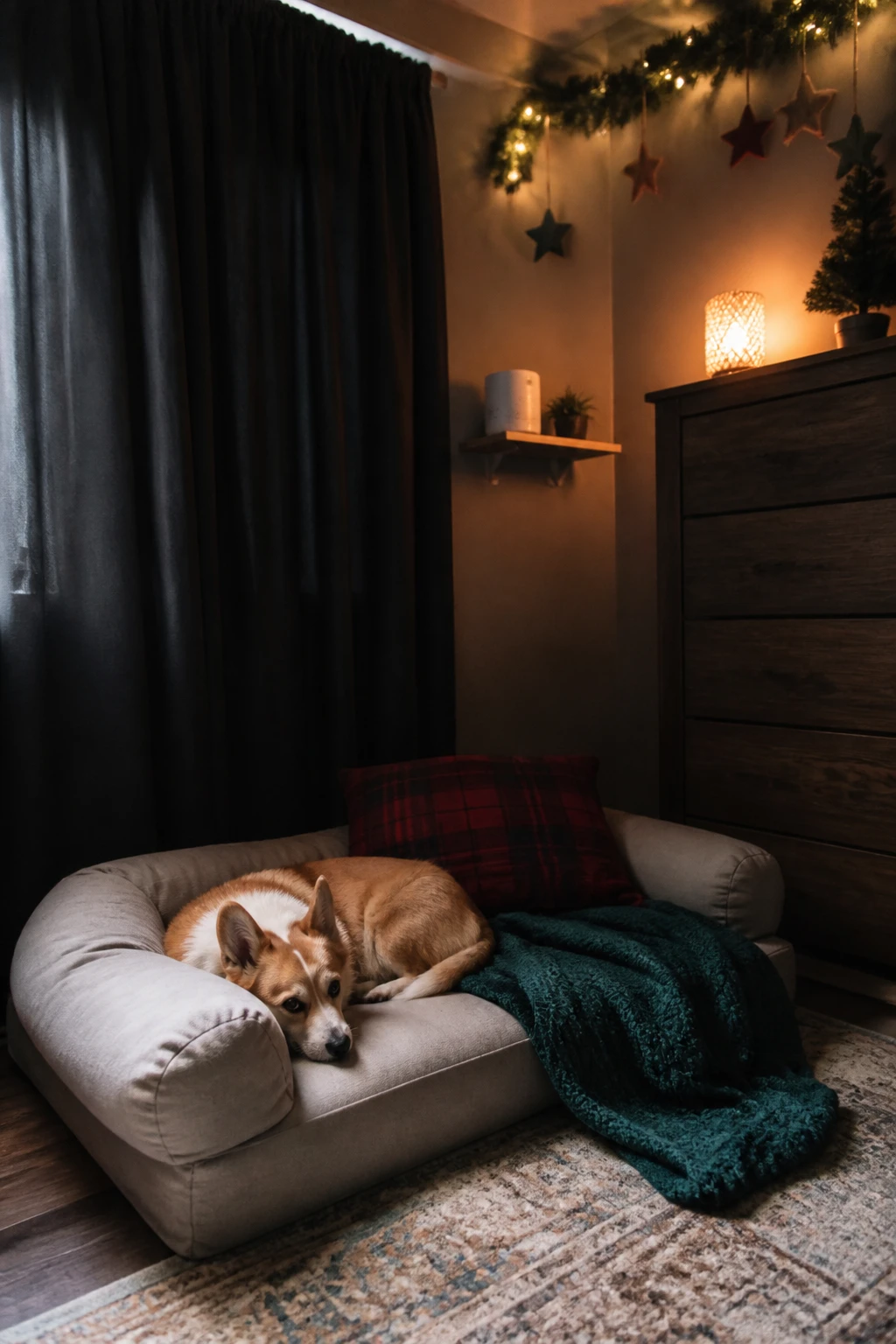
Sometimes the kindest thing is a no-guest zone. Convert a spare bedroom, office, or even a wide hallway landing into a snuggle room with cozy lighting and structured calm. Think “spa day” for your best bud.
What to Include
- Floor cushion or orthopedic bed with bolsters so your dog feels “held.”
- Blackout or room-darkening curtains to dial down visual triggers.
- Battery-powered table lamp with warm light (set on a high dresser or wall shelf).
- White noise machine or a small speaker playing consistent ambient sound. Keep cords managed with cord covers or cable boxes.
- Soft-sided playpen or freestanding gate if you need extra boundaries.
Style the space with framed winter art, fabric garlands secured high, and wood bead strands on shelves only. Keep any greenery faux and out of reach. No scents, no oils, no potpourri—dogs don’t need holiday perfume to relax.
Routine That Works
- Introduce the room for 5–10 minutes daily the week before hosting. Short, happy sessions only.
- Feed a regular meal or a lick-safe chew in there so the room builds a “good things happen here” association.
- Post a door sign: “Quiet Time—Please Knock.” Your future self will be grateful.
I’d skip elaborate decor in this room—less clutter, less stimulation. Worth it if you host big families or if kids zoom around your home like caffeinated elves.
Best for: Noise-sensitive or senior dogs who need firm boundaries and predictable calm.
Benefit: A dependable retreat that prevents over-arousal and gives you a breather too.
5. Design a Low-Traffic Dining-Adjacent Lounge With Elevated Comfort
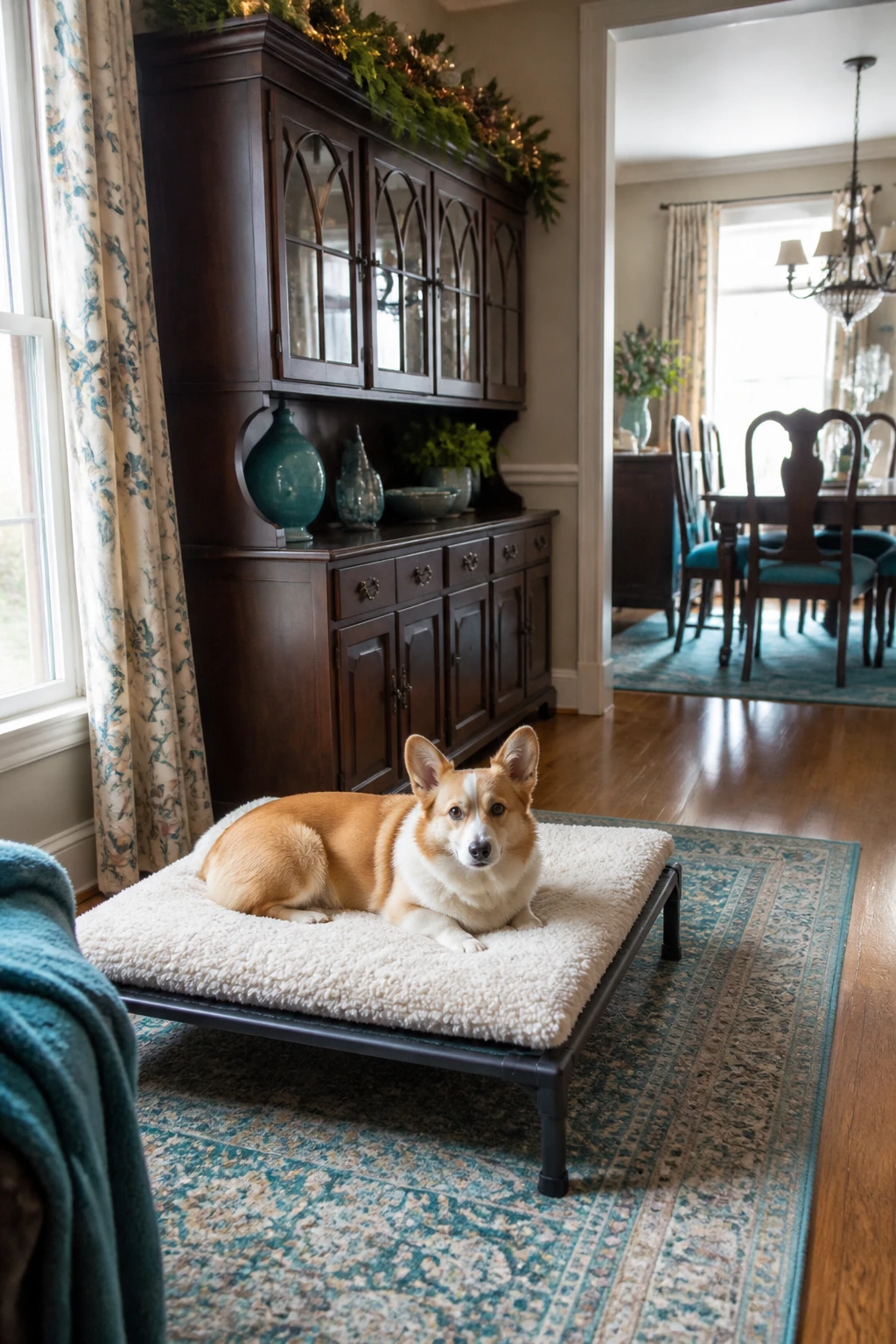
During dinner, dogs often hover for crumbs or pace because they don’t know what to do. Create a designated lounge just off the dining room so your dog relaxes while you feast. You’ll protect plates and maintain a relaxed vibe.
How to Place It
- Choose a corner 8–12 feet from the table, behind a sideboard or hutch if possible.
- Set a raised cot with a sherpa topper or a thick rectangular bed. Elevated cots help warm dogs stay cool, while toppers add softness.
- Add a washable runner underneath to define the zone and catch any drool or crumbs.
- Use a short folding screen or a plant stand (weighted) to suggest a boundary without boxing your dog in.
- Keep decor minimal: a fabric basket for blankets, a wooden tray on the sideboard with napkins and wipes, and shatterproof accents up high.
For families with multiple dogs, assign each dog a separate mat and space. Color-code beds if that helps. Safety tip: keep food-laden platters on higher surfaces and never place edible centerpieces within reach.
Calm Cues During Meals
- Ask for a down-stay on the bed while plates move. Reward after courses, not during bites.
- Seat the “dog lounge” near a wall so your pup feels anchored, not exposed.
- Play low-volume background music to mask fork clinks and chair scoots.
I’d pick a cot with rubber feet to prevent sliding on hard floors. I’d skip poufs or beanbags—no structure and easy to puncture. Worth it if your dog patrols under the table.
Best for: Food-motivated pups and households that entertain at the dining table.
Benefit: Peaceful meals, clean floors, and a dog who understands their job is to chill.
Common Mistake to Avoid
Don’t overhaul everything at once right before guests arrive. Dogs notice changes and may get unsettled if their entire world shifts overnight. Introduce one element per day—bed location, then divider, then crate cover—so the retreat feels familiar on party day. And keep décor safe and simple: stick to fabric, wood, and faux greenery placed high, and ditch anything fragile or stringy.
FAQ
How do I choose the right bed for a calm retreat?
Match the bed to your dog’s sleep style. Curlers love bolsters; sprawlers need flat, rectangular pads. For seniors, pick supportive foam with a removable, machine-washable cover. If your dog runs hot, try a raised cot with a soft topper. Place the bed away from vents and heaters.
What’s the safest way to decorate around dog zones for the holidays?
Use shatterproof accents, solid wood pieces, and fabric garlands mounted high with Command hooks. Avoid glass, glitter, tinsel, bells, and anything stringy. Keep cords hidden or elevated, and never use real candles near beds or crates. Choose faux greenery and secure it out of reach.
Where should I place my dog’s retreat if I have a small apartment?
Carve out a corner with a fabric screen behind the sofa, or turn a crate into a side table. A hallway end with a rug and a bolster bed also works. Keep the spot at least a few steps from the front door and kitchen, and use textiles to reduce noise bounce.
How can I help guests respect my dog’s quiet space?
Label the area with a friendly sign and explain the rules at the door: look, don’t touch, and let the dog approach if they want. For kids, set a “two giant steps away” rule. If needed, place a freestanding gate around the retreat so boundaries stay crystal clear.
Can I rotate spaces depending on the time of day?
Yes, just keep the elements consistent so your dog recognizes the setup. Move the same bed, blanket, and divider to a daytime nook by a window and a nighttime nook near the living room. Consistency in scent and texture helps your dog settle faster.
Do I need to crate my dog when guests arrive?
Not always. If your dog feels safe in a crate, use it for short intervals like arrivals and departures. Otherwise, a quiet corner or snuggle room with a gate can work. Watch body language—if your dog yawns repeatedly, lip-licks, or paces, a more enclosed option might help.
With a little planning, your holiday home can be both welcoming and calm. Try one of these setups this week, then layer in the rest before guests roll in. Your dog gets peace, your guests get space, and you get to enjoy the celebration—seriously, that’s the trifecta.
As an Amazon Associate, I earn from qualifying purchases.