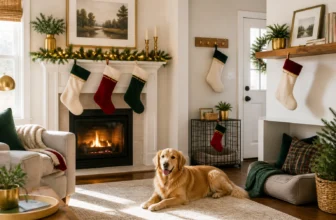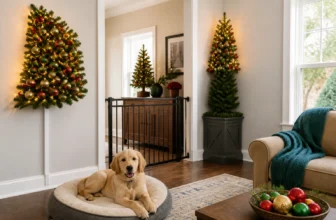
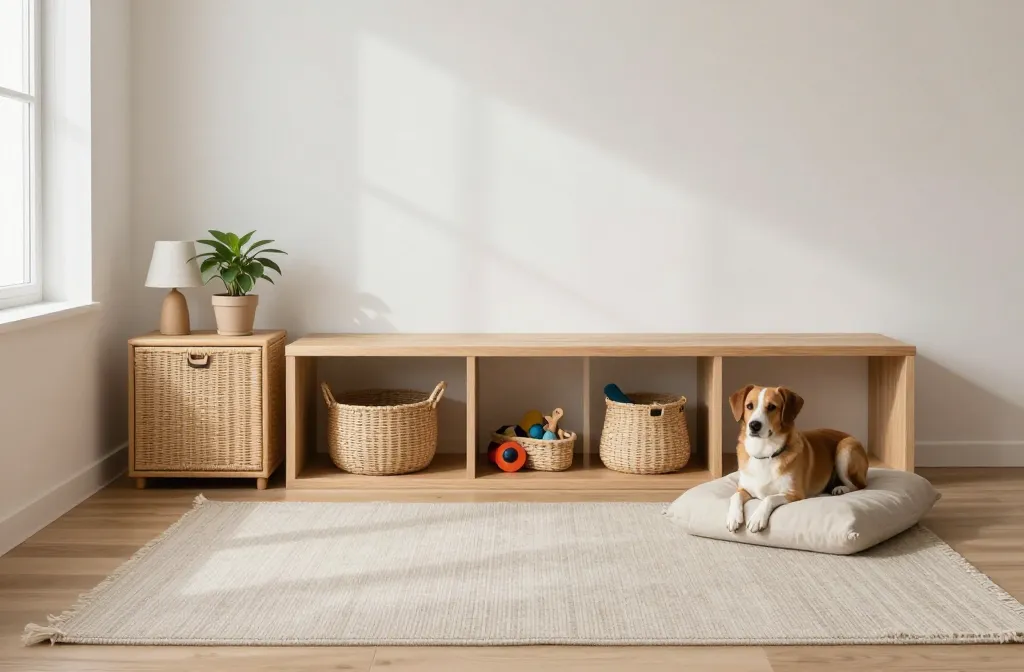
Small place, big dog energy? Totally doable. You don’t need a spare bedroom or a Pinterest mansion to give your pup a legit “room” that works. You just need a smart layout, a few multifunctional pieces, and a vibe that says, “Yes, this corner belongs to the dog.” Let’s build a cozy, chaos-free dog zone that fits your real life and your square footage.
Claim a Zone, Not a Room
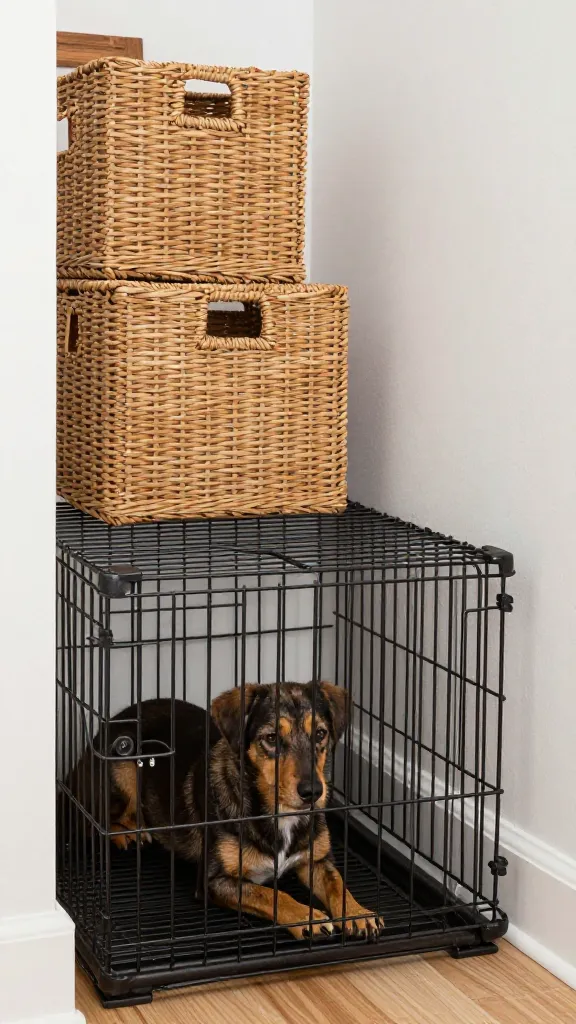
You don’t need walls to define a dog room. You just need boundaries and a plan. Pick a low-traffic spot that still feels social—near the sofa, under the stairs, or the end of a hallway.
- Under-stairs nook: Slide in a crate or a low platform bed, add baskets, and boom—instant dog den.
- Living room corner: Use a floor mat to mark the zone and place a crate that doubles as a side table.
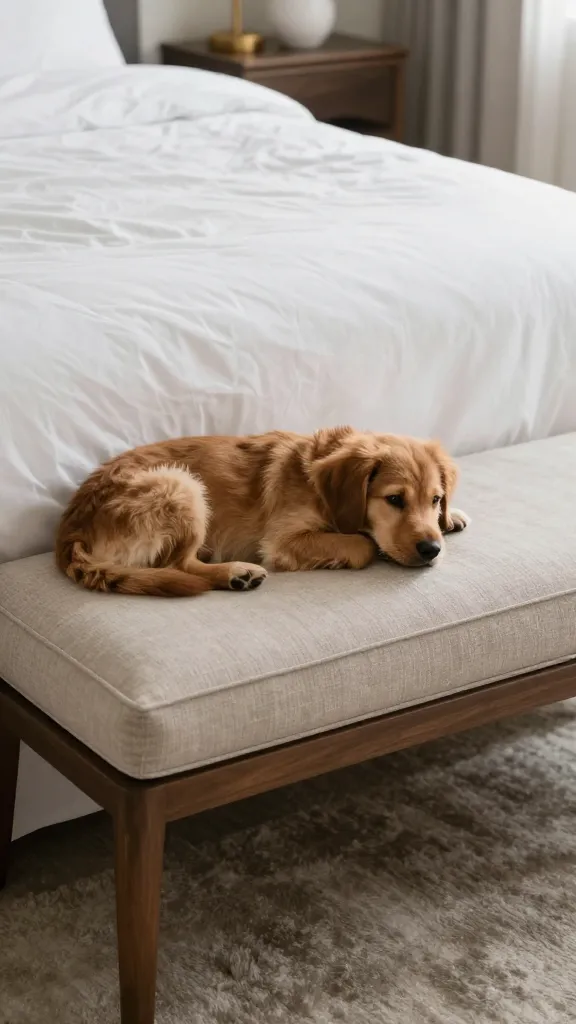
- Bedroom foot space: Narrow bench + cushion = a sleep spot that doesn’t eat walkway space.
Smart Dividers That Don’t Shrink the Room
Forget bulky gates that scream “prison.” Use a low open shelf, a plant stand, or a slim console to create a visual boundary. Clear acrylic gates keep sightlines open and the aesthetic calm.
Crate, But Make It Furniture
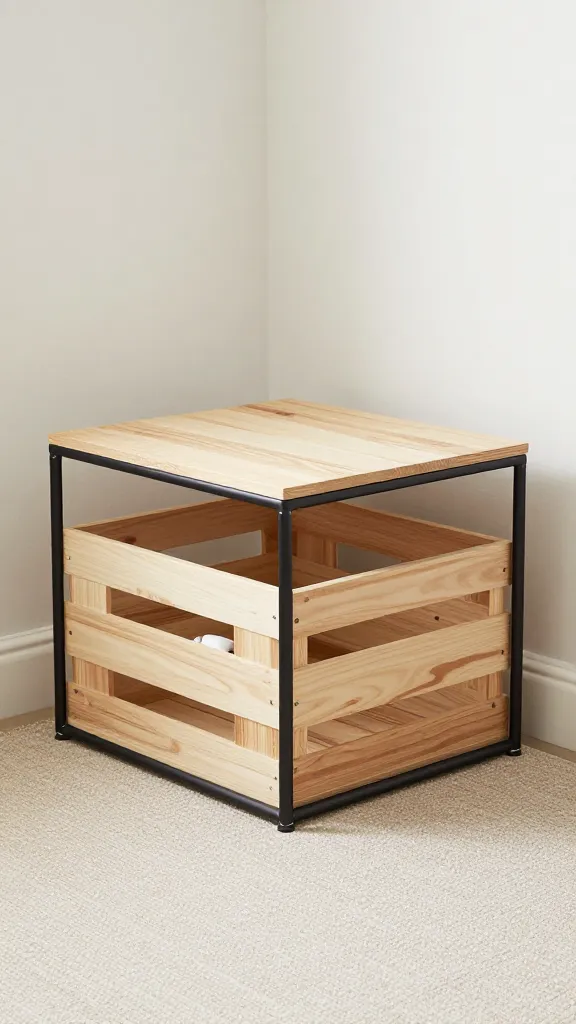
Crates save sanity. They also eat space if you pick the wrong one. Choose a crate that works as furniture so it earns its footprint.
- End-table crates: Wood or rattan-look crates hold lamps and coffee mugs while your pup snoozes inside.
- Stack-friendly setups: Put a crate under a wall-mounted shelf for treats, leashes, and wipes.
- Foldable wire crates: Need guest space fast? Collapse and slide under a bed in seconds.
Cozy Factor Without the Bulk
Line the crate with a thin, washable pad instead of a fluffy bed that eats clearance. Add a crate cover or light linen drape for a den vibe. FYI: breathable fabrics help nervous pups relax.
Storage That Works Hard (And Looks Good)
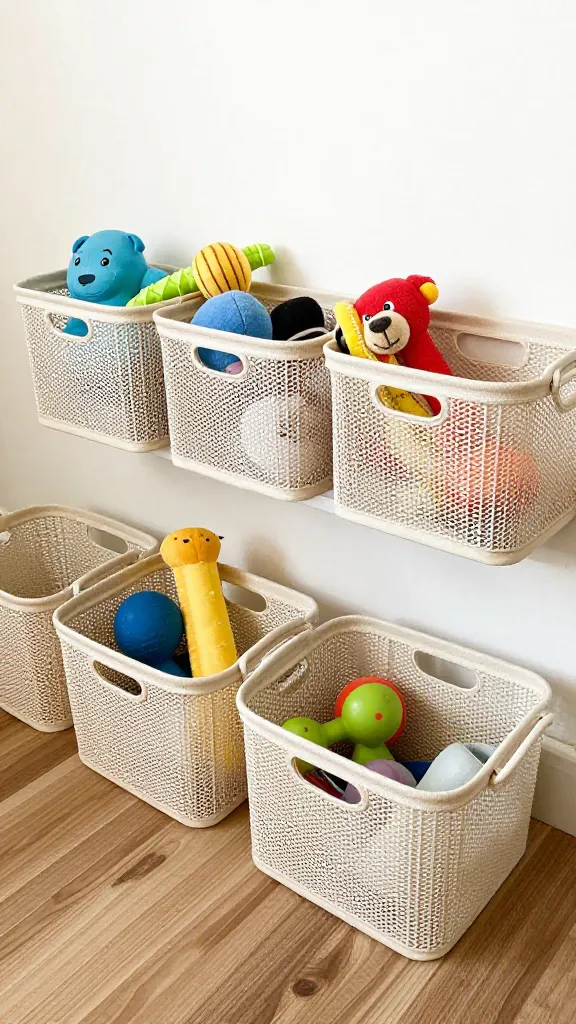
Puppy stuff multiplies. If you don’t corral it, your living room turns into a squeaky toy graveyard. Go vertical and go hidden.
- Wall hooks: Hang leashes, harnesses, and a poop-bag dispenser near the door.
- Over-the-door organizer: Treats, meds, and grooming gear live here, not on your counter.
- Under-bed bins: Rotate seasonal sweaters, spare toys, and travel bowls out of sight.
- Baskets with lids: Toss toys in quickly. Bonus: they hide the chaos during Zoom calls.
Food Station Without the Mess
Create a feeding area that doesn’t sprawl. Use a narrow mat with raised edges and a wall-mounted scoop for kibble. Store the main bag in an airtight bin tucked in a closet or under a bench. No more midnight crinkle symphonies.
Small Beds That Feel Big
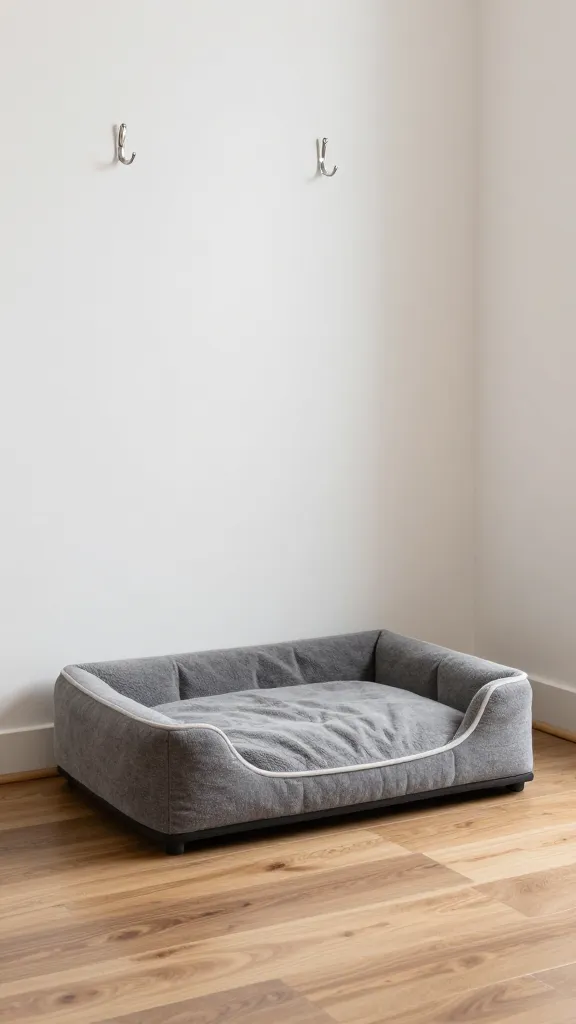
You don’t need a giant cushion swallowing your floor. Pick a bed that fits the dog, not your wishful thinking.
- Bolster beds: Great for anxious pups who like a boundary to lean on.
- Elevated cots: Airflow, easy cleaning, and they slide under benches.
- Corner beds: Wedge into tight angles and free up walkways.
Measure the Dog, Not the Label
Brands size beds like they size jeans: inconsistently. Measure your pup nose-to-tail when curled, then add a few inches. IMO, a snug fit beats a bed that eats half the room.
Design With Cleanability in Mind
Small spaces get gross faster. Make every surface easy to wipe, wash, or shake out.
- Washable rugs: Place one under the bed/crate to catch fur and dander.
- Performance fabrics: Crate covers, throws, and cushion covers should handle machine washing.
- Silicone mats: Under bowls, under slow feeders, under chaos.
Odor Control That Actually Works
Keep an enzyme spray, unscented pet wipes, and a lint roller in the zone. Add a small HEPA filter nearby if you can swing it. Your future self will thank you, and your guests will stop pretending they “like that wet dog smell.”
Make It Enrichment-Friendly, Not Cluttered
Mental exercise beats zoomies in a small place. Rotate toys and keep the stash lean.
- 2-3 core toys out: A chew, a plush, and a puzzle. Store the rest.
- Wall-mounted puzzle shelf: Keeps gear reachable, not scattered.
- Slow feeders + lick mats: Stick a lick mat to a tray or tile during dinner prep for calm vibes.
Hide the Ugly Stuff
Pick toy colors that match your decor so the room doesn’t scream “daycare.” Neutral ropes, wood chews, and silicone bowls blend in. Yes, it’s a little extra. Also yes, it works.
Safety First, Always
A tiny dog zone still needs big safety energy. Secure it like you mean it.
- Cord control: Use cable sleeves or cord clips behind furniture.
- Plant check: Some houseplants are toxic. Swap pothos and sago for pet-safe options like calathea.
- Chew-proof the base: Cover tempting corners with clear guards or aluminum angle strips.
- Ventilation: Never wedge a crate right against a radiator or heater.
Noise and Light Considerations
Street noise and hall lights can keep pups on alert. Add a soft crate cover and a white-noise machine near the zone. Dim lighting signals bedtime—even in a studio.
Style It Like You Mean It
You’ll look at this nook every day. Make it cute, not an afterthought.
- Mini gallery wall: Frame a paw print, a name tag, or a favorite photo above the zone.
- Matching hardware: Hooks, bin handles, and crate pulls in the same finish make it feel intentional.
- Color palette: Coordinate the bed, mat, and bowl colors with your rug or sofa.
Personal Touches That Don’t Add Clutter
A monogrammed tag on the toy basket or a small nameplate on the crate adds personality without extra stuff. Keep it simple and cohesive. Your space (and your eyeballs) will thank you.
Tiny Layouts That Work IRL
Let’s plug these ideas into common small-space setups.
- Studio apartment: Crate/side table next to the sofa, wall shelf above for treats and leashes, silicone mat under bowls by the kitchen cart.
- One-bedroom: Dog bed at the foot of the bed on a washable rug, hooks by the entry, collapsible crate stored under the bed for guests.
- Shared space with roommates: Under-stairs den with a gate, labeled bins for each dog’s gear, feeding mat stored on a hook when not in use.
Budget Tips That Don’t Look Cheap
– Use IKEA cabinets or a thrifted side table as a crate surround (leave ventilation!).
– Grab washable covers and swap seasonally instead of buying new beds.
– DIY a wall leash station with a slim board, 3 hooks, and a small shelf—instant “designed” moment.
FAQ
How big should a dog crate be for small spaces?
Pick the smallest crate your dog can stand up, turn around, and lie down in comfortably. Bigger isn’t always better, especially for anxious pups. Measure your dog and check interior dimensions, not just the size label.
Where should I put the dog’s bed in a tiny apartment?
Choose a quiet corner that still feels connected to you—near the sofa or at the foot of the bed. Avoid busy walkways and drafty doors. Your dog will rest better if they can see you but not get bumped every five minutes.
How do I keep my dog’s area from smelling?
Use washable textiles and clean them weekly. Wipe bowls daily, vacuum hair often, and spray accidents with an enzyme cleaner. A small HEPA filter helps, and so does regular sun time for beds, FYI.
What’s the best way to store dog toys in a small space?
Keep 2-3 toys out and rotate the rest weekly from a lidded basket or fabric bin. This keeps the floor clear and toys exciting. IMO, rotation cuts boredom and clutter at the same time.
Can I make a dog zone without buying new furniture?
Absolutely. Use a folded blanket as a bed, a sturdy basket for storage, and wall hooks you already own. Upgrade slowly—start with a washable mat and an airtight food bin and build from there.
How do I stop the dog zone from taking over the room?
Match colors to your decor, choose multipurpose pieces, and go vertical with storage. Keep the footprint tight and the silhouette clean. Edit weekly—your future sanity depends on it.
Conclusion
You don’t need a spare room to give your pup a legit retreat. Carve out a zone, make every inch pull double duty, and keep it cleanable and cute. Do that, and your small space will work harder, look better, and still have room for zoomies—short ones, but still.
Ready to upgrade your space? Check out our top picks below — hand-picked options that blend seamlessly into any home while keeping your pup cozy and secure.
As an Amazon Associate, I earn from qualifying purchases.