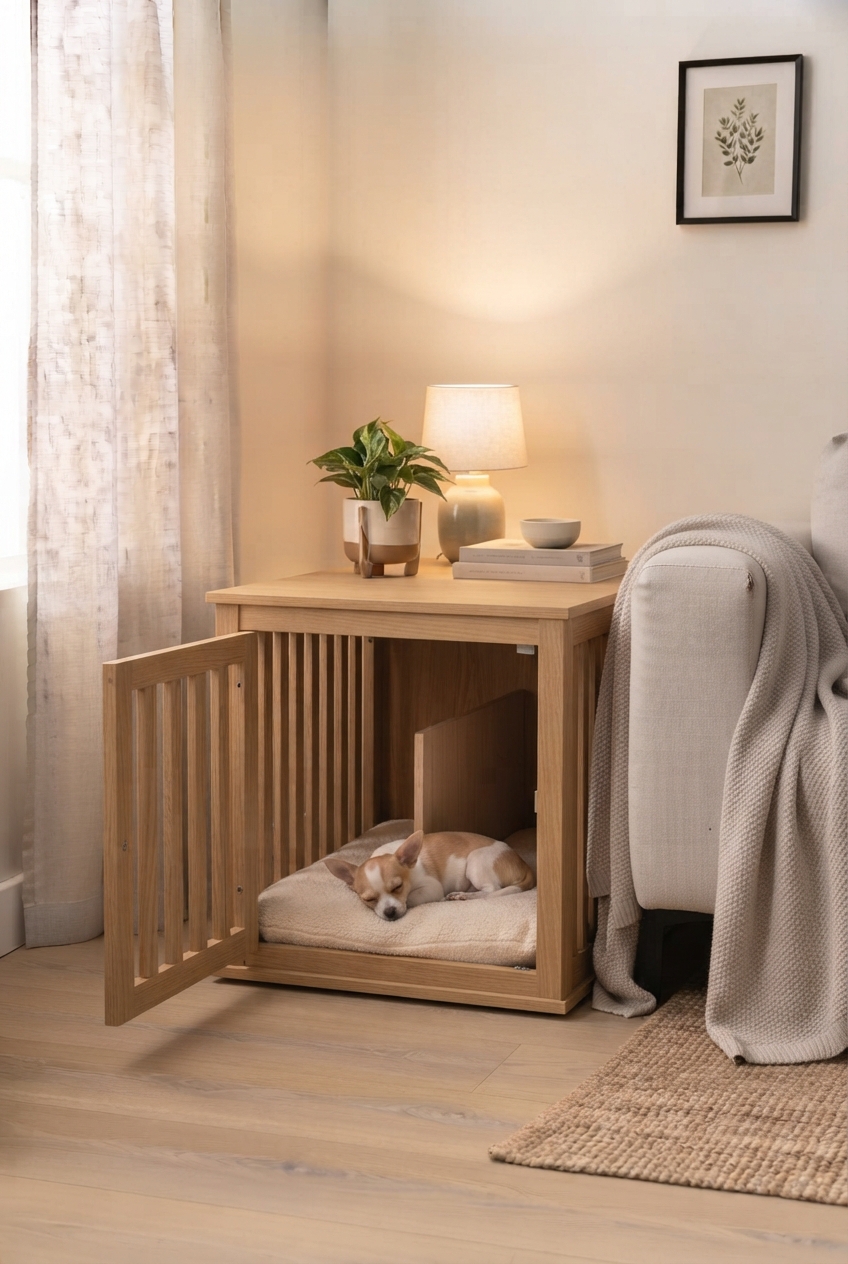
Puppies grow fast, and their crate setup should make that easy, not complicated. A few smart choices now save you from buying three different crates over the next year.
Why Puppy Crates Are Different
A crate that’s too big can undo house training progress, while one that’s too small gets outgrown in weeks — sizing matters more here than with adult dogs.
What to Look For
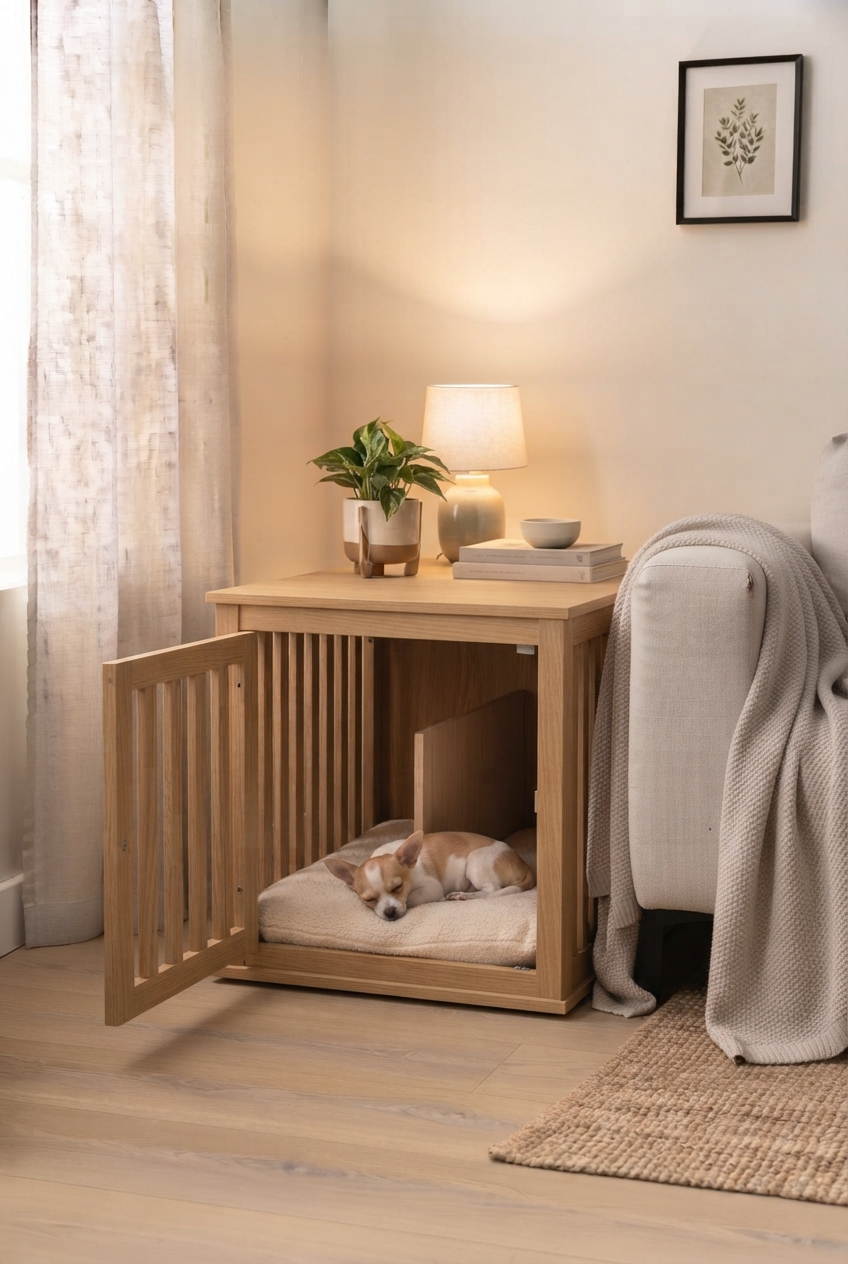
- A crate with a divider panel to adjust the size as they grow
- An easy-to-clean floor pan for the inevitable accidents
- A soft, chew-resistant pad to start
- A cover for part of the crate to encourage settling down
The Puppy Crate Formula
Choose a crate with an adjustable divider → start with the smallest setting → add a simple washable pad → cover part of it for a den-like feel.
FAQ
Should I buy a bigger crate now to save money later?
Only if it has a divider panel — otherwise, a too-big crate can slow down house training.
What if my puppy chews the pad?
Start with a simple, inexpensive pad until the chewing phase passes, then upgrade.
How much of the crate should be covered?
Partly — enough to feel den-like without blocking airflow or making it feel closed off.
Final Thought
A puppy crate setup does two jobs at once: it grows with your dog instead of needing constant replacing, and it makes house training genuinely easier. Smart choices now, less hassle later.